Cryo-EM to be added to structural biology program |
|
A significant commitment of funds and resources is being made to establish the latest innovation in microscopy as the focal point of the Center for Advanced Structural Biology (CASB) at the College of Medicine. The project will be built out in three phases over the next five years.
The focal point of the first phase of the project kicking off this month is the integration of core services on the Talos L120C Transmission Electron Microscope and Vitrobot, using $1.5 million from Research2030 as part of the JobsOhio grant. The Talos L120C instrument is designed for performance across a wide range of sample types and applications, such as imaging complex mixtures of macromolecules and radiation sensitive materials, both at room and cryogenic temperatures.
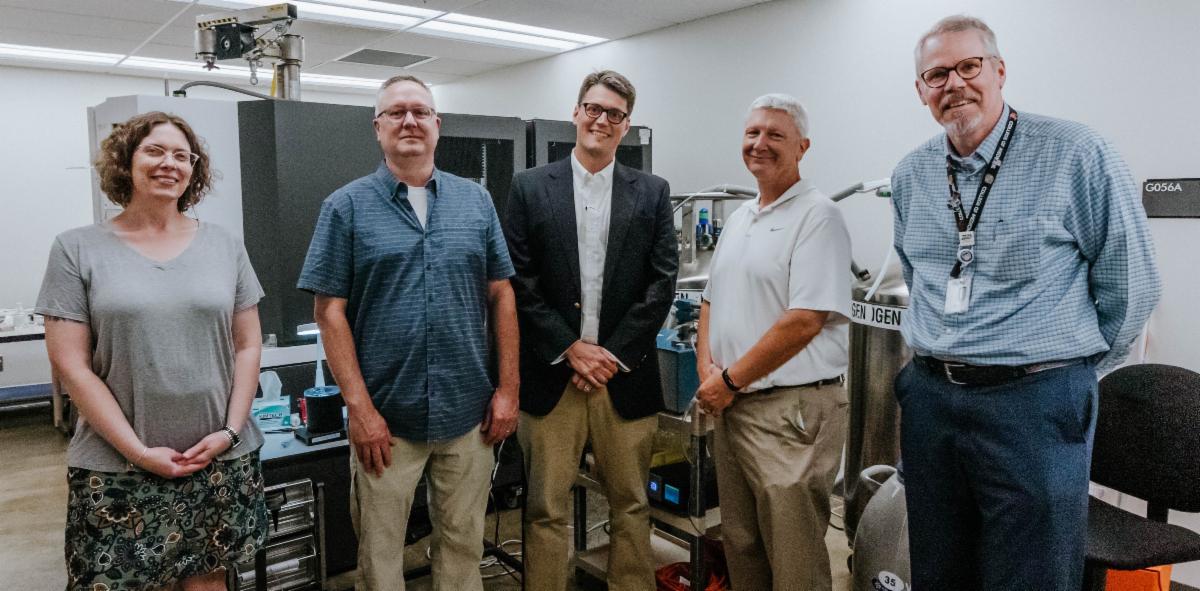
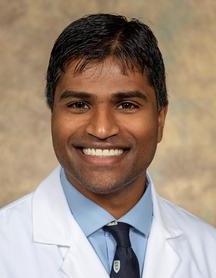
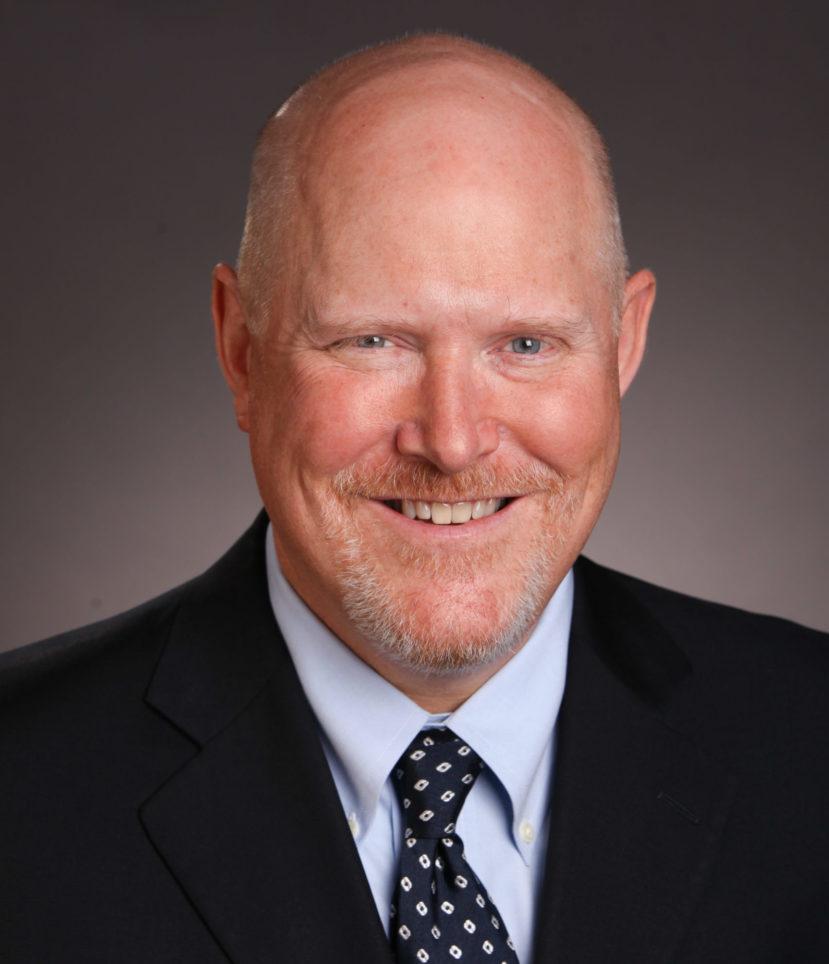
“It’s changing the game on how we do research in structural biology,” says Ken Greis, PhD (pictured, right), associate dean for research core facilities, speaking about cryogenic electron microscopy (Cryo-EM) technology, which started to emerge about five to 10 years ago. “The technology has had such an impact that you can’t recruit faculty who are structural biologists without being invested in Cryo-EM.”
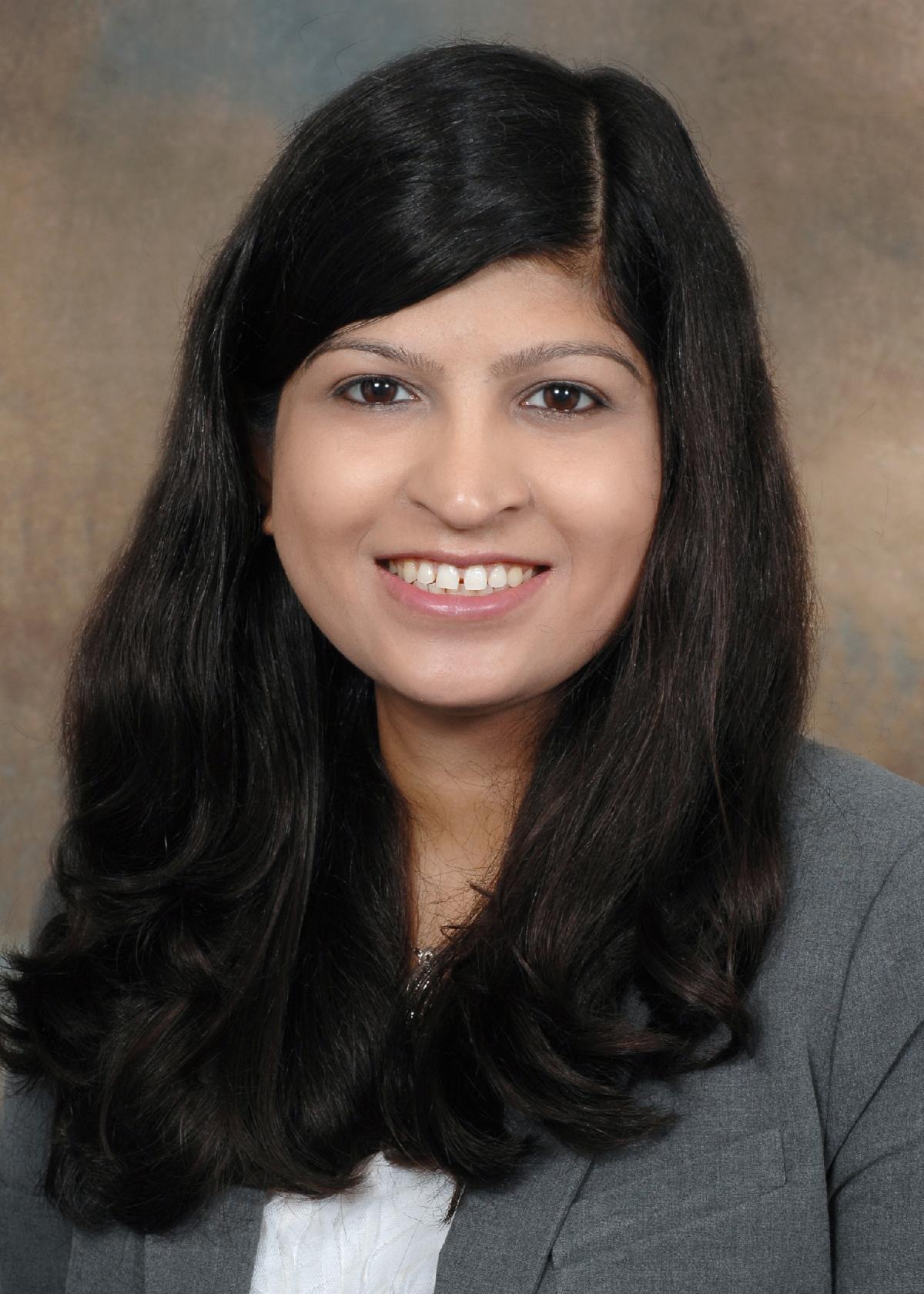
Greis, in collaboration with Michael Lieberman, PhD, professor and chair of the Department of Molecular Genetics, Biochemistry and Microbiology, and the structural biology faculty along with the financial and recruitment support from the college’s dean’s office and the UC Office of Research, have been recruiting people with experience and expertise in the Cryo-EM field, such as Desiree Benefield, PhD (pictured, left), who will be the lab manager for the facility.
“I was excited to see UC incorporating this powerful technology and wanted to be a part of the facilities development and growth,” says Benefield. “My work here is to provide support, resources and guidance to anyone interested in learning more about the Cryo-EM resources in the CASB. I look forward to being busy this summer!”
By preparing and imaging samples at cryogenic temperatures, structures of biological macromolecules can be visualized in a near-native, hydrated state. The technology has been vital for understanding the novel virus driving the COVID-19 pandemic in early 2020 and for more effectively examining evolving structural changes in today’s variants.
Greis says the first phase has taken about a year and a half to establish once the funding was secured, with the second and third phases likely taking similar times each to implement. The Talos L120C is currently housed in the Medical Science Building in an area that was specifically renovated to meet the stringent instrument requirement. Longer term the university has submitted federal grant applications to fully renovate space in the College of Medicine that formerly housed five nuclear magnetic resonance systems.
Additional recruitment has included Xiaowei Hou, PhD who is coming to UC this month specifically to work on this project at its inception. She was recruited from Memorial Sloan Kettering Cancer Center, where she gained eight years experience as an advanced Cryo-EM user and developed a research interest in understanding molecular mechanisms of human diseases.
One of the people who helped recruit Hou to UC is Rhett Kovall, PhD (pictured, second from left), professor in the Department of Molecular Genetics, Biochemistry and Microbiology. He, along with Tom Thompson, PhD (pictured, second from right), professor, Tom Seegar, PhD (pictured, center), assistant professor, and Greis have spent the last five years getting the funding and laying out the plan to establish the Cryo-EM facility in the CASB.
Greis says the College of Medicine has four major areas of emphasis that Cryo-EM will impact: cancer, infectious disease, cardiovascular and neuroscience.
“These are technologies that span the range of research that allow you to impact all of the above, but you have to have the technology and you have to have the people who know how to use it,” Greis says. “It’s a transformational technology that just doesn’t come along that frequently in this business that you look at and say, ‘This applies to everybody. We can solve so many research problems with it.’”
|
|
UC Board approves Osher Center for Integrative Health name |
At its June 28 meeting, the UC Board of Trustees approved the naming of the Osher Center for Integrative Health at the University of Cincinnati. The center, based in the Department of Family and Community Medicine, late last year received a $5.5 million gift from the Bernard Osher Foundation. The center had been known as the UC Center for Integrative Health and Wellness since its inception in 2009.
“This incredible gift endows key leadership positions and programs and is an investment in center administration to increase capacity and ensure the long-term sustainability of the center’s transformational work,” says Sian Cotton, PhD, center director and Turner Farm Foundation Chair. “The gift supports two new endowed leadership positions, including center medical director and education program leaders. Additionally, the funding will be used to increase access for under-resourced patient clinical care and community education.”
The center also joins the Osher Collaborative, a group of nine academic integrative health centers in the country funded by the Osher Foundation.
Cotton says that with the endowment one of the center’s goals is to establish a longitudinal course thread that embeds integrative and lifestyle medicine education into the College of Medicine’s required curriculum for first- and second-year medical students. The center has already established three certificate programs: a recently approved graduate certificate for integrative health and wellness, which will begin enrolling students this fall; an undergraduate certificate for integrative health and wellness; and a yoga certificate. A new Medical Student Scholar Program also will begin this fall for medical students to receive specialized training in integrative and lifestyle medicine. The Center also offers lifestyle medicine and wellness complimentary virtual programs to UC and the Cincinnati community.
Cotton expects significant clinical growth from the approximately 10,000 patient visits conducted annually. Services provided include lifestyle medicine consultations, acupuncture, biofeedback, mediation, mindfulness, yoga, Tai Chi and music and art therapy. Services are increasingly covered by insurance, however, the center is able to assist under-resourced patients through funds from community donors and foundations.
The endowment also will help the center to significantly expand its research initiatives. The center’s goal is to develop a world-class integrative oncology and integrative health research program and to build a network of researchers and educators with interests in integrative oncology, lifestyle medicine and integrative health.
“We are involved in several research projects, including investigating mind-body and food-as-medicine interventions,” Cotton says. “Current projects include the Mind-Body Skills program, Mindfulness-Based Stress Reduction at the Free Store Food Bank Cincinnati COOKS! Program, the CCM Wellness Assessment, Build it Bites with Cincinnati Children’s, Workplace Mindfulness and practice-based clinical research,” Cotton says.
|
|
UC Board of Trustees appointments |
At its June 28 meeting, the UC Board of Trustees officially approved the following emeriti appointments in the College of Medicine:
-
Steven Carleton, MD, PhD, professor emeritus, Department of Emergency Medicine, effective July 1, 2022
-
Zhongyun Dong, MD, PhD, professor emeritus, Department of Internal Medicine, effective July 1, 2022
-
Mark Eckman, MD, professor emeritus, Department of Internal Medicine, effective July 1, 2022
-
Margery Gass, MD, professor of clinical emerita, Department of Obstetrics and Gynecology, effective May 1, 2022
-
Jane Khoury, PhD, research professor emerita, Department of Pediatrics, effective Sept. 1, 2022
-
Tiina Reponen, PhD, professor emerita, Department of Environmental and Public Health Sciences, effective Aug. 1, 2022
|
|
Stefaniuk named to ASCP ‘40 Under Forty’ list for 2022 |
Catherine Stefaniuk, DO, assistant professor in the Department of Pathology and Laboratory Medicine, has been selected by the American Society for Clinical Pathology (ASCP) as one of the 40 “brightest emerging leaders and innovators of pathology, laboratory medicine and ASCP.”
Each year, ASCP selects 40 pathologists, pathology residents and laboratory professionals under the age of 40 who have made significant contributions to the profession and stand out as leaders who will help shape the future of pathology and laboratory medicine. Public voting and committee selection then determine the top five, who will be honored at the ASCP 2022 Annual Meeting, Sept. 7-9 in Chicago. Votes can be cast for Stefaniuk online daily through 12:59 a.m., Wednesday, July 20.
“I was very excited to learn that I was named an honoree of the ASCP 40 Under Forty. This is great news with there being a lot of strong candidates in the clinical laboratory field. It was amazing to be included in this group,” Stefaniuk says.
Stefaniuk, who joined the college faculty in 2018, is board certified in anatomic, clinical and molecular genetic pathology. She serves as the director of the coagulation, immunology, urinalysis and hematology clinical laboratories at UC Medical Center and also is the director of the Diagnostic Laboratory Medicine rotation where she has worked to create an integrative clinical pathology rotation for residents. She has worked to improve patient care in the lab through effective test utilization and has worked with hematologists, laboratory and IT staff to provide rapid hemoglobin test results to improve blood utilization for red blood cell exchanges. Currently, Stefaniuk is working with a diverse group of physicians to improve pre-surgical anemia diagnosis to help alleviate the need for postsurgical blood transfusions.
“Dr. Stefaniuk’s laboratory directorships contribute significantly to the laboratory services provided by UC Health. She also plays a key role in teaching laboratory medicine to our residents and students,” says Dani Zander, MD, MacKenzie Professor and chair of the Department of Pathology and Laboratory Medicine.
|
|
Reyes, Pritts receive 2022 Faculty-to-Faculty Mentoring Awards |
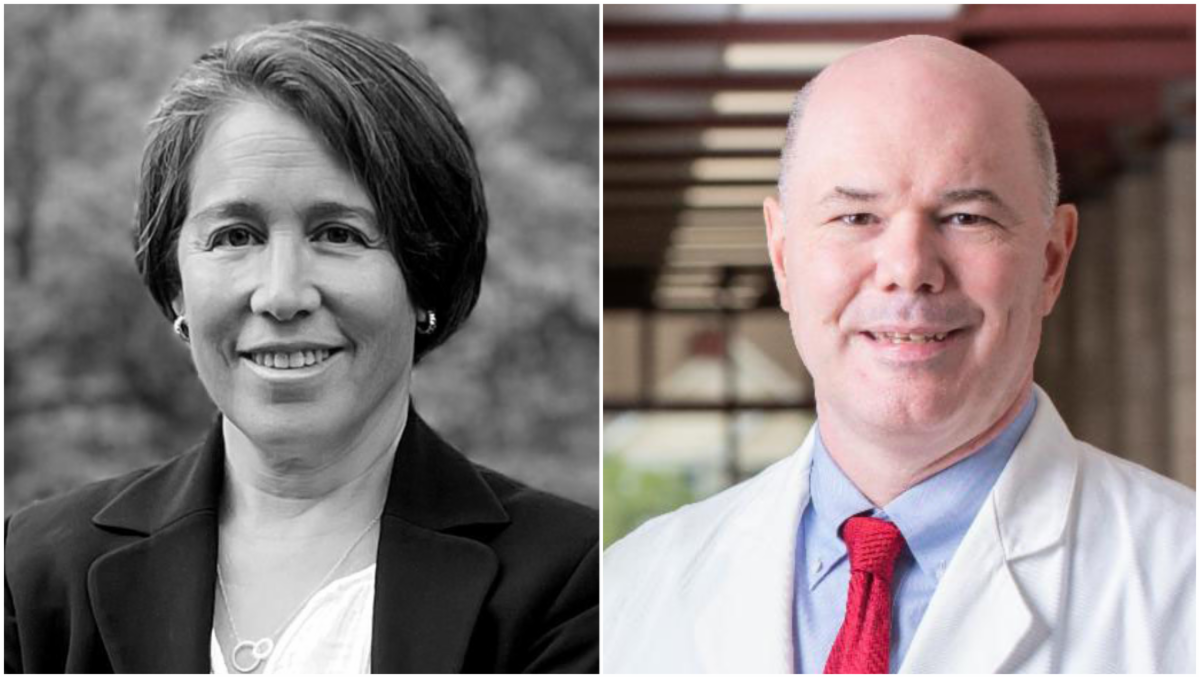
Teresa Reyes, PhD, professor, Department of Pharmacology and Systems Physiology, and Timothy Pritts, MD, PhD, professor, Department of Surgery, have been named recipients of the College of Medicine’s 2022 Faculty-to-Faculty Mentoring Awards.
Mentoring among faculty at the College of Medicine is a crucial element in sustaining a vital faculty community, promoting faculty development and increasing faculty retention. The purpose of the Faculty-to-Faculty Mentoring Award is to recognize the outstanding efforts of one clinical and one basic science faculty member for their mentorship of other faculty. These prestigious awards acknowledge the time sacrifice and dedication faculty mentors devote to foster the career development and academic success of colleagues in the areas of research, education, service and clinical practice.
Reyes (pictured, left) received the Basic Science Faculty-to-Faculty Mentoring Award. “My dedication to mentoring comes from a deep appreciation for the many mentors that have supported me in my career development by providing essential advice and training. I hope that by sharing my own experiences, I can help ‘demystify’ aspects of a scientific career. There is great joy in celebrating the success of fellow faculty and trainees, as each individual finds their own path,” she says.
Pritts (pictured, right) received the Clinical Faculty-to-Faculty Mentoring Award. “It’s a great honor to be nominated for and selected for this award. Mentoring is a key element of academic medical practice. We each have the opportunity to help others grow and succeed. Mentoring is essential to help grow the next generation of physicians, scholars and leaders. The process of mentoring is very rewarding. I feel like I always receive more than I give. Some of my greatest professional joys have been to see my mentees succeed in so many areas,” he says.
|
|
Shah named to American Society of Transplantation committee |
Silvi Shah, MD, associate professor in the Department of Internal Medicine, Division of Nephrology and Hypertension, has been invited to serve a three-year term on the Fellow of the American Society of Transplantation (FAST) selection committee.
The goal of the committee is to advance the field of transplantation and improve patient care through the promotion of research, education, advocacy and organ donation. FAST also recognizes members who have demonstrated an exceptional commitment to the field of transplantation as well as outstanding service to the American Society of Transplantation. Shah was inducted into FAST in 2020.
Shah is a physician-scientist whose research focuses on women’s health, including pregnancy, sex disparities in kidney disease and kidney health in cardiovascular disease. She is supported by the K23 career development award from the National Institutes of Health to study sex differences in cardiovascular disease in patients on dialysis. Shah serves as a co-editor of American Society of Transplantation e-news and leads the American Society of Nephrology’s “Women’s Health and Research in Nephrology” community.
|
|
Jose receives award for pulmonary hypertension research |
Arun Jose, MD, assistant professor in the Department of Internal Medicine, Division of Pulmonary, Critical Care and Sleep Medicine, has received the 2022 PHenomenal Impact Fund for Global PH Research Award, for his project on the gut microbiome and circulating metabolome in pulmonary arterial hypertension (PAH).
The award is one of two programs funded by the charitable organization Team PHenomenal Hope. Through this award, Team PHenomenal Hope provides investigators with grant funding for medical research that aims to improve treatments or find a cure for pulmonary hypertension, a rare disease that causes high blood pressure in the vessels that supply the lungs, which strains the heart as well as the lungs. The PHenomenal Impact Fund for Global PH Research Award is given to investigators who are implementing novel concepts in PH and have the potential to change the field.
Jose, who also is a K Scholar and director of pulmonary hypertension at the Cincinnati Veterans Affairs Medical Center, specializes in PAH, with a particular interest in the intestinal microbiome and pulmonary vascular disease due to liver disease. His current research focuses on applying next-generation sequencing techniques, metabolomics and metagenomics to identify and develop novel biomarkers and therapeutic targets for PAH.
|
|
Emergency Medicine names annual award recipients |
Six Department of Emergency Medicine residents and fellows and one faculty member have received annual departmental honors:
-
Jessica Baez, MD, Faculty Golden Apple Teaching Award, for outstanding contribution to resident education.
-
Brandon Berger, MD, W. Brian Gibler, MD, Research Award, in recognition of the graduating resident who has made the greatest contribution to research while in residency.
-
Kate Connelly, MD, and Eddie Irankunda, MD, Daniel E. Storer, MD, and Steven C. Carleton, MD, Excellence in Air Care Award, for outstanding performance In air care throughout their emergency medicine residency. Irankunda also received the Brian A. Stettler, MD, Resident Teaching Award for outstanding contribution to resident education.
-
Colleen Laurence, MD, Global Health Contribution Recognition, for outstanding contribution to global health during their residency.
-
Jazmyn Shaw, MD, Michael P. Spadafora, MD, Award, for demonstrating extraordinary enthusiasm as an intern for the field of emergency medicine.
- Additionally, William Knight, MD, professor and Class of 2003, Faculty Mentorship Award, for outstanding contribution to resident mentorship.
|
|
Surgery honors residents, faculty with annual awards |
Five Department of Surgery residents and one faculty member have received annual departmental honors:
-
Allison Ammann, MD, Resident Research Competition Award, for basic research.
-
Jennifer Baker, MD, Josef E. Fischer Award. This award was established by the chief resident Class of 2001 and is peer selected. The award is given to the resident in general surgery who most exemplifies excellence in patient care, attention to detail and intellectual curiosity in the pursuit of clinical and scientific knowledge. Baker also received the Max Zinninger Award. The Zinninger Award was first presented in 1986 to the resident who most exemplified the characteristics of Max Zinninger, MD. This award is given annually to the resident who, in the opinion of the faculty, best exemplifies the characteristics of Zinninger—tenacious and meticulous in patient care, knowledgeable, exemplifies professionalism and ceaseless in promotion of the department.
-
Alex Cortez, MD, Class of 2015, Department of Surgery Best Teaching Resident Award, as voted by medical students during the third-year Surgery Clerkship.
-
Aaron Delman, MD, Resident Research Competition Award, for clinical science research.
-
Mackenzie Morris, MD, James M. Hurst Trauma Resident of the Year Award.
-
Additionally, Mary Stuever, DO, instructor, Outstanding Surgical Educator Award. This award honors a faculty member, who by vote of the surgical resident staff, has made significant contributions to the education and mentoring of surgical residents.
|
|
Transform recycled lab material into artwork for contest |
The College of Medicine Office of Research is seeking submissions of artwork created from recycled and recovered research laboratory materials. Submissions will be displayed and judged during the Research Recognition Celebration on Wednesday, Oct. 5. Recipients of first-, second- and third-place awards will be announced at the Oct. 5 event.
The contest is open to all students, staff, trainees, faculty and deans. Participants must register by Wednesday, Sept. 14 to submit an art piece. Participants may register as an individual or group.
Entries must contain 100% recycled, recovered or found content from research laboratories with the exception of paints, dyes, adhesives, canvas and mounting hardware. Entries may contain any clean, non-biohazardous, non-radioactive recycled material and cannot include food matter or living organisms. Pictures of such things as bacteria and fungus can be included.
Entry dimension may be no larger than 72 inches high by 36 inches wide and 24 inches deep and must be ready to display by wall mount or plinth or be free standing.
Artwork must be delivered to the Dean’s Suite, E-870 CARE/Crawley Building, by 2 p.m., Monday, Oct. 3. Winning entries will be exhibited in the CARE/Crawley Atrium until Oct. 19.
|
|
Hoxworth celebrates opening of renovated Apheresis Center |
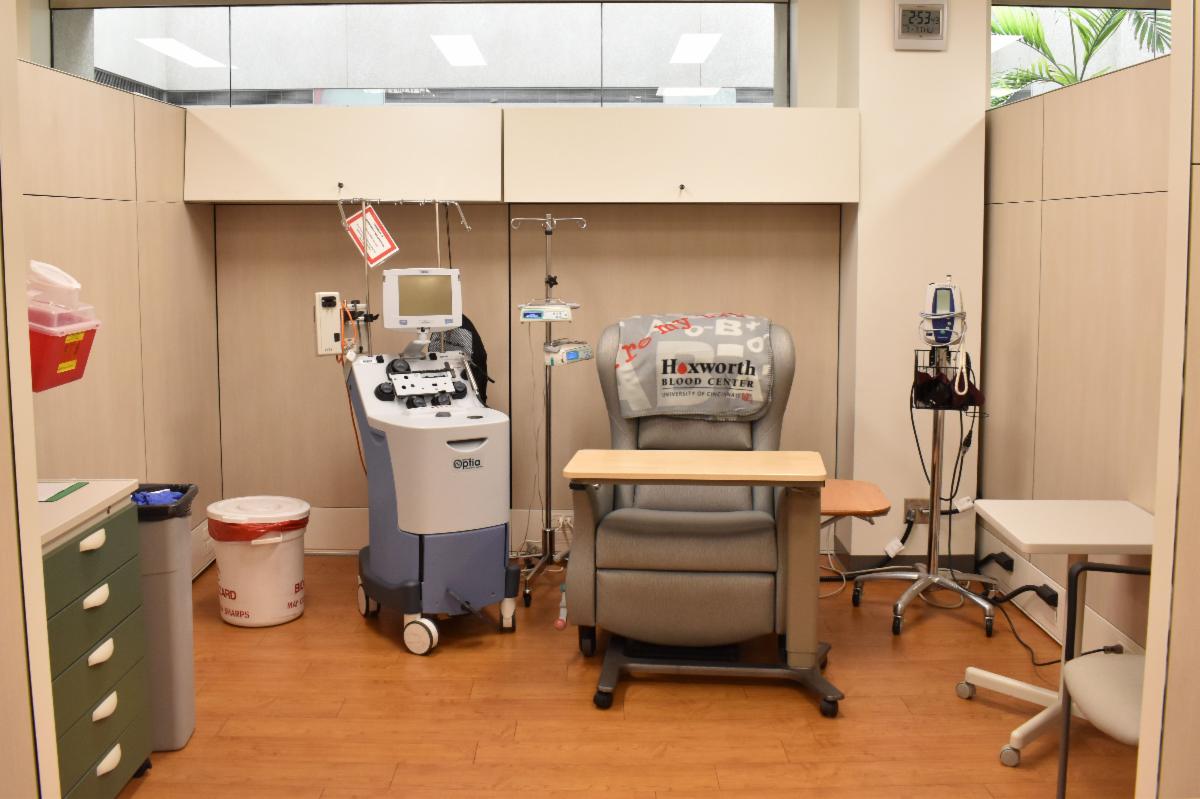
Hoxworth Blood Center celebrated the opening Thursday, July 7 of its renovated Apheresis Center. Located on the fourth floor of the center, the Apheresis Center collects different types of white blood cells from donors for transplantation, therapeutic infusions and emerging cellular therapies.
The newly renovated Apheresis Center features four pods to accommodate more donors and offers greater comfort and care as the donation process is longer than a typical whole blood or platelet donation.
At Hoxworth’s Apheresis Center, several kinds of white cell collections can take place seven days a week. Granulocyte cells are one such product collected by Hoxworth medical personnel when the urgent need arises.
“These (white blood cells) are for patients who have undergone chemotherapy and have no white blood cells of their own to help fight off infections,” says Krystol Weidner, RN, manager of Hoxworth’s Apheresis Department.
The entire process for granulocyte collection and infusion begins with a hospital need and a subsequent call to Hoxworth to find a suitable donor. Hoxworth’s recruitment team then identifies lists of potential donors who are a blood type match for the patient and begins the recruiting process. Once a donor commits, they undergo a three-hour donation process. The collected granulocytes are then whisked to the patient’s bedside and quickly infused, as these precious white cells expire within 24 hours. Most often they are transfused to immunocompromised pediatric patients at Cincinnati Children’s.
For stem cell donations, Hoxworth partners with Be The Match, an organization operated by the National Marrow Donor Program that manages the most diverse marrow registry in the world. People from all over the country are matched as stem cell and lymphocyte donors for patients throughout the world. This type of donation takes about four to eight hours.
“These donors are giving so much to get to this point, blood work, injections, physicals, so we wanted to provide a comfortable environment for them as they spend up to eight hours donating stem cells to someone they’ve never met,” Weidner says.
In 2021, Hoxworth collected more than 100 products from donors for the National Marrow Donor Program for patients across the world. Hoxworth expects to surpass these numbers in 2022.
“We look forward to helping more patients across the globe as our apheresis collection capacity grows,” said Caroline Alquist, MD, associate professor and medical director of the apheresis program.
The Apheresis Center also provides white cell collections for various established and emerging immunotherapy indications. Whole blood, red blood cells, platelets and plasma are also collected by this team and used for Hoxworth’s internal research studies in partnership with Cincinnati Children’s.
|
|
Next Center for Addiction virtual lecture Wednesday, July 20 |
The College of Medicine’s Center for Addiction Research virtual Summer Speaker Series continues Wednesday, July 20. The presentations highlight UC addiction research and UC-community collaborations related to prevention and treatment. The series, which began in June, is hosted by the Urban Health Pathway of Next Lives Here. The final presentation in the series will be held Wednesday, Aug. 17.
Wednesday, July 20, noon
“Development of a Recombinant Humanized Anti-cocaine Monoclonal Antibody” presented by Andrew Norman, PhD, professor, Department of Pharmacology and Systems Physiology, Center for Addiction Research Core Leader, Addiction Treatment Development and Testing.
Wednesday, Aug. 17, noon
“Understanding and Impact of Medical Marijuana in Ohio” presented by LaTrice Montgomery, PhD, associate professor, Department of Psychiatry and Behavioral Neuroscience, and Brian Higgins, managing associate, Frost Brown Todd Attorneys, LLC.
|
|
2023 Cincinnati Magazine ‘Top Doctors’ voting continues |
Voting continues for the 2023 Cincinnati Magazine “Top Doctors.” Votes will be accepted through midnight Saturday, Aug. 13.
An invitation to vote was emailed last month to physicians with active licenses in the region . Physicians also can visit CincinnatiTopDocs.com to vote. Voters can name three physicians in each specialty. Votes are confidential. Please direct questions on voting to Professional Research Services via email or by phone at 248-691-1800, ext. 134.
The magazine publishes its list of “Top Doctors” every January based on votes cast by physicians. Last year, 553 of the 890 physicians (62%) who made the list of “Top Doctors” either graduated from the College of Medicine, had been trained at the college and UC Health or were current faculty members.
Everyone is encouraged to take this opportunity to recognize the region’s best physicians by voting for “Top Doctors 2023.”
|
|
In Memoriam: James Tweddell, MD |
James Tweddell, MD, professor in the Department of Surgery and executive co-director of the Heart Institute and director of cardiothoracic Surgery at Cincinnati Children’s, died Friday, July 1 after a battle with cancer. He was 62.
Tweddell, a member of the College of Medicine’s Class of 1985, was a world-renowned cardiothoracic surgeon and academic with an extensive list of research and clinical contributions vital to advancing the care and outcomes of congenital heart surgery patients.
A Cincinnati native, Tweddell completed his residency in general surgery at New York Medical Center. He then moved to Washington University Medical Center in St. Louis where he was a research fellow in cardiothoracic surgery and a general surgery resident before completing a residency in cardiothoracic surgery and fellowship in pediatric cardiothoracic surgery.
Upon completion of his training, Tweddell joined the Medical College of Wisconsin where he began working at Children’s Hospital of Wisconsin. There, he held the S. Bert Litwin Chair for Cardiothoracic Surgery and became director of Pediatric Cardiothoracic Surgery in 2001. In 2015, Tweddell joined Cincinnati Children’s where he expanded the Cardiothoracic Surgery Program’s international caliber while providing unparalleled surgical care and innovation for patients and families. His leadership helped the program achieve surgical outcomes that rank among the top in the nation. He also established an ACGME-approved fellowship in congenital cardiac surgery.
Tweddell is best-known for his pioneering work treating children with hypoplastic left heart syndrome. Some of the key innovations Tweddell contributed to included decreasing mortality following the Norwood procedure through the use of venous saturation monitoring and afterload reduction. He also helped reduce interstage mortality of single ventricle patients through the development of a home monitoring program.
Tweddell was a member of many major professional societies and held important leadership positions with the American Heart Association, the Society of Thoracic Surgeons, the American Association for Thoracic Surgery and the American Board of Thoracic Surgery. Most recently, he served as the 10th president of the Congenital Heart Surgeons’ Society.
Cincinnati Children’s will honor Tweddell by hosting a Celebration of Life on Monday, July 18. For details on this event, contact Tiffany Whatley.
|
|
This week in College of Medicine history |
July 13, 1831: The first meeting of the Medical College of Ohio faculty is held after the faculties of the Medical Department of Miami University, which had been formed by Daniel Drake, MD, earlier in the year and was scheduled to begin instruction in the fall of 1831, combined with the faculty of the Medical College of Ohio. In addition to Drake, who is returning to the college after leaving in 1822, new Medical College of Ohio faculty are John Eberle, MD, John Henry, MD, Thomas Mitchell, MD, and James Staughton, MD.
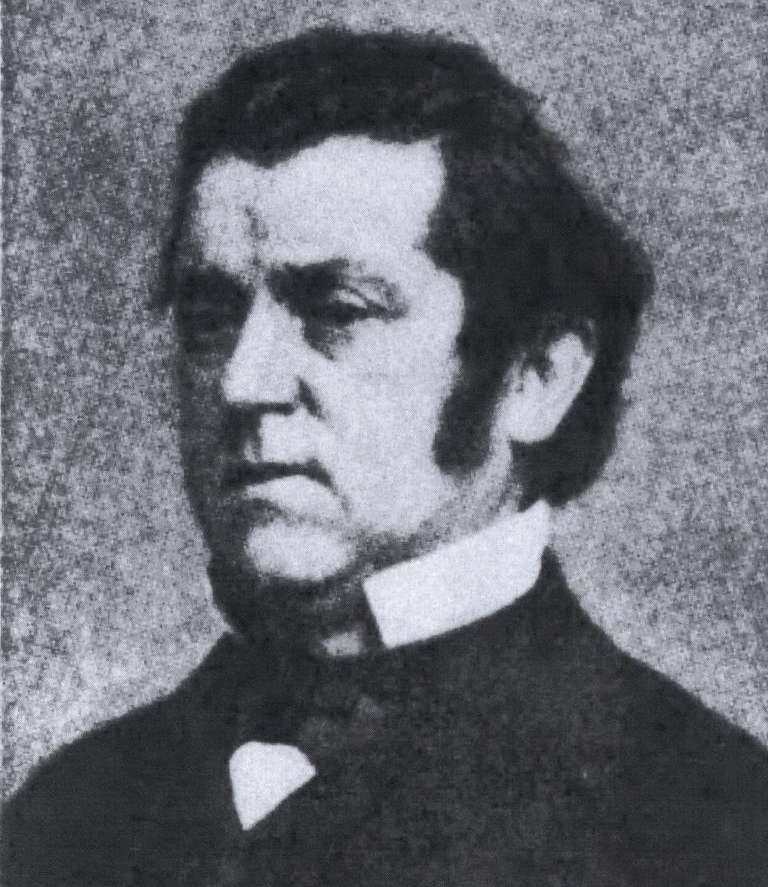
July 17, 1871: George Blackman, MD (pictured), professor of surgery at the Medical College of Ohio since 1855 and one of the country's leading surgeons, dies at his Avondale residence. He was 72. Born in 1819, Blackman was honored in 1847 by election to the Fellowship of the Royal Medical and Chirurgical Society of London. He was editor of the journal Western Lancet and coauthor of the text “Hand-book on Military Surgery.”
|
|
UPCOMING LECTURES AND SEMINARS (July 12 - 25)
-
Family Medicine Grand Rounds, Tuesday, July 12: Sanjay Shewakramani, MD, associate professor, Department of Emergency Medicine, will present “Sepsis for the Family Medicine Provider” at 7:30 a.m. via Zoom.
-
Department of Molecular Genetics, Biochemistry and Microbiology Weekly Seminar Series, Tuesday, July 12: Nathan Ferguson, doctoral candidate, will present “Post-transcriptional Regulation of the Copper Transporter ATP7A” and Jacob Mast, doctoral candidate, will present “Characterizing the Activity and Inhibition of Erythroferrone’s Oligomeric States” at noon in Medical Sciences Building 3051 and via Zoom.
-
Department of Internal Medicine Medical Grand Rounds, Wednesday, July 13: Vlad Cotarlan, MD, associate professor, Department of Internal Medicine, Division of Cardiovascular Health and Disease, will present “Atrial Fibrillation, Heart Failure and Stroke: The Good, the Bad and the Ugly” at noon via Zoom.
-
University of Cincinnati Cancer Center Cancer Research Seminar Series, Friday, July 15: Daniel Pomeranz Krummel, PhD, associate professor, Department of Neurology and Rehabilitation Medicine, will present “A Team Approach to Studying Novel Small Molecules Effective in CNS and Systemic Cancers” at noon in Medical Sciences Building 5051. Register for the seminar.
-
Department of Molecular Genetics, Biochemistry and Microbiology Weekly Seminar Series, Tuesday, July 19: Alexandra Perez, doctoral candidate, will present “Stage Specific Copper Prioritization During Muscle Cell Differentiation” and Kiana Kawarizadeh, doctoral candidate, will present “A Novel Role for B-Cell Adaptor for PI3K (BCAP) in Canonical M2 Polarization” at noon in Medical Sciences Building 3051 and via Zoom (Meeting ID: 924 1839 4657).
-
Center for Clinical and Translational Science and Training Grand Rounds, Friday, July 22: Nneka Sederstrom, PhD, chief health equity officer, Hennepin Healthcare, Minneapolis, will present “A Brief History of Racism in Medicine: Where We Were, Where We Are, and Where We Hope to Go” at noon via Zoom. Register for the presentation.
|
|
|
|
|
|
|