Rail Workers Weekly News Digest
Number 8 - February 25, 2020
|
|
Below is a series of articles compiled over the previous week.
They are of interest to railroad workers.
_____________________________________________
|
|
Article 1 -
CREW CONSIST NEWS
Facing Crew Challenges, Operating Craft Unions will Act in Solidarity
(Editor's Note: The following excerpt is from SMART-TD President Ferguson on the latest with the union's effort to preserve the two-person crew. Please read the entire article by clicking READ MORE at the bottom).
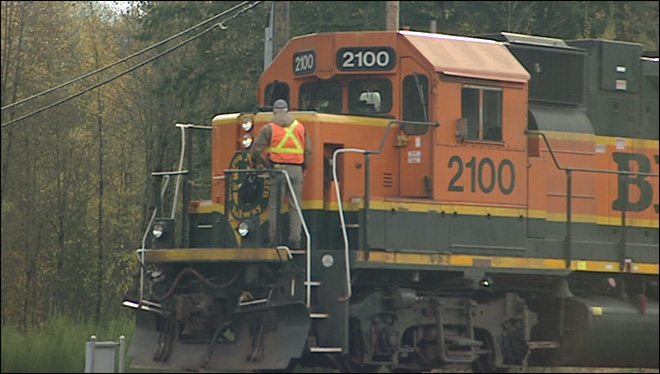
We now have a coalition of 10 rail unions about to begin negotiating together in this upcoming round of bargaining. I have been in close contact with the Brotherhood of Locomotive Engineers and Trainmen (BLET) President Dennis Pierce throughout as carriers have tried to attack two-person crews.
Our two unions are linked in the courts. We’re linked in the halls of Congress. We’re linked in the locomotive cabs. We are now linked at the bargaining table.
Our attorneys are working together on behalf of both our organizations to fight the ongoing court cases as carriers try to manipulate the system with their deep pockets by attempting to get long-standing precedents and legislation overturned.
Legislative representatives from both our organizations are meeting with members of Congress and state legislatures to get the word on for two-person crew laws. The carriers, however, are using every means to fight to try to get two-person crew laws of seven states thrown out, which we have opposed.
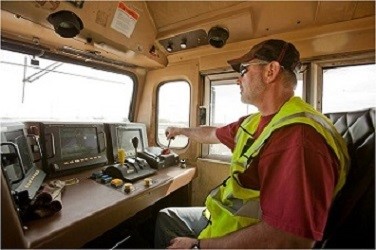
Members from both organizations are sitting in cabs of freight trains staying alert and keeping one another safe through each and every shift, ready at a moment’s notice to respond when things go wrong. We need to carry this effort on in crew consist.
BLET President Pierce recently stated in a message to his union: “I share this information to make it clear to BLET’s membership that our proud Union stands with our Brothers and Sisters in SMART’s Transportation Division in the fight to preserve two-person crews,” Pierce wrote. “Be it on the regulatory front, the legislative front, in court or at the bargaining table, BLET is working with SMART-TD to protect the interests of all operating employees.”
|
|
Article 2 -
DRUG TESTING NEWS
DOT Issues Warning Regarding Use Of CBD Products By DOT-Regulated Employees
The U.S. Department of Transportation Office of Drug and Alcohol Policy Compliance
published a notice
on February 18, 2020 concerning the use of hemp and cannabidiol (CBD) products by safety-sensitive employees regulated by DOT’s agencies (including the Federal Aviation Administration, the Federal Motor Carrier Safety Administration, the Federal Transit Administration, the Federal Railroad Administration, and the Pipeline and Hazardous Materials Administration, as well as the U.S. Coast Guard). Among other things, ODAPC stated the following:
“The Agricultural Improvement Act of 2018, Pub. L. 115-334, (Farm Bill) removed hemp from the definition of marijuana under the Controlled Substances Act. Under the Farm Bill, hemp-derived products containing a concentration of up to 0.3% tetrahydrocannabinol (THC) are not controlled substances. THC is the primary psychoactive component of marijuana. Any product, including “Cannabidiol” (CBD) products, with a concentration of more than 0.3% THC remains classified as marijuana, a Schedule I drug under the Controlled Substances Act.
We have had inquiries about whether the Department of Transportation-regulated safety-sensitive employees can use CBD products. Safety-sensitive employees who are subject to drug testing specified under 49 CFR part 40 (Part 40) include: pilots, school bus drivers, truck drivers, train engineers, transit vehicle operators, aircraft maintenance personnel, fire-armed transit security personnel, ship captains, and pipeline emergency response personnel, among others.
It is important for all employers and safety-sensitive employees to know:
|
|
Article 3 -
FREIGHT NEWS
U.S. Rail Traffic Keeps Falling
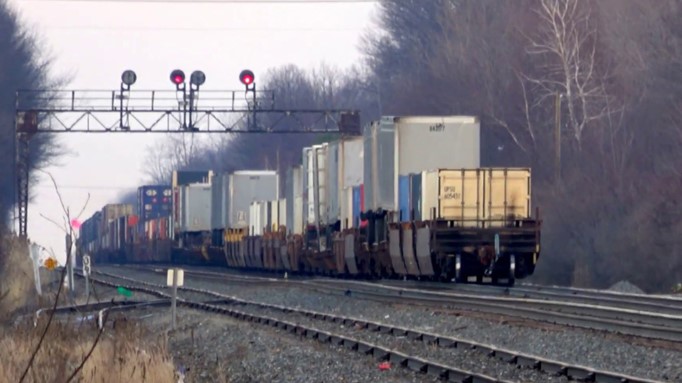
The Association of American Railroads (AAR) reported U.S. rail traffic for the week ended Feb. 15, 2020, and, for this week, total U.S. weekly rail traffic was 479,137 carloads and intermodal units, down 8.6% compared with the same week last year.
Total carloads for the week ended Feb. 15 were 227,447 carloads, down 9.1% compared with the same week in 2019, while U.S. weekly intermodal volume was 251,690 containers and trailers, down 8% compared to 2019.
Four of the 10 carload commodity groups posted an increase compared with the same week in 2019. They included commodities such as petroleum and petroleum products, up 734 carloads, to 12,622; motor vehicles and parts, up 700 carloads, to 17,583; and metallic ores and metals, up 582 carloads, to 20,859. Commodity groups that posted decreases compared with the same week in 2019 included commodities such as coal, down 17,147 carloads, to 63,045; nonmetallic minerals, down 3,614 carloads, to 28,381; and grain, down 2,973 carloads, to 18,325.
For the first seven weeks of 2020, U.S. railroads reported cumulative volume of 1,625,296 carloads, down 6.1% from the same point last year; and 1,749,983 intermodal units, down 6.3% from last year. Total combined U.S. traffic for the first seven weeks of 2020 was 3,375,279 carloads and intermodal units, a decrease of 6.2% compared to last year.
|
|
Article 4 -
DERAILMENT NEWS
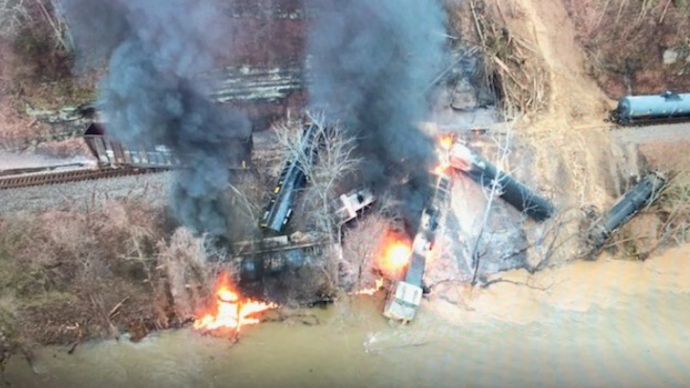
Two people taken to hospital after rockslide causes Pike County train derailment
(Editor's note: This is the second time in 6 weeks that a freight train has plunged headfirst into a river. Miraculously, the crew of both trains survived with minor injuries. With all the talk about safety, drone technology and so forth, one cannot help but wonder how this is happening).
"We got a 911 call of a train derailment just above the Draffin bridge, which is where we're standing here, and the engines were on fire," said an emergency official. "Where the fire was at the time near the derailment, because of the where the fire was, in case of explosion."
Officials had to evacuate nearby communities and worked quickly to get the train engineers out and move them to safety. The CSX workers are in the hospital with non-life threatening injuries.
All that is left is the cleanup. CSX is deploying environmental monitoring measures to minimize impacts. The Kentucky Energy and Environment Cabinet has a team sampling the water to make sure it is safe to drink.
One man who saw the whole thing unfold said he felt helpless. "The train horn, you know, woke me up a little bit and then it sounded like a tornado was ripping through. Just a real loud rumbling," said Austin Cox. He said he saw an orange glow and when he got to his backyard, he already knew what he was looking at.
"The flames were 50-60 feet in the air. It's gut-wrenching to see," said Cox. Cox called 911, convinced that the operators of the train were dead. "Who survives a train crash into the river, hitting a mudslide of that size? And then you survive the fire too and walk away from it?" Cox wondered. "They started asking for help. And you knew they was, they was both alive. I guess you were kind of relieved, but at the same time, it makes you feel even worse. Cause now you do know they are over there in that heat."
|
|
Article 5 -
HEALTH CARE NEWS
Viewpoint: Employment-Based Health Care Is an Anchor around the Neck of the U.S. Working Class
Last June at the House Ways and Means Committee Hearing on Medicare for All, Rep. Kevin Brady of Texas lamented, “That great health care plan that your union negotiated for you? It’s gone. Banned under Medicare for All.”
A right-wing congressman with a 7 percent lifetime voting score from the AFL-CIO crying crocodile tears for union health care plans can easily be dismissed as just another absurdity of America’s political dysfunction.
But when Sen. Joe “The Working Man’s Friend” Biden repeats the charge almost word for word, and when AFL-CIO President Rich Trumka insists—on Fox News, no less!—that “if there isn’t some way to have our plans integrated into the system, then we would not support [Medicare for All],” something is up.
Talking points, after all, don’t appear out of thin air. They’re carefully crafted and disseminated by lobbyists and publicists, often on behalf of corporate interests.
Trumka was soon joined by Teachers (AFT) President Randi Weingarten. Six months earlier she had given Medicare for All a full-throated endorsement. But in a September 23 Politico article, she walked that back in favor of a fictitious system where “employer-based insurance would be allowed to exist to the extent that plans met or exceeded the standards set by the Medicare plan.”
It’s mind-boggling to see national labor leaders defend a system that’s the biggest cause of strikes, lockouts, and concession bargaining.
For a generation, U.S. unions have traded wages and other benefits for ever-shrinking coverage from employers, or for the ever-increasing employer contributions required to maintain similarly shrinking benefits from union-sponsored health and welfare funds.
|
|
Article 6 -
TRAIN CREW NEWS
Railroad workers rescue cold, missing 5-year-old girl along tracks in St. Paul
Two railroad workers for Union Pacific are being hailed as heroes after they saved the life of a little five-year-old girl from St. Paul over the weekend.
Angie Knutson is always aware of her surroundings while working her shift as an engineer for Union Pacific Railroad. Around midnight Saturday as the train was passing through east St. Paul near Phalen Boulevard, she knew something wasn't right.
“I happen to notice something out there that looked odd and I said, ‘Is that a little kid?’” said Angie Knutson, an engineer for Union Pacific Railroad. “We said, ‘It’s a little girl,’ so we stopped the train as fast as I could.”
She stopped the train and the conductor, Jarrod Campbell, jumped off to find the child and approached her.
“[I asked her,] ‘Are you doing ok? You look really cold,’” said Campbell. “She had no mittens, no hat, wearing a really light jacket.”
The five-year-old told Campbell her name was Zoey and she was looking for her mom. He got her on the train and bundled her up with his big coat.
“We were warming up her feet—they were just so cold—and definitely starting to see some early signs of hypothermia,” said Campbell.
|
|
Article 7 -
LABOR UNION NEWS
The Survival of the Longshore Union is at Stake
Coastwide Port Action Can Stop Union Busting! Labor Solidarity Must Prevail
(Editor's note: RWU has close ties with ILWU. This important labor struggle has vast implications for rail labor. RWU advises the various rail unions to likewise reach out to this fellow union!)
A recent federal court decision in Portland, Oregon poses an immediate existential threat to the strongest union in the U.S. today, the ILWU, and ultimately to the labor movement as a whole. The International Longshore and Warehouse Union (ILWU), arguably one of the most militant unions in the U.S., has been hit with a union-busting $93.6 million dollar court-imposed fine for a secondary boycott deemed illegal under the 1947 Taft-Hartley Act. The plaintiff, International Container Terminal Services, Inc. (ICTSI) is owned by the third richest man in the Philippines, billionaire Enrique Razon Jr. and operates in 27 ports worldwide, mainly in poor, developing countries.
The maritime company claims it was run out of business in Portland because of a secondary boycott by the longshore union during a long-running dispute over two mechanics jobs which are presently done by another union, the International Brotherhood of Electrical Workers (IBEW). ICTSI argues the primary employer is the Port of Portland which hires the mechanics, so they claim the longshore union organized an “illegal” secondary boycott. For the ILWU’s part, it was a foolish top down campaign organized by the dubious Leal Sundet, then, an ILWU Coast Committeeman who had previously been an Oregon area executive for the employers group, the Pacific Maritime Association (PMA).
On February 14 in Portland, this capital vs labor battle may be decided by a federal court judge. The response of the ILWU to the union-busting verdict should be to take the struggle out of the courts and onto the docks where our strength lies, as it did so many times in the past. Otherwise the union leadership is agreeing to let this battle between labor and capital be decided by a capitalist judge. Some members don’t want to declare bankruptcy but that would mean an exorbitant assessment of all longshore workers. Others want to re-join the AFL-CIO but that doesn’t necessarily mean real support for the ILWU. The main obstacle is that the leadership is offering no kind of active labor defense, only a deadly silence in the media.
|
|
Article 8 -
DERAILMENT NEWS
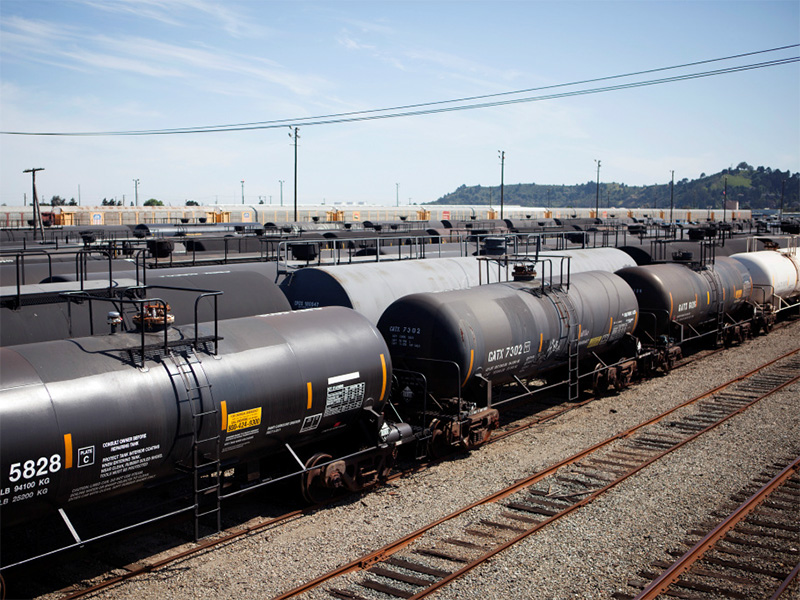
Train carrying crude oil derails near Gogama, Ontarion
TORONTO, Feb 19 (Reuters) - A Canadian National Railway Co CNR.TO freight train derailed in Ontario and started leaking crude oil, the company said on Wednesday, marking the second such incident in less than two weeks.
About 30 cars came off the rails on Tuesday night near Emo, Ontario, just north of the border with Minnesota, the railroad said in a statement. Emo is about 380 km (240 miles) west of Thunder Bay, Ontario.
Several cars have leaked crude oil, but preliminary reports show none of it entered waterways, the company said. The cause of the derailment was still under investigation, it added.
No fire or injuries were reported.
The derailment prompted local emergency workers to evacuate residents within 800 meters (yards) from the site as a precaution. Ontario police said there was no risk to public safety at the time.
|
|
|
|
|
|
|