September 13, 2024

Newsletter for September 13, 2024

This Issue:

  • County Farm Bureau Annual Meeting Dates Set
  • Ranching For Revenue Session Planned For Sept. 26
  • White Pine County Farm Bureau Ag Production Tour Visits Diamond Valley
  • There’s More To The Details Of The 23 Percent Decrease In Our Net Farm Income
  • It's Time For Congress To Deliver A New Farm Bill
  • You Voice Is Also Needed To Make The Point To Congress…
  • Nevada Farm Bureau Policy On Changes To Water Right Forfeiture
  • Nevada Department of Agriculture Seeking Increases In Cost Of Chemical Registrations
  • Presidential Candidates Provide Response To Farm Bureau Ag Issues Survey
  • We Need Your Help In Defeating Question 3
Nevada Farm Bureau Website

County Farm Bureau Annual Meeting Dates Set


At this point there are four county Farm Bureaus who have announced their 2024 annual meeting dates.  They are:


  • Churchill County Farm Bureau – October 9 at the Golf Course in Fallon
  • Clark County Farm Bureau – October 29
  • Humboldt County Bureau – October 12 (6 p.m.) at the Humboldt County Extension Office
  • Lyon County Farm Bureau – October 16 at the Lions Club House in Yerington

Ranching For Revenue Session Planned For Sept. 26

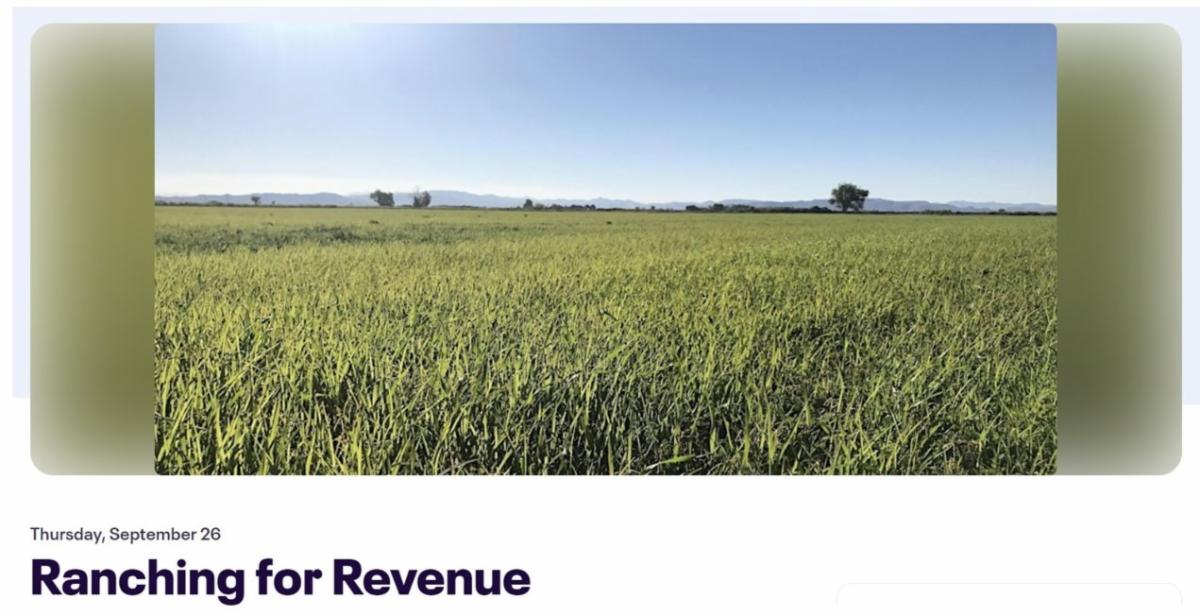
A special day-long training session is being planned for ranchers who are interested in building up their management skills and seeking to consider ways for enhancing your ranch profitability.  The workshop is scheduled for Thursday, September 26 and will start at 8 a.m.  It will be held at the Elko Basque Center, 1601 Flagview Dr., Elko, NV.  Click here to be taken to the site to use for registering for this conference.  The $42 registration fee will cover your lunch and information presented during the session.


Each section is led by professionals who have extensive scholarly and farming backgrounds. This workshop is geared to accommodate large scale farming and ranching operations looking to implement a more holistic approach but is also suitable for hobby farmers and gardeners working with small plots. High School and college students with an interest in agriculture are encouraged to attend.


For more information, contact Adrienne Snow, Extension outreach specialist at adriennes@unr.edu or by calling 775-247-6458. Persons in need of special accommodations or assistance should contact Paul Lessick, Extension civil rights and compliance coordinator, at plessick@unr.edu or 702-257-5577 at least five days prior to the scheduled event with their needs or for more information.

White Pine County Farm Bureau Ag Production Tour Visits Diamond Valley

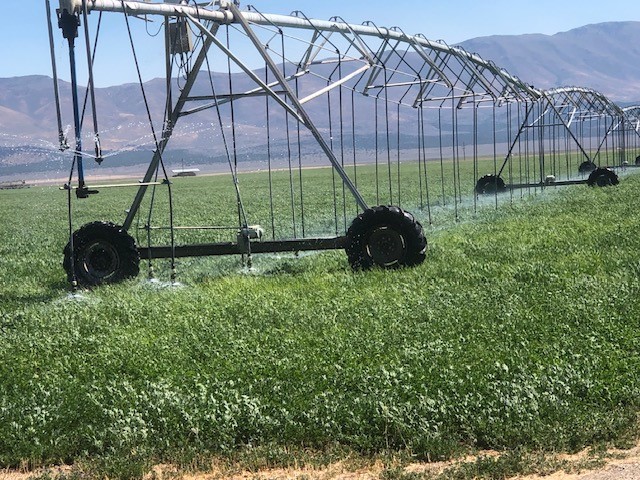
Congratulations to the White Pine County Farm Bureau for their 2024 annual agricultural production tour on September 11.  This year’s tour visited Diamond Valley in Eureka County and focused on the water conservation and irrigation management that Marty Plaskett is putting into place in his operation.  Thanks as well to the Plaskett family for hosting the group.  The tour included in-depth conversations on the technology and exchange of practices that not only is taking place in Plaskett’s operation but also the stages of developments that the tour participants are doing in their operations.


Over the past number of years, the White Pine County Farm Bureau has provided their farmer/rancher members with the opportunity to participate in this tour which has visited a number of different operations in the area, getting an understanding of various approaches that their fellow agricultural producers are doing or experimenting with to make their operations succeed.

There’s More To The Details Of The 23 Percent Decrease In Our Net Farm Income

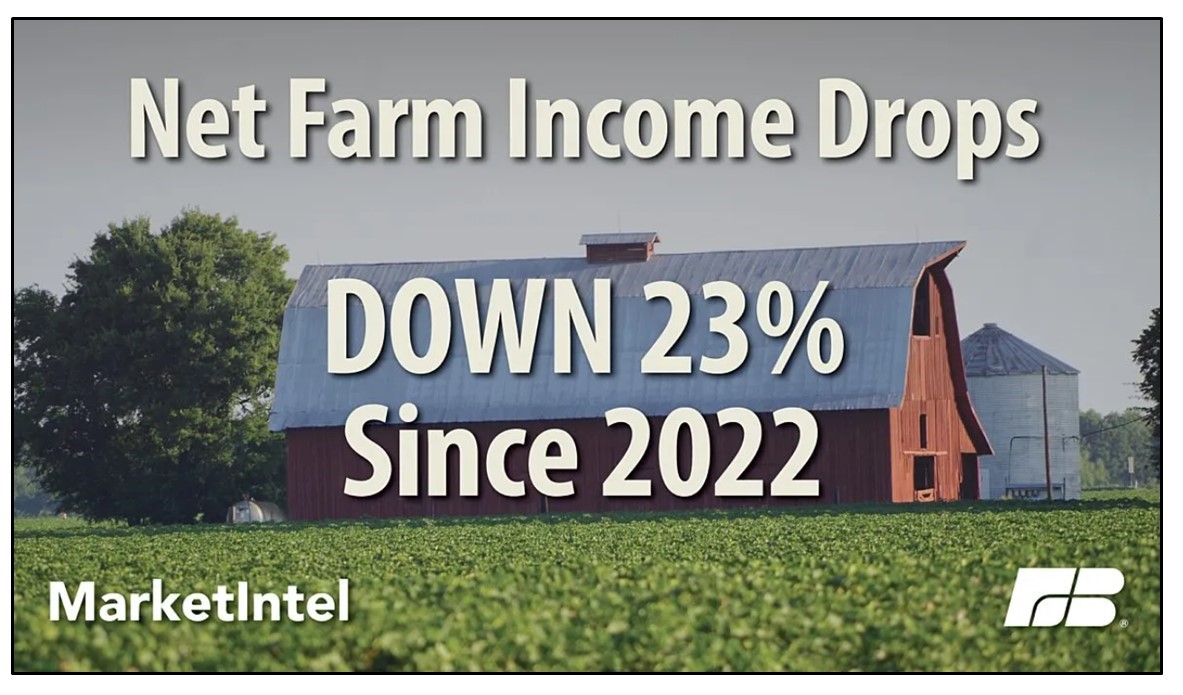
Last week’s newsletter carried the special news release of American Farm Bureau Federation (AFBF) President Zippy Duvall responding to the September 5th announcement by USDA’s Economic Research Service that since 2022, America’s net farm income is estimated to decline by 23 percent in 2024.  AFBF Economist Daniel Munch has prepared this Market Intel report which gives the insights related to the estimate of our country losing nearly a quarter of the net farm income over the past two years.

It's Time For Congress To Deliver A New Farm Bill

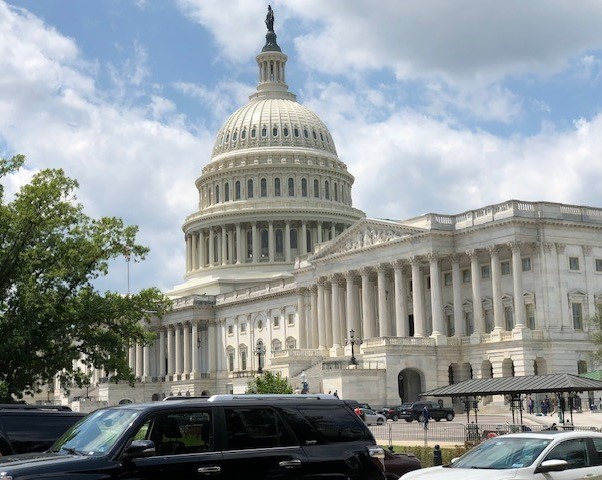
The critical nature of America’s hurting farm economy is causing more attention on pressing Congress to stop fooling around and deliver a modernized and reliable Farm Bill.  The current operating Farm Bill was extended last September when it was supposed to expire and be replaced with an updated version.  Unless there’s no action it will expire at the end of this fiscal year (September 30, 2024).  Renewing it – as it is – again, totally ignores the relevance of having a farm safety net.


In this American Farm Bureau Federation (AFBF) news release shares that over 300 groups have combined their efforts to send a strong letter to the leaders of the U.S. House and Senate that they need to deliver.


“Since the beginning of the year, the harvest price of major crops traded on the Chicago Mercantile Exchange and the Intercontinental Exchange have fallen by an average of 21% while total production costs remain near record levels.” the message to Congressional leaders explains, adding, “Since the passage of the 2018 farm bill, farmers have endured a pandemic, global unrest, a trade war with China and supply chain challenges. USDA forecasts farm sector debt to reach almost $541 billion in 2024, the highest inflation-adjusted level in more than 50 years.”

You Voice Is Also Needed To Make The Point To Congress…

Beyond agricultural organizations sending strongly worded messages to leaders of the House and Senate, farmers and ranchers are also making their voices heard, through contacts with the elected U.S. Congressman and U.S. Senators.  Please take advantage of this opportunity  to let your elected member of the U.S. House and our two U.S. Senators, making them aware that they need to take action and pass a new Farm Bill now.

Nevada Farm Bureau Policy On Changes To Water Right Forfeiture

The concepts of changes to Nevada’s Law on forfeiture of water rights that are not being put to beneficial use are being considered as possible legislation from the State Engineer’s office.  One of the potential outlines of an approach for change might involve going to a system where after five years of a water right not being put to beneficial use, the Nevada Division of Water Resources would send a letter of notification of a pending forfeiture of the water right and the directive that the issue would need to be resolved by putting the water that is not being used to beneficial use in the coming five year period.  As the second five-year timeframe came to a close the water right owner would be notified that the water right was forfeited.


Nevada Farm Bureau policy was a driving force in establishing the current system where water right owners who have not been putting their groundwater rights to beneficial use would be notified by the State Engineer that they had to prove up on their non-use within a year or lose their water rights.  The relevant section of Nevada Farm Bureau policy #326 states – “We also ask for 1-year notification prior to any forfeiture.”  This language has been incorporated into Nevada Revised Statutes (NRS) 534.90…


“NRS 534.090 Forfeiture and abandonment of rights.

     1. Except as otherwise provided in this section, failure for 5 successive years after April 15, 1967, on the part of the holder of any right, whether it is an adjudicated right, an unadjudicated right or a right for which a certificate has been issued pursuant to NRS 533.425, and further whether the right is initiated after or before March 25, 1939, to use beneficially all or any part of the underground water for the purpose for which the right is acquired or claimed, works a forfeiture of both undetermined rights and determined rights to the use of that water to the extent of the nonuse.

     2. If the records of the State Engineer or any other documents obtained by or provided to the State Engineer indicate 4 or more consecutive years of nonuse of all or any part of a water right which is governed by this chapter:

     (a) The State Engineer shall notify the owner of the water right, as determined in the records of the Office of the State Engineer, by registered or certified mail of the nonuse and that the owner has 1 year after the date of the notice of nonuse in which to use the water right beneficially and to provide proof of such use to the State Engineer or apply for relief pursuant to subsection 3 to avoid forfeiting the water right.

     (b) If, after 1 year after the date of the notice of nonuse pursuant to paragraph (a), proof of resumption of beneficial use is not filed in the Office of the State Engineer, the State Engineer shall, unless the State Engineer has granted a request to extend the time necessary to work a forfeiture of the water right, send a final notice to the owner of the water right, as determined in the records of the Office of the State Engineer, by registered or certified mail, that the water right is held for forfeiture. If the owner of the water right, within 30 days after the date of such final notice, fails to file the required proof of resumption of beneficial use or an application for an extension of time to prevent forfeiture, the State Engineer shall declare the right, or the portion of the right not returned to beneficial use, forfeited. The State Engineer shall send notice of the declaration of forfeiture, by registered or certified mail, to the owner of record, as determined in the records of the Office of the State Engineer, of the water right that has been declared forfeited….”


The Problem Are The Extensions….


In a follow-up meeting with the State Engineer’s office to seek a better understanding of the need for the changes being considered, Nevada Farm Bureau learned that the extensions sought after the four-year notification, and the continuing annual efforts to seek on-going extensions doesn’t resolve the non-use issue and simply generates expanding paperwork.


Should Nevada Farm Bureau Policy Be Changed To Address This Issue?


If extensions are the problem of not adhering to the “use it or lose it” principle, perhaps the change to Nevada water law should be amended to not provide for extensions after the four-year notification of non-use.  The change in state law could provide for the fifth year of non-use to put the water to beneficial use, but there would not be any extension provided.


Do you believe that Nevada Farm Bureau’s policy should be changed to uphold the foundational principle of putting water rights to beneficial use and correcting the on-going issue of extensions precluding forfeitures from being applied with the five-year requirement?


This is one of several pertinent policy decisions that county Farm Bureau policy development sessions need to consider this fall.


Nevada Department of Agriculture Seeking Increases In Cost Of Chemical Registrations

The Nevada Department of Agriculture (NDA) Division of Plant Health and Compliance is conducting a survey to assess the potential impacts of proposed changes to Nevada Administrative Code (NAC) Chapter 586.011 on businesses. The changes proposed to NAC 586.011 pertain to the regulation of pesticide registrations.  Please click here to access the survey. This survey should take 5-10 minutes to complete.


Please note, this survey is the first step in assessing the impact of these proposed changes in accordance with Nevada Revised Statute (NRS) 233B.0608. Participation in this survey is voluntary, and data that you provide will be used to help the NDA draft a business impact statement. This statement, created from the results of this survey, will be available as part of a future public workshop announcement. In addition to completing this survey, you may also provide public comment on these proposed changes at a future workshop, which will be announced after the survey closes. We thank you for your time and feedback. 

Please review the proposed changes to NAC 586 prior to taking this survey. The link to these changes is provided here - Proposed changes to NAC 586


The deadline to complete the survey is Wednesday, Sept. 22.

Presidential Candidates Provide Response To Farm Bureau Ag Issues Survey

WASHINGTON, September 12, 2024 – Vice President Kamala Harris and former President Donald Trump revealed their priorities for American agriculture in responses provided by their campaigns to a questionnaire distributed by the American Farm Bureau Federation (AFBF).


Farm Bureau asked the Democratic and Republican presidential nominees to respond with their stances on several topics that directly affect farmers, ranchers and rural communities. Topics include crop insurance, taxes, labor and rural infrastructure.


“The challenges facing America’s farmers and ranchers continue to mount, from falling commodity prices to stubbornly high supply costs,” said AFBF President Zippy Duvall. “The next president will set the agenda for trade, regulatory reform, labor and sustainability. It is important that our members, and others in rural America, know where the presidential candidates stand on issues that will affect the vibrancy of their communities and their ability to pass farms to the next generation.”


The questionnaire includes 14 questions. In addition to the topics listed above, it covers food system resiliency, regulatory reform, international trade, sustainability, energy and biotechnology.


The answers are presented unedited, to give members an unfiltered look at each candidate’s platform. AFBF has invited candidates from both parties to respond to election questionnaires for more than 40 years. The survey responses are available now on FB.org/election2024.


We Need Your Help In Defeating Question 3


We’ve shared on a number of occasions that the Nevada Farm Bureau Board of Directors have made the decision to support a “NO” vote seeking to defeat passage of this proposed change to Nevada’s Constitution.  


Ballot Question 3, if adopted would amend the Nevada Constitution to establish a system of “Ranked-choice voting.” Ranked-choice voting (RCV) is an alternative voting method where voters rank candidates in order of preference instead of choosing just one. If a candidate receives more than 50 percent of first-preference votes, they win. If not, the candidate with the fewest votes is eliminated, and their votes are redistributed to the voters' next preferences. This process continues until a candidate secures a majority of the votes. 


Your help in working to assist in accomplishing this goal is greatly appreciated. Please consider these helpful steps…


1. Stay Informed: Keep up-to-date with the latest news and information about RCV and its impact on elections. Knowledge is power. 


2. Spread the Word: Share what you've learned about RCV with friends, family, and colleagues. The more people understand the potential issues, the stronger our community becomes. 


3. Support Our Efforts: Consider volunteering with our organization or making a donation to help us continue our advocacy work. Every bit of support helps us in our mission. 


4. Engage on Social Media: Share about the dangers of RCV on your social media to tell others to VOTE NO on Ballot Question 3. 


Please visit this website to learn more details and consider adding your name with those who are voting “NO” on Nevada Ballot Question 3.

Have A Great Weekend!