The International Law Section Gazette |
|
Dear ILS Members,
Given what has transpired this past week in Cuba, I would like use my first message as Chair to briefly explain why I believe these recent events are so relevant to our Section, and how our Section can become more relevant by getting more involved with the issues which they present.
Since day one as an attorney, I was told of the importance of the International Law Section by Burton Landy, who was our first Chair when we were merely a Florida Bar Committee. Long before his contemporaries, Burt understood that Florida needed to take the lead in promoting the practice of international law. Having attended the University of Havana, he also understood the critical nexus Cuba has with our legal community. At almost 93 years of age, he is still coming to the office on a regular basis and he has most certainly earned the right to say, “See, I told you so.”
Burt’s protégé and the Co-Founder of my firm, George “Rocky” Harper, was Chair of the ILS in the early 1990s. It was a lot of work back then but, rest assured, he had this young associate enthusiastically pitching-in to help him with some of the more laborious projects, including one of the first premier conferences of the Section held at the Intercontinental Hotel in 1991, which was somewhat pre-maturely called the “Post-Castro Cuba Conference.” I like to think of this event as a pre-cursor to what we all now know of as “i-Law.” Rocky, who was “más Cubano que la palma” had his “Post-Castro” moment when he outlived Fidel but he is unfortunately not here with us to witness and guide us through the important events of the past week. For that, we are at a great disadvantage.
Twenty five years later, as the Chair of the ILS’s Cuba Committee, I had the honor of leading four different ILS delegations to Cuba from 2015 through 2018, during which our members participated in important discussions with leaders in Cuban government and judiciary, dissidents, members of the Opposition and several important Cuban law firms about topics ranging from human rights, Rule of Law, reparations and comparative law. Following our first delegation, we invited the renown “Lawyer for the Dissidents” Rene Gomez Manzano to fly from Havana to speak at our Annual Meeting in Boca Raton, where we presented him with a special Human Rights Advocate Award. Our trips were widely covered in the media by Univision, Telemundo, the local television affiliate of ABC News, the Daily Business Review and others. However, it was our interviews with TV Marti which apparently caught the attention of Cuban government and reportedly landed some of us on a “blacklist” of sorts which prevented us from meeting with government officials and law firms on subsequent visits. Not long after our most recent visit, the ILS invited Opposition leader and Founder of CubaDecide, Rosa Maria Paya, to speak at an ILS Human Rights Symposium at the University of Miami. In the recent news clips, you probably saw her organization’s banners flying in the protests on the streets of Havana
This same news coverage correctly points out that the People of Cuba are largely motivated to take to the streets in protest because of a humanitarian crisis in which there is a dearth of food, medicine, and basic necessities not seen since the Soviet Union pulled out of Cuba in the early 1990’s, coined by the government at that time as the “Special Period.” However, if we listen close to the current news footage, we can hear that the chants and cries are not just about the deplorable conditions. Theses protests are specifically demanding democracy and human rights. As unfamiliar as this might be in the recent Cuban experience, history has shown that, under certain circumstances, these ideals can become greater motivating factors than even a struggle for physical sustenance or life and limb. If and when that happens, change is inevitable.
The ILS is not a political organization and, as such, we purposefully try not to take any political positions. However, we are an organization which fervently supports universally accepted principles of international law appropriately applied by means of the laws of sovereign nations, which includes the recognition of fundamental human rights and the fair and uniform application of the Rule of Law. From this perspective, the people of Cuba and the lawyers there, who hold fast in defending these principles, require our full support, as do the people and like-minded lawyers of Nicaragua, and the people and lawyers of Haiti. As international lawyers, what better purpose could we possibly have than to offer that support?
In the weeks and months to come, we will be looking to our own Human Rights Committee of the ILS for more opportunities to show our support for those risking their lives in the name of human rights, and I invite all of our members to participate with us and propose further activities to advance these important causes. I hope you will join us on this most important mission for our Section this year and for many years to come.
Very truly yours,
James M. Meyer
|
|
Meet the 2021-2022 ILS Executive Board
|
|
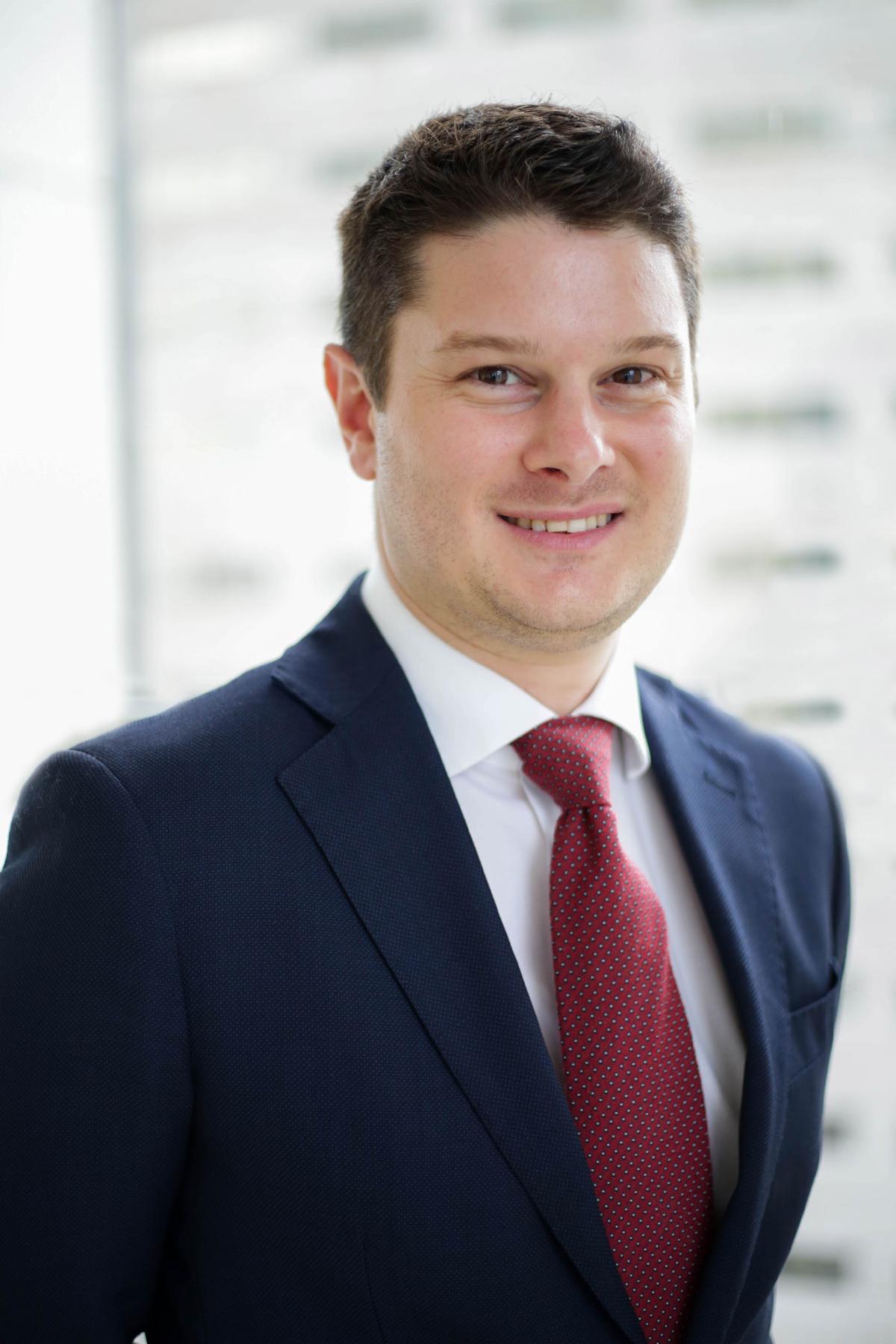
James M. Meyer
Harper Meyer Perez Hagen Albert Dribin & DeLuca LLP
201 S. Biscayne Blvd., Ste. 800
Miami, FL 33131
|
|
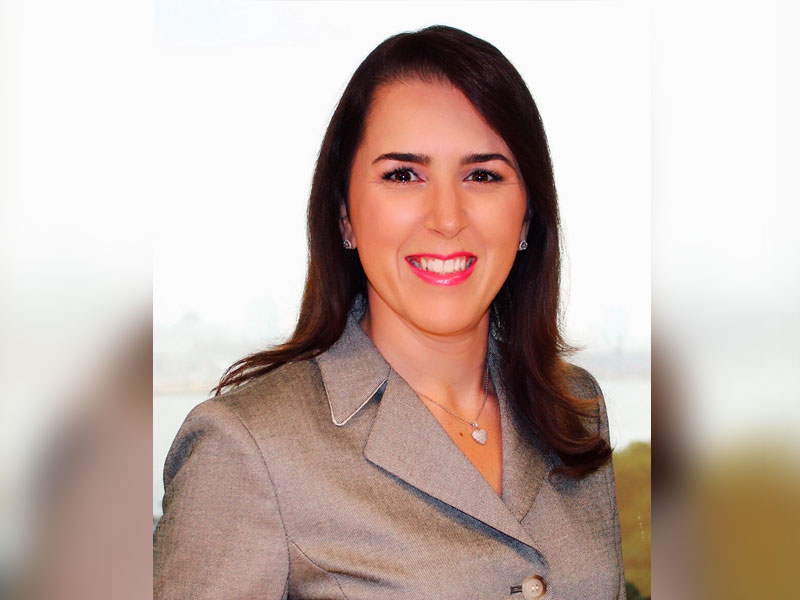
Jacqueline Villalba
Harper Meyer Perez Hagen Albert Dribin & DeLuca LLP
201 S. Biscayne Blvd., Ste. 800
Miami, FL 33131
|
|
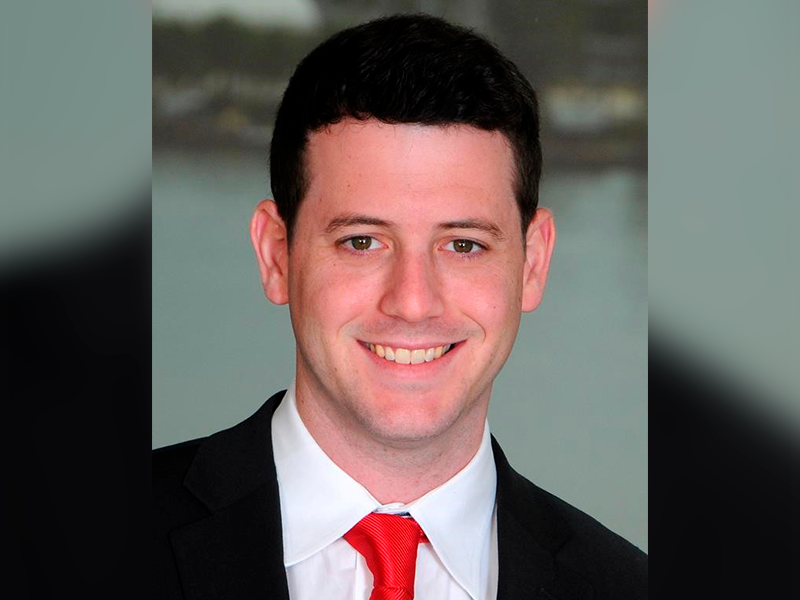
Richard Montes De Oca
MDO Partners
175 S.W. 7th Street, Ste. 1900
Miami, FL 33130
|
|
Ana María Barton
Reed Smith LLP
1001 Brickell Bay Drive, 9th Floor
Miami, FL 33131
|
|
Cristina Vicens-Beard
Sequor Law
1111 Brickell Avenue, Ste. 1250
Miami, FL 33131
|
|
5 ILS Members Appointed to the ILS Executive Council |
|
Please join the Executive Board of the International Law Section in welcoming the newest Members of the ILS Executive Council: Yine Rodriguez Perez, Fabio Giallanza, Penelope Perez Kelly, Jeffrey Hagen, and Davide Macelloni. Their term will expire in 2024.
|
|
International Law Quarterly |
|
International Law Quarterly: Spring 2021 |
|
The Spring Issue of the International Law Quarterly: Shifts in International Law Under the Biden Administration is now available! Click on the image below to download!
|
|
Meet the 52 Florida Bar Board Certified Members
in International Law
Philipp Buhler
|
|
Phillip Buhler has been practicing principally in the area of Admiralty and maritime law for over thirty-three years. He has worked in firms in Florida and Louisiana and is currently a senior partner with Moseley, Prichard, Parrish, Knight & Jones in Jacksonville. In addition to his law practice he has served as a Dozent (lecturer) in maritime law at the University of Hamburg and as a Dozent in intermodal transportation law and US/international civil procedure at the Lehrstuhl fur US-amerikanisches Recht of the Universitat zu Koeln in Cologne. He has served on the Boards of the Maritime Law Association of the United States and the Inter-American Bar Association as well as the ILS. Mr. Buhler is the editor of the International Maritime Law volumes of the seminal reference Benedicts on Admiralty, and is Florida Bar Board certified in both International Law and Admiralty and Maritime Law. He obtained his JD from the University of Miami and an LL.M. (Admiralty) from Tulane University. Mr. Buhler is currently working on a PhD in law at Dalhousie University in Halifax, and was resident in Canada for much of the last two years. His doctoral work is focused on international regulation of commercial shipping in Polar waters, following on the enactment of the Polar Code under the auspices of the International Maritime Organization in 2017.
Why did you become Board Certified in International Law? My primary incentive for seeking Board certification was for my own betterment. The process encouraged me to study areas of international law outside of those in which I work regularly, although maritime law is arguably the oldest form of international law (the earliest references going back to Roman, Byzantine and Rhodian sources). The certification may have helped to establish the latter point, an important consideration when issues not strictly maritime arise in my work. Certification could also have helped with my bona fides entering the academic world as both an instructor and a doctoral student.
What are some benefits you received from being Board Certified? I have been contacted by prospective clients with legal issues often closely related to my practice, although some might not consider them "maritime" in nature. Such matters, involving for instance international environmental regulation, international commercial transactions and sales of goods, and intermodal transportation have all been part of my practice and one can easily transfer skills from the water to the land side of such cases. On the litigation front, international maritime law utilizes all aspects of transnational litigation and arbitration, and Board certification identifies skills in this area especially.
Any best tips or advice to ILS Members preparing for the Certification Exam? Read, as broadly and widely, and deeply, as possible. The general subject of international law is probably the most comprehensive of any topic tested by the Florida certification process, and it is safe to say that no international lawyer will ever be fully conversant in all areas. There are some very good treatises and handbooks covering the subject, and I hope that the ILS will continue to offer its very good CLE review courses for all candidates.
|
|
Meet the 34 Florida Bar Members Board Certified
in International Litigation and Arbitration
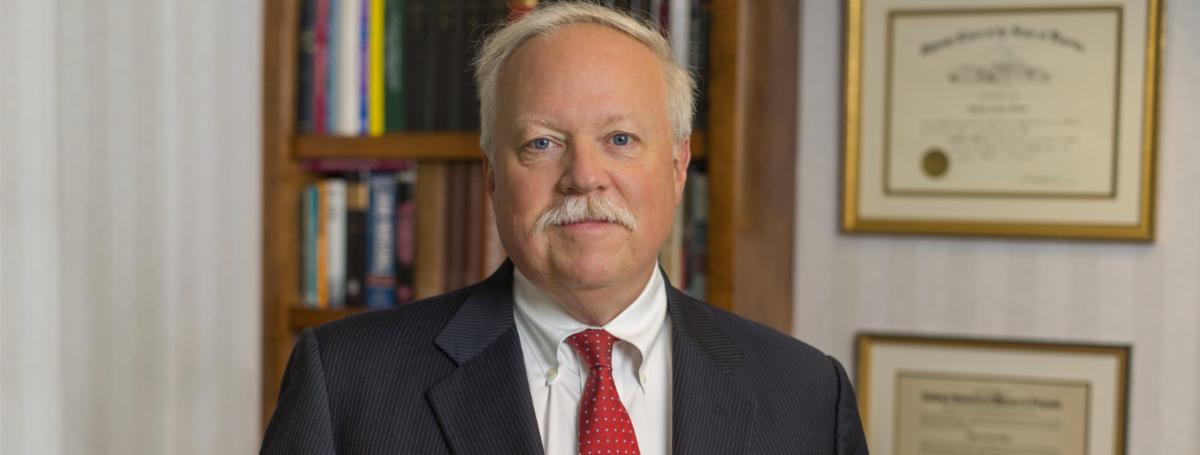
Roger Kobert
|
|
Roger Kobert is a New Jersey native who grew up in South Florida, went to college in Philadelphia and returned for law school in Miami, where he has practiced for more than 32 years. He now practices in both New York City and Miami as a shareholder with Carlton Fields, a full-service national law firm.
Roger earned his B.S. in political science from the University of Pennsylvania in 1985 and his J.D. from the University of Miami School of Law in 1988. Prior to joining Carlton Fields last year, Roger was a partner at other firms, including Weiss Serota Helfman, where he headed up their International Law Group in Coral Gables; New York boutique Fischer & Mandell, where he created and ran its Miami office; and Shutts & Bowen in Miami.
Roger is a longtime member of The Florida Bar International Law Section. He is former chairman, vice chairman, and treasurer of the Federal Bar Association International Law Section and a member of its National Task Force on Diversity and Inclusion. He is active in the ABA International Law Section, including several committee, conference, and financial leadership roles. Roger is a frequent speaker on matters of international and domestic law and professional ethics.
Roger was one of nine inaugural appointees by The Florida Bar to serve on the Board Certification Committee on International Litigation and Arbitration. The committee created a new certification examination from scratch, annually modifying and expanding it, as well as vetting applicants and grading exams. Roger was recently re-appointed to a second term, and now serves as the committee’s vice chair. He has been Florida Board Certified in International Litigation & Arbitration since inception of the Bar’s recognition.
In his private practice, Roger represents foreign and domestic businesses, governments, and individuals in federal and state litigation, arbitration, and appeals; has served as a U.S. law expert witness in foreign court proceedings; advised foreign governments on matters of U.S. law; and led cross-border, multinational, and domestic dispute resolution teams. His subject matter experience includes banking, commercial torts and contracts, foreign sovereign immunity, insurance, real estate, antitrust, and § 1782. His notable work includes serving as lead counsel against a former head of state for crimes against humanity; establishing a new standard for franchisor tort immunity in the Florida Supreme Court; securing the release of foreign governmental assets frozen by the Office of Foreign Assets Control; and trying a high-profile, multinational fraud case involving U.S. military contractors.
Why did you become Board Certified in International Litigation and Arbitration? Despite explosive growth of arbitration and international litigation in recent decades, there wasn’t, until now, an objective way to identify the most highly qualified and experienced practitioners. This certification is a valuable public service. It draws attention to and confirms experience and competence, so that clients, colleagues, arbitrators, and judges can be confident that the dispute resolution advocacy in question is of the highest caliber and leads to optimal results.
This new recognition was conceived through remarkable vision and effort by leading members of the Bar, and particularly this Section. I’m honored to have been twice selected to serve on the committee, and to help ensure that the best-qualified and experienced international litigation and arbitration practitioners are identified and recognized. It’s a feather in one’s cap, no doubt. I’m proud of the service we provide to the Bar and encourage others to learn the craft and earn their own recognition.
What are some benefits you received from being Board Certified? Credibility, qualification, and value all come along with the certification, as the Bar has done the vetting for clients, adverse parties and counsel, arbitrators, and judges. It’s akin to passing a general bar exam in that sense, but it’s a specialized “bar” that only years of dedication and experience can provide. It’s nothing short of recognition of expertise in this broad yet specialized field of law, so everyone benefits from its confirmation.
Any best tips or advice to ILS Members preparing for the Certification Exam? While the specifics of the test are closely guarded, of course, it’s not tipping our hand to reveal that the exam is designed to be both fair and challenging. Many hours are put into ensuring both, and to test qualified candidates’ mettle. Our goal is not to be exclusionary by being so pedantic that we keep the “club” as small as possible — on the contrary, we seek to accept as many deserving members as we can, without compromising standards, to ensure that the certification has genuine worth. My tip is to be patient if you’re an up and coming international litigation/arbitration lawyer, gain your experience, study and practice the rules, precepts, and conventions, and be prepared to be tested vigorously but fairly when you’re ready. Nothing would make us happier, and feel we’ve succeeded, than to welcome many more members to our specialty field.
|
|
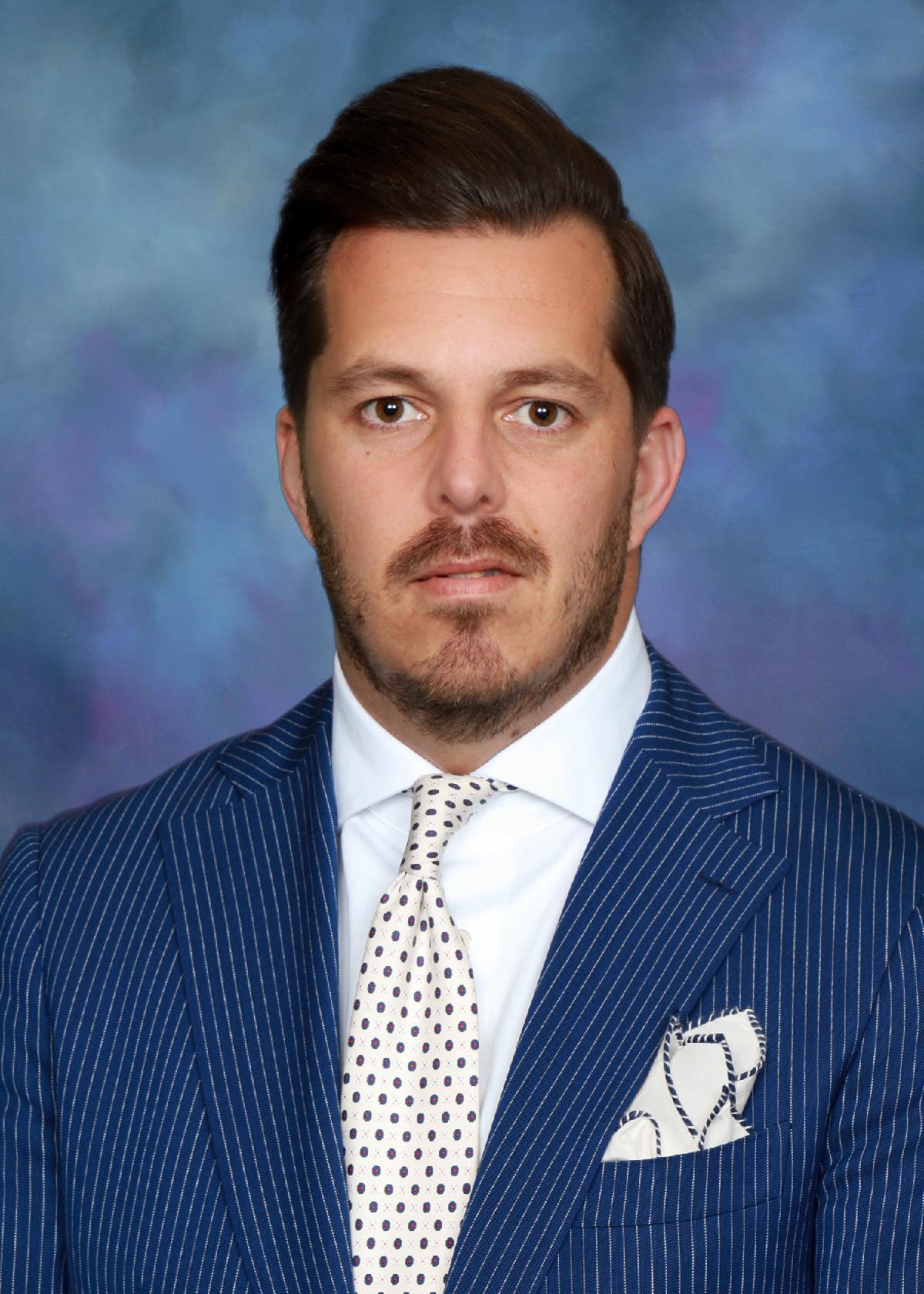
Adrian Nuñez Joins Greenberg Traurig
|
|
|
|
Adrian Nuñez has joined Greenberg Traurig as of counsel in its Miami litigation practice group. Adrian joins a seasoned litigation team and will focus on international disputes resolution along with business and contractual disputes litigation. Adrian has over 12 years of litigation experience and regularly counsels foreign and domestic clients in a broad range of commercial matters. Previously, he had spent 4 ½ years at Jones Day’s global disputes practice in Miami. Adrian is member of the International Law Section of the Florida Bar and is Chair of the Richard DeWitt Memorial Vis Pre-Moot Committee. For additional information regarding Adrian, please follow this link.
|
|
Covid-19 Vaccine and The Patent Dilemma
By Lavinia Meliti*
The creation of the Covid-19 vaccine has been one of the key challenges in the battle against the pandemic. The urgency in responding to this global health crisis has called for extraordinary efforts worldwide to tackle the pandemic as quickly and possible.
In response to the pressing need for more global supply and given the huge surges in number of cases and deaths, the World Trade Organization has worked hard to ensure that the protection of intellectual property (e.g., patents) rights did not create barriers to the access of affordable medical products, including vaccines.
Nonetheless, the outbreak has led to a swift increase in global demand, and the proposal to suspend intellectual property rights on Covid-19 vaccines has been welcomed widely, but not without criticisms.[1]
Critics of the waiver proposal firmly believe that in the vaccines’ development, patents play a key role as means to enhance innovation.[2] Following this line of thought, patent rights are justifiable because without such patents new medicines would not be created, as there would be a lack of incentive to invest in their creation. Thus, while considering the patentability of the Covid-19 vaccine, it is crucial to determine whether the existence of such patent protection will incentivize its research and development or, rather, negatively impact the ability of developing states to procure the resources required for their population.
Many have expressed concerns about patenting the Covid-19 vaccine as patents may grant a temporary monopoly to the patent holder, thereby preventing generic market entry. In other words, that “[t]he immediate impact of intellectual property protection is to benefit financially those who have knowledge and inventive power, and to increase the costs of access to those without.”[3] The other side, however, believes that creating the optimal conditions for innovation in vaccines is one of the most important roles the law may undertake in this battle.
Patents provide a right in knowledge generated by way of an invention.[4] What a patent substantially does is to prevent knowledge from becoming a public good, since there is no control over its dissemination.[5] In other words, the patentee has the right to exclude others from utilizing the knowledge, for the life of the patent.[6]
In the pharmaceutical field, however, excluding the public from such knowledge may be controversial. As Kevin Outterson has noted on this point: “[t]he goal of IP laws should be to maximize nonrival access to pharmaceutical knowledge . . . [and] [s]ince pharmaceutical knowledge is non-rival, it should be disseminated in the widest possible fashion at the lowest possible cost for the greatest possible benefit to global public health.”[7]
The whole point of patenting an idea is protection against imitators. Some may claim that if imitators deprive the inventor of all his advantages by selling at a lower price, potential investors would not fund the development of innovator products, and it would not be possible to recoup the initial investment.[8] Thus, this would lead to stagnation in research and development, which would ultimately halt the progress of modern medicine.[9]
There is a very little risk, however, that imitators may “copy” the vaccine and sell it at a lower price in a world where price barriers and technological knowhow needed to utilize the knowledge are inaccessible. Even if a patent for the vaccine did not exist, it would be very difficult for imitators to produce it in absence of resources.[10] Thus, liberalizing patents does not guarantee that good quality vaccines get into the arms of those who need them.[11]
There is a huge need of global solidarity, before vaccine nationalism[12]; global sharing of technology, before competition. Hopefully, this will stop the pandemic in its tracks, and it will reverse the trend of its consequential global distress.
[1] Council for Trade-Related Aspects of Intellectual Prop. Rights, WTO Doc. IP/C/W/669 (Oct. 2, 2020).
[2] Qiwei C. Xue & Lisa L. Ouellette, Innovation Policy and The Market for Vaccines, J. Law & the Biosciences, Vol. 7, Issue 1 (Jan-Jun 2020).
[3] Comm’n on Intellectual Property Rights, Integrating Intellectual Property Rights and Development Policy 7 (2002).
[4] Mark Eccleston-Turner, The Economic Theory of Patent Protection and Pandemic Influenza Vaccines: Do Patents Really Incentivize Innovation in The Field?, Am. Journal of Law & Medicine, 572, 576 (2016).
[7] Kevin Outterson, Pharmaceutical Arbitrage: Balancing Access and Innovation in International Prescription Drug Markets, 5 Yale J. Health Pol’y L. & Ethics 193, 217 (2005).
[8] Dominique Guellec & Bruno Van Pottelsberghe, The Economics of the European Patent System: IP Policy for Innovation and Competition, J. of Intell. Cap., 49, 50 (Apr. 2008).
[9] See supra note 4 at 578.
[10] See Simon D. Roger & Ashraf Mikhail, Biosimilars: Opportunity or Cause for Concern?, 10 J. Pharmacology & Pharmaceutical Sci. 405, 406 (2007).
[11] Gareth Iacobucci, Covid-19: How Will a Waiver on Vaccine Patents Affect Global Supply?, The Bmj (May 10, 2021), https://www.bmj.com/content/373/bmj.n1182.
[12] Protecting Lower-Income Countries with Covid-19 Vaccines Require Global Solidarity, UN Chronicle, United Nations, https://www.un.org/en/un-chronicle/protecting%20lower-income%20countries%20with%20covid-19%20vaccines%20requires%20global%20solidarity.
|
|
|
|
*Lavinia Meliti is General Counsel and Corporate Development Officer at IPwe, Inc., a tech start-up disrupting the field of Intellectual Property through the escalating integration of AI and Blockchain technology. She oversees all legal matters including IP, M&A, and Compliance, while helping in streamlining business development and strategic partnerships.
Fluent in English, Italian, and Spanish, Lavinia holds a double Juris Doctor degree from Nova Southeastern University, and Roma Tre University School of Law, in Rome, Italy.
|
|
Call for Articles: Legal Globalization
The editors of the International Law Quarterly are soliciting articles for the Fall 2021 edition, which will focus on Legal Globalization. Possible topics include (but are not limited to):
• global anticorruption efforts,
• international judgment recognition,
• environmental issues, such as global trading in carbon credits,
• international security issues,
• treaties and public international law,
• treatment of refugees,
• and more!
PLEASE NOTE, timely articles not specifically dealing with Legal Globalization will be considered for inclusion in this edition.
Please submit a short Statement of Interest in writing an article on a specific topic to the ILQ Editors at EditorsILQ@gmail.com by Wednesday, July 21, 2021.
The Fall edition of the ILQ will be distributed at and in connection with the annual ILS Retreat. Final drafts will ve due from the authors by Friday, August 20, 2021.
If you have any questions, please fell free to reach out to EditorsILQ@gmail.com or to one of the editors directly: Ana Barton, Neha Dagley, Jeff Hagen, or Laura Reich.
|
|
International Law Deskbook 2020
The International Law Section is proud to announce that its International Law Deskbook 2020 is now ready for shipping! Get yours today!
To purchase the International Deskbook 2020, please click HERE to log into your account on the Florida Bar's website. Once logged in, please click HERE to search for the International Deskbook 2020 by entering the course number 4039. You will then find the International Deskbook 2020 under "Course Materials."
|
|
Call for New Members - Law School Liaison Committee
The Law School Liaison Committee (LSLC) is seeking to expand its membership to energetic individuals who can help strengthening the relationship between the ILS and law schools from Florida and beyond. We are particularly keen in adding young members (i.e., having graduated from law school within the last two years). Anyone interested in joining the committee should email Professor Manuel Gomez at: magomez@fiu.edu.
|
|
International Law Section - Call for Member News
The Executive Board of the International Law Section calls for all Members to share news about their professional achievements, endeavors, and successes to be published in the Gazette and on the International Law Section website.
To share your professional achievements with the ILS Network, please submit all relevant information to Davide Macelloni, Editor of the ILS Gazette, at dmacelloni@drbdc-law.com.
|
|
Join the International Law Section
If you are reading the Gazette, chances are that you are a practitioner or a student with an interest in International Law, one of the most wide-ranging, exciting and challenging legal specialties. Everyone in our field knows how crucial it is to stay on top of diverse and evolving national legal regimes, and at the same time, the difficulty of keeping meticulously up-to-date on developments around the world.
The International Law Section (ILS) of The Florida Bar is here to help you, the practitioner, navigate both the everyday and big-picture challenges of our field. Our Section is your forum to share knowledge and best practices, and to meet and mingle with peers in professional collaborations that can only enhance your grasp of the specialty and your standing among clients and peers.
Let ILS membership assist you in developing a thriving international practice through peer network development that includes important shared learnings and reciprocal referrals of clients and casework.
If your practice transcends borders, join us in making this the authoritative, go-to forum for Florida and the gateway to the region for anyone practicing International Law. Our Section is open to lawyers from other states and countries, full-time faculty at U.S. law schools, and full-time U.S. law students, all of whom may participate as associate members. For more information regarding membership with the ILS, click HERE.
|
|
Please join The Florida Bar International Law Section on August 4, 2021 for its Webinar, "Immigration Strategies for Investors, Entrepreneurs, and Corporations in the Post-COVID World." The webinar will discuss procedures regarding visa processing issues at Consulates in the business visa categories, inspections issues at the border, and maintaining lawful status upon entry. The panel will feature Jacqueline Villalba, a Board Certified Specialist in Immigration and Nationality Law, Treasurer of the International Law Section, and Partner at Harper Meyer LLP in Miami; Larry S. Rifkin, a Board Certified Specialist in Immigration and Nationality Law, Managing Partner at Rifkin & Fox-Isicoff, P.A., and Past Chair of the International Law Section; and Juan Carlos Freire, Junior Partner at Rifkin & Fox-Isicoff, P.A. CLE Credits are approved for this webinar (General 1.0 hour; Immigration and Nationality Law 1.0 hour; International Law 1.0 hour; and International Litigation and Arbitration 1.0 hour). To register, please click on the image above or follow this link.
|
|
The International Law Quarterly - Spring 2021 |
|
The Spring 2021 Issue of the International Law Quarterly - Shifts in International Law Under the Biden Administration is now available. Click on the image above to download! For all previous issues of the International Law Quarterly, please follow this link.
|
|
ILS Thanks its Sponsors
In light of what we accomplished this past year, we hope you will continue to support the Section as a sponsor. In 2019-2020, various firms, companies and suppliers sponsored the Section.
We look forward to another year of innovative programs where we can advance international law and further promote our sponsors. To learn more, read the Section's sponsorship package. You can also contact our Treasurer, Jacqueline Villalba at jvillalba@harpermeyer.com, or Vice Treasurer, Richard Montes De Oca at rmontes@mdopartners.com for more details.
|
|
The ILS Gazette
Editor: Davide Macelloni
Chair: James M. Meyer
Immediate Past Chair: Robert J. Becerra
Chair-Elect: Jacqueline Villalba
Secretary: Richard Montes De Oca
Treasurer: Ana Barton
Vice-Treasurer: Cristina Vicens Beard
|
|
© 2021. All Rights Reserved. |
|
|
|
|
|
|