|
“Play is often talked about as if it were a relief from serious learning. But for children, play IS serious learning. Play is really the work of childhood.” ~ Fred Rogers
Welcome to the nature & play newsletter, which offers actionable ideas, resources, and research that support child-led play and nature connection for educators and families in ELRCs 8, 9, and 10.
| | |
The Field of Playwork
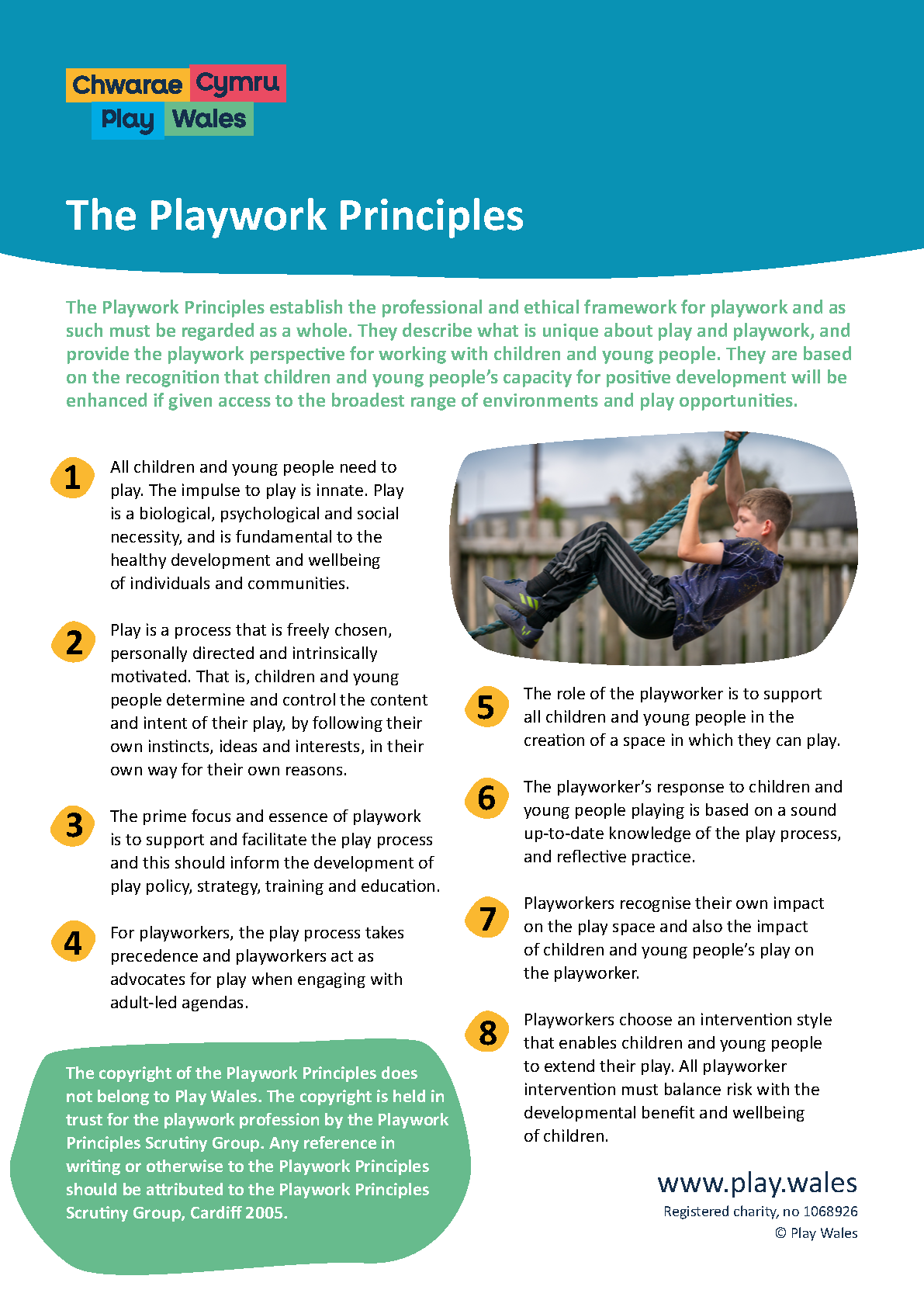
Playwork is a professional approach that originated in the United Kingdom, grounded in the belief that play is a fundamental right of children. It is strongly influenced by the Playwork Principles.
Playwork is defined as "a practice that supports and facilitates children’s self-directed play. Playworkers create and maintain spaces where children can play freely and intervene only when necessary, based on careful observation and reflection."
Core elements include:
- Commitment to freely chosen, self-directed play
- Creation of rich play environments (often including loose parts)
- Reflective practice and minimal adult interference
- Recognition of play as intrinsically motivated and process-driven
- Respect for children’s control over their play experiences
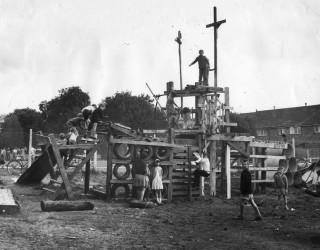
Playwork grew out of UK adventure playground movements after World War II and continues to influence out-of-school and community-based play provision. But what does it look like in Early Childhood Education?
| | |
How Playwork Intersects with Early Childhood Education
While playwork developed outside formal schooling, its philosophy deeply aligns with early childhood education.
Environment as the “Third Teacher”
Playwork emphasizes designing environments that invite exploration rather than directing outcomes. In early childhood settings, this means:
- Loose parts indoors and outdoors
- Open-ended materials
- Flexible spaces that evolve with children’s interests
The Adult’s Role: Observant, Responsive, Reflective
In playwork, adults:
- Observe before intervening
- Support without taking over ("stand back and tune in")
- Reflect on when and why they step in
- Allow ample amounts of time outdoors and in child-directed play
In early childhood settings, this translates to:
- Scaffolding rather than directing
- Allowing productive risk-taking
- Supporting social negotiation
Risk and Challenge
Playwork embraces managed risk as essential for development. In ECE settings:
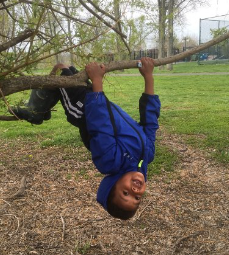
- Climbing, tool use, rough-and-tumble play, and exploration are supported with thoughtful supervision.
- Risk-benefit thinking replaces purely hazard-avoidance models. Benefit-Risk Assessments are created for each feature or activity that poses risks.
Process Over Product
Playwork values the experience of play rather than measurable outcomes. In early childhood:
- Documentation highlights learning journeys, not just finished work.
- Play is not “used” solely to teach a skill — it is valued in its own right.
View an example of playwork in school policy here. Consider adding a play position statement to your family handbook and/or adopting some of these practices.
| | |
View The Land Documentary trailer here.
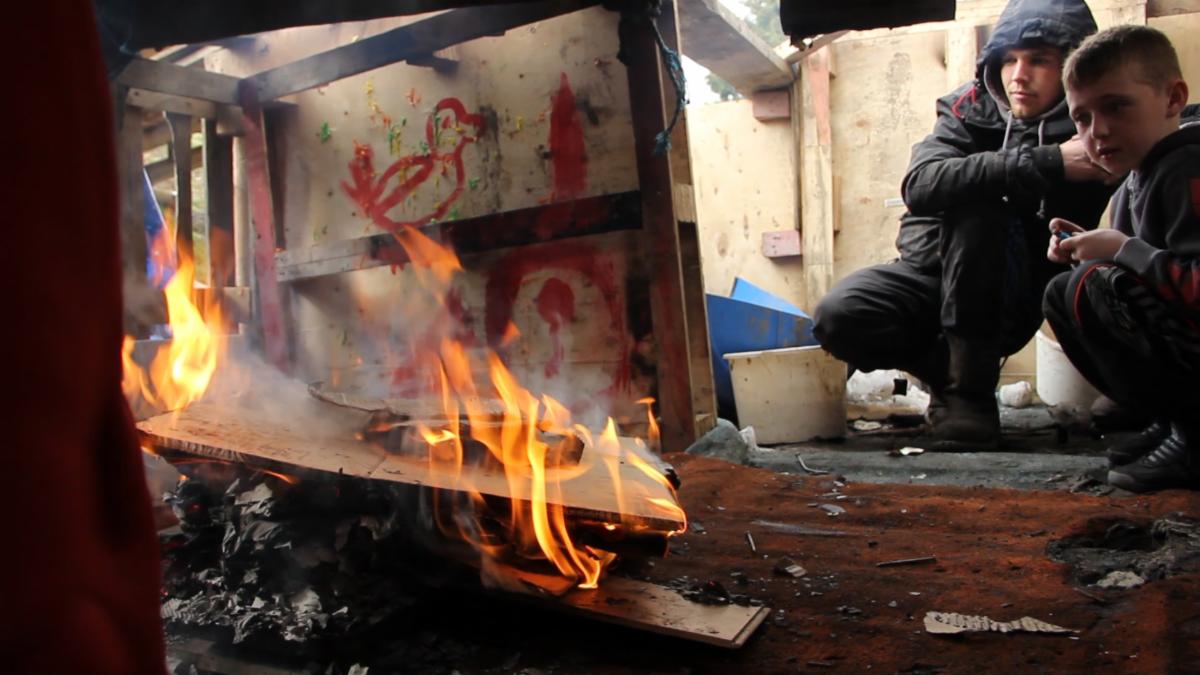
The Land is a short documentary about a Welsh adventure playground of the same name. Since its premiere at the Full Frame Documentary Film Festival, The Land has been used widely by educators, play advocates, designers and parents as a tool to launch robust conversations about play, risk, freedom and children's culture.
| | |
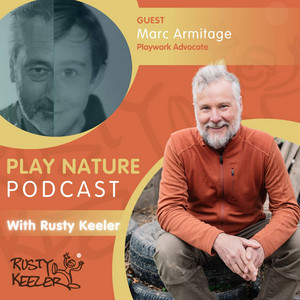
Ep 26 | How a Playworker Thinks About Play with Marc Armitage | Play is everywhere. It slips through sidewalks and across continents. In this episode of Play Nature Podcast, host Rusty Keeler welcomes playworker, play advocate, and "friend of play" Marc Armitage. Marc is joining from Australia with stories that stretch from Yorkshire to the far corners of playgrounds and city streets. | | | |
Plant a vine conical in your outdoor play space this spring
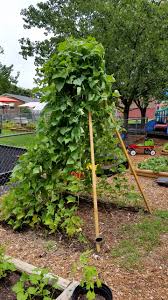
As the weather warms and the ground thaws, you may be thinking about ways to enhance your outdoor play space. March is the perfect time to plant a pea plant vine conical, which gives children a food source to tend and a space for play or privacy.
The Natural Learning Initiative has resources to help you design and create your vine conical here:
Conicals
Vine Conical Installation
| |
Need a home-made play-dough recipe? Look no further! | |
Playdough ingredients:
2 cups all-purpose flour
3/4 cup salt
4 teaspoons cream of tartar
2 cups lukewarm water
2 Tablespoons of vegetable oil (coconut oil works too)
Food coloring, optional
Quart sized bags
Stir together the flour, salt and cream of tartar in a large pot. Next add the water and oil. If you’re only making one color, add in the color now as well. Cook over medium heat, stirring constantly. Continue stirring until the dough has thickened and begins to form into a ball. Remove from heat and then place inside a gallon sized bag or onto wax paper. Allow to cool slightly and then knead until smooth. If you’re adding colors after, divide the dough into balls (for how many colors you want) and then add the dough into the quart-sized bags. Start with about 5 drops of color and add more to brighten it. Knead the dough while inside the bag so it doesn’t stain your hands. Once it’s all mixed together, you’re ready to PLAY.
Thank you to our STARS Outreach Coach, Katelyn, for this recipe!
| | | Natural Start Alliance's Recommendations for Licensing Outdoor Nature-Based (ONB) Early Learning and Child Care Programs (Feedback due March 20, 2026) | In October 2025, the Natural Start Alliance released Recommendations for Licensing Outdoor, Nature-Based Early Learning and Child Care Programs in draft form. Recommendations are now being sought from professionals with expertise in early learning policy, program delivery, and related fields, along with parents and caregivers, or anyone who prioritizes children's access to outdoor, nature-based early learning. Deadline to submit: March 20. | | | | Upcoming Professional Development | |
Winter 2026 Virtual Outdoor Learning Workshops - Outdoor Learning School & Store | | | |
March 26, 2 PM | Watch. Wait. Wonder: The Art of Observation by Heather White, Ed.S., M.Ed., NCSP | Observation is at the heart of effective early childhood practice, yet it is also an art—one that calls you to slow down, notice, and truly see the child before you. In this session, you’ll be invited to step into the role of a keen observer, sharpening your awareness and deepening your understanding of what unfolds in your learning environment each day. | | | March 26, 8 PM | Let's Grow Together! Gardening with Young Children | |
Not everyone needs to have a green thumb to learn how to grow plants with young children. In this 1.5-hour webinar, participants will learn about the benefits of gardening with young children, gardening basics (including plant selection, plant needs, and materials needed), gardening design (types of early childhood education gardens and design considerations), and opportunities for gardening with children (including lesson plans and resources). Break out your tools, and let’s get messy!
*This webinar is listed in Mountain Time.
| | | April 7, 7 PM | Dirty Dishes - The Benefits of Learning with Mud Kitchens | Learn how to use your mud kitchen as a tool to support your student's development. Mud kitchens are easy ways to add sensory input into your curriculum to support collaboration, motor skills, literacy, math, and science. It is an inclusive activity that will help with the foundational skills needed for printing and storytelling. Discover the tools needed and expand learning into your class curriculum year-round. | | | April 8, 2 PM |The Heart and the Mind 101: From Neurons to Nerves to Regulation by Richard Cohen, M.A. | Every emotion, reaction, and behavior tells a story—and it begins deep within the brain and body. In this insightful and grounding session, we’ll explore the fascinating connection between the brain, the nervous system, and emotional regulation in early childhood. | | | |
Asynchronous: Creating a Natural Habitat for Learning | Teacher Tom | In this brand new 6-week course, you will learn how to transform your preschool (or your home) environment into a true "co-teacher" and ally, and stop feeling trapped and frustrated by its limitations. | | | | Upcoming In-person Conscious Discipline Trainings | | |
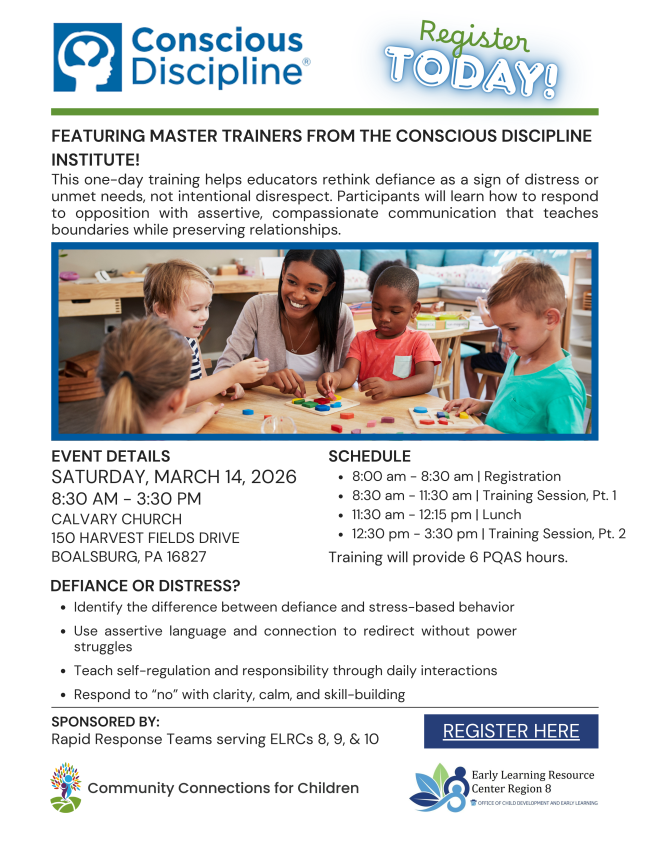
Defiance or Distress?
Saturday, March 14, 8:30-3:30
Calvary Church, Boalsburg, PA
| | |
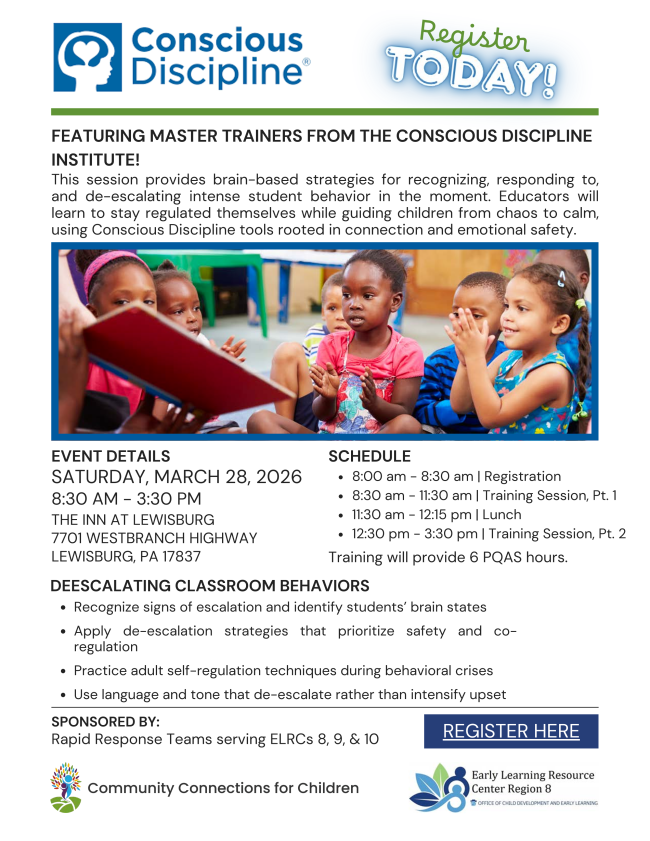
Deescalating Classroom Behaviors
Saturday, March 28, 8:30-3:30
The Inn at Lewisburg, Lewisburg, PA
| |
Episode 37: Free to Be - Defending the Early Years | Kisha welcomes Renata Bowers and discusses the many aspects of her early childhood advocacy work, from authoring children's books that promote positive self-image, autonomy, and freedom to her direct work with children and families. | | | |
#227: Classroom Environments That Support Independence, Regulation, and Learning with Jennifer Fernandez | How does your classroom environment shape children's behaviour, independence, and learning? In this episode of The Everything ECE Podcast, Carla sits down with Jennifer Fernandez, School Specialty's Early Childhood Education Strategist for the U.S. | | | |
Nature-Based Emergent Curriculum (6): Discovering What Children Are Curious About | |
In this episode, we continue our series on nature-based emergent curriculum, guiding you to take small, manageable steps to build your confidence. This week we're focusing on live observations of children's play to knowing their curiosities and interests.
Check out the rest of the episodes in this series here.
| | | |
Episode 43: Potty Train with Confidence | In this episode, Potty Train with Confidence: Supporting Readiness and Routine in the Classroom, we're joined by Eryn Panko, CCC's Health and Wellness Coach, for a practical and encouraging conversation on supporting potty training in early care settings. | | | | Access our Nature-Based Play Resource List on the Keystone Kids Go website. | | Check out the "Inspiring Nature-Based Early Learning" webinar here. This training counts for 1 hour of PQAS PD (and can count toward STARS indicator EC 3.4.6). | | | |
Quest for Quality Podcast
Part 1: The Benefits of Outdoor Learning and How to Start Small
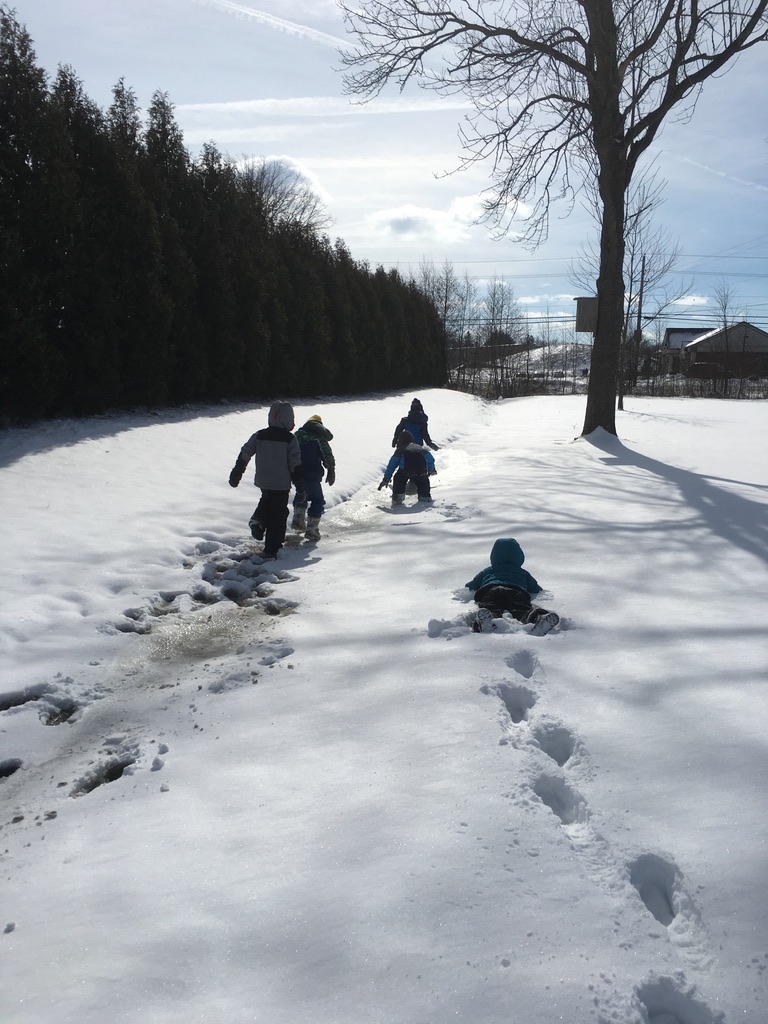
Research shows that children thrive outdoors and have opportunities for learning, development and self-regulation that cannot be achieved indoors. In this podcast, Susan and Elizabeth discuss how nature play supports the health and well-being of children and adults alike, the features of an Outdoor Learning Environment compared to a playground, the barriers that may limit how much time children spend outdoors, and small-step solutions anyone can take to get started.
| | | | |
Quest for Quality Podcast
Part 2: Diving Deeper into Outdoor Learning Practices
In part 2 of this outdoor learning series, Susan and Elizabeth do a deeper dive into what outdoor play really looks like, including some additional areas you can set up, how to easily connect outdoor play to learning standards, and our role as the adult in this type of play-based, child-led exploration.
Click here for part 1 and 2 resources.
| | | Our Favorite E-Newsletters and Blogs | |
Looking for more information or coaching?
STARS Outdoor Learning Coach Elizabeth Marcello and Outdoor Learning & Play Consultant Susan Chlebowski can partner with you to provide center-based or individual classroom coaching and professional development in the topics of:
- Play pedagogy
- Outdoor learning environments
- Classroom management and challenging behavior support
-
Creating innovative solutions to barriers
Complete a "Consultation Request" through your PD Registry Organization Page's Keystone STARS tab to request coaching.
*For early learning providers in ELRCs 8, 9, and 10 only.
| | | Keep in Touch with Community Connections for Children! | | | | |