AUGUST 2026 | VOLUME 3 ISSUE 2 | | |
Gwendolyn Clegg, Director
This one is personal. OFR celebrated its second birthday last month. During the past two years, I have had the most wonderful job of putting together the team that built OFR. Currently, the OFR team consists of fourteen employees. However, on July 1, 2024, the day of OFR’s birth, OFR consisted of a small number of core individuals who put their blood, sweat, and tears into building OFR into what it is today. That tiny staff recruited, interviewed OFR staff candidates and contract attorneys, social workers and mentors, executed contracts, drafted policies and procedures, and trained everyone to be ready to deliver high-quality legal representation on day one. The sheer grit, determination, frustration, and laughter our tiny staff embodied during those early days are rarely seen in employment settings. We became a family. A close-knit family. As we added team members, they too became a part of our tiny but growing family and today we must say goodbye to one of them. OFR would not be what it is today without the amazing Allyson McCormick!
I remember the day Allyson’s resume came across my desk (computer)! I was incredulous that a recent graduate of Princeton University with an international bachelor’s degree would want to join our ranks! The world is her oyster, after all! We immediately scheduled her for an interview, and I am sure I never even allowed her to get a word in edgewise due to my excitement about her interest in our work. I remember her nodding her head profusely as we described our mission. She was all in. We offered her the job, and it felt like she started the next day.
Allyson stepped into her role as the Executive Administrative Assistant of OFR without a job description. We had no idea what this position would end up doing. We are a startup; we are building the plane as we fly it. Allyson is kind, calming, fierce, brilliant and quick on her feet, she quickly learned that I was a terrible delegator of tasks, that I liked to do things on my own without assistance, and that I would never ask for help, but she was not about to allow me to keep operating that way. She positioned herself right outside my office or near me at our teaming table. She would hear of projects, big and small, that needed tackling and she would tell me, sometimes gently and sometimes assertively, I WILL take that off your plate. She taught me how to trust the job would get done even better and more amazing than I envisioned - if I just trusted her to do it.
While Allyson is the face of the OFR office, she is also the heart of OFR. She truly is our operations manager and keeps this office moving forward at a brisk pace, allowing nothing to fall through the cracks. Allyson is also everyone’s confidant -especially mine!
If you have ever read our newsletter, visited our website, followed our social media, attended our trainings, received a Christmas card, received assistance with figuring out if a client was yours or not, or a million other things, just know Allyson was behind each and every one of those endeavors!
It is with great joy that OFR wishes Allyson great, happiness and success in her next adventure. Allyson is leaving OFR to become an attorney! She will be attending law school this fall! Her adventure will take her to a new state and away from Oklahoma; however, we hope to persuade her to return to us someday and join us in this work that she too has fallen in love with. It is OFR’s honor to have worked with Allyson; she has shaped us all immeasurably, and her influence on OFR does not go unacknowledged! Please join us in wishing Allyson well and thanking her for her amazing contributions to OFR!
P.S. I will miss you more than you will ever know! You were the first and you shaped me! All my love as you become an amazing lawyer! I will forever be here for you!
| | |
Shoutout to Cristine Atkinson!
For winning an incredible motion hearing resulting in case closure and return of the child to father!
| |
Shoutout to Constance Bear!
Constance's story was shared in The Imprint as a piece of the Osage Nation's successful effort to reduce foster care entires to zero. She is using her lived experience and expertise not only to serve our clients, but to make impactful change in her tribe and across the entire state of Oklahoma. Read more here!
| | |
Shoutout to Valerie Tovar and Shelby Kramme!
They assisted in a presentation to South Central CASA in Norman. Their contributions to the presentation were invaluable and provided the CASA staff and volunteers with additional explanation of how IDTs can assist parents, children, and families.
| |
Shoutout to Jenny Sanbrano!
Jenny's IDT members said she is wonderful to work with - she is responsive, dedicated, and a wonderful asset to her clients!
| | |
Shoutout to all of OFR, from Allyson:
The past two years with this office have been an incredible experience. I have loved every moment of watching this program grow, change, and make waves across Oklahoma. To each and every member of OFR's staff, and to every attorney, mentor, and social worker, keep up the amazing work! The practice of child welfare law is improving across our state and across the entire country because of your unceasing efforts. Thank you all, and I will miss you more than you know!
| | Have you done something awesome? Do you have a good story? Share it here! | | |
Holly Iker, Region 2 Managing Attorney for Parent Representation
“Active Efforts”: Definition, Examples, and Implementation
ICWA requires the use of “active efforts…to provide remedial services and rehabilitative programs designed to prevent the breakup of the Indian family.” (25 U.S.C. §1912(d)). There is no definition of “active efforts” in the statute. However, the term is defined in the Code of Federal Regulations at 25 CFR §23.2 as:
“Active efforts means affirmative, active, thorough, and timely efforts intended primarily to maintain or reunite an Indian child with his or her family. Where an agency is involved in the child-custody proceeding, active efforts must involve assisting the parent or parents or Indian custodian through the steps of a case plan and with accessing or developing the resources necessary to satisfy the case plan. To the maximum extent possible, active efforts should be provided in a manner consistent with the prevailing social and cultural conditions and way of life of the Indian child's Tribe and should be conducted in partnership with the Indian child and the Indian child's parents, extended family members, Indian custodians, and Tribe.”
Active efforts will not be the same for each ICWA case. Active efforts should be tailored to the facts and circumstances of each case. Active efforts will vary from case to case, and courts have the discretion to consider the facts and circumstances of each case to determine whether the definition of “active efforts” is met.
Active efforts should be affirmative, active, thorough, and timely.
Examples of Active Efforts in the Code of Federal Regulations at 25 CFR §23.2:
(1) Conducting a comprehensive assessment of the circumstances of the Indian child's family, with a focus on safe reunification as the most desirable goal;
(2) Identifying appropriate services and helping the parents to overcome barriers, including actively assisting the parents in obtaining such services;
(3) Identifying, notifying, and inviting representatives of the Indian child's Tribe to participate in providing support and services to the Indian child's family and in family team meetings, permanency planning, and resolution of placement issues;
(4) Conducting or causing to be conducted a diligent search for the Indian child's extended family members, and contacting and consulting with extended family members to provide family structure and support for the Indian child and the Indian child's parents;
(5) Offering and employing all available and culturally appropriate family preservation strategies and facilitating the use of remedial and rehabilitative services provided by the child's Tribe;
(6) Taking steps to keep siblings together whenever possible;
(7) Supporting regular visits with parents or Indian custodians in the most natural setting possible as well as trial home visits of the Indian child during any period of removal, consistent with the need to ensure the health, safety, and welfare of the child;
(8) Identifying community resources including housing, financial, transportation, mental health, substance abuse, and peer support services and actively assisting the Indian child's parents or, when appropriate, the child's family, in utilizing and accessing those resources;
(9) Monitoring progress and participation in services;
(10) Considering alternative ways to address the needs of the Indian child's parents and, where appropriate, the family, if the optimum services do not exist or are not available;
(11) Providing post-reunification services and monitoring.
Because active efforts require assisting the parents or Indian custodian through the steps of the case plan and with accessing or developing resources necessary to satisfy the case plan, the Oklahoma Department of Human Services must take an active role in connecting the parents or Indian custodians with resources. Simply preparing an ISP is not enough. Making a referral is not enough. The Oklahoma Department of Human Services should be actively connecting Indian families with services and not merely making the services available.
The regulation also requires that, to the maximum extent possible, active efforts should be provided in a manner consistent with the prevailing social and cultural conditions of the Indian child’s tribe, and in partnership with the child, parents, extended family, and Tribe. Determining the appropriate active efforts may include discussions with the child, parents, family, and Tribe. However, the responsibility to provide active efforts remains with the Oklahoma Department of Human Services.
When representing parents and children in ICWA cases, all OFR contractors should be asking the Court to determine whether OHS has truly made “active efforts” to provide services and programs to the family. Have the steps taken by OHS been affirmative, active, thorough, and timely?
ICWA and the regulations both provide that the State court MUST conclude that active efforts were provided and were unsuccessful prior to ordering an involuntary foster-care placement or TPR. See 25 U.S.C. §1912(d) and 25 CFR §23.120. Anytime there is a judicial determination that an Indian child must be placed in or remain in foster care, the Court must first be satisfied that the active-efforts requirement has been met. While input from parties, tribes, and OHS is crucial, the determination whether the active efforts requirement has been met can ONLY be made by the Court.
Active efforts are required to prevent the breakup of the Indian child’s family, regardless of whether individual members of the family are themselves Indian. The child’s family is an “Indian family” because the child meets the definition of an “Indian child”. The definition of an “Indian child” is provided in 25 CFR §23.2 and 10 O.S. §40.2(2).
OFR attorney contractors should be actively monitoring compliance with the active efforts requirement and addressing active efforts at every hearing. Neither OFR attorney contractors nor the Courts should rely on previous determinations that active efforts were being made. Circumstances in cases can change quickly and can change significantly between court hearings. OFR attorney contractors should be routinely asking their clients, OHS, tribes, and service providers specifically if active efforts are being made by OHS.
Active efforts must also be documented and made a part of the court record. Pursuant to 25 CFR §23.120(b), “active efforts must be documented in detail in the record.” The active-efforts requirement is a key protection provided by ICWA. It is crucial that compliance with the requirement is documented in the court record. Judicial determinations must be included in court orders. OHS must provide sufficient documentation to the court to use in reaching its conclusions regarding active efforts determinations.
While there are no specific guidelines for what must be included in the active efforts documentation, the following is recommended as relevant information regarding active efforts:
- The issues the family is facing that OHS is targeting through active efforts (these should be the same issues that are threatening the breakup of the Indian family or preventing reunification);
- A list of active efforts OHS determines would best address the issues and the reasoning for choosing those specific active efforts;
- Dates, people contacted, and other details evidencing how OHS provided active efforts;
- Results of the active efforts provided and, where the results were less than satisfactory, whether OHS adjusted the active efforts to better address the issues.
| | |
Priscilla Minor-Thoms, Region 5 Director of Social Work
The First Client We Must Understand Is Ourselves
"Our clients are often judged by their worst moments. As advocates, we have the privilege of seeing beyond those moments to the person's potential. That begins with understanding our own responses, assumptions, and communication styles. When we lead with self-awareness, humility, and compassion, we create space for families to do the same. Sometimes the most meaningful change begins not with what we say, but with how we show up." Priscilla Minor-Thoms
How Temperament Shapes Advocacy
Every day, we meet parents and youth during some of the most difficult moments of their lives. They may be fearful, angry, grieving, overwhelmed, or uncertain about what comes next. As professionals, we often focus on understanding our clients—but one of the most powerful tools we have is understanding ourselves.
Temperament is our natural way of responding to people, stress, conflict, and change. Some of us are quick problem-solvers. Others are natural encouragers, planners, or peacemakers. None of these temperaments are "right" or "wrong," but each one can influence how we engage families.
A person who naturally likes to solve problems may unintentionally move too quickly, offering solutions before a parent feels heard. Someone with a nurturing temperament may take on too much responsibility, working harder than the client instead of empowering them to take ownership of their goals. Others may avoid difficult conversations in an effort to preserve peace, even when honest discussions about safety are necessary.
Families involved in the child welfare system are often responding from a place of trauma. Their reactions may not reflect who they are at their best but rather what they are experiencing in the moment. When we understand our own temperament, we are better able to pause, listen, and respond thoughtfully rather than react emotionally.
As advocates, our role is not to "fix" families. It is to walk alongside them, helping them recognize their strengths, overcome barriers, and build the skills needed for lasting success. Every interaction is an opportunity to model calm communication, healthy boundaries, problem-solving, and hope.
The next time you prepare for court, a home visit, or a team meeting, consider asking yourself:
- Am I listening more than I am talking?
- Am I responding to the client's needs or to my own discomfort?
- How might my natural communication style affect this conversation?
- Am I empowering this family or unintentionally taking over?
Self-awareness is not just personal growth, it is a professional skill. The more we understand our own temperament, the more effective we become as attorneys, social workers, parent mentors, youth mentors, and advocates for children and families.
| | |
In the Matter of J.R.V., J.Y.V., & J.S.K.
Mother appeals a jury verdict terminating her parental rights, arguing the State failed to prove by clear and convincing evidence that she failed to correct conditions, that a substantial erosion of the parent/child relationship occurred, and that termination served the children's best interests. Mother's central argument was that DHS failed to make reasonable efforts, particularly by suspending her supervised visitation. COCA rejected this, holding DHS met the "reasonable efforts" standard under In re J.S., distinguishing it from ICWA's heightened "active efforts" standard, and that the suspension was well supported by evidence of the children's expressed fear and reported mental health. COCA also held the jury heard sufficient evidence, including testimony from two of the children, to support both the failure-to-correct finding and the best interests determination. COCA affirms. Read full opinion
| | |
In the Matter of A.B., S.B.Jr., A.R., & K.C.
Father appeals an order adjudicating two of the four named children deprived as to him, arguing the State failed to prove by a preponderance of the evidence that the children were deprived due to domestic violence, threat of harm, and lack of proper parental care and guardianship, and that adjudication served their best interests. Father's position rested largely on his and Mother's trial testimony denying domestic violence and describing the children as feeling safe in the home, and he asked COCA to reweigh that testimony against the State's evidence. COCA held the district court, not COCA, is entitled to assess witness credibility, and noted the trial court had expressly found Parents' denials incredible in light of substantial contrary evidence, including police testimony, a prior substantiated referral, and Mother's own admissions of abuse. COCA also held Father raised no distinct challenge to the best interests finding. COCA affirms. Read full opinion
| | Interested in being notified as appellate decisions are made? Sign up for OSCN's mailing list using this link. | | |
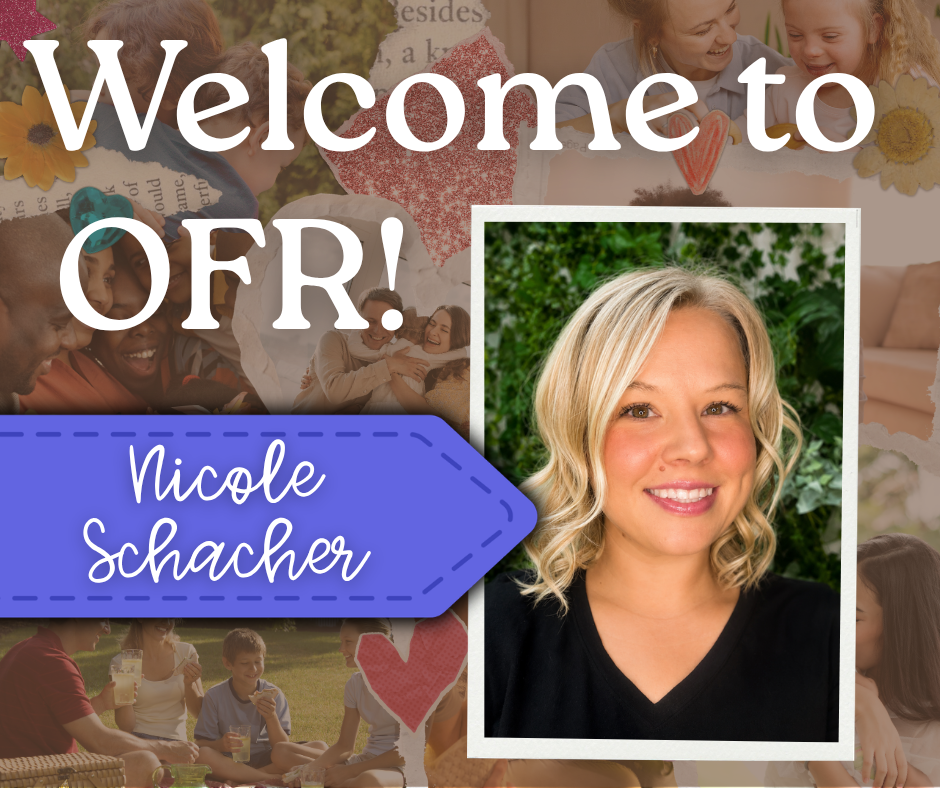
Nicole Schacher, MSW - Region 1 Social Worker
My name is Nicole Schacher. My journey into social work began long before I earned my degrees. As a young mother, I experienced firsthand how the support of a compassionate social worker can change the course of a person’s life. That experience inspired me to dedicate my own life to serving others and helping families find hope, healing, and lasting change.
I earned my Bachelor of Social Work from Northwestern Oklahoma State University and my Master of Social Work from the University of Oklahoma. I am currently pursuing my Licensed Master Social Worker (LMSW) credential as I continue my journey toward becoming a Licensed Clinical Social Worker (LCSW).
| | |
For the past 12 years, I have worked in child welfare, serving children, families, and diverse populations throughout Oklahoma. My experience has strengthened my belief that meaningful change is possible when people are met with compassion, accountability, and the right support. I have also had the privilege of serving as a field practicum instructor for both the University of Oklahoma and Northwestern Oklahoma State University, mentoring future social workers as they completed their BSW and MSW field placements.
I have always believed in the power of hope. I believe people are capable of change, that prevention is just as important as intervention, and that every individual deserves to be treated with dignity and respect. My passion is helping others recognize their strengths, overcome challenges, and create brighter futures for themselves and their families.
I am excited to begin this new chapter of my career, focusing solely on my role as a Master of Social Work professional with the Oklahoma Office of Family Representation. Working as part of a multidisciplinary legal team will allow me to collaborate with attorneys and other professionals to advocate for and support families involved with child welfare. This opportunity allows me to continue my passion for strengthening families through advocacy. I look forward to helping families navigate challenges while recognizing their strengths and building hope for lasting change.
| | |
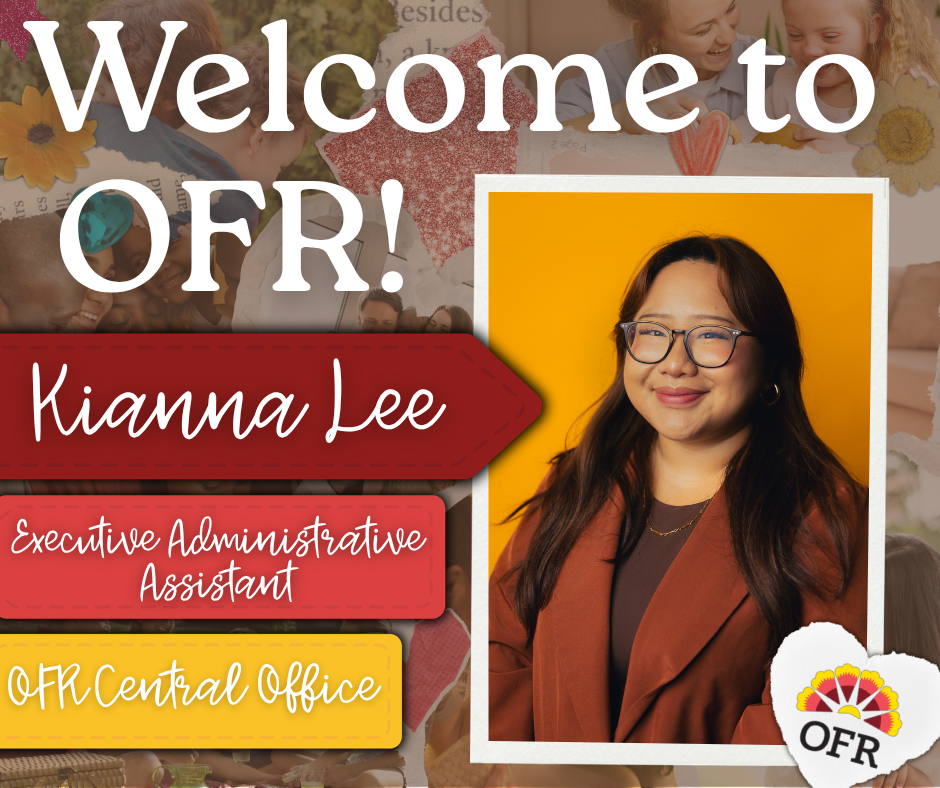
Kianna Lee - Executive Administrative Assistant
Hi OFR team, I am so excited to be your new assistant! At 15, I began volunteering with nonprofits and grew curious about advocacy work. My passion for helping others led me to organizing for national nonprofits like GSA Network and Trans Law Center. This momentum for giving people a voice grew into a career and I have never looked back since.
I'm a social worker at heart with the dream of pursuing law school. In my spare time, I love reading thriller novels and snuggling with my cats.
| | |
The Osage Nation Zeroed Out Entries Into Foster Care for Six Months: Here’s How
Six years ago, the Osage Nation’s Social Services Agency began shifting its approach to child welfare. Leaders asked themselves a seemingly simple question: “How can we gain trust in our community?”
The answer quickly became clear. When maltreatment was reported, they needed to help families, not just take their kids away. At community events in the small town of Pawhuska — the tribe’s reservation capital, one hour north of Tulsa, Oklahoma — they distributed free food, diapers, medication lock boxes and fentanyl test kits.
Hoping to counter fearful perceptions of punitive child welfare workers, Osage Nation’s social services tried to project a different, more supportive image. The tribe embraced what staff called a “whatever-it-takes” approach to improve on their goal of preventing foster care entries and reducing trauma.
How a push to protect parental rights is reshaping Texas’ foster care system
Fresh off last year’s voter approval of a parental rights amendment to the state’s constitution, three rulings last month signal how the Texas Department of Family and Protective Services faces more scrutiny when it comes to permanently removing children from harmful and abusive families.
In two cases last month, the Texas Supreme Court pushed back on the agency’s assessment that a parent should lose their rights entirely, clearing the way for the children to be put up for adoption.
In a third June court case, which could change how future abuse and neglect determinations are made, an Austin judge found that DFPS violated the constitutional rights of Temecia and Rodney Jackson after their newborn girl was briefly taken from them in 2023 over a dispute with a pediatrician over managing the child’s jaundice condition.
The judge ruled the agency violated the couple’s due process rights by giving them no way to appeal its decision that it was “unable to determine” whether they abused their child.
“Our goal is to hold people’s toes to the fire to what the Constitution requires. The Constitution requires due process,” said Sophia Howard, a Texas ACLU law fellow who worked on the Jacksons’ successful case.
While there’s no precise way to determine whether families in the crosshairs of a DFPS abuse investigation are winning more than before, Texas courts are giving a clear signal: it’ll take much more than than general concerns about child abuse for the state to permanently remove a child from their home.
| | |
NACC’s 49th National Child Welfare Law Conference will be attended by Gwen Clegg, Timothy Michaels-Johnson, and Terry Allen!
Gwen and Timothy will be presenting on the two topics below:
Recruiting and Training Attorneys to See Children as Clients: Lessons from Expressed Interest Representation of Children in Oklahoma
GWENDOLYN CLEGG, JD – Oklahoma Office of Family Representation
Oklahoma law provides children at the Emergency Custody Hearing an attorney to represent their expressed interests, or if a child cannot express an interest the child’s attorney shall represent the child with substituted judgement and follow the statutory factors for substituting judgement. CASAs or GALs represent a child’s best interest in Oklahoma. The law specifically states that an attorney for the child shall not be the GAL for the child, meaning they may not represent the best interest of the child. The Judge determines what is in the best interest of the child. The Oklahoma Office of Family Representation is approaching our second anniversary. We have learned over the past two years that child representation in Oklahoma has not been following our amazing statutes. Recruiting and training attorneys who understand and want to represent the expressed interests of children and/or who understand how to use substituted judgement representation remains challenging.
Tech-Empowered High-Quality Representation: Innovative Tools That Elevate Parent & Youth Advocacy
VALERIE FROST, M.ED – Sunlight
TIMOTHY MICHAELS-JOHNSON, JD – Oklahoma Office of Family Representation
RYAN O’DONNELL, FORMER FOSTER PARENT – Sunlight
This session is an interactive roundtable showing how emerging, family-centered technologies — like Sunlight, Sunlight Health, and CasaManager — help families and support teams successfully and collaboratively navigate complex systems to achieve their goals — family reunification, securing healthcare benefits, transitioning out of care. Attendees will illuminate common pain points (e.g., locating critical case documents, difficulties contacting clients, identifying agency contacts). The panelists will share use cases of how technology innovations complement zealous advocacy and strengthen day-to-day practice.
NACC Events Calendar!
Online Conference in October:
Wednesday, October 14 through Friday, October 16, 2026
From the comfort of your home or office!
Check out NACC’s Resource Center! Filter by topic area, resource type, and view NACC’s Information Hubs:
NACC Resource Center
Race Equity Hub
Student Hub
| | | | | |