|
Background
Superabsorbent polymers, commonly used in household products such as floral arrangements and diapers are referred to as “water beads” when incorporated in children’s sensory toys. According to data from the National Poison Data System there were 19,660 pediatric exposures to water beads reported between January 1, 2014, and December 31, 2023. In the past five years there has been a 1,820% increase in poison control center’s exposures. While the majority of exposures can be safely managed at home, some cases of gastrointestinal obstruction requiring surgical intervention have been reported, making management decisions difficult in some cases (Gummin et al., 2024). In response to the rising number of cases, the U.S. Consumer Product Safety Commission has issued a formal safety warning regarding water beads.
Mechanism of Injury
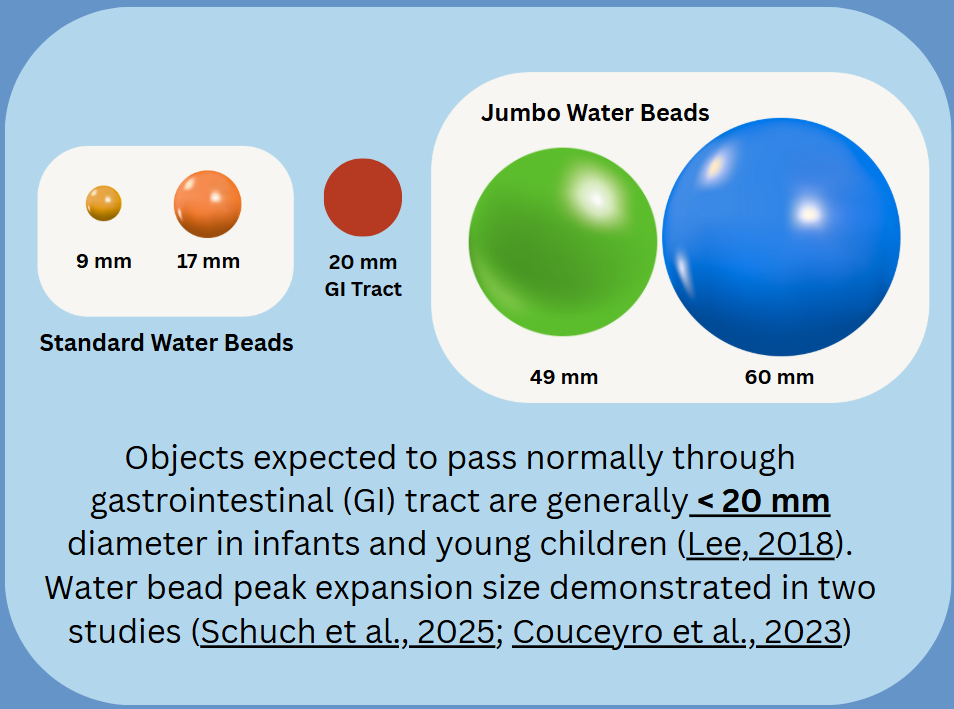
Water beads are composed of hydrophilic polymers, commonly polymerized acrylamide monomer, and are engineered to absorb and retain water and may expand to over 100 times their original size. While acrylamide is generally considered non-toxic in small quantities and is found in various consumer products including dyes, cosmetics, and some foods cooked at high temperatures, its polymerized version poses a significant mechanical hazard (Haugen et al., 2025). Upon exposure to liquid, water beads undergo a physical expansion from an initial diameter of approximately 0.2 mm to as much as 56 mm posing a risk for gastrointestinal obstruction or even tissue perforation (Reeves, 2025).
Clinical Presentation and Management
Most reported cases of water bead ingestion remain asymptomatic with the beads passing in the stool. However, ingestion of large quantities of small beads, or small quantities of larger beads, can result in obstruction. Symptoms may be delayed and nonspecific which could complicate early diagnosis if the history was unknown. Caregivers should be advised to monitor for clinical signs of obstruction such as vomiting, abdominal pain, and changes in bowel movement patterns. While most cases can be managed conservatively, some literature suggests that hyperosmolar agents such as polyethylene glycol-electrolyte solution (e.g., GoLYTELY®) may help reduce bead size and facilitate passage. Nonetheless, surgical intervention remains the definitive treatment in cases of confirmed bowel obstruction (Greene, 2024).
|