Naming our Gifts - the Work of Stewardship | |
- Year of Living Generously: St. Paul's Stewardship Toolkit
- August lectionary Stewardship preaching and teaching tips
- Late-Pentecost Reflection
- Register for our August 29 Webinar - be ready for fall campaigns!
- Learn about the 2026/2027 Stewardship Package - Plenty Good Room
| | |
Greetings!
Doubt has a surprisingly prominent role in the August lectionary. Again and again, God’s people are asked to act before they possess certainty: to feed a crowd when the food appears insufficient, to step onto stormy water, to insist that mercy reaches beyond familiar boundaries, to confess faith that is real but not yet complete, and to practice love even when we doubt that love can overcome the forces set against it.
Stewardship often lives in that same unsettled space. We wonder whether there will be enough, whether our gifts will matter, whether we are capable of what God is asking, or whether generosity can truly change anything. Scripture does not scold us for asking those questions. Instead, it invites us to bring our doubts along as we take the next faithful step. The disciples offer the loaves they have. Peter leaves the boat. The Canaanite woman refuses to stop asking. Faith is revealed not as perfect confidence, but as trust expressed through action.
These passages also remind us that doubt can expose the boundaries of our imagination. Sometimes we doubt ourselves; sometimes we doubt God’s abundance; and sometimes we doubt whether grace can extend to people beyond the circles we have drawn. Yet each story pushes those boundaries outward. What seems inadequate becomes enough. The one who begins to sink is caught. The outsider becomes a teacher of faith. The disciple who understands only in part is still entrusted with a calling.
Perhaps, then, doubt is not stewardship’s enemy. Left unattended, it can become fear, scarcity, or paralysis. But brought honestly into the presence of God, doubt can become the doorway to deeper trust. The August lectionary invites us to offer what we have, step forward without guarantees, widen the reach of mercy, and practice courageous love—trusting that God is already at work in gifts and possibilities we cannot yet fully see.
All good gifts,
J. Davey Gerhard, Executive Director
| | | |
Reflection for the Season after Pentecost
After the fire of Pentecost, the Church enters its longest season – marked by green, the color of growth. This ordinary time is anything but ordinary: it is the season when discipleship takes root and deepens, when the daily work of following Christ becomes our steady rhythm.
The spiritual Plenty Good Room echoes the call of this season. God’s kingdom is not only revealed in mountaintop moments or holy days, but in the steady unfolding of daily life – plenty good room for us to grow in love, service, and generosity. Each ordinary day becomes a chance to choose our seat at God’s table and to make space for others.
Ordinary Time reminds us that stewardship is not seasonal; it is a way of life. Our choices about how to use our time, our resources, and our energy are all acts of discipleship. We are called to see that God’s abundance is present in the regular, even mundane, moments – when we teach a child, share a meal, volunteer in our community, or support the ongoing mission of the church.
Scarcity whispers that the everyday does not matter, that only the grand gestures or the extraordinary count. But God reveals that holiness is woven into the fabric of daily living. The parables of Jesus are full of seeds, bread, lamps, and coins, ordinary things that reveal extraordinary truths. In this long season of green growth, we are invited to trust that our daily generosity – whether in prayer, presence, or financial support – nurtures a flourishing Heavenly Kingdom.
The long green season is where faith matures. Just as plants deepen their roots and stretch toward the sun, so too do we grow when we practice steady generosity, gratitude, and hospitality. By tending the ordinary with extraordinary love, we join the Spirit in making plenty good room for all.
This season after Pentecost, let us continue to sow seeds of generosity, trusting that God will bring the growth. There is plenty good room – for steady discipleship, for flourishing communities, for a harvest of grace.
“Let us not grow weary in doing what is right, for we will reap at harvest time, if we do not give up.” — Galatians 6:9
For Reflection: Planned Gifts (legacy gifts) are a way of planting seeds that mature over a long time. Have you considered making a gift from your estate to support the mission of your congregation?
This reflection is a part of the Seasonal Reflections, which you may download in this year's Annual Stewardship Campaign materials.
| |
Are you planning a campaign in 2027 for Capital, Feasibility, Legacy, or Annual Stewardship? We are opening up capacity for 2027 campaigns now. Let our experience and our theological approach to fundraising guide your congregation in a sustainable, successful campaign! Please give us a call!
TENS Consulting follows four core principles:
Transparency
Equal Accessibility
Need-Responsiveness
Sustainability
These values inform everything from our pricing ranges to our commitment to customize services for congregations with fewer resources. Our goal is to make campaign consulting affordable, accessible, and theologically grounded for Episcopal congregations of all sizes and budgets.
TENS Offers consulting to congregations, to institutions (schools, camps, special ministries), and to dioceses. Our experienced consultant team has completed successful campaigns across the Church.
We invite you to learn more on our website, and, as you imagine your program growth and capital needs for this year, to reach out to us for more information on how we can create a scalable, affordable initiative for your congregation or diocese.
Be sure to ask about Member Discounts
| | |
Year of Living Generously Tip of the Month: Paul's Stewardship Toolkit
In Romans 12:1–8, Paul offers a remarkably complete vision of stewardship. He begins not with money, but with the whole self: our bodies, minds, gifts, relationships, and place within the community. Stewardship is the practice of offering all of these to God, not as isolated individuals, but as members of one body whose gifts are meant to serve one another. As congregations begin preparing for the fall, August is a good time to take inventory of the tools God has already placed among us.
1. Offer the Ordinary
Invite parishioners to consider one ordinary part of daily life they can intentionally offer to God this month: their work, commute, caregiving, cooking, exercise, volunteering, or rest. Paul’s call to present our bodies as a living sacrifice reminds us that worship continues long after Sunday morning. Encourage people to begin the day with a simple prayer: “God, use what I do today for your purposes.”
2. Renew One Habit
Paul urges us not to be conformed to the world, but to be transformed by the renewing of our minds. Ask the congregation to identify one habit that shapes them more than they would like—constant news, hurried schedules, unnecessary spending, resentment, or distraction—and replace it with a practice that creates room for gratitude, prayer, generosity, or attention. Transformation often begins with one small, repeated choice.
3. Name the Gifts Among You
Create an easy opportunity for members to recognize and name one another’s gifts. This might happen through a simple card, a bulletin-board prompt, a small-group conversation, or a few minutes during coffee hour. Encourage people to complete the sentence, “I see God working through you when you…” Gifts become easier to offer when the community helps us recognize that we possess them.
4. Connect Every Gift to Ministry
Paul reminds us that we are one body, and that our gifts are given for the good of the whole. Choose one parish ministry and tell the full story of the gifts that make it possible—not only leadership and financial support, but hospitality, prayer, administration, teaching, encouragement, maintenance, transportation, and care. Help the congregation see that ministry is rarely the work of one gifted person; it is what happens when many gifts are offered together.
| | |
Download the 2026/27 Annual Campaign Materials and prepare for a successful Pledge Campaign!
In God’s house there is always room for more: more ideas, more people, more ways to share, more stories to tell. And in the world that God created, there is more needed: more love, more connection, more peace, more creativity. Plenty Good Room reminds us that there is always room in God’s house; we just need to make ourselves at home and invite others to join us. The ways we steward our relationships, resources, and responses to grow ministry and serve our neighbors are the ways we connect our gratitude to our generosity. There’s Plenty Good Room in God’s House; pull up a chair and sit down. Want to know the inspiration behind this year's theme? Here's the talented Lynda Randle singing the spiritual Plenty Good Room
Our theme for the annual campaign this year focuses on our hospitality and how, if we ask members to be generous, we can always find a way to increase our work in God's kingdom.
Our 2026/27 campaign materials are ready for download now.. As always, we offer our campaign materials in English and Spanish. This year's package includes:
- Seasonal Reflections and Questions - Advent through Christ the King
- Sample letters from clergy, wardens, and committee members
- Sample thank-you letter
- Logos and artwork for the Plenty Good Room / Invitados a la Mesa campaign
- Liturgical resources - Prayers of the People and Offertory blessings
- Pledge cards in Word and .pdf
- Campaign timeline for ideal implementation
| | |
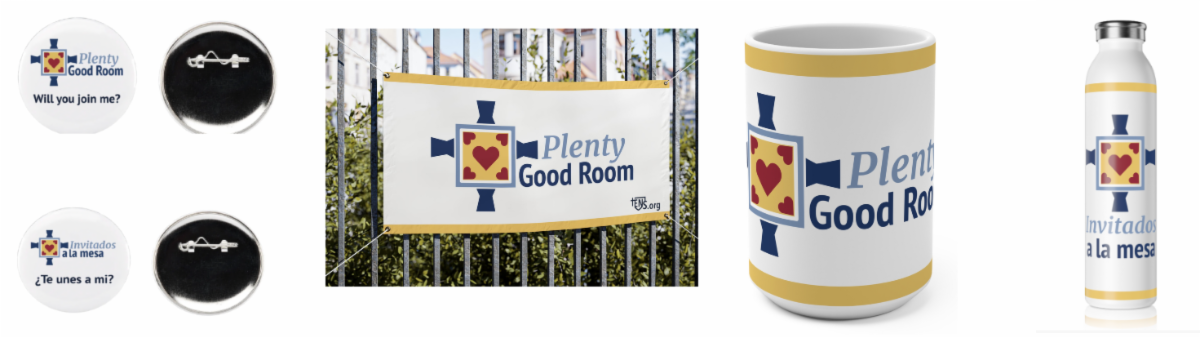
Zhuzh up your campaign with TENS Merchandise
Banners, buttons, and mugs! Looking for a gift for your campaign volunteers? How about inexpensive wearables and useful objects like pens, magnets, and buttons to invite people to fill out their pledge forms and to join them in making a gift to support the church this year? Check out these products to help you get out the word in your congregation.
| | |
Do you follow us on Facebook, Instagram, and YouTube?
TENS Shares inspiration, resources, and reflection materials on our social media every week.
On Tuesdays: A Year of Living Generously Tip so you don't have to search your inbox to find our newsletter every week!
On Thursdays: Reflections on the coming Gospel
On Feast Days: A reflection on stewardship and celebration
Seasons of the Church Year: Every time the color changes in church there is a seasonal reflection you may use for personal or congregational formation. We post these on social media along with including them in the campaign resources download.
| | |
Weekly Reflections on the August Lectionary for Preachers, Teachers, and Readers
Proper 13
Matthew 14: 13-21
Jesus withdraws to a deserted place after hearing of John the Baptist’s death, but the crowds follow him there. Even in grief, he is moved by compassion: he heals, teaches, and refuses to send hungry people away. When the disciples point out the obvious shortage of food, Jesus gives them a startling instruction: “You give them something to eat.” Stewardship begins in that moment—not with abundance, but with responsibility. The disciples are invited to stop describing what is lacking and begin offering what is already in their hands.
Five loaves and two fish are not enough—until they are blessed, broken, and shared. The miracle is not simply that everyone eats, but that the disciples become participants in God’s abundance. Jesus does not create a banquet for the crowd while the disciples watch; he places the food in their hands and sends them out to feed the people. The church is still called to do the same: to receive God’s gifts with gratitude, release them without fear, and trust that what is shared in love can become more than we imagined.
Proper 14
Matthew 14:22-33
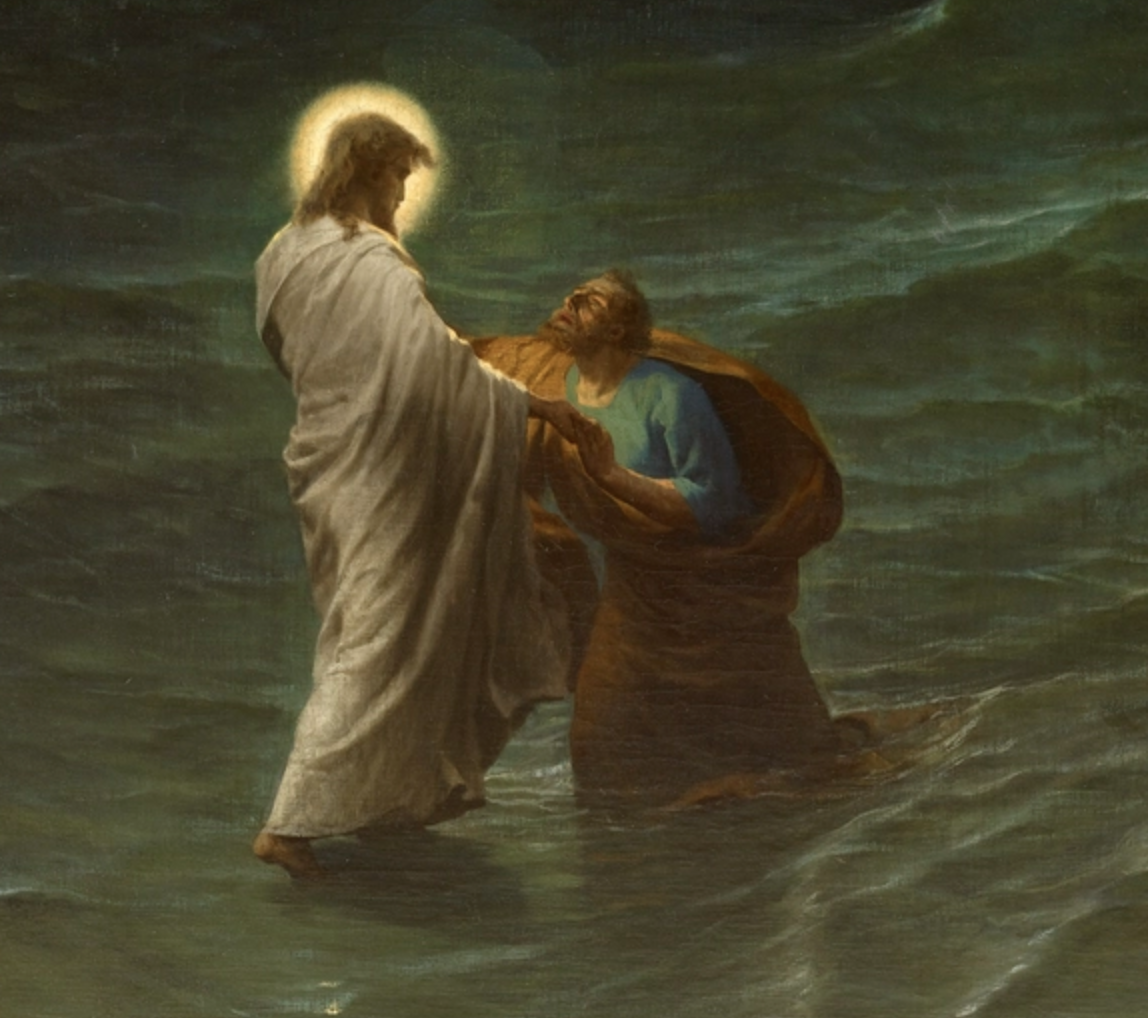
After feeding the crowd, Jesus sends the disciples across the water while he goes away to pray. By morning, the wind is against them, the boat is battered, and Jesus comes toward them across the sea. Peter’s response is wonderfully human: part faith, part courage, and part uncertainty. He steps out of the boat, but when he notices the storm, fear overtakes him. Stewardship often feels like this—not a confident march across calm water, but a trembling step toward God while the wind is still blowing.
Jesus does not shame Peter for sinking; he reaches out and catches him. That may be the deeper lesson for communities facing uncertain futures: faith is not the absence of doubt, but the willingness to move toward Christ and call for help when fear takes hold. We do not need perfect confidence before we offer our gifts, attempt new ministry, or answer a difficult need. We need enough trust to step out—and the humility to receive the hand that steadies us.
Proper 15
Matthew 15: 21-28
The Canaanite woman comes to Jesus carrying both desperation and courage. She asks for healing for her daughter, and at first she is met with silence, dismissal, and a boundary drawn around who belongs within the scope of his mission. Yet she persists. She refuses to let exclusion have the final word, and her sharp reply reveals a faith that sees abundance where others see limits: even the crumbs of God’s mercy are enough to bring healing.
This is stewardship as holy persistence—the faithful use of voice, courage, wit, and love on behalf of someone in need. The woman offers no money and holds no institutional power, but she brings everything she has to the encounter. Her witness challenges the church to ask where we have mistaken our boundaries for God’s boundaries, and whose faith, pain, or wisdom might be calling us into a larger, more generous understanding of God’s mission.
Proper 16
Matthew 16: 13-20
Jesus asks the disciples what others are saying about him, but then turns the question directly toward them: “Who do you say that I am?” Peter answers with courage and conviction, naming Jesus as the Messiah, the Son of the living God. His confession becomes the foundation upon which Jesus promises to build. Stewardship begins with the same deeply personal question. Before we decide what we will give, share, risk, or serve, we must ask whom we believe we are following—and whether that belief has any claim upon the way we live.
Peter’s answer is bold, but his understanding is not yet complete. His faith will continue to grow through misunderstanding, failure, forgiveness, and renewed calling. The church is built not upon people who possess perfect certainty, but upon disciples willing to confess what they know and keep following as they learn. We need not wait until every doubt is settled before offering ourselves to God’s work. Faithful stewardship is the practice of building our lives upon the truth we have received, trusting that Christ will continue to deepen and reshape our answer.
Proper 17
Romans 12:9-21
Paul offers no abstract definition of Christian love. Instead, he gives us a series of concrete practices: hold fast to what is good, show honor, contribute to those in need, extend hospitality, rejoice with those who rejoice, and weep with those who weep. Stewardship is woven through every instruction. It is the faithful offering of our attention, homes, resources, patience, compassion, and power for the sake of our neighbors.
The most difficult instruction may be the refusal to repay evil with evil. Paul calls the church to feed its enemies, bless its persecutors, and overcome evil with good—not through passivity, but through disciplined, courageous love. We may doubt whether such generosity can really change anything. Yet Christian stewardship asks us to trust that God can use what we offer—one meal, one welcome, one act of mercy, one refusal to retaliate—to loosen evil’s hold and make room for reconciliation.
| | |
Our Next Free Webinar: Pastor, Don't Panic: Stewardship Practices for a Changing Landscape Saturday, August 29, 9AM PDT
2026 is noisy, it is anxious, and inside of it we are seeking a path forward, a way through, and a plan for our generosity and gratitude ministries. Find hope, inspiration, support, and new ideas for your fundraising campaign this year focusing on our mission, our generosity, and the ways we are called to share our gifts. Sign up for our free webinar, and join us on August 29!
| | | | |