WORKING
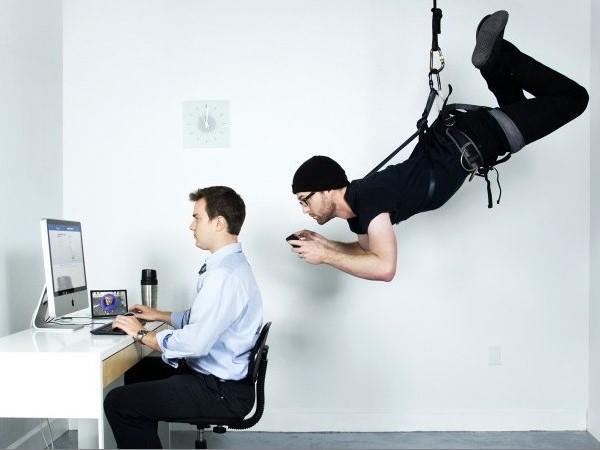
Is your boss spying on you?
The Ontario government is planning legislation requiring employers to disclose how and why they monitor their employees
| |
|
WHEN THE PANDEMIC hit and people started working from home, managers were faced with a new challenge — how should they monitor their employees from afar? Should they even be trying? What kind of privacy did they owe their employees?
New legislation in Ontario is attempting to inject some transparency into that question by requiring employers to tell their workers if they are being monitored electronically — something that increased “dramatically” in this country over the course of the past two years.
If passed, it would make Ontario the first province to require that disclosure, as well as requiring employers with 25 or more workers to have a written electronic monitoring policy, and it would apply to remote workers as well as in-person workers.
It’s one of a series of provincial measures meant to adapt to the future of work. In the fall, the Ford government introduced right-to-disconnect legislation, giving workers the right to unplug completely from work in off-hours, and the banning of non-compete clauses in worker contracts. If passed, it would come into effect at the end of the year — after, it’s worth noting, the provincial election.
The moves to modernize labour regulations is generally seen as a positive one for all parties. Some of the things bosses were doing — including, in some cases, gaining access to workers’ webcams to check up on them — were pretty plainly invasive, and did little to improve trust in remote work.
Earlier this month, the World Health Organization and International Labour Organization released a brief recommending against invasive surveillance practices, which they said could potentially harm productivity and worker morale. “We have the opportunity,” the ILO director said, “to embed new supportive policies, practices and norms to ensure millions of teleworkers have healthy, happy, productive and decent work.”
| |
REAL ESTATE
Friends with homebuying benefits
As house prices continue to cruise into the stratosphere, home co-ownership gains traction
| |
|
FILE THIS ONE under somewhat bleak indicators about the housing market: with prices moving increasingly out of reach, particularly for single and first-time buyers, there has been a sharp increase in people interested in home co-ownership.
More Canadians, say realtors, are exploring co-ownership, and StatsCanada said in a recent release that more than 15 per cent of first-time buyers in B.C. did so in groups of three or more.
But experts say the model has a lot of benefits to it, even as the housing market moves further out of reach. It offers people a way to start building equity, for one thing, and it can mean a chance to get out of siloed apartment living, for another.
Of course, if you’re interested in this idea, there are things to watch out for. You should make sure you know the financial health of your co-buyers, as well as drawing up contingency plans should someone want to move and cash out or bring in a partner or roommate.
And then there’s taxes — since homeownership has a lot of tax benefits, but only one person can claim them, how will that be dealt with? “This money move is far more complex and financially binding than co-signing a lease on an apartment,” writes Farnoosh Torabi. “Partnering with a friend or relative to buy a home may make a purchase more feasible, but it’s best to go in with eyes wide open.”
| |
|
|
|
PRESENTED BY: AHRIA CONSULTING
Know Why self-reflection is important for your career
| Career satisfaction is directly linked to our personal values, and rightly so. An alignment between your career and your core values produces satisfaction, a sense of happiness and fulfillment. | | | |
MANAGING
The sophomore slump
When employees start losing that new-job excitement, it’s probably time to shake things up
| |
|
PERHAPS YOU KNOW the feeling. The first year of a new job is great, bringing new challenges, relationships and opportunities. Six months pass, and things start to feel settled. Your anniversary comes around, and that’s nice, too.
And then, as you settle in for the long-term, the job starts to feel like a stressful grind — a ‘sophomore slump’, if you will.
“Sophomore slumps aren’t limited to education,” write Casey Noenickx and Meredith Turits. “They can occur in any period in which new projects or commitments lose their initial gloss and evolve into routine hard work.”
For managers, it’s an unpleasant reality, especially when it affects promising new employees. But it’s not a fait accompli, and bosses can do a lot to help get employees out of a sophomore slump.
Simple changes, like moving meeting times or settings, can help keep things fresh. “It’s unrealistic to do the same thing over and over again and expect different results,” writes Tom Gimbel. “Change things up when they aren’t working.”
In other cases, it may be helpful to tap into a workers’ ambition to learn and grow. They may be on top of their current job, but not being challenged as much anymore; in those cases, giving employees new training opportunities can reinvigorate them (and it’s a smart investment to make in that worker, too).
And, if nothing else, be patient. Especially now, as a global pandemic plays out, it’s unreasonable to expect workers not to slump a little bit. “Be patient, supportive, and give your employee plenty of breathing space,” writes Kevin Daum. “This is not the time to start micromanaging his or her every move.”
| |
WORKPLACE
Missing the commute? You’re not alone
While we may not miss bumper-to-bumper traffic, some of us long for the home and work boundaries the daily commute created
| |
 | |
OF ALL THE rituals lost to the pandemic, it’s hard to imagine that the daily commute would be one that people would mourn. It’s an activity usually measured in inconveniences. Afterall, the length and ease of a trip to the office is often a determining factor in choosing where to live. It’s hard to imagine that anyone would prize delays, traffic snarls and crowded transit.
And yet, some people do. After all the months spent working from home, these housebound workers miss their daily commute and break between work and home that a commute provided — the “Honey, I’m home!” moment.
More than anything, those pining for the occupational travel routine miss the clear-cut transition the commute provided, which cleanly divided work from home. And transit of any sort offers a rare opportunity to accomplish something while not actually doing much. People told The Wall Street Journal their trips to and from work used to calibrate their day, and many filled the time by listening to podcasts, music or reading. Another survey had 31 per cent of respondents saying they are calling mom less often without their commute.
It's not surprising then to learn that some people have turned to faux commutes ― usually walks or bike rides that separate home and work time ― to regain the satisfying elements of the pre-pandemic routine.
Jessica Eastman, a Vancouver-based naturopathic doctor and a faux commuter herself, even believes a manufactured commute ― and its mind-clearing attributes ― can be the secret to a high-quality sleep.
“Not only is [the faux commute] really vital for helping to regulate mood, energy and focus for the day,” she told The Guardian, “it’s also super vital for optimizing sleep quality and the capacity to fall asleep with ease in the evening.”
| | | | | |