Program Newsletter | 3rd Quarter, 2023


Research Updates

Gaps in DRRM funding, setup may hinder localization in Nepal—HHI study 

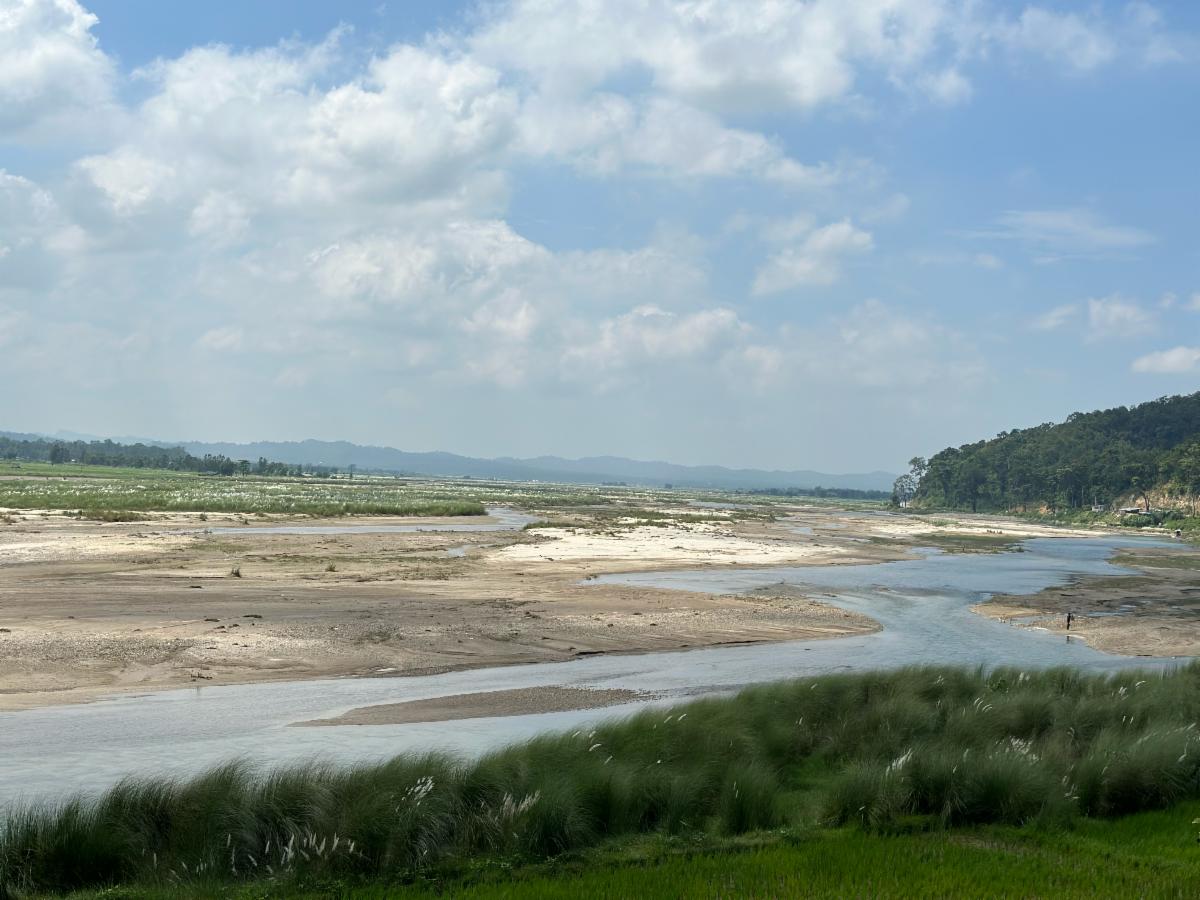
Floodplain area along the banks of the Triyuga River, Udayapur, adjacent to the Madan Bhandari National Highway in Nepal. Photo by Ganesh Dhungana 

To jumpstart its work in Nepal, the Harvard Humanitarian Initiative’s Resilient Communities program conducted a scoping study earlier this year which found that disaster preparedness and response plans and policies at federal, provincial, and local levels are in place; however, gaps in funding and institutional arrangements may hinder the implementation of localization plans and policies. 


The study was informed by consultations with stakeholders, and key informant interviews (KIIs) with different government and nongovernmental agencies working in the disaster risk reduction and management (DRRM) sector in Nepal. The scoping study aimed to understand the strengths and gaps in governance, coordination, knowledge management, and capacity of disaster management in the country.

Click here to learn more about the study findings. 


“Nepal is among the countries most vulnerable to climate change impacts. From glacial lake outburst floods in the north, exacerbated by warming temperatures, to flooding in the south, impacted by increased rainfall. Climate poses a direct threat to infrastructure, agriculture, health, and livelihoods. Local communities will be at the forefront of this and it is important to explore how local actors are thinking about and preparing for climate-related impacts on their communities,” said HHI Resilient Communities program director Dr. Vincenzo Bollettino in a statement.  


The study suggests that research and training institutions can bridge the gap by bringing agencies together to share their knowledge, experiences, and learnings that can help DRRM programming in local communities.

Access the full report
 

Know Your Resilience Score!

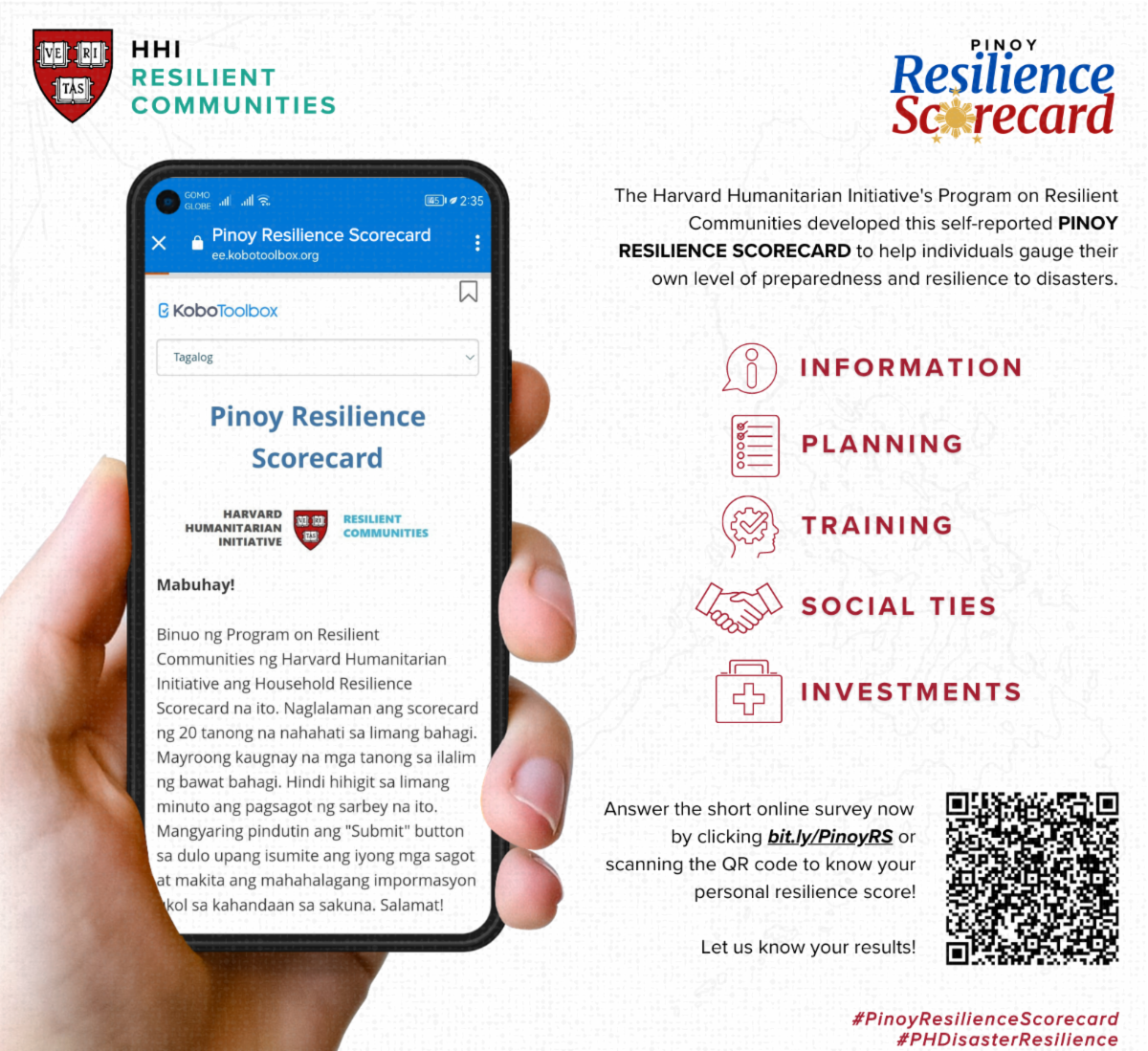
The HHI Resilient Communities program launched the “Pinoy Resilience Scorecard” in time for the observance of the National Disaster Resilience Month in July in the Philippines.  


The online scorecard aims to assess disaster preparedness and resilience of Filipinos at the individual level. Scorecard results will be used to help researchers, NGOs, and government agencies better understand the resilience of Filipinos and to identify which dimensions of resilience need more support in terms of education, material investments, training, and capacity building.  


There is still time! You may still access the online scorecard at bit.ly/PinoyRS


Event

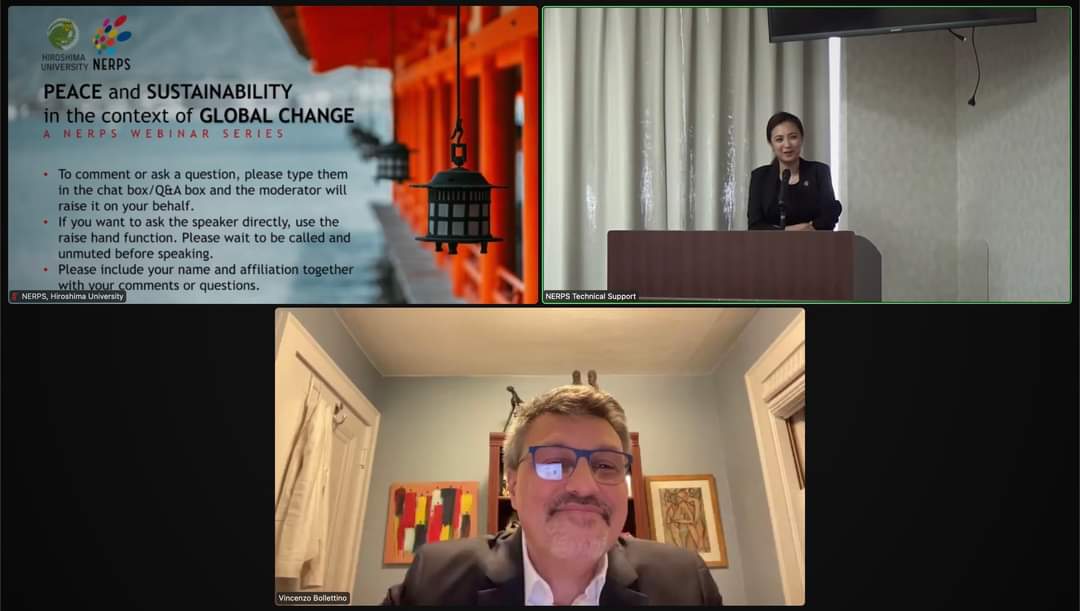
On September 21, 2023, Dr. Vincenzo Bollettino served as the guest speaker at a webinar titled “Understanding Filipino’s Perspective on and Experience with Climate Change and Disasters”. 


In the webinar, Dr. Bollettino discussed Filipinos’ level of disaster preparedness and knowledge of climate change and how they are linked to the necessary actions Filipinos are likely to do at times of disasters. He also discussed some factors contributing to disaster resilience, such as access and use of quality resources and services, effective social support and safety nets, preparedness training, and personal adaptive capacity. 


The webinar was hosted by Hiroshima University’s Network for Education and Research on Peace and Sustainability. 


Interested in inviting HHI Resilient Communities to your events?

Contact Us

Staff Spotlight

Meet Our Project Lead in Nepal: Ganesh Dhungana, MPhil


The HHI Resilient Communities program welcomed Ganesh Dhungana as our Project Lead in Nepal in May 2023. Ganesh is the primary focal point for the program’s country-based research activities and is responsible for building and maintaining the network of academic, government, private, civil society, and other actors responsible for disaster preparedness policies and programming. He looks at all in-country logistics and administration needed to fulfill program objectives and provides contextual knowledge and strategic guidance for HHI research and programming in-country. 


Before joining HHI, Ganesh served as a researcher at the Asian Institute of Technology in Thailand. He was also the Executive Director of Action Nepal, where he managed numerous humanitarian projects to support the response and recovery of communities affected by the Nepal earthquake in 2015.  


Besides work, Ganesh loves traveling and going on an adventure.

Connect with Ganesh
 

Let's Stay Connected

Thank you for reading our latest newsletter! Should you have any comments, concerns, or suggestions, please don’t hesitate to contact us. Stay tuned for our next quarterly newsletter in December. Meanwhile, let’s stay connected on social media: 

Facebook  Twitter  Instagram  LinkedIn  Web
 
Join Our Mailing List

Share this newsletter via:

LinkedIn LinkedIn Post