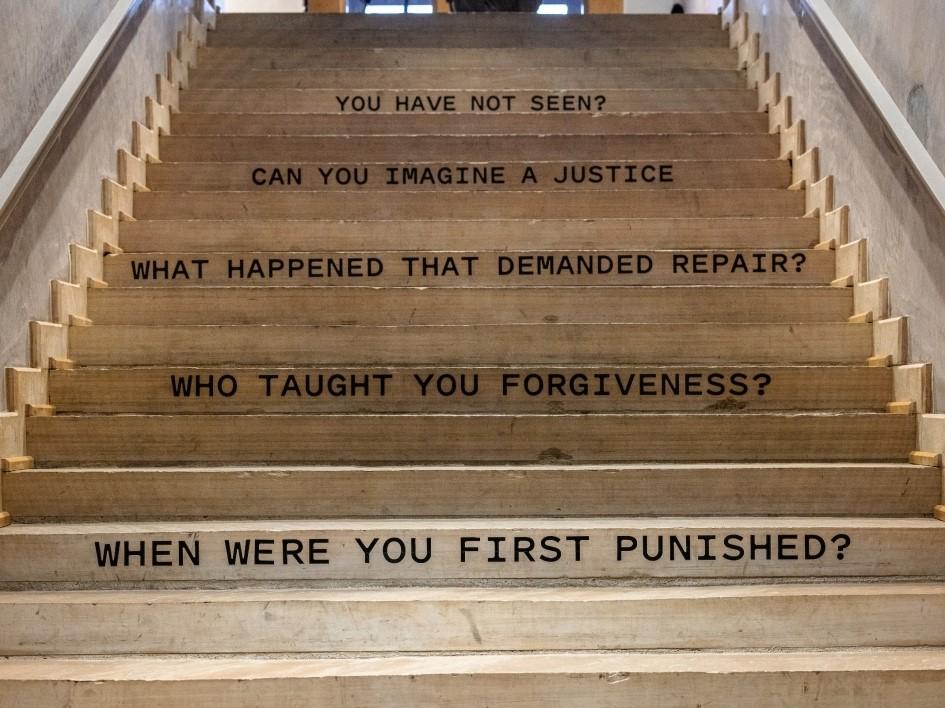
Welcome to the University of Oklahoma Carceral Studies Consortium Newsletter. The Carceral Studies Consortium strives to build a community for intellectual exploration that includes faculty, staff, graduate students, community members, practitioners, and organizers.
Carceral Studies is concerned with the independent function and nexus of the political and social systems that organize, shape, sustain, and entrench practices of punishment, surveillance, incarceration, and harm.
|
|
Carceral Studies Consortium to Host "Prison Lands," a Film/Discussion Series
The OU Carceral Studies Consortium is pleased to announce its Fall 2021 documentary series, in partnership with the WGS Center for Social Justice, on the theme "Prison Lands." Each screening will be followed by a group discussion facilitated by scholars. The series will feature the films Slavery by Another Name (Weds., Oct. 6, 6pm), The Facility (Weds., Nov. 3, 6pm), and The Prison in Twelve Landscapes (Weds., Dec. 1, 6pm). Interested parties should register using the link below.
|
|
|
Fall 2021 Microgrants: Call for Proposals
This fall, the Carceral Studies Consortium is offering a small number of micro-grants of up to $500 to OU faculty, staff and students to support the development of research, pedagogy, and community engagement projects relating to carceral studies. The Consortium encourages applications for projects that engage the community and/or support social or policy outcomes. Applications are due Monday, October 18, 2021. To view a list of past recipients, click here. |
|
|
Rob Schumacher / The Arizona Republic via AP Photo |
|
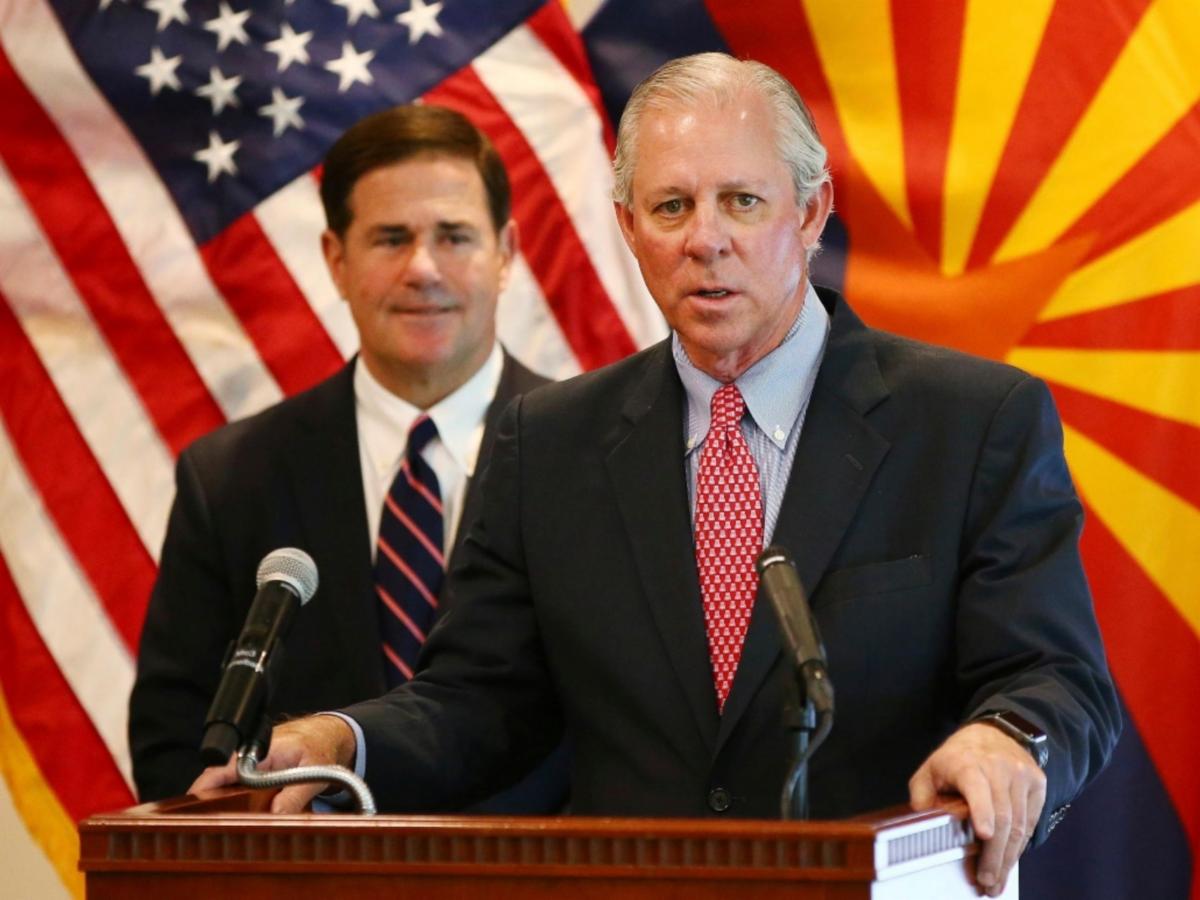
Tensions continue to rise between state lawmakers, educational institutions, and community members as vaccine mandates are outlawed in many states. At the University of Oklahoma, a campus without a vaccine mandate, community members launched “The OU Days of Action” to protest the lack of leadership in the school’s public health policies. Daniel Payne reports these same struggles across multiple states because “some university leaders are publicly battling mask and vaccine bans; others are taking a quieter approach and speaking with government officials who have significant sway over the budgets and operations of public universities.” Regardless of the methods used to reach lawmakers, Payne asserts that “none of the leaders have successfully moved the needle for rescinding standing laws.” The few universities that have attempted to institute meaningful COVID-19 health policies have been met with opposition as one university official stated, “We took some bullets, politically,” and “it was like we were poking the governor and state legislature in the eye.” As a result, mask and vaccine bans remain in effect. Anita Barkin, the co-chair of the American College Health Association’s COVID-19 task force, concludes: “They [lawmakers] are handcuffing these institutions in their ability to mitigate Covid.”
|
|
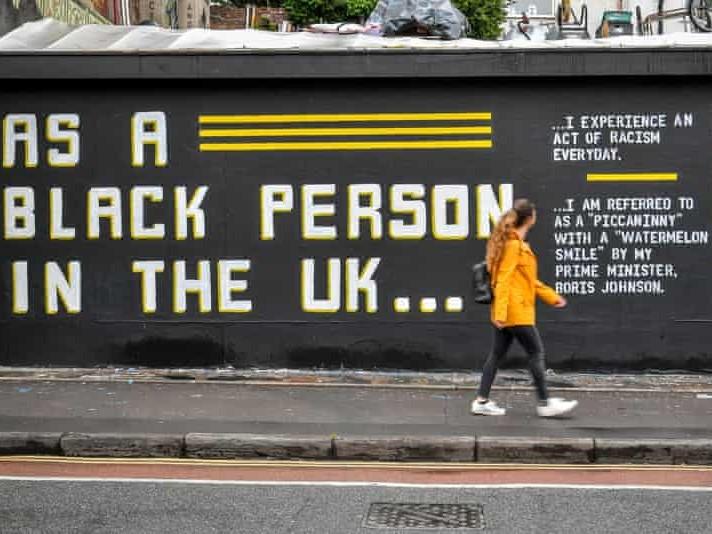
According to Haroon Siddique, an unnamed former employee of Britain’s Equality and Human Rights Commission (EHRC) has claimed that the organization has “fail[ed] to support the human rights of ethnic minorities and collud[ed] in the denial of structural and institutional racism.” The former employee described her experiences of “having to be the person who has to both explain racism and defend that it exists (also known as racial gaslighting).” The Joint Committee on Human Rights within Parliament has also identified the EHRC’s inability “to provide leadership and gain trust in tackling racial equality.” A representative of the EHRC responded to these criticisms by affirming that their “work to combat race discrimination continues to be a priority under our strategic plan. However, it is not the role of the EHRC to develop or promote particular political theories on racism; rather, we are a regulator tasked by statute with enforcing and upholding the law of the land.” To that end, the EHRC epitomizes its purpose as one of enforcement of current “concepts that have legal meaning” rather than a progressive organization that operates in accordance with developments in the understandings of human rights.
|
|
Andrew Caballero-Reynolds / AFP / Getty Images |
|
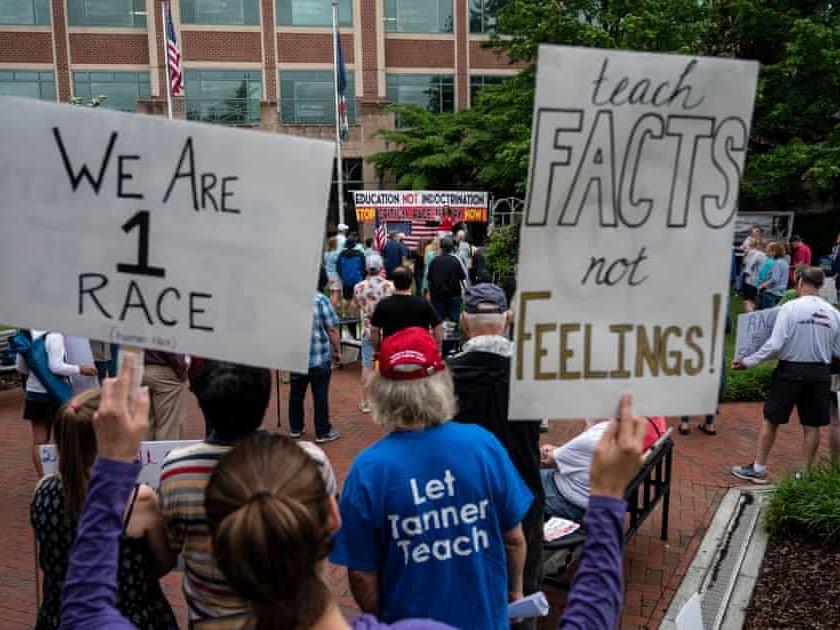
Melinda Anderson surveyed Black educators in states that have banned teaching Critical Race Theory (CRT). Anderson found that "teaching America's complex racial past has become infinitely more difficult with a spate of new laws passed in some states in recent months." Most importantly, Anderson argues that these legislative decisions contribute to the "shrinking pool of Black teachers in public schools." Teachers such as Valanna White of Tennesse described her experiences of confusion and frustration with the banning of CRT even though their state's standards still require content related to slavery and Jim Crow. White believes she will face consequences "for just teaching my standards" since she "can’t talk about the civil rights movement without talking about Bloody Sunday and the premise behind Bloody Sunday, the premise behind voter suppression.” Monique Cottman, a Black teacher in Iowa, depicted a “chilling effect” for Black teachers in response to CRT laws. She concludes that the restriction limits the authenticity of Black educators in the classroom. Similarly, UC Berkeley professor Thomas Philip’s research finds that anti-history laws diminish the “purpose of teaching for many Black teachers.” Yet, even in the face of legal adversity and consequences, educators like White remain motivated to teach because they “teach the truth [and] the truth is not wrong.”
|
|
Electronic Frontier Foundation |
|
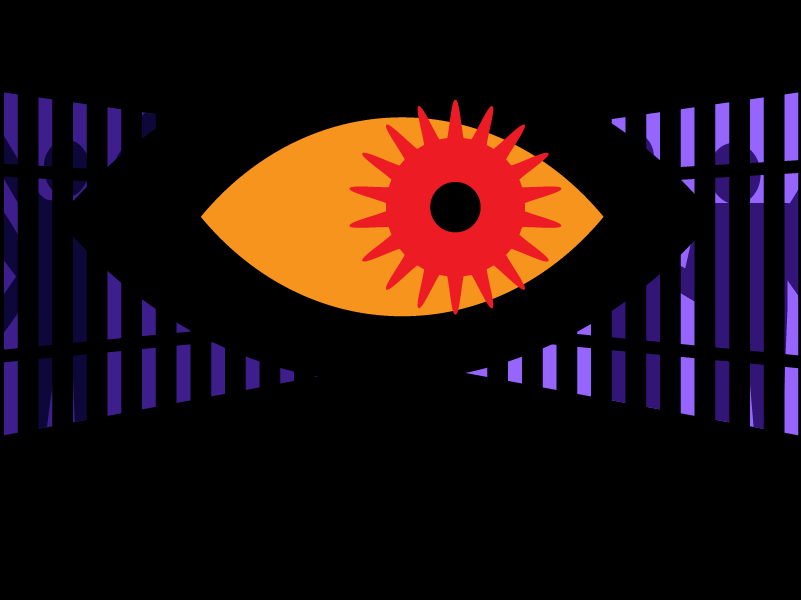
Beryl Lipton and Cooper Quintin investigated how prison businesses exploit and violate the privacy of incarcerated people by charging and monitoring phone calls in jails and prisons. Although some prison reforms have mitigated the monetary burden of phone calls, other prison businesses have focused on developing complex surveillance and voice recognition systems. According to Lipton and Quintin, companies like Securus and Global Tel*Link are “working to monetize their ability to eavesdrop on and catalog thousands of voices traversing the phone lines of penal facilities in nearly every state every day.” The development of these voice recognition technologies is justified by prison companies as they claim it would be “highly beneficial for communication systems in penal institutions to incorporate biometrics as an additional security device.” One inmate even spoke about how they were threatened with loss of privilege if they did not “help train the system to recognize his voice.” Lipton and Quintin believe that the tactics to capitalize on the phone systems in incarceration facilities will not only expand incarcerated peoples’ expenses but will “seek to identify, and almost certainly misidentify, more inmates and families than ever before, forging new frontiers in the ways America’s prison complex can scrutinize the vulnerable.”
|
|
Charlie Leight / ASU News |
|
Arizona State University is currently hosting art exhibits that explore mass incarceration. The show, Undoing Time: Art and Histories of Incarceration, is slated to run through February of 2022 and is accessible virtually. Carolina Aranibar-Fernández showcases her piece that involves audiences walking over her own hand-made clay/soil tiles depicting the names of companies that profit from the carceral state. As audiences crush the tiles, they create dust that aids the growth of the plants included in the exhibit. Aranibar-Fernández explains that this process conveys that “for something to be constructed, something gets destroyed.” Many of the works in Undoing Time feature thematic experiences for audiences to witness the many methods of the carceral state to cause harm and exploit the vulnerable. Still, the curators paid particular attention to avoiding the creation of further harm through the exhibits. A reporter for ASU News, Mary Beth Faller, notes that the curators took special care to facilitate collaboration between artists and related scholars to consider how the artwork might emotionally impact museumgoers. Miki Garcia, director of the ASU Art Museum, states, “my plea is that it’s not an exhibit that is in an echo chamber, but is really something that students and the community can use as a platform to discuss what is happening in our state today.
|
|
Mr. Rene # MAN POWER by Fulton Leroy Washington |
|
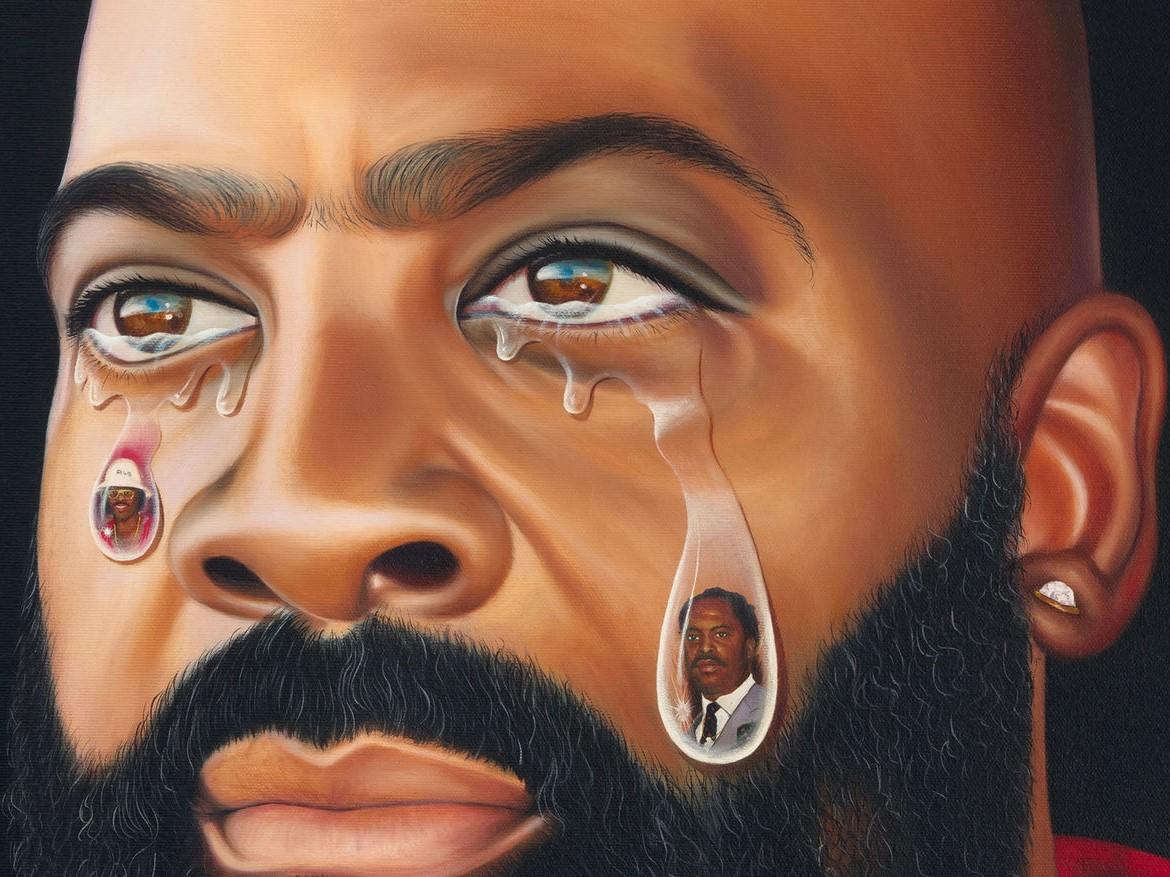
Fulton Leroy Washington spent over 21 years in federal prison before receiving clemency in 2016 through a review under the Obama administration. During his incarceration, Washington discovered and honed his art skills, which led him to share his craft with other incarcerated people to illustrate their emotions of pain and suffering. Washington utilizes his art to express a narrative, such as the linked lives of loved ones in the painting Loving a Convict. Washington placed a “string of pearls” with the faces of loved ones in this work to signify the way incarceration affects the family members that were connected to the “convict” by “taking part of the life of everybody that spirit is connected to.” Washington has extended his work to include many forms of oppression. Recently, Karlos Hill co-led the “Tulsa Race Massacre Centennial Commission’s National Day of Learning…which featured Washington’s Targeted Insurrection,” a painting that facilitates historical and contemporary injustices by “connect[ing] the 1921 race massacre and the 2021 Capitol insurrection with systemic police violence against communities of color.” Even through the years of tribulations, Washington, closing in on his seventies, presents a distinct attitude of hope through the continued pursuit of his goals and the message that “your life will be whatever you spend your time working towards.”
|
|
Please share recent research you would like to see featured!
Send it to carceralstudies@ou.edu
|
|
ABSTRACT: On January 29, 2021, a police officer with the Rochester, New York, Police Department pepper-sprayed a 9-year-old Black girl who had been handcuffed and forced into the back of a police car. In the struggle that proceeded this moment, an officer yelled at the girl with obvious frustration, “You’re acting like a child!” In this essay, I consider how the girl’s quick retort —“I AM a child!”—interjected a truth into the struggle that had been all but ignored by the armed adults on the scene. I consider how the truth embedded in this girl’s call exposes the lies of law enforcement and, in doing so, lay the seeds of abolitionist imaginings—a call for a system, a world, that would treat a Black girl as if she were a child
|
|
ABSTRACT: Though the persistence of voter suppression and disenfranchisement in the US is well-documented, we still know little about their contemporary ideological underpinnings beyond partisanship and racial resentment. Highlighting the Christian Right’s influence in driving anti-democratic sentiment in the post-Civil Rights era, we propose contemporary ideological support for restricting the vote generally, and specifically, to those who prove “worthy,” is undergirded by a pervasive ideology that cloaks authoritarian ethno-traditionalism with the ultimacy and polysemic utility of religious language―Christian nationalism. Nationally representative data collected weeks before the November 2020 elections reveal Christian nationalism is a leading predictor that Americans deny that voter suppression is a problem, believe that the US makes it “too easy to vote,” believe that voter fraud is rampant, and support measures to disenfranchise individuals who could not pass a basic civics test or who committed certain crimes. Interactions show Christian nationalism’s influence is particularly strong among men across most outcomes and, regarding voter suppression, whites compared to Blacks. We argue Christian nationalism seeks to institutionalize founding ideals in which civic participation is rooted in hierarchies, being restricted to a “worthy” few. Appeals to America’s religious heritage thus facilitate stratifying America’s citizenry and justifying restricting participation to preserve dominance.
|
|
New Carceral Studies Board Members
The Carceral Studies Consortium is pleased to welcome our newest board members:
|
|
|
Call for Papers: 2022 Conference - "Perspectives on Carcerality" hosted by DePaul Philosophy Graduate Students
DePaul University at the University of Illinois, Chicago invites papers for their virtual and in-person graduate student conference. The conference, titled Perspectives on Carcerality, Surveillance, Policing, and Abolition, “aims to explore critical approaches to these technologies as well as the practices of subversion that allow us to both imagine and create a post-carceral society.” Interested parties can submit abstracts and panel proposals to depaulgradcon2022@gmail.com. The deadline for submissions is November 28th, 2021.
|
|
|
OU PolicyMap Trial
OU Libraries is currently offering a trial subscription to the program PolicyMap until November 23, 2021. PolicyMap enables users to interact with data and mapping tools with indicators that include demographics, jobs, housing, crime, quality of life, education, socioeconomic factors, and much more. Some data sources include the Census Bureau, Department of Homeland Security, and Center for Disease Control Behavioral Risk Factor Surveillance Survey. If you would like to see OU subscribe to this program, it is important to try it out and respond to the feedback survey as soon as possible.
|
|
|
ABOUT
The Consortium Newsletter will offer a roundup of a few selected articles that reflect today’s news, organizing, and thinking related to the carceral state. We understand that freedom work is built on education and engagement. Education requires an understanding of contemporary issues informed by their historical context. We hope that these curated articles will help you analyze the issues that we face and understand the community that we strive to construct.
Join the conversation!
We encourage feedback, suggestions, and article suggestions. Please reach out to carceralstudies@ou.edu with any ideas, thoughts, or recommendations.
If anyone you know is interested in receiving this newsletter and other information from the Carceral Studies Consortium, please forward them this email and they may click this link to subscribe.
|
|
Land Acknowledgment
The University of Oklahoma is on the traditional lands of the Caddo Nation and the Wichita & Affiliated Tribes. This land was also once part of the Muscogee Creek and Seminole nations. It also served as a hunting ground, trade exchange point, and migration route for the Apache, Cheyenne, Comanche, Kiowa, and Osage nations. Today, 39 federally-recognized Tribal nations dwell in what is now the State of Oklahoma as a result of settler colonial policies designed to confine and forcefully assimilate Indigenous peoples.
|
|
The University of Oklahoma is an equal opportunity institution. ou.edu/eoo |
|
|
|
|
|
|