|
This month, we wanted to give you a sneak peek at the core of all of our fundraising products — our honey. And of course, it all starts with the honeybees.
They spent the winter enjoying warmer temperatures and more sunshine in California, and have just made the trek back to Minnesota. Now, they’re hunkering down in the colder weather and shorter days, staying close to the hive and waiting for the first real signs of spring — especially dandelions, the first flowering plant they eagerly head out to forage.
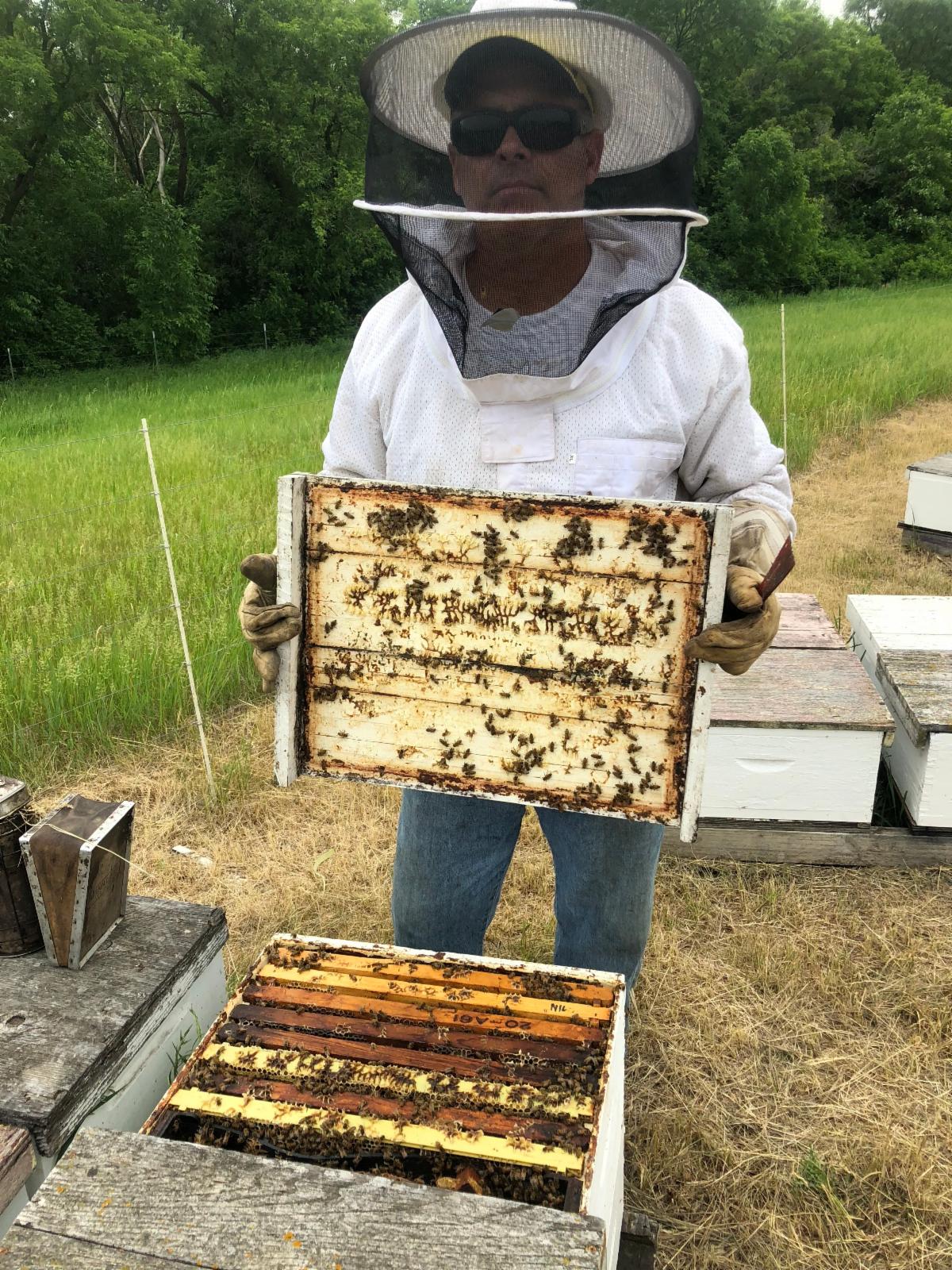
Our beekeeper begins by inspecting each hive. He checks the brood frames to ensure the queen is alive and continuing to lay eggs, which is essential for a strong, growing colony. He also makes sure the bees still have plenty of their own honey to eat — and if not, he’ll supplement with syrup to help them through until natural blooms return.
He also checks the pallet the hive sits on, looking for any intruders like beetles or ants that could threaten the colony. At the same time, he’s evaluating the overall population of the hive. Strong colonies can be “split,” meaning a portion of the bees and brood are used to start new colonies — an important part of rebuilding after winter.
As the season progresses, the bees have more to look forward to.
After dandelions, they move to white and yellow clover in late spring, then shift to goldenrod and other wildflowers as summer approaches. Each new bloom brings new nectar sources — and subtle changes in the honey itself.
Then comes one of the most exciting times of the year: a short, two-week window known as the “honey flow.” This happens when the Basswood Llinden) trees bloom, and it’s when the bees produce the majority of their honey for the season.
|