Weekly Digest Number 17 - April 25th, 2023 |
|
Welcome to the RWU Rail & Labor News! This news bulletin is produced and emailed out each Tuesday morning. We hope you find each week's news and information useful. If so, please share with co-workers, friends, and colleagues. If you like, you can sign them up to get all the news from RWU HERE. Or forward them the link. Note: If you read over this news bulletin each week, you will be sure to never miss the important news of what is going on in the railroad world from a worker's perspective!
|
|
(Editor's Note: It is great to see a universal coalition of rail labor come together around this issue. Since our founding in 2008, RWU has called for such a universal coalition in contract bargaining. Perhaps this can serve as a template for what is to come. There is NO reason that ALL of rail labor should not be united. Even if we are sliced into a dozen or more unions by craft, we certainly owe it to one another to ACT like ONE union!) |
|
Union Coalition Calls on Railroads to Stop Share Buybacks, Scrap Precision Scheduled Railroading
April 21, 2023
Unions say share buybacks should stop until safety improves
|
|
WASHINGTON — A coalition of railroad labor unions today called on the Class I systems to pause their stock buyback programs and abandon the low-cost Precision Scheduled Railroading operating model until safety improves.
The 14 unions, which combined represent more than 100,000 railroad workers, claim that since 2015 the six publicly-traded freight railroads spent more than $165 billion in stock buybacks, which is $46 billion more than they invested in safety.
“For years, rail workers have been sounding the alarm about safety issues. It’s time to listen to rail workers, not rail CEOs,” the union coalition said on their new nostockbuybacks.org website. “It’s time to end PSR now. If freight rail CEOs don’t prioritize safety over profits, the crisis will unfortunately continue.”
The unions also are running a petition campaign to gain support for their anti-buyback effort.
Surface Transportation Board Chairman Martin Oberman has been critical of the railroads’ stock buyback programs, as well, saying they come at the expense of investments in capacity expansion and customer service.
The Association of American Railroads did not immediately return an email seeking comment on the unions’ claims.
|
|
(Editor's Note: Railroad Workers United works alongside other workers' organizations along the supply chain. Truckers Movement for Justice (TMJ) has been a worthy ally of rail workers in recent years. We continue to build bridges with longshore workers, truckers, warehouse workers, and others in the logistics sector. We can achieve a lot working together along the supply chain!) |
|
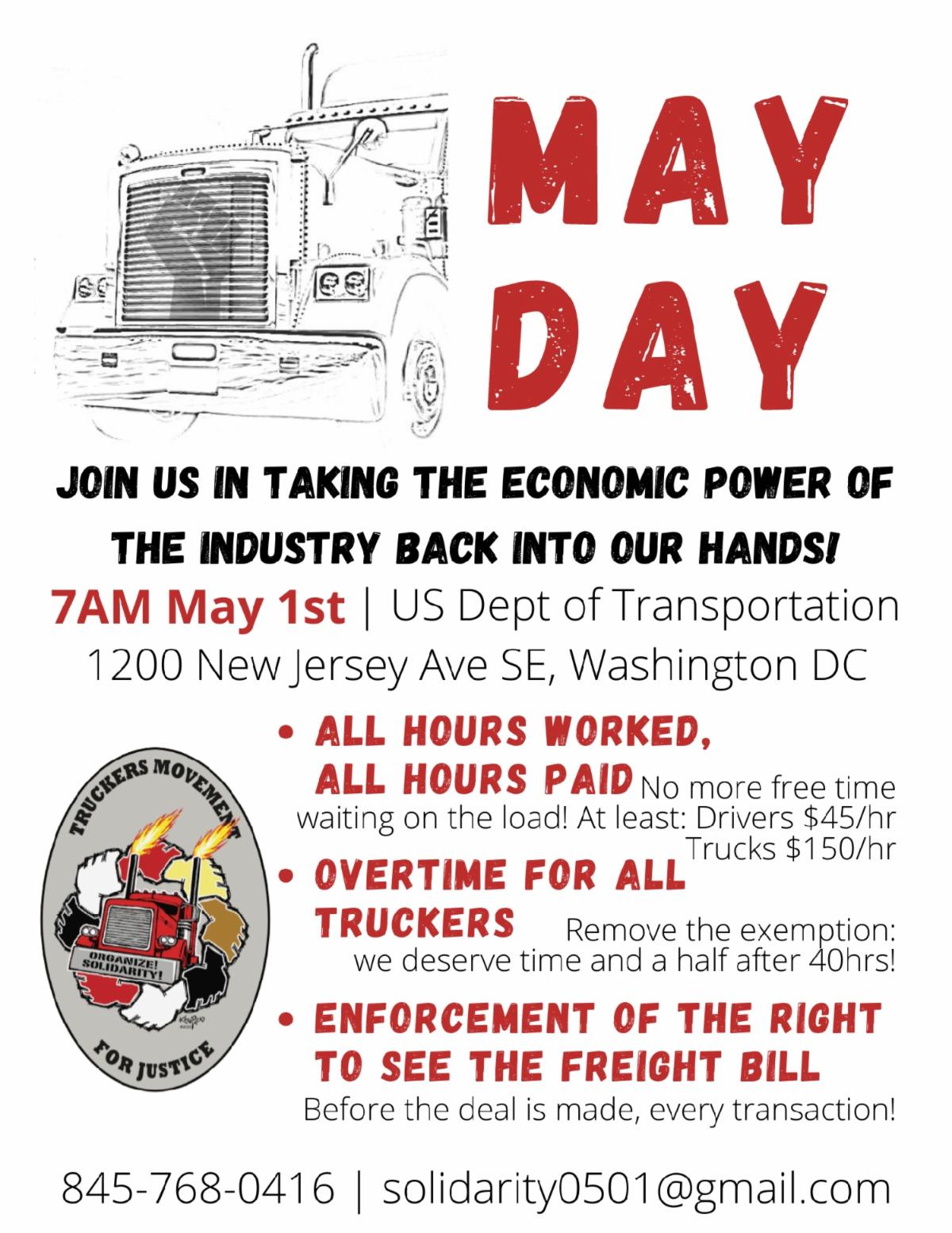
Truckers Movement for Justice (TMJ) to Rally in Washington, DC on May First |
|
Trucker's Movement for Justice (TMJ), a grass roots trucking labor group representing all aspects of trucking, is announcing a protest to be held on May 1, 2023. The protest will take place at the U.S.DOT building, Washington DC 7 AM to 4 PM. TMJ has held meetings and exchanged correspondence with the USDOT, USDOL and FMCSA in recent years. In addition, we have made our voices heard by attending a Presidential White House event concerning President Biden's Trucking Action Plan. The issues raised at the meeting and through other correspondence have not been resolved and no solutions have been presented to date. The issues at hand are:
1. Truckers must be afforded the right to see the freight bill. Brokers steal BILLIONS from drivers and shippers every year by not allowing them to see the original freight bill and negotiating their rates, which is legally REQUIRED by FMCSA. See, generally, 49 C.F.R. Sections 300-399.
2. All hours worked should be hours paid. Most truck drivers are NOT paid by the hour, they are paid by the mile, and they do NOT get paid for untold hours a week that they must idle in traffic as part of their job. This results in massive WAGE THEFT, drivers working 20 hours or more a day, and in the end, they make LESS than minimum wage. If you wonder why trucking has turnover rates of OVER 100%, this is the reason.
3. Overtime for truckers. Truck drivers, by the FLSA, do NOT get overtime pay no matter how many hours they work. See Section 13(b)(1) of the FLSA. This also results in a massive turnover in the industry. We want to be treated and paid like everyone else in the supply chain.
We hope to see you in Washington, DC at the Protest!
|
|
(Editor's Note: Anytime a union mobilizes its membership for this sort of action is a breath of spring! RWU salutes the BMWED for pulling off this action. Now, next time we get ALL the unions to do this together and we will be exponentially more effective!) |
|
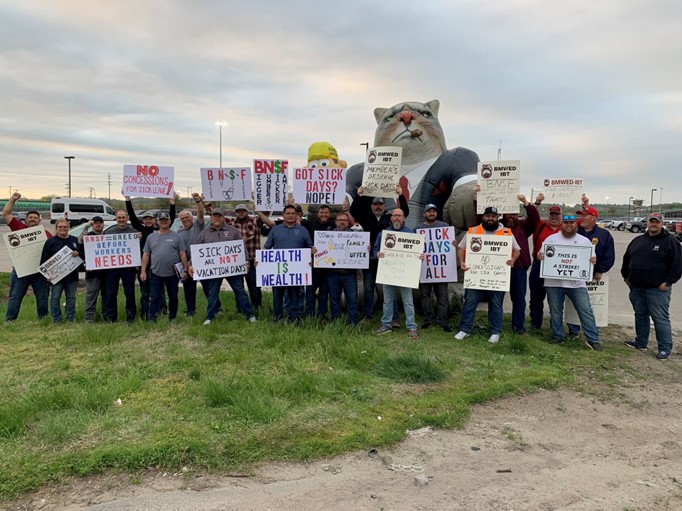
BMWED Holds Paid Sick Leave Rally Ahead of BNSF CEO Katie Farmer
Apr 19 2023 4:13PM
|
|
Today at Kansas City's Argentine Yard, BNSF CEO Katie Farmer held a town hall meeting and the BMWED was there!
Starting at 5:30 a.m., we held an informational rally ahead of Ms. Farmer's arrival, where we demanded BNSF follow the lead of several other Class I freight railroads and provide members with paid sick days and other quality of life improvements to improve morale and build trust between management and labor.
The night prior to the town hall and our action, a train derailed in the yard and all of the MOW headquartered force worked from 10 p.m. until about 8 a.m. restoring service and repairing the track.
All three BMWED general chairmen on the BNSF were in attendance and had a lengthy discussion with CEO Farmer and VP of Engineering John Cech, where the thoughts and concerns of BMWED BNSF members were reiterated. The Brotherhood stands ready to bargain in good faith with BNSF on paid sick leave -- including today following the town hall -- if management will genuinely listen to our concerns.
|
|
(Editor's Note: For decades the Class One railroads have dissed Amtrak along with small shippers who they consider not worth their time and energy. With the modern PSR style era, Class Ones are not adverse to dissing just about everyone, including large shippers such as the one filing this latest "common carrier" complaint against BNSF.) |
|
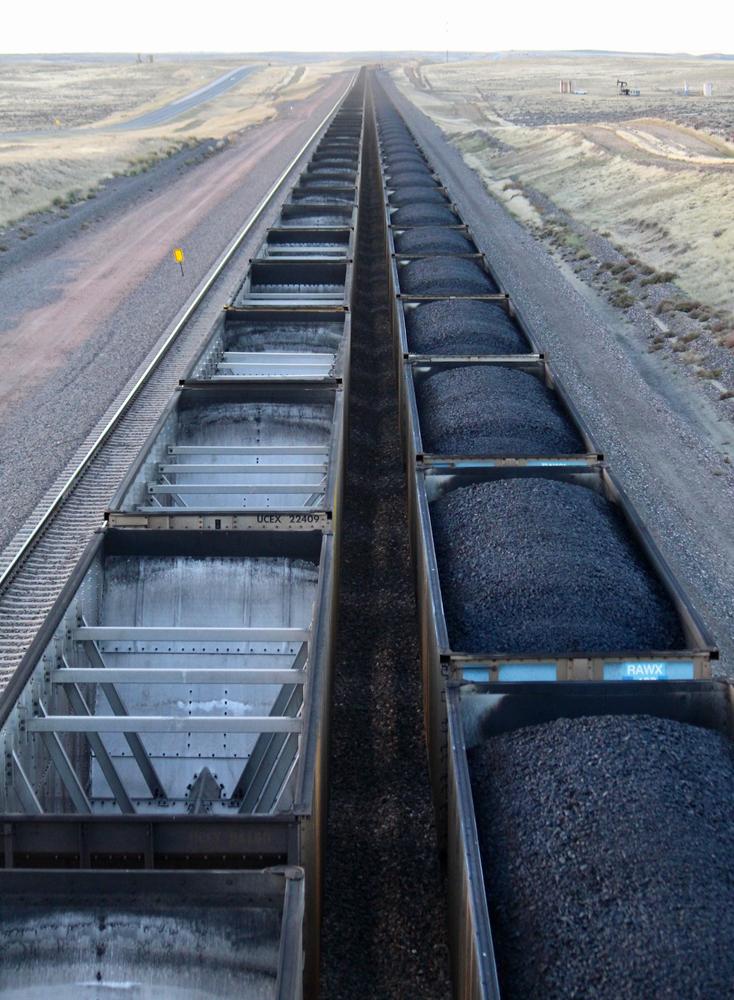
Powder River Basin Coal Company Files Common Carrier Complaint Against BNSF Railway
Navajo Transitional Energy Co. also seeks emergency service order
|
|
WASHINGTON – Navajo Transitional Energy Co. says BNSF Railway has violated its common carrier obligations by failing to provide adequate service for its Powder River Basin export coal trains.
NTEC, in a complaint filed with the Surface Transportation Board on Friday, says BNSF has failed to provide adequate service from the Spring Creek Mine in Montana to the Westshore Terminals at Roberts Bank in Delta, British Columbia, Canada.
The coal company, in a separate filing, also seeks an emergency service order from the STB that would require BNSF to handle 29 loaded trains per month beginning May 1.
BNSF handled 17 NTEC trains in February and 22 in March, which NTEC says was below the 24 to 30 trains per month that the coal company sought as part of a Nov. 1, 2022, service request. The coal is exported to customers in Japan and South Korea.
NTEC says BNSF expects to reduce service to 16 trains per month beginning June 1. “Service at a 16-train per month level would profoundly hinder NTEC’s ability to run its business, to satisfy its existing contractual obligations, and to market export coal for future sales,” NTEC told the STB.
|
|
Matter of Fact: Concern Over Rail Safety After Recent Train Accidents |
|
One hundred and forty thousand miles of track are used to carry freight across the U.S. The trains and track are largely operated by private companies, which are facing increased scrutiny after three recent derailments. In the last decade the industry has had between 10 and 20 train derailments every year, involving hazardous materials. Correspondent Dan Lieberman is in Pittsburgh to talk to safety advocates, rail workers, and residents to find out what it will take to keep our rail lines safe. |
|
(Editor's Note: This is not good news for intermodal and rail. What promised so much for rail development in recent decades - intermodal - has been dashed against the rocks of PSR. With so many internodal facilities shuttered and traffic lanes discontinued in recent years, the railroad has reduced the flexibility of this mode of shipping. What seemed so promising is now tanking. The private rail industry sabotages itself once again.) |
|
Freight Pattern Shifts Threaten Intermodal Growth Potential
Intermodal demand may be capped by inflexible infrastructure
|
|
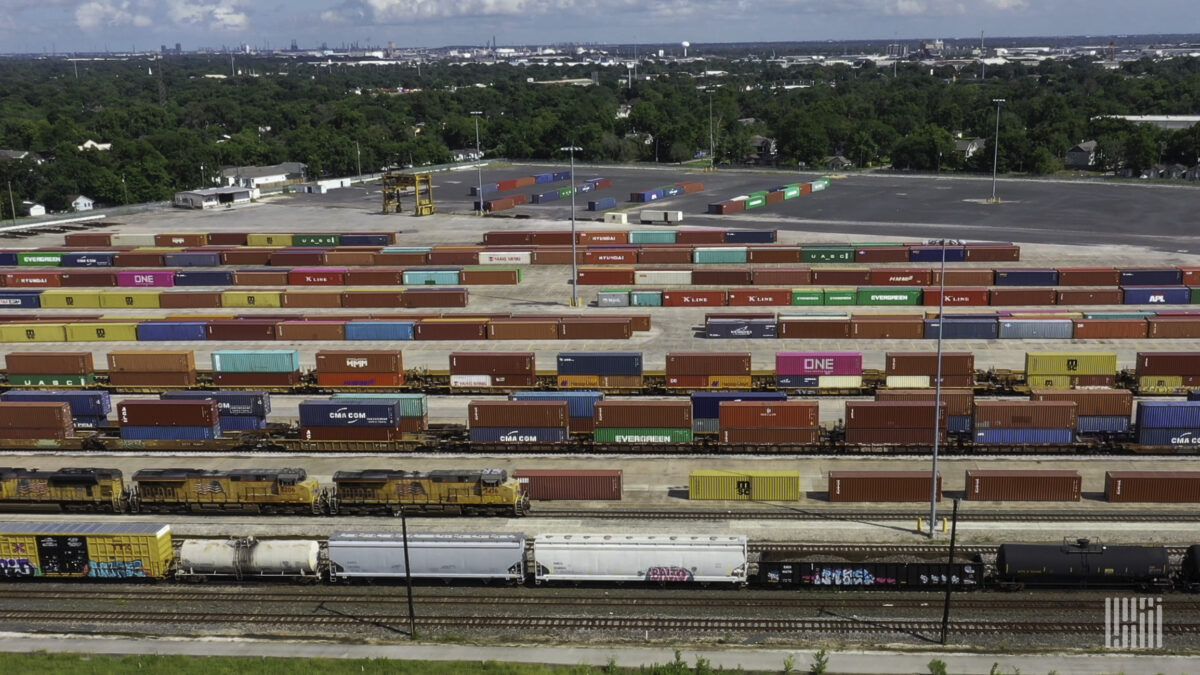
Loaded rail intermodal container volumes were down approximately 8% from the first quarter last year and, more surprisingly, 5.7% from pre-pandemic Q1 2020 — suggesting there has been more than simple freight demand erosion for the sector. Shifting transportation demand patterns have already cut into the mode’s volumes and may threaten growth potential in the coming years.
Intermodal as a growth opportunity has long been a question for the railroads. Moving intermodal units is far lower margin than moving highly-profitable unit trains of bulk commodities, but intermodal should still represent a viable avenue for volume growth that contributes to operating margin dollars.
The pandemic boom for consumer goods should have been the perfect chance for intermodal to shine as trucking rates soared, but congestion around the multiple touch points showed how inflexible infrastructure can limit growth potential even though it drives efficiency in stable environments.
The largest intermodal lane by volume is Los Angeles to Chicago, which has seen ~14% less demand this past week than a year ago. Los Angeles to Dallas, another major lane, has dropped 18% y/y. Neither of these are shocking considering overall demand has deteriorated across all transportation in the past 12 months.
Import volumes have fallen over 16% since April of last year with a slight demand shift away from the West Coast. The collapse in imports has been to blame for intermodal operators in the near term with some level of recovery expected as inventories stabilize. While this expectation is valid, the longer-term concern is how much potential remains as the macroenvironment changes.
|
|
CN, TCRC Agree on Tentative Labor Contract |
|
CN and the Teamsters Canada Rail Conference (TCRC) have reached a tentative agreement for a labor contract that, if ratified, would cover 6,000 locomotive engineers, conductors and yard conductors and coordinators.
The employees work on the Class I's mainline, for its short lines and in yards in Canada.
“We would like to thank their leadership for engaging with CN in proactive and productive discussions, ensuring uninterrupted service for our customers,” said CN President and CEO Tracy Robinson in a press release.
The agreement will be voted on via secret-ballot electronic voting, which will be open May 5-26, TCRC officials said in a press release.
Union officials will not comment publicly on the contract’s details until after the ratification vote.
|
|
(Editor's Note: States such as Virginia and North Carolina that have invested heavily in passenger rail are witnessing record numbers in ridership these days that far exceed pre-pandemic levels. If you build it they will come!) |
|
North Carolina Passenger-Rail Service Logs Record Ridership in Q1 |
|
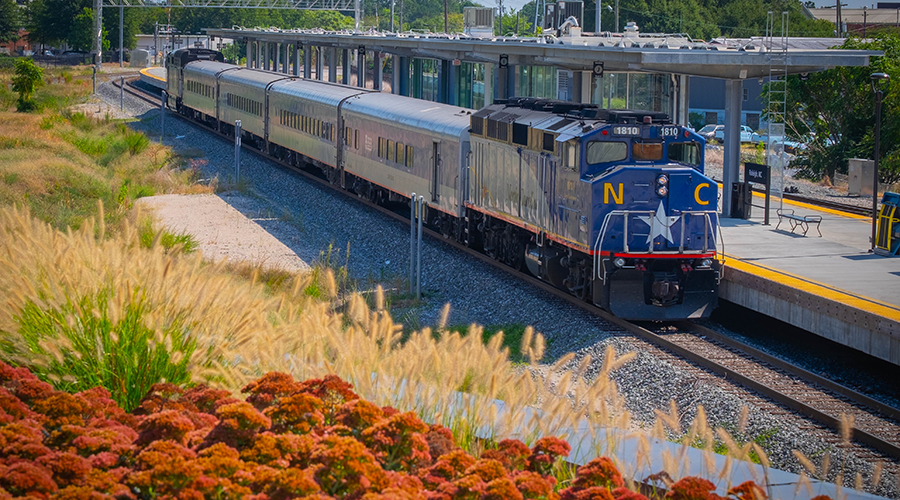
The NC By Train service posted monthly ridership records in January, February and March, with the quarter’s total ridership increasing 30% over pre-pandemic ridership levels based in 2019, NCDOT officials said in a press release.
Ridership was up 50% in the first quarter compared with ridership levels during the same period a year ago.
NC By Train operates passenger service across the state on behalf of Amtrak. Routes include the Piedmont, Carolinian, Silver Star, Crescent and Silver Meteor/Palmetto.
|
|
(Editor's Note: We include this article because it is the largest upcoming labor conflict in the U.S. and because the IBT leadership is doing some things right: mobilizing the membership in advance of contract negotiations, inviting all members to actively participate in the process, running a corporate campaign, including rank & file members at the bargaining table, calling press conferences, speaking out, seeking allies from other unions, setting deadlines for action, and striking a defiant and militant tone. If railroad workers hope to win anything in the next contract round, we need our unions to strike this same posture. Formal rail bargaining starts in a year and a half, but preparations need to start today!) |
|
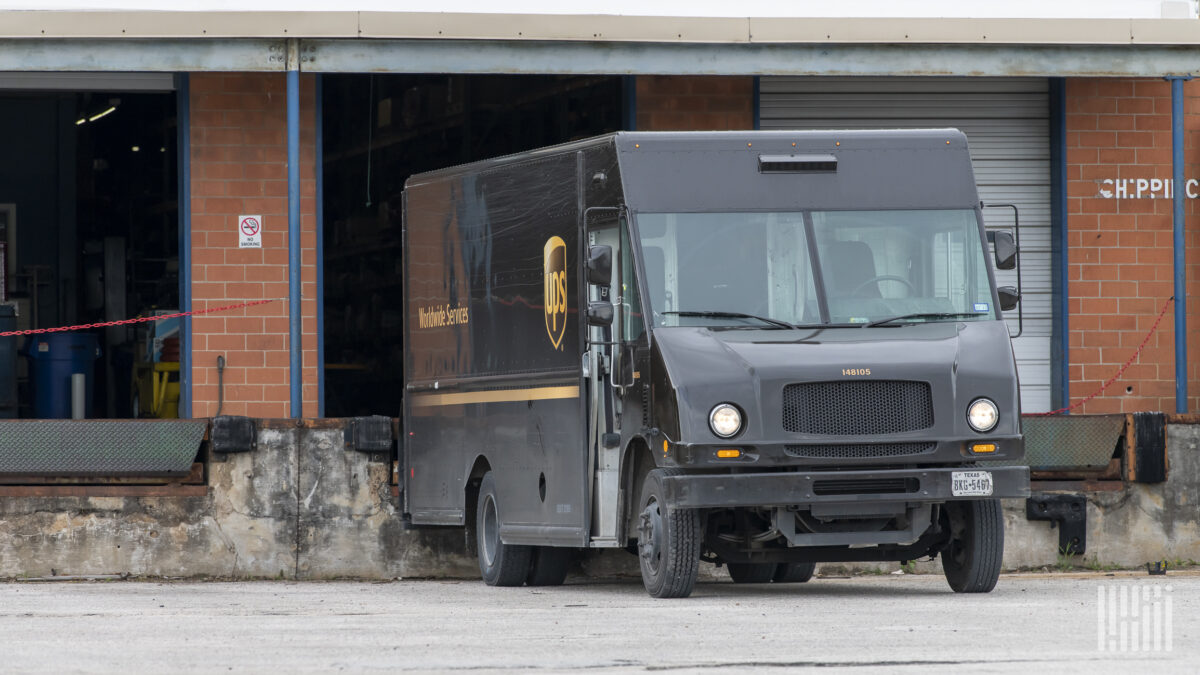
Teamsters Rally Against UPS at Southern California Event
O’Brien says union will work seven days a week to get contract
|
|
The Teamsters union headed into Southern California over the weekend to demand higher wages and better benefits from UPS Inc. The two sides begin negotiations on Monday over a new master contract and spar over how far they’ve gotten in bargaining 40 regional supplemental agreements tied to the master compact.
“There are 12 weeks from Monday until the expiration of the contract. We’ve stated our intentions. Teamsters will not be working beyond the expiration date of that contract unless there is a new contract that our members deserve, endorse, embrace, and vote on. We are prepared to work seven days a week to get it done,” said Sean M. O’Brien, general president of the Teamsters, speaking Saturday in Orange.
The Teamsters national negotiating committee meets with UPS on Monday in Washington, D.C., to address supplemental negotiations. Last Wednesday, the union demanded that UPS resolve supplemental agreements before a national agreement can be negotiated.
The Teamsters said that of the 40 supplementals, 30 remain unresolved due to repeated delays by UPS. The company said negotiating national and supplemental contracts at the same time is common. It denied that it is foot-dragging or negotiating in bad faith.
More than 340,000 Teamsters are covered under the master five-year contract, which expires July 31. They are also covered by multiple agreements specific to the regions where they work. The agreements cover provisions like paid time off, seniority, overtime and work hours.
|
|
(Editor's Note: The UP is incapable of handling this single passenger train that only runs 3X per week. It has been chronically late for decades, despite Amtrak and the Feds' best efforts to run it on-time. If the freight railroads are so mismanaged and poorly run that they cannot handle the nation's passenger trains as agreed to by law, then it surely is time for the railroads to be publicly owned and operated.) |
|
Amtrak to STB: "Sunset Limited" Trains Still Running Late |
|
In December 2022, Amtrak asked the STB to investigate why host railroad practices, primarily at Union Pacific Railroad, are contributing to substandard on-time performance of Sunset Limited trains in the southwestern United States.
The trains' substandard customer on-time performance (COTP) warrants an investigation by the STB because it fell below 80% for two consecutive calendar quarters, Amtrak explained. The passenger railroad also stated that COTP on the route was unacceptably low for at least four consecutive calendar quarters, extending across all of fiscal-year 2022.
On March 13, Amtrak gave the STB a status report that showed COTP on the route remained substandard during Q1 of fiscal-year 2023. In its filing with the STB earlier this week, the railroad said its data for Q2 of FY2023 "underscores the need for an expeditious board investigation and remediation of the Sunset's continuing substandard on-time performance."
In the second quarter, the route's Train 1 registered 45% COTP; Train 2 registered 38%.
"These figures are still nowhere close to meeting the applicable COTP standard," Amtrak said in the filing.
|
|
(Editor's Note: Great to see our union representatives taking the bull by the horns here and speaking out at an International Workers' Day event!) |
|
May Day Commemoration: Railroad Union Representatives to Speak on Holding Norfolk Southern Accountable for E. Palestine Disaster |
|
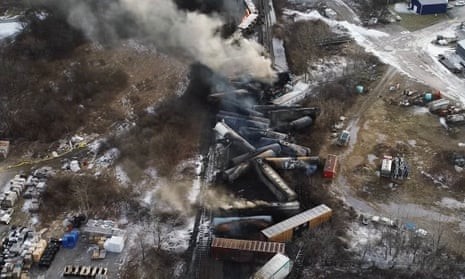
The Norfolk Southern train derailment in East Palestine, Ohio on February 3 has resulted in ongoing health issues among residents, and crises in the community and others nearby following the spill and “controlled” burning of extremely hazardous chemicals that’s polluted the air, land and water.
The railroad industry -- thanks for their corporate constitutional "rights" -- lobbied over the last several years to weaken numerous safety regulations to railcars and braking systems, train length and weight and to railroad workers. The response to the derailment by the railroad corporation, government and regulatory agencies has been nowhere near what's needed to provide relief and recovery.
Railroad workers and their unions warned long before the derailment of inadequate safety measures threatening workers, area residents and communities. They now are working with others to hold Norfolk Southern Railroad Corporation fully accountable for the accident and are educating and organizing for changes to prevent future derailments.
Speakers
- John Esterly, Chair and Legislative Representative, Brotherhood of Locomotive Engineers and Trainmen, Ohio
- Clyde Whitaker, State Legislative Director, Sheet Metal, Air, Rail and Transportation (SMART), Ohio
- Jennie Spanos, Co-Director, National Move to Amend Coalition, Moderator
|
|
Weekly Derailment Department |
|
|
|
|
|
|