Faulkner County Agriculture Update

March 14, 2025


General Conditions

Weather


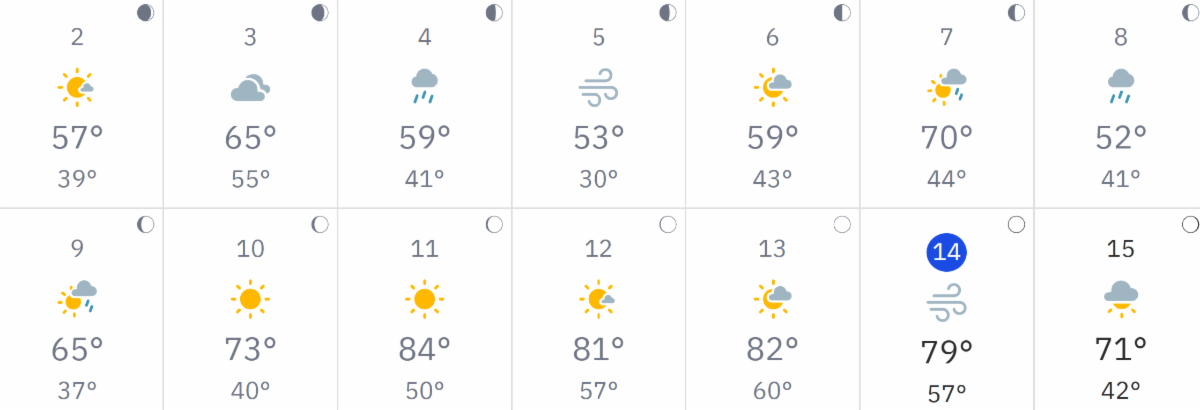
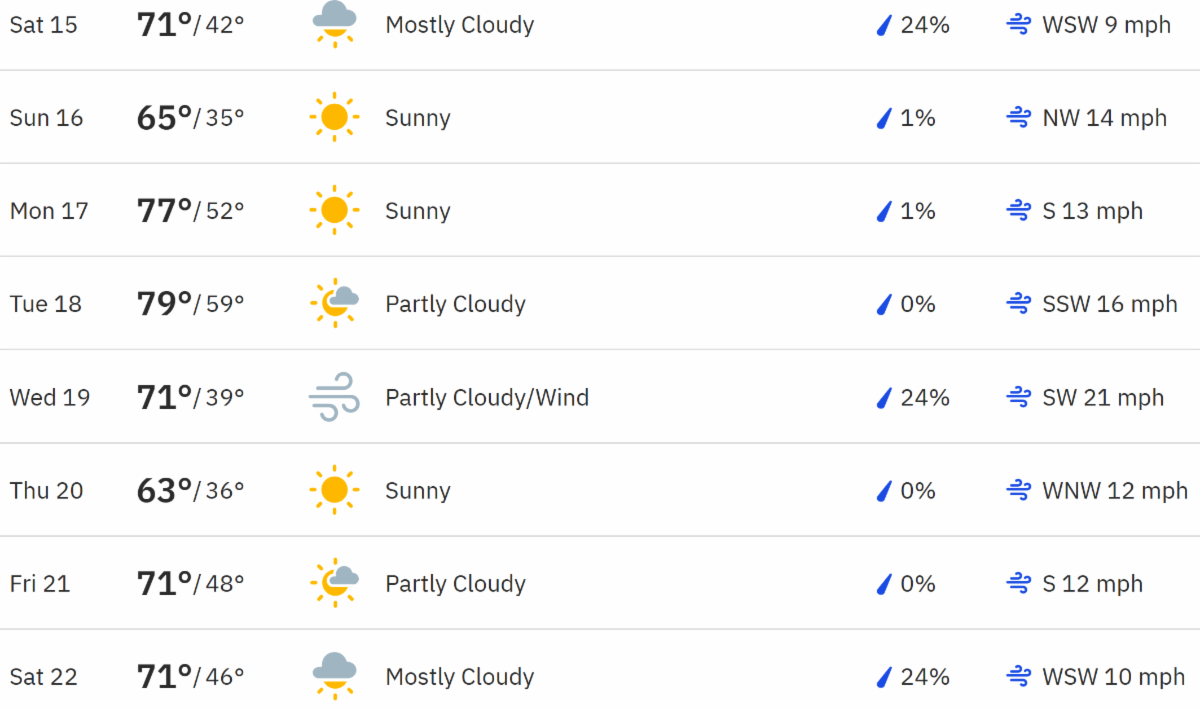
When the week began we were looking at sever weather on Wednesday and Friday, but nothing happened on Wednesday and the chances for Friday are getting slimmer and slimmer. Several producers have started working fields and if we continue to be dry into next week I wouldn't be surprised to see the first corn and rice planted for 2025.

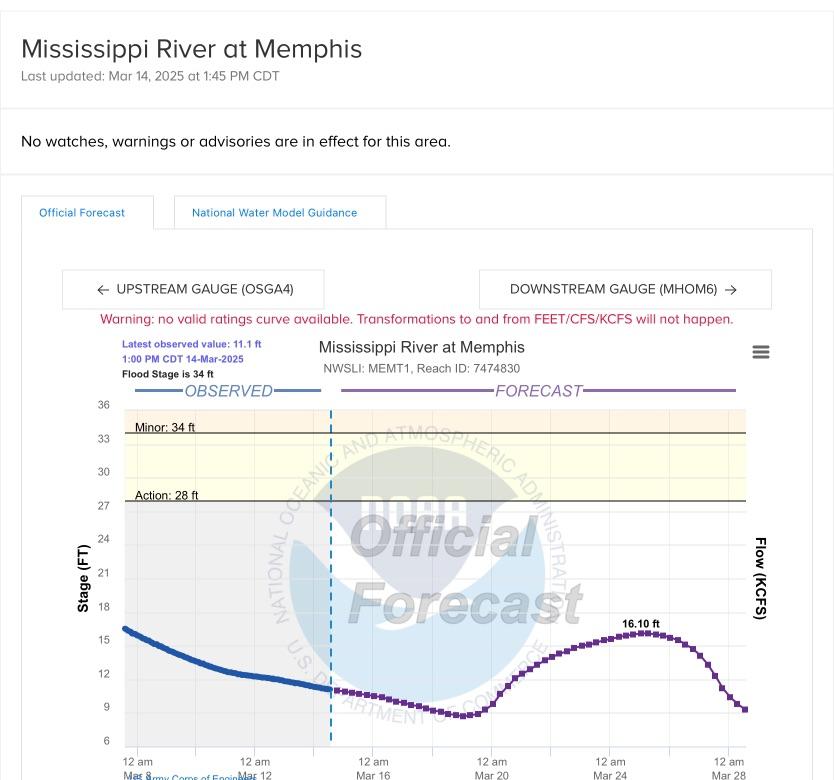
Arkansas and Mississippi River

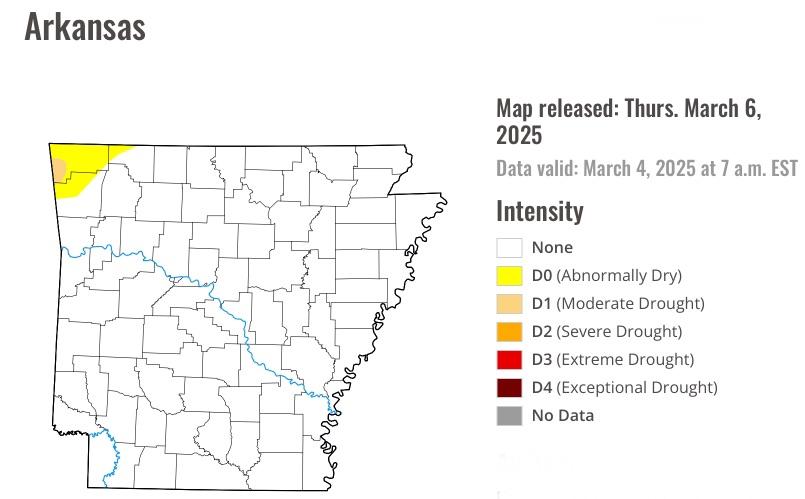
Drought Monitor
US Drought Monitor

Row Crop

2025 PLC and ARC Decisions

by Scott Stiles - March 12, 2025


With the 2018 Farm Bill extended for an additional year, farmers will have the same commodity title decisions to make in 2025 as they have since 2019. These include the Price Loss Coverage (PLC), Agricultural Risk Coverage at the county level (ARC-CO), and ARC at the individual level (ARC-IC) programs.


Producers will need to make an ARC or PLC election for 2025 at their local Farm Service Agency (FSA) office or they can apply online by the April 15, 2025 deadline. If producers do not submit their election by April 15th, their 2024 election remains in effect. For specific enrollment details on these programs for 2025, click here.


To read more from Scott click below:


2025 PLC and ARC Decisions

Wheat


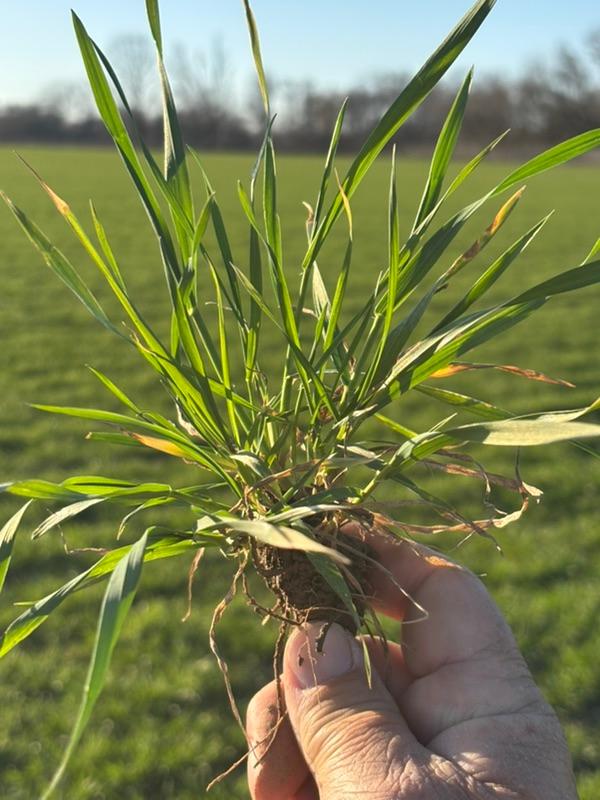
Wheat is enjoying the warm weather, sunshine and fertilizer! It has really taken off over the last few days. You can see it turning a darker green color as it takes up the fertilizer. The majority of the fields that needed a herbicide have been sprayed so now we need to watch it grow. The second (or third in some cases) application of fertilizer should be going out about three weeks after the prior application.

Corn


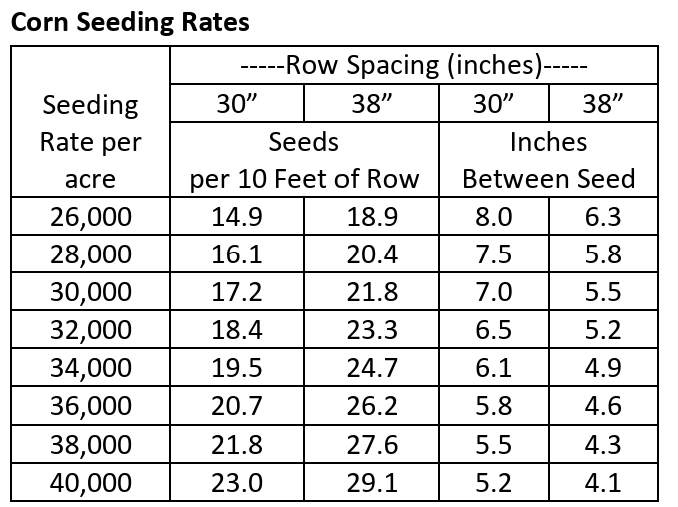
Corn planting will be starting soon in the county. I know a few fields are bedded up and depending on the weather we could see planting starting next week. I am a firm believer in keeping seeding rates around 32,000 to 34,000 seeds per acre. You can decrease that to 28,000 to 30,000 for dryland situations.


Don't forget to add your fields to the Corn DD50 program. Just like using the rice DD50 program, this will help you keep up with growth stages and give you critical timings for management decisions. Arkansas Corn DD50


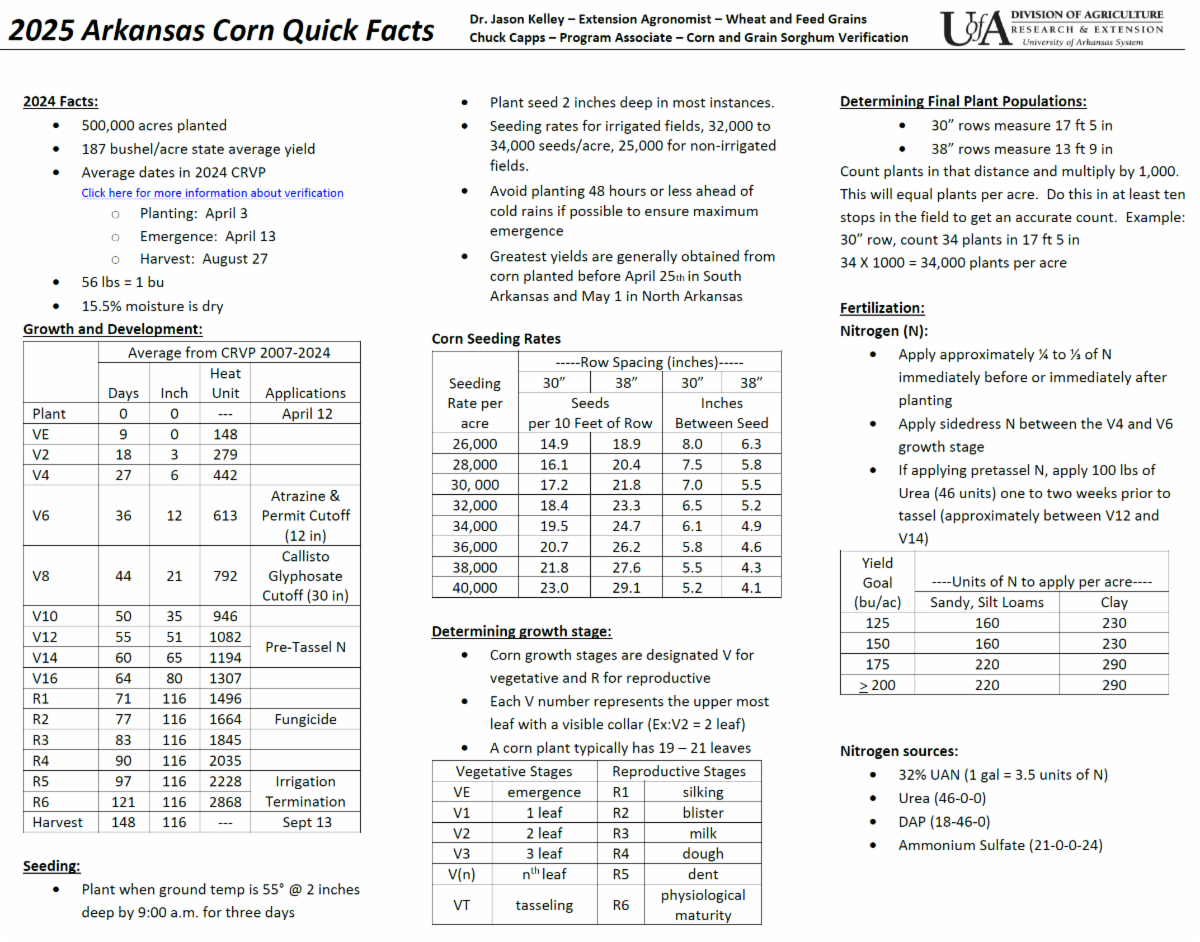
The 2025 Arkansas Corn Quick Facts is available by clicking the following link.


2025 Corn Quick Facts
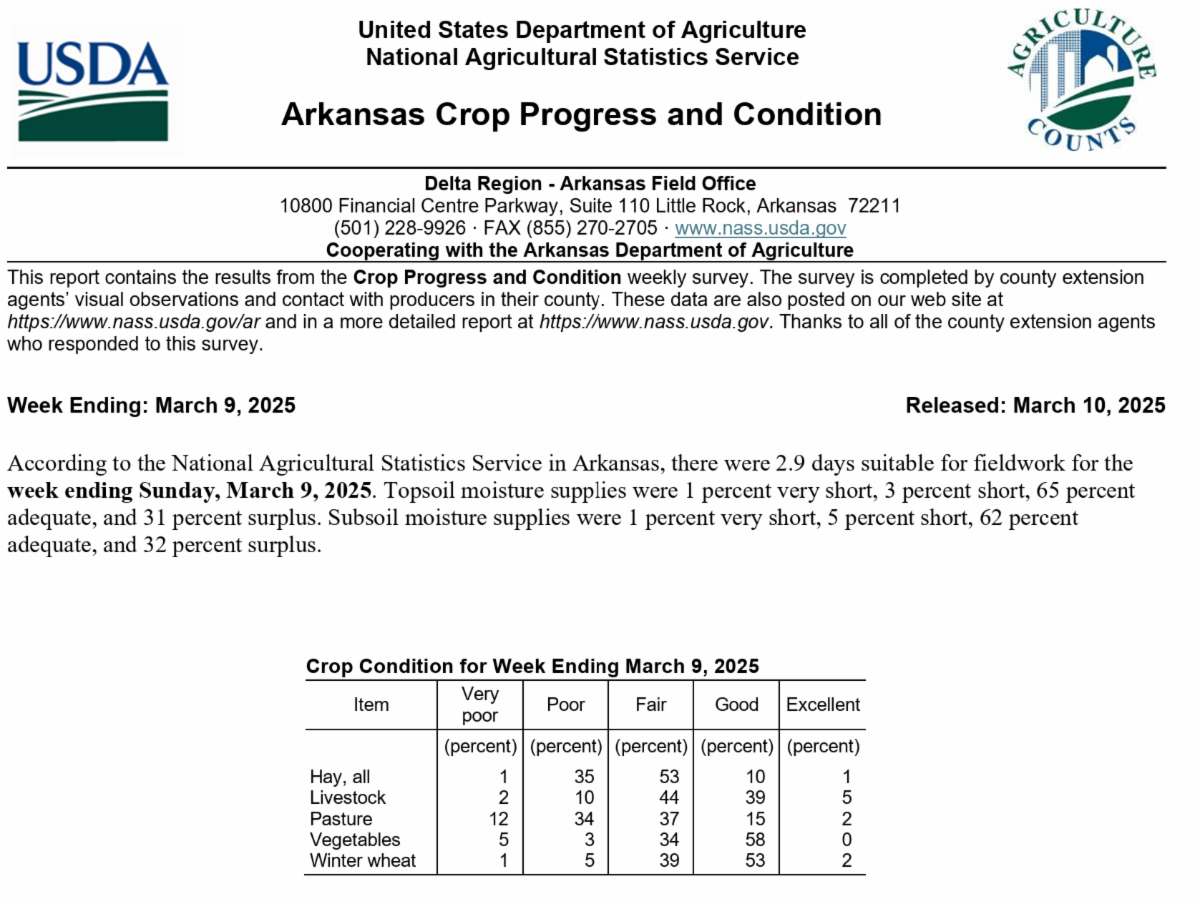
Arkansas weekly Crop Progress & Condition Report for the week ending Sunday, March 9, 2025

Beef, Small Ruminants, & Forages

Spring Fertilizing Strategies

Bronc Finch, PhD- Soil Fertility Extension Specialist


Hay Fields

Nitrogen

  • Nighttime temperatures of ≥60°F for 7 consecutive days (for warm seasons). 
  • Split N recommendation by Cuttings: 50 lb. N/acre for every Ton of Production.

Phosphorus

  • Apply soil test recommended P early season.
  • If fertilizer budgets are tight, reduce P fertilizer first.

Potassium

  • Split potassium recommendation up with Nitrogen
  • Potassium should be applied at a minimum of 1:1 with N.

(1 lb. Urea = 0.75 lb. Potash or 1 lb. AN = 0.5 lb. Potash)


Pastures

Nitrogen

  • Nighttime temperatures of ≥60°F for 7 consecutive days (for warm seasons).
  • Supplemental N can be applied every 4-6 weeks to boost biomass availability

P and K

  • Apply Early in the season
  • Low to Very Low (high application rates) can be split into fall and spring applications.

Hay Feeding/Leftover Hay

  • Using a pasture drag to spread out the leftover hay can have great benefits to the soil’s physical and nutrient properties.
  • Hay = Organic Matter 


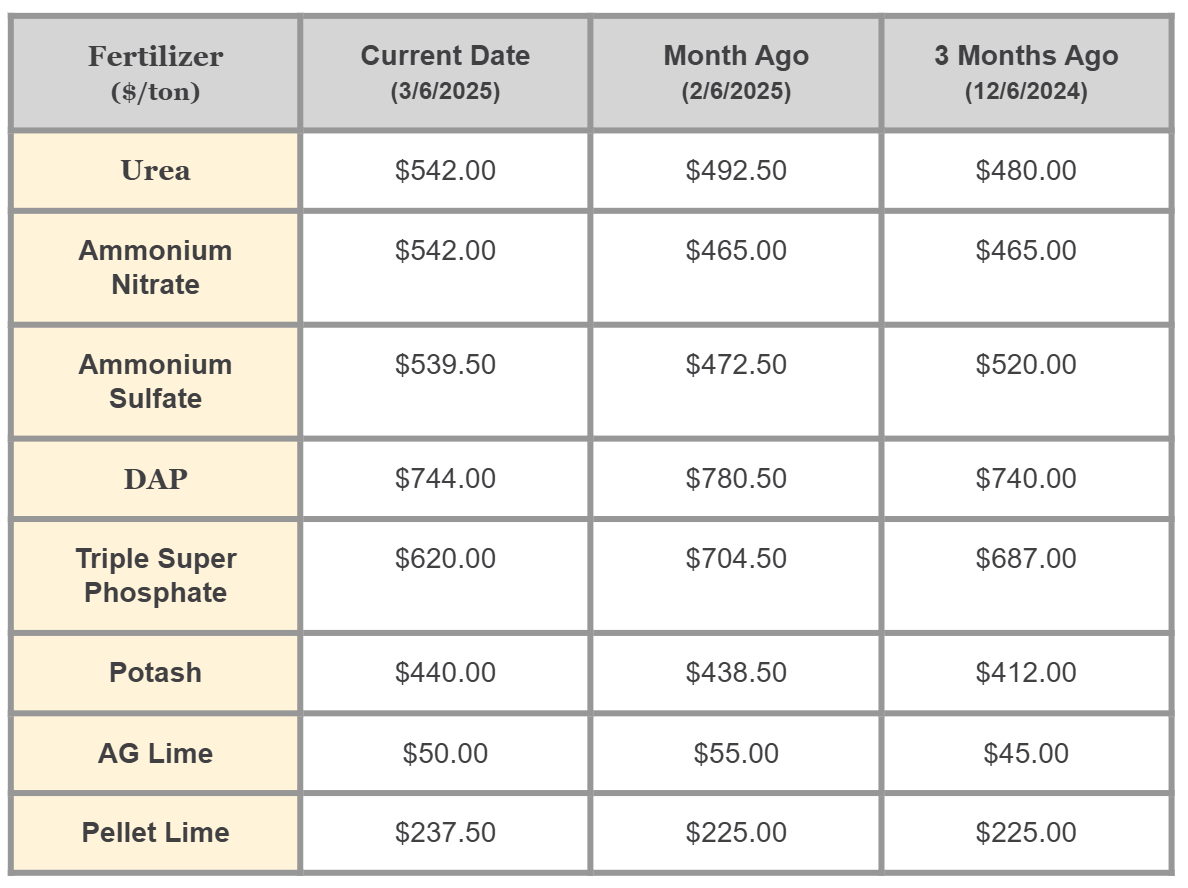
Calculating Fertilizer

 Product Needed:

(Pounds of nutrient rec. ÷ % Nutrient in product) × 100 = Pounds of product per acre

 Product Cost:

(Price ÷ Weight of Product) = Cost of Product (per unit of weight)

 Multiply by the product needed to get the total cost

 Nutrient Cost:

(Price ÷ (Weight of Product ÷ % Nutrient in product) × 100 ) = Nutrient Cost

This can be used to compare fertilizer products.

Bull to Female Ratios

Mark Z. Johnson, Oklahoma State University Extension Beef Cattle Breeding Specialist


Breeding season is approaching and bull turnout is only weeks away for herds that plan to start calving next January. We are fortunate in Oklahoma to have a large number of outstanding registered seedstock breeders who are, and will be, marketing bulls in volume in our state. The opportunity to invest in genetics to improve the profit potential of your operation leads to several questions and requires planning.


The first goal of breeding season is to get cows bred early in breeding season resulting in more calves born earlier in calving season, shorter breeding/calving seasons, older calves at weaning and ultimately, more pay weight at weaning due to calf age. The typical beef calf gains about 2 lbs./day up until weaning, accordingly a calf born one heat cycle (21 days) earlier will wean off about 40 lbs. heavier. How do we get this accomplished? By having an adequate amount of bulls to get cows serviced. The following shows a conservative expectation of the number of cows we should expect bulls to cover in a defined breeding season.


12 - 15 month old bulls = 10 – 12 females

15 - 18 month old bulls = 12 – 18 females

18 - 24 month old females = 18 – 25 females

24 mo. & older = 25 – 35 females

2 – 6 year old bulls = 25 – 35 females


Rule of Thumb: One female per month of age at turnout (after passing yearling Breeding Soundness Exam)


For example: If I have 60 heifers to breed and plan to turn out 15 month old bulls, I will need four bulls.


What is the typical life expectancy of a breeding bull? Typically up to the age of 6 is “prime of life” for breeding bulls. This isn’t to say that all bulls will break down at this age, but is more likely to happen after age six. Often when an older bull goes bad, it isn’t discovered until after breeding season when we are doing pregnancy checks.

Foot And Mouth Disease

Barry Whitworth, DVM, OSU Cooperative Extension State Livestock Extension Veterinarian


The World Organization for Animal Health confirmed an outbreak of Foot and Mouth Disease (FMD) in cattle in Hungary on March 6, 2025. The last reported case of FMD in Hungary occurred on December 31,1973. This is following a previous reported case of FMD in Germany on January 10, 2025. Hungary has not seen a case of FMD in fifty years and Germany has not had a case in forty years. The United States (US) has not experienced a case of FMD since 1929, but the Hungary and Germany experiences remind all livestock producers in the US that FMD is still a threat to livestock operations.


FMD is a highly contagious viral disease of cloven-hoofed animals. Important livestock species, that can be infected with the virus, are cattle, pigs, sheep, and goats. The disease is not a public health threat. Unfortunately, the disease can spread easily and cause severe economic hardship.


FMD is caused by the Foot and Mouth Disease Virus (FMDV) in the Picornaviridae family. The seven known serotypes of the virus are O, A, C, SAT 1, SAT 2, SAT 3, and Asia 1. Serotype O is the most common. The serotypes have multiple subtypes. The large number of serotypes makes vaccine development difficult since immunity to one serotype does not protect against others.


FMDV can be found in all fluids excreted from infected animals. This includes saliva, urine, feces, fluid from vesicles, semen, amniotic fluid, and aborted fetuses. Expired air from infected animals can transmit the virus in the right environment. The virus can enter the body through inhalation, ingestion, and direct contact with infected animals. The virus can also be spread by contaminated objects and feed.


Clinical signs of the disease can vary between species. The most common clinical sign are blisters or vesicles on the tongue, gums, teats, and the interdigital space of the hooves. Other typical symptoms found are fever, loss of appetite, excessive drooling or salivation, lameness, and decreased milk production in dairy animals. In severe cases, particularly in young animals, FMD can cause heart inflammation, leading to sudden death. Most adult animals recover in two to three weeks. Although, some animals never return to full production or have permanent issues such as hoof malformation, chronic lameness, chronic mastitis, and weight loss.


FMD is a difficult disease to control. Most animals in the US are very susceptible to FMD. If an outbreak were to occur in the US, the disease could spread rapidly, unless detected early and eliminated. The United States Department of Agriculture (USDA) has worked hard at keeping the disease out of the US. Animal Plant and Health Inspection Service (APHIS) continues to work with the Department of Homeland Security’s Customs and Border Protection at screening cargo at the border. The US restricts importation of animals and animal products from areas affected by FMD. APHIS deploys veterinarians worldwide to assist other countries in their efforts to control and eradicate the disease.


If a case of FMD occurs in the US, livestock producers will probably be the first to see it. For this reason, livestock producers should be familiar with the clinical signs of the disease. Any suspicious signs should be reported to their veterinarian. Livestock producers should maintain a good biosecurity plan. A key part of that plan should be to control who may enter their livestock operation. It is especially important to limit those who have traveled outside the US.


FMD is a constant threat to the US livestock industry. An outbreak would have significant economic consequences. US cattle producers should remain vigilant at keeping this disease out of the US.

Coccidiosis for Small Ruminants


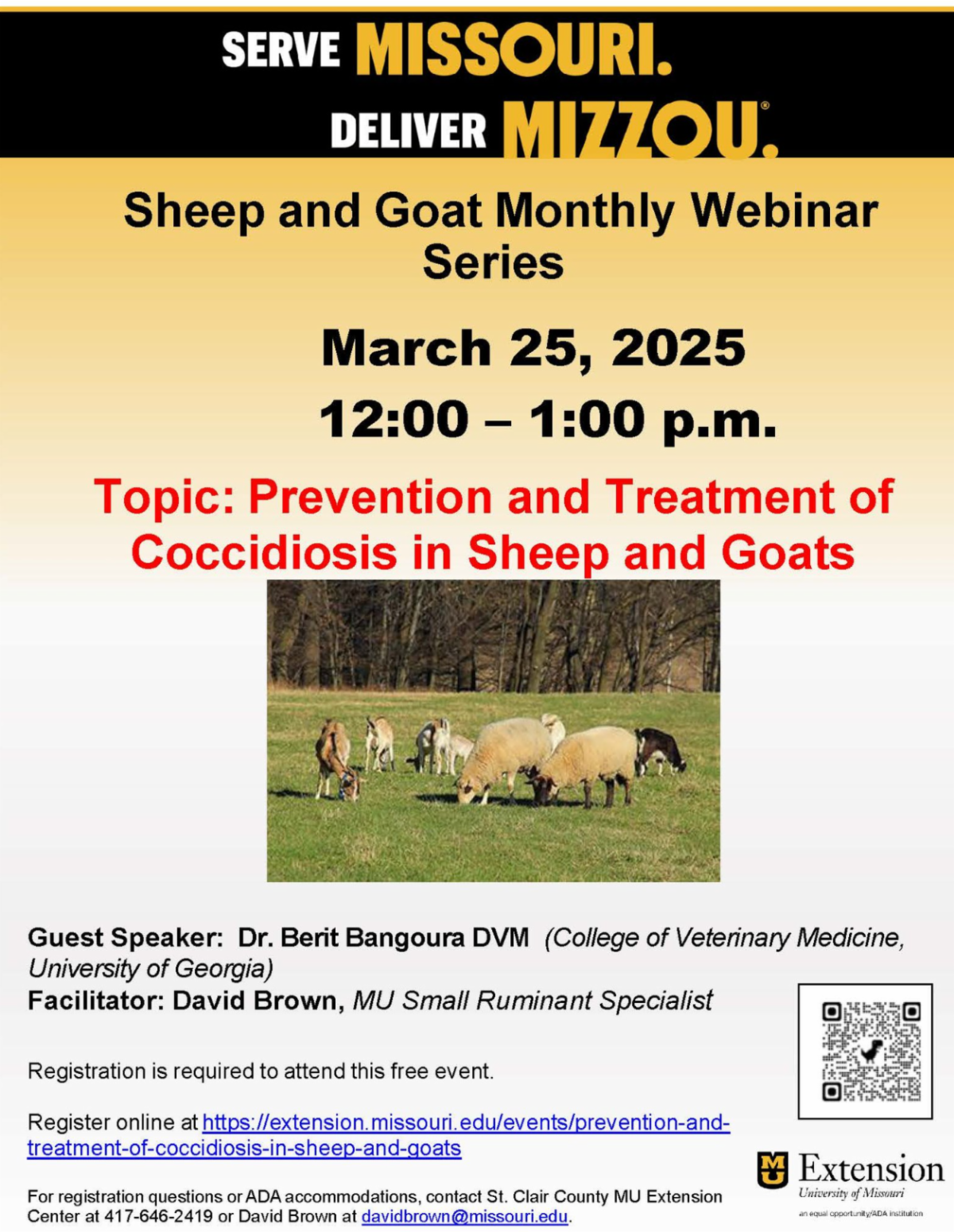
Coccidiosis, caused by Eimeria species, is a parasitic disease that primarily affects young lambs and kids, making them highly susceptible to diarrhea, dehydration, weight loss, weakness, and even death. Due to high veterinary costs and increased mortality rates, this disease presents a significant economic challenge to small ruminant producers.

This educational event will provide sheep and goat producers with essential knowledge on how to identify, prevent, and effectively manage coccidiosis, helping them safeguard their flocks and improve overall herd health.


Guest Speaker: Dr. Berit Bangoura DVM (College of Veterinary Medicine, University of Georgia)


Host/Facilitator: David Brown, Ph.D. (MU Small Ruminant Specialist)


There is no fee however, registration is required: register here

Cattle Market Notes Weekly

Livestock Market Report


The weekly livestock market report is available on the Arkansas Department of Agriculture website.

ADA Livestock Market Report

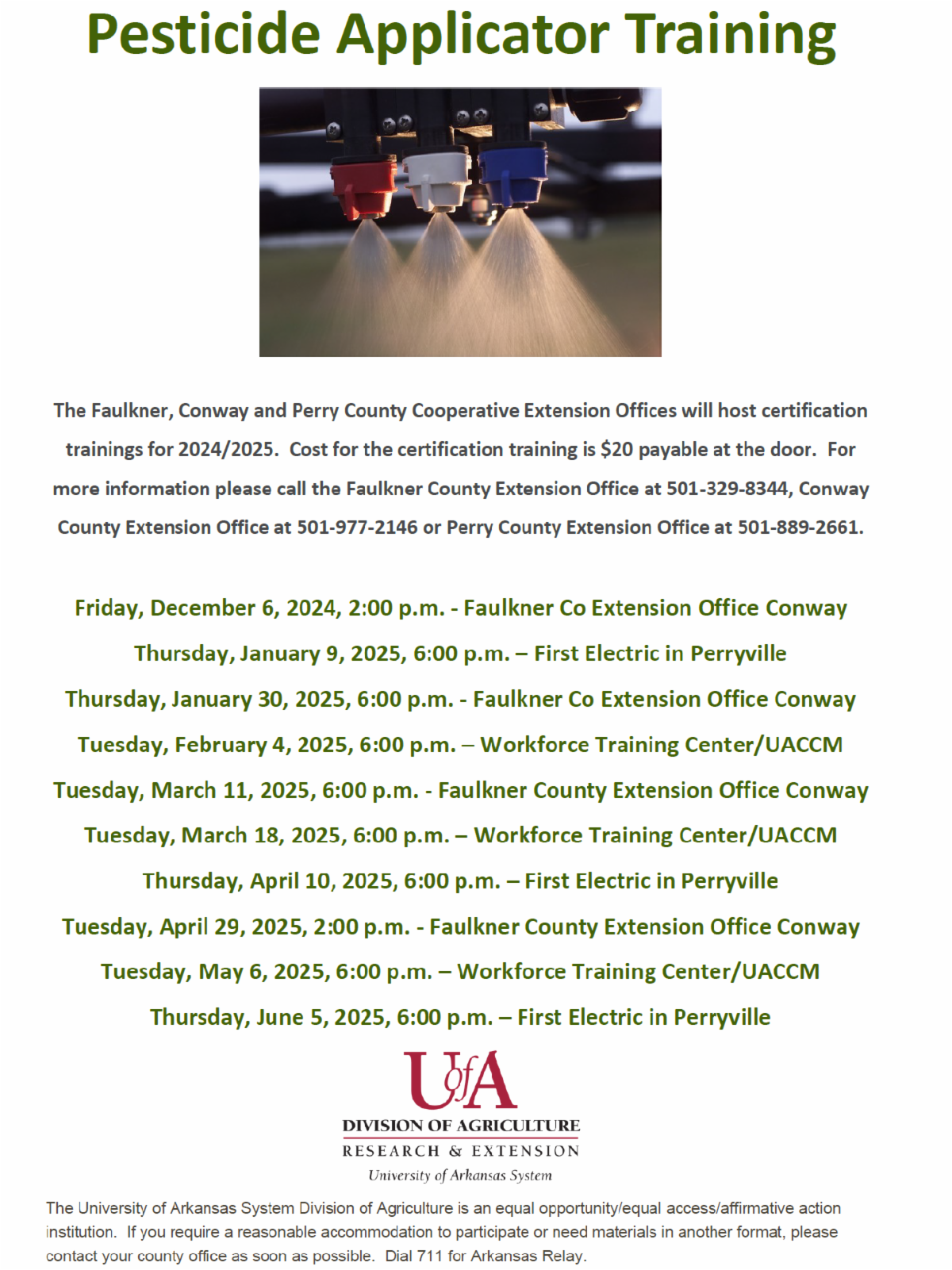
Pesticide Applicator Trainings


This is the Pesticide Applicator Training Schedule for Faulkner, Perry and Conway County.


Cost for the certification training is $20 that is payable at the training. It is a good idea to call and register for the class or if you have any questions, feel free to call and ask. Office numbers are located below. Anyone can go to any of these trainings. You don't have to just go in your county.


Faulkner County call and talk to Mindy Beard at the office at 501-329-8344 or email at rbeard@uada.edu

Perry County - 501-889-2661

Conway County - 501-977-2146


You can also get certified online. It also costs $20. The link to the online training is listed below.

Online Pesticide Applicator Training

Sign up for Text Alerts


You can now sign up for text alerts from me throughout the year. I have two areas you can sign up for which includes Faulkner Livestock or Faulkner Ag (Row Crop Updates). To sign up you can follow one of these links or use the QR Codes below.

Faulkner Livestock


Use either the QR Code or this link:

https://slktxt.io/10lLe

Faulkner Ag (Faulkner Row Crops)


Use either the QR Code or this link:

https://slktxt.io/10lLc

Upcoming Events


Contact Kevin Lawson, County Extension Agent–Agriculture, Faulkner County | Kevin Lawson
uaex.uada.edu/faulkner