Rail & Labor News from RWU
| |
Weekly Digest Number 46 - November 12th, 2024 | |
Welcome to the RWU Rail & Labor News! This news bulletin is produced and emailed out each Tuesday morning. We hope you find each week's news and information useful. If so, please share with co-workers, friends, and colleagues. If you like, you can sign them up to get all the news from RWU HERE. Or forward them the link. Got a hot tip? Please forward the article and a link to raillabornews@gmail.com. Note: If you read over this news bulletin each week, you will be sure to never miss the important news of what is going on in the railroad world from a worker's perspective! | |
Editor's Note: Sean Jeans-Gail offers a sobering assessment of the new political landscape as Republicans edge toward a trifecta in D.C., setting the stage for a second Trump term. For rail labor and passenger rail advocates, the return of Trump to the White House raises more red flags than green lights. His first term was marked by attempts to gut long-distance Amtrak services, stall critical infrastructure projects like the Hudson River Tunnel, and revoke funding for California’s high-speed rail ambitions—all clear signals that transportation, particularly rail, ranks low in his priorities. A Trump 2.0 administration might prove to be just as unfriendly, if not openly hostile, to intercity rail programs, and the implications for passenger rail workers and rail infrastructure could be profound. As the dust settles on this election, rail labor will need to brace itself and prepare for a fight to preserve—and hopefully advance—the future of passenger rail in America. | |
Sean Jeans-Gail / Nov 8
While results from this week’s election are still being tabulated, Republicans are well on their way to securing a trifecta in Washington, D.C. for the 119th Congress. We’re still in the process of sorting through the state-by-state results, but we've already identified a few key takeaways. Donald Trump has secured a second term in the White House, making him only the second president in U.S. history to serve non-consecutive terms. While President Trump occasionally mentioned trains on the campaign trail in 2016 (mainly as one of the ways the U.S. was falling behind China), transportation wasn’t a top priority during his first term or his 2024 campaign. In fact, there are only a few meaningful datapoints on passenger rail from his first administration, and none of them suggest that a Trump Administration 2.0 will be friendly to intercity rail programs:
-
In 2017, the Trump Administration’s Presidential budget proposal called for eliminating Amtrak’s long distance passenger rail service while preserving service for the Northeast Corridor (NEC) and state supported routes. (You can read our response to that proposal here.) That proposal was rejected by Congress.
-
In 2018, the Trump Administration held up funds for the Hudson River Tunnel, breaking a previously agreed-upon deal between the U.S. Department of Transportation, New Jersey, and New York. Contemporary reporting suggested that President Trump used the funding as leverage in his negotations with Senator Chuck Schumer (D-NY) over funding for a border wall.
-
In 2019, the Trump Administration terminated a $929 million grant agreement with the State of California for its high-speed rail project. The funding was ultimately restored by the Biden Administration.
| |
Editor's Note: Norfolk Southern’s push for one-minute railcar inspections is a blatant example of profit-driven recklessness. Rail labor has long warned that lean operations and job cuts compromise safety, and this directive only sharpens those concerns. FRA’s Chief Safety Officer expresses worry over defects being missed—a fear shared by every rail worker who understands the risks of cutting corners. This isn’t just a policy shift; it’s a dangerous gamble with lives and safety in the name of efficiency; safety cannot be sacrificed on the altar of corporate profit. | |
Associated Press / Nov 6
Norfolk Southern sparked renewed concerns about flaws being missed during railcar inspections when it told employees this week they should spend no more than a minute looking at each car. But the railroad said the rule simply reflects the current industry standard, and there are no plans for disciplining employees for missing that one-minute target. Rail unions have been raising the alarm for several years now about inspections being rushed across the industry in the wake of the railroads eliminating one-third of all the jobs as they adopted the current lean operating model that has become the standard.The Federal Railroad Administration’s Chief Safety Officer Karl Alexy said the agency was already tracking inspection times closely across the industry before the new announcement from Norfolk Southern, and the agency will be watching how the railroad implements it. “If they really are going to be held to that, I’m very concerned about defects not being found, I think that is pretty quick,” Alexy said.
| |
Editor's Note: The FTA’s new safety regulation for transit workers is a hard-won step forward, but it’s overdue. Transit workers have pushed for these protections for years, and while this is progress, real safety requires more than words. Enforcement, funding, and a commitment to workers over profit are essential to make it meaningful. | |
|
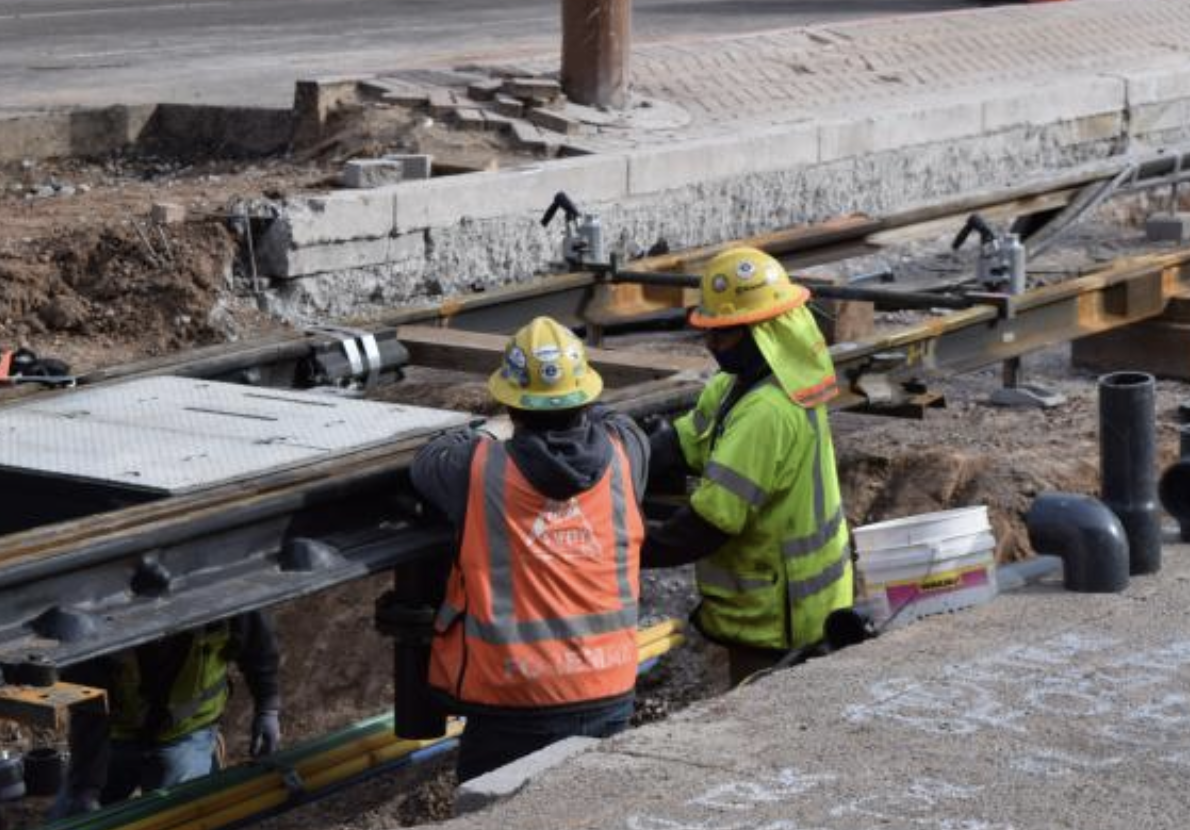
The U.S. Department of Transportation’s Federal Transit Administration (FTA) is issuing a regulation to make transit workers safer, nationwide, by mandating standards to protect them while working on transit railways. This is the latest action from the Biden-Harris Administration to protect transit workers, keeping them safer at work. “Transit workers deserve to know their safety is the highest priority when they’re performing track work,” said U.S. Transportation Secretary Pete Buttigieg. “Thanks to the Biden-Harris Administration, we now have the first-ever rule requiring worker protection standards for rail transit agencies that will keep American transit track workers safe as they do their important work to keep our transit systems operating.”
|
|
Editor's Note: Maximillian Alvarez, a steadfast friend of RWU, and Steve Mellon bring us an unfiltered look into East Palestine nearly two years after Norfolk Southern’s ‘bomb train’ derailment. In this powerful documentary, they reveal a community left in a toxic sacrifice zone, used as a political pawn while real support remains absent. Their work cuts through the divisive narratives, highlighting the common ground among working-class communities—a truth that corporate media and politicians would rather ignore. East Palestine is a haunting reminder of what happens when profits are placed above people. | |
 | 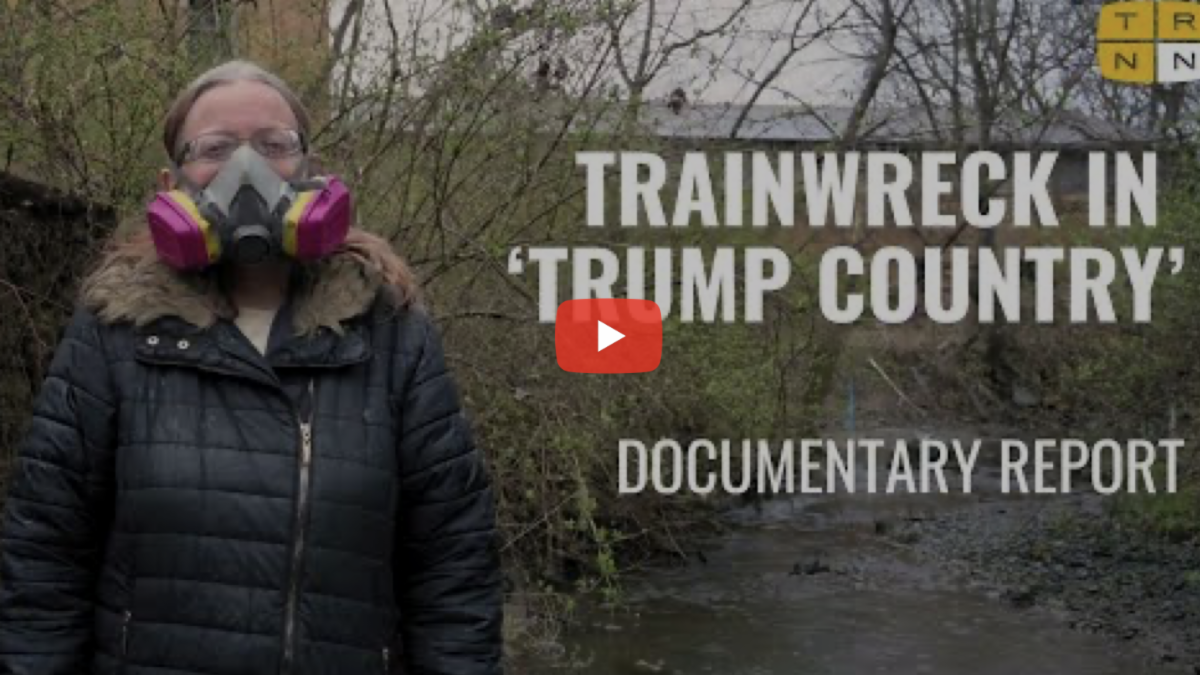 |
From the moment a Norfolk Southern ‘bomb train’ derailed in East Palestine, OH, on February 3, 2023, traumatized and chemically exposed residents became another political football to be kicked around by Republicans, Democrats, and the media. Nearly two years since the avoidable catastrophe that changed their lives forever, residents in and around East Palestine and their families have been left to live in a toxic “sacrifice zone.” Like in 2020, the majority of voters in this part of Ohio and Pennsylvania will likely vote for Donald Trump in 2024, though plenty have given up on the whole system. In this on-the-ground documentary report, TRNN Editor-in-Chief Maximillian Alvarez and Steve Mellon from the Pittsburgh Union Progress go to East Palestine to speak with residents face to face, deep in the heart of so-called “Trump Country,” and what they find is a stark reminder that working-class communities have way more in common than corporate media and corporate politicians want us to believe.
| |
Editor's Note: Phillip Longman taps into a rare point of consensus in America: the need to bring manufacturing back home. From politicians to union halls, there’s agreement that we must start making more in America. Trump pushed this with tariffs, while Biden has doubled down with both tariffs and subsidies for key sectors like tech and green energy. But for working people, the real question is whether these policies will translate into good, stable jobs or just another slogan. Rebuilding American industry is essential—but only if it truly benefits the workers on the ground, not just corporate balance sheets. | |
|
Phillip Longman / October 29
For all our differences, Americans are remarkably united on one key point. Partisan Democrats and Republicans, business and labor leaders, and just about all the folks sitting in think tanks or on barstools across this great land agree that we must start making more stuff in America. President Donald Trump, of course, pursued this goal primarily by imposing tariffs and ran for a second term promising to impose far more. The Biden-Harris administration maintained many of Trump’s original tariffs and added some new ones while also creating deep subsidies for many forms of domestic manufacturing, particularly computer chips and green technology.
| |
Editor's Note: The restoration of passenger rail service between Mobile and New Orleans marks a long-overdue victory for the Gulf Coast, abandoned since Hurricane Katrina. With $178 million in funding from the Bipartisan Infrastructure Law, the Gulf Coast Corridor Improvement project is a step towards reconnecting communities that have waited nearly two decades for reliable rail service. While this is a win for the region, it also serves as a reminder: true progress in rail requires sustained commitment and investment, not just from Washington but from every stakeholder who believes in a future where rail serves the people. | |
US DOT / October 23
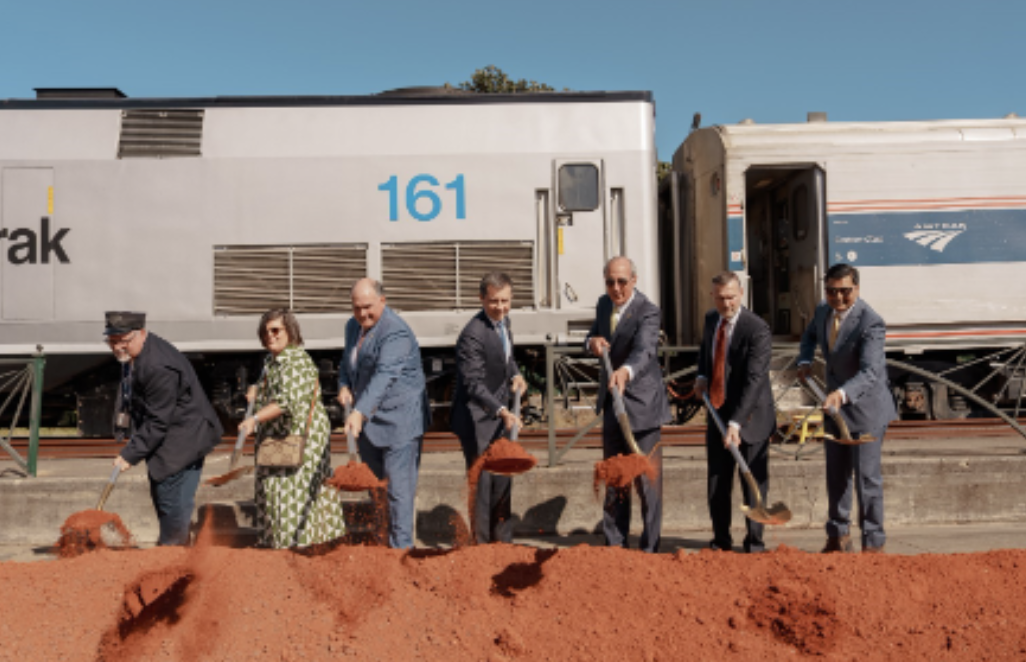
Yesterday, Secretary Pete Buttigieg joined Mobile Mayor Sandy Stimpson, Federal Railroad Administrator Amit Bose and representatives from Amtrak, the Southern Rail Commission, and other local leaders for a groundbreaking ceremony for the Gulf Coast Corridor Improvement project, which will restore passenger rail service to the Gulf Coast. Once the layover track and platform are completed, Amtrak will resume passenger service between Mobile and New Orleans for the first time since Hurricane Katrina devastated the region in 2005. The Biden-Harris Administration awarded the project $178 million through the 2021 Bipartisan Infrastructure Law.
| |
Editor's Note: Voters sent a clear message in 2024: public transit matters. With 46 out of 53 transit ballot measures approved so far, communities across the country are stepping up to support transportation infrastructure that connects people and strengthens local economies. As APTA President Paul Skoutelas notes, these measures reflect a growing commitment to invest in transit. But let’s not forget—voter support is only the first step. Real progress will require continued pressure to ensure these funds are used effectively, putting people and communities first. | |
Progressive Railroading / Nov 7
As of Tuesday, voters so far in 2024 approved 46 out of 53 ballot measures in support of public transit, according to the American Public Transportation Association (APTA). APTA found that voters supported 19 out of 25 transit-related ballot measures in the 2024 general election, with one measure still outstanding. Those 19 voter-approved measures add to the 27 measures already passed by voters this year, APTA officials said yesterday in a press release. "Initial results from this year’s public transportation ballot initiatives show a clear trend: Communities across the country are backing public transit," APTA President and CEO Paul Skoutelas said. "These measures have become a vital indicator of voters' commitment to investing in transit, and this year's response has been overwhelmingly positive.”
| |
Editor's Note: Amtrak’s high-speed rail vision is gaining momentum, from Texas to the Northeast Corridor. Join Byford as he outlines Amtrak’s plans—will America finally embrace faster, more frequent rail, or will progress hit the usual roadblocks? | |
High Speed Rail Alliance
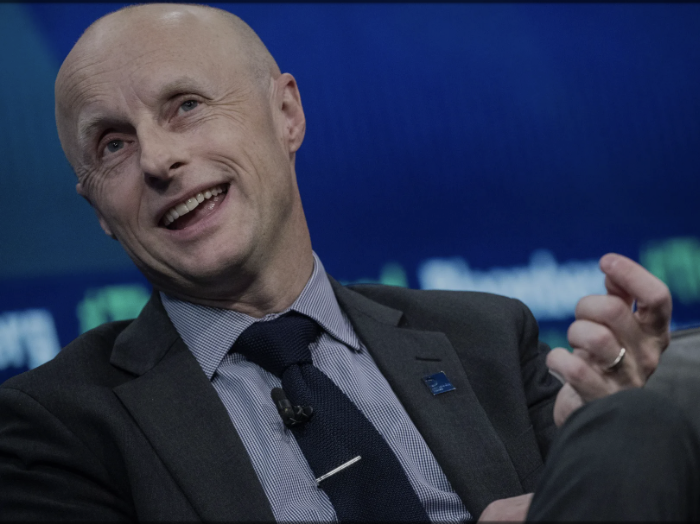
Last year, Andy Byford—the transportation executive who earned the nickname ’Train Daddy’ while managing New York City’s subways—became Amtrak’s Senior Vice President for High-Speed Rail Development Programs. Amtrak has also begun working with Texas Central on the proposed high-speed line linking Dallas and Houston, and it has work underway to improve Acela service between Washington, DC and Boston. In this online talk, we’ll hear from Andy Byford about Amtrak’s plans and the best possibilities for faster, more frequent American train service.
| |
Editor's Note: SMART’s $81 million award to extend rail service in northern Sonoma County marks a major win for sustainable transit in California. With funding from TIRCP and additional federal, state, and local contributions, SMART will expand service from Windsor to Healdsburg, tackling key transportation needs with an eco-friendly approach. As more communities rally behind modern rail, projects like this signal a shift toward greener, connected futures. | |
|
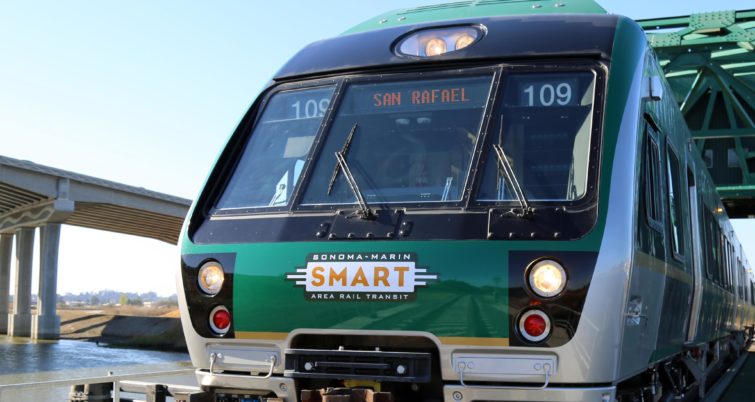
The Sonoma-Marin Area Rail Transit (SMART) District is pleased to announce an $81 million award from the State of California to extend passenger rail service to communities in northern Sonoma County. The funding comes from the Transit and Intercity Rail Capital Program (TIRCP) and is being matched by $188 million in other secured and pending Federal, State, Regional and local funds. With two additional grant decisions pending in June 2025, SMART will bring environmentally friendly and modern rail service and pathway from Windsor north through Healdsburg to the northern Healdsburg city limits, addressing crucial transportation needs in the region.
| |
Editor's Note: BNSF, CSX, and Union Pacific’s lawsuit against the FRA highlights the ongoing tug-of-war between railroads prioritizing cost-cutting and the FRA’s insistence on a ‘belt and suspenders’ safety approach. By pushing to reduce visual inspections in favor of unproven tech, the railroads continue to prioritize efficiency over the safety standards that protect workers and the public. The FRA’s caution is a reminder that technology alone cannot replace the expertise of trained inspectors on the ground. This litigation underscores a troubling trend: railroads pushing to erode safety measures in the name of innovation, all while safety waivers go unchecked. | |
Trains.com / Nov 8
BNSF Railway, CSX, and Union Pacific filed lawsuits against the Federal Railroad Administration today for its failure to act on a half dozen safety waiver requests that in some cases would allow railroads to scale back visual inspections in areas where they have deployed new high-tech train and track inspection systems. The litigation asks federal courts to find FRA’s inaction on waiver requests is “arbitrary and capricious” and in violation of FRA’s own regulations requiring action within nine months, the Association of American Railroads said. The FRA has disagreed, noting in some cases that railroads need to take a “belt and suspenders” approach that uses new technology while maintaining required inspections using railroad employees.
| |
Editor's Note: Rail labor knows too well the RLA’s impact on the right to strike, stretching out negotiations and stifling worker power in the name of ‘protecting commerce.’ Expanding this restriction to the maritime industry is a blatant move to erode labor rights further. Workers deserve the right to stand up for fair treatment without bureaucratic handcuffs. This proposal isn’t about safeguarding the supply chain; it’s about stripping workers of their last line of defense. | |
Frank Wilner / Nov 4
"In response to an early October economy-jolting dock workers’ strike—now suspended until mid-January—Rep. Michelle Steel (R-Calif.) introduced a “Safeguarding Our Supply Chain Act” (H.R. 9911) to transfer maritime industry employees from National Labor Relations Act (NLRA) coverage to that of the Railway Labor Act (RLA) in hopes of preventing future work stoppages. Written collaboratively in 1926 by rail labor and management, and passed by Congress without substantive change, the RLA promotes jaw-jaw to prevent war-war and resulting work stoppages that create national emergencies by impeding the flow of interstate commerce. Concluding commercial airlines are similarly vital to interstate commerce, Congress added them to RLA coverage in 1936—but never the maritime industry. An appropriate question for stakeholders is whether expanding RLA coverage to the maritime industry is the appropriate solution to protecting the flow of interstate commerce."
| |
Editor's Note: Bill Moyer, a strong ally of RWU, argues on the Volts podcast that our rail system is missing out on big public benefits by prioritizing profits over people. Solutionary Rail’s vision could shift freight from highways, reduce emissions, and use rail corridors for renewable energy transmission. Moyer’s call to ‘Reconnect America’ goes beyond rail—it’s a push for public infrastructure that truly serves the common good. | |
Solutionary Rail's Bill Moyer on Volts podcast / Nov 7
"The episode, How Railroads Could Boost the US Energy Transition, dives into how our privately owned rail system, focused on short-term profits, is missing out on big public benefits—like shifting freight from roads to rails, reducing emissions, and even using rail corridors to carry high-voltage transmission lines for renewable energy. The Reconnect America theme is something I feel is worth leaning into right now. To me, this feels like a time to both stand by those who are most vulnerable AND to truly listen, to recognize the humanity of others, the aspirations of others, and to seek connection by appealing to the best in them. The work that Solutionary Rail has been championing is an opportunity to connect, including with unlikely allies. I invite you to listen to the interview, either here on our website or at the Volts site."
| |
NEWS FROM AROUND THE LABOR MOVEMENT | |
 | |
For over half of a century, working people in the U.S. have seen stagnating wages, worsening working conditions, the loss of good jobs, and constant increases in the cost of living. This is the result of corporations’ never-ending thirst to squeeze as many profits out of workers as possible. Throughout this time, both major parties have been complicit in this corporate assault. They have maintained their power, and a corrupt two-party system, by dividing the working class along lines of race, gender, and education. Frustration with the Democrats and their unwillingness to confront corporate power or offer real solutions to working people’s economic concerns led many working people to vote for Donald Trump on Tuesday, giving him the margin of victory. While working people largely voted for Trump in the hope that he will improve the economy, Project 2025, the 900-page blueprint for a second Trump administration, will only worsen the economic problems working people face. One of the most dangerous political threats that the labor movement, and the working class, has faced in generations, Project 2025 proposes a variety of measures to weaken unions in the private sector, and bluntly states its objective to eliminate them completely in the public sector. It also seeks to weaken or eliminate virtually every law that protects workers, from OSHA to the minimum wage to laws against child labor.
| |
Nick Niedźwiadek / November 6
Democrats spent months hand-wringing about losing their grasp on rank-and-file union members. On Tuesday that was the least of their worries. Despite persistent fears that labor might break for former President Donald Trump, exit polling showed Vice President Kamala Harris winning voters in union households 55 to 43 percent, roughly on par with President Joe Biden’s performance in 2020. (A separate survey from NBC News had Harris up 10 points among union voters.) Union leaders were quick to take credit for holding the line, though they acknowledged they faced headwinds from Democrats’ overall economic messaging.
| |
|
Jenny Brown / Nov 5th
Striking Boeing Machinists will start returning to work tomorrow after voting for a new contract with substantial wage increases. The 33,000 Seattle-area Machinists voted 59 percent to accept, just two weeks after two-thirds of them voted to reject a slightly worse contract. Voting was more subdued this time, workers said. “The big difference in this contract is that we're getting a lot of intimidation from our CEO now,” said striker Mylo Lang. He voted no. “We put in a long, hard fight. We achieved a lot,” said Jon Voss, a steward at the Renton factory, where they build the 737. “Boeing does not get to be the bully that they have been for the past 25 years.” The new contract increases wages 38 percent over four years, substantially increases the 401(k) match, slightly improves mandatory overtime rules, and contains a promise to build the next plane in the Puget Sound area. It does not restore the defined benefit pension, a big demand of many strikers.
| |
WEEKLY DERAILMENT DEPARTMENT | | | | |