Welcome to the University of Oklahoma Carceral Studies Consortium Newsletter. The Carceral Studies Consortium strives to build a community for intellectual exploration that includes faculty, staff, graduate students, community members, practitioners, and organizers.
Carceral Studies is concerned with the independent function and nexus of the political and social systems that organize, shape, sustain, and entrench practices of punishment, surveillance, incarceration, and harm.
|
|
|
|
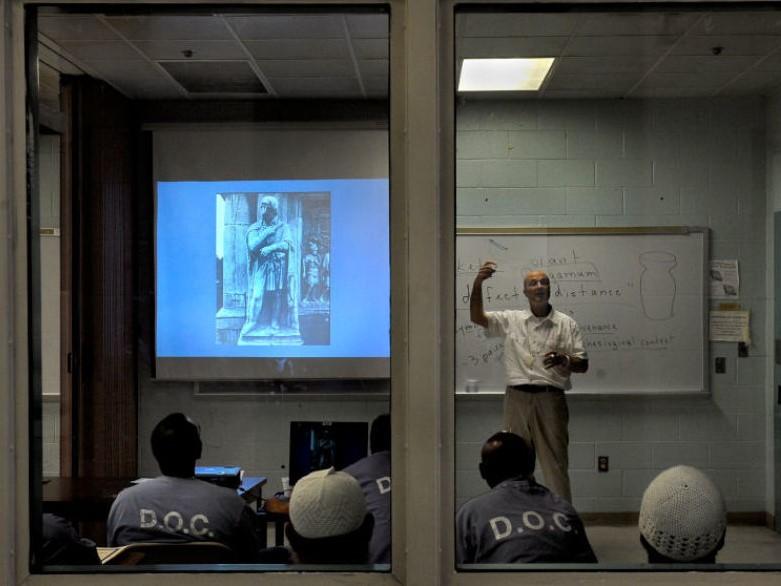
Assistant professor Michele Friendner posits that “unlike deaf children, deaf incarcerated people are generally not seen as having ‘potential’ that deserves nurturing through auditory technology.” Assistive hearing devices are neither a medical priority nor a protected necessity for those that are incarcerated. Friender explains that many state level departments of corrections follow a “one good ear policy” which dictates a maximum of one hearing aid be provided in the case where both ears suffer from at least moderate hearing loss. In the case of at least one good ear, even if the other has complete loss, no such aids are provided. Multiple state departments of corrections attempt to skirt by with the bare minimum of accommodations despite the necessity of situational awareness such as responding to correctional officers’ commands. Wearing a single hearing aid has been shown to demand more cognitive work to adjust for sound identification and localization. Carceral institutions, according to Friedner, are making a clear statement that their best definition of a “medical necessity” is “...keeping incarcerated people biologically alive.”
|
|
|
|
Those facing incarceration have seen an increased likelihood of house arrest as a response to social distancing concerns in jails and prisons during the COVID-19 pandemic. Reporting the findings from law professor Kate Weisburd, April Glaser explains how house arrest and ankle monitors are not a significant improvement over physical imprisonment. E-carceration, the use of technology such as ankle monitors in place of physical incarceration, is often recommended as a reform to imprisonment because it, in theory, allows individuals to continue employment and avoid the conditions of jail/prison. However, Glaser points to the ankle monitor as a form of carceral surveillance that arbitrarily denotes appropriate behavior while on house arrest and is merely a looming threat of physical incarceration for any infraction. Those on house arrest are responsible for maintaining a charged ankle monitor, paying technology fees per day for the monitor, and requesting any travel weeks in advance; failure to abide by these regulations can be treated as an attempted “escape.” Weisburd concludes that “viewing electronic surveillance as an alternative to incarceration furthers and perpetuates a dangerous false binary between incarceration or monitoring and ignores an obvious third option, which is freedom.”
|
|
|
|
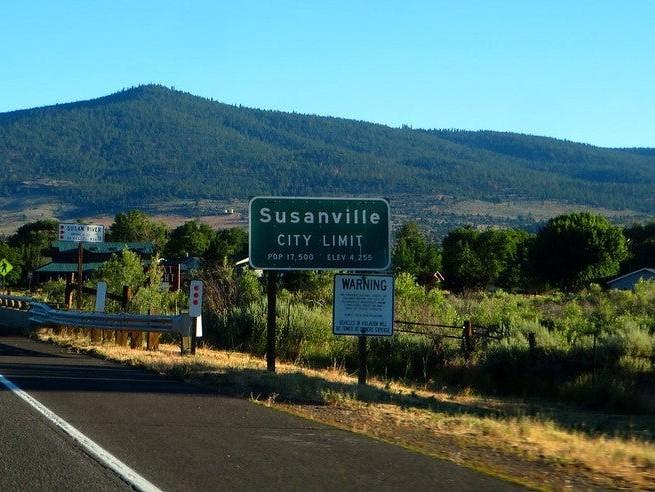
Decades of mass incarceration have required an increase in prison construction. Sofia Andrade reveals how these new infrastructures resulted in many small towns across the nation building entire local economies around imprisonment. These small towns rely heavily on employment from the local prisons and vigorously maintain this financial system by voting for pro-incarceration political candidates as well as fighting decarceration policies. Andrade clarifies this misplaced economic dependency by pointing out that locals are often not placed in the highest-paying positions, and decarcerated towns often pivot the spaces to different industries. In addition, profiting off human caging can be traumatic for the community. Andrade notes the solution to successful prison town death and moral rebirth is one that includes “...direct engagement with communities to develop the new and innovative opportunities that would be necessary for a just transition away from a prison economy,” such as repurposing prison infrastructures into “... shelters, cannabis laboratories, sports villages, and even movie studios.”
|
|
|
|
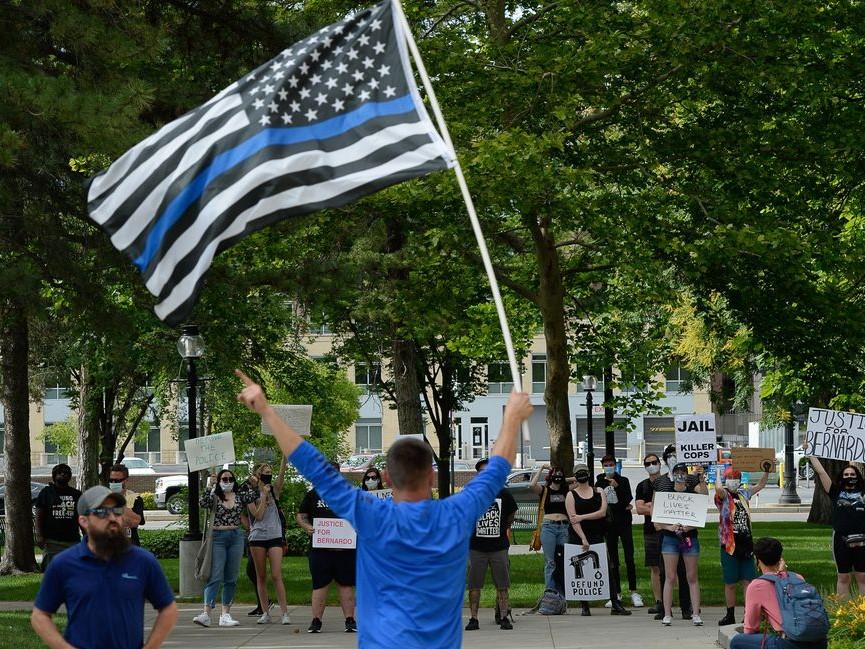
A Garfield County, Iowa police officer arrested a 19-year-old-woman for allegedly “stomping on a ‘Back the Blue’ sign.” According to the officer’s affidavit, the officer arrested this woman for “destroying property that did not belong to her in a manner to attempt to intimidate law enforcement.” Under Utah Code, these allegations of destroying property are enhanced as a hate crime violation because of law enforcement’s protected status. Utah is one of five states that list law enforcement officers in the same category as race and gender within the states’ hate crime laws’ protected categories. The ACLU of Utah argues that the anti-police hate charge filing could show that the state will more harshly punish people who oppose law enforcement.
|
|
|
|
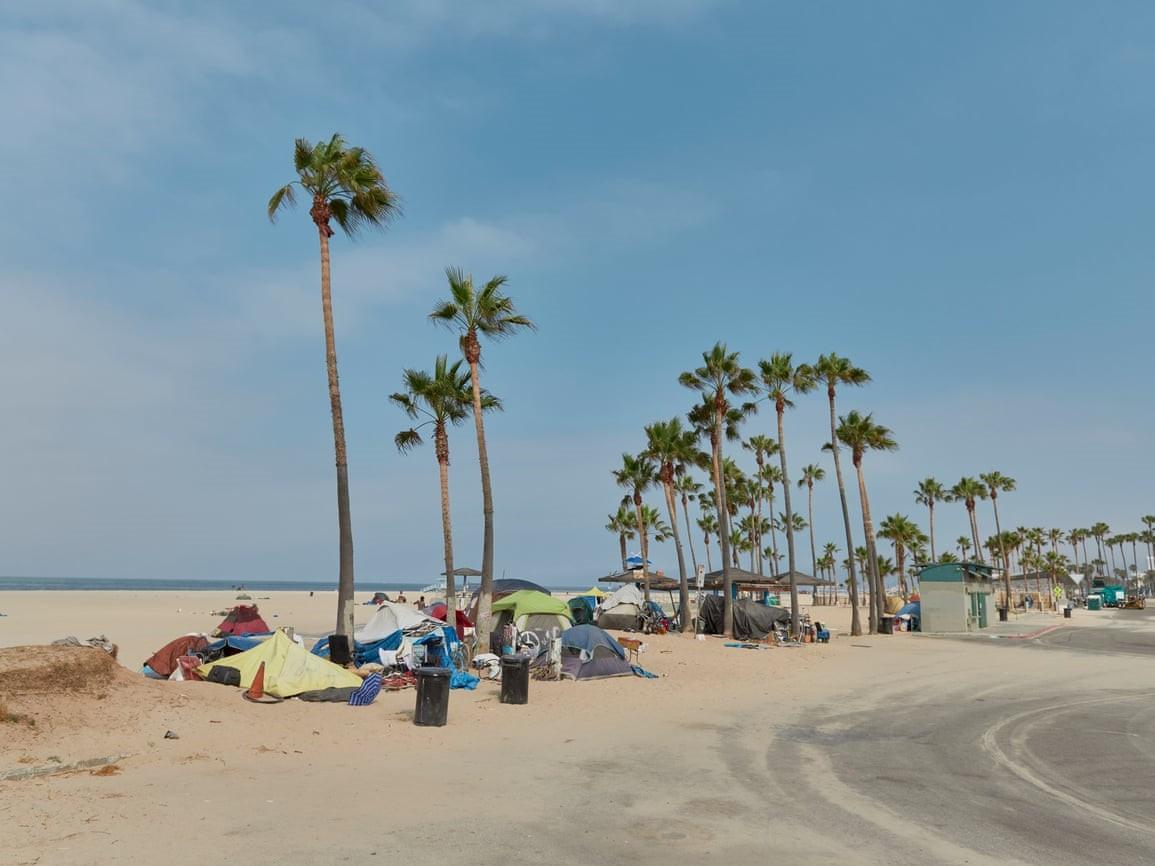
During the COVID pandemic, a community of unhoused people has ballooned along Venice Beach in Los Angeles. The city pledged to help find housing for these residents, but many fear the attention on their community will not result in long-term help. Dawn Little, a member of this Venice community, said: “If we’re not here, then I don’t know where we’ll go. I guess we’d find another sidewalk.” As LA has begun reopening, public officials and mayoral candidates have faced pressure from merchants and homeowners to clear the area while also exaggerating and exploiting fears for their own political gain. Local councilman Mike Bonin has pledged that no one will be arrested and all residents of the encampment will be offered housing, but that’s a difficult process. Residents of the encampment, for example, are wary of entering a temporary housing program, as Sam Levin writes, “fearing they’ll end up somewhere with little privacy or many restrictions.” Although the city promised a humane approach to those in the encampment, the city council recently passed new restrictions on encampments and LA city police officers recently cleared sections of the encampment in the middle of the night. Lisa Redmond with Venice Catholic Workers argues that law enforcement can destroy trust and lead people to flee without housing: “It’s prioritizing the public space over actual human beings.”
|
|
|
|
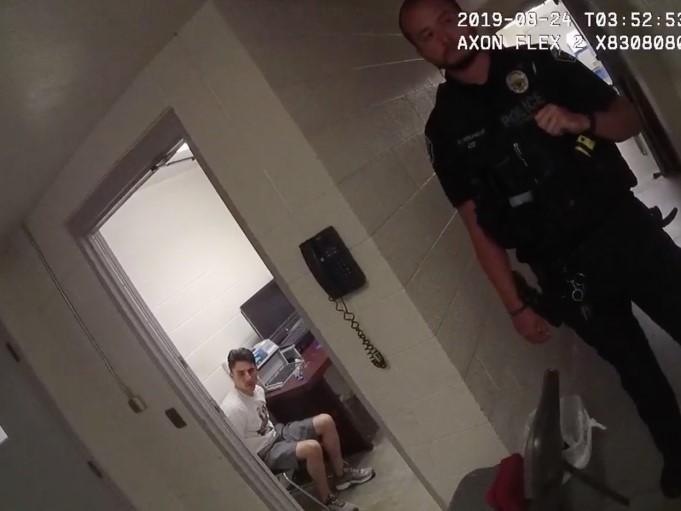
Content Warning: This article includes graphic body camera footage of the incident.
In 2019, West Valley City police officers in Utah responded to a call concerning Chad Breinholt, who was allegedly intoxicated and threatening suicide. According to Jessica Miller, rather than meeting Breinholt’s medical needs, officers chose to arrest Breinholt for suspicion of driving under the influence. While being detained, officers threatened Breinholt with additional charges and antagonized him while also failing to disclose relevant medical information to the fire department that responded to his collapse. After hours of visible anguish and objective signs of intoxication, officers were conducting a second body search for a weapon when Breinholt reached for one of their guns. Two officers momentarily attempted to overpower the handcuffed Breinholt before sergeant Will Longman drew his weapon and shouted, “You’re about to die, my friend,” to which he fired one fatal shot. Two years later, sergeant Longman is still active in the department with pending charges.
|
|
|
|
Decades of economic liberalization in India have, as Tanvi Misri writes, “exposed its farming communities to exploitative multinational agri-corporations and climate injustices, plunging them into a perennial state of crisis.” These circumstances have compelled Indians to migrate: the number of Indians apprehended at the U.S. border rose from 188 in 2007 to 9,234 in 2018. The arrival of these Indian migrants represents, as Harsah Walia writes, the “outcome of the actual crises of capitalism, conquest, and climate change.” Indians who cannot afford the expansive and uncertain pathways to legal migration to the U.S. rely on smugglers. Indians who make it to the border often languish in detention because asylum officers and immigration judges refuse to believe that they face persecution and therefore are ineligible to apply for asylum. Misra argues that the research U.S. officials rely on to make asylum decisions doesn’t capture “the complexity of the circumstances on the ground some Indians are fleeing.” Because the idea of “illegal immigrants” was created as a legal category and racialized category, the construct obscures the complexity and scope of human migration as well as the United States’ role in enabling it.
|
|
|
|
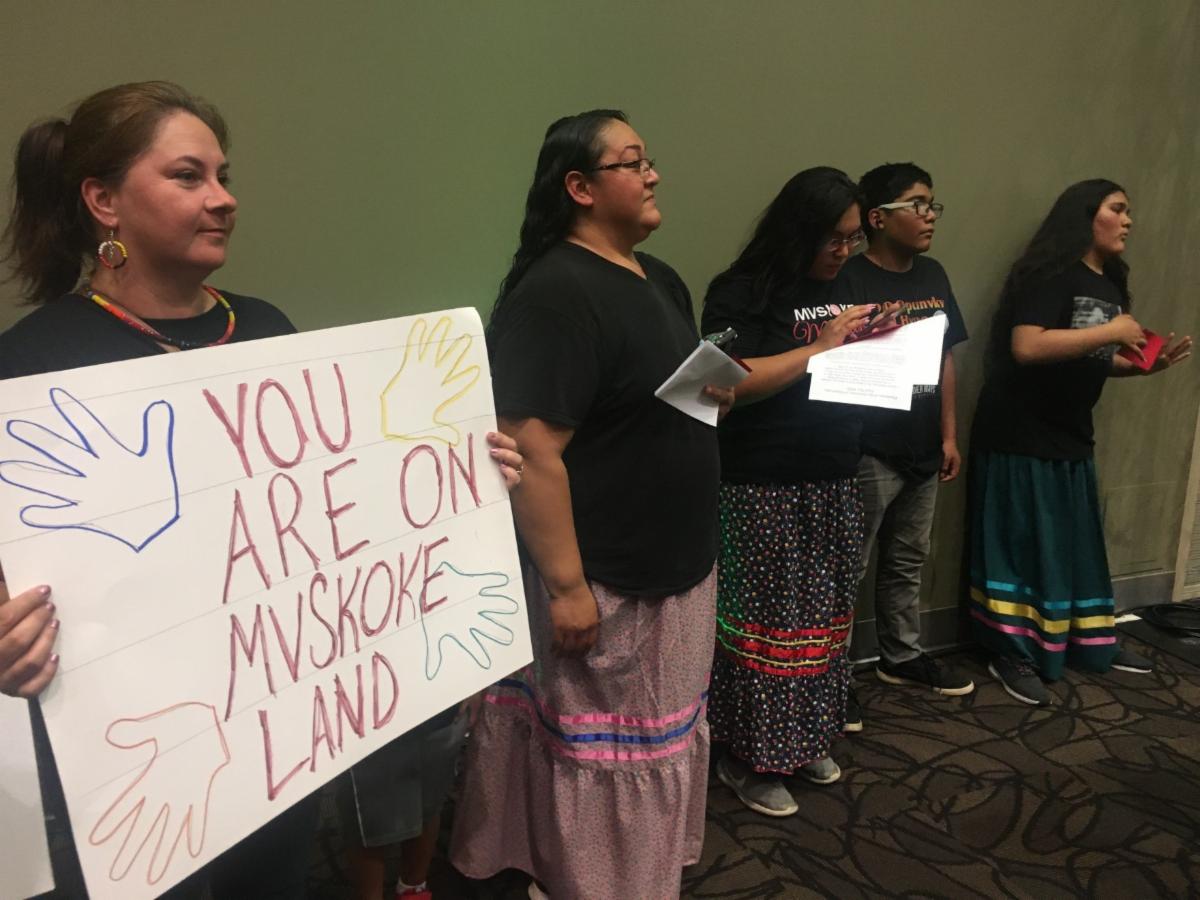
Governor Kevin Stitt and district attorneys from across the state led the McGirt v. Oklahoma Community Impact Forum. The forum ended abruptly earlier than its scheduled concluding time after protesters held signs that read “You Are On Indian Land” and “We Are Still Here” as well as turning their back towards the panel. While Stitt and district attorneys have said that crime is increasing in the state and public safety will be undermined by the McGirt decision, communities throughout the Five Tribes have been recognized nationally as some of Oklahoma’s safest cities. Moreover, when discussing McGirt Stitt claims that state crime rates are rising, but journalist Allison Herrera notes that Stitt recently touted the state’s declining violent and non-violent crime rates in a National Review article dated July 10. Stitt told Herrera that he is hesitant about cross-deputation because he is unsure of the training that tribal police officers receive and the fact that non-tribal individuals have no vote in who the sheriff or police chief is, but tribal police officers often receive the same training as non-tribal police officers. For example, Cherokee Nation officers receive training at Federal Law Enforcement Training Center and Muscogee Nation police receive CLEET training. The Supreme Court has ruled that tribal police have the authority and right to arrest non-tribal citizens within reservation bounds.
|
|
ABOUT
The Consortium Newsletter will offer a roundup of a few selected articles that reflect today’s news, organizing, and thinking related to the carceral state. We understand that freedom work is built on education and engagement. Education requires an understanding of contemporary issues informed by their historical context. We hope that these curated articles will help you analyze the issues that we face and understand the community that we strive to construct.
Join the conversation!
We encourage feedback, suggestions, and article suggestions. Please reach out to carceralstudies@ou.edu with any ideas, thoughts, or recommendations.
If anyone you know is interested in receiving this newsletter and other information from the Carceral Studies Consortium, please forward them this email and they may click this link to subscribe.
|
|
Land Acknowledgment
The University of Oklahoma is on the traditional lands of the Caddo Nation and the Wichita & Affiliated Tribes. This land was also once part of the Muscogee Creek and Seminole nations. It also served as a hunting ground, trade exchange point, and migration route for the Apache, Cheyenne, Comanche, Kiowa, and Osage nations. Today, 39 federally-recognized Tribal nations dwell in what is now the State of Oklahoma as a result of settler colonial policies designed to confine and forcefully assimilate Indigenous peoples.
|
|
The University of Oklahoma is an equal opportunity institution. ou.edu/eoo |
|
|
|
|
|
|