- Rural Hospital Closures and Re-openings
- Staff Spotlight: Tyler Malone, PhD
- Flex Monitoring Team Awarded Five-Year Cooperative Agreement
- Student Spotlights
- Spring Photos
- In the News
|
|
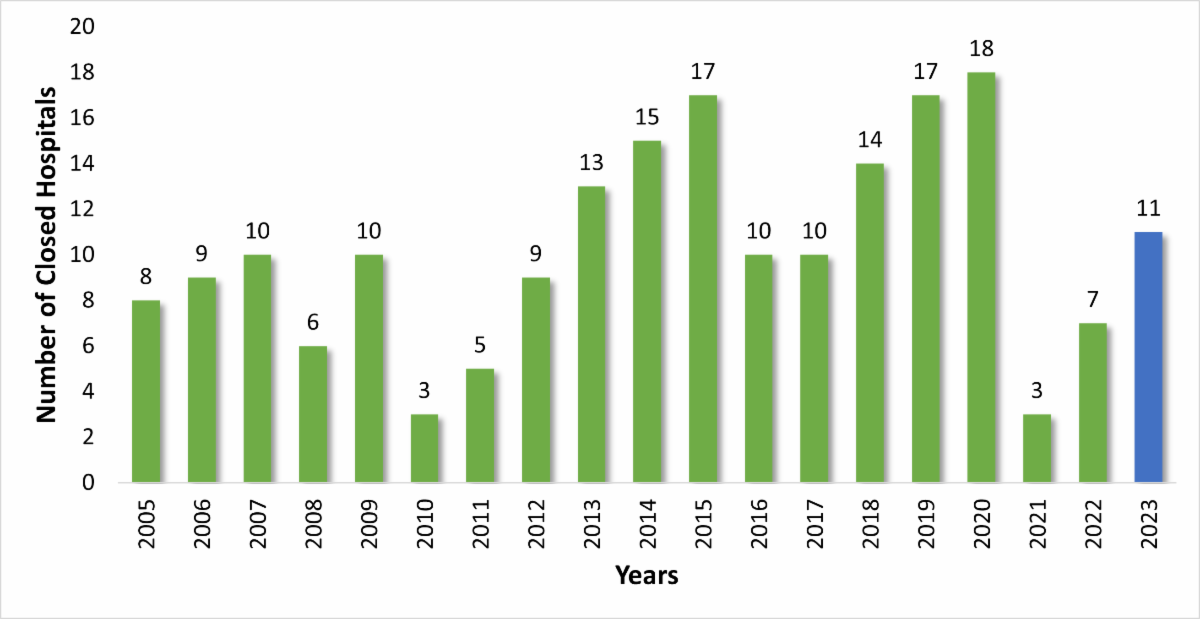
There are currently 11 closed/converted hospitals in 2023, bringing the total closures count to 195 for 2005-2023 [6 conversions to Rural Emergency Hospitals (REH), 89 conversions to other services, and 100 complete closures], with 152 occurring since 2010 (5 conversions to REH, 69 conversions to other services, and 77 complete closures). Below are summaries of the closures and re-openings discovered since our last newsletter (March 7, 2023).
Re-openings
-
De Queen Medical Center in De Queen, Arkansas, previously a closed Critical Access Hospital (CAH), reopened in a new facility. The hospital closed in May 2019 due to financial difficulties. The community approved a tax increase to reopen the hospital but could not use the closed facility due to property tax liens from creditors of the previous owner, Jorge Perez, tied to alleged health care billing fraud. The old facility was also too close to nearby hospitals to be a CAH, so they built the new facility four miles away in the same rural community. The new hospital, Sevier County Medical Center, opened on January 23, 2023 and is working to achieve CAH status.
-
Jellico Medical Center in Jellico, Tennessee, reopened in April 2023 and has been renamed Jellico Regional Hospital. The hospital currently offers emergency room, lab, radiology, and inpatient services on a limited basis. They plan to restore all services over the summer. The Jellico Medical Center originally stopped admitting patients in November 2020 and fully closed March 1, 2021. Jellico is in a mountainous area, and the nearest hospitals are each an hour away except one in the neighboring state of Kentucky, which is 30 minutes away and out of network for some patients.
Closures
-
St. Margaret's Health – Spring Valley, an Medicare Dependent Hospital (MDH) in Spring Valley, Illinois, closed on June 16, 2023. All services ceased and administration blames the closure on financial distress from COVID-19, a 2021 computer system cyberattack, and staff shortages. The system closed another hospital nearby in Peru, IL in January of this year citing similar reasons. Patients will now have to drive 30 minutes to reach the nearest hospital for emergency care and obstetrics.
-
Sturgis Hospital, a rural hospital in Sturgis, Michigan, ceased inpatient services on May 1, 2023. The hospital is pursuing the REH designation and continues to offer emergency and outpatient services. The hospital was losing money and considering bankruptcy, resulting in layoffs and department closures over the last several years. They managed to stay open through 2022 by securing an $11 million grant in June from the state.
-
St. Luke's Health - Memorial Hospital, a CAH in San Augustine, Texas, ceased inpatient services on April 1, 2023 and is awaiting approval of their application to convert to an REH. The hospital struggled financially for years due, in part, to low inpatient volume. The nearest full-service hospital 36 miles away.
-
UPMC Lock Haven, an MDH in Lock Haven, Pennsylvania, ceased inpatient services on March 30, 2023. The hospital president announced that March 29, 2023 was the last day they would admit inpatients. The hospital officially became a department of another hospital, Williamsport Regional Medical Center, on April 3, 2023 and was fully designated as an Outpatient Emergency Department (ED) on April 20.
-
Anson General Hospital, an MDH in Anson, Texas, ceased inpatient services on March 26, 2023 and converted to an REH effective March 27.
-
Alliance Healthcare System, a Sole Community Hospital in Holly Springs, Mississippi, ceased inpatient care and converted to an REH, effective March 16, 2023. This is the first Mississippi hospital to convert to an REH.
-
Irwin County Hospital, a rural hospital in Ocilla, Georgia, ceased inpatient services on January 31, 2023 and converted to an REH. It is the first in Georgia to convert.
Conversion to REH
Six hospitals have converted to REHs so far in 2023.
- Anson General Hospital (Texas)
- Alliance Healthcare System (Mississippi)
- St. Mark's Medical Center (Texas)
- Falls Community Hospital and Clinic (Texas)
- Irwin County Hospital (Georgia)
- Crosbyton Clinic Hospital (Texas)
|
|
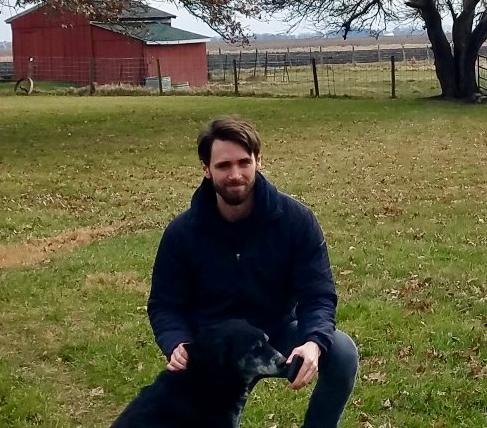
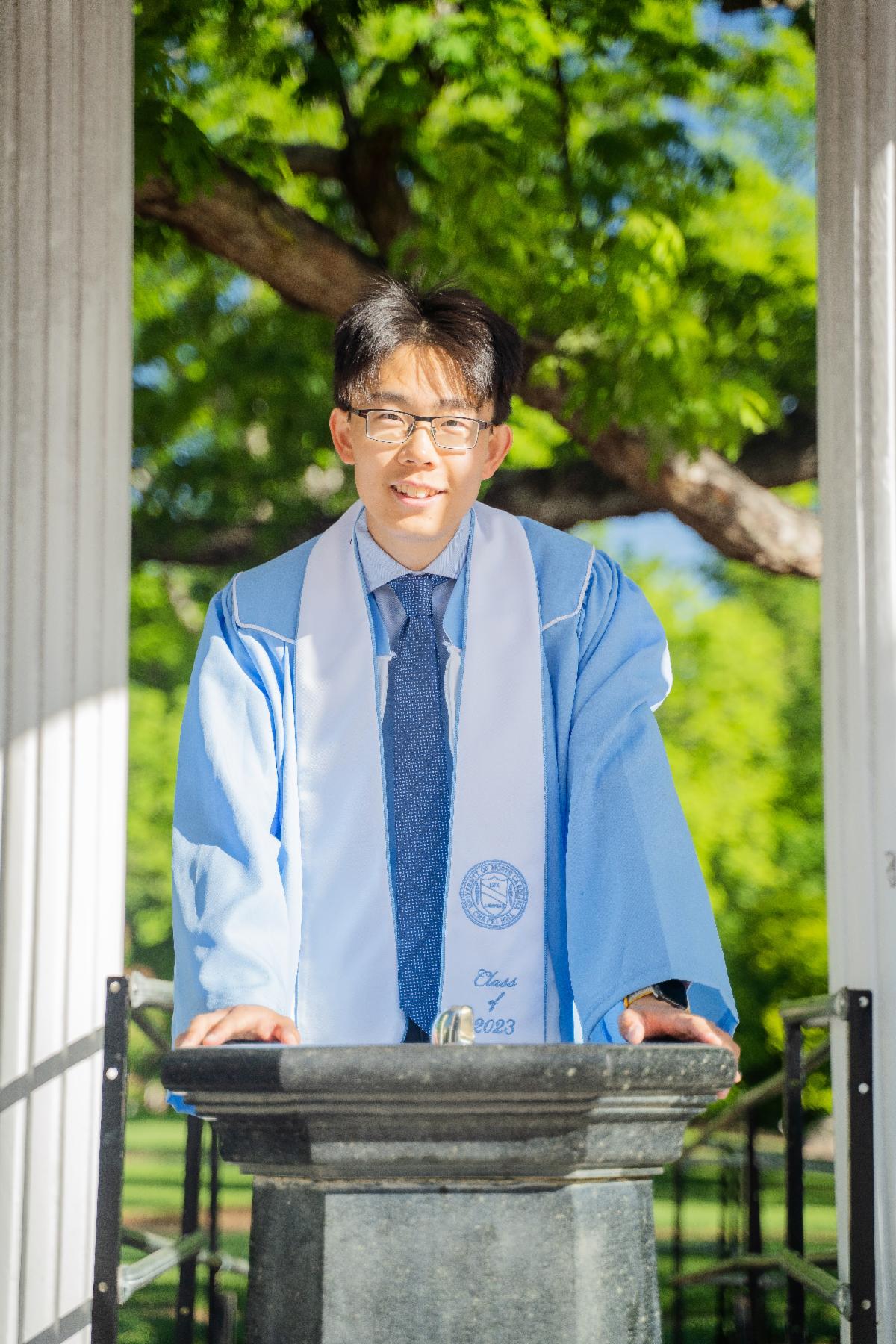
In May, we officially welcomed Dr. Tyler Malone as a research investigator with the NC RHRP. Tyler has been part of our research family for four years as he worked on his doctorate. We are beyond excited to have him join us and look forward to the added quality and dimension he will bring our program. Now, we'll let Tyler introduce himself.
Hello! My name is Tyler Malone, and I am a new Research Investigator with the NC RHRP. Prior to joining the NC RHRP full-time, I graduated from the University of North Carolina with a PhD (’23) in Health Policy and Management. However, I didn’t start my college career in public health. I was a mathematics and biology double major at first (to be honest, I wasn’t fully sure how to combine the two; I just figured I would choose one over the other at some point). As I continued my collegiate education, I gradually shifted toward a field that allowed me to combine the elements of my prior academic interests. Public health caught my eye in particular as its cross-disciplinary nature provided wonderful opportunities to combine my love of analytics with research topics that can improve health care for others. I chose UNC’s doctoral program in Health Policy and Management for several reasons, including the excellent department faculty and the chance to work on research projects related to rural and behavioral health. I have a natural interest in rural health due to growing up outside a small town in Illinois (shout-out to Farmer City, IL!), and I am passionate about improving health care outcomes among rural communities. I also developed an interest in behavioral health over the course of my graduate education. The first research projects I worked on as a graduate student focused on psychological distress and coping skills among young adults, and I’ve been fascinated by the complexities and importance of behavioral health ever since.
One of the best aspects of my new Research Investigator position is that it will allow me to continue the work I started as a Graduate Research Assistant (GRA). Working as an NC RHRP GRA was one of the absolute highlights of my graduate student journey! As a student researcher, I was able to develop my research skills and build strong connections with health services colleagues within and outside the NC RHRP. Much of my rural research has focused on topics related to rural patient care-seeking behavior and rural hospital closures, patient volume, financial indicators, and discharge patterns. Going forward, I am excited to continue our current projects on rural hospital markets and financial distress models, explore new topics promoting rural health, and develop partnerships with other key rural stakeholders and researchers!
Last, but not least, no newsletter bio would be complete without a random fun fact. My random fun fact is I am co-owner of the Green Bay Packers. Not only do the Packers share the colors of our Rural Program, but they are also easily the smallest market among all NFL franchises. Truly the Team Rural representative of professional football! Go Pack Go!
|
|
Flex Monitoring Team Wins 5-Year Award |
|
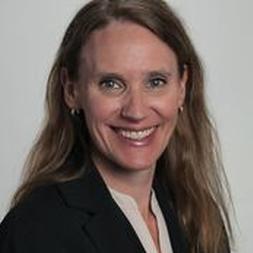
Led by Dr. Kristin Reiter, the NC RHRP uses FMT funds to provide financial analysis to Critical Access Hospitals (CAHs). In 2011, using Medicare Cost Report data, we began providing individual financial indicator reports to every CAH (now more than 1,300). In 2015, we began making this data available through the Critical Access Hospital Measurement and Performance Assessment System (CAHMPAS). CAHMPAS is a tool that lets CAH administrators and State Flex Programs explore their CAH performance on financial, quality, and community-benefit measures. CAH financial data on CAHMPAS is accessible only to CAH administrators and State Flex Programs.
Our recent research studies have focused on the financial characteristics of CAHs participating in Accountable Care Organizations (ACO), the financial impact of COVID-19 on CAHs, and the reliance on non-operating revenue by rural and urban hospitals. We also produce a summary of CAH financial and operational indicator medians by state each year. This report presents national and state median values for the 29 financial indicators included in CAHMPAS. Below are our recent and upcoming briefs and reports.
|
|
Working with talented students is a huge bonus of working with the NC Rural Health Research Program. This year we were fortunate to have five graduate research assistants and two undergraduate research assistants. Students are immersed in rural health research projects, which help them enhance their research skills in addition to becoming rural health advocates. They contribute a tremendous amount to our work. You'll see they are authors of many briefs and peer reviewed manuscripts we produce. Below, in their own words, are short summaries of their experiences this year and where they are headed next. |
|
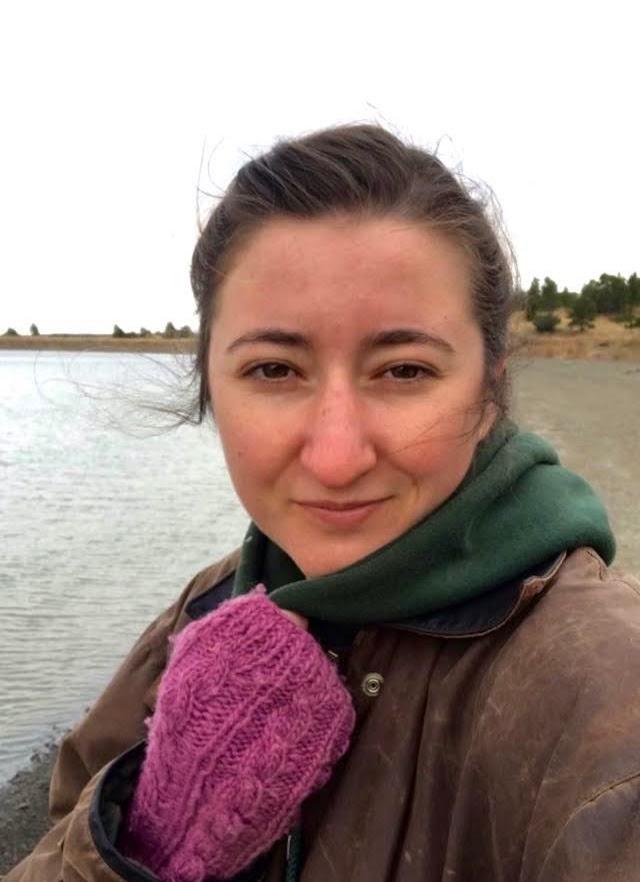
Emmaline Keesee (MSPH 2023): I worked on two projects with NC RHRP over the last year. In my first role, I helped explore the relative uncompensated care burden in rural and urban hospitals, knowing that high levels of uncompensated care can be challenging for small, rural hospitals with limited profitability margins. Our team produced a brief and infographic on uncompensated care for rural hospitals by ownership, system affiliation, and size. Additionally, we worked on an article looking at uncompensated care when considering rural status and location in a Medicaid expansion state. The second project I worked on provided updates on the importance of the CMS low volume hospital adjustment for rural hospitals given its extension through 2024. I learned a great deal during my time at NC RHRP about how to write formal manuscripts, analyze data, and work on a research team. I'm grateful for the knowledge and mentorship I received. I will be continuing my education in the fall by starting a doctorate in Health Policy at Vanderbilt University. I'm excited to continue building on what I learned with NC RHRP while in my next position!
|
|
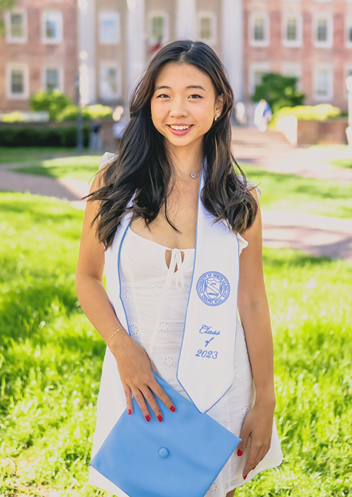
Jessie Ma (BSPH 2023): As an undergraduate research assistant this year, I helped develop a brief on different hospital operating margin measures. We compared three different measures of operating margin and how each varied using Hospital Cost Report data. I have learned so much about rural hospitals and their struggles, COVID-19's impact on the health care industry, financial terminology, and data analysis. Something I struggled with, but was also an extremely rewarding experience, was learning more about data analysis and graph creation using Stata and how to apply it to this project. It was amazing to work with real-life data and have an opportunity to apply what I learned in class and to work that can create an actual impact with policymakers and hospital administrators.
After graduating, I will move to Boston to work as a Healthcare & Analytics Strategy Consulting associate at IQVIA. The main job responsibilities include conducting primary and secondary research on markets, payers, physicians, patients, and competitive products to identify key findings for client engagements. However, before starting work in July, I will be traveling to Europe and China! I am very excited about what is to come!
|
|
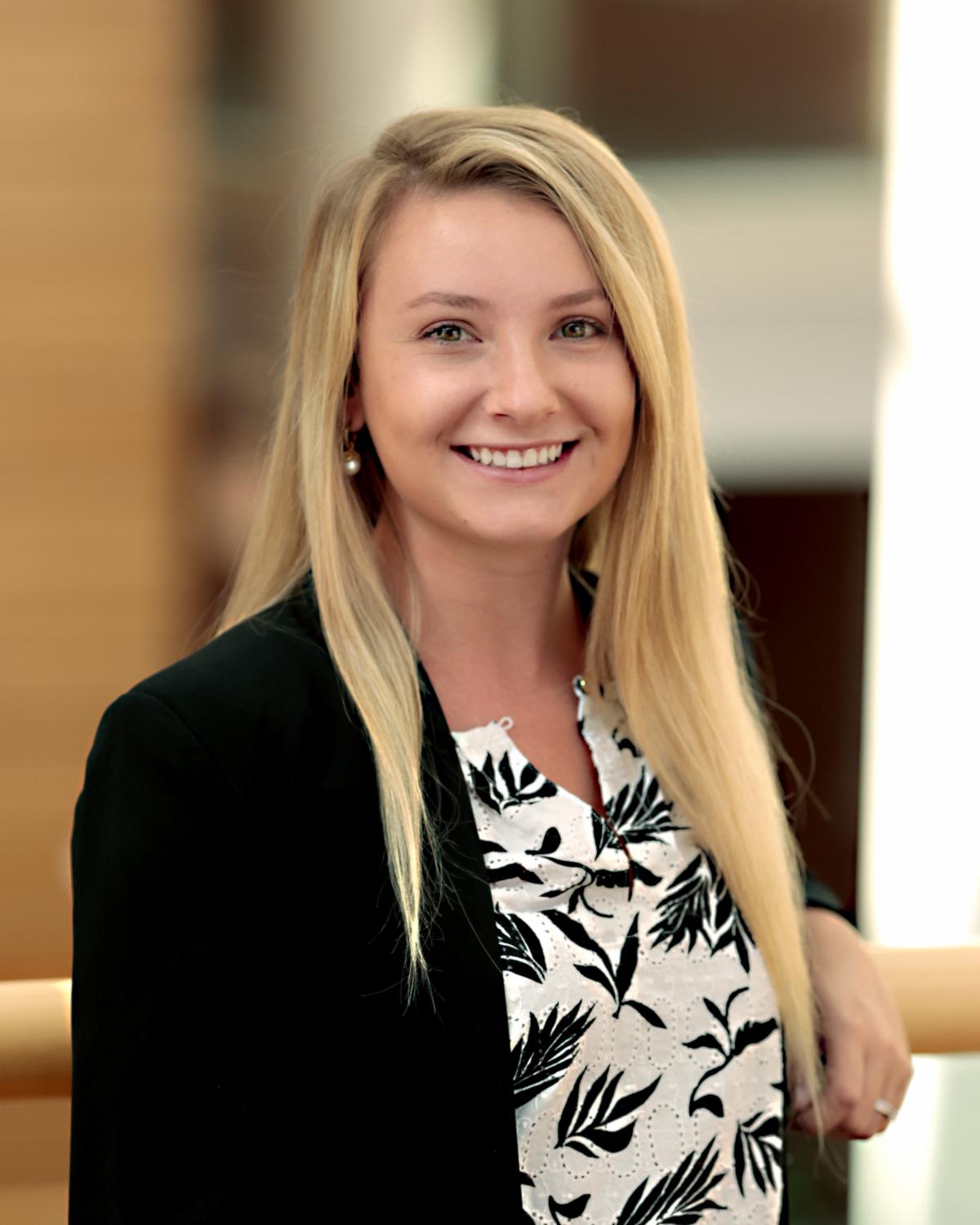
Laura McFadyen (MSPH 2024): This year, I investigated how the COVID-19 pandemic impacted the financial performance of rural hospitals, especially CAHs. During this time, I also studied the differential impacts of the pandemic on urban versus rural hospital profitability with specific attention to the reporting of COVID-19 public health emergency funds. Through this process, I produced two findings briefs and am in the process of submitting a manuscript. As a research assistant, I learned the valuable skills of thoughtful communication, how to learn and adapt, and the non-stationary aspects of research. Being able to apply what I was currently learning in my coursework to either the health policy discussion and/or statistical analysis was very rewarding! I also enjoyed, although sometimes frustrating, the process of learning a new econometric model while conducting research for my manuscript. I cannot say enough good things about working with the NC RHRP team and have enjoyed learning from true experts in the field of rural health care as well as people who genuinely are passionate about what they do and bring their own unique perspectives and individuality to the team.
During the 2023 summer, I will work as an intern with Faulkner Consulting Group where I will be responsible for performing statistical analysis, creating financial models, and developing reports to present data in ways that help leaders make data-driven decisions. I also plan to continue working as a research assistant with the NC RHRP for the upcoming academic year as I work toward a Masters of Science in Public Health degree with the UNC Gillings School of Global Public Health in their Health Policy and Management Department.
|
|
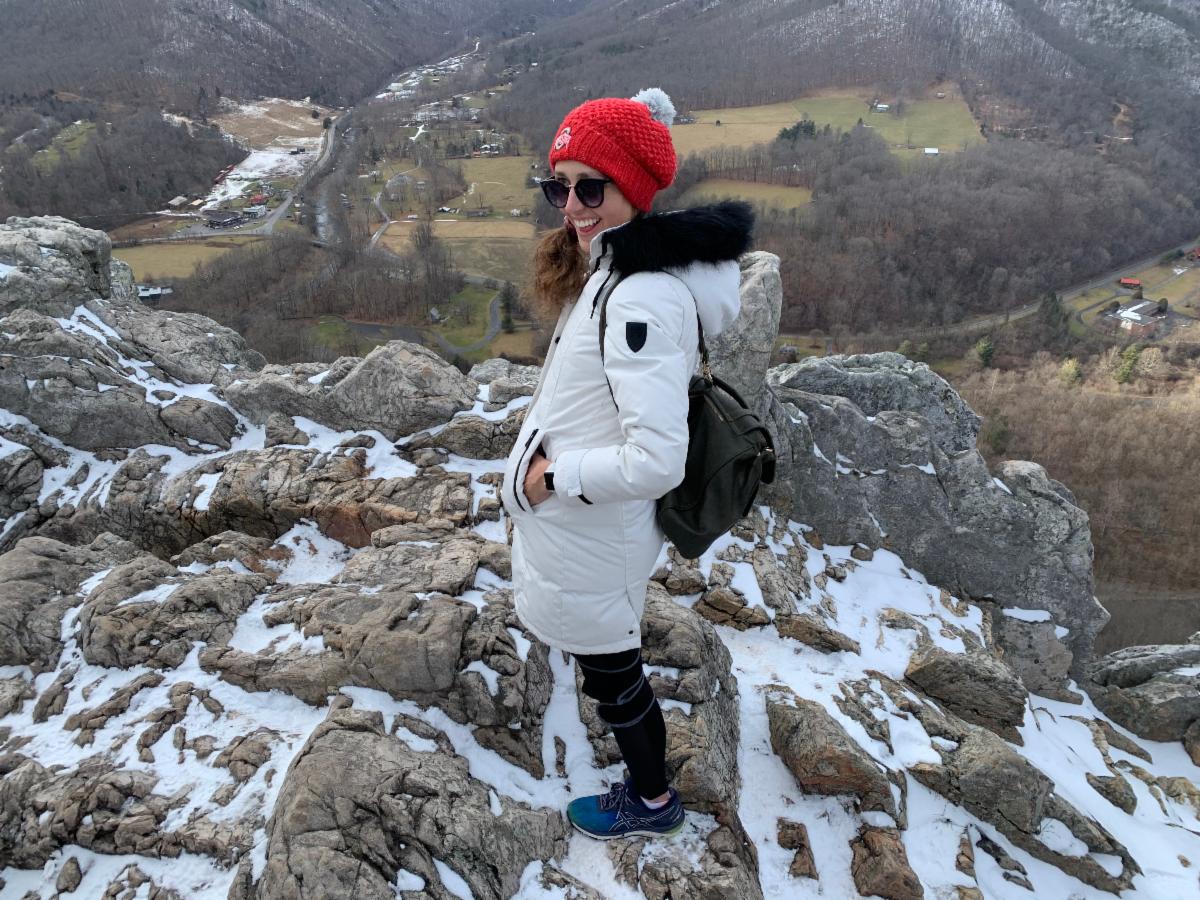
Ariana Pitcher (MPH 2023): This year I analyzed the extent to which rural hospitals nationwide rely on non-operating revenue (derived from investments, contributions, government appropriations, and revenue from medical rental space), which has been found to improve financial performance by subsidizing losses on patient care. In one article, I compared rural hospitals by different payment types (CAHs & Rural-Prospective Payment System hospitals) and further stratified them by ownership (for-profit, not-for-profit, and government-owned) to understand the percentage of revenue derived from operating versus non-operating sources and if it impacts overall margins. In a smaller brief, I explored how the reliance of non-operating revenue may differ between rural and urban hospitals and if hospital types vary on how much they rely on specific sources of non-operating revenue. Overall, I really enjoyed my experience with the NC RHRP and their intelligent, engaging team. I appreciated the opportunity to manage a research project independently, while receiving timely feedback and guidance throughout the process. I received incredible support to further develop my data analysis skills and was challenged to think more methodically about different strategies to communicate and visualize data. I was also able to learn more about topics that I had not deeply engaged with in classroom settings, including metrics to assess and interpret financial performance, a host of issues impacting rural hospitals, and various aspects of the research process.
After graduating in May with my Masters of Public Health in Health Policy, I was converted to a permanent federal employee and full-time Health Policy Analyst at the Centers for Medicare & Medicaid Services (CMS), where I completed my Summer 2022 practicum and where I have been subsequently retained throughout the year as a permanent intern in with CMS. I am also planning to re-locate to Washington, DC to be closer to CMS headquarters. I'm looking forward to celebrating all these big changes with some downtime at Carolina Beach with my family and dogs, a visit to Star Wars Galaxy's Edge at Disney, and traveling to Europe (Spain, Greece, Italy, and Turkey) with my partner.
|
|
Ruoyu Zhang (BS 2023): This year I helped the Flex Monitoring Team revamp the Critical Access Hospital State Medians Report from a manual process to an automated program, performed statistical analysis that compared the proportion of non-operating revenue at different hospitals, and gathered and cleaned Medicare Advantage data and demographic variables for the Rural Hospital Financial Distress Index project. I’ve learned a lot about the current state of rural health in the U.S. through my work, especially the financial stability of rural hospitals and other challenges that they are facing. Though I’ve heard about the rural health challenges through the news, classes, etc., it’s still a surprise to me when I see the stark difference between rural and urban hospitals. In addition to learning more about rural health, I also enjoyed the data analysis portion of my work, particularly figuring out what went wrong in my code and searching for solutions to address the issue. I'm not going to lie, it was painful when I got stuck in my coding, but it’s so satisfying to see the final deliverables at the end! I am most proud of being able to work on several projects, working with many talented people over the past year, and co-authoring a paper that’s being considered for publication.
In June, I joined Charles River Associates as a Life Sciences Analyst in the Boston office. I will be assisting projects and cases related to life science litigations, life science policy analyses, pharmaceutical product pricing, and market entry analyses. Before joining Charles River Associates, I traveled to Peru with my family. I’ve always wanted to visit Machu Picchu since I read about it in my primary school textbook, and it turned out to be such a wonderful trip.
Hannah Friedman (doctoral candidate, 2023): featured in our Winter 2022 Newsletter Staff Spotlight, can be seen in the photos below.
Tyler Malone (PhD, 2023): mentioned above and seen in photos below.
|
|
We had an exciting Spring that included the 2023 National Rural Health Association's Annual Conference in San Diego, CA; the 2023 AcademyHealth Annual Research Meeting in Seattle, WA; UNC's graduation; and the U.S Senate Committee on Finance's Subcommittee on Health Care in Washington, DC. |
|
 |
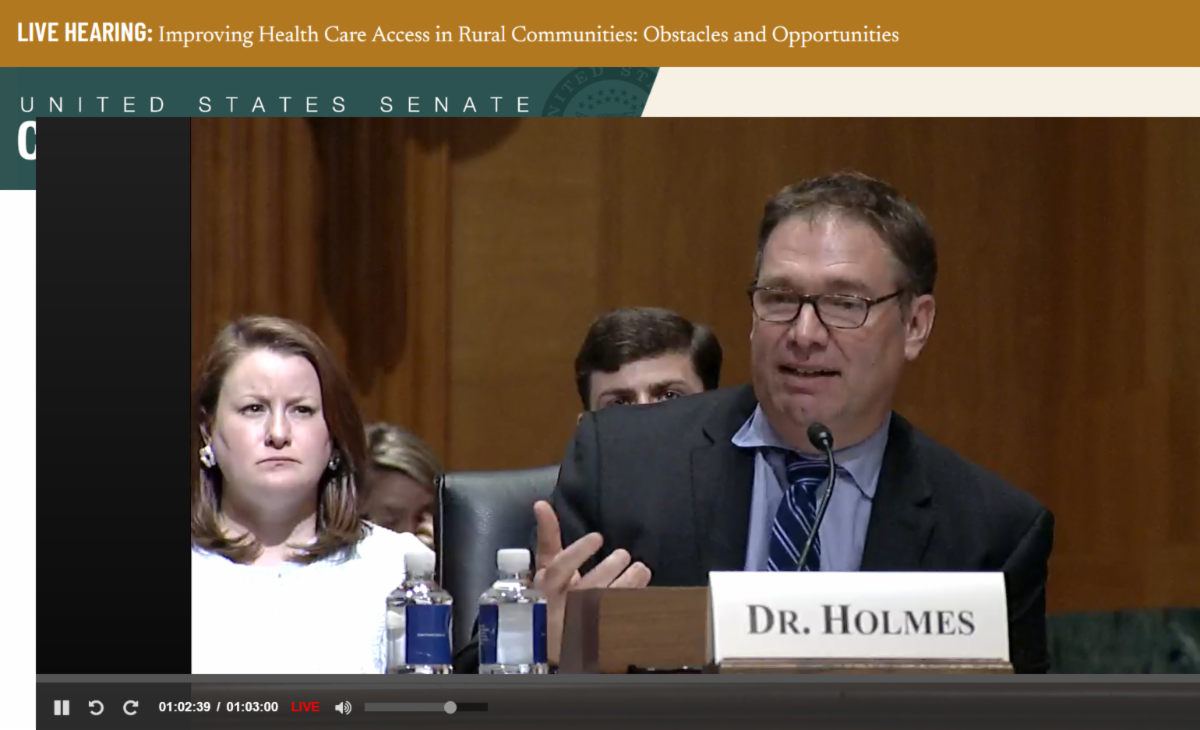
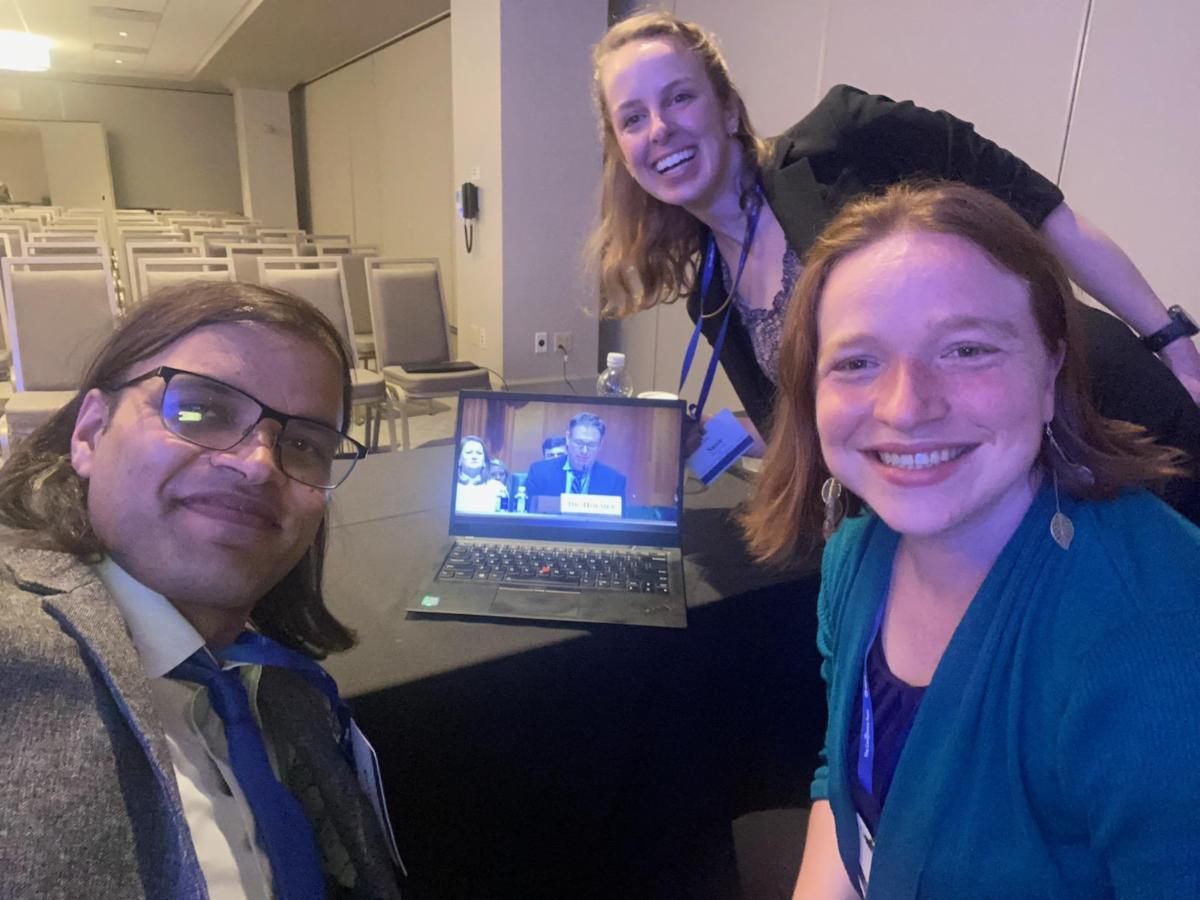
Below: Mukesh Adhikari (Health Policy Management doctoral candidate), Susie Gurzenda (NC RHRP), and Hannah Friedman in San Diego watching Mark testify to the Senate Finance Committee (5/17/23)
|
|
|
|
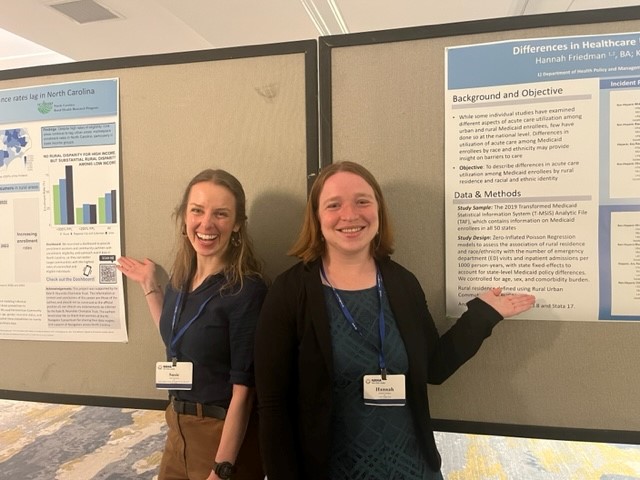
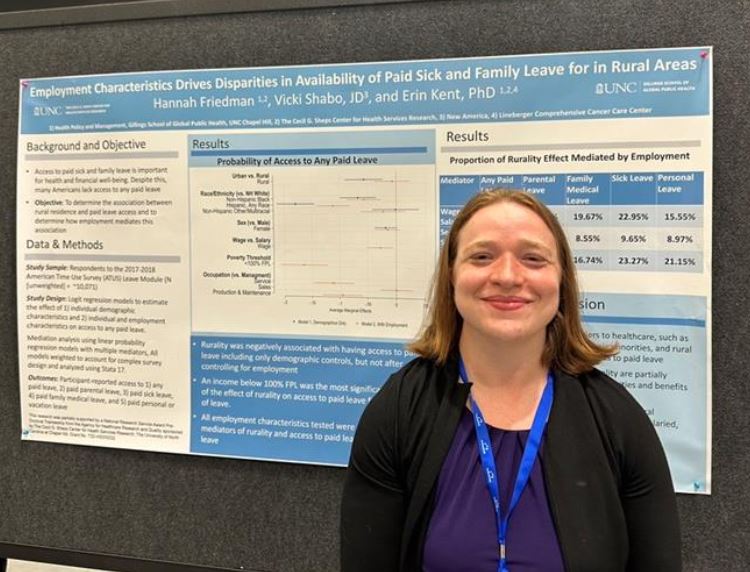
Above: Susie Gurzenda and Hannah Friedman present posters at the 2023 NRHA Annual Conference (5/17/23)
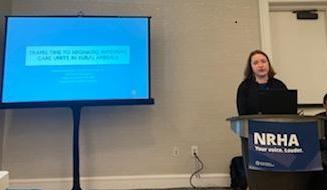
Below: Hannah Friedman presents at the 2023 NRHA Annual Conference (5/19/23)
|
|
|
|
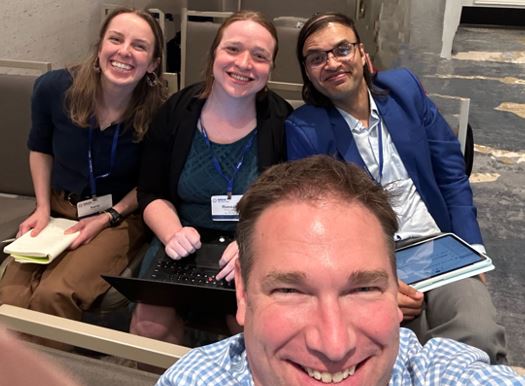
Above: Susie Gurzenda, Hannah Friedman, Mukesh Adhikari, and Mark Holmes at 2023 NRHA Annual Conference (5/18/23) |
|
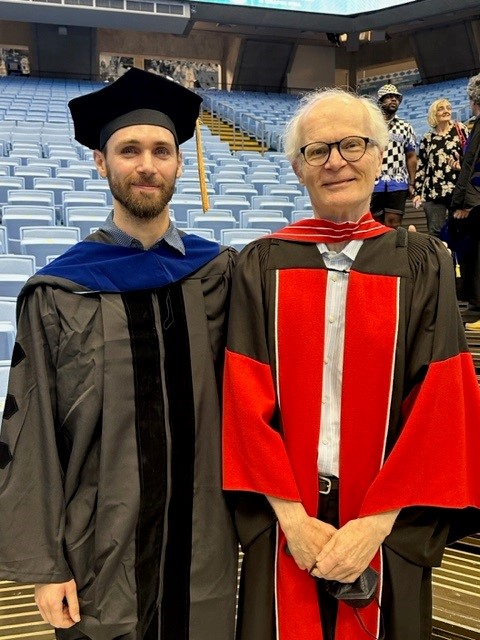
Below: Tyler Malone and George Pink at the 2023 UNC graduation (5/14/23) |
|
Above: Hannah Friedman presents her poster at the 2023 Academy Health Annual Research Meeting in Seattle, WA (6/26/23) |
|
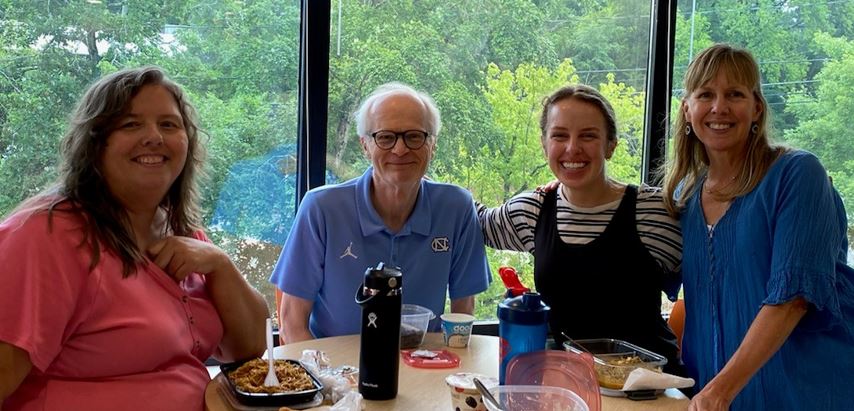
Above: Julie Perry, George Pink, Susie Gurzenda, and Kristie Thompson lunching in real life (IRL) at the Sheps Center (6/21/23) |
|
|
A sample of some of our recent media mentions. |
|
(Congressional Research Services 4/26/23)
|
|
NC RURAL HEALTH RESEARCH PROGRAM
|
|
|
Have feedback on this newsletter or suggested content for future newsletters? Contact Kristie Thompson.
|
|
|
|
|
|
|