|
|
School Wellness Weekly
December 17, 2021
|
|
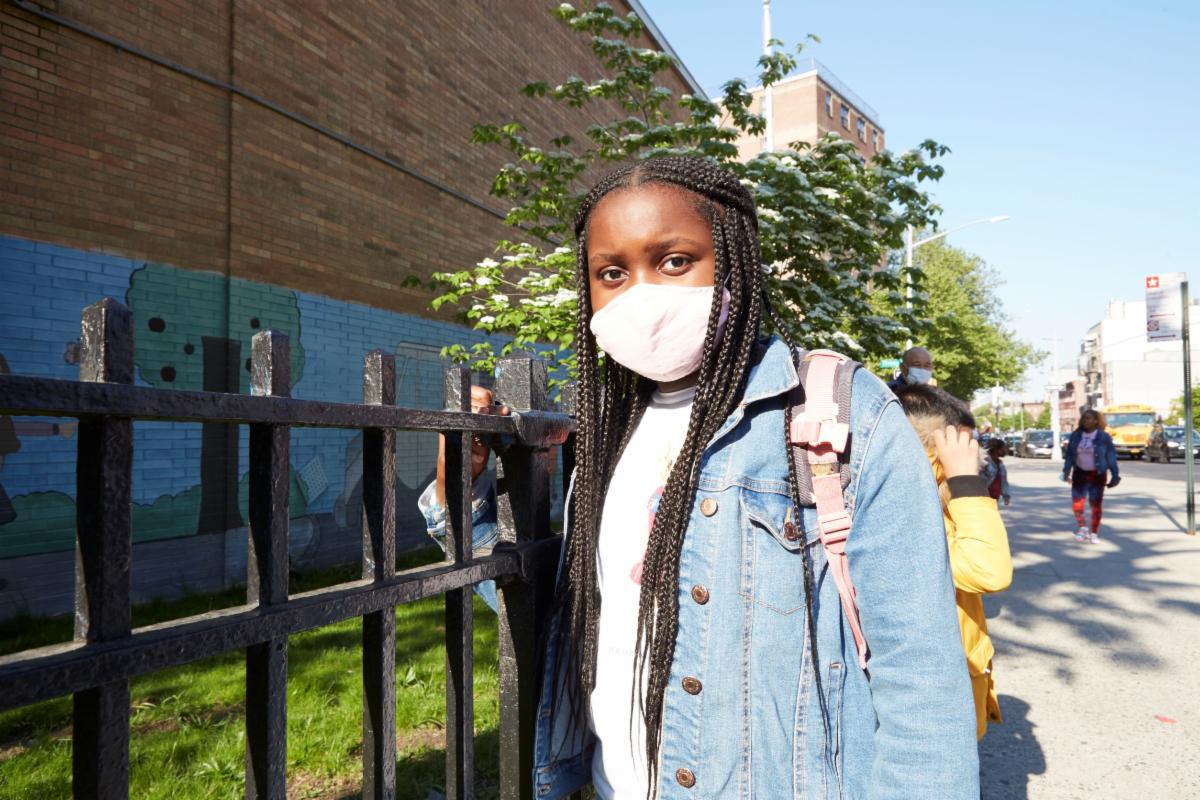
Thank you for showing up to help our students heal in 2021. To truly acknowledge gratitude, we need to make time to slow the pace down and take stock; the holiday season is the perfect time to do just that. Gratitude showed up in many ways at the start of this school year:
- On November 2, more than 1,500 educators, trusted partner organizations, and content experts across NYC came together in virtual community during our full-day Think-Move-Achieve Online Professional Learning Opportunities for PE, Health Ed, and School Wellness on Election Day.
- Students felt more safe and affirmed in their school communities thanks to GSA spaces created by their passionate teachers (check out our teacher highlight in this issue).
This holiday season, the Office of School Wellness Programs thanks our educators for showing up this school year to help our students heal, reconnect, and re-acclimate to a daily, in-person academic routine.
We’ll resume School Wellness Weekly at the start of 2022 with more resources and opportunities. From all of us here in the Office of School Wellness Programs, have a joyous holiday and a safe New Year.
Photo credit: New York City Department of Education
|
|
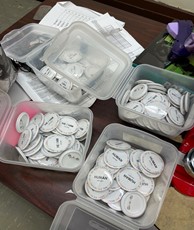
In this issue of School Wellness Weekly, we highlight Alyssa Taylor, Health Education teacher, first-year Physical Education teacher, and liaison and advisor for the Gender and Sexualities Alliance (GSA) at The Brooklyn School for Math and Research, 32K168. Ms. Taylor shares her experience working with her students to help them feel safe and affirmed.
Photo: Student-created buttons to celebrate International Pronouns Day at The Brooklyn School for Math and Research, 32K168 (courtesy, Alyssa Taylor).
|
|
What do you love most about teaching PE and Health Education?
When you can change a student's mindset and get them to understand fitness outside of high school. I also want to teach them to incorporate the [skills from the] lessons into their life.
What continues to inspire you?
My students. I love coming to school, seeing them grow out of their shells and take initiative. There has been low initiative in lots of students right now because of the pandemic and seeing students be more involved and motivated because they are starting to work together inspires me. I have started to see the initiative they get from being in this [GSA] group and how inspired they are.
What do you love most about participating in your school’s GSA?
I love that the kids can be themselves. They have completely changed in the best way since they’ve [started] participating in GSA. They feel more comfortable being themselves and it’s been great to see their true personalities bloom.
How do you connect with your students and their families to keep them motivated and engaged in your school’s GSA?
I don’t communicate with families too much [to protect their privacy]. I try to touch on all things with group presentations, while providing a space to relax. Students love arts and crafts, especially painting on canvases to allow them to express themselves creatively. [I work with the students to] create vision boards to capture their goals. [The students] motivate each other as well. They created a gender-neutral sign for one of our school’s gender-neutral bathrooms.
What lessons have you learned, or hurdles have you had to overcome supporting your students?
As a first-year teacher, [I’ve learned that] not everything has to be set in stone, and to not be hard on myself. Everything is a learning experience, and you have to keep trying. I learned to let students speak up on what they want to do: it’s supposed to be a comforting space. [I pressured myself thinking] I needed to be talking at them with prepared presentations every single time we met. Instead, it’s better to listen to what your students need and want to learn, then go from there. I check in with my students on a weekly basis; it’s important to ask if they are all comfortable.
What’s your favorite resource that you have used for your students involved in GSA?
The GLSEN (opens in new window) website has been great. For International Pronouns Day, kids got excited and helped design pronoun pins given out to everyone at lunch.
If you could share anything about your school’s GSA with NYC teachers, what would it be?
Listen to your students. Some students told me I was the only teacher that asked them for their preferred pronouns in the first week. Give them a safe space to talk and be themselves. Ensure your students' identities are being respected.
|
|
School Wellness Programs Tip:
Join a Build an Affirming Community with OUT for Safe Schools® session in January. This session will provide participants with tools to build affirming school communities in their classroom through instructional practices and outside of their classroom with the OUT for Safe Schools® (opens in new window) badge campaign, a national initiative that helps educators and school staff come out as visible allies for LGBTQ students. Participants will learn to:
- Communicate the importance of being affirming and inclusive of all student identities
- Identify strategies to be more inclusive during instruction
- Use the OUT for Safe Schools® badges
- Continue or launch a Gender and Sexualities Alliance (GSA) club
- Recommend affirming and age-appropriate in-person and online resources to their students
Stay tuned to School Wellness Weekly in early January for 2022 training dates and registration links.
|
|
Health Education and Physical Education |
|
New! CTLE Credit Will Be Awarded for Eligible OPLC Sessions
Starting this month, CTLE credit will be awarded to participants in Health Ed and PE Online Professional Learning Community (OPLC) sessions that are: 1) facilitated by Office of School Wellness Programs staff and 2) meet the New York State Education Department’s other criteria for content and assessment of learning. Please note that CTLE eligibility applies only to sessions scheduled to take place starting in December 2021 and is not retroactive. Each eligible session will be indicated in the Professional Learning Catalog on the Online Professional Learning Communities page (opens in new window) and on the Event Manager registration links. Once OPLCs return to the pre-pandemic in-person model led by school-based staff, the sessions will no longer be CTLE-eligible.
|
|
Building the Wellness Community |
|
Grades 9-12 School Wellness Councils: Student Artist Opportunity from DOE Office of Sustainability: rFUTURE 2022
Classroom or Outdoor Garden Grant Opportunity
Apply for the 2022 Grow with Us Grant for classroom or outdoor garden equipment and supplies. There are two options: a bundle of three Tower Gardens as a science bundle including a dolly, nutrient solution or a High Tunnel. Schools should apply for the system that best meets their educational goals and available classroom or outdoor space. Visit the Grow with Us Grant web page (opens in new window) to find application guidelines. Applications are due Friday, February 4, 2022.
|
|
NYC Department of Health and Mental Hygiene (DOHMH) Resources |
|
Help Prevent Children's Tooth Decay: Free and Low-Cost Dental Services in Schools
Did you know:
- Over 750 NYC schools have an approved school-based dental provider.
- Of the children examined in schools, nearly 40% have untreated tooth decay.
The DOE, in partnership with the DOHMH, offers dental services to students in schools—with parental consent—regardless of whether they have health insurance, and at no cost. This includes services that take place at fixed clinics located in buildings with School Based Health Centers (SBHCs), and services provided by portable/mobile providers who bring services on-site to buildings.
Educators: Communicate with your principal and parent coordinator on the status of no-cost school-based dental care. All schools are encouraged to contact their approved dental vendor to schedule dental services for the 2021-2022 school year. Not sure who to contact, do not know if one is authorized for school-based care, or have general questions? Email NYCDOHMHDental@health.nyc.gov (opens in new email window). Visit the Dental Services page (opens in new window) for information on how your school can participate in a dental program, including how to:
- select a dental provider
- create a successful program
- prepare for the visit from the dental program
- pick an ideal space at your school
School-based dental programs rely on participation through signed parental consent forms; help these programs achieve as many consents as possible to address the critical need for dental care.
|
|
Did you know? Fluoride helps prevent tooth decay. It is in New York City tap water, toothpaste, and rinses. Fluoride varnish (opens in new window) can be applied to a child’s teeth by a medical provider.
|
|
Learn the Risks and Help Students Quit Vaping
Vaping socially often means sharing space, not wearing a mask, and even sharing devices, which can all increase risk of COVID-19 exposure. E-cigarettes also contain harmful chemicals and can cause lung injury. Since COVID-19 can also affect the lungs, vaping may put kids at increased risk. Additionally, almost all e-cigarettes contain nicotine, which is addictive and can affect how a young person’s brain works. It can make their memory and focus worse, which may make it harder to learn.
Families and caregivers can protect kids by talking to them about tobacco, e-cigarettes, and alternative products.
When trying to quit vaping, cravings and slip ups may happen, which can be stressful and emotional for both youth and families. To increase success, it is important to get support and keep trying.
-
Teens can get free advice, tips, and inspiration for quitting by texting “DROPTHEVAPE” to 88709 to join This Is Quitting (opens in new window).
- Families and caregivers can also talk with their child’s health care provider about resources and strategies to help them cope with nicotine withdrawal. Most health insurance plans, including Medicaid, cover service to help quit vaping.
- Families and caregivers can get daily advice to support their teens in quitting vaping by texting “QUIT” to (202) 899-7550.
|
|
|
|
|
|
|