 |
Iron & Steel Preservation
|
|

.
|
This issue of the Iron & Steel Preservation Newsletter features two historic bridges, the 1886 Bauer Road Bridge restored and erected in the Calhoun County Historic Bridge Park in Michigan, and the 1864 Clifton Suspension Bridge over the Avon Gorge in Bristol in the United Kingdom.
Thanks, Vern Mesler 2021
Iron & Steel Preservation
|
Clifton Suspension Bridge
|
Isambard Kingdom Brunel, seated, and at his side, in hand, his top hat, looking forever over the crowd of people in the London Paddington Station he designed. A famous nineteenth century British engineer whose life-size bronze statue by John Doubleday greeted us at our first stop on a three-week trip through the UK in 2019 exploring historic bridges and canals. Not a day passed during our trip that we did not come in physical contact with a cast iron, wrought iron, or historic steel structure, many of them riveted, most of them continuing to perform as designed.
One memorable Brunel bridge we visited early in our trip was the Clifton Suspension Bridge located in Bristol. We scheduled a tour of the bridge with Laura Hilton, an industrial archaeologist who serves as Visitor Services Manager for the Clifton Suspension Bridge Trust. It was a memorable experience, especially touring the huge, vaulted stone abutments constructed to support the bridge tower on the Leigh Woods side of the river. It was assumed that this abutment was solid stone until the discovery, in 2002 during a renovation project, of twelve vaulted chambers, a discovery made one hundred and forty years after the bridge opened.
|
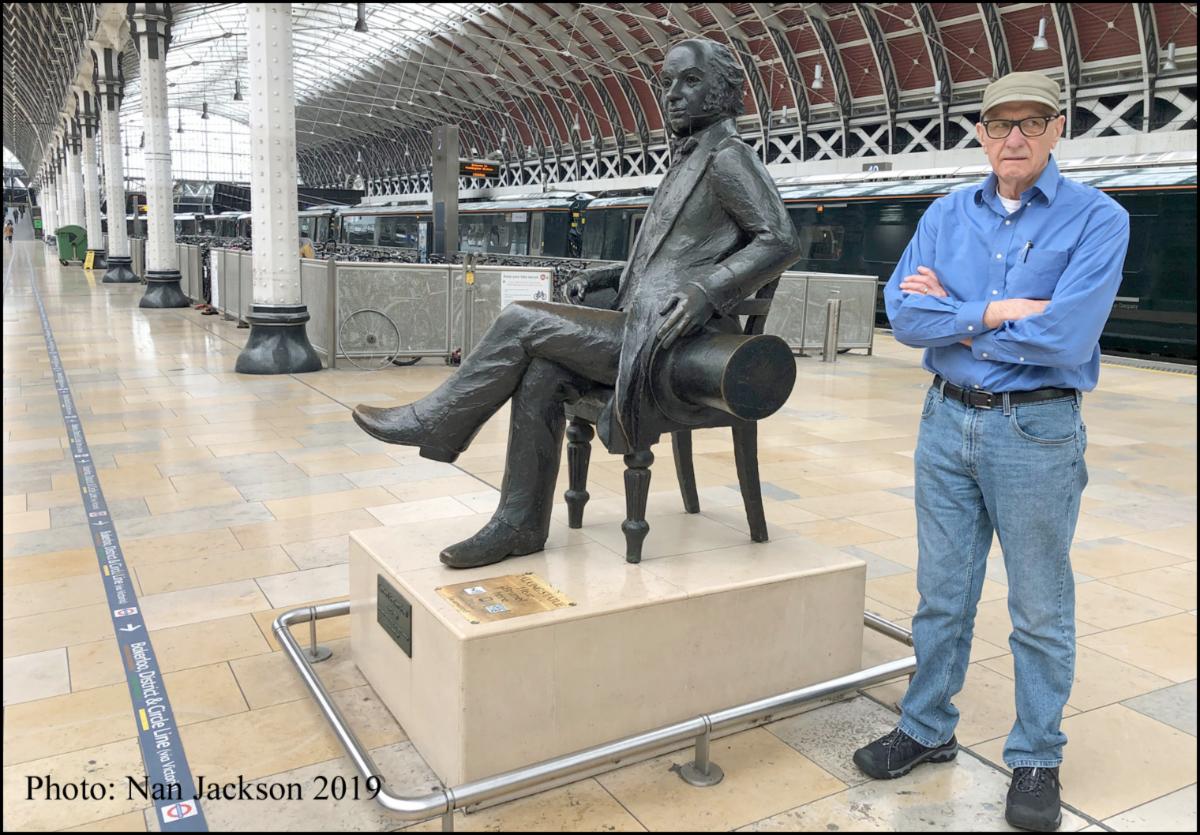
Isambard Kingdom Brunel and Vern Mesler
| 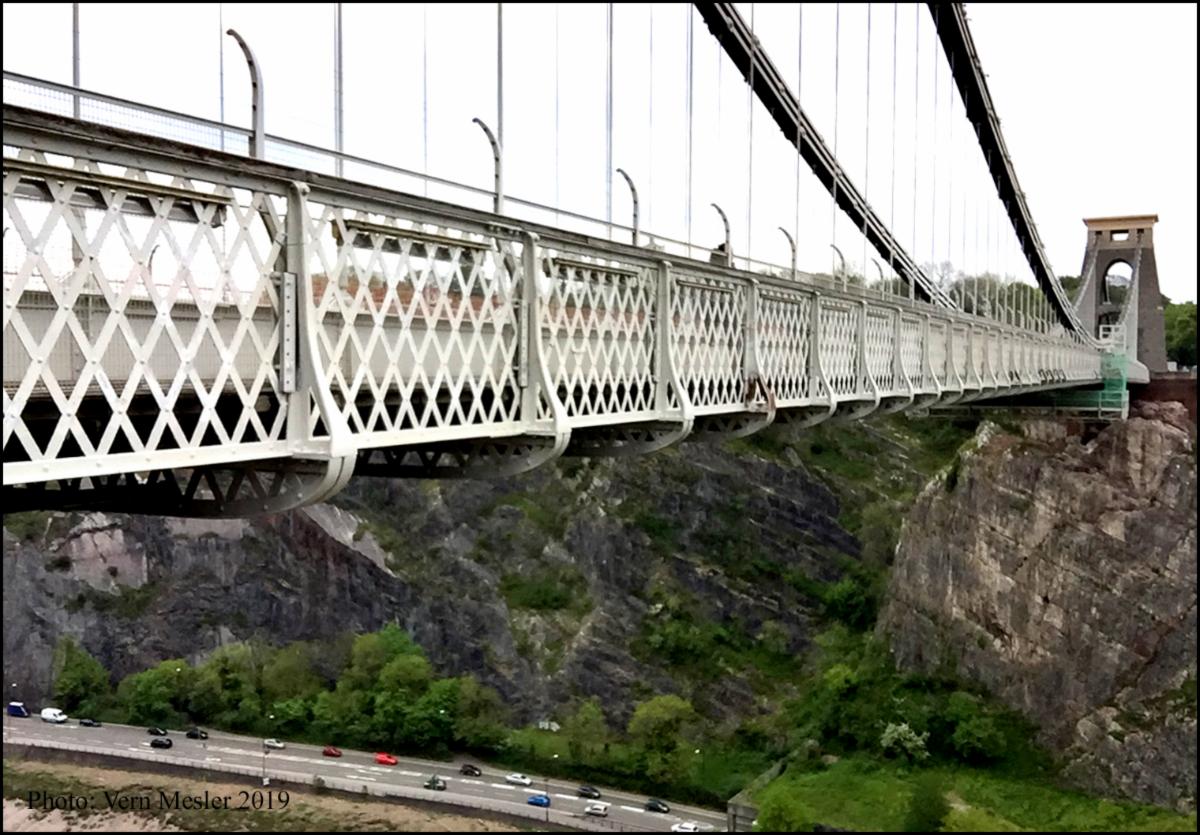
Clifton Suspension Bridge and the Leigh Woods bridge tower.
| 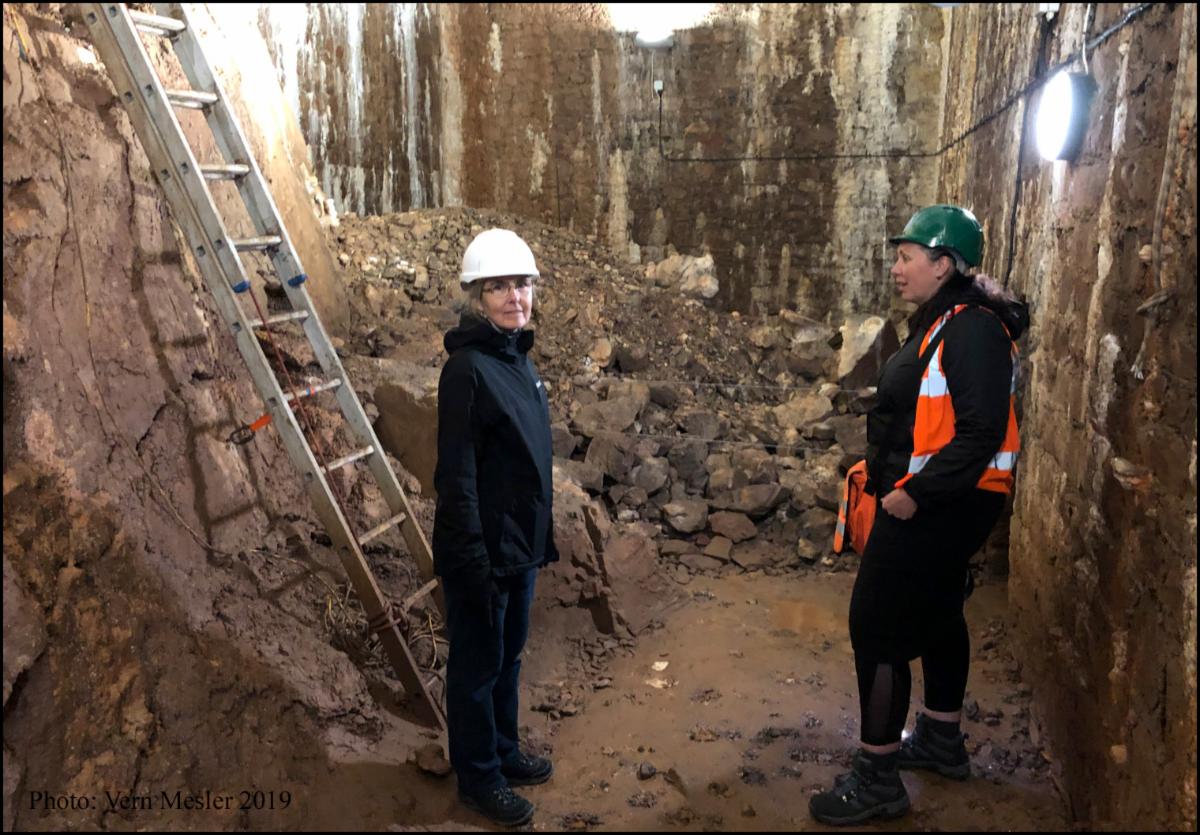
Nan Jackson and Laura Hilton in one of the vault chambers.
| 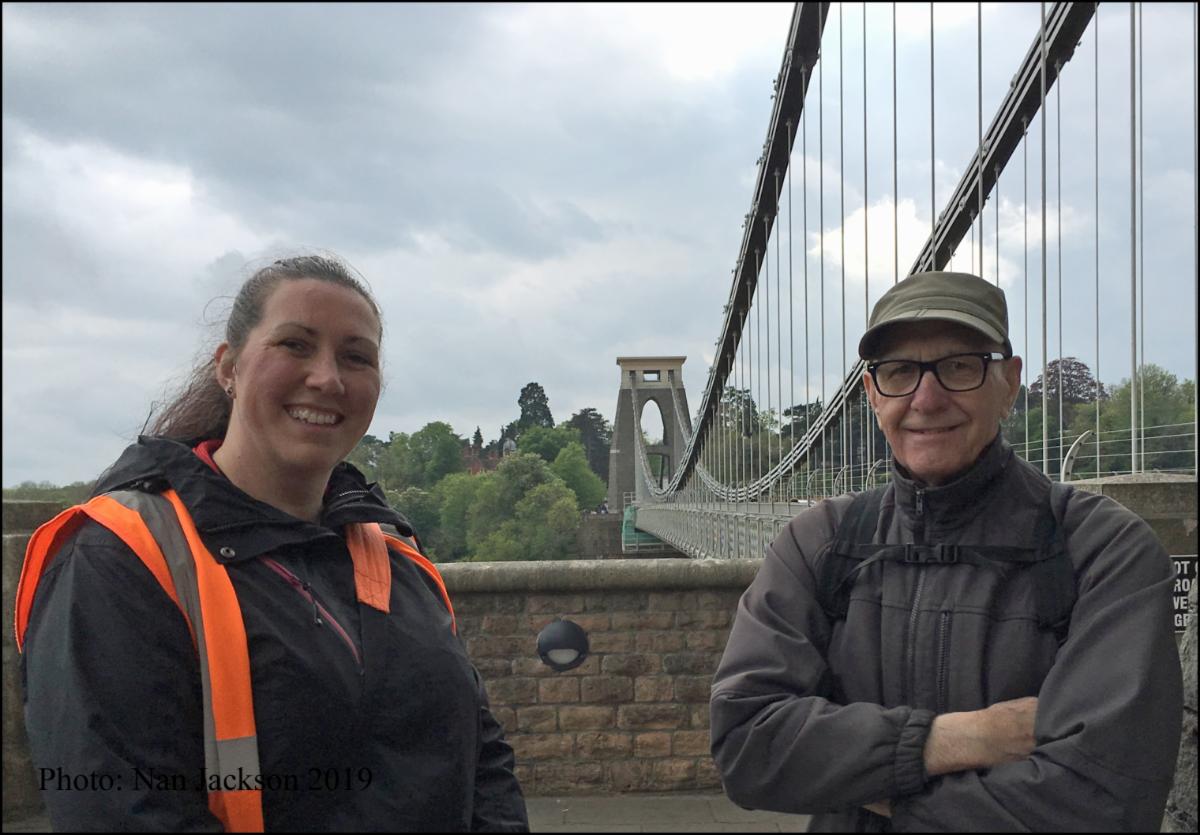
Laura Hilton and Vern Mesler at the Clifton Suspension Bridge.
|
|
Clifton Suspension Bridge Webinar March 31, 2021, at 2pm EST
|
Laura Hilton, along with Andrew Martin for the Clifton Suspension Bridge Trust, will present the history of the Clifton bridge's construction and the engineers involved. Of special interest to Martin are the Victorian engineering connections, the working relations between engineers and notable figures of the 1900s that show the origins of materials and the sharing of ideas during the Industrial Revolution. If you would like to attend the Clifton Suspension Bridge WebEx presentation, please email me at meslerv@gmail.comAn invitation with a link to the event will be sent shortly before the presentation.
|
Thanks to David Simmons for his Excellent Webinar Presentation
|
A craftsman's thanks to David Simmons for an excellent webinar presentation on February 26th based on his 1997 article on the Boyer field rivet hammer. Thanks also to Steven Walton, Editor, IA: The Journal of the Society for Industrial Archeology, for making Simmons' Vogel Prize-winning article, "The Continuous Clatter: Practical Field Riveting," available for ISP Newsletter readers.
Today the Boyer rivet hammer is finding a new life in the hands of craftsmen and women in the preservation community. Once shelved to collect dust and rust, these historic tools are being oiled, machined, and made ready to do the work they were built for: to drive rivets. During the Q&A after David Simmons' presentation, there was a lively discussion regarding the holder-on, an essential tool in the rivet process. Pneumatic and Hand Crafted Holder-On In the photos below, an industrial pneumatic holder-on, rebuilt by Michigan Pneumatic Tool, is used during a rivet demonstration for students at Lansing Community College.
|
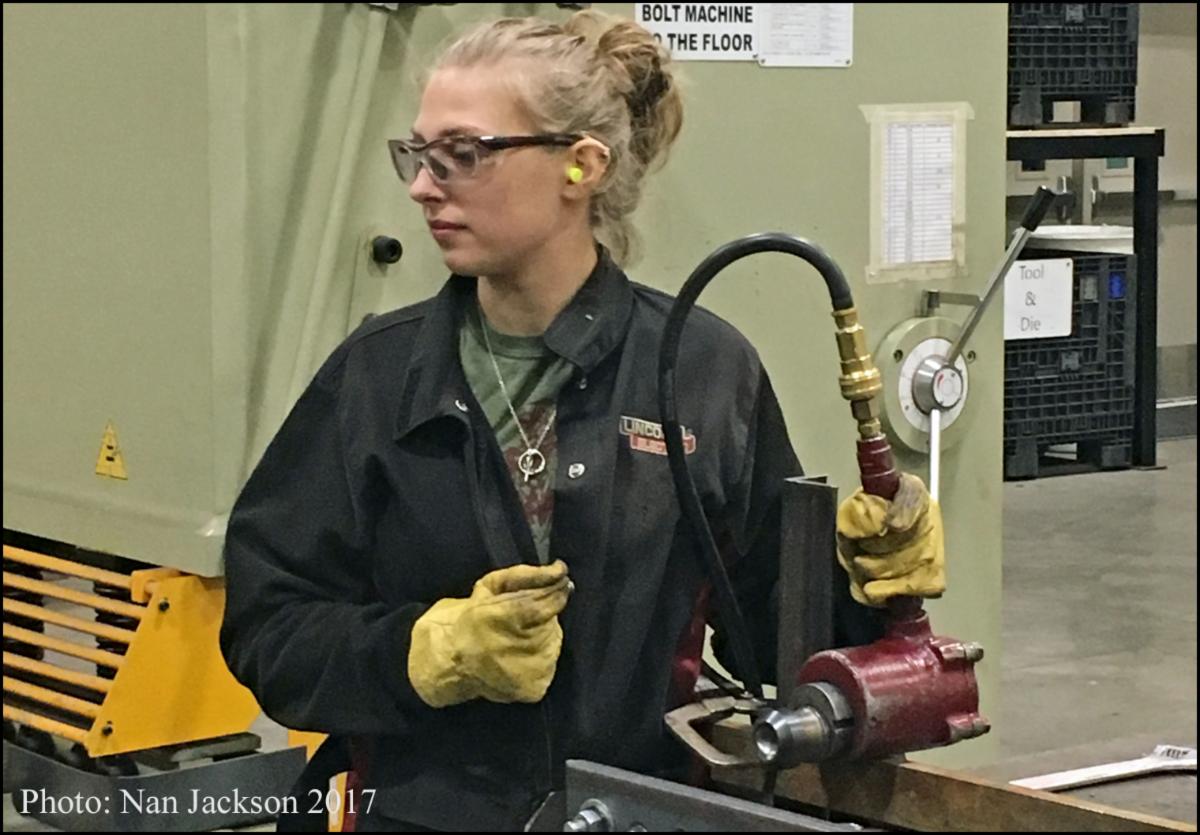
Jenna Louise Richelle with a pneumatic holder-on during a 2017 Lansing Community College student rivet demonstration.
| 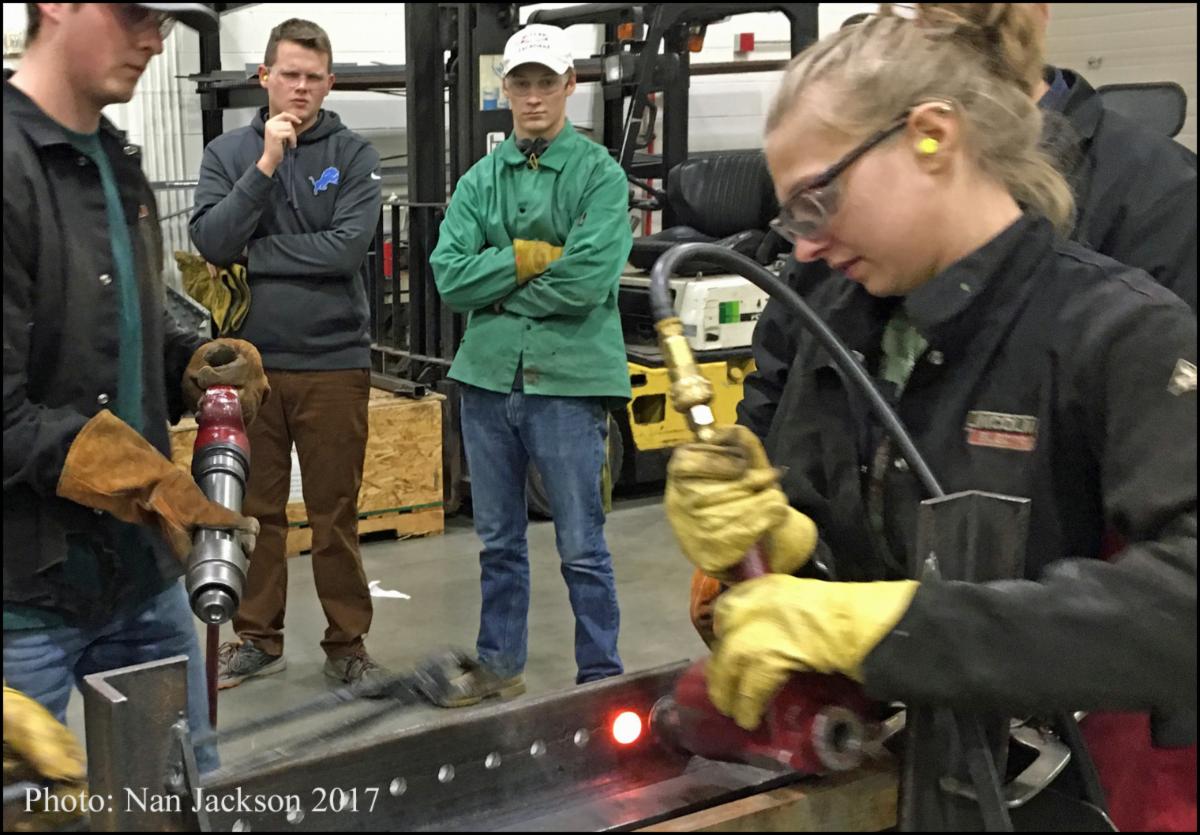 Jenna positions the holder-on over a heated rivet to set it for driving and forming with a Boyer field rivet hammer (seen ready to go at left).
|
|
Bauer Road Bridge, Clinton County, Michigan
|
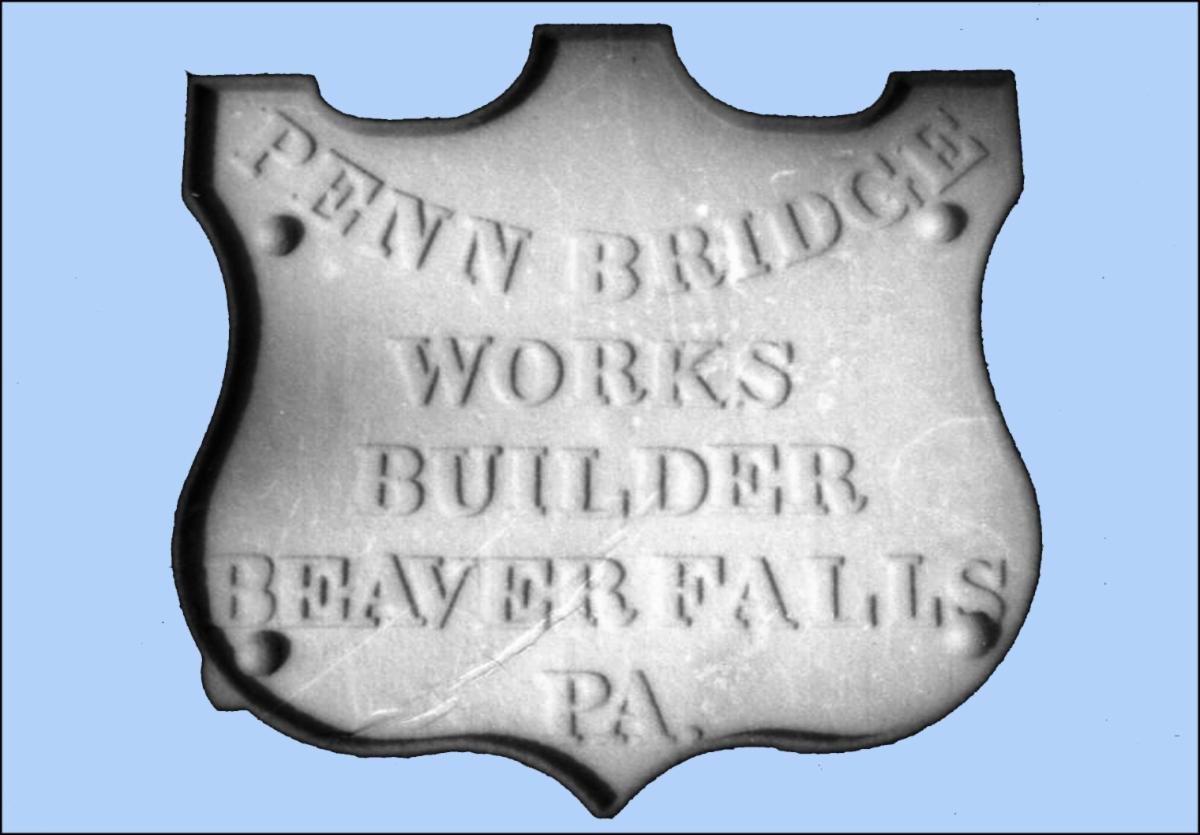
Small stones crack under the iron straps on the heavy freight wagon wheels, and a light spring breeze creates small clouds of dust as the wagon's fifth wheel turns onto Bauer Road. Straining against their harnesses, the team of horses finishes the turn. Behind the teamster, strapped to the heavy freight wagon, are newly fabricated wrought iron bridge parts from the Penn Bridge Company of Beaver Falls, Pennsylvania. The team of horses pulls the wagon straight onto Bauer Road and moves slowly toward the recently built stone abutments along the Looking Glass River in Michigan. In a nearby field a farmer pauses for a moment from behind his horse drawn plow to watch the slow-moving wagon loaded with black painted wrought iron as it makes its way toward the abutments. He had read in the Grand Ledge Independent that the old wooden bridge would be replaced with a new iron bridge, and he looks forward to the day when the new bridge is erected and he can take advantage of the heavier loads the iron bridge can accommodate.
Climbing down from his seat, the teamster unfastens the harnesses from his horses to let them graze before going back to pick up another load of wrought iron bridge parts from the local train depot. A gin-pole is positioned over the wagon, and local craftsmen with heavy hemp rope straps begin to unload the bridge members. An aroma of oily hemp permeates the air and blends with the smells of the trees and river. The rope tightens in the double sheave wooden block, and the wrought iron bridge members are lifted from the wagon. That is how I imagine the scene. As I worked on the restoration of the Bauer Road Bridge, I visualized how the bridge parts would have been transported to the site and how the bridge would have been erected over the river, not by the industrial machinery that I've worked with but with the labor-intensive methods that would have been familiar to my ancestors.
Erected over the Looking Glass River in the 1880s, the Bauer Road Bridge served the local Michigan farm community for years until it was determined unfit for late twentieth century vehicle traffic. Mounds of dirt were piled at each end to prevent any further use of the bridge. Its identification plaque was removed by a local resident to put in their recreation room, and the bridge sat nameless for years. There are no ornamental iron details that decorate its main members, but within the plain simple lines, as with all historic metal truss bridges, lies a graceful efficiency designed to carry rural traffic. Within its eye bars, rivets, chord pins, and wrought iron is the unwritten record of a craftsman. These members were all saved in the Bauer Road Bridge restoration, in contrast to many historic bridge projects where original bridge members are replaced with "new steel," destroying the original and its irreplaceable manufacturing and craftsman record. Restored and erected in 2005, the Bauer Road Bridge now spans the Dickinson creek in Michigan's Calhoun County Historic Bridge Park.
Vern Mesler 2020/2021
|
| 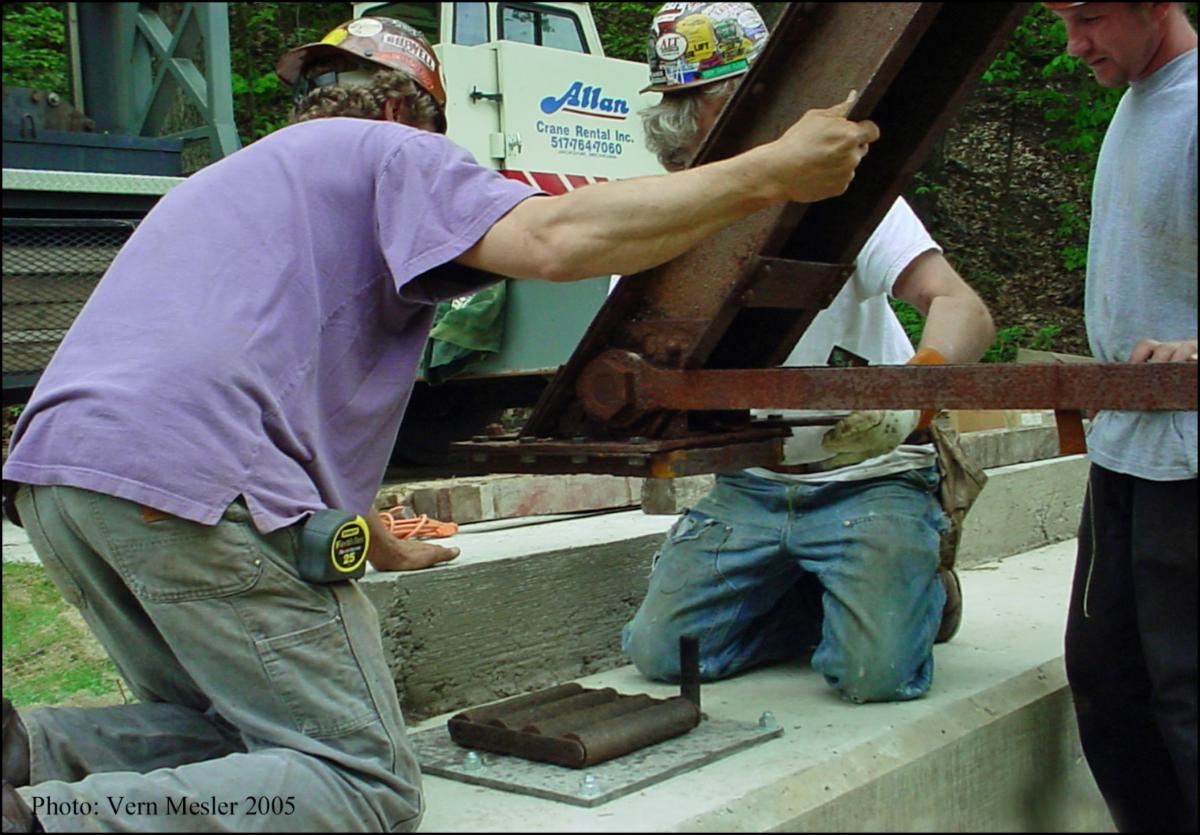
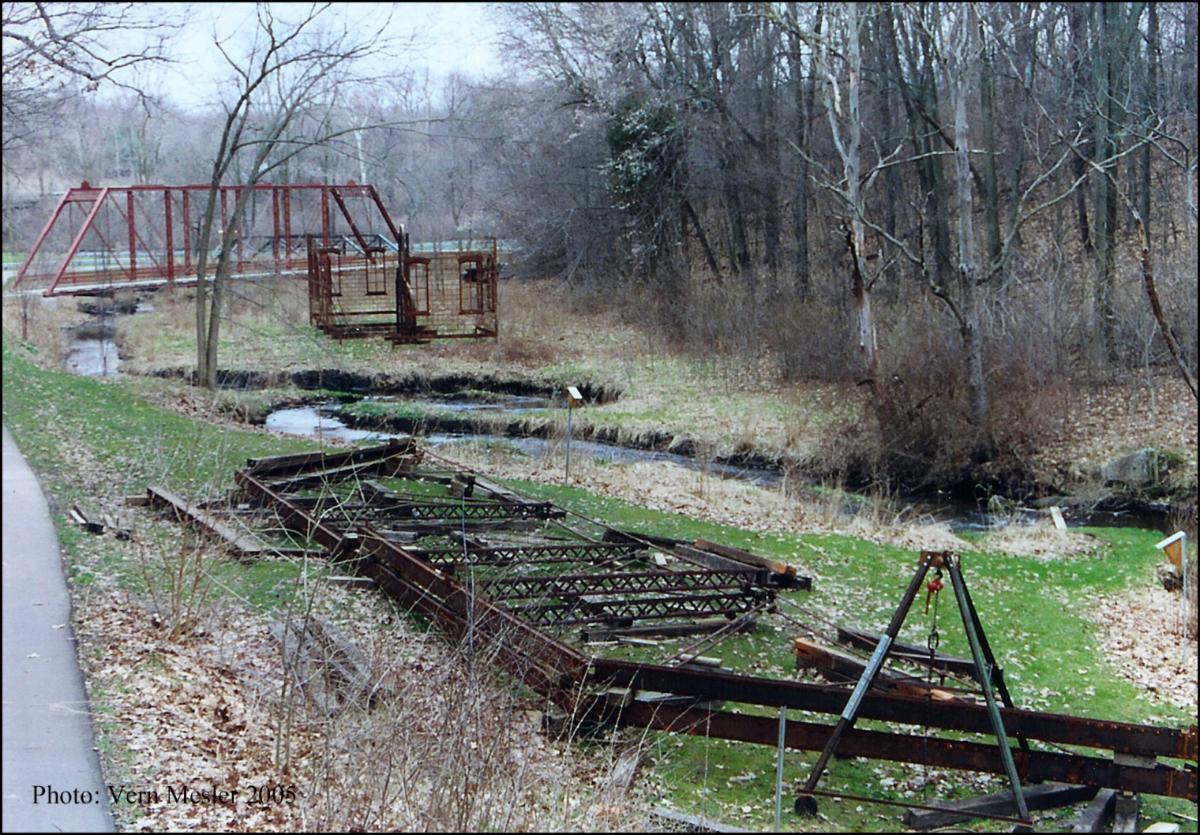
Bauer Road Bridge truss being set on rollers, 2005.
| 
Bauer Road Bridge ready for re-assembly at the Historic Bridge Park, 2005.
| 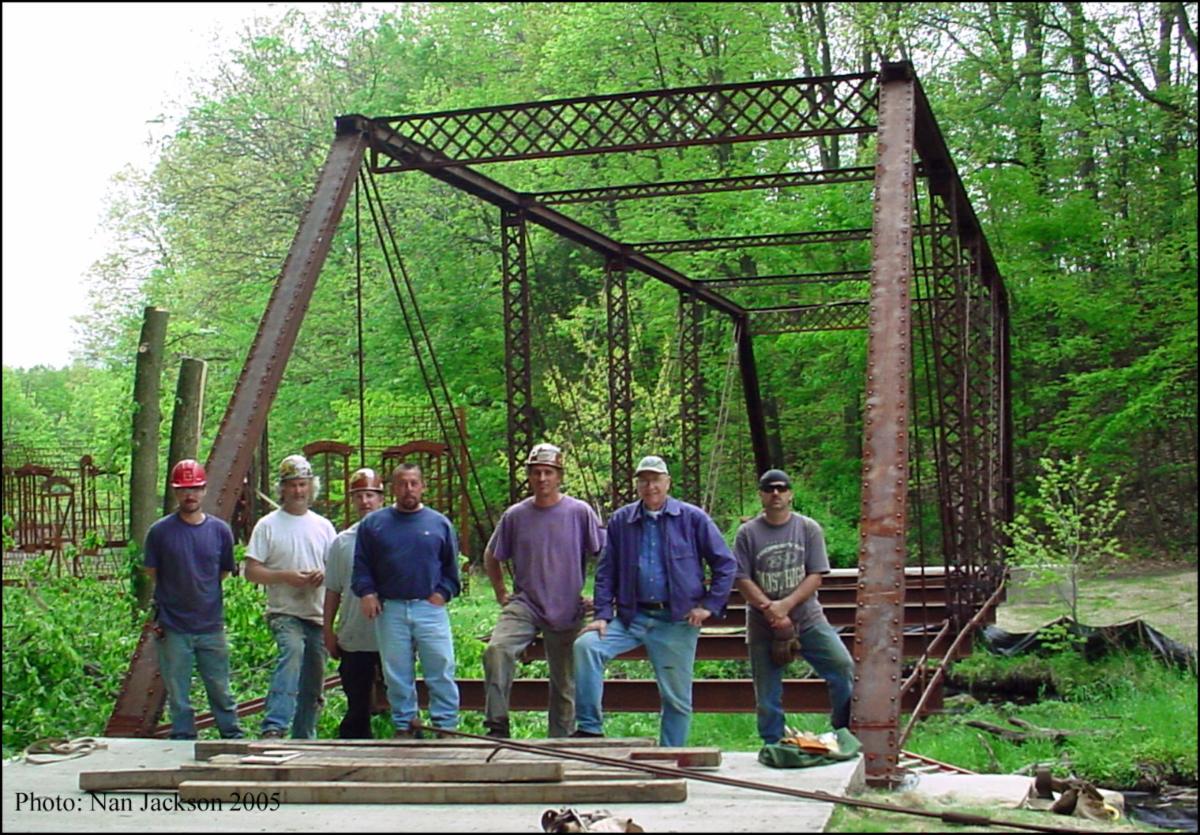
Wayne Conklin, Nels Raynor, Dave Cimala, Scotty Alan, Will Piggott, Vern Mesler, Rob Denniston.
| 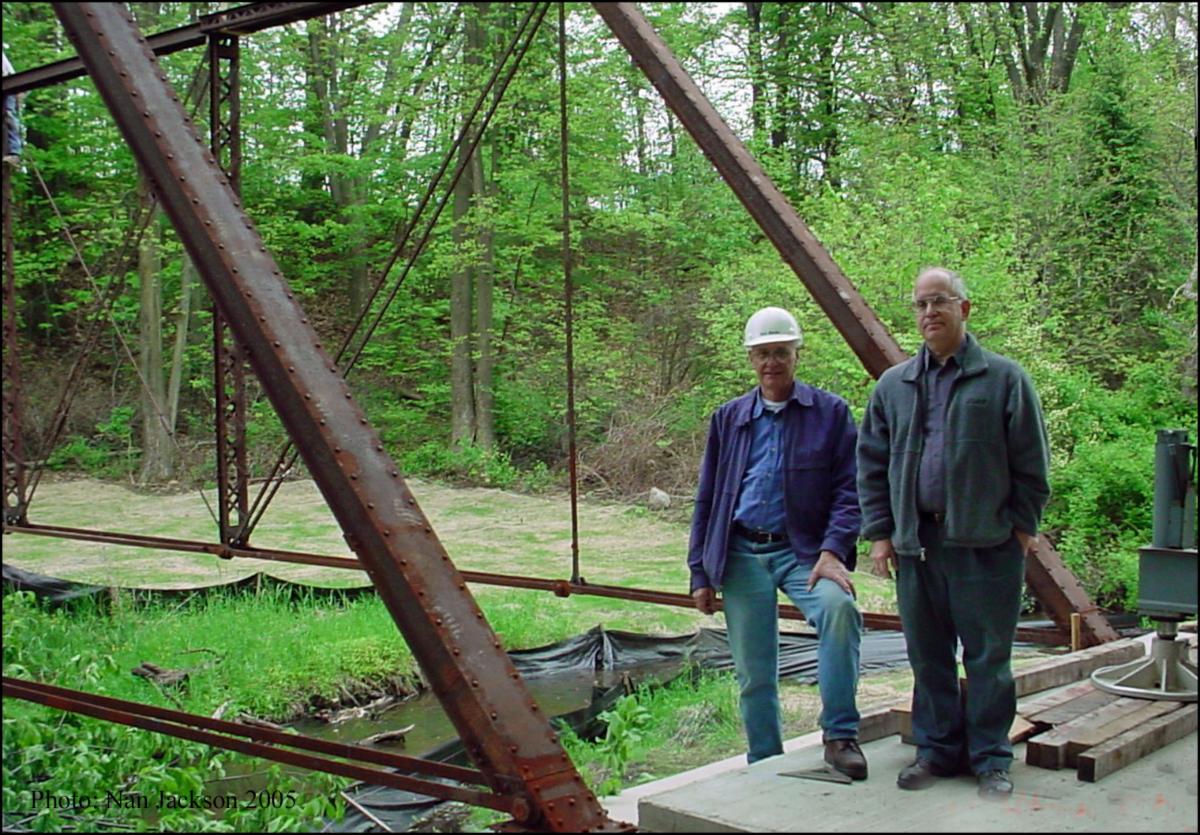
Vern Mesler (project manager for the restoration of bridges for the Calhoun County Historic Bridge Park 1997-2007) with Dennis Randolph (Managing Director of the Calhoun County Road Commission 1992-2008).
| 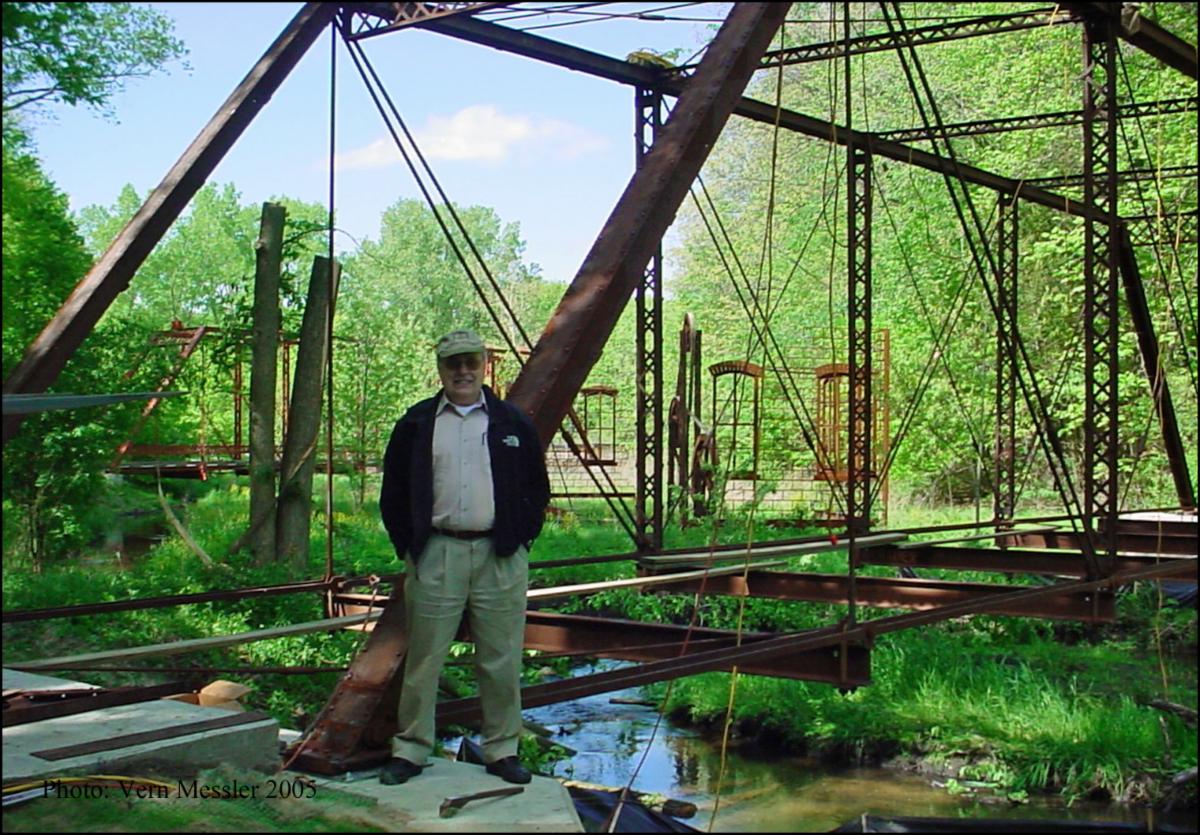
Maynard E. Schuur, Structural Engineer, Gove Associates, Inc. provided truss analysis for the restoration of the Bauer Road Bridge.
| 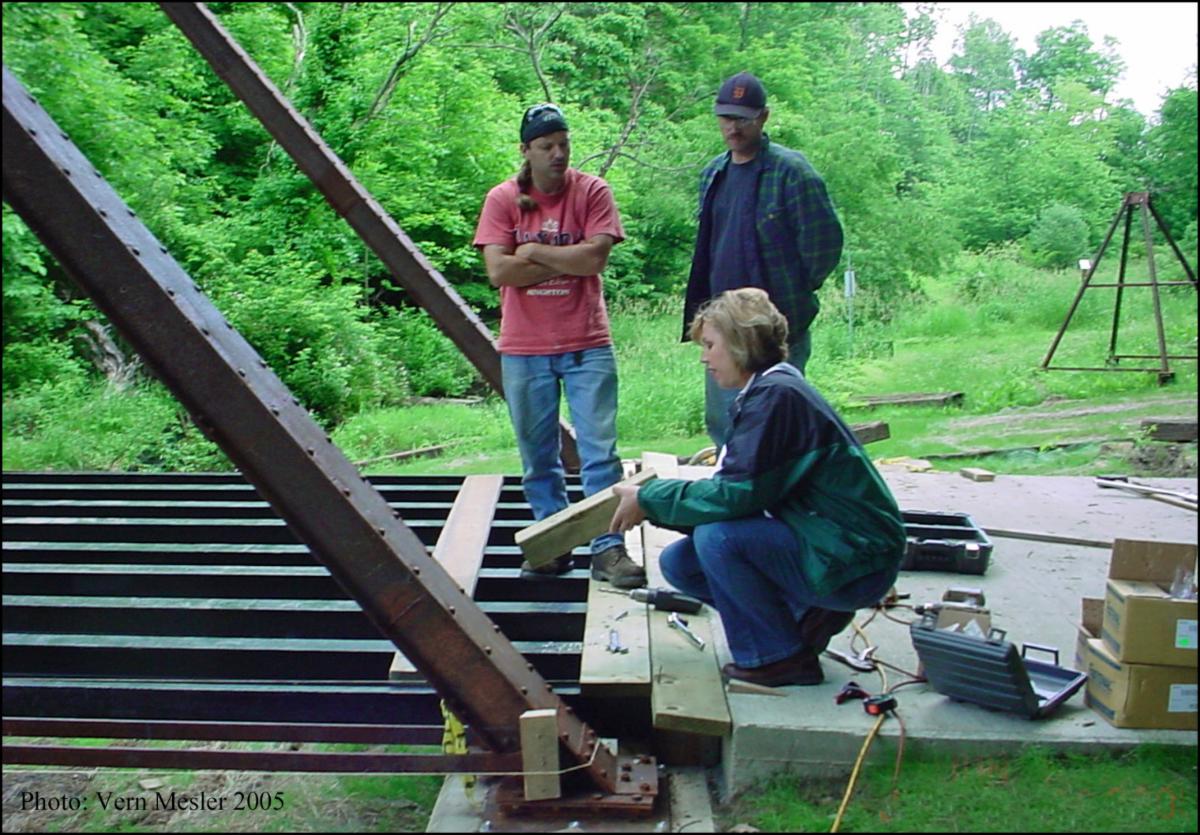
Bauer Road Bridge decking; Rob Denniston and Wayne Conklin with Annette Chapman (Calhoun County Parks Director 1997-2007).
| 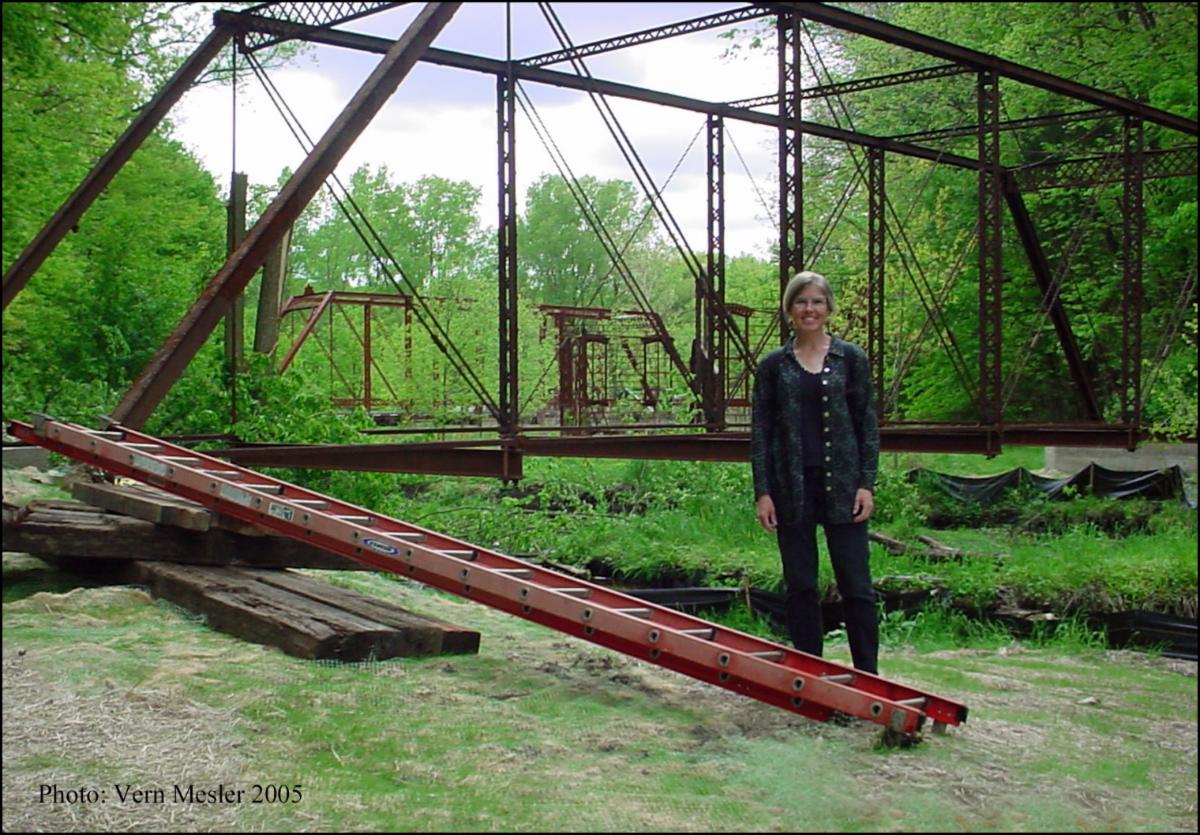
Nan Jackson, writer/editor/photographer.
|
|
|
Program Fund
Please consider contributing to the Iron and Steel Preservation Program Fund. This fund was established to support projects, research, conferences and scholarships related to the repair, rehabilitation, and restoration of metals. The Lansing Community College Foundation is a nonprofit 501(c)(3) corporation.
Donate Here
|
|
|
|
Past Iron & Steel Preservation Newsletters
|
Thank you to all our donors!
We always appreciate contributions to the Iron and Steel Preservation Program Fund. Thank you for your support.
|
|
|
|
Sponsor
|
Want to become a sponsor?
|
|
Lansing Community College
5708 Cornerstone Drive
PO Box 40010, MC 4100W
Lansing, MI 48917
|
|
|
|
|
Copyright © 2021. All Rights Reserved.
|
|
|
|