Weekly Digest Number 20 - May 18, 2021 |
|
TRANSPORTATION LABOR APPLAUDS CALLS FOR PSR STUDY, ENCOURAGES GAO TO MOVE QUICKLY |
|
Greg Regan, president of the Transportation Trades Department, AFL-CIO (TTD), issues this statement applauding House Transportation and Infrastructure Committee Chair Peter DeFazio (D-OR) and Railroads, Pipelines, and Hazardous Materials Subcommittee Chair Donald Payne Jr (D-NJ) for calling on the GAO to study the impacts of Precision Scheduled Railroading (PSR) on workers, safety, and shippers:
“For years, freight rail workers and their unions have been sounding the alarm about the dangers of PSR, a destructive business model dominating the freight rail industry. Today, we applaud Chairs DeFazio and Payne for taking seriously the concerns of our freight rail workforce and the customers they serve, and requesting that the GAO examine the alarming practices and conditions rail employees experience on a daily basis. TTD calls on the GAO to complete the requested study expeditiously and in consultation with the freight rail workforce.
“The ramifications of PSR are almost too many to count, and the implementation of this business model has made the freight rail industry nearly unrecognizable. The goal of PSR is to line the pockets of wealthy shareholders by prioritizing cost cutting and profits over safety and service. As a result, freight rail workers across all crafts and classes have been systematically laid off as employment at Class I railroads has been slashed by approximately 25% in just a few years. Those left are forced to take on more responsibilities, and report being pressured to meet unattainable standards and arbitrary deadlines while combating debilitating fatigue. Railroads are also evading federally mandated inspections, neglecting maintenance, and operating fewer but significantly longer trains – a move that impacts the safety not only of rail workers, but of the communities through which these trains travel.
“Freight rail workers and their unions fear that the combination of a less-than-bare bones workforce, endemic fatigue, dangerous equipment, longer trains, and an overall disregard for safety threatens both rail workers and the long-term viability of the industry. A study by the GAO elevating these concerns is a good first step in reining in this out-of-control business model and returning safety to the freight rail industry.”
|
|
In a turnaround, Kansas City Southern board accepts Canadian National’s buyout offer |
|
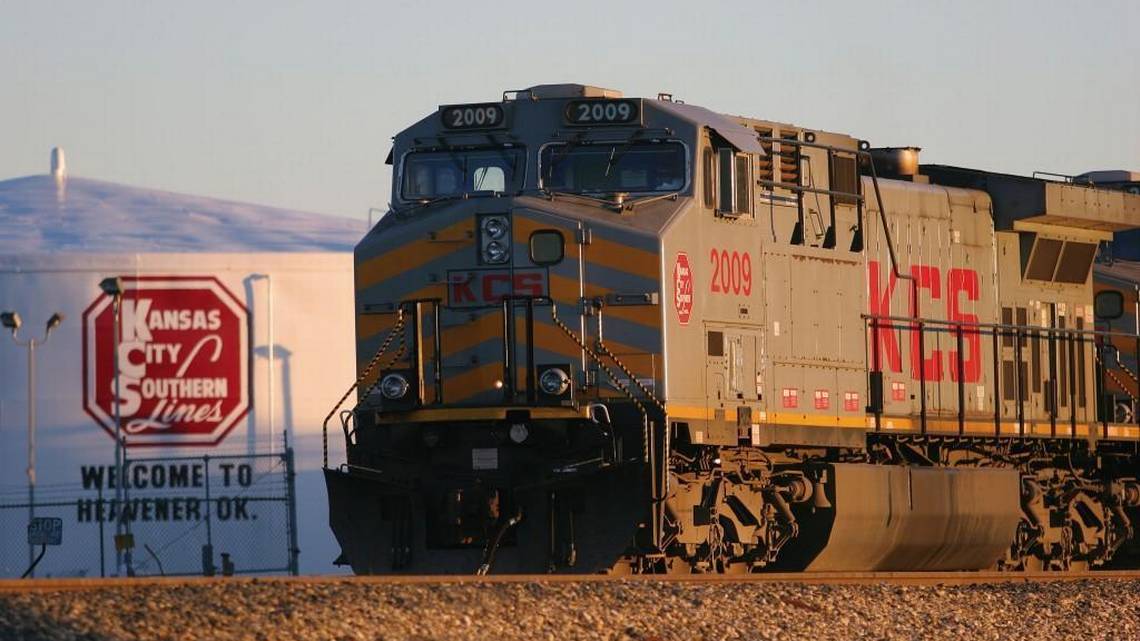
Kansas City Southern’s board of directors decided on Thursday to accept an acquisition offer by Canadian National Railway, marking a surprise turnaround since March when the local rail company had agreed to a merger with another Canadian firm.
Kansas City Southern told Canadian Pacific that it is ending its merger agreement that was reached in March, which valued Kansas City Southern at $29 billion.
Canadian National Railway submitted a $33.6 billion offer to buy Kansas City Southern, one that Kansas City Southern’s board of directors deemed a superior proposal after weeks of negotiations and due diligence.
Canadian National sweetened its offer for Kansas City Southern over its earlier bid from April, including a pledge to cover a $700 million breakup fee owed to Canadian Pacific if its deal for Kansas City Southern could not close.
Kansas City Southern’s announcement comes as top executives from Canadian National arrived in Kansas City on Wednesday and spent Thursday visiting with civic organizations and leaders in town, including the Greater Kansas City Chamber of Commerce and Kansas City Area Development Council, to press them on the benefits of their proposal.
|
|
EDITOR'S NOTE: The KCS merger situation is generating all sorts of news!
|
|
US rail industry defends safety record amid staffing cuts |
|
Even as railroads are operating longer and longer freight trains that sometimes stretch for miles, the companies have drastically reduced staffing levels, prompting unions to warn that moves meant to increase profits could endanger safety and even result in disasters.
More than 22% of the jobs at railroads Union Pacific, CSX and Norfolk Southern have been eliminated since 2017, when CSX implemented a cost-cutting system called Precision Scheduled Railroading that most other U.S. railroads later copied. BNSF, the largest U.S. railroad and the only one that hasn't expressly adopted that model, has still made staff cuts to improve efficiency and remain competitive.
The railroads acknowledge they have cut staff, lengthened trains and made other adjustments to reduce spending, but they are adamant none of the changes increase dangers. Regulators at the Federal Railroad Administration say they are tracking the changes and that the data so far does not show the new operating model is unsafe. But unions counter that with the stakes so high any time a train derails, the new system is risky.
"Every time the wheels come off the rail, it's kind of like buying a lottery ticket to the big disaster," said Jason Cox with the carmen division of the Transportation Communications Union.
Precision Scheduled Railroading calls for running fewer, longer trains with a mix of freight to reduce the number of crews and locomotives needed to deliver millions of tons of goods nationwide. The railroads also operate their trains on more of a set schedule now, with fewer stops and pickups, and they have eliminated shorter, less-profitable routes.
By increasing the length of trains, railroads can reduce total trips, cut down on the number of engines and railcars needing maintenance, and manage with fewer employees. Some trains now stretch longer than 2 miles (3.2 kilometers). Union Pacific said the average of its maximum train length has grown more than 30% to 9,250 feet, which is 1.75 miles (2.8 kilometers), since it started using the new operating model in 2018, and the railroad is expanding track sidings throughout its network to accommodate much longer trains.
|
|
Introduction to the principal components of the Solutionary Rail proposal
|
|
Solutionary Rail is a PEOPLE-Powered infrastructural proposal that requires a broad grassroots alliance to make it happen with the public benefit components intact.
Solutionary Rail now provides a new 2021 video presentation along with links to supplemental briefs and a free PDF of their book.
|
|
Editor's Note: Hazmat teams dispatched to derailments in IA & MN
|
|
Union Pacific train derails in southern Minnesota
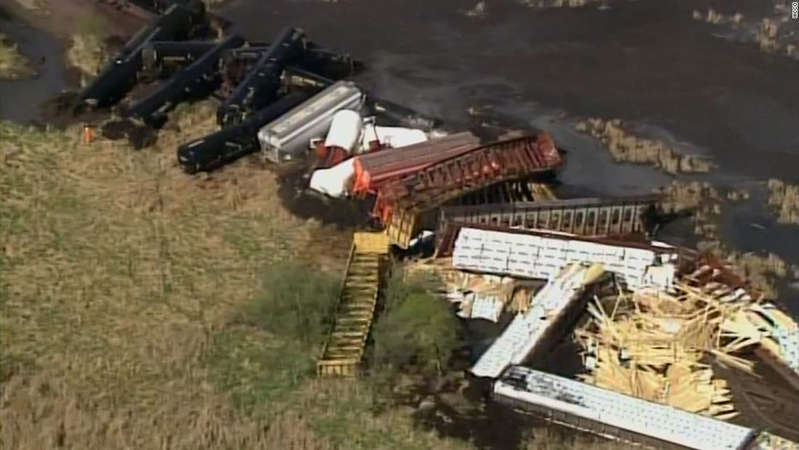
A Union Pacific train derailed Saturday afternoon in Albert Lea, Minnesota, according to local authorities.
No injuries have been reported among the crew, according to the rail operator.
The 50-car train was traveling by Goose Lake when the accident happened, per the Albert Lea Police Department, about 10 miles north of the state border with Iowa. Albert Lea is about 100 miles south of Minneapolis.
Union Pacific said approximately 28 cars derailed around 1:45 p.m. CT.
"The train was carrying mixed commodities. We're still working to identify what is in the derailed cars," Union Pacific said. The cause of the accident is under investigation.
A hazardous materials crew was brought in from Rochester as a precaution, and people living near the accident site were advised to remain indoors, according to police.
|
|
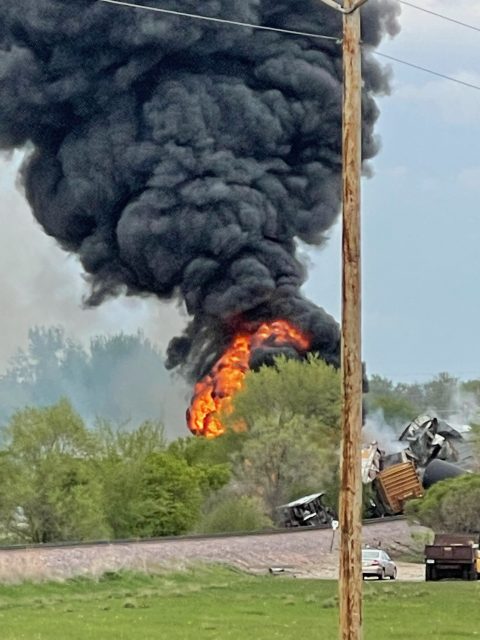
Cars Burst Into Flames in Iowa... Mass Evacuations Underway
Mass evacuations are currently underway in northwest Iowa -- where a train derailment has sent its cars bursting into flames... and hazmat crews storming in.
The accident appears to have occurred just a short time ago near the city of Sibley, where black smoke has been billowing for several minutes now. Somebody nearby captured footage of the crash, and you can see spouts of flames coming up from behind a building.
Several different rescue crews are enroute, as there are concerns the train might've been carrying flammable liquid... which would explain the fire that's growing on site. Word is that authorities are clearing the area within a 5-mile radius... so a massive hazard's unfolding.
|
|
HOUSE TRANSPORTATION LEADERS REQUEST GAO STUDY ON PSR |
|
The chair of the House Committee on Transportation and Infrastructure Peter DeFazio (D-OR) and the chair of the Subcommittee on Railroads, Pipelines, and Hazardous Materials Donald M. Payne Jr. (D-NJ) are requesting the U.S. Government Accountability Office (GAO) examine the impacts that the implementation of precision scheduled railroading (PSR) by Class I railroads are having on workers, safety, freight shippers, passenger railroads and long-term management of the nation’s railroads.
“PSR in practice means the bottom line drives the decisions,” said Chair DeFazio. “Longer trains, unhappy shippers and a workforce pushed to do more with less is not a model to chase after – unless you’re on Wall Street. But we can’t let hedge fund managers write the rules of railroading. Last Congress, my Committee heard from various stakeholders concerned for the immediate and long-term impacts of PSR. This study, passed by the House last year in my surface transportation reauthorization bill, the INVEST in America Act, will help us find ways to address the impacts this railroad management strategy has on workers, freight shippers, passenger railroads and rail safety.”
“Precision scheduled railroading is being used more and more throughout the rail industry,” said Rep. Donald M. Payne Jr. “But I am concerned that this strategy could come at the expense of worker safety and smart, long-term railroad management. We need more information about this practice to determine whether it is beneficial or harmful to our nation’s railroad system.”
|
|
The government of Canada provides an update on Lac-Mégantic rail bypass project |
|
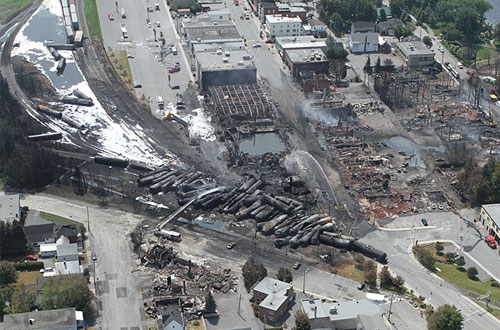
Yesterday, the Canadian government released a statement providing an update on the Lac- Mégantic rail bypass project.
Readers likely remember the horrific derailment of a runaway train loaded with crude oil that exploded in the town of Lac Mégantic in Quebec, killing 47 people. The accident occurred in 2013. Yesterday, the government of Canada updated everyone on the progress of the rail bypass project, which is moving the rail line around Lac Mégantic. The Canadian press release follows.
“We will never forget the Lac‑Mégantic tragedy and the people who lost their lives. Railway safety will always be a priority for the Government of Canada. That is why we are re-affirming our commitment to supporting the people of Lac‑Mégantic and the surrounding area, and to advancing the important Lac‑Mégantic rail bypass project.
“Today, the Minister of Transport, the Honourable Omar Alghabra, and the Parliamentary Secretary to the Minister of Transport, Soraya Martinez Ferrada, are announcing that the Government of Canada still intends to complete the rail bypass project in 2023.
|
|
CSX buys bulk tank trucking fleet to build intermodal muscle |
|
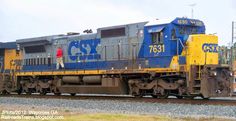
Freight railroad CSX Corp. today said it will acquire the bulk liquid chemicals truck transportation specialist Quality Carriers Inc. in a move the company said will create the nation’s first integrated multimodal chemical transportation solution.
Jacksonville, Florida-based CSX purchased the trucking line from the Tampa, Florida-based global logistics and transportation provider Quality Distribution Inc., which has been owned since 2015 by the private equity firm Apax Partners.
Terms of the deal were not disclosed, but following the deal, Quality Carriers said it will become a standalone entity within CSX, remain headquartered in Tampa, and continue to be managed by its current president, Randy Strutz.
Quality Carriers operates what it calls the most extensive bulk tank trucking fleet in North America, with around 2,500 drivers and a network of over 100 company-owned and affiliate terminals and facilities in the U.S., Canada, and Mexico. By linking that organization to CSX, Quality Carriers said its customers will gain access to a wider range of cost-effective shipping options for their needs, utilizing a combination of integrated rail and trucking transportation networks that will allow them to maximize capacity and delivery efficiencies.
|
|
What Workers Need to Do to Prevent Railroads from Reducing Your New York Dock Protections |
|
Many BMWED members are (rightfully) concerned about the proposed acquisition of Kansas City Southern (KCS and its subsidiaries Tex-Mex and Mid-South) by either Canadian Pacific (CP) or Canadian National (CN). Also, other members are concerned about CSX acquiring Pan Am in New England. It should be noted that the transaction involving KCS will likely take at least one (1) year to be resolved at the Surface Transportation Board (STB). Also, any member working for KCS, CP, CN, CSX and Pam Am will be eligible for New York Dock benefits if their compensation is adversely affected by an approved acquisition.
Displaced employees are entitled to a displacement allowance, which is based upon the total compensation earned by the employee in the 12-month period prior to the adverse effect of the transaction (i.e., the displacement). Dismissed employees are entitled to a dismissal allowance, which is the equivalent of one-twelfth of the compensation the employee received in the 12-month period prior to the adverse effect of the transaction (i.e., the furlough). In both instances, displaced and dismissed employees hold the burden of proof in demonstrating their adverse effects of the transaction, which includes substantiating their earnings for the 12-month period prior to being displaced or dismissed.
|
|
Norfolk Southern Railroad responds
to complaints
|
|
A recent vehicle accident on White Oak Road in Junction City brought to light a problem with trains that’s becoming more common and dangerous — longer trains that are passing through town, stopping to refuel and for maintenance often block road crossings for long periods of time.
Emergency responders were prohibited from quickly responding to the accident a couple of weeks ago because a train had stopped and was blocking both of Junction City’s crossings. The ambulance was forced to return to Danville and take another route on Stewart’s Lane back to Junction City costing at least 15 minutes of response time, according to Boyle County Emergency Medical Services Deputy Director Jonathan Wesley.
|
|
|
|
|
|
|