March 25, 2024
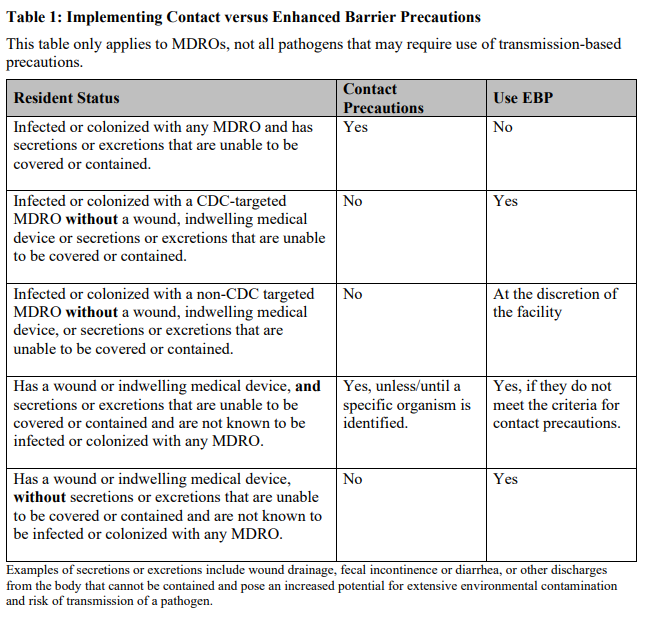
CMS released QSO-24-08-NH which includes new guidance for State Survey Agencies and long-term care (LTC) facilities on the use of enhanced barrier precautions (EBP) to align with CDC's recommendations.
As of April 1, 2024, this new guidance related to EBP is being incorporated in F880 Infection Prevention and Control to assist LTC surveyors when evaluating the use of enhanced barrier precautions in nursing homes.
EBP are indicated for residents with any of the following:
-
Infection or colonization with a CDC-targeted multidrug-resistant organism (MDRO) when Contact Precautions do not otherwise apply; or
- Wounds and/or indwelling medical devices even if the resident is not known to be infected or colonized with a MDRO.
For residents who fit these criteria, EBP expand standard based precautions to include donning gown and gloves during the below high-contact resident care activities:
- Dressing
- Bathing/showering
- Transferring
- Providing hygiene
- Changing linens
- Changing briefs or assisting with toileting
- Device care or use: central line, urinary catheter, feeding tube, tracheostomy/ventilator
- Wound care: any skin opening requiring a dressing
Note: In general, gowns and gloves would not be recommended when performing transfers in common areas such as dining or activity rooms, where contact is anticipated to be shorter in duration. Outside the resident’s room, EBP should be followed when performing transfers or assisting during bathing in a shared/common shower room and when working with residents in the therapy gym, specifically when anticipating close physical contact while assisting with transfers and mobility.
Residents are not restricted to their rooms or limited from participation in group activities.