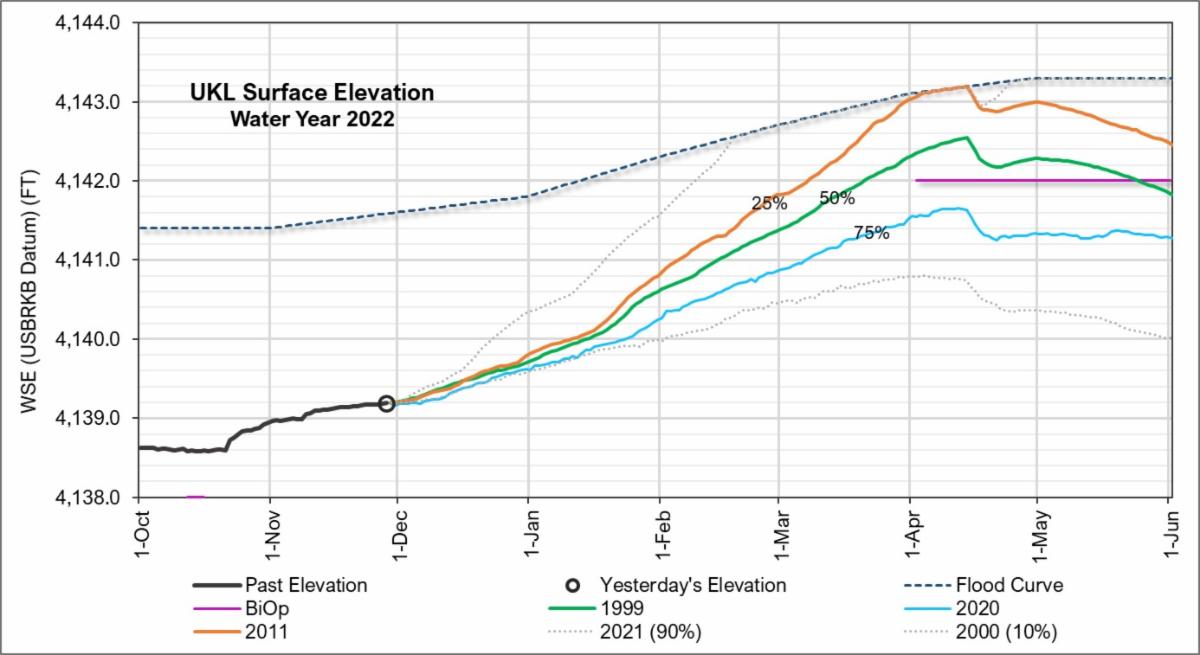
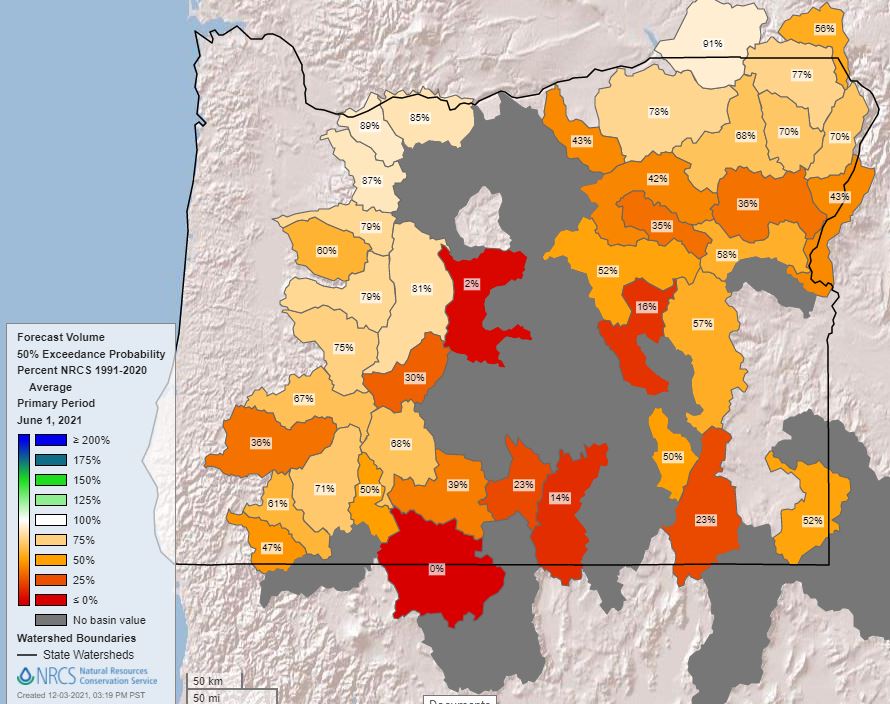
Reclamation's projection for Upper Klamath Lake elevations fall short of the anticipated needs of Klamath Project irrigators, USFWS minimum lake elevations for the endangered c'waam and kaptu, in addition to the National Marine Fisheries Service demands for
water flows for coho, which are not currently in the Klamath River mainstem, in excess of the amount of water which would have been naturally available given the current hydrologic conditions.
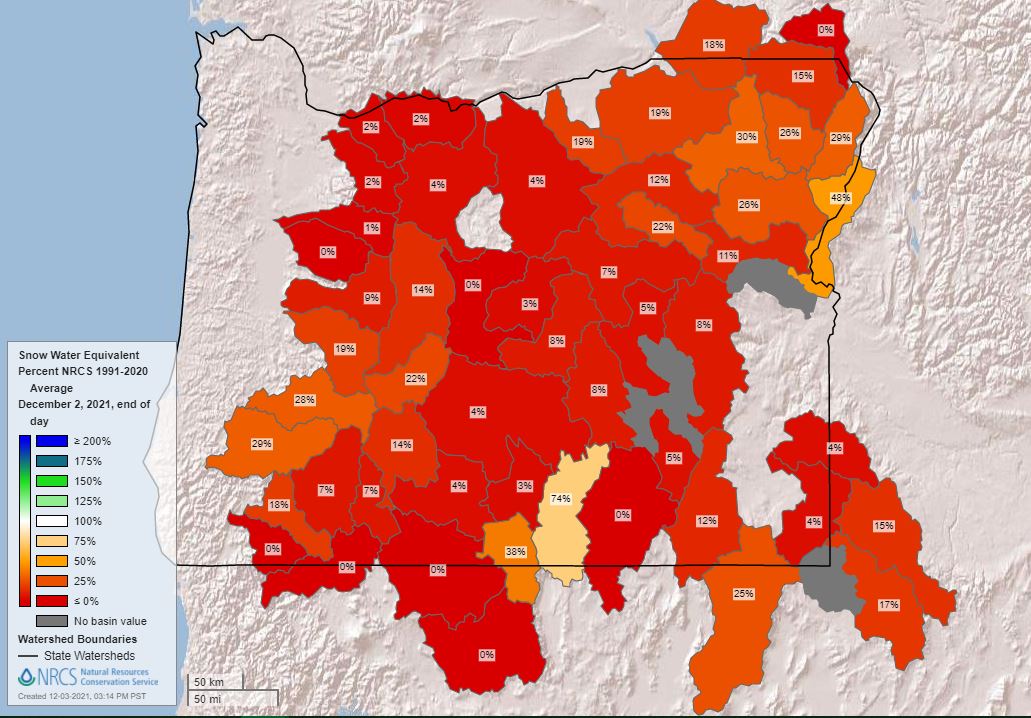
In discussing with various analysts, we believe Reclamation's 75% exceedance prediction (blue line on the top chart) is the more likely projection given current inflows below 25% and non-existent snowpack. If these analysts are correct, UKL will not meet the biological opinion levels required by USFWS. The "dip" in this chart during April is a planned "flushing flow" down the Klamath River clearly requiring the use of stored water from UKL.
Reclamation began sending over 1200 cubic feet of water down the Klamath River on 1 December 2021 to "repay" PacifiCorps reservoirs for water "borrowed" by USFWS for environmental purposes this past fall. This release is in excess of the inflow to the Lake, requiring UKL stored water to be released. Klamath Drainage District and Tulelake Irrigation Districts have responded to Reclamation's request to cease all Project operations on 6 December 2021.
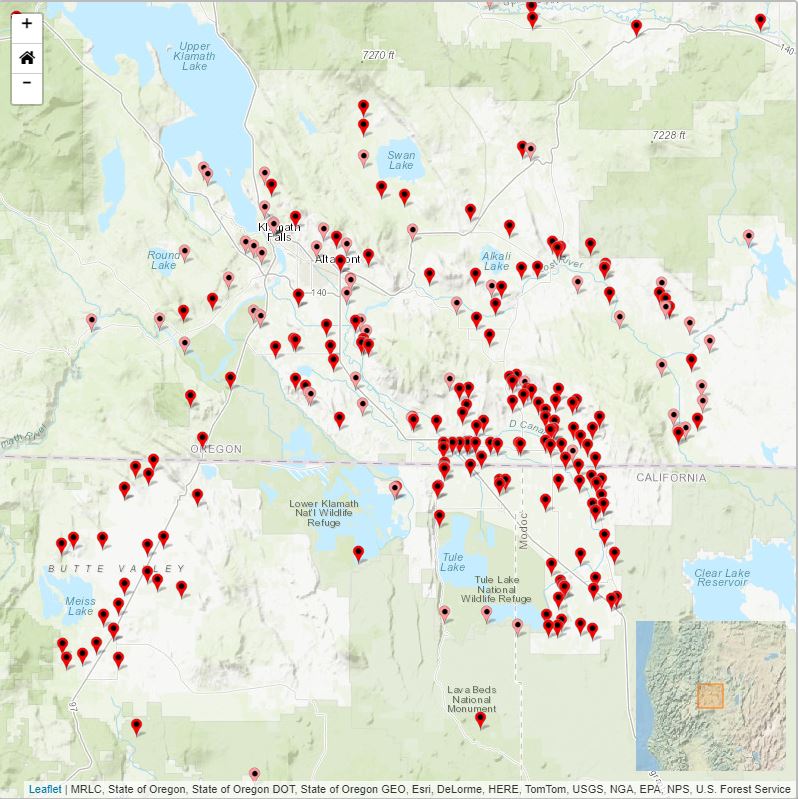
The USGS Upper Klamath Basin groundwater tracking tools can be viewed by clicking the bottom chart.
Klamath Irrigation District leadership, with our partners, are engaging with various stakeholders to communicate our perception that Reclamation will direct a late start and/or set conditions to repeat the environmental disaster, destruction of our ecosystem, devastation of our communities, our culture, and economy as occurred in 2021.
Klamath Irrigation District is also preparing to submit an application for a limited license to begin slowing filling the A Canal beginning 15 February 2022 as part of our overly cautious extended water-up plan for 2022.