|
Council of Producers & Distributors of Agrotechnology
Terry Kippley, CPDA
| |
|
EPA Administrator Lee Zeldin’s Message to EPA Staff: “It’s Time to Return to the Office”
On February 18, EPA Administrator Lee Zeldin released a video on social media urging staff to return to full-time work in the office. Zeldin said:
“To the dedicated employees who have been showing up to the office every day, thank you! Your commitment to our mission does not go unnoticed. To all of the other great members of the team, it’s time to return to the office. To partner. To collaborate. And to deliver.
Since January 2024, the highest single-day attendance rate for the agency was a mere 37%. On Mondays and Fridays, attendance averaged 8.9%. EPA employees are beginning to return to agency worksites full-time on February 24, 2025.
| |
|
Tariff Impacts on Formulated Active Ingredients with Chinese Technical
Jim DeLisi from CPDA member company Fanwood Chemical passes along this important information related to U.S. Customs and the recent tariff increases affecting Chinese imports:
“We need to take this opportunity to remind all of our readers that the formulation of an agrochemical is not a substantial transformation under U.S. Customs definitions. Therefore, if you import a product into the U.S. from a third country that contains a Chinese active ingredient, for labeling purposes that material is likely properly classified as to where it was formulated, but for tariff purposes, that product is likely still Chinese and therefore subject to the 25% surtax, now plus 10%! When in doubt, you are urged to seek a binding customs ruling.”
| |
|
Federal Insecticide Fungicide and Rodenticide Act Labeling
The U.S. Environmental Protection Agency is seeking public comments on a petition filed by several state attorneys general (AG). The AGs are requesting that EPA initiate rulemaking to clarify that statements on pesticide labels regarding health claims that are inconsistent and contrary with EPA’s findings would be false and misleading under federal pesticide law. This would prevent states from imposing labeling requirements that are different from EPA’s findings.
This effort is aligned with the bipartisan Agricultural Labeling Uniformity Act (ALUA), introduced by Reps. Dusty Johnson (R-SD) and Jim Costa (D-CA) last Congress. If enacted, the ALUA would firmly establish that FIFRA preempts states from imposing labeling requirements that differ from EPA’s findings. CPDA expects that this law will be re-introduced for this Congress.
| |
|
Chlorpyrifos
To give commenters more time to provide input, EPA is reopening the public comment period on a proposed rule to revoke certain tolerances for chlorpyrifos.
EPA released the proposed tolerance rule in December 2024 with a comment period that closed on February 10. The agency will soon publish a Federal Register notice reopening the public comment period for 30 days.
| |
|
PFAS Bill Introduced in Maryland
The Maryland legislature will consider a bill prohibiting the use of pesticides containing intentionally added PFAS during its 2025 legislative session, which ends on April 7. This follows PFAS legislation in previous sessions prohibiting PFAS in certain compounds and industrial wastewater. Thanks to CropLife America and RISE for testifying last week in opposition to the bill, arguing that the legislation is unnecessary given the existing robust federal regulation of pesticides.
| |
|
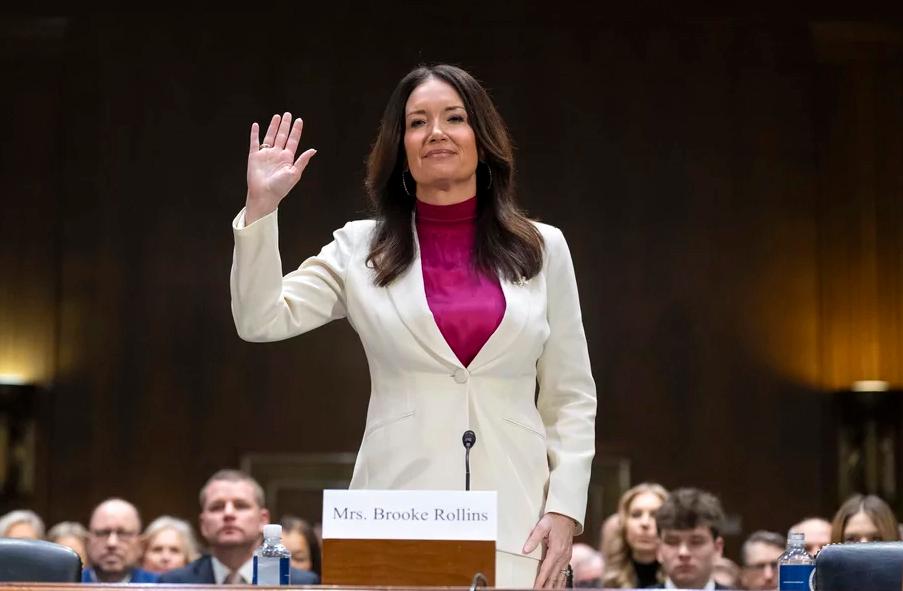
Brooke Rollins Confirmed
Last Thursday, by a 72 to 28 final vote, including support from 19 Democrats, the Senate confirmed Brooke L. Rollins as the next Secretary of Agriculture. The Senate agriculture committee voted unanimously to advance her nomination. In response, CPDA issued the following statement:
"CPDA would like to congratulate Brooke Rollins on her confirmation as the next Secretary of Agriculture. CPDA and our member companies look forward to working with you to ensure U.S. farmers have the resources necessary to feed, fuel and clothe the world."
| |
|
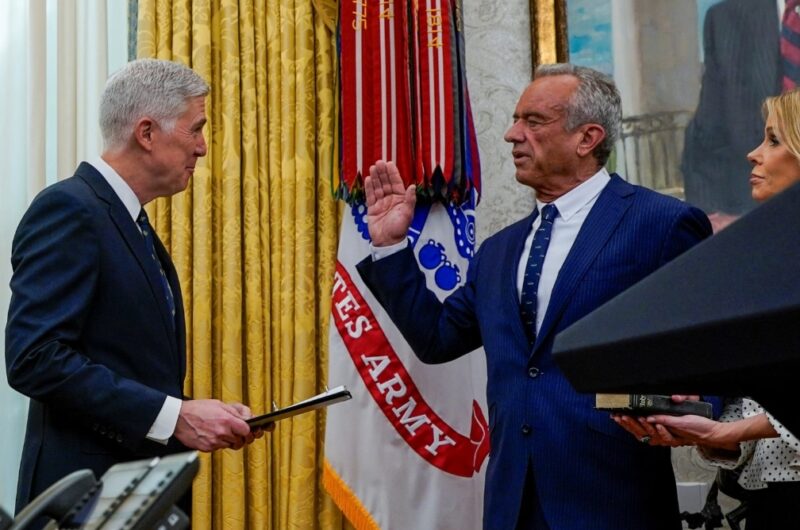
Robert F. Kennedy Jr. Confirmed
Also last Thursday, following a close Senate vote to confirm him, Robert F. Kennedy Jr. was sworn in to lead the Department of Health and Human Services.
Agricultural leaders will be watching Mr. Kennedy closely as he has stressed reshaping farm policy as a priority. During his Senate confirmation hearing Mr. Kennedy said:
“We will make sure our tax dollars support healthy foods. We will scrutinize the chemical additives in our food supply. We will remove the financial conflicts of interest in our agencies.”
Wasting no time, President Trump signed an executive order (EO) after his confirmation vote entitled “Establishing the President’s Make America Healthy Again Commission,” which will be chaired by Mr. Kennedy.
The EO directs affected federal agencies to “aggressively combat” America’s health challenges, including obesity and diabetes. The EO directs agencies to “work with farmers to ensure that United States food is the healthiest, most abundant and most affordable in the world.” The commission will focus first on causes of the “childhood chronic disease crisis” and the potential overuse of certain food ingredients, medications, and chemicals.
Working parallel to Mr. Kennedy’s efforts under the EO, members of the Senate have formed a “Make America Healthy Again” (MAHA) Caucus, seeking legislative ways to implement Kennedy’s vision for a heathier America. Senator Roger Marshall (R-KS), a founder of the MAHA Caucus, said lawmakers are readying a package of bills focused on soil health, nutrition and increasing access to costly regenerative agriculture techniques.
| |
|
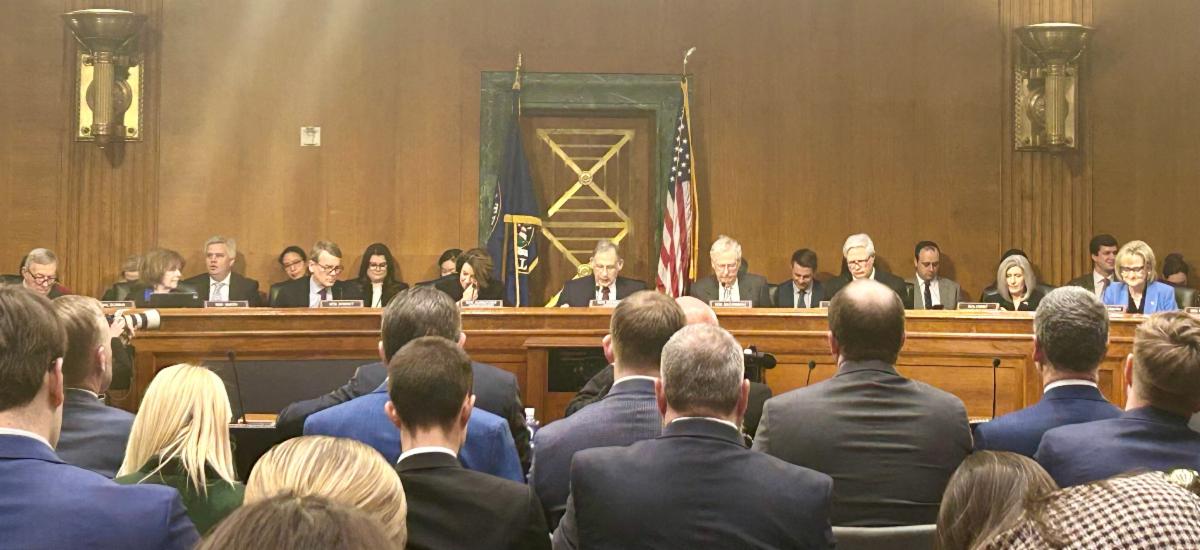
Senate Agriculture Committee Hearing
On February 5, Andrew Walmsley, CPDA’s Vice President of Government Relations attended a Senate Agriculture Committee hearing to discuss the health of the farm economy. The hearing featured multiple witnesses, including American Farm Bureau Federation (AFBF) President Zippy Duvall, National Farmers Union President Rob Larew, and other stakeholders.
The hearing comes as there are widespread woes across farming regions and commodities amid stagnant and declining farm income, a potential trade war due to tariffs, supply chain woes and rising input costs. Adding to that was an inability of the last Congress to approve a new Farm Bill reflective of current crop and economic conditions. Another significant concern is the possible expiration of the tax cuts contained in the Tax Cuts and Jobs Act of 2017.
Note: President Duvall will be our Monday evening guest speaker during the February 24-26 CPDA Fly-In.
| |
|
Farm Economy Update
The day after the Senate Agriculture Committee hearing, the U.S. Department of Agriculture’s Economic Research Service (ERS) released its latest numbers on the farm economy. For 2025, USDA is projecting net farm income to increase sharply, due to an infusion of $31 billion in disaster aid and market relief assistance provided by Congress last December.
USDA’s forecast for net farm income is $180.1 billion for 2025, an increase of 26.4% from 2024, and 44.8% above the 20-year average for farm earnings.
Net cash farm income, which is a measure of cash receipts, plus government payments, minus cash expenses is estimated to increase by 18.8%, or $30.6 billion, to $193.7 billion in 2025. That would be 30.9% above the 20-year average.
Direct government payments to producers are the key drivers for 2025 as they are forecast to increase 355%, or $33.1 billion, to $42.4 billion.
These funds are part of a broader expected increase in ad hoc disaster payments (temporary, emergency payments issued outside standard farm bill programs), which are expected to total $35.7 billion in 2025, up from just $4.35 billion in 2024, a 720% increase.
Farm Bill payments through the Agriculture Risk Coverage (ARC) and Price Loss Coverage (PLC) programs will also add to the increase in government payments, rising a combined $1.6 billion in 2025, more than triple their 2024 levels.
| |
|
House Agriculture Committee Hearing
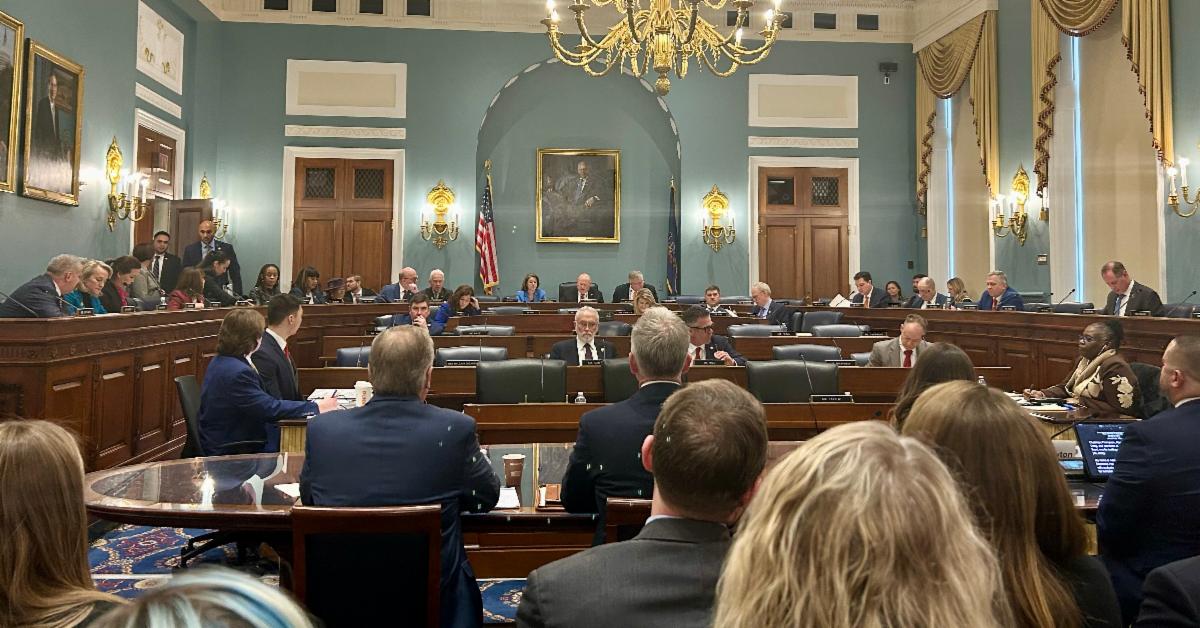
Andrew also attended last Tuesday’s House Agriculture Committee hearing entitled “Examining the Economic Crisis in Farm Country.” This follows a similar hearing in the Senate Agriculture Committee as noted above.
John Newton, Ph.D., is the Executive Head of Terrain and the former Chief Economist at AFBF and served as one of the witnesses. Newton told the committee that USDA projects production expenses to decrease by less than 1% to $450.4 billion in 2025, leaving them near the record highs of 2022. Newton also noted that costs are projected to increase for seed, chemicals, and repairs, while fertilizer and energy prices are expected to decrease.
“We’ve seen tight margins now in farm country for three straight years in a row,” Newton said, adding that the economic assistance package passed in December “is not going to make anyone whole.” He said that according to his calculations, around $130 billion in ad hoc support has been provided to farmers in the last six years, compared to around $20 billion through the two main farm bill programs for row crops, Price Loss Coverage and Agriculture Risk Coverage.
“Our farm safety net is broken,” Newton said, calling for additional strengthening of the farm bill programs. "It does not work the way it needs to work and that’s why we’ve had to rely so heavily on ad hoc support.”
Note: Dr. Newton will be joining us for our CPDA Fly-In on February 24th.
| |
|
Attention CCAs: Earn 1 IPM CEU Credit
Attend the Next CPDA/ARA Adjuvant Advantage Webinar Series
| |
|
Tuesday, March 11th
Adjuvants & Unmanned Sprayers
Future outlook and why adjuvants are so essential in unmanned precision applications.
Sponsored by WinField United.
Certified Crop Advisers attending the webinar will earn one Certified Crop Adviser (CCA) program, IPM CEU.
| |
|
This webinar is sponsored by | | | | |