| | |
Finally, the last week of December was a little less busy with legislative matters and time to visit with friends. Since the last newsletter, news from Washington DC just didn't stop coming and legislative work ramped up to prepare for next February’s session (more below). State elected officials including Attorney General Dan Rayfield and Secretary of State Tobias Read are taking action as we legislators are planning more protections for Oregonians. I met with local people about health care and economic development, and spoke with several community groups including OLLI (Osher Lifelong Learning Institute at UO), Airport Rotary Club, the Lane County Association of PERS retirees (LCAP), City Club of Eugene, and Leadership Eugene-Springfield (LES) - see more about it below.
At home, six interconnected home smoke alarms had to be replaced (they do have a finite life and continue chirping to let you know it’s time to replace them, even when you remove the battery and disconnect them from house power). And the fancy dual-fuel stove that was here when we moved in some years ago couldn’t be quickly or economically repaired, so we bought an electric induction range from a local retailer (yes, it was easy to get used to and I like it!).
As December drew to a close I enjoyed a few days of “down time” with college football and basketball games on TV, watching juncos and hummingbirds in the backyard and sapsuckers in the front (photos), and hearing the Oregon Brass Society. Wishing something to bring each of you a bit of peace and good cheer,
| | |
In the sections below you'll find
- Next legislative session: February 2026
- Federal actions: pre-emption for regulating AI and "deep fakes"; SRS money for Lane County
- Around the state: transportation funding, Willamette and Pacific Universities merging, whooping cough surge greatest since 1950
- Local area: Ko-Kwel Wellness Center, Bushnell U expanding health professions programs, Blue River rebuilding, local winemaker named American Wine Legend
- Snapshots: Eugene Airport Rotary, Leadership Eugene-Springfield, City Club on health care
| | Next Legislative Session: February | | |
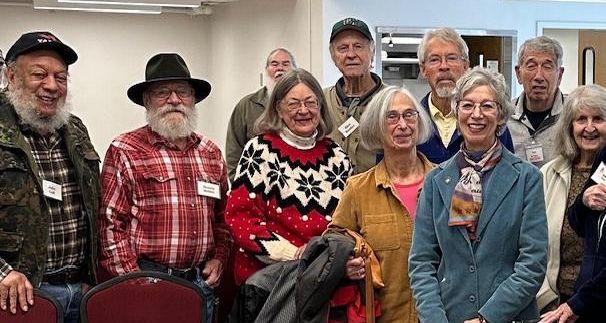
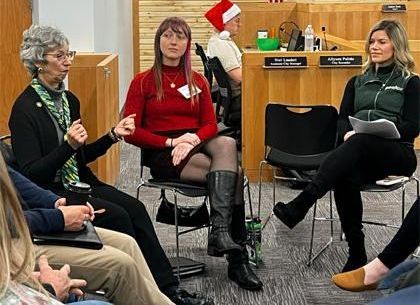
Every group I visit with is asking about the next legislative session, including people at a recent LCAP meeting (photo). Here's a quick description:
The legislature will convene for the regular even-year short session on February 1, 2026, limited to no more than 35 days. Because the session is only five weeks, there is limited time for consideration in one chamber (House or Senate), and if it passes, to move over for consideration in the other chamber. The short session was originally conceived for finishing unfinished business, budget adjustments, or handling emergencies. Bill ideas should be vetted; there will be almost no time for complicated negotiations and amendments. Each committee can introduce up to three bills, and each legislator can introduce no more than two personal bills. We’ll see what those are around February 1. I will introduce scaled-back versions of two ideas that passed out of committee in the last session but stalled (i.e. no funding) in Joint Ways and Means. Those two are: defining urgent care clinics, which are currently unlicensed and unregulated, and reducing some of the red tape and delay in getting care workers licensed and working.
This won’t be an ordinary short session. We have a couple of extraordinary situations to deal with. One is how to respond to the referendum to repeal funding for the transportation package passed in the September special session. The other is how to handle the impact of federal policies, rescissions, clawbacks and cuts, and Congressional budget actions. As reported in mid-July, some agencies have been eliminated such as US Agency for International Development and US Institute of Museum and Library Services, and others reduced to less than 1/4 of the workforce including National Consumer Financial Protection Bureau, AmeriCorps, and HUD Community Planning and Development; and about 41.5% fired at Small Business Administration. Long-standing policies to address a changing environment, increasing wildfire threat, and diversifying energy sources are being reversed, upending progress and undercutting business investments. President Trump’s budget bill and unstable economic policies will end up costing Oregon more than $880 million in tax revenue over two years. Program cuts add another $1.1 billion to the impact, including SNAP for food assistance ($540 million), Medicaid ($490 m), and numerous other programs such as the Marine Fisheries Team, Urban Community Forestry, and Library Services Technology Act. Adding to the concern is what the November Economic and Revenue Forecast showed: the national economy and Oregon’s show signs of slowing, a warning flag for labor conditions (payroll declines, unusual when not in recession), and an increasingly “k-shaped” economy, where the graph with two lines going opposite directions (up and down) indicates growing wealth inequality. You can read more about how federal actions are impacting Oregon and House District 13 in my September newsletter.
| | |
Transportation package
The Legislature passed a transportation funding package in September designed to shore up revenue for ODOT as well as county and cities. Oregon’s level of taxes and fees has not been sufficient to keep up. Fees have remained largely unchanged for several - or many - years. Revenue coming in from gas tax has been steadily decreasing due to better fuel efficiency in regular vehicles, and more people driving electric or hybrid vehicles. The legislation provided money to ODOT, counties and cities, and local transit districts via an increase in the state gas tax and DMV title and registration fees and payroll tax, and a Road User Charge (RUC) for EVs, hybrid and plug-in hybrid vehicles. See more detail in my September e-news.
These changes have been put on pause, after petitioners delivered signatures to the Secretary of State’s office to refer the tax increases to voters. Some changes remain in place including a long-awaited improvement for truck diesel fuel tax and new accountability measures. According to the Department of Transportation, no layoffs would take place until after the short legislative session ends in March.
The fees and tax increases would have raised around $791 million in the 2025-27 budget cycle, with the State Highway Fund to be shared roughly 50/50 between state and local governments, and funding for local transit agencies to avert service cuts.
| | |
The federal government has neglected its role in enacting common-sense regulations to prevent harmful and predatory use of AI by corporations and individuals. In contrast, the Oregon Legislature has been working to keep Oregonians safe from the new threats imposed by this rapidly-developing technology. In 2025, 38 states adopted or enacted artificial intelligence measures, and more are expected in 2026.
A proposed 10-year ban on states regulating AI was initially included in the Republican spending bill, H.R.1 (One Big Beautiful Bill), but was removed before it passed in July. I spoke out about this at the time, as you can see in my one-minute video on the topic. Across the country, 280 state lawmakers from both parties signed a letter to Congress opposing legislation that would curtail state AI laws. The National Conference of State Legislatures honored 10 members of Congress who championed an amendment to remove the moratorium on state artificial intelligence (AI) legislation from the One Big Beautiful Bill Act (OBBBA), including Jeff Merkley (D-Ore.), Maria Cantwell (D-Wash.), and Lisa Murkowski (R-Alaska).
The Oregon legislature earlier this year voted unanimously to expand Oregon's criminal statutes to prohibit digitally created or manipulated intimate images, sometimes called deepfakes. AI-generated intimate photos and videos increased more than four-fold (464%) from 2022 to 2023 alone and over 20,000 AI-generated images of children were posted to an online forum within one month. The legislation ensures that victims of AI-generated deepfakes have the same legal protections as those harmed by traditional revenge porn.
| |
Earlier this month President Trump went around Congress and signed an executive order to prohibit states from regulating AI. States that don’t adhere to the rules could face funding restrictions, targeting funds allocated to expand broadband access in rural areas. That applies to state laws already adopted as well as any new laws.
Under the President’s executive order, Oregon's law would be completely rolled back; victims of AI-generated deepfakes would be left with no legal recourse, and perpetrators would face no punishment. Funds previously designated for helping with broadband deployment could be clawed back. This executive order is a blatant attack on states' ability to protect their own citizens.
The executive order is almost certain to be challenged in court, and tech policy researchers say the Trump administration cannot restrict state regulation in this way without Congress passing a law. For example, Florida Gov. Ron DeSantis said, “An executive order doesn’t/can’t preempt state legislative action.” Michael Kleinman, head of U.S. policy at the Future of Life Institute, said AI companies are “operating with impunity ... No other industry operates without regulation and oversight, be it drug manufacturers or hair salons; basic safety measures are not just expected, but legally required." As reported in Government Technology, “President Trump’s executive order doubles down on a dangerous policy that the Republican-led Congress has rejected not once, but twice: displacing states from their critical role in ensuring that AI is safe, trustworthy, and nondiscriminatory,” Cody Venzke, senior policy counsel with the American Civil Liberties Union, said in a statement. He emphasized the bipartisan opposition to these efforts. “Moreover, the executive order is not just dangerous, it’s unconstitutional.”
Read what Government Technology* has to say about the Executive Order and a follow-up article. (*a division of e.Republic, a smart media and research company focused exclusively on public-sector innovation for state and local government)
| | |
Secure Rural Schools (SRS) Reauthorization
Finally, some good news from Congress!
Secure Rural Schools funding has been an arrangement with the federal government since 2000, mitigating budget pressures in several states due to large amounts of their land being owned by the federal government and therefore not subject to property taxes. The payments recognize the share of timber sales on public lands.
The SRS arrangement had been reauthorized by Congress every two years until last year. Neither the 2024 Continuing Resolution (Dec 2024) nor Trump's big budget bill H.R. 1 included SRS, sending all timber sale receipts directly to the federal Department of the Treasury.
Lane County relies on federal Secure Rural Schools payments (SRS), and had lost around $8 million by the time Congress finally reauthorized the program in December. Good news, but a resolution to a problem that should not have happened in the first place.
| | |
Willamette and Pacific merger
Willamette University and Pacific University announced plans to merge, adopting a “collegiate” model, where different colleges operate under one institution and share resources. They explain the partnership will lead to better services and expanded career pathways for students, as well as create a regional workforce development hub. Under the plan, a new university would serve undergraduate students on campuses with the same names and retain the distinct identities and programs—such as law and data science for Willamette, or health professions and education at Pacific—which attract students to each. Pacific’s main campus is in Forest Grove, graduate and professional programs are located on the Hillsboro campus, and the Portland office hosts the MFA writing program. Willamette’s main campus is across the street from the Capitol in Salem, a lovely place for a walk to clear the head from stressful legislative meetings. Willamette also has programs at three sites in Portland. Read more about the proposed merger.
Whooping Cough
There have been 1,541 confirmed cases of whooping cough (pertussis) in Oregon for 2025, compared to 1,228 for 2024 and 40 for 2023, and the most reported cases since 1950. At one point in December, children under 12 months accounted for 87 cases and 22 hospitalizations.
There are several reasons behind this surge in cases, such as lower vaccination rates among young children and pregnant women, and modern pertussis vaccines not providing immunity for as long as they used to so requiring more frequent vaccinations to stay up-to-date; there have also been changes in reporting. The Oregon Health Authority (OHA) recommends pertussis vaccines for infants over 2 months of age, children, adolescents, and adults. Because babies are at the highest risk of pertussis, all pregnant women should be vaccinated with Tdap (tetanus, diphtheria, pertussis) during each pregnancy, which allows the mother to make antibodies that cross the placenta and may protect the baby even before the baby can be vaccinated. Learn more about vaccine recommendations and pertussis reporting from OHA, and here’s the story from Oregon Public Broadcasting.
| | |
Ko-Kwel Wellness Center
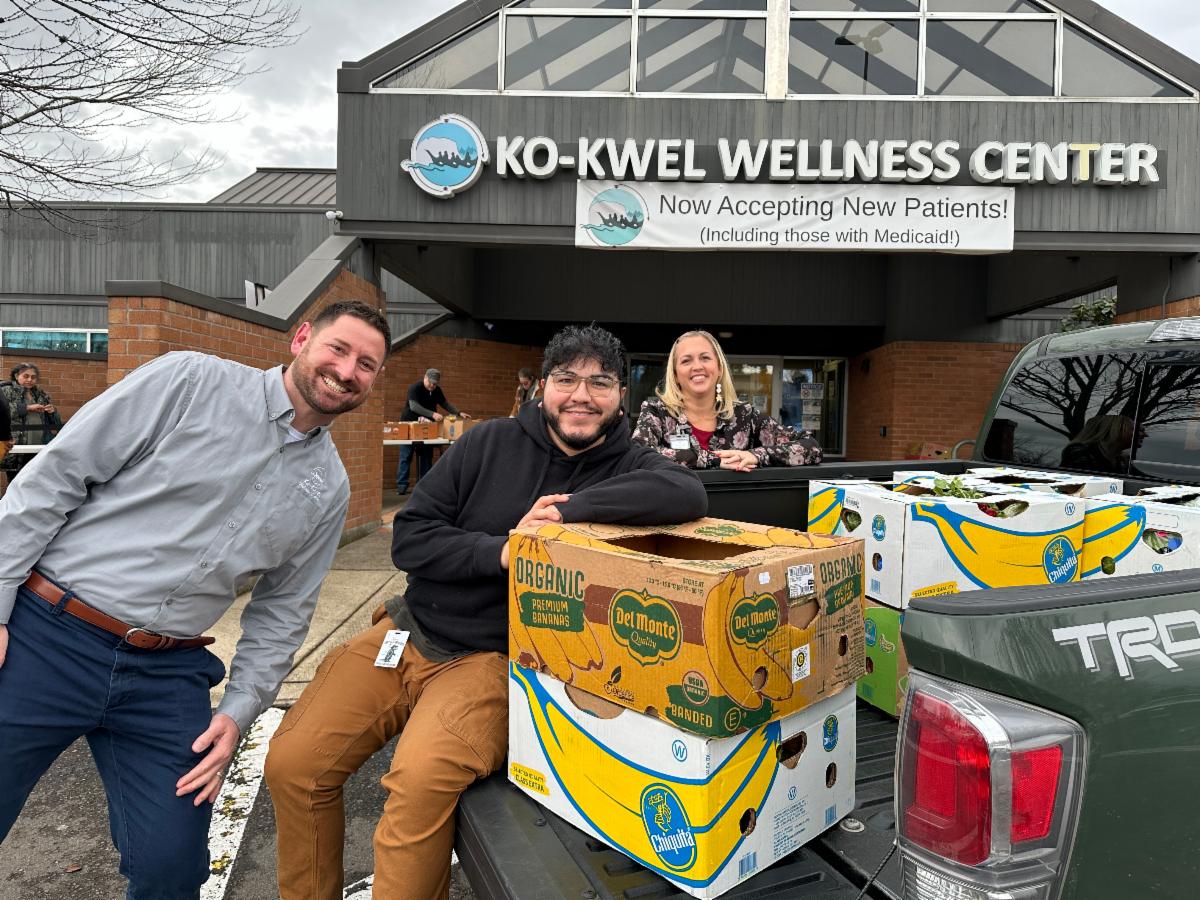
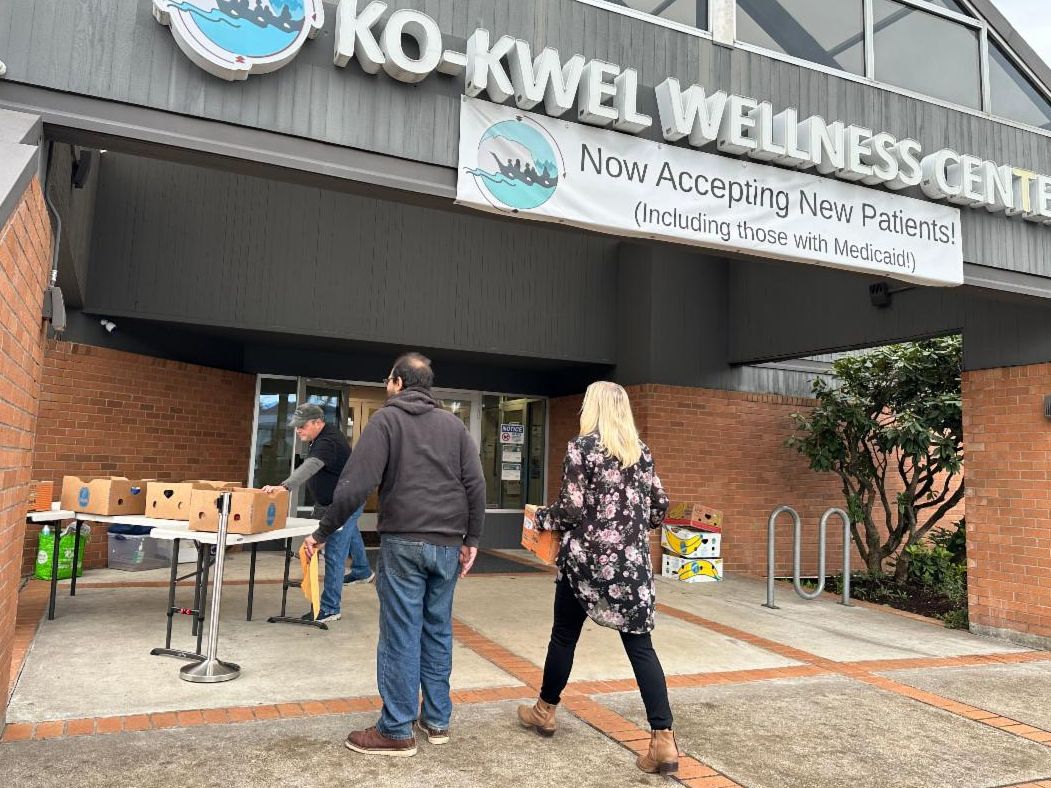
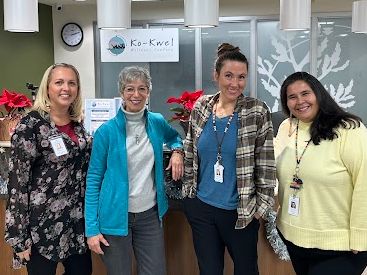
I had a great second visit to Ko-Kwel Wellness Center. My first visit was in 2022 when the Coquille Indian Tribe of southern Oregon had just opened the clinic. The aim was offering a whole-person approach to wellness, health, and self-sufficiency in a safe, traditional, and culturally meaningful environment. This year, I happened to be there on a Tuesday, the day each week they serve as a community food pantry.
Primary care and behavioral health services are offered to Coquille Tribal families, other American Indian and Alaska Natives, employees of the tribe, and the general public as capacity allows. New patients are being accepted, including Medicaid recipients. KWC-Eugene began accepting patients into its new Opioid Treatment Program in June. It is the first integrated, tribally operated, opioid treatment program in the state.
Learn more at www.kokwelwellness.org.
| | |
Blue River rebuilding
Five years after the Holiday Farm fire, Blue River has a new residential neighborhood. McKenzie Community Land Trust cut the ribbon on six freshly built homes now available for ownership by fire survivors, a landmark achievement, and a blueprint for future disaster recovery. The six homes were built with a grant from Oregon Housing and Community Services, alongside a construction loan from Summit Bank. Support from Lane County for the property acquisition, and landscape design was provided pro bono. Read more about this achievement in rebuilding.
Bushnell expands health professions programs at downtown campus
Bushnell University has purchased two former PeaceHealth buildings at the University District campus — a combined 125,000 square feet the university will use to expand its health profession programs. The acquisition opens room for Bushnell to expand its School of Nursing, and add new academic offerings down the line. As Lane County faces shortages of primary care and mental health providers, the university aims to train more of the region’s future health care workforce and keep graduates in Eugene.
The university envisions new programs for training mid-level providers, like nurse practitioners and physicians’ assistants; behavioral health professionals like interventionists, therapists and counselors; and public health and social workers.
| | |
Congratulations to Ed King
Wine Enthusiast has named Ed King American Wine Legend, 2025
From Wine Enthusiast magazine:
"Ed and his father, Ed King, Jr., founded King Estate in 1991. Their origin story traces back to Kansas City, Missouri, where his King, Jr., a pioneer in the avionics industry, founded King Radio Corporation in 1959. King spent his summers working the assembly line and other jobs at his father’s company. ... When his father sold King Radio in the mid-1980s, his idea of retirement was to help his son build a winery. The 600-acre property they settled on was a hay farm, with horses and dusty gravel roads, located near Eugene in the southern Willamette Valley. King said it reminded him of Kansas. Today, the King Estate property spans 1,033 acres, with 460 acres planted primarily to Pinot Gris and Pinot Noir. After years of organic certification, in 2016 King Estate became the largest Demeter USA-certified biodynamic vineyard in North America.
King has helped his community through his philanthropic efforts, including the establishment of a cardiac care center at the region’s largest hospital and the founding of Oak Hill School, a college preparatory school in Eugene."
Read the whole article. (By the way, in 2024 Wine Enthusiast became a certified B Corporation (B Corp) as a business meeting high standards of verified social and environmental performance, public transparency, and legal accountability to balance profit and purpose)
| | |
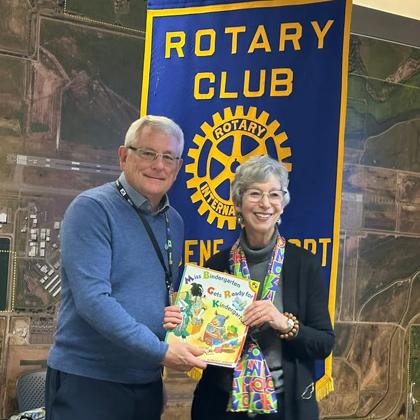
A great conversation with Eugene Airport Rotary Club members earlier this month. The Rotary Club of Eugene Airport provides the book Miss Bindergarten to the kindergarten students in several schools as a gift from the club, with the name of a speaker who presented to the club.
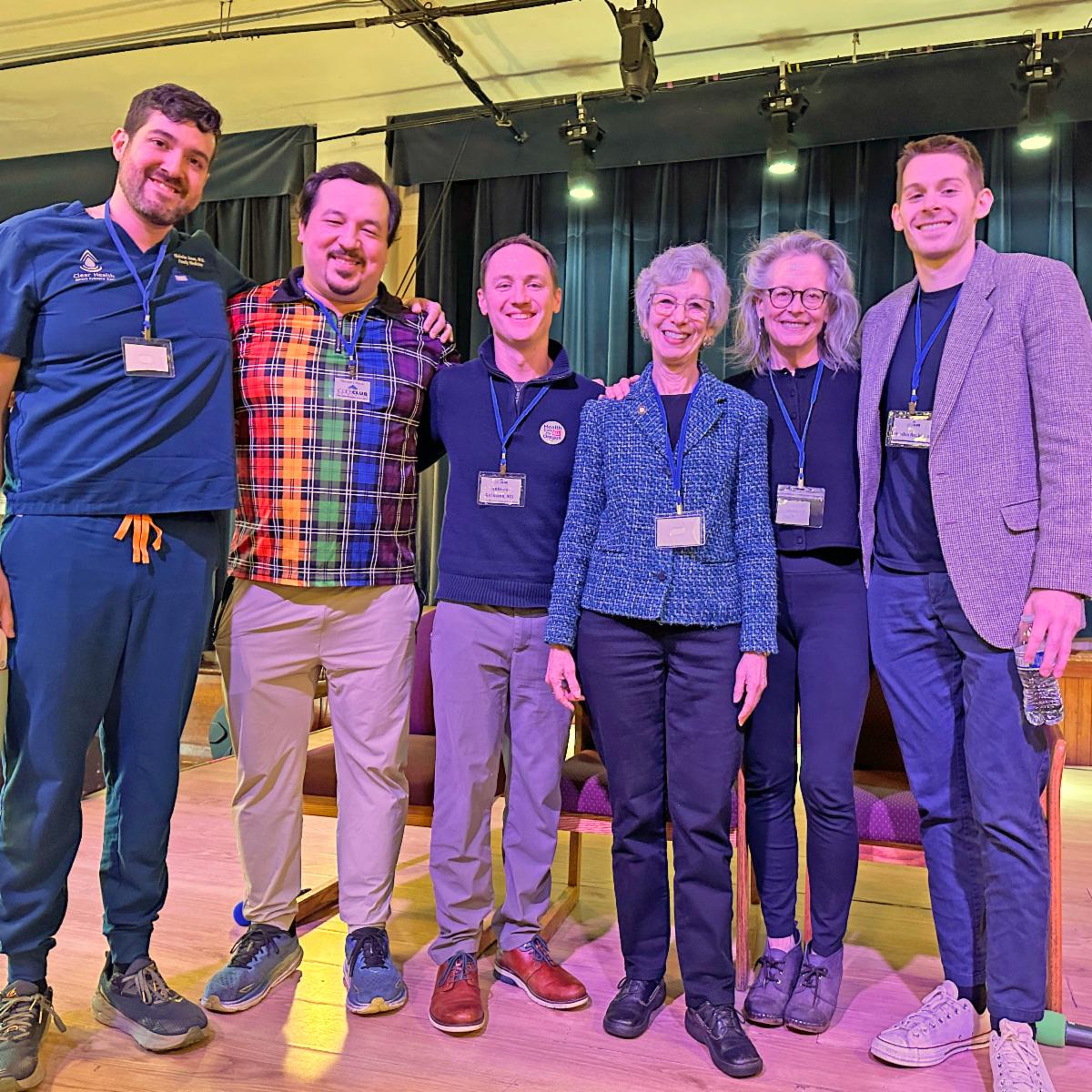
At City Club I provided opening remarks on access to health care and the business of health care, joining panel members as a follow-up to what we discussed at two previous City Club presentations in 2024: Hayden Rooke-Ley, Dr. Nick Jones, and Dr. Tony Germann. Read about it in this KLCC story.
| | Also in December, I joined Rep. John Lively and Sen. Floyd Prozanski talking with more than 20 participants in Leadership of Eugene-Springfield (LES). We talked about our paths to running for election and serving in the legislature and answered questions ranging from partisanship to legislative process and decision-making. LES, sponsored by the Eugene Area Chamber of Commerce, is a program for emerging and established leaders in the Eugene-Springfield community who bring experiences from a diverse range of backgrounds and industry experience. Each one is committed to learning, collaborating, and shaping a stronger future for our community. Learn more about the LES program. | | | | |