Important News!
United Healthcare’s new policy reverses the previous policy with a limit of three (3) epidural injections to the ASIPP recommendation of four (4) procedures per year.
As you know, ASIPP has resolutely advocated for a change in the policy on epidural injection limits of three (3) per year through evidence-based presentations and communication. We first sent a letter on June 21, and they responded on June 27. Since then, we have continued with multiple other correspondences. Consequently, they published the new policy which went into effect on November 1, 2022. This policy now provides coverage for four (4) procedures.
As a reminder, after much effort and many correspondences on the part of ASIPP, percutaneous adhesiolysis is now covered in all states, following the reversal of noncoverage policies of Noridian and Palmetto.
We are still awaiting the response from Centene in reference to the continuation of the epidural injections when indicated beyond one year. We will keep you posted on the developments. See Letter to Centene.
|
|
Need to catch up on earning your
CME Credits before 2022 is over?
Here is an excellent opportunity offered by ASIPP to earn
19.5 AMA PRA Category 1 CreditsTM in Chicago, November 11-13
|
|
Great news! Representatives Larry Bucshon (R-Ind.) and Ami Bera (D-Calif.), are introducing a bill that would prevent a 4.4 percent Medicare physician fee payment cut from taking effect on January 1, 2023, through the introduction of the Medicare Access and CHIP Reauthorization Act of 2015 and associated payment mechanism.
This is the bill we have been requesting from members of the Congress to introduce for some time for the last few months. ASIPP has supported this and ASIPP members have sent over 5,000 letters to Members of the Congress to date.
Representatives Bucshon and Bera are supported in this endeavor by six additional representatives, Kim Schrier M.D. (WA-08), Michael Burgess, M.D. (TX-26), Earl Blumenauer (OR-03), Brad Wenstrup, D.P.M. (OH-02), Bradley Schneider (IL-10), and Mariannette Miller-Meeks, M.D. (IA-02). Together they sent a Request for Information: Medicare Payment System Reform letter to members of Congress. See RFI Letter
|
|
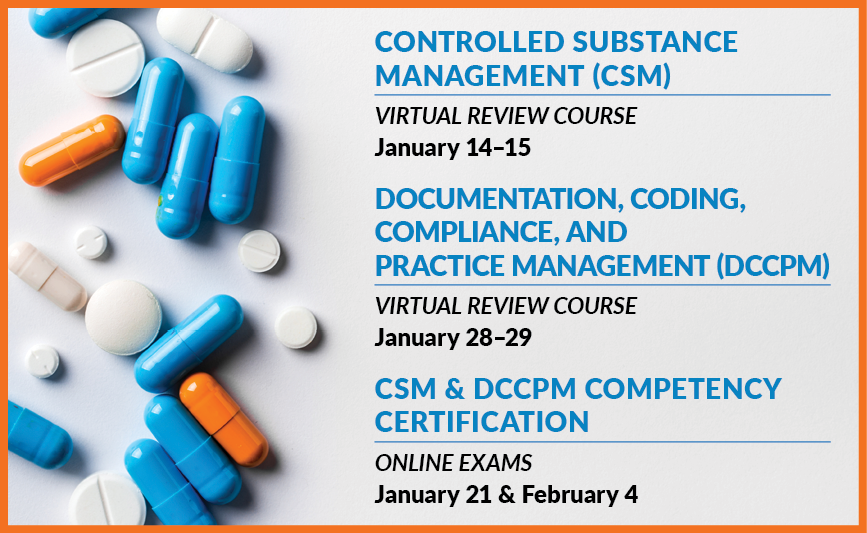
Register today for these 2023 Virtual Review Courses and Competency Certification Exams |
|
Two recent Supreme Court cases have major implications for physician practice
Last week, in an otherwise unremarkable order list, the Supreme Court remanded a case involving a "pill mill" doctor to a lower court for further consideration, in a move that could impact previous precedent-setting decisions on prescribing liability.
Details of the Cases
Counsel for Medardo Queg Santos, MD, filed a writ of certiorari -- a petition for review -- with the Supreme Court earlier this year. The counsel argued that if the court were to decide that "pill mill" doctors could not be convicted absent a jury finding that they subjectively believed the doctor was wrongfully dispensing pills, then Santos should be cleared of his conviction.
|
|
Resident/Fellow News and Updates |
|
As many resident physicians and fellows across the country eye opportunities to unionize, those at Montefiore Medical Center in the Bronx in New York City are the latest to do so.
Their aim -- like others before them -- is securing a seat at the table when it comes to important decisions that can affect working conditions and the provision of care, according to an announcement from the Committee of Interns and Residents/Service Employees International Union (CIR/SEIU).
On Tuesday, resident physicians at Montefiore also announced their intention to form a union with CIR/SEIU, holding a press briefing outside their place of employment.
|
|
REMAINING PART I EXAM DATES THIS YEAR:
November 19 & December 17
|
|
Peter McCullough, MD, and Sherri Tenpenny, DO, face new scrutiny
Two doctors accused of spreading misinformation about COVID-19 vaccines are facing challenges from state and national medical organizations.
Peter McCullough, MD, and Sherri Tenpenny, DO, are facing scrutiny from a specialty board and a state medical board, respectively.
McCullough, who is still facing a lawsuit for allegedly using his former Baylor affiliation while conducting "dozens" of media appearances to share his contentious views on COVID-19 vaccines, told Steve Kirsch that his board certifications in internal medicine and cardiology were revoked last week by the American Board of Internal Medicine (ABIM).
|
|
Mixed results with green light therapy for fibromyalgia
Researchers continued to build a case for green light therapy in the chronic pain population, despite rocky preliminary data from a small randomized trial.
Among 34 opioid users with fibromyalgia, the 12 randomized to wear green glasses trended nonsignificantly toward reduced anxiety on the PROMIS-57 scale compared with peers who wore blue or clear glasses instead (median -3 vs +3.5 vs +2 points, P=0.11).
The null result persisted upon adjustment for age and compliance, but there was a signal that green glasses could reduce fear-based anxiety in particular (P=0.03), reported Amanda Nelli, MD, a postdoctoral researcher at Duke University Medical Center in Durham, North Carolina, at this year's American Society of Anesthesiologists (ASA) annual meeting.
|
|
Two recent studies showed that the updated bivalent boosters were not more effective at targeting newer subvariants than the original formula, but the director of the FDA's vaccine division said these studies have limitations, CNBC reported Oct. 28.
In separate studies, Harvard University and Columbia University researchers tested the tweaked vaccines and the original shots among about 20 people, and the results indicated that Pfizer's and Moderna's new boosters are as effective against subvariant BA.5 as the older vaccines.
"It is important to note that even the data from these initial small studies indicate that the bivalent vaccines are generally at least as good or better as the original vaccines in generating an immune response particularly to BA.4/BA.5 and other newer variants," Center for Biologics Evaluation and Research Director Peter Marks, MD, PhD, said in a statement.
|
|
|
|
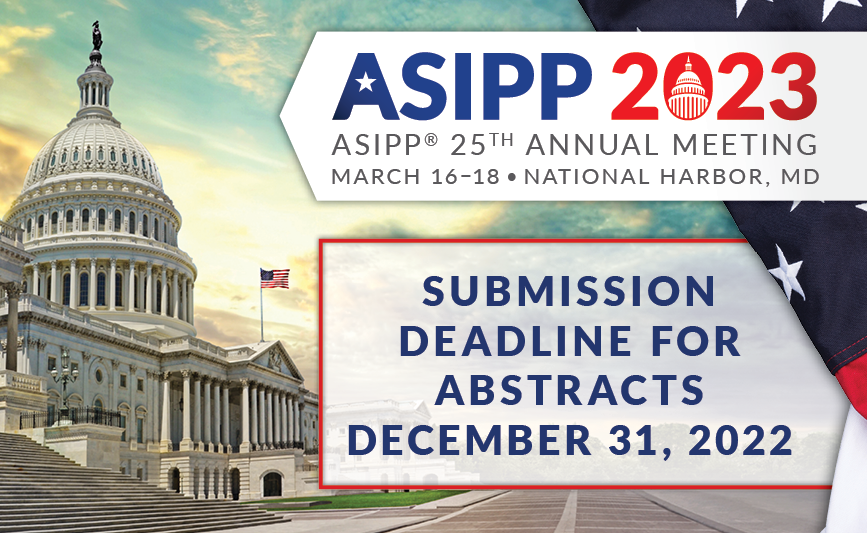
Please plan to join us at the
2023 ASIPP Annual Meeting
March 16-18 National Harbor, Maryland
Register Early
More details will be posted on our website at asipp.org.
Registration begins November 2022.
|
|
For meeting or exhibitor/sponsor information:
|
|
Its shape is changing slightly, but we must continue to battle this scourge
Midterm election madness is in full swing and the incipient cold/flu/COVID season is looming. Our national opioid epidemic has largely disappeared from the headlines with the exception of local coverage when drugs are associated with a crime.
How are we faring in this longstanding battle?
First, a brief recap of what brought us to this point. Beginning in the late 1990s, pharmaceutical company misinformation about the addictive properties of opioid pain medications led providers to prescribe them at higher rates. This precipitated an alarming increase in the use and misuse of these highly addictive medications and, in 2017, prompted the Department of Health and Human Services to declare a public health emergency.
|
|
- ASIPP Members Only Site Information - |
|
-
To log in for the first time you will need to click “forgot password” at the bottom of the login window.
- Check your email and then log in as directed.
-
If you have problems logging into your account, click here.
|
|
Pain Medicine Case Reports (PMCR) and Editor-in-Chief Alaa Abd-Elsayed, MD, PhD would like to invite you to submit case reports and case series to the PMCR journal. Your article will be published free of charge.
Open access journals are freely available online for immediate worldwide open access to the full text of published articles. There is no subscription fee for open access journals. Open access journals are no different from traditional subscription-based journals: they undergo the same peer-review and quality control as any other scholarly journal.
Interested in becoming a member of the PMCR Editorial Board?
Editorial board members are asked to review 2-6 manuscripts per year. Please submit your most up-to-date CV to sgold@asipp.org for consideration.
For more information or to submit your articles, click here.
|
|
| CASE REPORT |
Wade Anthony Wyckoff, MD, Michael S. Nirenberg, DPM, Azem A. Chami, MD, Rinoo Vasant Shah, MD, Rutvij J. Shah, MD, and Alan D. Kaye, MD, PhD
Abstract
BACKGROUND: With the high rate of complications of spine surgery and the current opioid epidemic, peripheral nerve stimulation has become more popular in recent years. This procedure is usually indicated for patients who have failed conservative measures for pain relief.
CASE REPORT: A 56-year-old man with a past medical history of right-hand pain after trauma who failed a trial of opioids and nerve blocks underwent a radial nerve stimulator procedure, which successfully resolved his neuropathic pain state.
CONCLUSION: Radial nerve stimulators should be offered as an alternative to pain management in patients who have failed conservative treatment options and who continue to have peripheral nerve pain.
KEY WORDS: Hand pain, neuropathic pain, peripheral nerve stimulation, postsurgical pain, radial nerve
|
|
| SYSTEMATIC REVIEW |
Laxmaiah Manchikanti, MD, Emilija Knezevic, Richard E. Latchaw, MD, Nebojsa Nick Knezevic, MD, PhD, Salahadin Abdi, MD, PhD, Mahendra R. Sanapati, MD, Peter S. Staats, MD, Christopher G. Gharibo, MD, Thomas T. Simopoulos, MD, Shalini Shah, MD, Alaa Abd-Elsayed, MD, Annu Navani, MD, Alan D. Kaye, MD, PhD, Sheri L. Albers, DO, and Joshua A. Hirsch, MD
Abstract
Background: Epidural injections are among the most commonly performed procedures for managing low back and lower extremity pain. Pinto et al and Chou et al previously performed systematic reviews and meta-analyses, which, along with a recent update from Oliveira et al showing the lack of effectiveness of epidural steroid injections in managing lumbar disc herniation, spinal stenosis, and radiculopathy. In contrast to these papers, multiple other systematic reviews and meta-analyses have supported the effectiveness and use of epidural injections utilizing fluoroscopically guided techniques. A major flaw in the review can be related to attributing active-controlled trials to placebo-controlled trials. The assumption that local anesthetics do not provide sustained benefit, despite extensive evidence that local anesthetics provide long-term relief, similar to a combination of local anesthetic with steroids is flawed.
Study Design: The Cochrane Review of randomized controlled trials (RCTs) of epidural injections in managing chronic low back and lower extremity pain with sciatica or lumbar radiculopathy were reanalyzed using systematic methodology and meta-analysis.
Objectives: To re-evaluate Cochrane data on RCTs of epidural injections in managing chronic low back and lower extremity pain with sciatica or lumbar radiculopathy utilizing qualitative and quantitative techniques with dual-arm and single-arm analysis.
Methods: In this systematic review, we have used the same RCTs from the Cochrane Review of a minimum of 20% change in pain scale or significant pain relief of >= 50%. The outcome measures were pain relief and functional status improvement. Significant improvement was defined as 50% or greater pain relief and functional status improvement. Our review was performed utilizing the Cochrane Review methodologic quality assessment and the Interventional Pain Management Techniques - Quality Appraisal of Reliability and Risk of Bias Assessment (IPM-QRB). Evidence was summarized utilizing the principles of best evidence synthesis and the Grading of Recommendations, Assessment, Development and Evaluations (GRADE) system. Clinical relevance of the pragmatic nature of each study was assessed.
Results: In evaluating the RCTs in the Cochrane Review, we identified 16 trials having placebo-control design and 9 trials with an active-control design performed with fluoroscopic guidance. Utilizing conventional dual-arm and single-arm meta-analysis, the evidence is vastly different from the interpretation of the data within the Cochrane Review. The overall combined evidence is Level I, or strong evidence, at one and 3 months, and Level II, or moderate evidence, at 6 and 12 months.
Limitations: The limitation of this study is that only data contained in the Cochrane Review were analyzed.
Conclusion: A comparative systematic review and meta-analysis of the Cochrane Review of randomized controlled trials (RCTs) of epidural injections in managing chronic low back and lower extremity pain with sciatica or lumbar radiculopathy yielded different results. This review, based on the evidence derived from placebo-controlled trials and active-controlled trials showed Level I, or strong evidence, at one and 3 months and Level II at 6 and 12 months. This review once again emphasizes the importance of the allocation of studies to placebo-control and active-control groups, utilizing standards of practice with inclusion of only the studies performed under fluoroscopic guidance.
Keywords: caudal epidural injections; epidural injections; interlaminar epidural injections; local anesthetic; lumbar radiculopathy; sciatica; steroids; transforaminal epidural injections; Chronic low back pain.
|
|
| SYSTEMATIC REVIEW |
Jie Zeng, MD, Zhi-hang Tang, MD, Jing-qiu Liang, MD, Fuming Wang, PhD, Wu-hua Ma, PhD, Cong Yu, MD, Haolan Xiong, PhD, and Qi Chen, MD
Abstract
Background: The optimal analgesia for video-assisted thoracoscopic surgery (VATS) is still unknown.
Objectives: Our aim was to conduct a network meta-analysis and systematic review to compare the efficacy of different analgesic strategies in VATS.
Study Design: Bayesian network meta-analysis.
Methods: We searched PubMed, Embase, Medline, Springer, Google Scholar, and Web of Science to evaluate all relevant randomized controlled trials that investigated the analgesic effects of different regional analgesia methods for VATS published through July 2021. After a comprehensive search of electronic databases, the following methods were identified: epidural analgesia (EA), local anesthetics (LA), superficial serratus anterior plane block (SSAPB), deep serratus anterior plane block (DSAPB), erector spinae plane block (ESPB), paravertebral block (PVB), and intercostal nerve block (ICNB). Primary outcomes were the visual analog scale score at rest, at 2 hours, 6 hours and 24 hours postoperatively. The secondary outcomes were postoperative analgesic consumption, incidence of nausea and emesis, and pruritus.
Result: Overall, 35 trials met our inclusion criteria. EA and PVB were relatively more advantageous in terms of analgesic effect at 2 hours and 6 hours postoperatively; the EA group was superior to the DSAPB, ESPB, and ICNB groups at 24 hours postoperatively. EA was found to be superior to other analgesia techniques for 24 hour postoperative analgesic consumption., PVB showed advantages in reducing postoperative nausea, emesis, and pruritus.
Limitations: Different concentrations and volumes of local anesthetics might affect the analgesic effects of the various analgesia techniques.
Conclusion: EA and PVB have certain advantages in analgesia, but the incidence of postoperative pruritus after EA is higher. At the same time, considering the risk of coagulation and puncture complications, PVB may be a better choice.
Keywords: VATS; regional analgesia; Network meta-analysis.
|
|
ASIPP is now in collaboration with Curi Medical Liability Program
Since this malpractice insurance program officially launched in November 2018, ASIPP has signed up hundreds of providers with an average savings of 30%. This is professional liability insurance tailored to our specialty and will stand up for us and defend our practices.
Curi is a full-service advisory firm that serves physicians and their practices. Their valued advice is grounded in your priorities and elevated in your outcomes. They are driven by a deep understanding of your specific circumstances in medicine, business, and life. To read a few important points to keep in mind about the program, including discounts, administrative defense, cyber coverage, aggressive claims handling, and complimentary risk management CME activities, visit our website.
|
|
ASIPP® has formed a partnership with Henry Schein and PedsPal, a national GPO that has a successful history of negotiating better prices on medical supplies and creating value-added services for independent physicians. Working with MedAssets, PedsPal provides excellent pricing on products like contrast media that alleviate some of the financial pressures you experience today.
|
|
ASIPP® is now offering our members the benefit of a unique revenue cycle management/ billing service.
We have received a tremendous amount of interest in the ASIPP® billing and coding program.
Click here to learn more about the negotiated rate for practices and more!
|
|
|
up-to-date news related to you, your practice, and your patients!
|
|
|
|
|
|
|