e-Newsletter | January 22, 2021 |
|
Wallace Nutting and his Colonial Chain of Picture Houses
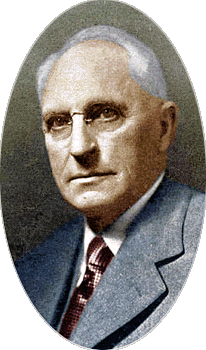
Wallace Nutting (1861-1941) might be described as a Renaissance man, although first and foremost, he was an antiquarian. Educated at Phillips Exeter Academy and Harvard, his career path took him from minister, photographer, artist, lecturer, antiques collector, and furniture manufacturer to a New England entrepreneur who made a success from marketing what has been called "Old America."
Nutting, probably best known as a photographer of hand colored platinum prints during the first quarter of the twentieth century, was born in Rockbottom, a village in central Massachusetts. He descended from Puritan ancestors and perhaps it was this that first fueled his interest in the Colonial Revival of which he was a central character. As a teenager, he attended the Philadelphia Centennial Exposition in 1876 and was inspired by the exhibitions promoting national pride.
|
|
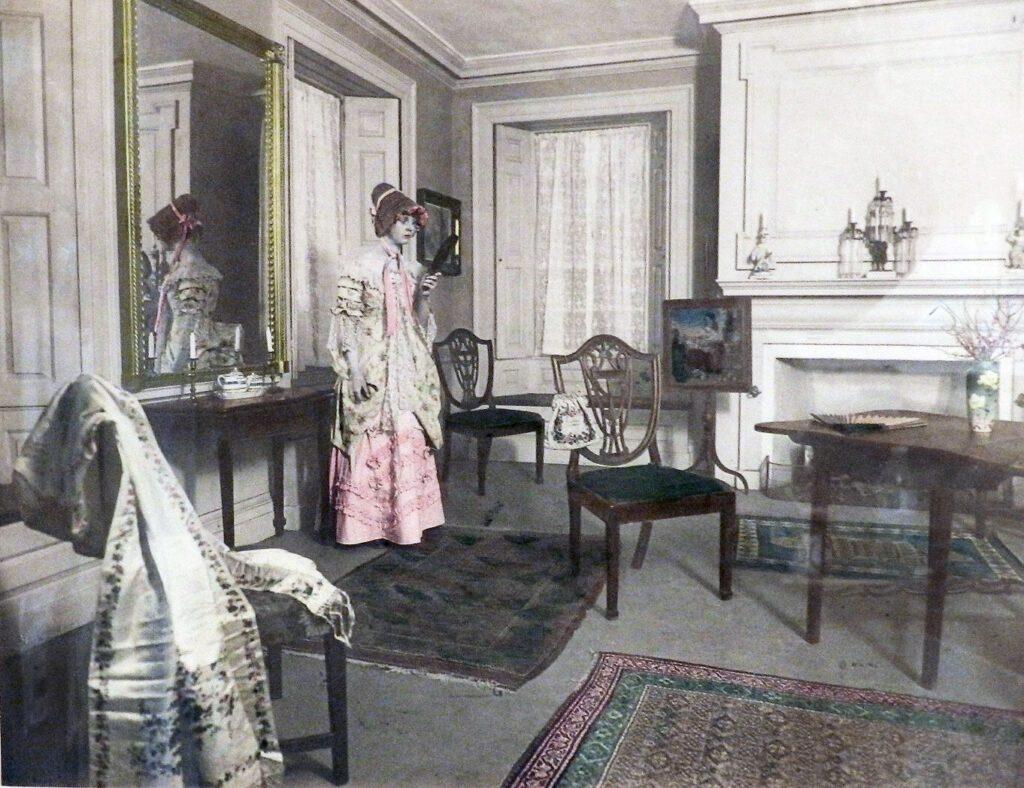
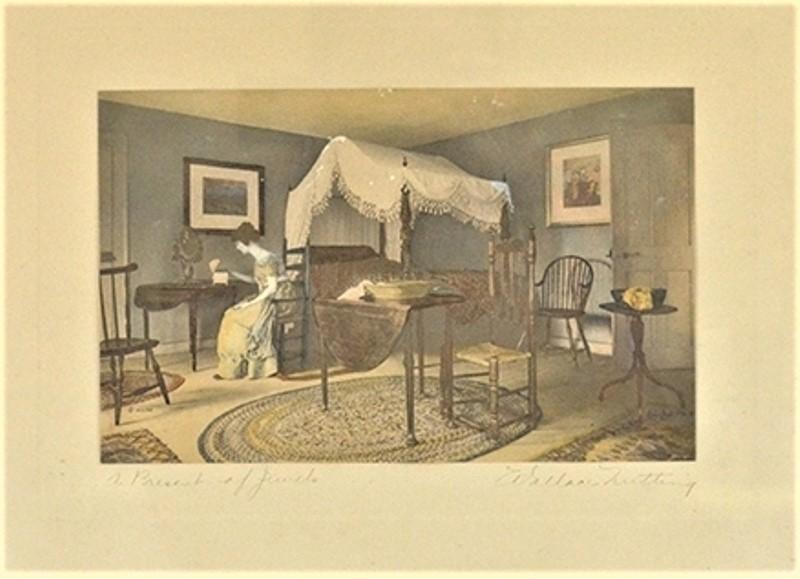
"Very Satisfactory" - Hand colored photograph, 1916, the Cutler-Bartlet House and "A Present of Jewels" - Hand colored photograph, 1916, Chamber, the Cutler-Bartlet House, Newburyport, Mass. Courtesy images. |
|
Much has been written about this Congregational minister who left the pulpit in 1904 due to health problems and pursued his interest in photography. To improve his health, he took to bicycling the back roads of New England and captured quintessential pastoral views. These landscape views became the basis for a series of illustrated travel books beginning in 1922 with Vermont Beautiful, published by the Old America Company.
By 1906, Wallace and Mariet Nutting had settled in Southbury, CT and established his photography business at their home "Nuttinghame." By 1914 the business had outgrown the property and the Nuttings relocated to Framingham, MA, this time naming the property "Nuttingholme." It was here that they resided for the remainder of their lives. While they were still in Connecticut, the photography work had expanded beyond landscapes to include views of colonial houses and their interiors. The interiors eventually included stage sets with models dressed in "colonial" garb. Nutting employed a group of young women who hand colored the photographs. By 1915 he is said to have earned $1,000 a day from his photographic work.
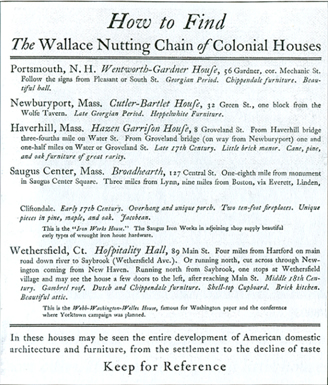
The move to Framingham coincided with what has become one of Nutting's lasting legacies – his "Chain of Colonial Picture Houses." The Chain was comprised of five houses in Connecticut, Massachusetts, and New Hampshire. It was designed to cover architectural periods and styles in early America and showcase New England history for the enjoyment of everyman and to ensure authenticity of the interior design and furnishings.
|
|
An advertisement for the Chain of Colonial Picture Houses. Courtesy image. |
|
The first house Nutting acquired was the Ironmaster's House in Saugus which, characteristically, he renamed "Broadhearth." Throughout his purchases and restorations, he consulted with William Sumner Appleton, although he and Appleton sparred about nostalgic character versus historical accuracy. Appleton was the founder of the Society for the Preservation of New England Antiquities, now known as Historic New England.
1915 saw the purchase of the brick, first period house, circa 1724, known as the Hazen Garrison in Haverhill. The fact that the house was said to have been the first structure to house a shoe factory particularly appealed to Nutting just as the iron industry had appealed to him at the Saugus property. Despite a large investment of time and money, the Hazen Garrison didn't thrive as a historical site.
The second purchase of 1915 was the Wentworth House, a Georgian waterfront mansion in Portsmouth, N.H. that was built in 1760 by Mark Hunking Wentworth.
The Joseph Webb House in Wethersfield, CT was close to the heart of the collector when he purchased it in 1916 and renamed it "Hospitality Hall." It provided a stunning and gracious backdrop for the hand-colored photographs Nutting called his "Colonials." The plan for the Webb House included restoration as well as some 20th century embellishments of murals depicting historic themes. These later came up for criticism when the house was sold to the Connecticut Society of Colonial Dames in 1919.
The last and largest house in the chain was the Cutler-Bartlet House on Green Street in Newburyport. Built in 1782, its first principal occupants were Joseph Cutler and his wife, the former Alice Hooper, daughter of "King" Hooper of Marblehead. Sadly, Cutler died young in 1804. In 1810, the house was divided in two, and the wife and heirs of Josiah Bartlett lived in the other half of the house for most of the nineteenth century. Bartlet who died in 1795 was a signer of the Declaration of Independence, something that, no doubt, would have pleased the Colonial Revivalist Nutting.
|
|
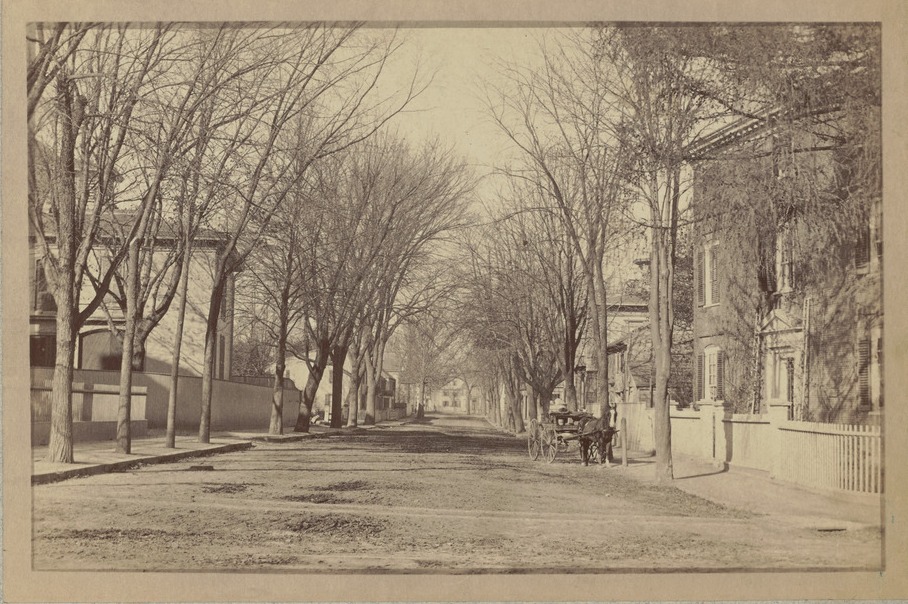
The Cutler-Bartlet House, 32 Green Street, Newburyport, Mass. From the collections of the Museum of Old Newbury. |
|
Nutting used the Cutler-Bartlet house for interior photographs, furnishing it with Hepplewhite and Sheraton furniture, but he also considered it a show place to exhibit much of the merchandise he had for sale including furniture and photographs. Nutting was particularly fond of Windsor chairs, favoring their simple lines and clean forms. He purchased 140 Windsors for his chain of houses and installed most of them at the Cutler-Bartlet where he felt that the rooms worked well as galleries for his "Colonials" and that visitors would have the opportunity to purchase furniture like the pieces they saw on exhibit.
The chain of five houses were open to the public for a small fee proving a panorama of early American lifestyles. However, they were not a financial success, and by 1920 Nutting had sold all of them. He continued to produce his colonial photographs in the homes of dozens of sympathetic friends. His efforts were not for naught, however. The Webb House, the Ironmaster's House, and the Wentworth House remain museums today, and his work in this field helped to spawn the great flourishing of New England historic house museums throughout nearly the first half of the twentieth century.
Editor's notes: This story covers one aspect of Wallace Nutting and his role in the Colonial Revival movement. Please join us on April 8, 2021 at 7:00 p.m. for a special presentation on Wallace Nutting and the Invention of Old America by Dr. Thomas Denenberg, Director of the Shelburne Museum, Vermont. Register here. Inconsistencies in spelling of names, etc., are from the historical record and not a typographical error.
|
|
Learn about upcoming programs, register, find Zoom links and catch up on previous presentations here. |
|
Miss a Recent MOON Program? Watch here. |
|
Thanks to the wonder of the Zoom platform, all of our programs are recorded and available online shortly after presentation. Visit our website for upcoming events, previous recordings, including the four 2020 Virtual Garden Tours, our Annual Meeting, children's and holiday programs, as well as all episodes of "Yeat Yeat, Don't Tell Me!"
In lieu of a printed program, we will be featuring monthly events here, as well as maintain a complete list on our website: www.NewburyHistory.org.
|
|
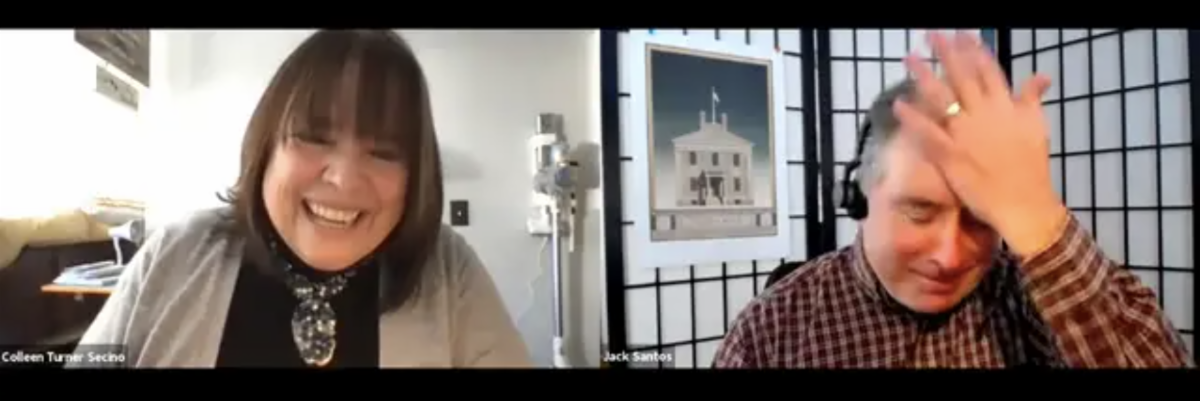
January 22, 2021: "Yeat Yeat, Don't Tell Me!" S2E18 with special guest Ghlee Woodworth, author, historian and 12th generation Newburyport native!
Zoom in today at noon. Click here or on the image below.
|
|
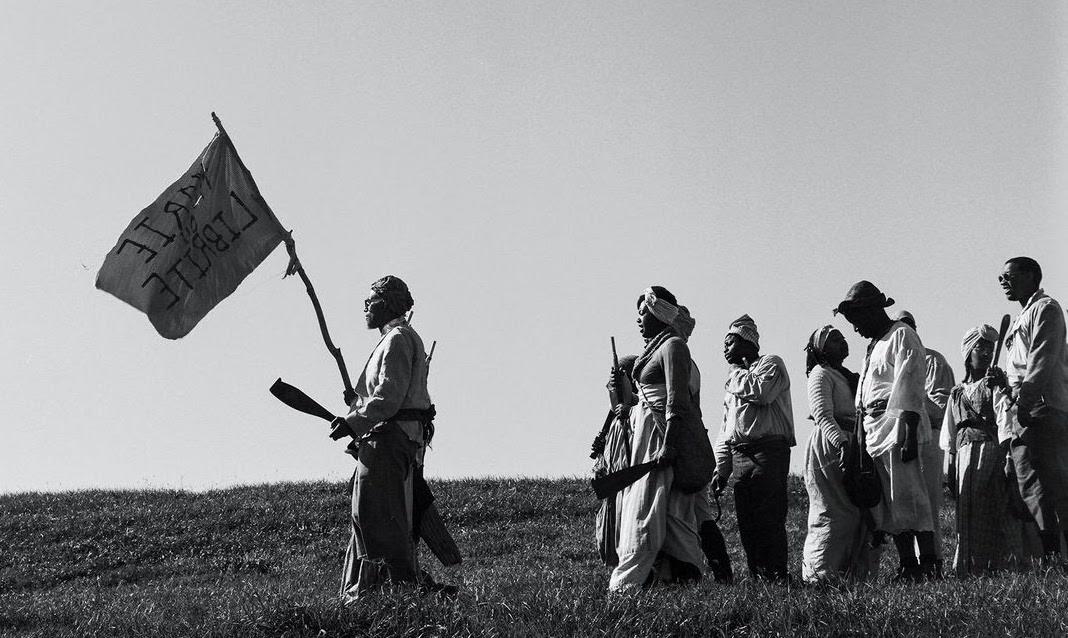
February 11, 2021: The German Coast Slave Rebellion of 1811: An Historiographic Analysis. Presented by Bejunior Fallon, '21, The Governor's Academy, this program looks at the largest, bloodiest slave revolt in American History. Register here.
|
|
February 25, 2021: Newbury and Warfare on the New England Frontier, 1689-1748. Presented by Dr. Steven C. Eames, director of history and interdisciplinary studies at Mount Ida College. His research will focus on the effect of war on soldiers and civilians, with a focus on early American history. He is the author of Rustic Warriors: Warfare and the Provincial Soldier on the New England Frontier, 1689-1748 (New York University Press). Registration available next week.
|
|
Something is Always Cooking at the Museum
Well prepared lamb is a treat to behold. Ruth Foskett offers this simple recipe for your next "special" celebration. Serve with a pear and spinach salad, a glass of red wine and a cheese plate for dessert to round out the meal.
Rack of Lamb
2 racks of lamb, 8 ribs each
1 cup soft bread crumbs, made from fresh white bread
1 1/2 teaspoon chopped tarragon
1 tablespoon and 1 teaspoon Dijon mustard
1 tablespoon olive oil
2 tablespoons vegetable oil
1 clove garlic, minced
Season lamb with salt and pepper. In ovenproof skillet, heat vegetable oil until very hot. Sear lamb on meaty side 2 minutes and flip to bone side for 1 minute. Place lamb and skillet in oven at 425ºF for 14 minutes. Remove from oven and let rest for 15 minutes. Coat meat side with mustard and press crumb mixture (tarragon, garlic, olive oil and crumbs) into mustard. At this point, you can cover and chill up to 24 hours. Heat oven to 425ºF. With lamb at room temperature, roast about 20-25 minutes for rare doneness. Slice between ribs and serve immediately. Serves 4.
|
|
|
|
Puzzle Me This...
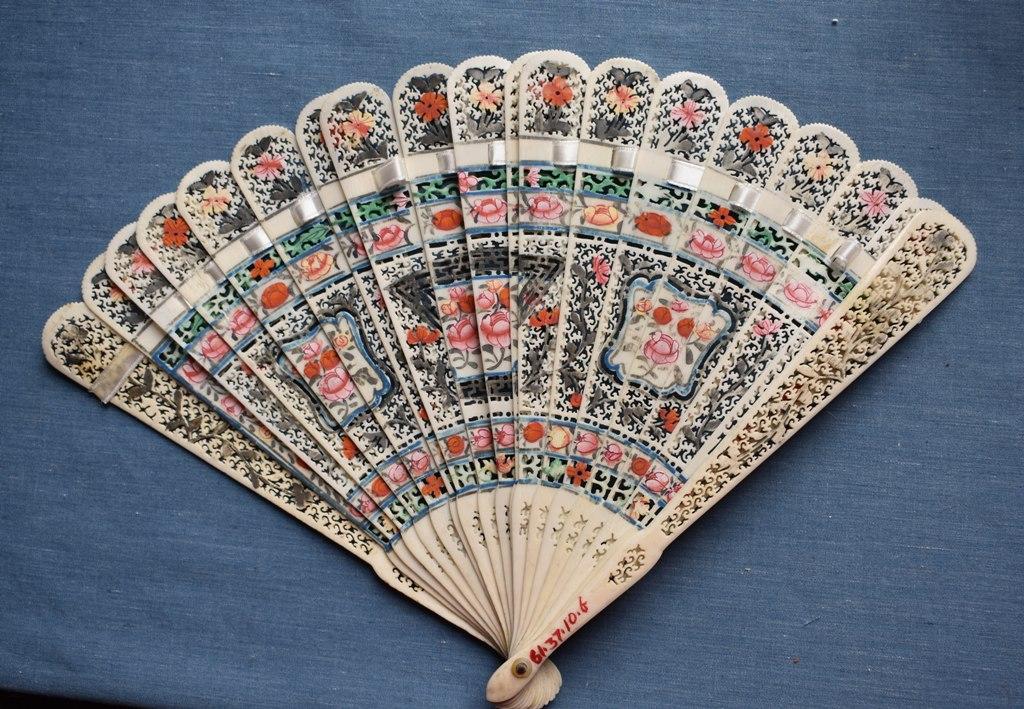
Ivory pierced and painted brisé fan with floral decoration, China, 19th century.
The East India Company imported large numbers of plain and carved brisé fans in ivory and tortoiseshell well into the 19th century. From the collections of the Museum of Old Newbury.
Click on the image to begin.
|
|
During this difficult period of COVID-19, we rely on your support more than ever. We are working to reschedule many of the programs that we have had to postpone, as well as develop new, online programs for you to enjoy and keep us connected. We hope, if you are able, that you will consider a donation to the museum. Thank you for your continued support.
|
|
Museum e-Newsletter made possible through the
generosity of our sponsors:
|
|
|
Museum of Old Newbury
98 High Street
Newburyport, MA 01950
978-462-2681
|
|
|
|
|
|
|
|