LinkedIn Share This Email

The Transitions to Adulthood Center for Research (Transitions ACR)

October 2026 Newsletter

ABOUT US

EDUCATION

RESEARCH

WEBINARS

PODCAST

In this Issue...

  • October is National Disability Employment Awareness Month
  • Upcoming Webinar: Different by Design
  • Recruiting for Learning & Working RRTC Study Projects
  • iSPARC FY26 Annual Report
 
young man working at a cafe

Resources for Employees with Mental Health Conditions


Work is more than a paycheck and a workplace. Here are resources to help those with mental health conditions get the extra support they need to be successful in the workplace. See below to learn about accommodations, rights, job retention, and other tools that can help employees, employers, caregivers, and service providers foster inclusive and supportive work environments.


Tip Sheets & Comics:


  1. Accommodations at Work: What Do I Need to Know? Tip Sheet
  2. Adulting Shorts: Let’s Talk About Workplace Accommodations Comic
  3. Applying for a Job: The Young Adults Guide, Revised 2023 Tip Sheet
  4. Adulting Shorts: Let's Talk About Getting Your Teen Ready for a Job Comic
  5. Adulting Is Hard: Understanding the College-to-Career Transition and Supporting Young Adults’ Emotional Wellbeing Tip Sheet
  6. WIOA: New Law Helps Youth & Young Adults Get Jobs – What Families Need to Know Tip Sheet


S.T.A.Y. Tuned Podcast:

  1. Ep 23: Finding Personal Fulfilment as a YA: Careers, Community & the Help that Gets Us There
  2. Ep 22: Living With a Disability- Work, Life, and Self Advocacy with Destiny Maxam
  3. Ep 16: Suffering in Silence? How to obtain mental health accommodations at work and school
  4. Ep 10: "Too sick" to work? - Breaking the narrative
  5. Ep 8: Prioritizing YOU - taking a leave of absence


Blogging on Adulting:

  1. 5 Ways Working Helps Me Manage My Mental Health Conditions
  2. Accommodations in the Workplace
  3. WORK TOOLS: TECH
  4. When Two Worlds Collide: Managing Physical and Mental Health Conditions at Work


More Employment-focused Tip Sheets & Briefs


More Podcast Episodes

Upcoming Webinar:

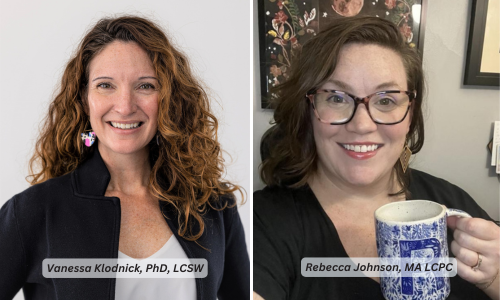
Vanessa Klodnick white middle aged woman and Rebecca Johnson white middle aged woman with glasses

Transition-age youth (ages 16–26) living with serious mental health conditions need services designed around their developmental needs, evolving priorities, and rapidly changing lives. These are needs that can be difficult to address within existing child and adult systems.


This webinar brings together research and practice-based insights to help mental health providers across the United States advocate for developmentally responsive, team-based TAY services. Participants will be introduced to a new, publicly available advocacy guidance tool for making a compelling case for TAY-specific service structures, practices, and supports in their own organizations and communities.

Webinar:


Different by Design: Become a Stronger Advocate for Team-Based Services That Work for Transition-Age Youth Diagnosed with Serious Mental Health Conditions


Tuesday, October 27, 2026, from 12 - 1 PM EDT


Presenters:

Vanessa V. Klodnick, PhD, LCSW & Rebecca P. Johnson, MA, LCPC


Register for the Webinar Today


Recruitment for Gig Economy Focus Groups

Who Can Join

  • Young adults with lived experience aged 18-30 that are interested in Gig Work or have done Gig Work when aged 18-24
  • Supported Employment Providers supporting Young Adults
  • Commit to one virtual focus group over zoom (approx. 60-90 minutes)
  • Compensation available for eligible participants


Interested?


See all the details & prescreen survey on our website

We are looking for young adults and supported employment providers to help us better understand the opportunities and challenges associated with gig work by participating in a virtual focus group as part of the Enhancing Knowledge of the Gig Economy Among Career Service Providers project under the Learning & Working During the Transition to Adulthood RRTC


The project seeks to advance the knowledge and skills of employment services to better support young adults with a mental health condition who are considering gig work.


Questions? Contact: louise.harkins@umassmed.edu


Recruitment for Fueling Success in CTE Project: Student and Family Focus Groups

Who Can Join:

  • Students aged 18 or older, with a mental health condition; Parents or caregivers; Students and their families who have taken at least one CTE class
  • Commit to a 1 hour virtual focus group
  • Compensation of $50 for eligible participants


Interested?


See all the details & prescreen survey on our website

We are recruiting students and family members for a one-hour virtual focus group as part of the Fueling Success in Career and Technical Education (CTE) project under the Learning & Working During the Transition to Adulthood RRTC.


The project seeks to better understand how to support youth and young adults with mental health conditions in CTE programs and how to share the value of CTE with students and families.

Participants will help researchers identify helpful resources, supports, and strategies to improve access and success in CTE. 


Questions? Contact: vanessa.mitchellwagner@umassmed.edu


Hot off the Press:

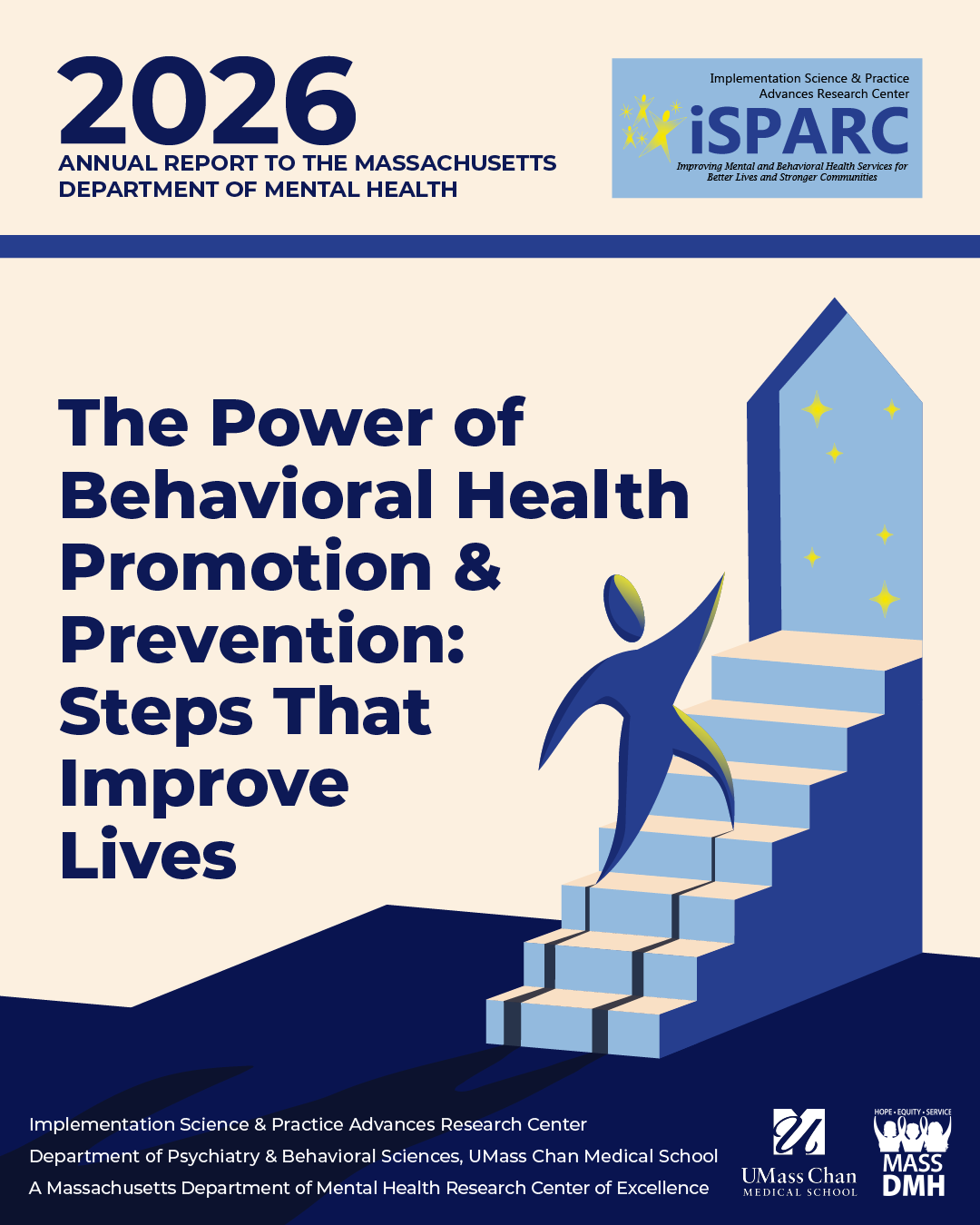
iSPARC's 2026 Annual Report

people going up stairs

The Power of Behavioral Health Promotion & Prevention: Steps That Improve Lives


Hot off the press: our parent center, iSPARC, has released its FY26 Annual Report. This report highlights iSPARC’s accomplishments over the past year, including technical assistance to the Massachusetts Department of Mental Health and its contracted providers, collaborations across the Commonwealth and beyond, and national public mental health and implementation research efforts. It also showcases the programs and organizational structure supported through the DMH contract.


Read it in our eLibrary


Looking for Assistance?


Technical Assistance activities are an extension of Transitions ACR's research and training activities. Our TA services can range from simple resource referrals to on-site development of a formal TA plan (including fact finding, goals, responsibilities, timelines, and evaluation measures). We are ready to help you develop programs, policies, and practices that support the community participation, educational, and employment outcomes of youth with mental health conditions.


To Request TA, fill out our online form. Please note that we do not provide clinical consultation, behavioral services, or referrals.


THINGS WE DO

WHO WE ARE

The Transitions to Adulthood Center for Research (Transitions ACR) conducts research, training, and dissemination activities to improve outcomes among youth and young adults (ages 14 to 30) with serious mental health conditions (SMHC). The Transitions ACR houses the Learning & Working During the Transition to Adulthood Rehabilitation Research & Training Center (L&W RRTC) along with other projects.

The Transitions ACR is located within the Implementation Science and Practice Advances Research Center iSPARC, a Massachusetts Department of Mental Health (DMH) Research Center of Excellence (CoE) located within the Department of Psychiatry and Behavioral Sciences, whose vision is to improve lives and strengthen communities by advancing behavioral health services and systems.

Stay Connected With Us!

Please share our newsletter with your network.

To subscribe, click here.

Questions? Contact Us or Visit us online

Instagram  Facebook  Bluesky  Youtube  X  LinkedIn

Some of the contents of this message are supported in part under a grant with funding from the National Institute on Disability, Independent Living, and Rehabilitation Research (NIDILRR), United States Department of Health and Human Services (NIDILRR grant number 90RTEM0012, The Learning & Working RRTC). NIDILRR is a Center within the Administration for Community Living (ACL), Department of Health and Human Services. The contents of this message do not necessarily represent the policy of NIDILRR, ACL, or HHS, and you should not assume endorsement by the Federal Government.​​​​

NIDILRR Logo all text