|
President's Message
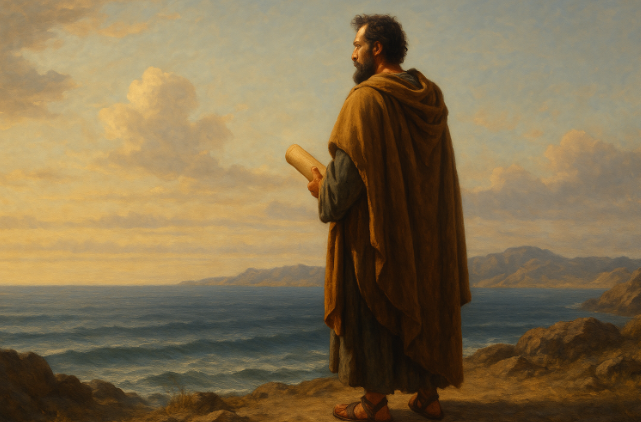
Paul’s Desire to Go to Spain
"But now, I am on my way to Spain, and I hope to see you on the way..."
(Romans 15:23)
Paul’s intention to go to Rome was clear. He desired to spread the gospel throughout the empire, and this ambition was concretely expressed in his plan to visit Spain. If Jerusalem marked the eastern edge of the Roman Empire, Spain represented its western limit. Thus, Paul’s desire to reach Spain symbolized his intent to extend the gospel across the entire empire.
"But now, I am on my way to Spain, and I hope to see you on the way..." (Romans 15:23)
In the Bible, Spain—or “Hispania/‘Westernmost region’”—is mentioned only here and in Romans 15:28.
At the time, Spain included the city of Tartessus, an ancient port city beyond the Strait of Gibraltar near modern-day Cádiz. Tartessus was a thriving trade hub in the ancient Mediterranean, and it is generally believed to correspond to the “Tarshish” mentioned in the Old Testament. King Solomon is also said to have traded with this city (see Old Testament reference, p.435), highlighting the extent of his influence.
Thus, “Tarshish” or Tartessus symbolized “the ends of the earth” in biblical times. It lay approximately 2,500 miles from Jerusalem—a journey akin to traveling to the moon today. This helps explain why Jonah, when fleeing God’s command to go to Nineveh, chose Tarshish as his destination: he sought to escape as far as possible, to the very ends of the known world.
"But Jonah arose to flee unto Tarshish from the presence of the Lord..." (Jonah 1:3)
However, historical information about Tarshish/Tartessus is limited. Spain emerges in recorded history around the 6th century BCE, during the Babylonian exile of the Jews. At that time, Greeks and Carthaginians established cities along the Spanish coast, developing the region, until Tartessus was eventually destroyed by the Carthaginians around 480 BCE.
Paul, meanwhile, could not immediately reach Rome as he had planned. When he wrote Romans, he intended to go to Jerusalem, but this journey ended with his arrest and imprisonment by the Roman governor Felix. It was not until approximately five years later that Paul finally reached Rome, and by then, he was brought as a prisoner appealing to the emperor.
Did Paul ever reach Spain? There is no definitive record. However, an early document from around 95 CE suggests that Paul did indeed travel to “the westernmost edge” of the known world.
|