Your Weekly Writing Exercise |
|
|
My latest writing exercise to inspire and encourage your creativity.
May 19, 2023
|
|
"Great content on this blog."
"Great tips!"
"The only weekly blog I read--always great ideas and approach."
|
|
|
Podcast on writing and her short story, "Pilots," winner in Etched Onyx writing contest
"Hearing Voices," Mary's story about a futuristic island community in The Airgonaut
Interview with Mary on writing difficult characters for her story "Breathing Room" (The Rappahannock Review)
|
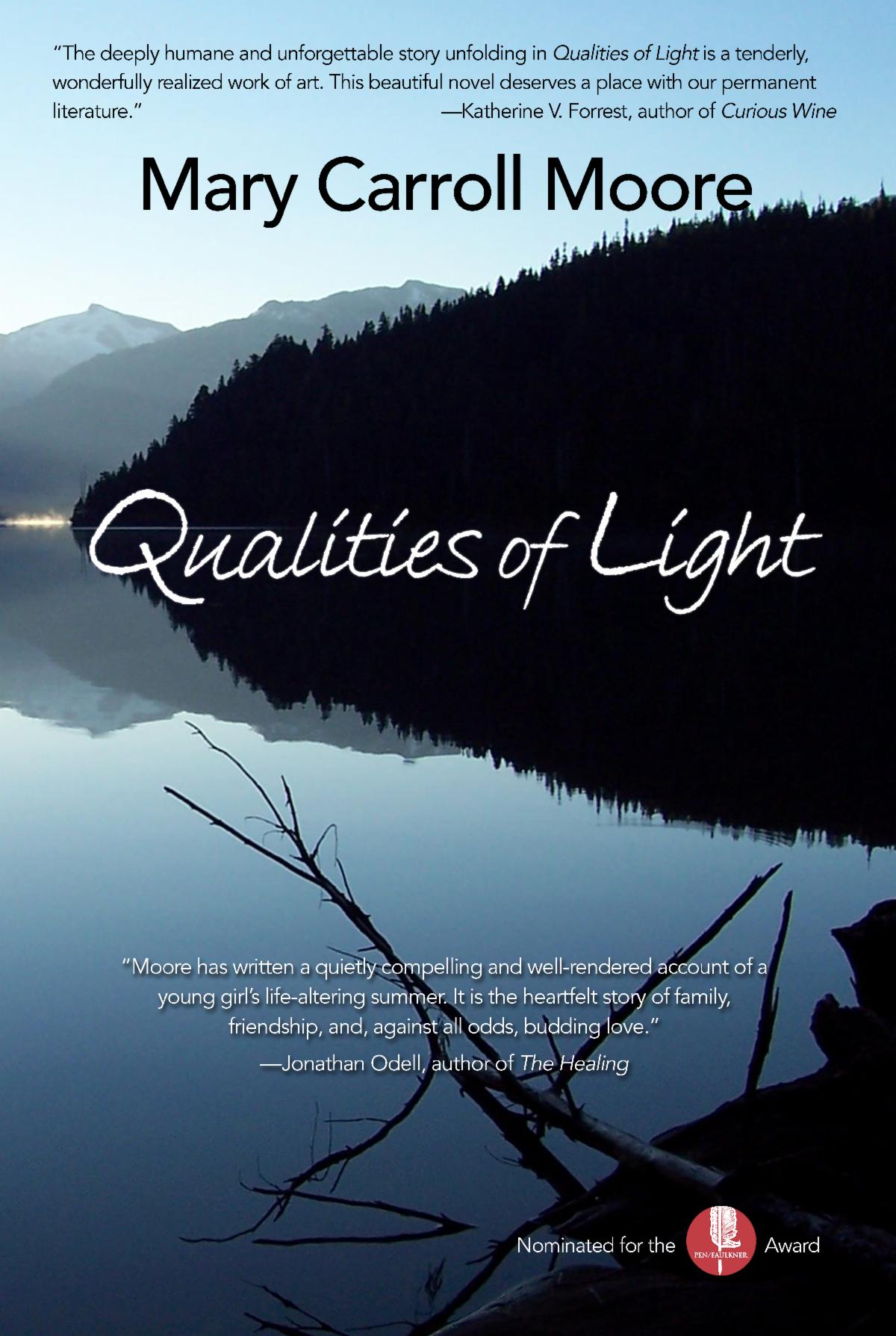
Mary's PEN-award-nominated novel, Qualities of Light, now available in second edition. Click here to order. Kindle version, click here.
|
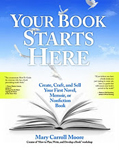
Basic and intermediate steps to storyboard, write, and revise your next book. Click on cover to find out more!
_____________________
"You coached me when I had nary a clue how one might take reams of chaos and turn it into an organized framework. Without your initial belief, teaching, editing, and coaching, I wouldn't have started."
—Christine Kane, author of
The Soul-Sourced Entrepreneur
________________________
|
My YouTube tutorials on the storyboard and the "container" in fiction and memoir |
|
Reader comments or questions are welcome! Email me at Mary [at] marycarrollmoore [dot] com and I'll respond in future posts. Your weekly writing exercise has been going since 2008 so lots of great ideas and inspiration in past posts. Check them out on my award-winning blog site.
|
_____________________________
Shout Out!
A hearty shout out to these writing friends and former students who are publishing their books! I encourage you to pre-order a copy to show your support of fellow writers and our writing community.
(If you are a former student and will publish soon (pre-orders of your book are available now), or have in the past two months, email mary[at]marycarrollmoore[dot]com to be included in a future Shout Out!)
Nancy Crochiere, Graceland (Avon, May release)
_______________________________
|
Good News for Older Women Writers: Your Age Is a Bonus! |
Imagine my surprise when I came across this article in The Guardian: older women writers (in their fifties, sixties, even seventies) are now a hot item with publishers.
The trend is slow but steady, according to the editors and agents interviewed. My surprise came because of decades of reading the "30 Under 30" lists and being dismayed at the publishing industry's romance with youth, youthful appearance, and many years ahead to write.
I was even told--before I signed with my agent--that trying to get another agent after sixty was iffy. You may have a good track record, you may write publishable books, but do you look like an author with a long future? How do you look, actually?
Post-pandemic, I welcomed the gray. I decided not to return to the hassle of coloring. Many of my friends did the same (and if you did not, no worries--this is all so personal). But it has worried me as I've prepared for my first photo shoot for my new novel. I'll need a headshot, some "writerly" photos, maybe some of me in my natural landscape, with garden as background or puppies in my lap. Sounds like fun, and the photographer is the nicest, most authentic man, except when I consider my hair.
Don't laugh--this is a reality for women in most art arenas. We're even concerned about writing narrators who are past 50.
Courtney Maum, in Before and After the Book Deal, has two insightful sections on this tricky topic. One discusses debuting after forty (maybe, at the time of publication, this was considered aged) and debuting as a disabled, queer, or author of color. Marginalization happens with older women, we all know that. As an author, we fight harder to be seen--but how do we want to be seen? As younger? As ourselves, right now?
Again, if this doesn't worry you, don't take it on, but I clearly remember a recent conversation with three women colleagues in their sixties who are publishing this spring. It's a subject on all our minds at this age of life. How does an older woman writer deal with the visibility disadvantages in the publishing world today?
It's not just looks, either. Maybe you don't have the energy to travel to dozens of cities to promote your book. You like being home. You're not up to speed on social media like you want to be. You even (horror!) write female narrators in midlife or older and you're openly passionate about the issues they face.
You're also at the age where you want to be who you are, at least most of the time.
But still the question remains: If you don't try to look thirty, or even fifty, will you be able to (1) attract an agent, (2) get published, and (3) get read?
Such concern doesn't fade if you've already published well. With each new book, I think about my presence in the world, what I am able to do now, what I want to do. I haven't had a new author photo since the pandemic--haven't needed to, thankfully. Zoom is forgiving.
So you can imagine my delight at t his article in The Guardian.
A well-respected British publication, it revealed that the rise of older female authors who are making their debut is now an industry trend, supported by publishers, agents, and sales teams. One agent in the article even said it was an advantage to be coming into publishing now as a debut author in her later years. The article cited many examples, including The Paper Palace by Miranda Cowley Heller, Bonnie Garmus's Lessons in Chemistry, and A Terrible Kindness by Jo Browning Wroe, among others.
Anna Fodorova (who published her debut, In the Blood, last year at age 77) was told that she'd need 40,000 followers on social media to get a book deal. Obviously, not true at all.
I did visit my hair stylist this weekend, just to see what could be done to update my look for this photo shoot, though. I am not going back to my younger look but I want something fresh, as well. She'll work magic, I hope--we'll see!
But in the larger world, I sincerely hope that publishers are getting wise to the wisdom of older women writers.
|
|
"Mary Carroll Moore leads the aspiring author through every step of the challenging, rewarding process of developing and completing a full-length book."
--Rebecca McClanahan, author of In the Key of New York City
Start with a big love of words, add a generous helping of Mary Carroll Moore,
mix with leavening from your peers, knead vigorously, and voila!
Your book has risen!"
--Eric Utne, founder of Utne Reader and author of Far-Out Man
Photos by Allie Smith, Cesar Viteri, and Hannah Grace, Upsplash
|
More Posts on Book Writing Below and on My Award-Winning Website
|
|
When to Research, When to Write: How to Balance the Different Kinds of Book-Writing Tasks |
Starting a new book is always a great adventure. The idea comes--so many different ways that can happen, from a dream, some intriguing research or a news article, a question ruminating, the image of characters, even a conversation playing in your head. Some writers begin with a storyboard, some with an outline, some launch right into scenes and chapters. |
|
What I've Learned about Great Dialogue from Thrillers |
I love literary fiction, rich nonfiction, travel memoir, all kinds of books, actually, that take me places. Every now and then, I also love a good thriller. I learn from those authors, mostly about tension, pace, and dialogue. It's high-wire stuff, and the dialogue is honed to a sharpness i don't find in a lot of other genres. Sometimes I skim over the visceral parts, but I always study the dialogue.
|
|
Honing Your Process of Receiving Feedback and the Revision It May Require |
One of my long-time students asked a great question: how does a writer I've only slowly gotten used to my own stages of writerly reaction when I receive feedback. Positive feedback generates a warm satisfaction, almost glee, inside. A victorious feeling. Something worked, especially satisfying if I put in a huge amount of effort. Sometimes, I'm amazed--I don't quite believe it--but I'm basically over the moon. |
|
How to Find, Develop, and Let Your Writing Voice Shine--Three Tips |
One of my long-time students asked a great question: how does a writer develop voice? |
|
Theme: The Undercurrent of Meaning in Your Book and Why It's Vital to Publishing Today |
When we finish a good book, something lingers with us. We have coffee with a friend and she notices we're distracted. It's not life--for once. Only the story we just read.
"I can't stop thinking about this book," we might say. "I almost miss it."
|
|
Finding the Best Comp Titles--What Your Query Letter to Agents Should Include |
One of the most challenging parts of assembling a good query letter--beyond the sheer difficulty of writing it--is deciding on your comps.
Agents need and want and almost require good comp titles. These are the two or three titles of other books in your genre that will help yours sell to a publisher.
|
|
Why a Smart Story Location Matters--and How It's about a Lot More Than Setting |
Realtors know that smart location is everything in buying or selling property. Try to sell a house that's near a busy highway or high tension wires, and you'll learn this. In story, a good location is also really important--I wouldn't say it's everything, but it's as vital as good characters and strong plot. |
|
Facing the Fear of Finishing Your Book |
There's a kind of romance that happens between a writer and the book they have been working on for months or years. A relationship, at least, if not romance. They begin to have feelings for each other, a certain fondness, from all they've gone through together. It hasn't often been an easy road but it's been all-consuming. We live with our books, day and night. In waking moments, we're mulling over plot ideas. At night, we may dream solutions. |
|
How to Keep Writing When You Have No Time--or Energy or Enthusiasm--for Your Book. Or Do You Need To? |
My spouse and I just adopted a puppy. He's adorable at 14 weeks, and full of energy and sharp growing-in teeth. He is slowly, after a week with us, learning how to use the yard for his bathroom duties rather than our rugs. He sleeps a lot, which is a blessing.
But my writing life has been upended. Not to mention sleep. Not to mention every other aspect of my every day.
|
|
Pros and Cons of Using Present or Past Tense--What's the Effect on Your Reader? |
IA client told me about a recent meeting of her writing group. They discussed using present versus past tense when writing memoir. What were to pros and cons of each, what effect did they have on the reader?
|
|
Crafting Stronger Mechanical and Emotional Transitions to Keep Your Reader Turning The Page |
I learned about the importance of transitions during my MFA study. One of my thesis advisers, a talented novelist, read my novel-in-progress and liked it but felt my background as a newspaper writer hampered my transitions. "You end each chapter like you would a journalistic piece," she told me. "It's complete, nothing left to push the reader forward into the next chapter." |
|
The Joys of Scrivener--My Favorite Software for Organizing Your Book-in-Progress |
Before I wrote books, I wrote stories, essays, and poems, columns and articles. Short stuff. Short stuff doesn't require that much organization. I had a friendly relationship with Word and Pages. I kept files of the multiple versions of my short stories, for example, in separate files within Word--not so hard to scan and use if needed. I often printed hard copies and kept a file folder until the piece was published. I used an Excel spreadsheet to track where I sent writing and what happened to it. |
|
Power Positions--How to Increase the Tension in Characters and Locations |
"Who's on first?"
We're not talking baseball. We're asking: Who is the power person in a particular scene? Who is the character that holds the control over present and future outcomes? Who will most easily score the home run?
Once I identify that player, I can begin to work the elements of tension in my fiction and memoir more skillfully.
|
|
Enter Late, Leave Early--A Great Piece of Writing Advice for Chapters |
Not everyone wants to pay for an MFA degree, and I didn't either, for a long time, until I started writing fiction and realized I knew nothing about it. I'd been published for years in memoir and nonfiction, but fiction was truly another animal. I researched schools, found one, got accepted, and began. In those two years, I learned a lot I didn't know, but one particular piece of advice reshaped my understanding of chapters, scenes, and books.
It was this: Enter late, leave early.
|
|
Finding the Shape of the Forest-- Learning How to Read Your Own Work |
I'll never forget the writer who approached me many years ago, asking me to read her work. "I can't read it myself," she said. "It makes me too upset."
I asked her, out of curiosity, how she went about reading it.
|
|
Making Your Scenes Rock--Seven Tips for Stronger Scenes |
One of my favorite writing-craft guides, often recommended to writers who want to hone their scenes in fiction and memoir, is The Scene Book by Sandra Scofield.
Not all writers know how to write scenes, truthfully. Neither did I, for many years. My scenes began as "islands," or unorganized snippets of writing that kinda felt like what a scene should be.
|
|
Learning New Tricks from Published Writers--What Advice to Make Your Own? |
I learned early in my writing career that just because a writer was brilliant--well reviewed, published, and capable on the page--that didn't mean they were the best teacher. Or even a reliable dispenser of advice I could use. The lesson came hard. |
|
Summary Tells, Scene Shows--How to Use Each in Fiction and Memoir |
I've been thinking a lot this week about the ways we tell stories. Some writers come from a background of oral storytelling, as in gathering round the fire and relating tales. A tradition of vocal rhythm, handed down from culture or place or heritage, crafts their stories almost unconsciously.
Stories are something told, not necessarily something shown.
There's much beauty in this. Much to value.
|
|
Dealing with Rejection Close to Home: When Family and Friends React to Your Writing |
A reader sent me a poignant email a few months ago. She's writing a memoir and happened to show segments to her family--for all the best reasons. She wanted her sister and brother to verify facts from their turbulent childhood. She wanted them to validate what she remembered. And she, naturally, wanted their support as she went forward with the book. |
|
A Different Way to Work with Revision for Your Book--Segments and Reverses |
Revision is the final stage of the book journey, after the gathering of material and the forming of a rough draft, after the structuring that happens next. Revision is hard, but essential if you want to publish. And there are so many ways to go about it.
I think I've tried them all.
|
|
Sinking into Winter: The Power of Retreat and Rest in the Life of the Writer |
I've just sent the revision of my third novel to my agent, and I'm at a loss. I sit, watching the snow fall outside my office window, wondering if I should pick up another project, read a book on writing, call someone. My agent is backlogged; she says she hasn't had so many manuscripts to read in a long time--thanks to the pandemic, we're all writing. So she may not have comments for a few weeks, if not longer. |
|
Strange Alchemy--Creating the Weave of Conflict, Character, and Place in Your Fiction or Memoir |
In pre-Covid times, I regularly visited friends in Boston to hear the legendary Boston Cecelia chorus perform each holiday season.
At one performance a few years ago, I remember how a soloist with a particularly liquid voice sang a few pieces, then disappeared into the rows of the alto section. I strained to hear her voice rise above the other altos--but it was impossible to distinguish. She blended so well, the group became one voice. Then she came to the front of the stage for another solo, and we fell back in astonishment once again.
|
|
The Magic of Showing Up at the Page--How to Design or Refine a Writing Practice That Works for You |
What's the difference between a writer who gets a book finished and a writer who never does? A writing practice.
Believe it--there's nothing more important.
Not talent, not a great idea. It's down to basics: putting self in chair, putting hands on keyboard or taking up the pen, and staying there past all the internal whining and doubt and misery to actually put words on the page.
|
|
What's at Stake? How to Ratchet Up the (Necessary) Tension in Your Book |
Stories tell about dilemmas--someone facing a problem, someone learning, someone solving a mystery, someone growing. Dilemma is that question or quest your book addresses, small or large. Whether it's the best method of growing a bonsai garden or learning who killed the victim in a murder mystery or figuring out a new identity after a great loss, dilemma, also known as the dramatic arc, forms the path your reader travels through your book.
Without strong dilemma, there’s no story. Another way to look at this is to ask the question: What's at stake in my story?
|
|
Planning a Brighter New Year for Your Writing Life--Are You Ready to Look Ahead? |
Hard to believe, but 2020 is almost behind us.
Quite the year. If your writing has benefited from the retreat of forced isolation, you're one of the fortunate ones. Others, I know, felt too flat with exhaustion and worry to nourish any creativity.
Looking back, it took me to midsummer to regain my stride. Changes in my work life from suddenly teaching on Zoom took vast amounts of learning and preparation time I hadn't planned for. I had to revamp all my class materials--not a bad thing, in the end. But it ate into my writing time.
|
|
Fostering Gratitude for Your Writing in Uncertain Times |
Two of my private clients emailed me this week, saying they hated their books. I don't usually hear such strong statements, especially from experienced writers as these. But life, not just the books, had worn these two writers out. Family illness, the spread of covid, exhausting politics, and dread of winter combined with difficult revision tasks put them over the edge.
It wasn't that they really hated their books--I knew that, I'd read both manuscripts, and they were good ones.
|
|
Wordsmithing the Heck out of Your Revision--Ten Steps to Make It Shine |
After the gathering stage, after the storyboarding and brainstorming your book's flow, after the first and tenth drafts are created, comes wordsmithing.
Wordsmithing is the final craft we book writers need to have in our toolbox. It's what makes the actual writing shine and sparkle.
Without the other steps, though, it's a wasted effort. I often think of it like putting curtains up on a framed house--window holes but no walls. The framing needs sheet rock, mudding and taping, sanding and painting, and glass in those windows, before the curtains go up.
|
|
How to Send a Manuscript to an Agent--and What to Expect Once You Do |
If you've been writing like crazy during the past months of isolation, you may be ready to send your manuscript off to an agent or two in the new year. One of my long-time students is in that scary and exciting place, and she asked for any tips on how to go about it.
(I've written in many past blog posts about how to know if you're really ready. You can search for them on my blog if you want to read them again. Enter "manuscript" or "agent" in the search box.)
|
|
Writing Real-Life Characters: How to Get to Know the People You Already Know |
I got an email from one of the students in my last online Afternoon Character Intensive. Since the workshop, he'd had a mini-breakthrough about his memoir--specifically the cast of characters he's trying to include. His mixed-up, even dangerous, family history means the players onstage are very individual, with quirks and tendencies. But he knew them so well, he'd not written that individuality onto the page. |
|
Editing-Writing-Storyboard Dance--When to Do Each One to Create the Best Book |
One of my past clients has been working hard on her memoir. She emailed me a few weeks ago with a good question about the best rhythm for book writers who are in revision. How do you know what's needed next--more editing, more writing, or the long view of a storyboard or charts? What are the signs that it's time for each of these all-important tasks?
I call it a dance. Ideally, there's a predictable flow between each activity, with markers along the way to tell you when to change partners.
|
|
Your weekly writing exercise
Wilton, NH 03086
|
|
|
|
|
|
|
|