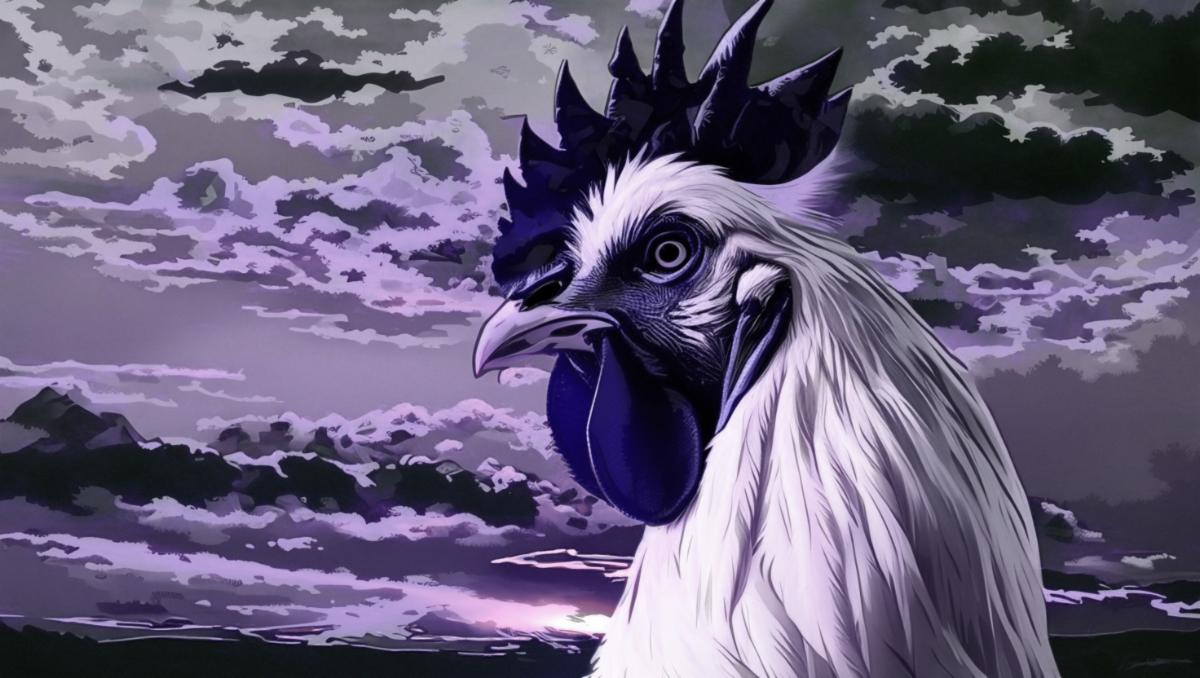
Today, as part of our 25th anniversary celebrations, we remember the original brave bird and ask what we can learn from him to help us act with clarity and charity in these challenging times. | |
|
After Viktor and then Violet and Chickweed, the next birds to come to the sanctuary were a trio of escapees from a "broiler breeder" facility who we collectively called The Wild Bunch: roosters Che and Fidel, along the enchanting hen called Rosa Luxemburg.
Why such rebellious names? Here's how sanctuary cofounder pattrice jones remembers their rescue:
| |
|
A call from the Humane Society took us to a suburban backyard, where three chickens had been living since mysteriously appearing a few weeks before. Miriam and I easily scooped up a lame rooster and a slow-moving adult hen and then turned our attention to the fierce adult rooster standing nearby, feet spread, red comb quivering like a battle flag.
We weren't surprised to learn from the homeowners that this rooster had protected the other two birds from a dog. While very frightened, he refused to abandon his caged companions. He paced excitedly, keeping his distance from us as he kept his eyes on his friends. He ran from us when we tried to catch him, but—instead of fleeing into the brush—returned again and again to stand beside the carriers into which we had placed his comrades. I will never forget the sight of him standing there, panting and wide-eyed with panic, obviously terrified but refusing to leave their sides. He was wily, too, darting left as I dove right and slipping right between Miriam's legs. Darkness fell before we managed to tackle him. Driving home, exhausted, we decided to call him Che Guevara.
| |
|
Since they were already adults when they appeared in the backyard, we concluded that they must have escaped or been culled from one of the nearby facilities in which adult hens and roosters are kept captive to produce the fertilized eggs from which the chickens to be raised on local factory farms are hatched. We'll say more about those chambers of horrors later this year when introducing roosters and hens that we know for sure came from those places. What's important for now is that they were older than the birds already in residence at our place. This meant that they played a large role in shaping the culture of our emerging avian community but also that they would not be with us for very long.
Che and Viktor immediately became fast friends, and he seemed to appreciate having someone to look to for advice as he parented Violet and Chickweed. Both Che and Viktor adored Rosa—we'll tell you more about her next week—but did not feel compelled to compete for her favor. Fidel got along with everyone but preferred his own company.
The chickens exploited by the poultry industry have been bred to have very large breast and thigh muscles, but their skeletons and internal organs are normal-sized. Therefore, as they age, they tend to develop leg problems and are also prone to heart attacks. Fidel had only a slight limp, but Che's tendons eventually weakened so badly that he could barely walk. We created a special area for him on the other side of the fence from the growing population in the yard, which now included five roosters collectively called The Pips as well as a number of birds who had arrived one by one. This became our first "sick bay" (a term we picked up from Star Trek and still use): a more restful yard for infirm, injured, or juvenile birds.
There, Che's protective personality truly showed itself. Again and again, he spread his giant wings for younger birds to nestle beneath them. Charlie Parker and Little Sister (both rescued by the roadside after fleeing from chicken catchers) were among the youngsters he nurtured. Sometimes Che would sing to them.
When Che became unable to walk at all, we carried him each day to a shady spot right beside the fence to the more lively yard. There, he could socialize and share snacks with his many friends. And there he died one afternoon, shortly after sharing his breakfast of blueberries with Viktor and Little Sister.
| |
|
Che's legacy lives on among chickens at the sanctuary all these years later. Birds he had nurtured grew up to nurture others. When Charlie Parker himself became old and infirm, moving into the sick bay when his own legs failed him, he did the same for younger birds as Che had done for him, singing softly as youngsters cuddled up to him.
Che was the first bird to die at our sanctuary. His death provoked us to reflect on the millions of birds, each with their own unique strengths and personalities, who die at the hands of humans each day. This prompted us to feel compelled to share his story and the stories of other chickens as widely as we could. Che also prompted us to make the domain of our first website bravebirds.org in recognition of the courageousness of chickens, who are so wrongly stereotyped as cowardly.
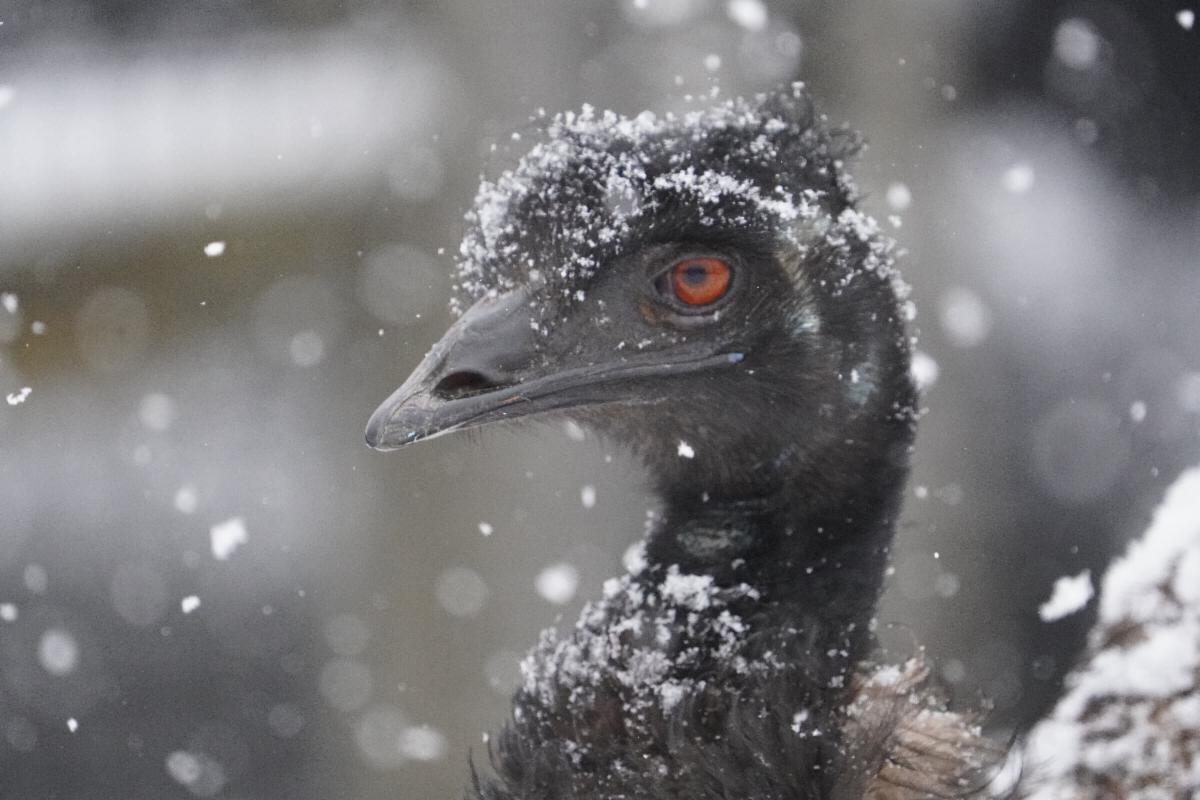
Courageous roosters currently in residence at the sanctuary include Agave the former fighting rooster, who dares to be gentle and sweet, and Crackle, who has taken young birds bigger than him under his wing. Courageous hens include Gaia, whose wild ways have delighted and terrified staff for many years, and Donut, who doesn't let her disability dissuade her from demanding her due. Other birds also behave boldly. Guinea fowl consider themselves the guardians of the grounds. You might remember Tiki the emu's summertime trek the year before last. We're happy to say that he has confined his hiking to the sanctuary grounds ever since.
| |
Sanctuary staff show courage too, and not just the physical courage required to cope with outdoor work in all weather, including snowstorms like the one we had yesterday. Every time we say "yes" to a new sanctuary resident, we know that the day will come when we say goodbye. Heartbreak is built into the work. And yet, again and again, sanctuary staff unanimously vote "yes" when invited to weigh in on whether to welcome an animal whose age or infirmity means that they are not likely to live long. That's emotional courage, the willingness to endure sorrow, rage, or fear rather than turn away from suffering. | |
|
All forms of courage—physical, emotional, and moral—require us to act even when we feel afraid. For us, Che's refusal to abandon his comrades even though he was terrified exemplifies courage as care in action. These days, there's so much to fear, with more bad news every day. Therefore, we offer Che—just an ordinary bird on an ordinary day, who nonetheless can show us the way—as an exemplar for our extended community to remember as we all decide what we will do each day. He loved his friends and refused to abandon them. He saw the fear of those who were more vulnerable than he was and did what he could to comfort and protect them. He loved his snacks and never hesitated to share them. He died, as we all do, but the reverberations of his actions continue to echo.
PS—It also takes courage to say "yes" when we don't know where the money to feed and house everybody will come from. We know times are tight for everyone, but hay and feed prices have risen while grant funding has fallen. If you can, please make a memorial donation in Che's honor, so that his legacy of courageous care can continue. No amount is too small!
| | |
|
|
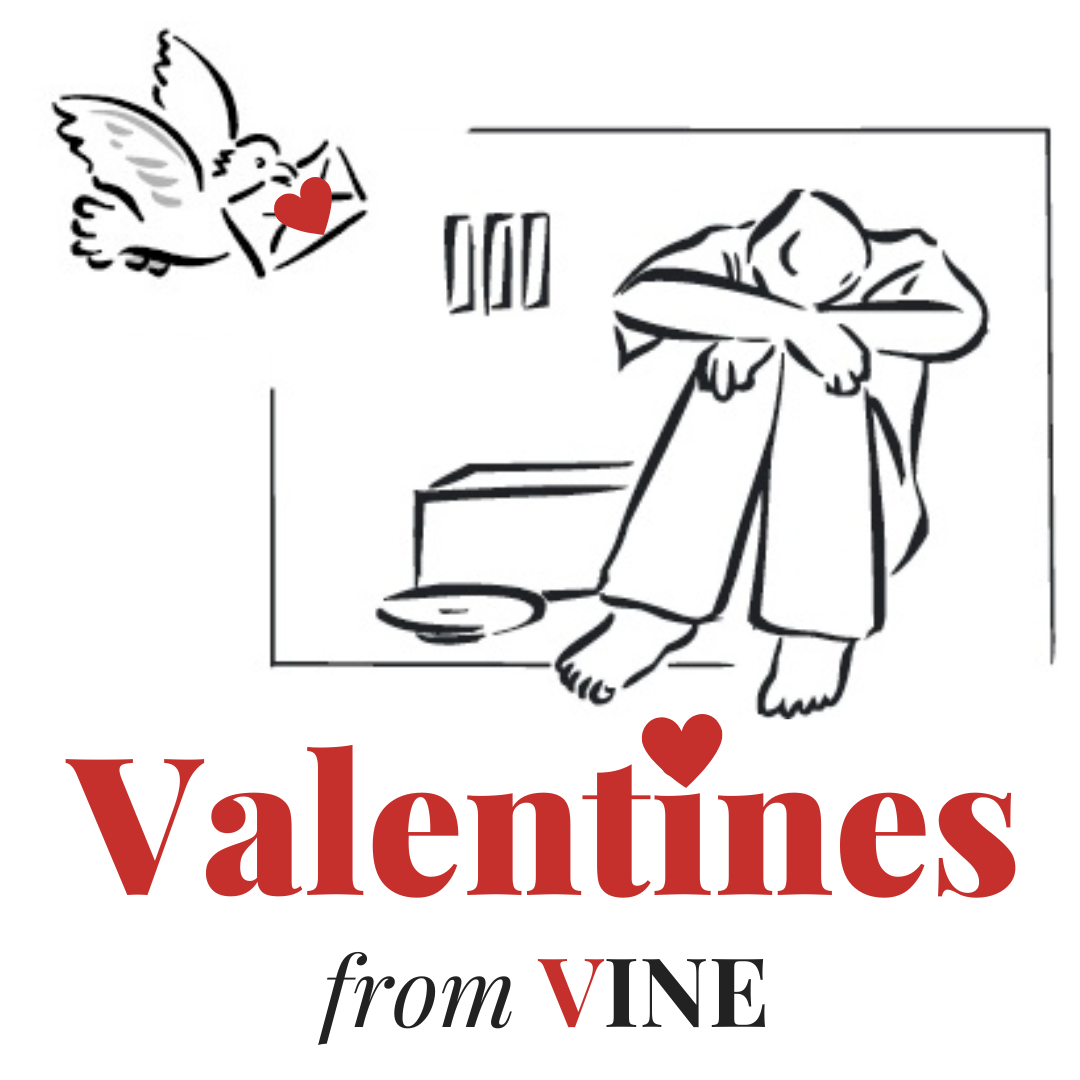
As we do each year, we will be encouraging our extended community to write notes to incarcerated activists on Valentine's Day.
Stay tuned for an updated list of addresses, along with tips for writing letters. We'll send those out by email and on social media on or before the 14th.
| | |
|
Everyone is welcome at this event, at which we will discuss the chapters in the Routledge Companion to Gender and Animals that have to do with sanctuaries. Authors of one or more of those chapters will be in attendance to answer questions and share insights. This will also be an extension of multi-year series of events for sanctuaries, so representatives of several sanctuaries also will be in attendance. | |
|
Here's how to participate:
- Download your free PDF of the selected chapters
-
Register for the event
- Read as much as you can
- Come to the event on February 23 to join the conversation or just listen in!
If you would like a PDF of the entire book, you can find it here.
| |
VINE Sanctuary is an LGBTQ-led refuge for farmed animals where hundreds of survivors of abuse and exploitation find peace and freedom. Donors make the sanctuary possible. | |
If you prefer to donate by mail, you can send a check to the address below:
VINE Sanctuary, 158 Massey Road, Springfield, VT 05156
| |
This block could not be converted :( | | | | |