Weekly Digest Number 46 - November 15th, 2022 |
|
Welcome to the RWU Rail & Labor News! This news bulletin is produced and emailed out each Tuesday morning. We hope you find each week's news and information useful. If so, please share with co-workers, friends, and colleagues. If you like, you can sign them up to get all the news from RWU HERE. Or forward them the link. Note: If you read over this news bulletin each week, you will be sure to never miss the important news of what is going on in the railroad world from a worker's perspective!
|
|
(Editor's Note: The rail carriers have long ago reneged on their "common cattier" obligation. The rail industry historically got millions of acres of land + breaks and incentives to build the railway and develop the country. In return, they were expected to be a "common carrier" for all freight and passengers interested in obtaining access. It is time the American public demands that the railroads live up to their end of the bargain. One more reason for public ownership.) |
|
Transportation Trades Department Asks Congress for Regulation Addressing Rail Service
Regulation should include more concise definition of the common carrier obligation, TTD says
|
|
Congress should consider implementing an annual “stress test” for the railroads to ensure that railroads have adequately invested in their infrastructure and people, according to policy position papers approved by the Transportation Trades Department (TTD) at a biannual meeting this week.
These position papers serve as policy action guidelines for the coalition for the upcoming months, according to TTD, which is affiliated with the AFL-CIO. These viewpoints have the support of the group’s 37 member unions, including member railroad unions.
To ensure that the railroads have the infrastructure and staffing they need to ensure sufficient network capacity, Congress should see whether to improve the definition for the common carrier obligation, TTD said.
The common carrier obligation binds the railroads to carry freight, but some in the industry contend that the common carrier obligation as it currently stands is too vague and doesn’t adequately define service standards.
The Surface Transportation Board could be the federal body that would work on the definition, according to TTD. Indeed, recent congressional legislation has sought to address this issue, although the change of power in the U.S. House of Representatives from Democrat to Republican could potentially affect whether that legislation gains much traction.
“At this moment, the railroads are not living up to their common carrier obligation. The current service provided by the railroads is falling well short of what their customers and this country needs and cannot be considered ‘reasonable’ by any sensible definition of the term,” TTD said. “Unfortunately, because the common carrier obligation is not clearly defined and the term ‘reasonable’ is in the eye of the beholder, the Surface Transportation Board, shippers are reluctant to bring common carrier cases and it is difficult for the agency to enforce the railroads’ common carrier obligation.”
Any definition of the common carrier obligation should consider factors such as the railroads’ staffing levels and the availability of equipment, as well as better enabling the STB to enforce this obligation through requiring railroads to increase employment levels or bring more equipment into the system, TTD said.
|
|
(Editor's Note: It is debatable if this was the best tactic, but for better or for worse, BRS and BMWED are now aligned to strike on December 5th. Should the operating crafts reject their TA as expected in a few weeks, then all four unions will align for a December 9th strike deadline. Here we go!) |
|
BMWED Joins BRS and Possibly Other Rail Unions in Our Struggle to Get More in Our Contract |
|
The BMWE has joined the BRS and possibly the BLET and SMART-TD Crafts subject to the outcome of their respective ratifications, with the same status quo period for the following reasons:
1. Republican Senators Richard Burr and Roger Wicker have already introduced a bill that would prohibit us from striking and further impose the National Tentative Agreement without the railroad-specific agreements for away from home expenses.
2. There is no other bill in congress at this time to allow us to strike; Congresspersons have been consumed with the mid-term elections. We will now have an opportunity to educate Congress and a obtain a better bill written for Railroad Workers, not the railroads.
3. Joining with the BRS and possibly the operating crafts will also improve our chances of not having Congress intervene on the railroads behalf and instead allow us to strike if necessary. This ultimately strengthens our chances to get paid sick leave.
The railroads continue to reject all BMWED and BRS proposals for paid sick leave. There are reports indicating the railroads intend to begin ceasing various rail operations within the next few days, in anticipation of a strike on November 20, even though in September they did not start taking such action until five days before the date of potential exercise of self-help. These service shutdowns would be a premature exercise of self-help by the railroads and a violation of their common carrier obligations to provide services to their customers. These shutdowns would also represent a blatant attempt to cause panic and economic harm to the railroads’ customers and the U.S. economy right before the Thanksgiving holiday. They would also be a manipulative attempt to instigate Congress to intervene against the interests of railroad workers. The railroad workers are not the problem here and are not to blame for the current situation. The American public and the railroads’ customers deserve better. They cannot be held hostage to protect the immense wealth of the railroads’ greedy executives and shareholders.
Therefore, the BMWED National Division Bargaining Committee has determined to extend its status quo period to synchronize with our Brothers and Sisters in the BRS Union if the BLET or SMART-TD Unions ratify their tentative agreements. However, if the BLET or SMART-TD fail to ratify their agreement, BMWED’s status quo period will then end at the same time as either the BLET or SMART-TD, which is at 0000:01 Eastern time on December 9, 2022.
|
|
(Editor's Note: Ultimately, the solution to carbon emissions from railroad locomotives is electrification using overhead catenary and onboard batteries. Through regenerative braking, combined with the more powerful propulsion and less loco maintenance, this investment would payoff greatly over time. Yet the U.S. rail industry - held as it is in a few private hands - is unable and unwilling to make such an important investment. Another reason for public ownership.) |
|
EPA Petitions to Address Harmful Emissions from Locomotives |
|
Petition Summary
On November 9, 2022, EPA responded to petitions submitted by the California Air Resources Board (CARB) and the San Joaquin Valley Air Pollution Control District. Both of these petitioners requested that the Environmental Protection Agency (EPA) undertake rulemaking to adopt more stringent national emission standards under the Clean Air Act (CAA) regulating nitrogen oxide (NOx) and particulate matter (PM) emissions from locomotives.
Background
In 2008, EPA promulgated regulations addressing air pollutant emissions from locomotives. While that rule put in place lower emission standards for new locomotives and new locomotive engines, in California and elsewhere locomotives remain a significant source of NOX and fine particulate matter emissions, often disproportionately impacting the health of communities near railyards and ports. In addition, the very slow natural fleet turnover of this sector results in older locomotives and locomotive engines remaining in use for decades.
Response to Petitions
As part of EPA’s response to these petitions, the Agency is taking immediate steps to focus resources and expertise on developing options and recommendations for new locomotives as well as those that are already operating in communities nationwide. This
|
|
(Editor's Note: Below is a fine example of what UP is all about. We should hammer away at the Class Ones and their exploitation of the workforce, exposing their mean spiritedness and hypocrisy at every turn, so that when we strike, we have the American people firmly on our side.) |
|
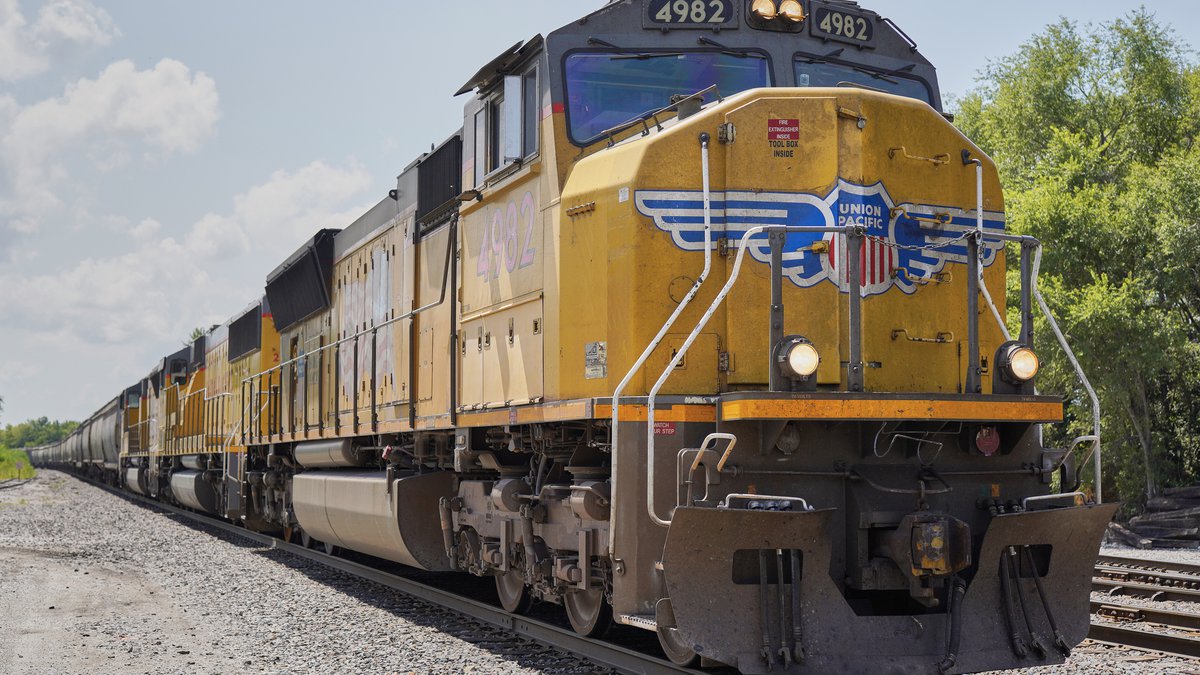
Unions, Iowa National Guard Criticize Union Pacific for Denying Veterans Day Off for Vets |
|
CEDAR RAPIDS, Iowa (KCRG) - Iowa labor leaders and the head of the Iowa National Guard say Union Pacific may be violating a state law by denying Veterans Day holiday requests for veterans.
The President of the Iowa Federation of Labor AFL-CIO, Charlie Wishman, said Union Pacific notified employees Wednesday that requests for Friday off for Veterans Day had been denied. It pointed to an Iowa law requiring companies to grant holiday time off to veterans on Veterans Day. That law includes exemptions where managers can deny those requests if the time off would compromise the company’s business functions or public health or safety. However, in those instances, the law says companies should provide at least ten days notice of the denial of time off.
“Railroad worker quality of life and morale in the nation’s freight rail system are at lows, and nationally workers have been negotiating at the bargaining table for time off without discipline, adequate staffing, paid health care, and improved quality of life,” said Wishman. “To ensure safe and reliable freight rail service, incredibly profitable Class-I rail carriers like Union Pacific need to step up and deliver for their employees.”
Union Pacific Spokesperson Robyn Tysver told TV9 said the company was forced to deny days off for Veterans Day because of workforce challenges.
“We considered all available manpower required for operations and determined, based on our operational capacity, we are not able to grant the requested leaves for Friday,” Tysver wrote in an email.
|
|
(Editor's Note: It is important to remember that there is no magic formula. At the end of the day, for purely financial reasons, the Class Ones have no interest in providing more time off and more predictable work schedules for T&E crews, as they see this as costing money that could go to short-run stock buybacks, dividend payments, CEO compensation, etc.) |
|
Union Pacific Launches Pilot Program to Provide More Predictable Schedules for Engineers
Railroad and union officials working together on experiment in Kansas
|
|
CHICAGO – Union Pacific is running a small pilot program in Kansas that aims to bring more predictability to engineer schedules.
The experiment comes as railroads have been having trouble retaining train crews and hiring new conductors at many locations across their systems — due in part to the unpredictable nature of the jobs.
Ongoing crew shortages at UP, BNSF Railway, CSX Transportation, and Norfolk Southern have created widespread service problems that have drawn the ire of shippers and the attention of regulators.
Eric Gehringer, UP’s executive vice president of operations, says about 40% of the railroad’s train crews — primarily those working in yard and local service — have scheduled jobs.
The remaining 60% of UP’s train and engine jobs are unscheduled. To provide more predictability in road freight service, UP is working with the Brotherhood of Locomotive Engineers and Trainmen on the pilot program that lets engineers know when they’ll work every 15 days.
Under the “11 and four” schedule, engineers know which 11 days they’ll work and which four days they’ll be off during every 15-day period, Gehringer told an investor conference on Tuesday.
“It’s something we have to do through the collective bargaining agreement. We can’t just instantly put that across the system,” Gehringer says, adding that he’s excited to see what the results will be over the 60 days left in the pilot program.
|
|
(Editor's Note: Amtrak has in some sense, instituted its own brand of "PSR." Just as freight carriers have been driving away customers and are moving less freight but bringing in more revenue, Amtrak has cut consists and frequencies, provided terrible customer service, jacked up rates, and brought in way more revenue per passenger this past year.) |
|
Capacity’s Impact Shows in Amtrak’s Fiscal 2022 Revenue and Ridership: Analysis |
|
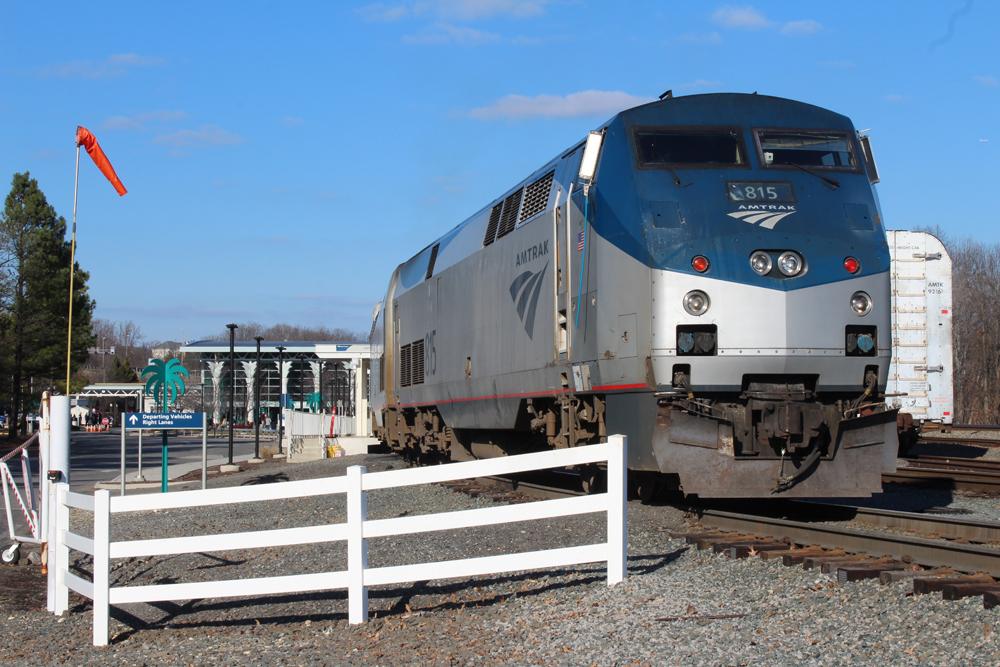
WASHINGTON — Amtrak reduced the huge financial shortfall it experienced during the COVID-19 pandemic with its results in fiscal 2022, earning $1.78 billion in gross ticket revenues while carrying 22.9 million passengers, according to a route-specific recap obtained by Trains News Wire.
Most noteworthy in yearly comparisons by service category, shown in the table below, is that revenue on the long-distance network in 2022 was up by $113 million, or 23%, over 2019, the last “normal,” or pre-pandemic year. In contrast, both Northeast Corridor and state-supported service revenue fell by about 30%.
Much of the long-distance gain was achieved by Auto Train’s continued stellar performance. The daily overnighter carrying travelers and their cars between Lorton, Va., and Sanford, Fla., benefited from high gas and rental-car prices most of the year. The train had enough coach and sleeping-car capacity to address pent-up travel demand at different price points, but eventually many departures sold out at high fare levels.
Though reduced somewhat by equipment and personnel shortages that plagued the rest of Amtrak’s network [see “Addressing Amtrak’s Capacity Crisis,” Trains Magazine, December 2022], each Auto Train usually operated with four coaches and as many as eight sleeping cars. It is also the only train marketed separately in advertising, social media, and at the Amtrak website.
High prices driven by reduced availability played a significant role in the long-
|
|
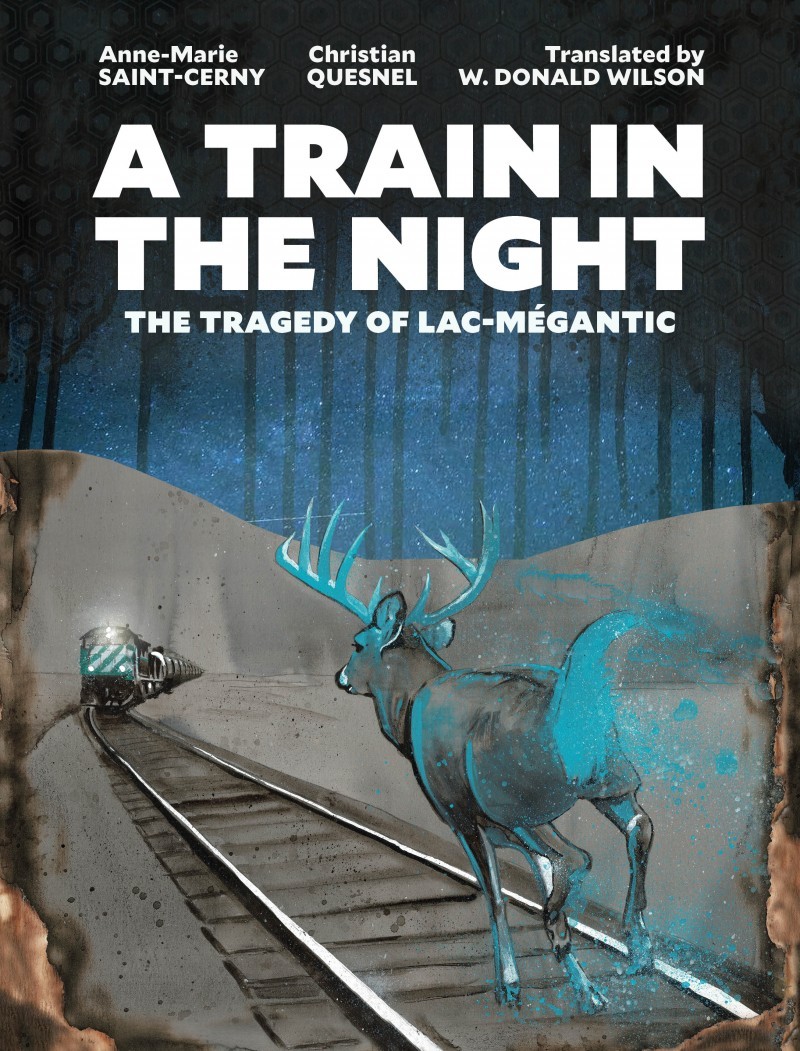
Train in the Night: The Tragedy of Lac-Mégantic |
|
On a summer night in 2013, a runaway train loaded with explosive oil derailed in the small town of Lac-Mégantic, Quebec. One of the deadliest rail disasters in Canadian history, Lac-Mégantic stands as a haunting narrative of how the powerful profit from collective tragedy.
Who are the real culprits of the disaster that claimed 47 lives? In this vivid, full-colour work of graphic nonfiction, award-winning author Anne-Marie Saint-Cerny and illustrator Christian Quesnel trace the path of the locomotive from the scene of the crime all the way back to cowboy producers of Dakota black gold, Wall Street investors, and politicians in the pocket of the billion-dollar oil and gas industry.
With no national public inquiry launched or meaningful criminal charges laid, the victims of Lac-Mégantic must not become mere statistics, nor the survivors left to the mercy of predatory developers and financial interests. Now the full story of that infamous night and its aftermath live on—and illustrate the true human cost of unfettered capitalism.
|
|
(Editor's Note: The fact that ONE worker death and a few dozen injured passengers could possibly lead to the CEO's imprisonment and fine is unfathomable on this side of the ocean. Imagine the likes of Hunter Harrison, Katy Farmer, and Lance Fritz doing time! Consider just a few recent wrecks that could gain them such a sentence: the death of a Texas switchman last summer or the collision at the Salton Sea a few months ago, or the crash of the Southwest Chief in Missouri over the summer. U.S. and Canadian railroads would certainly be a safer places to work!) |
|
KORAIL Hit for Worker's Death, Derailment |
|
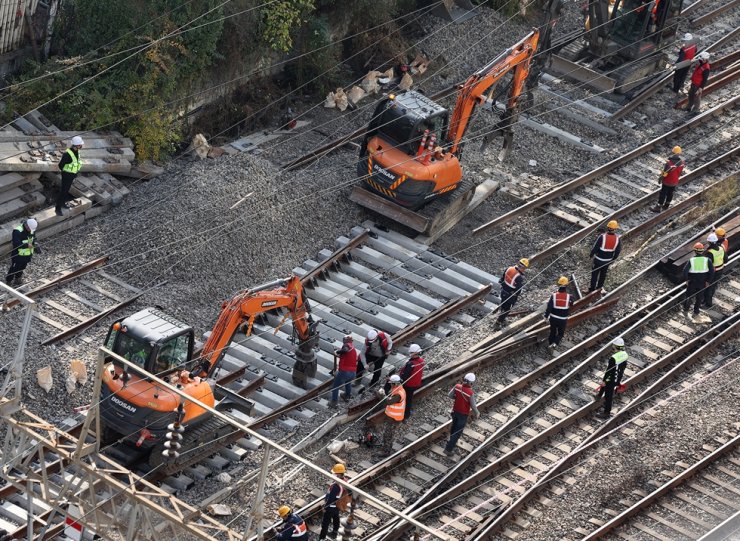
Land Minister Won Hee-ryong called for a fundamental and complete overhaul of Korea Railroad Corp. (KORAIL), the state-run rail operator, Monday, after a train had derailed late Sunday. The accident that caused injuries to at least 34 passengers came less than a day after a maintenance worker died while working, Nov. 5.
The series of accidents are fueling criticism of KORAIL CEO Na Hee-seung. He may become the first head of a state-run organization to be charged under a law, which subjects CEOs of large companies to a period of imprisonment of up to one year or fines of up to 1 billion won ($712,000) if fatal industrial accidents occur at their organization or its smaller partner firms. Na was questioned over the death of a rail worker in his 50s in Daejeon, March 14, according to the Ministry of Employment and Labor, Monday.
The rare and heated remarks of the land minister carry all the more weight since he is on a trip to Saudi Arabia to win overseas construction projects for Korean firms worth up to $50 billion every year through 2027.
"KORAIL has reported accidents after accidents," he said in an emergency meeting, according to the land ministry. "The state-run rail operator should undergo a complete overhaul. KORAIL must and will see to it that it minimizes customer inconvenience."
The comment followed injuries suffered by at least 34 passengers on a Mugunghwa train at 8:52 p.m., Sunday, as it was arriving at Yeongdeungpo Station in southern Seoul.
The train that had left central Seoul's Yongsan Station at 8:15 p.m. was bound for Iksan, North Jeolla Province, carrying 275 passengers.
Sunday's accident came only hours after a KORAIL worker in his 30s had been hit and killed by a train while connecting and separating train cars at Obong Station in Uiwang, Gyeonggi Province, Nov. 5.
The scene was reviewed immediately after the accident by a group of labor ministry officials. They will determine the cause of the accident and decide whether to seek criminal punishment for the CEO.
|
|
(Editor's Note: Pressure will increase on BNSF - given these numbers - to adopt more PSR like measures and continue to apply the screws on its workers a la Hi Viz.) |
|
BNSF's Revenue Rose, Income and Volume Fell in Q3 |
|
In the third quarter, BNSF Railway Co.’s total revenue shot up 16% to nearly $7 billion, but its operating expenses ballooned 30% to $4.6 billion on a year-over-year basis.
Moreover, the Class I’s operating income fell 7% to $2.1 billion, net income declined 6% to $1.4 billion, operating ratio worsened 8.2 points to 67.7 and volume dipped 5% to 2.4 million units, according to a Q3 financial performance report.
Revenue gains were the sole good-news story, including average revenue per car/unit that climbed 23% to $2,623 primarily because of higher fuel surcharges driven by diesel price hikes.
By commodity group, volume in the quarter:
• fell 7% for consumer products mostly due to lower international intermodal shipments resulting from supply-chain challenges;
• rose 4% for agricultural products because of higher domestic grain shipments, and increased renewable diesel and oil feedstock traffic;
• declined 7% for industrial products since demand for crude-by-rail shipments was low and building products traffic fell; and
|
|
(Editor's Note: The rail workers struggle on in the UK, and have become the de facto leaders of the labor movement there.) |
|
UK Strikes See Light at the End of the Tunnel |
|
Friday’s eleventh hour call-off came too late to save the weekend, but commuters exhaled a collective sigh of relief for the week ahead. The cancellation of strike action on Monday and Wednesday avoided a week of misery on the rails. For the public, whose loyalty has been tested to the limit by six months of disruption on Britain’s railway network, there is fresh hope of resolution.
Even on an unexpectedly busy news day, the announcement that rail strikes would not go ahead this week pushed everything else off Friday’s front pages. A breakthrough in the half-year long dispute came as a surprise to the nation. Attention has now switched to a week of intensive negotiations between unions, train operators and the infrastructure managers.
Saturday was still a write-off for would-be travelers. International rugby union events at Cardiff and Edinburgh suffered, and services were reduced by up to eighty per cent in some regions. The network map looked very much as if the most severe pruning proposed in the nineties had taken place. Some additional lines did remain open for freight traffic, which has been affected but not directly involved in the overall season of disputes.
The announcement from the RMT union came mid-afternoon on Friday, cancelling action at the infrastructure agency Network Rail across England, Scotland and Wales; and at fourteen passenger train operators mainly running services in England. Other unions with fewer members directly involved had already called off pending strike action. In Scotland, where industrial relations had taken a significant turn for the worse, there has been suspension of more widespread action planned for every week until Christmas.
Quixotic turnaround in ministerial positions
|
|
(Editor's Note: Railroad workers across Europe have been taking strike action. The Spanish General Confederation of Labor (CGT) is at the head of this round.) |
|
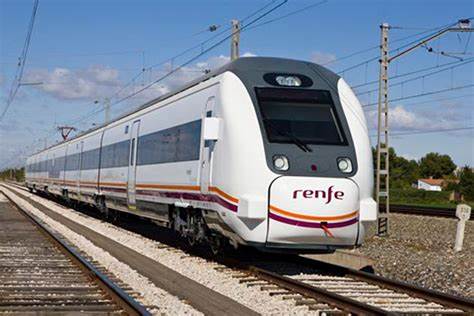
RENFE (Spanish Railroads) Forced to Run Reduced Timetables Due to Strike |
|
Renfe’s Cercanías, Rodalies, and medium-distance services will be curtailed on Friday due to strike action by a minority union. The Spanish operator says the strikes are going ahead despite the recent signing of a new collective agreement with the majority unions.
On Friday, only 75 percent of the Cercanías commuter services are expected to run during rush hour and only half of the normal number of trains outside of peak hours. Additionally, Renfe expects to be able to run only 65 percent of the normal number of medium-distance trains and 72 percent of its long-distance trains.
Rail freight stands to be affected too, with only 25 percent of the regular number of freight trains expected to be on the rails. This translates to about 200 scrapped freight services on Friday, Renfe warns. This will stand to impact a host of large and medium-sized enterprises, as well as the supply chain as a whole, the operator says.
There has been a lot of industrial action in the railway sector in recent months, most prominently in the United Kingdom, where the unions and the sector have been at odds for months. This has led to a number of strikes, including nationwide ones. There has also been industrial action in the Netherlands and most recently in Belgium and France.
|
|
|
|
|
|
|