HHCD Quarterly Newsletter
Issue 4 - Summer 2025
Learn about our soil sampling program, the fancy new hand tools added to our equipment program, working in extreme heat, recipes for two refreshing beverages to help you endure the heat, and a save the date for an event at Carr's ciderhouse in September!
| | |
Digging Into Spring: 95 Free Soil Samples and counting!
We've had a busy and exciting spring here at HHCD! So far, we've provided 95 free soil samples to 18 local farmers—a big step forward in our mission to support soil health and sustainable agriculture across the region.
To help power this effort, we welcomed Lily Gigante, a Plant and Soil Science student from the Stockbridge School of Agriculture at UMass Amherst. Lily has been an incredible addition to our team, contributing her knowledge and energy to our Healthy Soils Program. Together, we’re building our capacity to offer customized soil health recommendations based on the soil test results. We consider multiple factors—chemical, physical, and biological—to provide practical guidance on soil amendments and best practices to enhance crop productivity and long-term soil health.
Are You Eligible for Free Soil Testing?
If you're a farmer working with the Natural Resources Conservation Service (NRCS), you’re eligible for free soil sampling for all fields included in your NRCS Conservation Plan. Not working with NRCS? No problem! Farmers and gardeners can receive three free soil samples, including collection, processing, and submission to the UMass Soil Lab. Need more than three? Additional samples are available on a sliding scale from $10 to $40 each, depending on your operation size and needs.
| | |
Discover the In-Field Soil Health Assessment (IFSHA)
We also offer the In-Field Soil Health Assessment (IFSHA)—a hands-on tool that helps you evaluate the condition of your soil right on your farm or garden. Even better, we’ll teach you how to perform the assessment yourself!
So, what is IFSHA?
This quick, yet comprehensive evaluation looks at physical, chemical, and biological indicators to assess soil health—defined by the USDA as the “continued capacity of soil to function as a vital living ecosystem that sustains plants, animals, and humans.” Key IFSHA indicators include: Soil cover, residue breakdown, penetration resistance, water-stable aggregates, soil structure, plant root development, and biological diversity.
It’s a practical, down-to-earth way (literally!) to better understand your soil’s condition, compare it over time, and make informed management decisions. Plus, it's a fun and educational experience that brings you closer to the land you steward.
Let’s Dig Deeper—Together
We’re passionate about helping you grow healthier soils and stronger crops. Whether you're a seasoned farmer or an avid gardener, we're here to support your journey with science-based tools and personalized support.
Interested in free soil testing or learning more about IFSHA?
Reach out to us—we’d love to get our hands dirty with you!
| | Coming Soon: The Mobile Hand Tool Library | | |
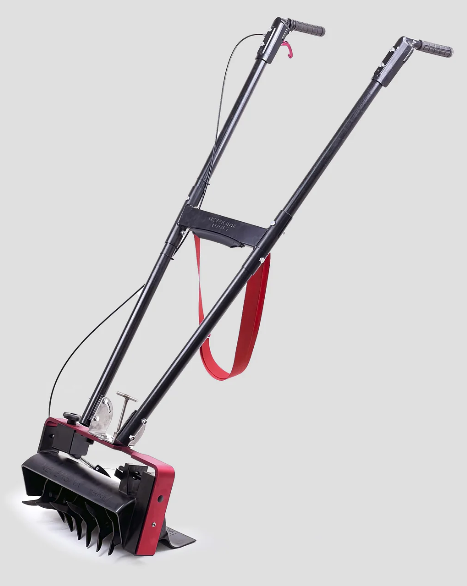
We’re also thrilled to be launching a Mobile Hand Tool Library—a low-cost, highly accessible collection of tools for farmers and gardeners. Our first set of high-quality tools, purchased from Neversink Tools, includes:
- Jang JP-1 Push Seeder
- Iconoclast Pro Tilther
- Two Broadforks
Soon, we’ll be adding smaller essentials like hori hori knives, pruners, and more—everything you need for small-scale, sustainable production.
By next year, we plan to roll out a fully stocked trailer loaded with tools you can rent at a very low cost. If you only need one or two tools, many of them will be available to borrow free of charge.
Have a favorite hand tool you’d love to see in our library? Let us know! We’re building this resource with your needs in mind.
| |
Working in Extreme Heat
By Matthew Karas
| | |
I was raised on a farm in South Deerfield and, like all farmers, I had to work long days outside throughout the growing season regardless of the weather. It didn't matter if it was 100 degrees, the cucumbers needed to be picked and the hay bales needed to be stacked and delivered. This was twenty years ago, before the impacts of climate change started to intensify to the extreme level that we are now experiencing. Nowadays, I have the privilege of choosing when to work outside. I originally planned to collect soil samples today, but after checking the forecast and seeing that the heat index was to exceed 100 degrees, I rescheduled. I recognize the luxury that this privilege affords me - instead of toiling in the heat I can work from an air conditioned office, staying comfortable and safe from the real impacts of extreme heat. Unfortunately, the more than two million farmworkers who sustain our agricultural system do not share this privilege.
Extreme heat can cause very serious health issues, impacting every system that regulates our body and straining our ability to function. You may notice that on a hot day your energy level suffers, you may feel more irritable, you may find it harder to concentrate on the work you are performing and your coordination declines. Extreme heat decreases worker productivity and increases the likelihood of workplace injuries, and is associated with higher healthcare costs. Extreme heat exacerbates the risk of certain health conditions, such as asthma, kidney, and heart diseases, and can lead to death.
Injustices permeate our entire food system and creates an environment where migrant workers can be easily abused. Most people are not aware that in many states there is a separate agricultural minimum wage - In Massachusetts the minimum wage for farmworkers is only $8 an hour! Many of the people who grow and harvest our food are undocumented workers and lack access to health care and other resources. Given that these workers are undocumented, it is hard to find accurate statistics regarding their well-being, but estimates are that farmworkers are 20-35 times more likely to die from heat-related stress than other industries.
There are common sense measures to protect people who work outdoors from the impacts of extreme heat, including access to shade and water, paid rest breaks, and minimizing work hours in the hottest conditions. Yet there is no heat-specific federal law to protect workers and only 5 states currently guarantee workers access to protective measures - California, Colorado, Minnesota, Oregon, and Washington. There is no such law in Massachusetts!
As the climate crisis intensifies and extreme heat days grow in frequency, it is imperative that we pass and enforce measures to protect those who grow and harvest our food. We all share a moral obligation to protect the members of our communities who are most vulnerable to extreme weather and workplace abuse. Passing protective measures will benefit all of us - it will strengthen our food system and local economy, save money on healthcare costs, and increase worker productivity!
Check out these resources for more information on this important topic:
- Heat Hazards and Migrant Rights: Protecting Agricultural Workers in a Changing Climate
- Extreme Heat is More Dangerous for Workers Every Year
- Protecting Farmworkers from Extreme Heat and Wildfire Smoke Helps the US Economy
| | Staying Hydrated with Switchels and Shrubs | | |
Switchels and shrubs are great beverages to make at home that can help you survive and thrive in the hot summer weather. A switchel dates back to the 18th century and is known by many other names, including "haymaker's punch", as it is a nourishing and energizing drink consumed by farmers laboring in the fields during the summer. In it's simplest form, a switchel contains water, apple cider vinegar, and a natural sweetener, such as honey, maple syrup, or molasses. Common additions include lemon, ginger, herbs, and even vegetables (cucumbers can be a nice addition!).
Switchels are often consumed straight, whereas shrubs are commonly diluted with flat or bubbly water, or used to make cocktails. Another difference is that shrubs contain fruit. I recommend experimenting with different types of fruit and herbal additions, or enjoy both of these recipes as is!
Simple Switchel
- 2.5 Cups Water
- 1/2 C Apple Cider Vinegar
- 1/2 C Honey
- 1 Tablespoon Molasses
- 2-5" ginger (depending on how spicey you like it!)
- Juice from 1-2 lemons
Cook ginger in 2 cups of water for 20 minutes. While the ginger is simmering, combine the remaining ingredients in a large large. Remove ginger from heat and add 1/2 cup of cold water to pot. Wait for water to get to room temperature before straining and adding to the jar with the rest of ingredients.
Pineapple Shrub (adapted from liquor.com)
- 1 Pineapple
- 1-2 C brown sugar
- 2 Cupts apple cider vinegar
- 4 Cloves
- 2 Cinnamon sticks
- 2-4" ginger
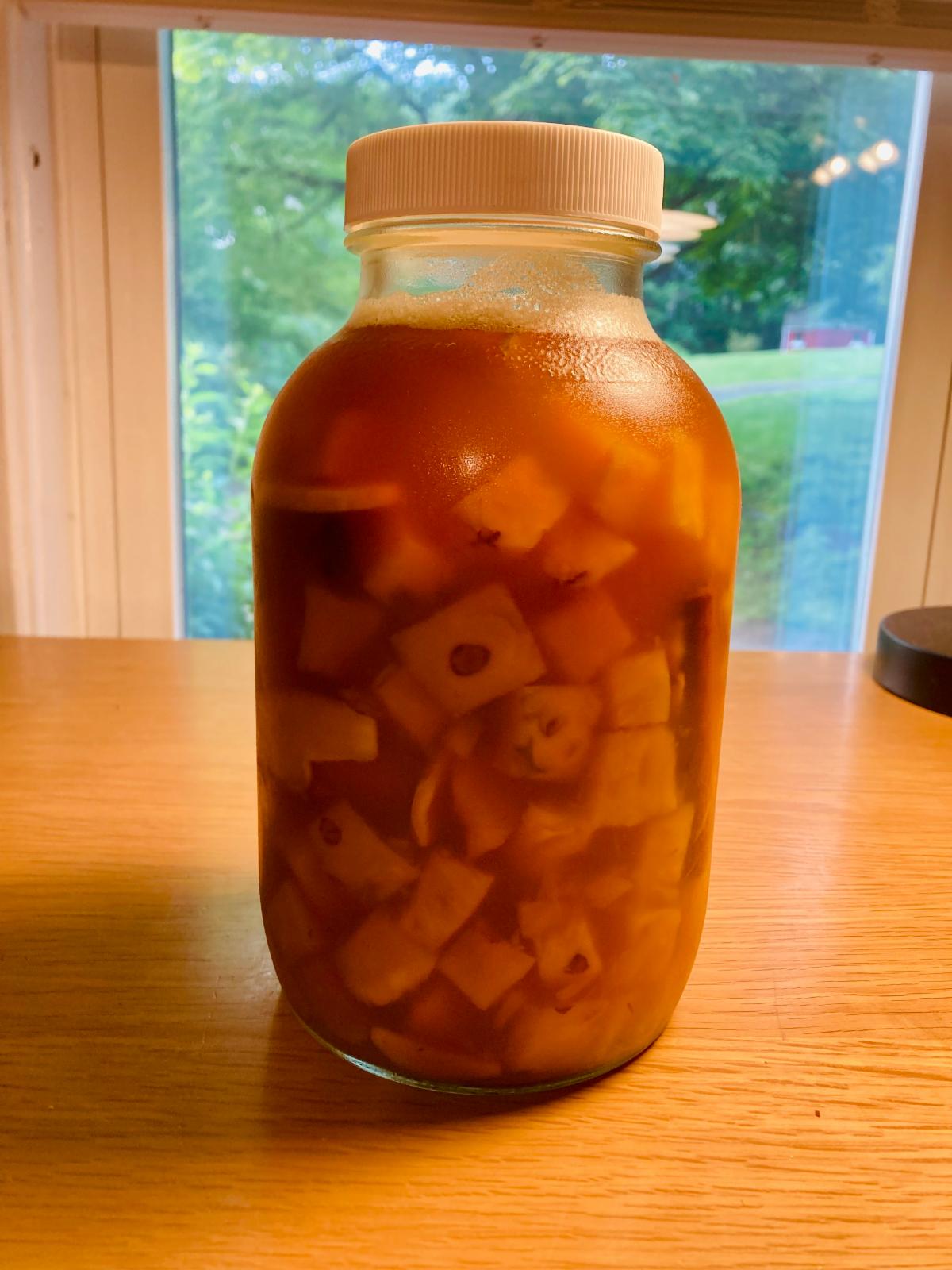
Remove the outer skin, cut the pineapple into cubes, and place in a medium pot along with the sugar, cloves, cinnamon, and ginger. Cook over medium heat for 5-10 minutes until the pineapple is carmelized. Add water and bring to a boil, reduce the heat, and simmer for 20 minutes. Allow this mixture to cool to room temperature before adding apple cider vinegar. Cool and refrigerate overnight, then strain the solids. The pineapple chunks can be eaten straight after you strain them out - they are very tasty!
| | SAVE THE DATE! September 18th @ Carr's | | |
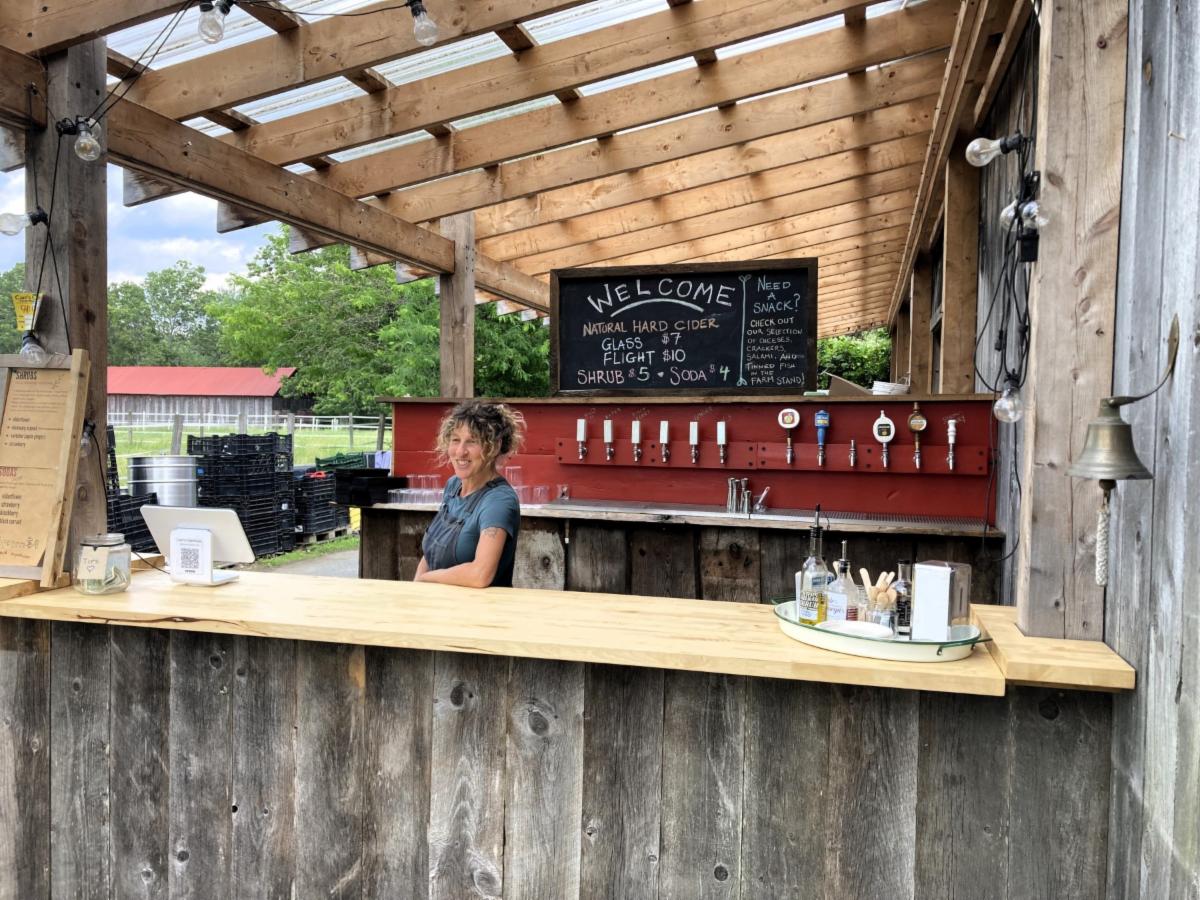
We are hosting a special farm walk and harvest celebration at Carr's Ciderhouse in Hadley on Thursday, September 18th! You will have an opportunity to meet the farmers and learn about their incredible agroforestry and cider operation, and enjoy great local food and cider with members of the community. More information upcoming!
| | |
Got Something to Share? Submit a Guest Article!
Are you passionate about water quality, wildlife, native plants, or another natural resource-related topic? We’d love to hear your voice!
We're accepting guest article submissions for future newsletters. Whether you’re a farmer, gardener, student, or local resident with a story or insight to share, this is a great way to engage with the community and spread good ideas.
Send us your article, and we’ll feature it in an upcoming issue!
| |
Join the District! Become a Supervisor!
| | |
The Hampden-Hampshire Conservation District is seeking to add
new District Supervisors in 2025.
Why you should join us:
- Take an active role to identify conservation needs and guide projects that improve environmental health in your community.
- Connect with other farmers and learn about opportunities available to farmers and landowners.
- Learn about and work with our partner organizations that are driving sustainable agriculture and conservation issues in the Pioneer Valley.
- Great resume builder for folks who are looking to pursue a career in conservation.
CLICK HERE to learn more
Contact us at hampdenhampshireconservation@gmail.com for more information.
| | |
Please consider making a tax-deductible donation so we can continue to provide community members with technical and financial assistance, educational programs, and community engagement.
Thank you for supporting our work to conserve the natural resources of Hampden and Hampshire counties! We are able to maintain our work conserving natural resources due to generous community donors like you!
| | | | |