Welcome to the University of Oklahoma Carceral Studies Consortium Newsletter. The Carceral Studies Consortium strives to build a community for intellectual exploration that includes faculty, staff, graduate students, community members, practitioners, and organizers.
Carceral Studies is concerned with the independent function and nexus of the political and social systems that organize, shape, sustain, and entrench practices of punishment, surveillance, incarceration, and harm.
|
|
Carceral Studies Conversations Podcast |
|
"Emancipation and Reparations" with Dr. Guy Emerson Mount |
|
|
|
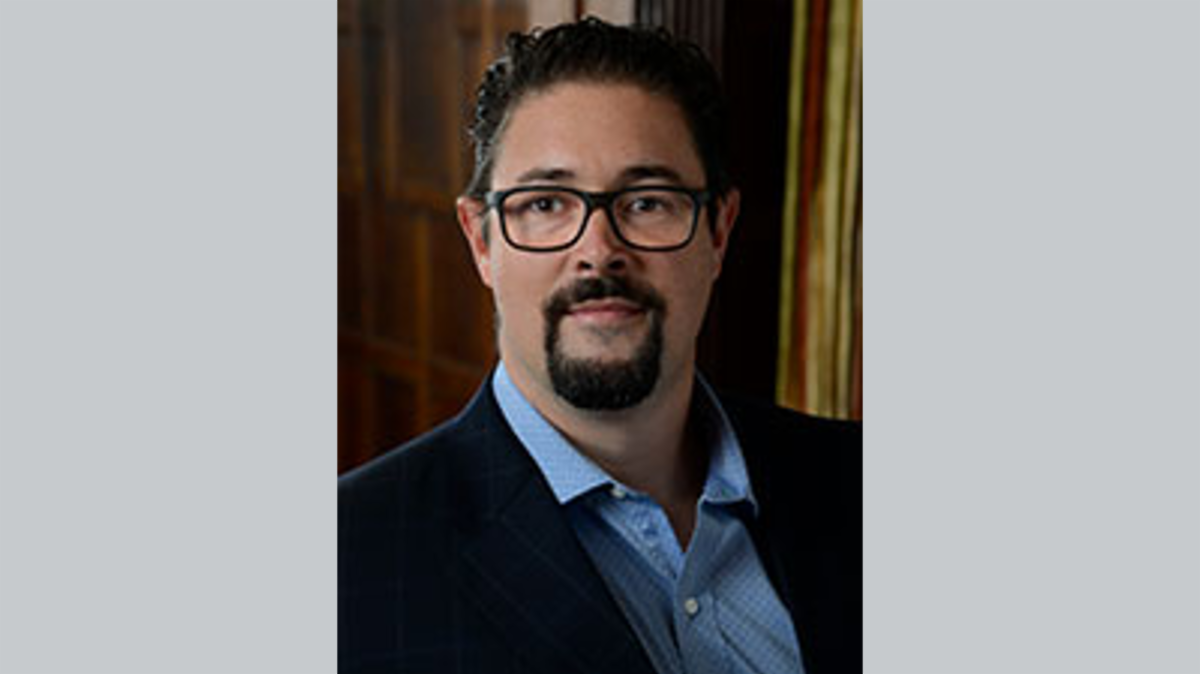
In this episode of the University of Oklahoma Carceral Studies Conversations podcast, Dr. Guy Emerson Mount explores the meaning of emancipation as it changed over time, the demands of reparations relative to repair and justice, and how the legacies of slavery and the lack of reparations has contributed to the Carceral State. Mount is an Assistant Professor of African American History at Auburn focusing on the intersection of Black transnationalism, Western modernity, and global empires. As part of his research into the lasting legacies of slavery, Prof. Mount recently co-founded the scholarly team that uncovered the University of Chicago’s historical ties to slavery. Mount currently serves as Associate Editor of Black Perspectives, the world’s largest online destination for African American history.
|
|
|
|
Hosted by NPR Music's Rodney Carmichael and Sidney Madden, this eleven-episode podcast series explores the intersection of rhyme and punishment. Each episode follows an artist such as Bobby Shmurda and DJ Drama and their relation to the criminal legal system. The series is interested in examining power: “the power the music industry wields over artists, the power of institutional forces that marginalize communities of color, the power of the prison industrial complex and the power dynamics deep-rooted in the rap game.”
|
|
|
|
After Philadelphia-based non-profit Safehouse planned to open the nation’s first supervised injection site to stem the city’s opioid deaths, the US Department of Justice sued on the grounds that it was illegal to operate a place to consume illegal drugs. In a 2-1 decision, the court sided with the government and argued: “Good intentions cannot override the plain text of the statute.” In the dissent, Judge Roth argues that the court risked criminalizing harm-prevention measures. Despite these setbacks, Safehouse and its allies remain hopeful that an appeal could prevail or that the Biden Administration’s Department of Justice could use prosecutorial discretion and not prosecute safe injection sites.
|
|
|
|
In the aftermath of the January 6 attack on Congress, 135 civil and human rights organizations called on Congress to use their existing powers from the many federal statutes to investigate and prosecute the individuals involved. The group urged Congress “to address the long-standing and ongoing threat posed by white supremacists and urged them to abstain from passing any additional domestic terrorism laws.” The organizations argued that “counterterrorism practices are far too often blatantly misused to target and criminalize the very marginalized communities that white supremacists target for hate.”
|
|
|
|
This new initiative from the Boston Globe allows people to ask the newspaper to update or anonymize past coverage of them online. “The ‘Fresh Start’ initiative is part of a broader effort to rethink the Globe’s criminal justice coverage and how it affects communities of color, amid a national reckoning over racial inequity.” This program is designed to address the “long-term impacts even minor stories can have in the digital age.”
|
|
|
|
After years of outrage about Trump’s immigration policies, Biden halted the construction of the wall and stopped new enrollments in the Migrant Protection Protocol Program. The administration is considering a “smart” wall as an alternative “where advanced surveillance tech replaces steel bollards and armed patrol routes.” These technologies, such as facial recognition at airports or aerial drones, don’t exist just along the border line, but extend hundreds of miles inland into the “Constitution-free zone” under the Border Patrol’s jurisdiction. De la Hoz argues, “There are already few limitations on the ability of immigration agents to access and use the information held in federal databases or to conduct additional surveillance when and where they see fit,” and implementing these technologies without oversight poses a danger.
|
|
|
|
As part of a slate of Executive Orders in pursuit of racial equity, Biden ordered the Department of Justice to phase out its contracts with private prisons. Pelot-Hobbs argues: “Although couched in the language of taking on mass incarceration, Biden’s private prison executive order fails to scale back incarceration or to confront racial state violence head–on.” Private prisons do not drive mass incarceration (9% of federal prisoners are held in private prisons), and this order excluded the Department of Homeland Security, which holds a majority of its detainees in private facilities. Pelot-Hobbs argues that the order fails to reduce punitive powers; instead, it “shores up the legitimacy of the state to imprison people.”
|
|
|
|
In his final weeks in office, Trump issued a slew of pardons. Berger argues that “Trump’s actions were more than the typical partisan lame-duck pardons. For he was not just supporting his loyal base of racist mercenaries and elitist grifters. Trump was pardoning mass incarceration itself.” This system of mass incarceration is about “reinforcing a racist system of class rule” that protects certain people from legal consequences. At the same time, Trump prosecuted whistleblowers, granted no pardons to political prisoners, and executed thirteen people. Berger concludes: “The carceral state has always been an effort to impose the iron will of racial capitalism” and that, even after Trump is out of office, the punitive impulse and carceral system persists.
|
|
|
|
Elizabeth Catte’s new book Pure America: Eugenics and the Making of Modern America shows how “white eugenics, far from being a short-lived horror, was in fact a ‘world building enterprise.’ And it built a world within whose structures, both visible and invisible, we are still living today.” Scientists, employing the progressive language and goals of social uplift, sought to transform society through the science of eugenics, and the sterilization law passed in Virginia targeted poor young women, especially victims of sexual assault, and people with disabilities. This book, Wayland-Smith argues, reveals the harmful persistence of the eugenicists’ logic: “The framing of the poor as drains on public vitality and finances remains a staple of U.S. public discourse on issues of poverty and so-called entitlement programs.”
|
|
Announcements & Opportunities |
|
Apply for Carceral Studies Consortium Grants, Due Feb. 1
In support of the CSC mission, the Consortium offers a small number of micro-grants of up to $500 to OU faculty, staff and students to support the development of research, pedagogy, and community engagement projects relating to Carceral Studies. The Consortium encourages applications for projects that engage the community and/or support social or policy outcomes.
Spring 2021 applications are due February 1, 2021
|
|
|
Carceral Studies Spring Welcome Event, Feb. 8
You are invited to our spring semester kick-off event to be held via Zoom on February 8th, 2021, from 4:00 - 5:00 p.m. Please join the community to network and learn more about Carceral Studies.
This event will include short presentations on work being done throughout Oklahoma by Ellen Stackable (Poetic Justice), Constance Chapple (Sociology), Miles Francisco (Foundation for Liberating Minds), Jermaine Thibodeaux (African and African American Studies), Bailey Hoffner (Norman Collective for Racial Justice), and Stephanie Heinrich (Educational Leadership and Policy).
We look forward to seeing you at this event on Zoom.
|
|
|
ABOUT
The Consortium Newsletter will offer a roundup of a few selected articles that reflect today’s news, organizing, and thinking related to the carceral state. We understand that freedom work is built on education and engagement. Education requires an understanding of contemporary issues informed by their historical context. We hope that these curated articles will help you analyze the issues that we face and understand the community that we strive to construct.
Join the conversation!
We encourage feedback, suggestions, and article suggestions. Please reach out to carceralstudies@ou.edu with any ideas, thoughts, or recommendations.
If anyone you know is interested in receiving this newsletter and other information from the Carceral Studies Consortium, please forward them this email and they may click this link to subscribe.
|
|
Land Acknowledgment
The University of Oklahoma is on the traditional lands of the Caddo Nation and the Wichita & Affiliated Tribes. This land was also once part of the Muscogee Creek and Seminole nations. It also served as a hunting ground, trade exchange point, and migration route for the Apache, Cheyenne, Comanche, Kiowa, and Osage nations. Today, 39 federally-recognized Tribal nations dwell in what is now the State of Oklahoma as a result of settler colonial policies designed to confine and forcefully assimilate Indigenous peoples.
|
|
The University of Oklahoma is an equal opportunity institution. ou.edu/eoo |
|
|
|
|
|
|