IES Rocky Mountain Webinar Series
Lighting Systems Design and its Impact on Space Exploration

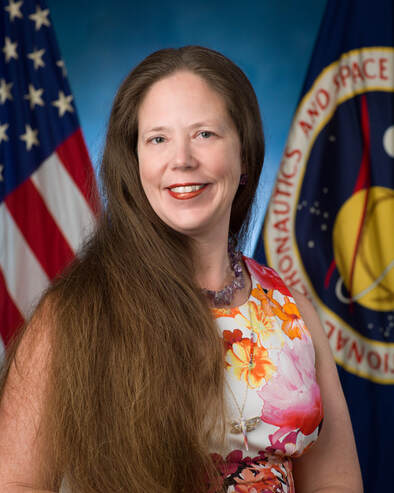
Toni Clark, P.E.

Tuesday, November 9, 2021
4:00 PM - 5:30 PM

FREE for members and students, $10 for non-members

This webinar is being co-presented with the IES-Houston section. You will receive a webinar link in an email closer to the presentation.
Former NASA Administrator Aaron Cohen once said, “Let’s face it, space is a risky business.” These risks are evidenced as we have watched astronauts launch from Earth on rockets, deploy satellites into orbit, construct the International Space Station, and walk on the Moon. Looking to the near future, NASA, along with international and commercial partners, are actively developing the Artemis Mission vehicles and systems. It is these systems that astronaut crews will use to return to the Moon and prepare to travel to Mars.
As NASA prepares for Artemis, countless designers, engineers, and researchers are working to identify and understand mission risks, as well as develop the technologies that will allow astronauts to overcome them. One such risk to be addressed is Lunar Surface Lighting. Artemis missions will take astronauts to the Lunar South Pole, a mostly dark region where the sun never rises much above the horizon. These low sun angles create a more challenging environment by casting long shadows which mask a hazardous terrain. As such, a surface lighting system must be developed that allow astronaut crews to operate safely and efficiently.
During this presentation, we will review, from a lighting perspective, the challenges of operating in space, and discuss how many of these lighting challenges have previously been addressed through task planning, optical design analysis, and employing Human-Systems Integration methods. Additionally, we will detail the challenges created by the Lunar South Pole environment, as well as how NASA is applying industry research to develop robust operational solutions which meet power and mass constraints. 
About the Speaker:

Toni represents both NASA Johnson Space Center’s Human Health and Performance Contract and Leidos Inc. as a Fellow for Spacecraft Lighting Environments. At Johnson Space Center, she is the Lighting Lab Technical Lead.

Toni is a subject matter expert in the development of spacecraft lighting architectures, developing requirements for the design, test, and verification of lighting technologies at Johnson Space Center, providing leadership and representation of NASA interests among stakeholders that require lighting and display systems for spaceflight vehicles. She provides understanding on the development of lighting systems and evaluation of light using photometric and spectrographic test equipment. She translates human factors and habitability research for engineering clients into metrics that can be used for hardware and integrated system design and verification. Toni maintains operation of a lighting test facility for controlled testing and evaluation of light sources and camera/lighting interfaces for systems development for end item performance verification and provides leadership in research and publication on human factors and lighting system design. In these roles, she supports the International Space Station, Orion, Gateway, and Lunar Surface exploration programs. Over her career in the Lighting Lab, Toni have been a leader in innovation, responsible for authoring and winning seven JSC Innovation Charge Account research grants, and one NASA Human Research Program Omnibus research grant.

Toni’s background before the Johnson Space Center’s Lighting Lab showcases experience over a wide range of industries and engineering practices. Over her career, she worked in facility design engineering, astronaut training, flight hardware design, ground support equipment design, and large-scale industry test and measurement verification systems. She applies the background in industry to be able to navigate a path between human factors concepts and engineering design and verification activities.
Check out our website