Greetings!
On June 18th, Human Rights Watch published the following report on Afghan schools and the effect of the pandemic:
"Afghanistan’s schools were in crisis before the pandemic. The number of children studying is falling in many provinces as conflict escalates and donor funding ends. Girls were already behind; Afghanistan has many more schools for boys than girls, and by upper secondary school, fewer than 36 percent of students are girls.
But now things are even worse. Online study works for few students. The World Bank estimates that only 14 percent of Afghans use the internet, and with 55 percent of people below the poverty line, many families cannot afford internet or devices to access it. With only 30 percent of women and 55 percent of men literate, many parents cannot help their children study.
Girls may be less likely to make it back to school. Respondents to the Human Rights Watch survey said that out-of-school girls face greater housework burdens, social isolation, and less internet access. A 2019 study found Afghan women spent 18.7 hours a day on childcare, care for others, preparing food, and cleaning, while men spent 5.6 hours a day on these tasks. Since the Covid-19 outbreak, caregiving responsibilities have increased dramatically around the world, often pushing women out of paid employment.
Abuse at home is another risk. One respondent wrote, “Afghans live in big families.… If they stay home every day it leads to family violence and children are the victims normally.” Thirty-five percent of Afghan girls marry as children, and being out of school is associated with child marriage. Afghan girls who did not study are 3 times as likely to marry before age 18 as girls who completed secondary education.
The Afghan government and its international donors should work to minimize the impact of the pandemic on women and girls."
We have provided assistance in that world for 17 years, improving as many lives as we can. We're not leaving, downsizing or reducing our commitment..
Recently the Afghan government announced private schools could open while keeping the public schools closed. Following the announcement we developed policies and conditions required to open our libraries. Four of our ten were opened on July 4th, a cause for celebration in many households. We're planning to open a fifth soon.
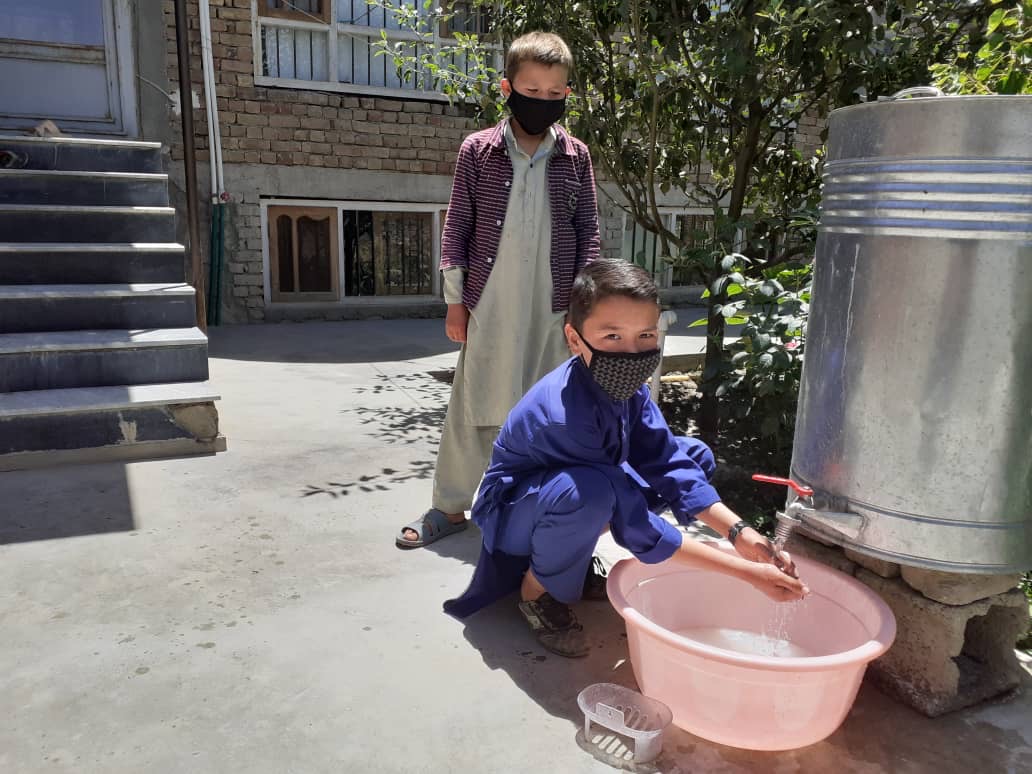
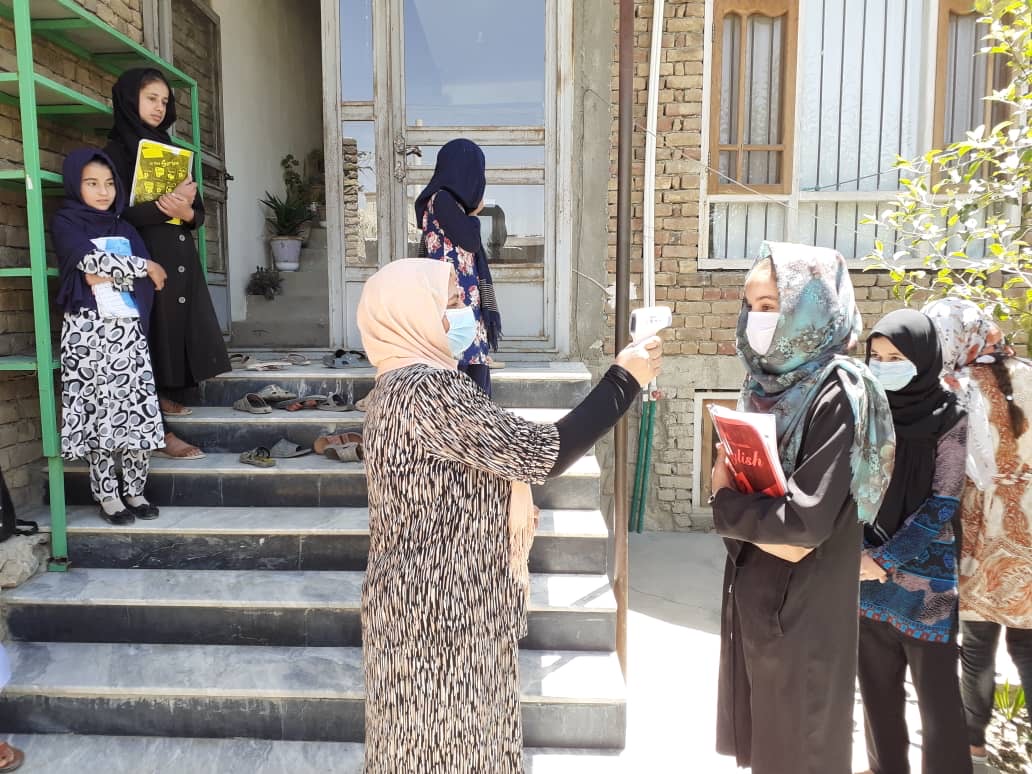
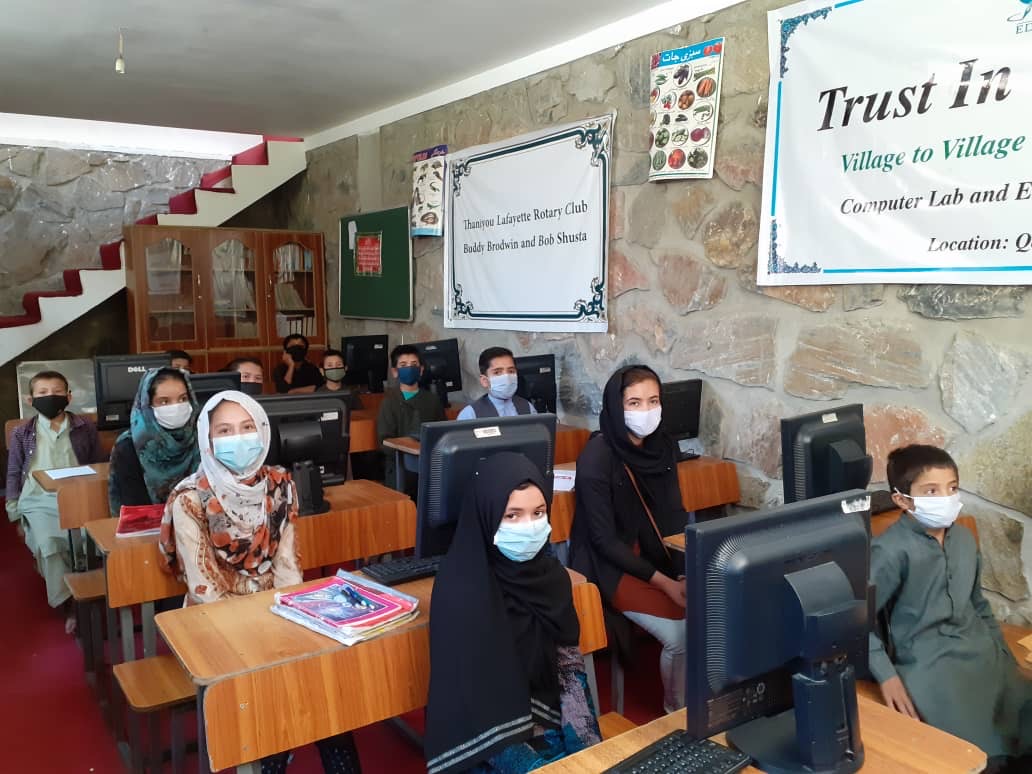
Below are photos of the library opened in Wahid's basement. We provided forehead thermometers and reduced the number of children who could use a computer from two to one. Children wash their hands before they enter and upon leaving a library
Social distancing is observed as much as possible and everyone must wear masks. The keyboards and surfaces they come into contact with will be sterilized throughout the day. To address the reduced capacity problem library visits will be limited to one hour, until we learn what the utilization numbers are. Understandably, there are families that don't feel comfortable allowing their children to use the libraries. We'll see how this goes before opening more.
Needless to say children were excited to get out of their house and continue their education. Incidentally, before they were closed, utilization of the ten libraries was over 700 a day (60% girls and 40% boys). We can't achieve 700 now. We'll do what we can for as many as possible, hoping to add more in the future.
Trying and dark times were just made brighter for a few hundred Afghan children and their families
Happy belated 4th,
Budd