|
Friends of St. Marks Wildlife Refuge
Reflections Newsletter - June 2025
| | |
Friends President's Message
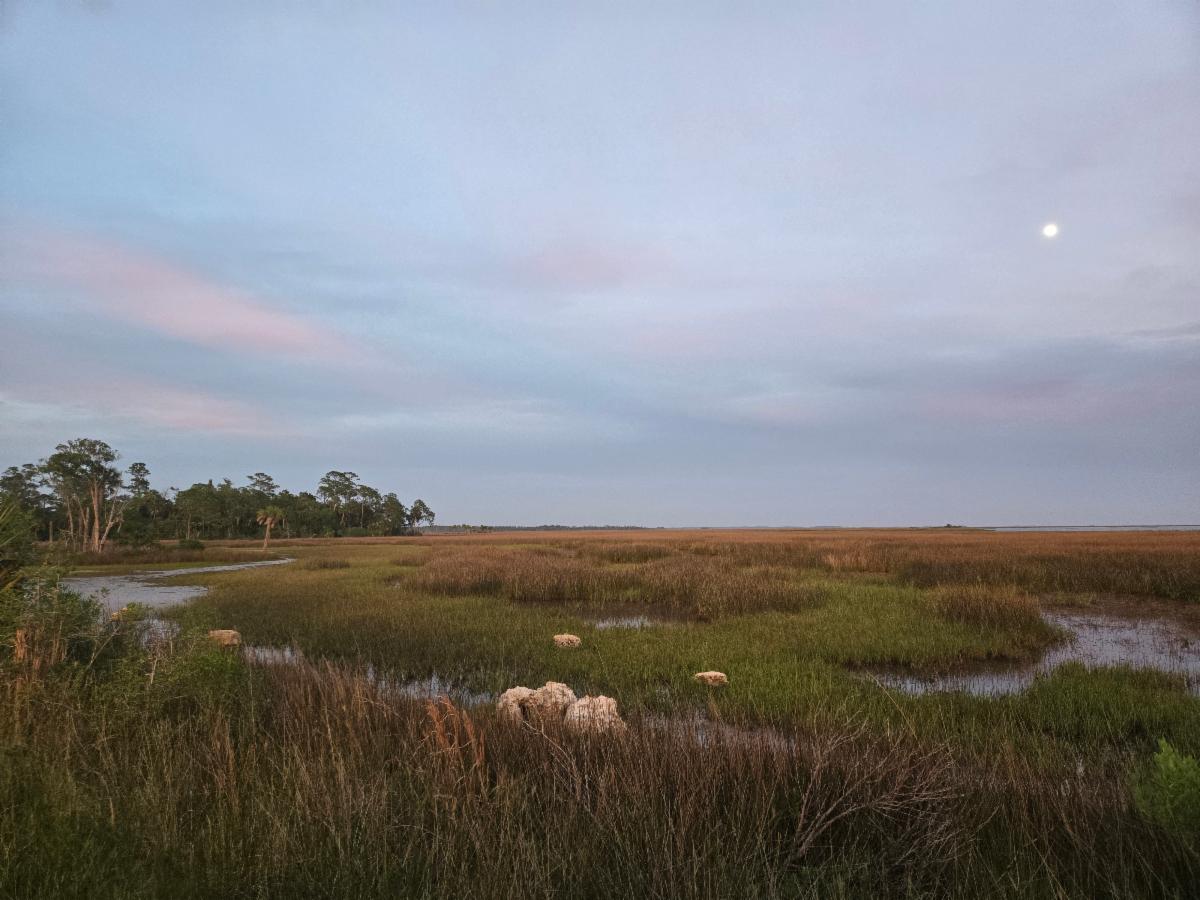
Text and Photos Courtesy Katasha Cornwell
Pressure
One of my favorite quotes comes from Billie Jean King, the tennis legend whose career spanned the 1960s through the early 1980s: “Pressure is a privilege, and champions adjust.” I came across this simple but powerful reminder years ago in a book by Dave McGillivray, the race director of the Boston Marathon. While it’s clearly a fitting mantra for someone training for a marathon or other major athletic challenge, I’ve found it applies just as well to my professional and volunteer life.
When things get tough—when we’re feeling the strain or facing an unexpected challenge—I try to think of it not as a burden, but as an opportunity. It's a chance to support your team, your co-workers, your family, or even just to push yourself a little further to reach a goal. One of my favorite consulting partners used to say something along the same lines: “If it were easy, they wouldn’t need you.” It’s a helpful reminder that being needed often comes with a little bit of pressure.
Lately, both your Board and the Refuge staff have faced their fair share of pressures, and they’ve responded with energy and dedication. In this issue, you’ll read about some of those wins and recent positive changes, from welcoming our new biology interns and seeing improvements across the Refuge, to spotlighting our signature preschool program and previewing upcoming Sunday talks.
And if you’re looking to step back and unwind, consider a visit to the Refuge to cast a line and enjoy some time by the water. Because while “pressure is a privilege,” it’s also important to take time to relax and recharge.
Before you head out, though, we’re still looking for a volunteer Nature Store Manager. If you—or someone you know—might be a good fit, please take a look at the ad later in this edition. We’re excited to find the right person to join our great team.
It is my privilege to volunteer with such a thoughtful, committed group of Board members, Refuge staff, and Friends. Your support, your time, and your generosity make a big difference, and I’m incredibly grateful for all you do.
A special thanks to our Board, recently reconfirmed at the Annual Meeting, and to all of our Friends who continue to give and show up in so many ways. Please don’t forget to invite your friends to become our Friends.
| | |
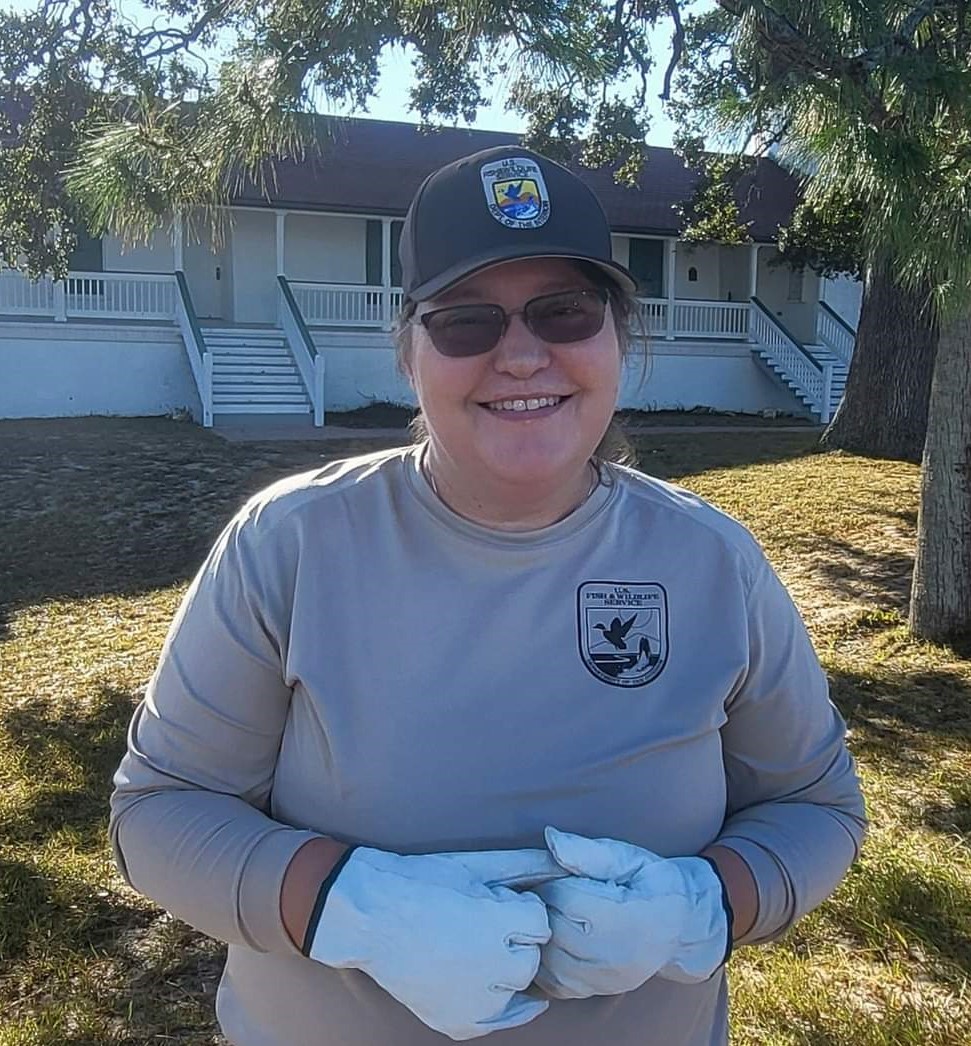
Meet Leslie Peters
Text and Photos Courtesy Leslie Peters and Katasha Cornwell
Leslie Peters is a Supervisory Park Ranger for the St. Marks National Wildlife Refuge. She has over 20 years’ experience working for the Department of the Interior in the National Park Service, and Bureau of Land Management. As a public servant it has been a delight for her to be able to help visitors connect to their public lands.
In the short time Leslie has been at St Marks, she has worked to bring visitors some exciting opportunities and improvements to our Refuge. To name a few, she hosted the night sky viewing event last year, improved the trail to Headquarters pond, planted a butterfly garden, hosted a successful Monarch festival, and has helped to hire some talented staff offering new programs like Jr. Rangers over the summer.
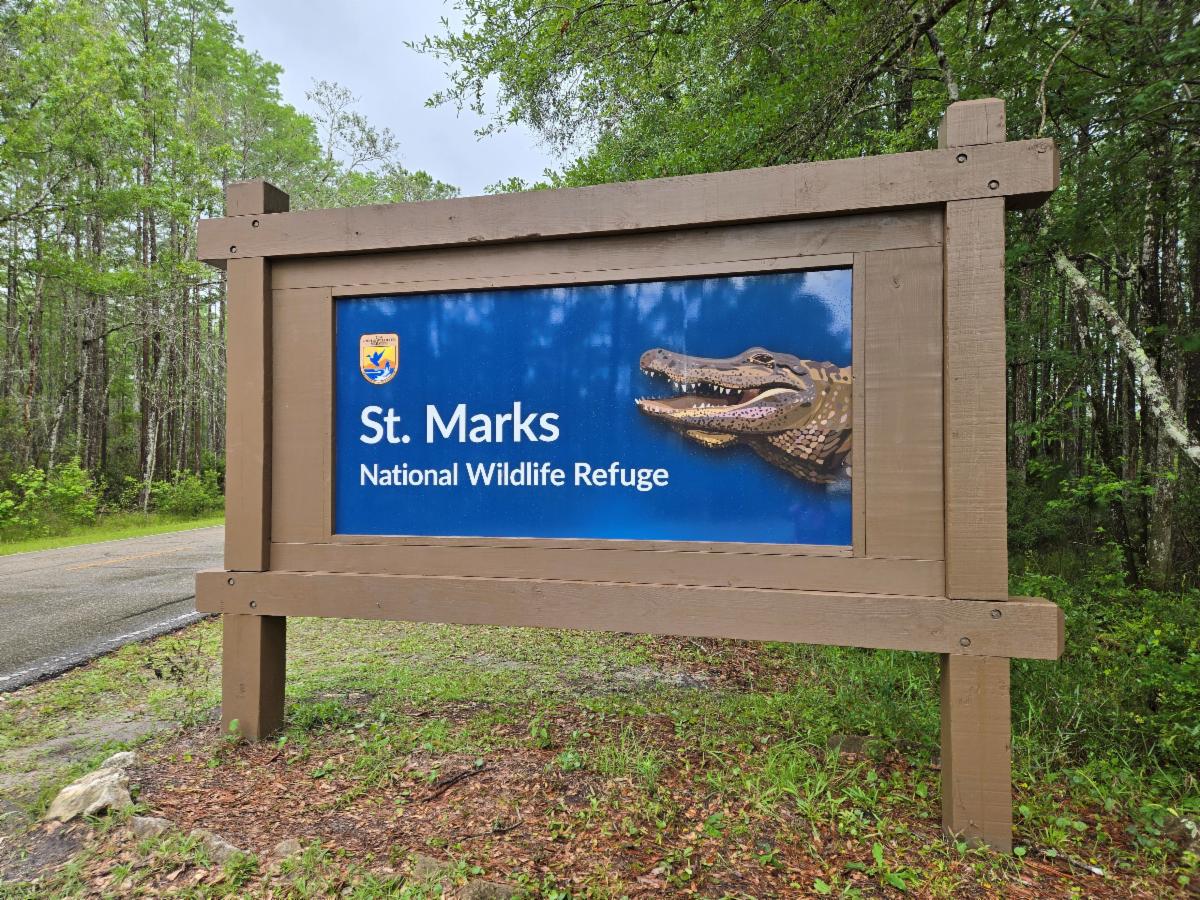
Leslie's most recent success story is the new sign as you enter the Refuge from Lighthouse Road. Leslie is a powerhouse and has more creative ideas coming soon. Come down and check out all of her team's hard work.
| | |
New Biology Summer Interns
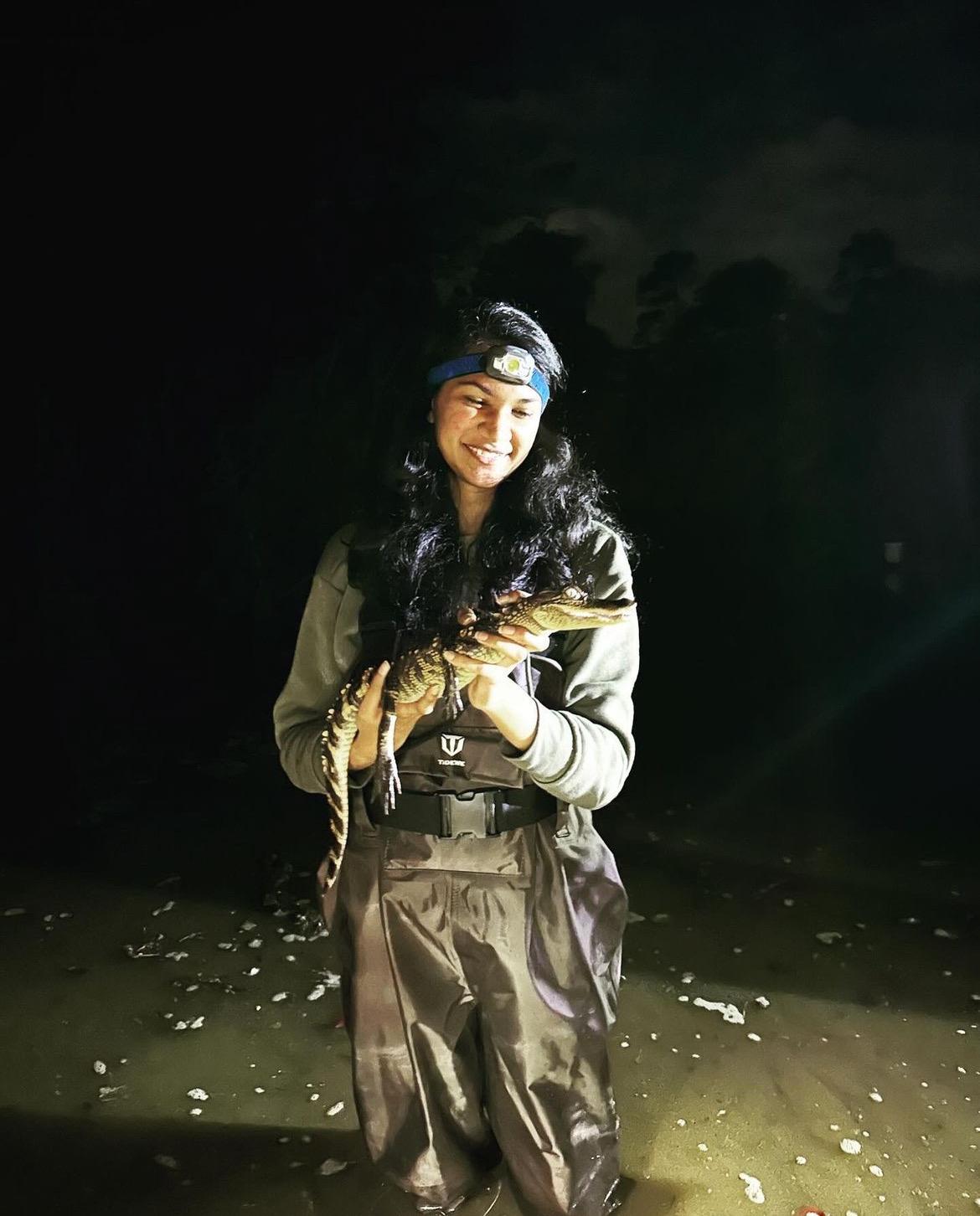
Hi everyone! My name is Sofia Monteiro, and I am one of the 2025 interns at St. Marks NWR! I grew up in Georgia visiting many of the National Parks and National Forests in the Southeast. I often went hiking, birding, or herping and was determined to learn all I could about the wildlife around me. My time spent outside grew my passion for wildlife conservation.
I am especially interested in birds and herpetofauna. My interest in birds began when I started doing wildlife photography on my hikes. I wanted to learn more about my subjects in order to best capture them in their element and better understand their behaviors.
I attended the University of Georgia and graduated with a B.S.F.R in Fisheries & Wildlife with a Wildlife Science Emphasis in May 2025. I plan to gain more experience doing fieldwork and working with a variety of taxa before I apply to graduate school. I did undergraduate research at UGA and want to pursue a career in research, likely with birds.
I am excited to work on managing and restoring habitats to contribute to recovery efforts for frosted flatwood salamanders and red-cockaded woodpeckers at St. Marks! These along with many of the other species here are in need of our help to manage their habitats and restore their populations! I am especially excited to gain more experience with red-cockaded woodpecker management and go on to continue working with birds in my future.
This internship will help me develop the skills I need for graduate school and help me dive deeper into my passions. I am grateful for the opportunity to work in such a beautiful place and learn so many new things. I am certain that my time at St. Marks will be beneficial to both my future and the future of the wildlife we are trying to protect!
| | |
Hi everyone! My name is Julia Thomas, and I am incredibly excited to be a Biological Intern at St. Marks NWR for the summer of 2025. I was born and raised in Georgia where I grew up loving the outdoors. I have always had a passion for wildlife and conservation, stemming from working alongside my dad to restore the Longleaf Ecosystem on our family land in South Georgia. Getting to help him on this project gave me my first taste of working with wildlife and I quickly knew this work was what I wanted to do for the rest of my life.
I am currently a sophomore at the University of Montana and am studying Wildlife Biology and Ecological Restoration. Between classes I enjoy running, backpacking, and reading. I am also a member of the Wildlife Society, Book Club, and Honors College on campus. I’ve had many great opportunities to volunteer on wildlife projects during my time at UM including hands-on experience working to monitor watershed health with the Watershed Education Network as well as volunteering for a graduate student to help process camera trap data. I am extremely grateful for all of the opportunities I have had and am excited to continue my education, taking with me everything I learn while at St. Marks.
After graduation, I hope to continue with seasonal work around the country to gain a variety of experience with different species. However, I hope to eventually end up working long term in the Southeast and pursuing a masters degree. I am extremely passionate about working to protect threatened and endangered species as well as managing human and wildlife conflict. Working at St. Marks will give me the opportunity to build my skill set and work with many of the incredible species present in the refuge. I am looking forward to continuing to learn and work here in Florida and being able to contribute to the work that St. Marks does. I am extremely excited for this opportunity and know that it will help me with whatever work I pursue next.
| | |
Fishing at the Refuge: Reconnecting with Nature and Finding Inner Stillness
Story by Beth C. Schwartz
Photos courtesy of Craig Thomas and David Woodham
As any visitor knows, the variegated vastness of the St. Marks National Wildlife Refuge offers humans so many ways to joyfully occupy themselves. Despite the abundance of enticing choices, however, over the many years I’ve been going to the refuge, I’ve never been tempted do anything other than what I’ve always done there: some combination of hiking and birding, after which I reward myself with a picnic under the gazebo overlooking Headquarters Pond, or—if I feel like tangling with some chatty, voracious grackles—at a picnic table beside Picnic Pond. Because I’ve been so single-minded about my refuge activities, I was a bit surprised when I discovered that two acquaintances regularly visit the refuge with an entirely different vision in mind. Their descriptions of fishing at the refuge opened a whole new world for me—or, more accurately, reconnected me to a dear old world, when, as children, my brother and I spent many quiet, happy hours fishing with our dad on Long Island. So evocative were these fishermen’s reflections that they resurrected memories I had not thought about for many years. Perhaps their stories will open old—or new—worlds for newsletter readers, as well….
| |
David Woodham, who grew up in Dothan, Alabama, has been fishing since he was five or six. He discovered fishing on his own, and he typically fished by himself or with the neighborhood kids. As a child, he gravitated toward freshwater fishing, mostly in ponds. He moved to Tallahassee after completing veterinary school in 2004 and discovered the refuge soon after he settled into North Florida.
Craig Thomas also began fishing as a child and was shaped by his early angling adventures in Gainesville, Florida, and Tuscaloosa, Alabama. Introduced to fishing by his dad and granddad, he fondly remembers bass fishing with them: “Sitting in the jon boat listening to their stories and catching fish together is instilled in my bones,” he reflects. He moved to Tallahassee in 2007 to start his acupuncture practice and learned about the refuge from online fishing forums, fishing blogs, and his patients; he started visiting the refuge about 15 years ago.
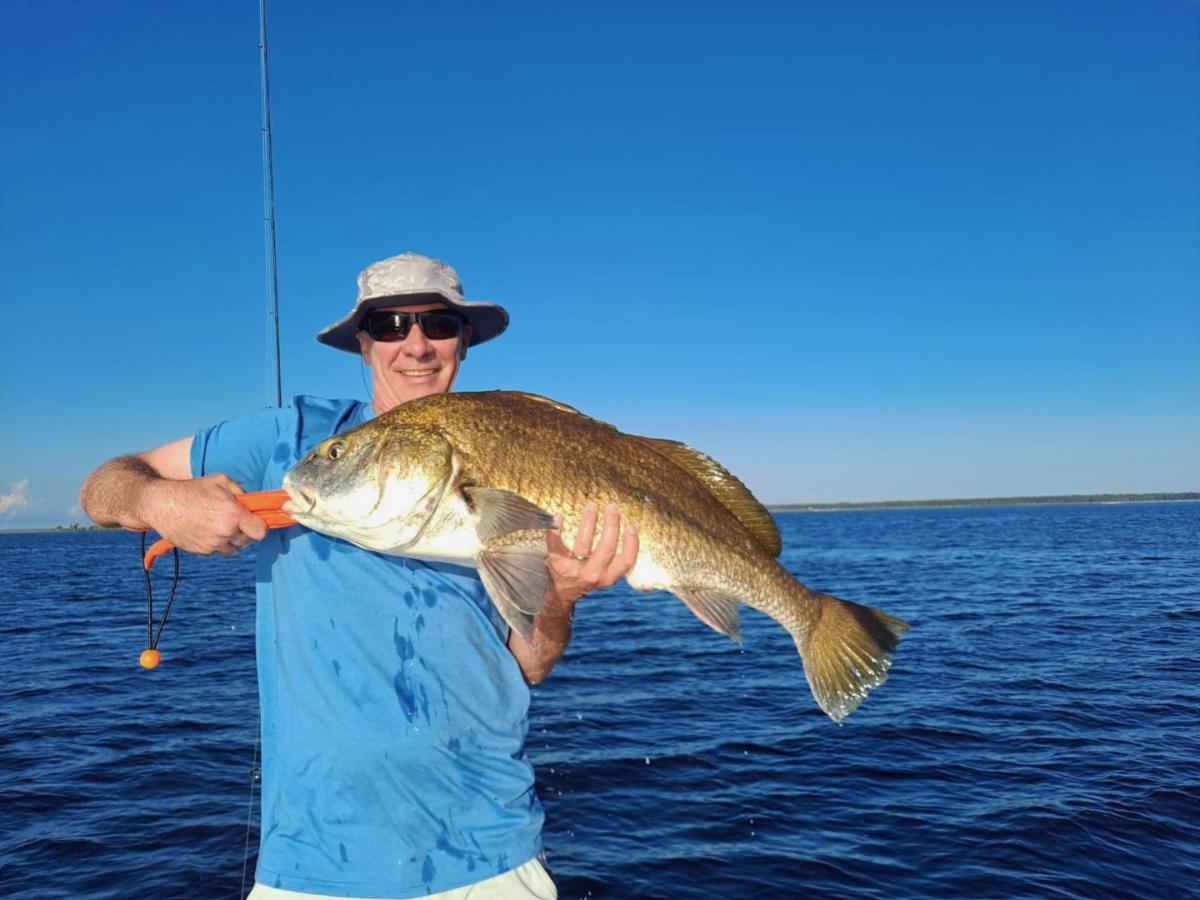
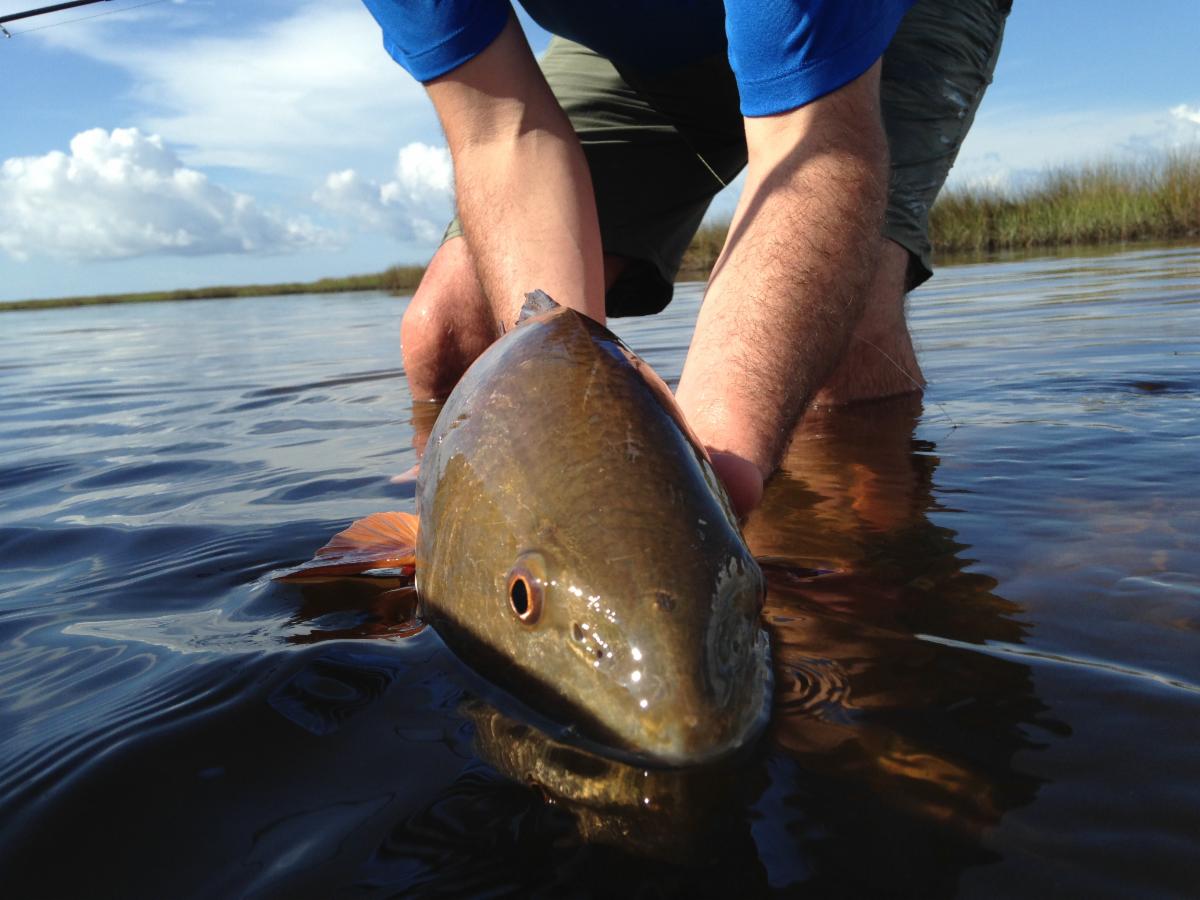
David likes to fish the creeks around the lighthouse. He has a fiberglass boat, however, and fiberglass is highly vulnerable in the refuge’s rocky creeks, so when he first started fishing around here, he ventured to the fort rather than the refuge itself because, as he explains, “I’d much rather spend my time fishing than slowly navigating around all the rocks.” Later, though, he began fishing with a friend who has a small, aluminum boat, which is far better suited to the jagged creek beds, and now, he and his friend go to the refuge two to three times a month, where they fish for redfish, trout, flounder, and sheepshead. He keeps only what he can eat fresh; anything more, he releases.
| | |
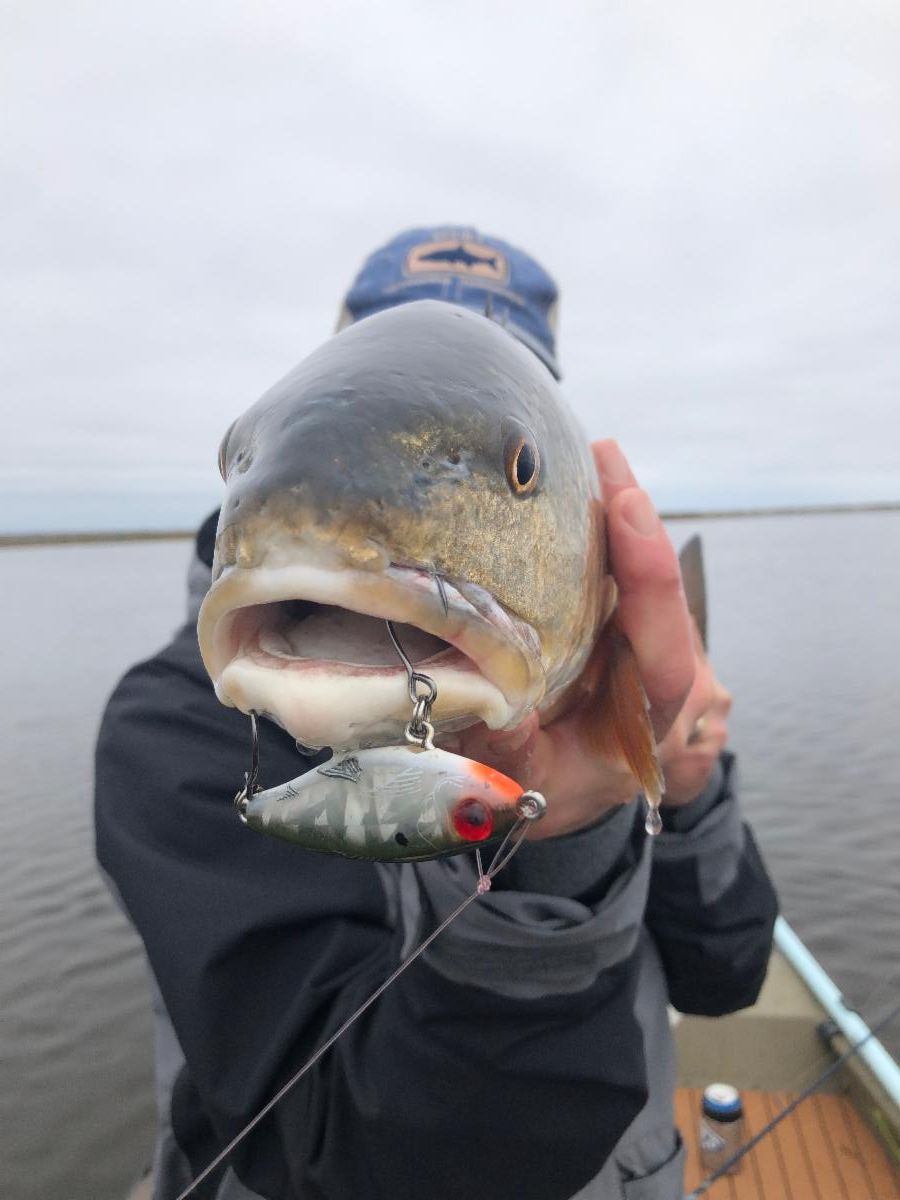
Craig likes fishing the bay by the lighthouse. When he first started going to the refuge, he shore-fished, mostly from the jetty. But he now has a one-person fishing kayak—a perfect choice for him: “I love being in the kayak. It’s so close to the water that I can reach over and touch it; I can feel the gentle wave action, the water lapping against the side of the boat. Everything goes away, all stresses, and it’s just you, trying to catch fish. That’s my Zen,” he admits. He goes to the refuge “as often as life, and work, allow,” and he angles for edible fish—especially redfish, trout, and flounder. (One memorable morning, he accomplished an “in-shore slam”—when you catch all three in one day!) He only brings home enough for his family to eat in one meal; anything beyond that is released.
The fishing experience for both men starts well before most humans are awake and functional. David gets on the water at first light: “Only birders and fishermen are at the refuge at first light. It’s calm and peaceful, watching the sun rise,” and he shares this intense, early-morning silence with loons, ducks, red wing blackbirds, baby bobcats, and deer. He puts the boat in at the lighthouse ramp and heads east of the lighthouse, to the creeks between the lighthouse and the Aucilla River.
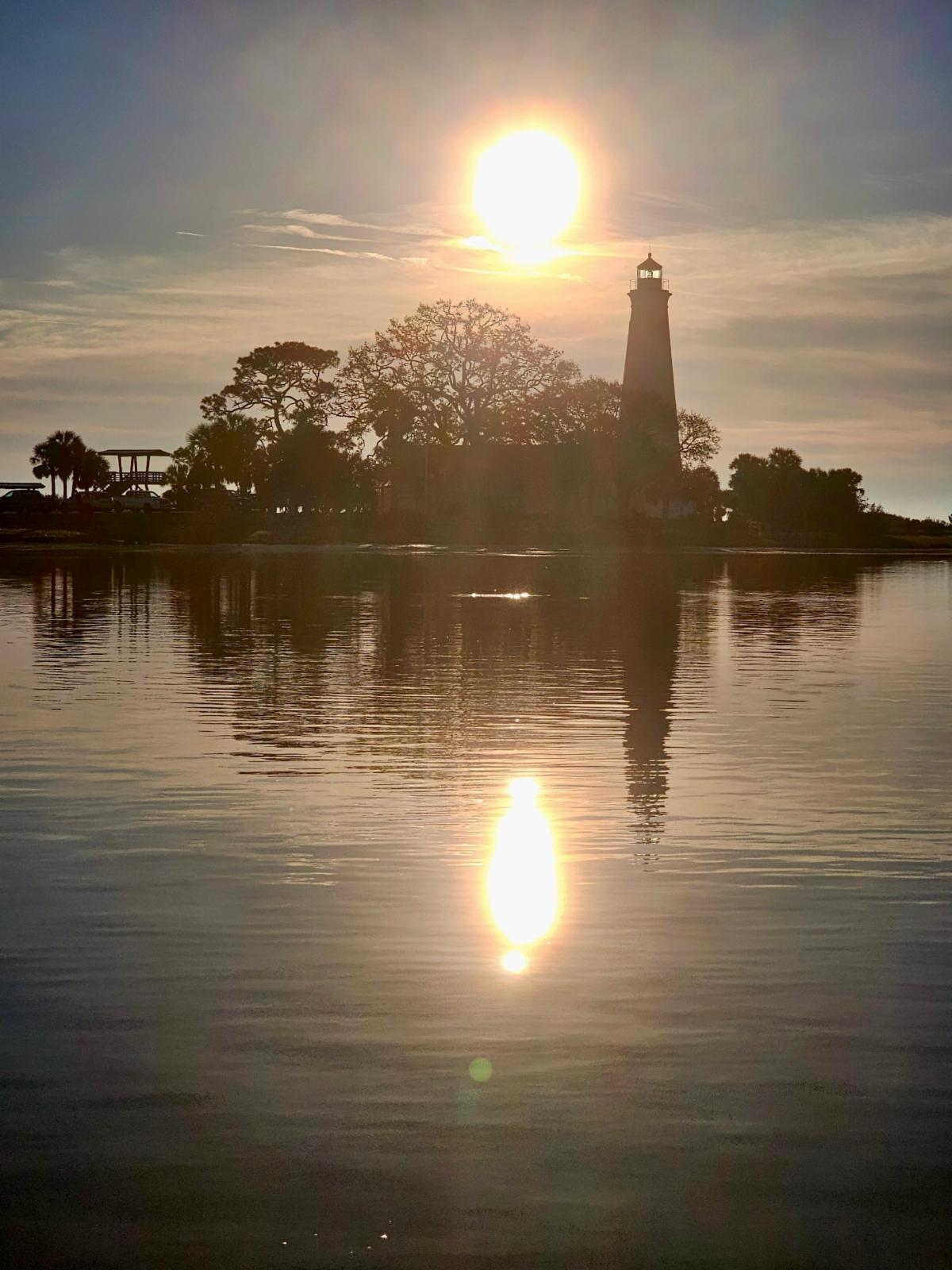
Craig also gets to the refuge well before dawn. “The fish start biting about an hour before sunrise, when there’s just a hint of light,” he notes, and he puts in his kayak at the lighthouse and paddles into the bay. “As I make my way, I always stop to look back at the refuge, especially the lighthouse”—a view he calls “iconic.” He recalls the beauty of “watching the sun rise behind the lighthouse through the pines and palms, the sky a canvas of pinks and oranges and purples and a smoky blue green, the trees silhouetted against the sky, the calm of the grass marshes, the sparkle on the water, the birds waking up, the stillness, the quiet.”
| | |
Even though to an onlooker, fishing might look like it simply comprises sitting around passively, holding a pole above the water, both men emphasize that fishing is not easy. David adds the challenge of using artificial bait (made of feathers and rubber). Also challenging is that he opts for “sight fishing—literally, we fish for what we can see,” describing his process like this: “The water is very shallow, usually about six inches deep, and we use a long pole to move the boat through the creek very slowly. Our aim is to sneak up on the fish and try to get them to bite the artificial bait.” To succeed, the sight fisher must also be attuned to the perfect conditions, he adds: “nice, low tide, with clear water—but not too clear—and not too much wind.”
For Craig, the challenges of fishing involve “learning about and getting better at understanding fish habits and patterns. This means you have to pay attention to the tides, the underwater topography, the time of day, where specific fish like to hang out and feed, and how fish adapt to their environment.” To be a successful fisherman, Craig knows he has to adapt to the fishes’ behaviors and adaptations. The fish have taught him many lessons over the years, among them, “Follow the birds, for that’s where the bait and predator fish are”; and “Fish love structure, like oyster beds and grasses, so that’s where you have to go to find them.”
| | |
For David, “Fishing is about hope—that around the next bend, with the next cast, with something you do different, you will increase your chance of success.” Fishing is also about being outside, about the serenity, the quiet, and about the pleasure of seeing things you weren’t expecting: manatees, porpoises, and osprey, for instance; or the playful entertainments of juvenile dolphins as they ride the bow wave of the boat. And for Craig, fishing is about science, but it’s also about nature, its timelessness, its ancient-ness, and about being in a stunning, hushed environment. For him, “The act of fishing is an act of meditation.”
Undeniably, fishing is also about the adrenaline rush you get when a fish gets on your hook—"the rod bending, the line tightening, the feel of the fish struggling, using various strategies to free itself and cut your fishing line,” as Craig describes. And that too is a euphoria to which any angler can relate.
P.S.: Although David and Craig are partial to boat-fishing, bank anglers also have access to a bounty of perfect fishing spots among the refuge’s rivers, lakes, and ponds. One of the magnificent appeals of fishing is that it is satisfying, and accessible, to everyone!
| | |
Second Sunday
Refuge Talk Series
Special thanks to St. Marks Refuge fire crew member Travis Pollard for his outstanding talk about his rediscovery of the B-17 crash in 1944. He is pictured left with Mr. and Mrs. Ryan who unfortunately had a family member perish in that crash, but were able to attend the talk and share their family history.
While our Sunday talks are on pause over the next two months, below you will find our anticipated roster of speakers to take us through the last few months of the year. Be on the lookout for announcements and how to register for free through future emails to Friends, Facebook posts, and newsletters.
August 10 - Cheryl Spencer, FWC, Florida Black bears
Sept. 14 - Thadra Stanton, NPS, Byrd Hammock Project
Oct. 12 -Dean and Sally Jue, Butterflies of SMNWR
Nov. 9 - Don Morrow, Waterfowl of SMNWR
December - Break for the Holidays
| | |
Annual Meeting Recap
Photos Courtesy Katasha Cornwell
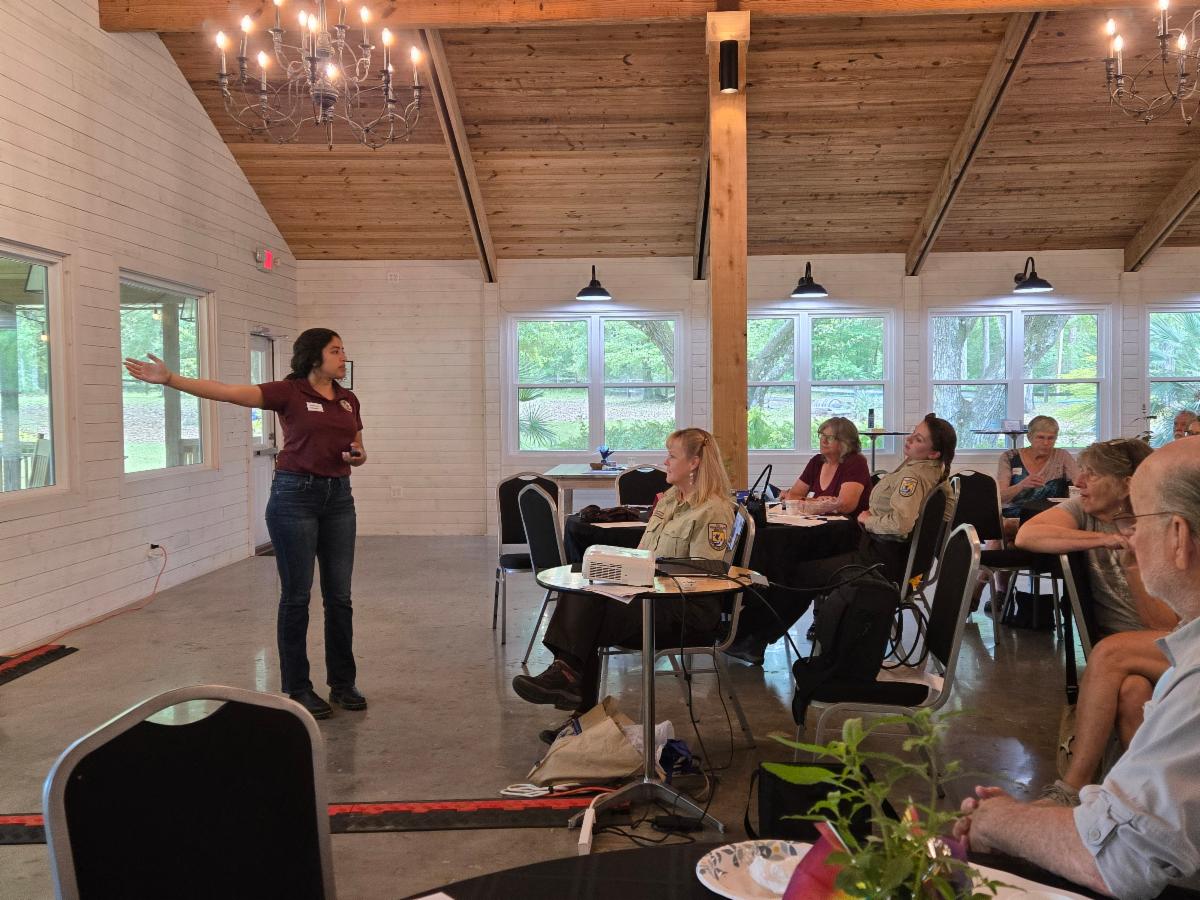
The Annual meeting is more than just a gathering of Board members, Friends, Refuge staff, and volunteers. It is a celebration of these dedicated groups and a chance for us to show our appreciation and gratitude for all that makes this Friend organization strong, vibrant, and successful in supporting our Refuge the best we can. This is also a time to provide updates and share information. Below is a brief recap in case you were not able to join the party.
Last year, we discussed planning for the future by
· Reaching more Refuge users
· Generating new and continued excitement about our signature programs
· Creating new partnerships
· Building our support of the refuge to best help them meet their mission
Hopefully, you will agree that we all have a lot to be proud of, excited about, and thankful for. Here are some of our accomplishments:
-
Conducted outreach to Congress to emphasize fully funding the Refuges
-
Enhanced our social media outreach to keep you updated with the latest events
-
Revamped the website at no cost, thanks to our amazing webmaster, Chris Akins
- Brought back the Sunday talks, starting with the one and only Don Morrow
- Acquired the last two pieces of Byrd Hammock
- Continued funding for the Lighthouse Keeper position
- Continued support for biological interns
- Provided support for an education intern who is now a full-time employee at the Refuge
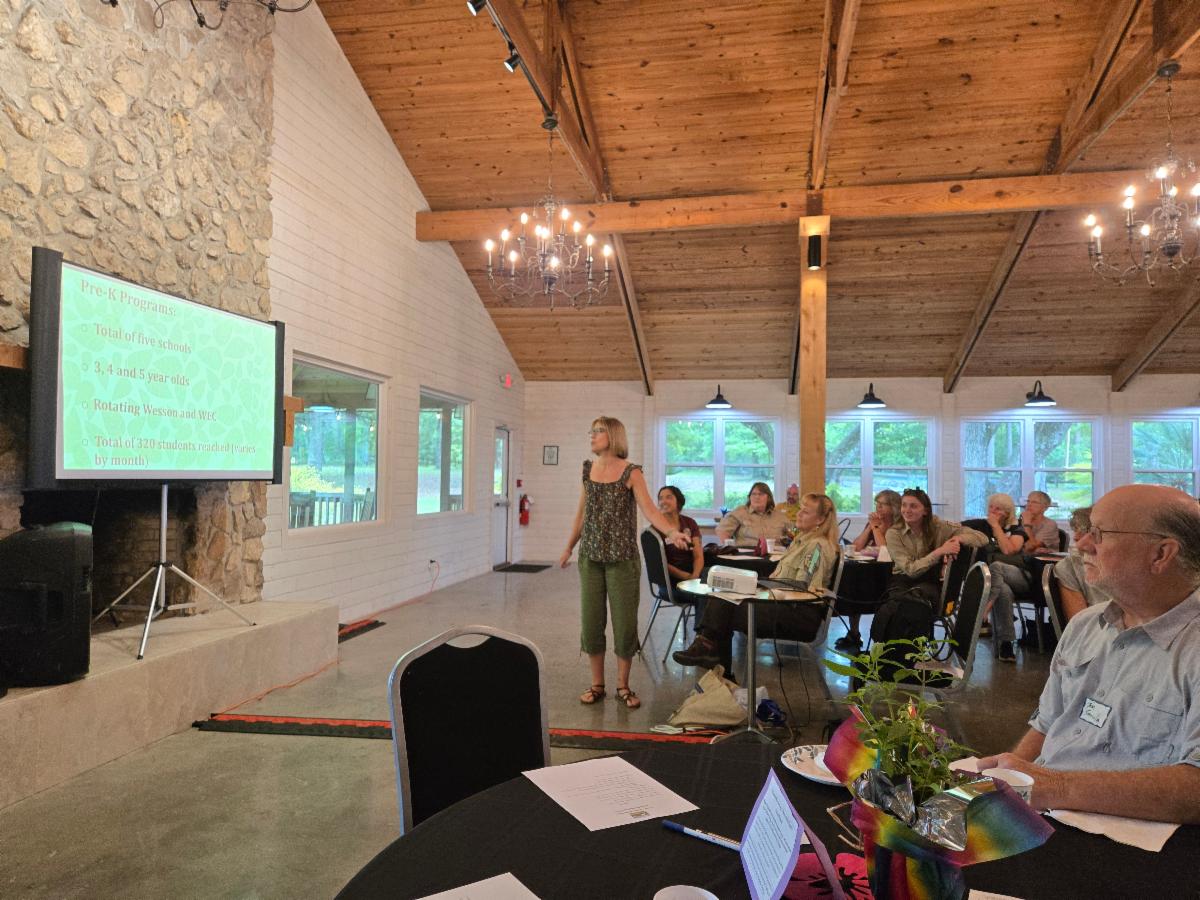
- Continued support for the preschool program, reaching children in our community
- Set new goals and objectives to guide us into the next year.
We can’t thank you enough for the donation of your time and energy and your generosity.
Here are a few stats from our Signature Programs presented during the Annual Meeting
- The Refuge had 1400 volunteer hours logged between January and May.
-
85 Red Cockaded Woodpecker nest cavities were surveyed
-
70 Frosted Flatwoods Salamander ponds were surveyed
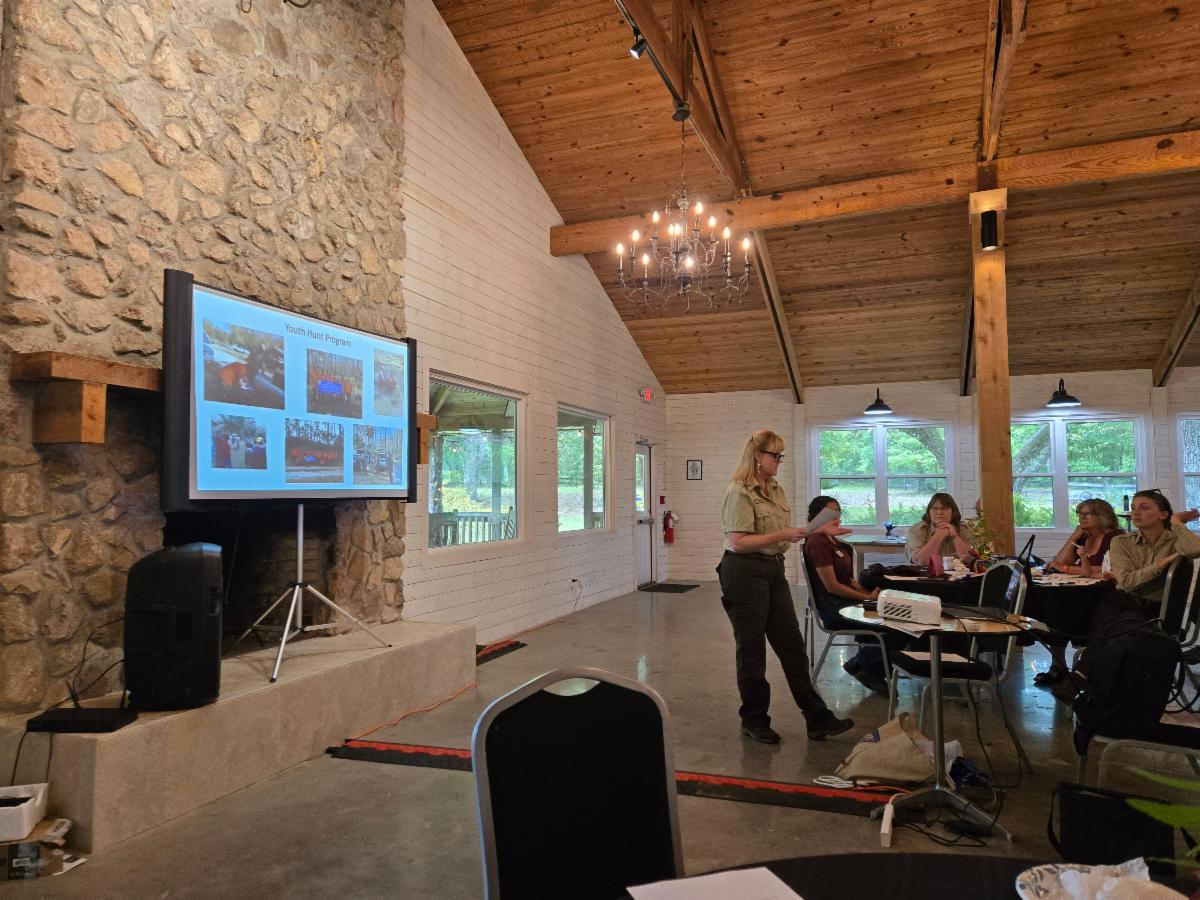
- Preschool program visited 320 students per month in Wakulla County
-
Heather Bevis, our preschool program teacher (picture below on the left) was awarded the Project Learning Tree Teacher of the Year!
- Heather and Lori (pictured above) hosted Tots on Trails for toddlers
- Our Lighthouse Keeper (Allen VanBrunt) and his team have hosted 67 open houses, put in 843 hours, and have welcomed over 7100 visitors so far this year.
| | Become a member of the Longleaf Society today by clicking this graphic. Your monthly giving provides a tremendous boost to the Friends of St Marks Wildlife Refuge to keep providing the programs and services you have come to expect from this award winning organization. | | |
We Encourage our Friends to SHARE!
As almost all of you know, the Friends give 100% of their support to the St. Marks National Wildlife Refuge. An important way for you increase that support is to share our message. Therefore, when you get this newsletter, we encourage you to send it on to a friend. You can share it via email or through various other social media. Here's the link to the Friends Newsletter page. Scroll to the "current" entry and copy the link.
Text Courtesy Phillip Pollock
| | |
Bird Reports Assist Visitors
Don Morrow, St. Marks National Wildlife Refuge volunteer and expert birder, creates concise bird-sighting reports on a week-to-week basis. Read his current and past reports here.
Photo Courtesy Katasha Cornwell
| | Have you considered including the Refuge in your will? The Friends of St. Marks Wildlife Refuge can provide information and guide you through the process. Just call the Refuge at 850-925-6121, and ask to be contacted by the Friends Board of Directors, or email us. | | |
Reflections newsletter is a benefit of membership for Friends of St. Marks Wildlife Refuge.
It also serves as an important supplement to
the Friends' website.
Both the newsletter and the web site provide members and the public information about volunteer activities and events at the Refuge.
Reflections editor: Katasha Cornwell
| | | | |