|
|
Wednesday | April 7, 2021
|
|
|
|
Our FIRST IN-PERSON
Meeting since COVID Shutdowns
|
|
The 23rd annual meeting will be educational (providing much-needed CME credits), exciting, and will offer the long-awaited ability to leave our homes and attend meetings in a safe and responsible manner.
ASIPP is working to make the program highly relevant for our changing healthcare system and environment. We will also bring you cutting-edge lectures on exciting new technology, world-renowned speakers, and much, much more.
Topics will include COVID-19, economics, burnout, social media, metabolic health, regulatory issues, scientific advances in IPM, and much more!
|
|
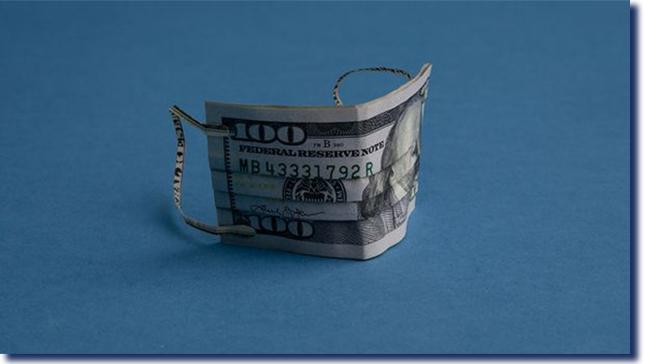
Elon Musk, Jeff Bezos, Mark Zuckerberg and six other tech titans made more than $360 billion during the pandemic, which may finally shatter the myth of the benevolent billionaire
The pandemic has been a boom time for America’s richest billionaires. The wealth of nine of the country’s top titans has increased by more than $360 billion in the past year. And they are all tech barons, underscoring the power of the industry in the U.S. economy. Tesla’s Elon Musk more than quadrupled his fortune and jockeyed with Amazon’s Jeff Bezos for the title of world’s wealthiest person. Facebook’s Mark Zuckerberg topped $100 billion. Google co-founders Larry Page and Sergey Brin gained a combined $65 billion.
Nearly all this wealth accumulation was tied to the share price in the companies the men co-founded or lead, and in which they remain significant shareholders. Amazon benefited while consumers shopped from home, as many of its bricks-and-mortar rivals struggled to keep pace. Google, Facebook and Microsoft helped power the new work-and-learn-from-home reality.
|
|
Last May, Baylor Scott & White Health, the largest nonprofit hospital system in Texas, laid off 1,200 employees and furloughed others as it braced for the then-novel coronavirus to spread. The cancellation of lucrative elective procedures as the hospital pivoted to treat a new and less profitable infectious disease presaged financial distress, if not ruin. The federal government rushed $454 million in relief funds to help shore up its operations.
But Baylor not only weathered the crisis, it thrived. By the end of 2020, Baylor had accumulated an $815 million surplus, $20 million more than it had in 2019, creating a 7.5 percent operating margin that would be higher than most hospitals’ profits in the flushest of eras, a KHN examination of financial statements shows.
|
|
CMS began recouping accelerated Medicare payments made to providers and suppliers to help temporarily relieve financial pressure from the pandemic.
The agency began recovering the payments March 30. CMS said the recoupment will begin on the one-year anniversary of when the provider received the first COVID-19 accelerated and advance payment.
"Please be sure your billing staff are aware that the recovery has begun, or will begin soon but no sooner than one year from the date we issued the CAAP to you," the article reads.
|
|
If you have a question, please email Savannah Gold at sgold@asipp.org or call 270.554.9412, ext 4219.
|
- Selected manuscripts will be presented in an Electronic Poster Presentation
- Top 25 will be published in the Pain Physician journal.
- Top 10 will be selected for the Abstract Presentation at the Annual Meeting
|
|
It's low-risk, but you still probably shouldn't do it, agency says
Those fully vaccinated against COVID-19 are no longer required to test before or after traveling domestically or internationally from the U.S., the CDC said in updated guidance on Friday.
Unless required to do so by the international destination, fully vaccinated people no longer require a test, and they no longer have to self-quarantine after returning to the U.S., unless required to do so by a state or local jurisdiction.
|
|
Policies are headed in the right direction, experts say
The priorities were released last Thursday by the White House Office of National Drug Control Policy (ONDCP).
|
|
Watertown Regional Medical Center in Wisconsin has replaced all of its anesthesiologists with certified registered nurse anesthetists (CRNAs), sparking outrage on social media and reigniting debate about the role of advanced practice nurses.
On March 28, an undated letter was posted on Twitter announcing that the anesthesiology staff at the small Midwestern hospital would be replaced by CRNAs. The letter migrated to Facebook and several doctors used it as an opportunity to express concern.
|
|
A top official in the European Medicines Agency said in an interview published Tuesday that there is a link between the AstraZeneca coronavirus vaccine and blood clots.
"In my opinion, we can say it now, it is clear there is a link with the vaccine. But we still do not know what causes this reaction," EMA head of vaccines Marco Cavaleri told Italy's Il Messaggero newspaper.
He said that "in the next few hours, we will say that there is a connection, but we still have to understand how this happens".
|
|
Pain Medicine Case Reports (PMCR) and Editor-in-Chief Alaa Abd-Elsayed, MD, PhD would like to invite you to submit case reports and case series to the PMCR journal. Your article will be published free of charge.
Open access journals are freely available online for immediate worldwide open access to the full text of published articles. There is no subscription fee for open access journals. Open access journals are no different from traditional subscription-based journals: they undergo the same peer-review and quality control as any other scholarly journal.
Interested in becoming a member of the PMCR Editorial Board?
Editorial board members are asked to review 2-6 manuscripts per year. Please submit your most up-to-date CV to sgold@asipp.org for consideration.
For more information or to submit your articles, click here.
|
|
Ashwin V. Rangavajjula, MD, Toyin Okanlawon, MD, and Mercy Udoji, MD
Abstract
BACKGROUND: The radial nerve is especially vulnerable to injury due to its location near the humerus. When acute pain becomes chronic and surgical repair is no longer an option, it is necessary to have non-opioid, non-pharmacological methods of pain relief.
CASE REPORT: A 63-year-old man presented with severe radial nerve neuralgia secondary to traumatic left upper extremity injury 40 years ago. After several unsuccessful surgical interventions and failing medication management, he was sent to pain management as a last resort prior to elective amputation of the left upper limb. After initial evaluation, the patient underwent a diagnostic ultrasound-guided radial nerve block at the midhumeral level with complete but short-lasting relief of his pain. Shortly after, we performed ultrasound-guided alcohol neurolysis of the radial nerve at the same level. This treatment resulted in 100% pain relief for 10 months with gradual resumption of pain to previous levels at 12 months post neurolysis.
|
|
Abstract
Background: Chronic pain, especially low back pain and hip pain, has been a growing public health concern that affects over 100 million Americans annually. Radiofrequency ablation (RFA) has distinct advantages over other chronic pain management modalities and its use has been increasing over the past decade. Among the growing population with comorbid conduction disorders and persistent pain, RFA and its potential interference with implantable cardiac devices is of concern.
RFA is becoming a foundational element of persistent pain management and has been shown to be effective in a multitude of chronic pain syndromes. Cardiac implantable electronic devices (CIED), such as cardiac pacemakers or implantable cardioverter defibrillators, have been used in the treatment of cardiac conduction diseases for a number of decades. With our aging population, these diseases have increased in both incidence and prevalence. Chronic pain and cardiac conduction diseases are both common in our increasingly aging population.
OBJECTIVES: This study aims to determine if the literature supports the hypothesis that patients with CIEDs can safely use RFA with minimal to no interaction.
|
|
Abstract
Background: Pain originating from the posterior sacroiliac complex is notoriously difficult to effectively treat due to its complex anatomy and variable innervation. Data on radiofrequency ablation (RFA) is limited. The Abbott Simplicity probe creates 3 monopolar lesions along the medial aspect of the sacroiliac joint and 2 bipolar lesions between the active portions of the probe. This device has been studied previously with improvement of pain-associated disability and pain reduction, but insufficient data is present to determine its utility at this time. Using the most recent literature for the potential innervation of the posterior sacroiliac joint, it is reasonable to explore this novel device and its ability to treat sacroiliac joint pain.
OBJECTIVES: Identify the percentage of improved posterior sacroiliac complex pain and improved function in patients who completed posterior sacroiliac complex radiofrequency ablation using the Simplicity probe.
|
|
Since this malpractice insurance program officially launched in November 2018, ASIPP has signed up hundreds of providers with an average savings of 30%. This is professional liability insurance tailored to our specialty and will stand up for us and defend our practices.
Norcal Mutual is 'A' Rated by AM best and is license in all 50 states. To read a few important points to keep in mind about the program, including discounts, administrative defense, cyber coverage, aggressive claims handling, and complimentary award-winning risk management CME activities, click here.
|
|
ASIPP® is now offering our members the benefit of a unique revenue cycle management/ billing service. We have received a tremendous amount of interest in the ASIPP® billing and coding program.
Click here to learn more about the negotiated rate for practices and more!
|
ASIPP® has formed a partnership with Henry Schein and PedsPal, a national GPO that has a successful history of negotiating better prices on medical supplies and creating value-added services for the independent physician. Working with MedAssets, PedsPal provides excellent pricing on products like contrast media that alleviate some of the financial pressures you experience today.
|
|
up-to-date news related to you, your practice, and your patients!
|
|
|
|
|
|
|