Greetings,


The end of the year is quickly approaching and we have a couple fun events coming up that we want to share with you!


We have also included our latest blog posts below. Camrie and Brett discuss how we "create" your paycheck in retirement and Krissy talks about claiming lost funds.


As always thanks for allowing us to have jobs we love.


The LPP Team


Shredding Party 2025 -October 24th 1pm-4pm


Come join us for our annual shredding party on Friday, October 24th from 1-4pm. As always we have a shred truck on site to shred all your important documents and some delicious food and beverages for you to enjoy.


Lunch Adventure to Learn About Long Term Care Places – November 14th 12:00 p.m.


Many of you are choosing to age in place. As we have discussed in our planning sessions, at some point, aging in place may not be a safe option. Angie has taken on the task to help us learn the options for future long term care should you ever need it. Each year, we plan to tour different places for people who can longer receive care safely at home.


Our first adventure will be at Discovery Commons San Pablo. It is a smaller, more intimate retirement community offering assisted living and memory care services under one roof. Discovery Commons will be providing a comprehensive tour led by their directors, a question-and-answer session, and a complimentary lunch prepared by their very own Chef Mario. Additionally, there will be a Happy Hour at 3:00 PM for those who wish to continue socializing together.


If you are interested in attending, please contact our office to reserve your spot or reach out to Angie at adokey@lifeplanningpartners.com. We welcome any suggestions for future community tours and look forward to seeing you there!


How Do We Recreate Your Paycheck at Retirement?

By Camrie Wagner and Brett Lozowski


Transitioning into the retirement stage of life is an exciting milestone. Many people find themselves asking: What will I do with my newfound time? Are there volunteer opportunities or charities that I want to become more involved with? Will I do more traveling? Spend more time with family?


Along with all the exciting plans to look forward to, the idea of retirement can also bring a sense of uncertainty. One of the biggest questions on many people’s minds is: Where will my money come from when I am no longer receiving a regular paycheck?


If you are preparing for retirement, chances are that you have worked hard and saved diligently for your financial future. You likely have funds saved across various accounts: workplace 401ks or 403bs, traditional and/or Roth IRAs, and taxable accounts. You may also have a pension and be eligible for social security benefits.


So, how do you go about navigating these resources to recreate your paycheck? This is where we come in.


The first and most important aspect that we evaluate (long before you retire) is your living expenses. It’s important to have a strong understanding of your spending and how much you need each month to support your lifestyle. This is reviewed every year as your life changes!


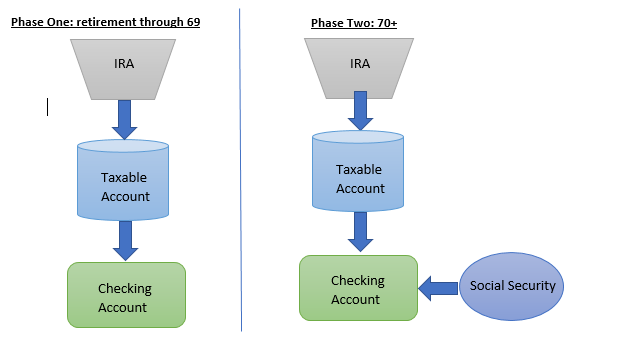
Once we figure out how much you need to support your ongoing monthly living expenses, we begin to plan for where the funds will come from. This looks different for each client. In general, here is what cash flow looks like for many people:


  •  Your workplace retirement plans may be rolled over into a Fidelity IRA. This allows for more investment options and potentially lower fees. This also allows us to easily manage your account distributions and rebalancing.
  • When we do your tax planning, we will determine whether you should take IRA distributions or capital gains to raise the cash you need. There are many factors that play into the ideal distribution amount including your cash flow needs, your tax bracket and Medicare premium tier, and your legacy goals. We will take the agreed upon amount out of your IRA and move it into your taxable account or realize capital gains in your taxable accounts.
  • Next, we will set up a regular “paycheck” from your taxable account, going directly into your checking account. Most people prefer to receive money in monthly installments, however we can setup installments to be paid in whatever frequency is most convenient for you. We also plan for one-off expenses like that dream vacation or gifts to charity or family members.
  •  As you begin social security or other pension benefits, we will reevaluate how much you need from your taxable account each month to cover your living expenses. Once you start social security, you will be able to reduce the amount of cash you take from your Fidelity taxable account.

The second aspect to consider is your investment allocation. A common misconception is that once you enter retirement that it is time to make your investment portfolio more conservative.


Readdressing your portfolio allocation should happen several years before you retire. Every retiree’s biggest nightmare is what happens if the financial markets enter a recession before they retire? 


This is why we start with understanding your real spending numbers, how much risk you can take financially and emotionally, and your legacy goals to define an appropriate investment allocation long before you decide to step away from work.


Remember, retirement is another phase of life that can last many decades. It is important that we balance your investment allocation with conservative assets like bonds that help fund your near-term cash flow needs and growth assets like stocks that can keep up with inflation over a longer time frame.


As you get closer to retirement, Brett will start adding to shorter term bonds, bond funds, and cash to ensure that you have several years of cash flow needs available. This helps provides a cushion for the extra or one-off spending like your dream vacation or charitable gifting. It also provides a cushion if thee is a financial market upheaval.


Retirement is the beginning of a new chapter. It is so important to revisit real spending numbers frequently throughout different stages of your life, especially before and during your retirement years. This is why planning is an ongoing process!


The most fulfilling part of our job is providing financial peace of mind so that you can enjoy your new chapter in life. Making sure you have regular cash flow to support your lifestyle is a big part of that peace. We look forward to hearing about your adventures and your plans to enjoy your paycheck!


Lost and Found: Retrieving Forgotten Accounts

By Krissy Di Candia


Have you ever found money in your pocket that you forgot about? It’s like finding a little bit of treasure.


Many people forget about accounts as they switch banks, move, or start a new job. According to the National Association of Unclaimed Property Administrators reported over 30 million people in the United States have unclaimed property that they either forgot about or never knew was theirs.


Financial accounts can transition to abandoned property by having undeliverable mail or prolonged periods of inactivity. Each state’s law varies on when a financial account becomes abandoned property and escheats to the state.


How do you see if you have lost funds? The NAUPA (National Association of Unclaimed Property Administrators) makes this easy by having a database of each state’s site. Simply go to https://unclaimed.org/state-reporting/ and click the link to your state’s official unclaimed property website. Then do a search for your name in their database. If you have moved to different states don’t forget to search your previous states of residency.


While the state sites will show most assets, they do not serve as a central database for all unclaimed funds and property. Here are some additional sites you can check for more specific types of assets:


Each site and state have their own requirements for claiming the assets but typically you’ll need to submit information such as your name, address, social and official documentation proving your identity.


How can you avoid having lost accounts? The best way to avoid losing accounts is by consolidating infrequently used bank accounts or workplace retirement plans (like 401ks) into your Fidelity IRA or new workplace plan when you change careers. The other is regularly checking that your financial institutions have up-to-date contact information.


As Carolyn likes to say, “It is always better to simplify!”


Be careful to steer clear of companies wanting to charge you a fee to claim your money. Searching and filing for unclaimed assets is free. If you are ever unsure on where to start, please reach out to us. We would be delighted to help!


Life Planning Partners, Inc.
904.448.5158