London Inc Ad_1.png
in partnership with.png

WORKFORCE

The rise of the boomerang employee

As companies continue to struggle to fill open roles, former employees represent a potentially untapped pool of talent

Boomerang.jpg

IF YOU’RE LOOKING for a new job, chances are there’s a potential employer you might be overlooking: one of your old ones.


In a job market where it seems like everyone is changing jobs all the time, a new trend has emerged. The ‘boomerang employee,’ as they are being called, was on the rise last year, comprising 4.5 per cent of all new hires — a modest increase from 3.9 per cent in 2019. Another study from Cornell found that boomerang hires thrived, especially in higher-level positions, suggesting that time away could be a beneficial asset.


Boomerang employees, experts say, know what they’re getting into and can be “kind of plug and play” in an organization. “They can come in,” says one business school professor, “and they can contribute with not a lot of training or onboarding.”


Of course, it’s never a sure thing. Workers looking at their old jobs should be conscious that they might be sentimentalizing an experience that they left for good reason.


But employers can do a lot to make sure that door stays open — starting with the goodbyes. “Say something like, ‘I’ve enjoyed working with you so much, and if this next opportunity isn’t what you hope it’ll be, we’d love to have you back,” suggests co-founder of The Muse, Kathryn Minshew.


“And once they leave, try to stay in touch if appropriate,” she continues. “It might just lead to your next best hire.”

CULTURE

Sometimes, it’s the little things

Missing office small talk? You’re not alone, and researchers say it impacts your wellbeing at work

Small talk.jpg

TO SOME FOLKS, small talk can be a tedious part of work culture. After all, how many times can you really talk about the weather or last night’s game?


But research is showing that the past two years without it have been a negative for many people.


And with many workplaces going permanently hybrid, managers need to think about what they can do to recreate it.


A Harvard Business Review survey, talking to workers pre-pandemic, found that small talk was “both uplifting and distracting.” While it occasionally made people less productive, it also made them feel social and part of their team. “On the whole,” the surveys authors found, “it was clear to us that the positives of small talk outweighed the negatives.”


So, as many workers look towards a largely remote future, managers are asking what they can do to promote this kind of social function and recreate it virtually.


Among the suggestions are to prioritize casual conversation in meetings ― by keeping them short and casual, as well as including time at the start for people to chit-chat ― or to come up with “new rituals” like a virtual morning coffee or virtual happy hour.


But most important might be the mental shift required. “Get out of the mindset that ‘this is not work’ when you’re having an informal conversation,” says management psychologist Nancy Rothbard. “We have to let go of the guilt around that by realizing that this is actually part and parcel of getting our work done.”

Ahria.jpg
arhia.jpg

Terry Talks: Leadership is simple, but not easy

Becoming a great leader doesn't have to be a soul-searching journey, nor is it dependent on your natural charisma. Instead, through a series of relatively simple actions, you can refine your leadership skills and cement yourself as an authority in your space.

Watch here

WORKFORCE

Say hello to the Office Resisters

There’s a growing divide between employer and employee attitudes towards hybrid work. And no one seems to know what to do about it

giphy image

MICROSOFT'S SECOND ANNUAL Work Trend Index Report has highlighted a growing disconnect between employer and employee attitudes to hybrid work, according to a survey of 31,000 people in 31 countries and analysis of user data from Microsoft 365 and LinkedIn.


Microsoft found that 50 per cent of leaders say their companies are planning a return to full time in-person work in the year ahead, even though a majority of employees prefer the flexibility of remote and hybrid work.


A small majority of managers (54 per cent) did acknowledge that the leadership at their companies is out of touch with employee expectations, with 74 per cent of managers saying they don’t have the influence or resources to drive change for their teams. And 43 per cent of leaders say building relationships is their greatest challenge as a result of having employees work in a hybrid or remote environment.


“The challenge ahead for every business leader is understanding the misalignment and trying to figure out how they can align what employees expect and are going to demand, with the pressure they’re going to have to drive business results in this very difficult environment,” says Jared Spataro, corporate vice president for modern work at Microsoft.


The report also found that 38 per cent of hybrid employees say their biggest challenge is knowing when and why to come into the office, yet only 28 per cent of leaders have laid out team agreements to define these new norms.


“Making [this] work will require shifting expectations that will require new approaches to culture and even operating procedures,” says Spataro.

London Inc. Ad_5.png

TRENDS

The suit is dead; long live the suit

The return to the office may usher in a new, more casual style for men in the workplace

Suit.jpg

AS THEY GET ready to return to their offices, millions of people have likely encountered this question: after two years of comfy casual, what am I supposed to wear?


For men in particular, it’s a new sensation. The basic men’s suit has been the dominant uniform of the white-collar world for so long ― but as the return to the office commences, it looks like Covid may have changed that.


Organizers of a recent business conference told a Financial Times journalist that more men were expressing confusion about what they were expected to wear. “Having discovered the pleasures of a polo shirt at home,” that writer wrote, “some were wondering if they really had to gussy up in a suit and tie again.”


Almost as soon as the pandemic started, people began questioning what it would mean for the men’s suit, as a raft of historic suit retailers ― Tailored Brands, Brooks Brothers, J.Crew ― went bankrupt. So did a lot of department stores.


Fast forward to 2022, sales of men’s suits had fallen far enough that the UK stopped including it in their inflation index; they replaced it with the blazer ― illustrating just how much more prominent a more casual look has become.


But if you’re not completely ready to give up your suit just yet, you’ll be glad to hear that some retailers, rather than fight the trend, are embracing it by making smart-casual suits made from stretchy jersey fabric with sweatpants on the bottom. The future might be uncertain, but at least it will be comfy.


MORE FROM LONDON INC...

London_Inc_WEB.png
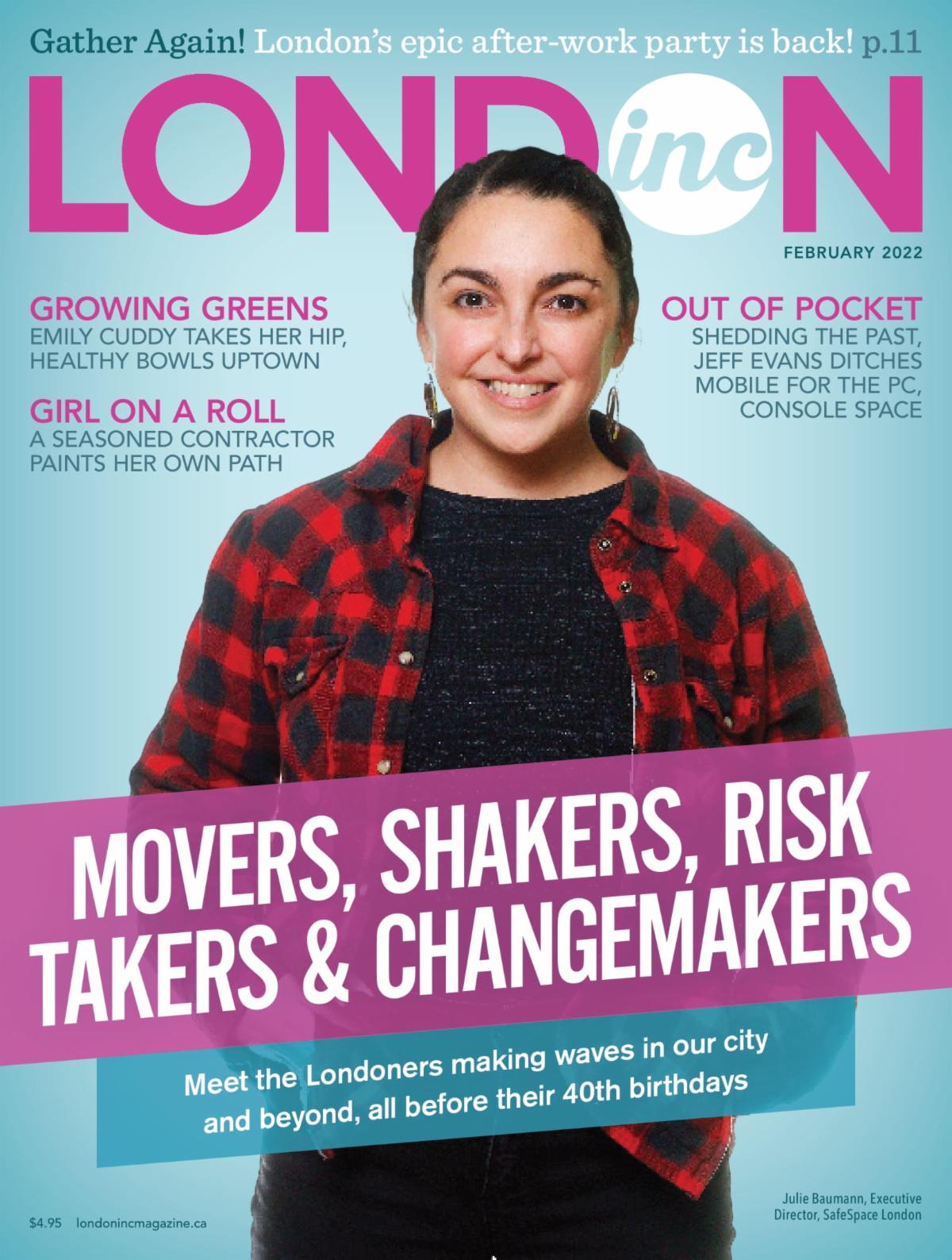
Linc_February_COVER-1.jpg
LinkedIn Share This Email

Follow Us

Facebook  Instagram  LinkedIn  Twitter