A Message from the Center | | |
Fall marks a time of transition as the weather changes and farm and food businesses begin planning for the months ahead. Harvesting the last crops from the field, sending livestock for processing, prepping for food shows, and attending markets—these activities are all part of the rhythm that our Northwest and Rocky Mountain Regional Food Business Center has been supporting since July 2023.
We are immensely proud to have provided technical assistance to nearly 1,600 individuals and to have fostered around 3,000 new partnerships for businesses throughout our 6 states. In addition, our teams supported 131 businesses in obtaining Business Builder grants totaling over $2.2 million.
Our RFBC had planned to continue this work into 2028, and had many training programs, scholarships and business development events underway, when we received notice from USDA of early termination of our work after two years of a five-year time horizon.
We will continue to support our 131 Business Builder grantees until their projects are completed in May 2026, and then transition our teams into a Regional Food Business Collaborative that serves as a clearinghouse for training, information and innovative funding sources for the Northwest and Rocky Mountain region’s food and farm businesses. We are still committed to our mission of “Connecting, Strengthening and Scaling Food Supply Chains,” and continuing to invest in our region’s businesses as we open a new chapter in regional food systems work. Look for upcoming newsletters that will keep you up to date on our work!
You will receive a survey about your willingness to stay connected with the Center as it transitions into more of a collaborative network this fall. We hope to keep you in our circle so our region can stay better connected in its programming and resources.
Dawn Thilmany, Colorado State University
Martha Sullins, Colorado State University
Lauren Gwin, Oregon State University
| | Celebrating the 2025 Colorado Food & Ag Collision | | |
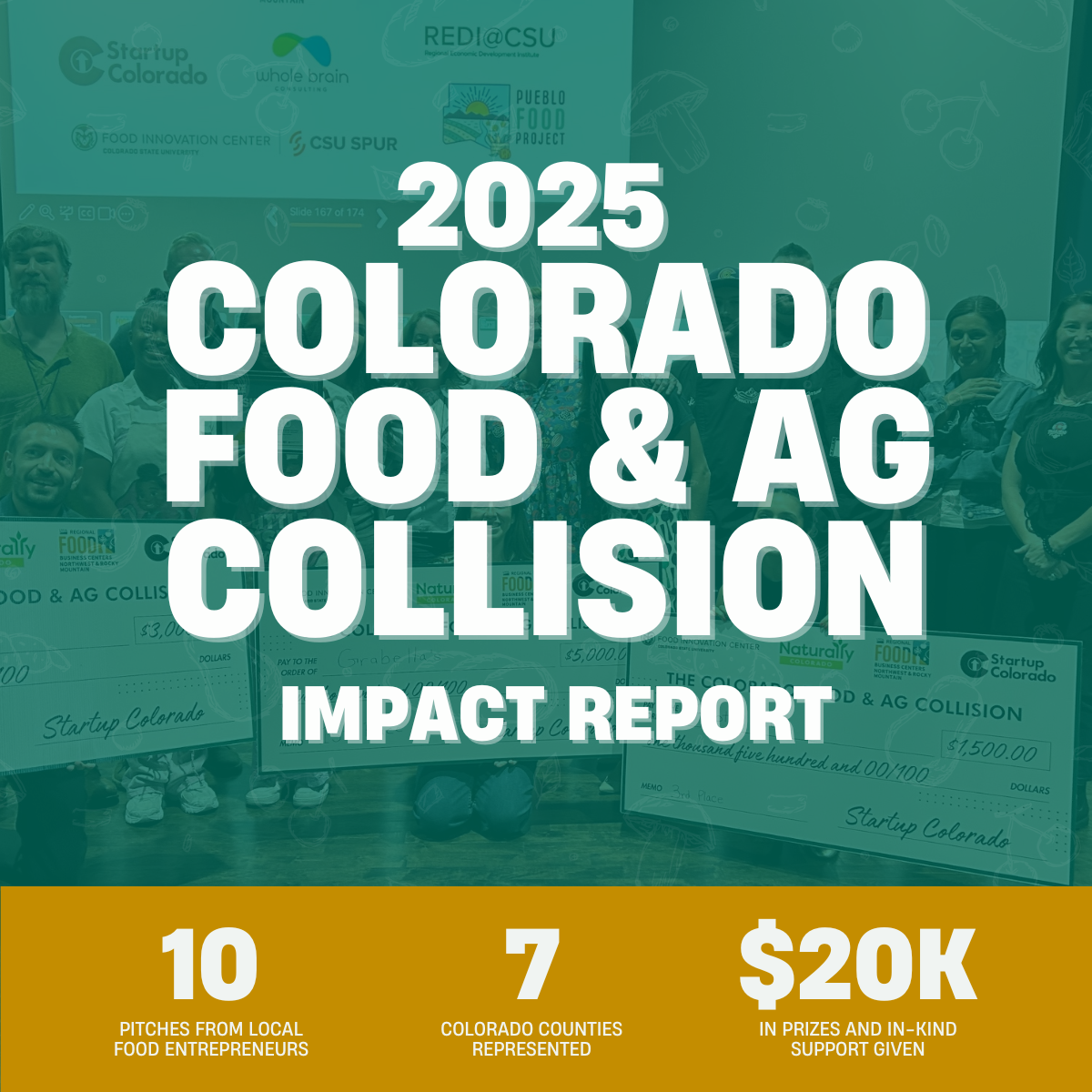
The Northwest & Rocky Mountain Regional Food Business Center was honored to help bring the 2025 Colorado Food & Agriculture Collision to life. This year’s event highlighted the creativity and resilience of Colorado’s food entrepreneurs, who pitched their products to industry judges, connected with new partners, and walked away with over $20,000 in awards and in-kind support. From value-added farm products to culturally rooted foods, the pitches reflected the diversity and strength of our local food system.
Beyond the competition, the Collision created space for conversation and collaboration. Entrepreneurs, retailers, distributors, and resource providers came together to share ideas, build relationships, and imagine what’s possible for Colorado’s food economy. Hosting the event at CSU Spur added another layer of inspiration, giving participants access to cutting-edge facilities designed to support food innovation.
Although USDA funding for our Center concluded in September, we’re proud that the networks and resources we helped build directly contributed to the success of the Collision. The momentum sparked this year will carry forward, and we look forward to seeing how these entrepreneurs continue to grow, inspire, and strengthen local food systems across the state.
Check out the full impact report for more details about the event and the ten pitchers!
| |
Big News: The Meaningful Marketplace Podcast is a Signal Award Finalist!
The Northwest and Rocky Mountain Regional Food Business Center is proud to announce that The Meaningful Marketplace podcast, which we sponsor, has been named a finalist for Best Indie Podcast in the 2025 Signal Awards. The Signal Awards honor podcasts that define culture today, and this recognition highlights the value of independent storytelling and the importance of amplifying food entrepreneurs, innovators, and community voices. The Meaningful Marketplace episode #222, Wapato Island Farm, Jennifer Rose Marie Serna, was specifically chosen for this award. Episode #222 highlights sacred hospitality, native identity in community, and the importance of indigenous foods and skill-sharing.
Public voting is now open for the Signal Listener’s Choice Award, and we encourage your voting support! To cast your vote, click here. Voting closes October 9, 2025, and winners will be announced October 15.
We are proud to support The Meaningful Marketplace in its mission to highlight the innovation and resilience of food businesses across our region and hope you will join us in helping it win this national recognition.
| | Workshop Follow Up: Understanding Priorities for Local and Regional Food Systems and Developing Action Plans for the Northwest and Rocky Mountain Region | | | | |
This recorded workshop explores key recommendations from two recent assessments commissioned by the Northwest and Rocky Mountain Regional Food Business Center. These assessments aim to identify the most effective ways to support farm and food businesses across the region.
Watch to gain insights, build new connections, and discover actionable pathways for better serving food and farm enterprises in your community.
| |
| | |
Eat Local First Network Meeting
November 6, 2025
10am-11am PDT
Virtual via Zoom
The Eat Local First Network is a place to connect and collaborate to guide communities toward local food across Washington State. By uniting stakeholders working across the food system, as well as economic development, tourism, government, community organizations, and media, the network fosters procurement and marketing of locally produced foods, aligning with our vision of a resilient, equitable food system where people are connected to local farms and food businesses wherever they live, work, shop, visit, and eat.
To learn more about the Network, please click here.
| | | |
| | |
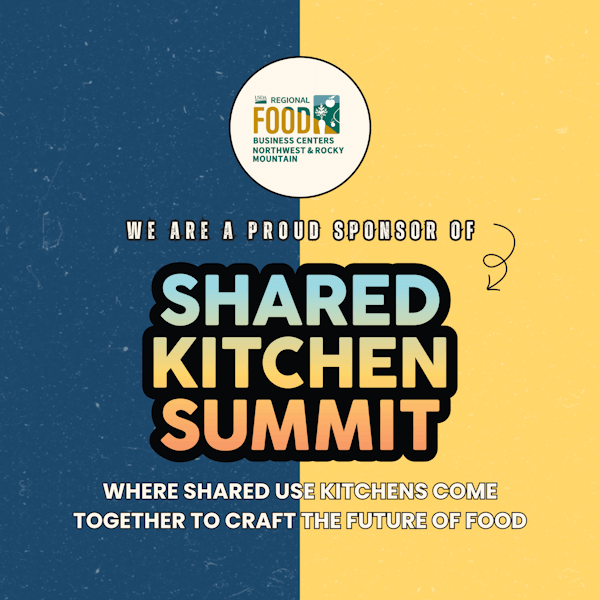
Shared Kitchen Summit
November 10-12, 2025
Cleveland, Ohio
We’re inviting you to the Shared Kitchen Summit to be a part of a powerful group that’s shaping the future of the food industry through shared-use kitchens. Together, we can tackle the challenges that shared kitchens face and pave the way for a food economy that’s not just surviving, but thriving. Let’s make a lasting difference, one shared kitchen at a time. Come join us; it’s going to be a fantastic ride!
We’ve packed three days with game-changing sessions, inspiring keynotes, and hands-on workshops designed to help shared kitchen operators rock their businesses.
Check out the full agenda now and grab your ticket before they’re gone!
| | | | Resources & Opportunities | |
| | |
USDA Farm to School Grant Now Open
USDA Food and Nutrition Service is pleased to announce the release of the Fiscal Year (FY) 2026 Farm to School Grant Program Request for Applications (RFA)! This competitive grant will fund innovative farm to school projects ranging from $100,000 to $500,000 for a total of up to $18 million. Eligible entities include state and local agencies, Tribes, child nutrition program operators, small- to medium-sized agriculture producers, groups of agricultural producers, and nonprofits.
Additional application resources are on the Resources for Farm to School Grant Program Applicants page. Complete applications must be submitted by 11:59 PM Eastern Time on December 5, 2025.
| | | |
| | |
Extension Risk Management Education Competitive Grants Program- Western Region
The Western Extension Risk Management Education Center (Western Center), in conjunction with the Northeast, Southern, and North Central Centers announces competitive funding opportunities for educational projects designed to help agricultural producers improve their economic viability through targeted risk management strategies. Proposed projects should address any of the five areas of risk: production, marketing, financial, legal or human. The maximum award will be $75,000 with a grant duration of 18 months to be conducted between April 1, 2026 and September 30, 2027.
All applications are due by 5 PM PST, Thursday, November 13, 2025
| | | |
| | |
AMS Resource Library for Regional Food Supply Chains
The AMS Resource Library contains a collection of technical assistance resources related to regional food supply chains. The library includes tools, guides, and references from a variety of sources, including those developed by USDA agencies, grantees, and partners.
| | | | |
Partners and Collaborators: |
| |
Center Leads: Colorado State University, Oregon State University
Regional/multi-state: Tahoma Peak Solutions, Network of Incubators and Community Kitchens (The Nick), Niche Meat Processor Assistance Network, Rocky Mountain Farmers Union, Luna Bird, The Food Corridor
Colorado: Colorado Department of Agriculture, Colorado State University
Oregon: Oregon Department of Agriculture, Oregon State University Food Innovation Center, Oregon Community Food Systems Network, Oregon Food Hub Network
Idaho: University of Idaho, Idaho Department of Agriculture, FARE Idaho, Future Roots, Arrowleaf Consulting Group
Montana: Montana Department of Agriculture, Montana State University
Washington: Washington State University, Washington State Department of Agriculture
Wyoming: University of Wyoming, Central Wyoming College
USDA: Ag Marketing Service Collaborators and NW-Rocky Mountain Regional Coordinator
| | |
In accordance with Federal civil rights law and U.S. Department of Agriculture (USDA) civil rights regulations and policies, the USDA, its Agencies, offices, and employees, and institutions participating in or administering USDA programs are prohibited from discriminating based on race, color, national origin, religion, sex, disability, age, marital status, family/parental status, income derived from a public assistance program, political beliefs, or reprisal or retaliation for prior civil rights activity, in any program or activity conducted or funded by USDA (not all bases apply to all programs). Remedies and complaint filing deadlines vary by program or incident.
Persons with disabilities who require alternative means of communication for program information (e.g., Braille, large print, audiotape, American Sign Language, etc.) should contact the State or local Agency that administers the program or contact USDA through the Telecommunications Relay Service at 711 (voice and TTY). Additionally, program information may be made available in languages other than English.
To file a program discrimination complaint, complete the USDA Program Discrimination Complaint Form, AD-3027, found online at How to File a Program Discrimination Complaint and at any USDA office or write a letter addressed to USDA and provide in the letter all of the information requested in the form. To request a copy of the complaint form, call (866) 632-9992. Submit your completed form or letter to USDA by: (1) mail: U.S. Department of Agriculture, Office of the Assistant Secretary for Civil Rights, 1400 Independence Avenue, SW, Mail Stop 9410, Washington, D.C. 20250-9410; (2) fax: (202) 690-7442; or (3) email: program.intake@usda.gov.
USDA is an equal opportunity provider, employer, and lender.
| | | | |