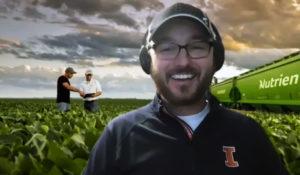
We had an opportunity to speak with Eric Snodgrass, Principal Atmospheric Scientist at Nutrien Ag Solutions recently. Snodgrass has a large audience for his twice a week Ag Weather Forecasts, including FIRST managers who must scout broad areas for their field operations.
One reason producers crave weather information so much is that, “you have this independent third party in your operation — the atmosphere — and you need to know how it will behave,” Snodgrass explained. His forecasting and appearances are also followed to watch how weather will move markets, and who may be having problems specifically, “whether it’s Nebraska or Central Ukraine.”
Snodgrass described the transformative changes happening in forecasting. More and more sensors are on the ground, like expanded weather station networks in Brazil. Satellite data has better resolution and more wavebands to use as input into models. Tremendous computational loads for weather modeling are handled on supercomputers, including processes he explained use both the observed weather data and additional “perturbations”, noise added to the simulations, to understand how strong and certain the weather patterns are.
The broader subject of climate can be contentious, but Snodgrass had insightful ways to look at observed trends. For example, for the Illinois and Iowa region he said that, in general, maximum temperatures have a flat trend. However, average nighttime lows are 2-3 ℉ higher than in the past, making for a longer growing season and earlier planting windows. In the same area, around 5 inches more precipitation falls during the growing season than prior to 1980, but with 2-3 times higher frequency of 2 in. amounts. “It’s raining more but in bigger events,” he noted, with added potential for erosion or saturation issues. Snodgrass pointed toward water management improvements, like controlled drainage, as climate-smart practices.
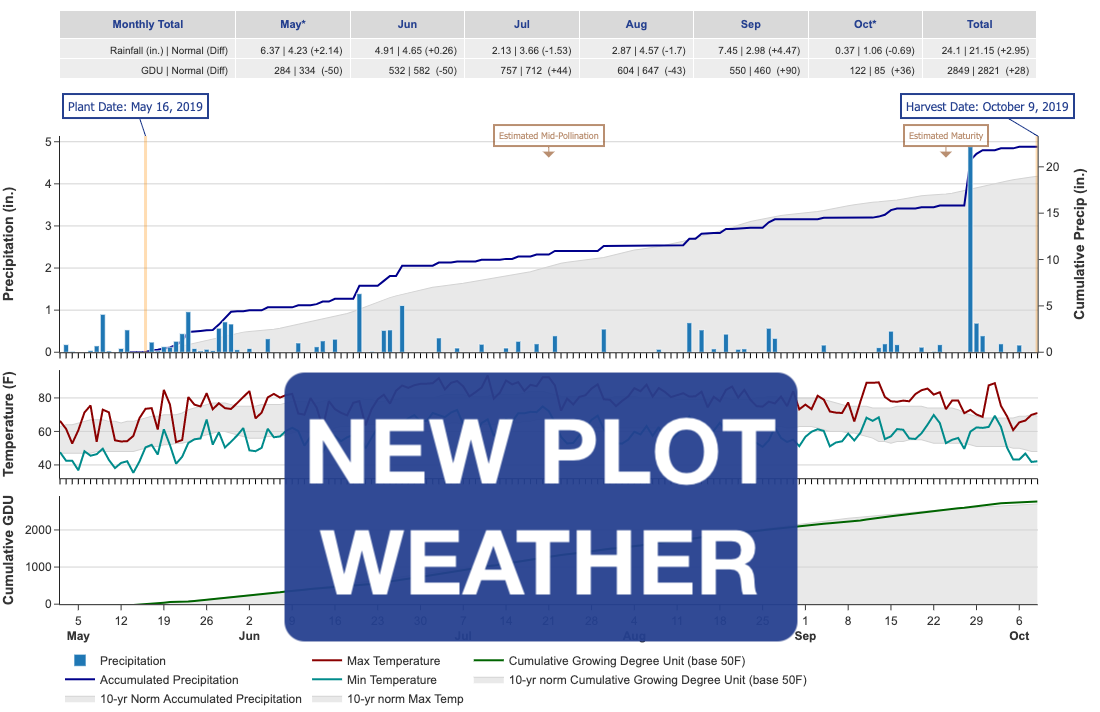
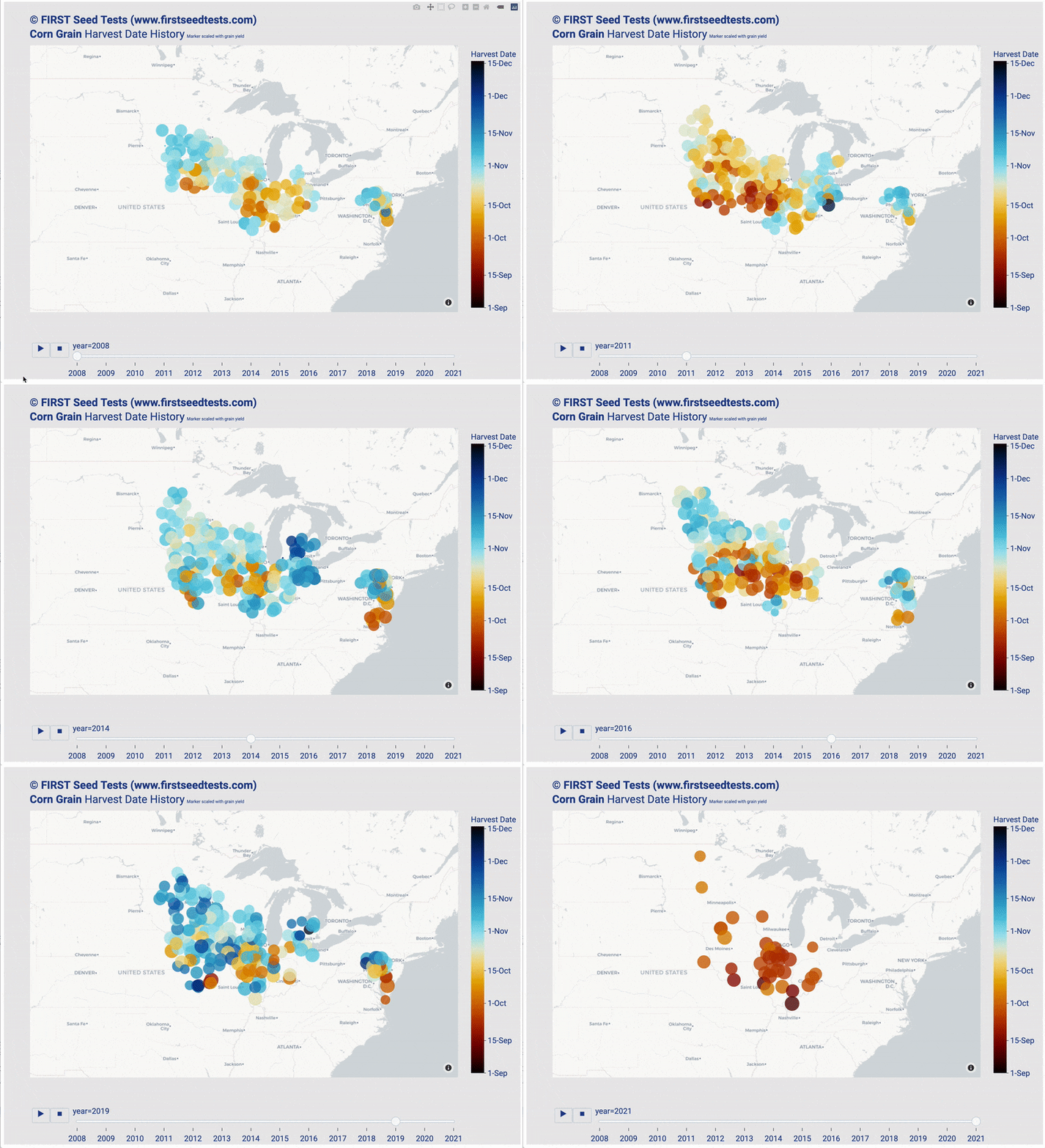
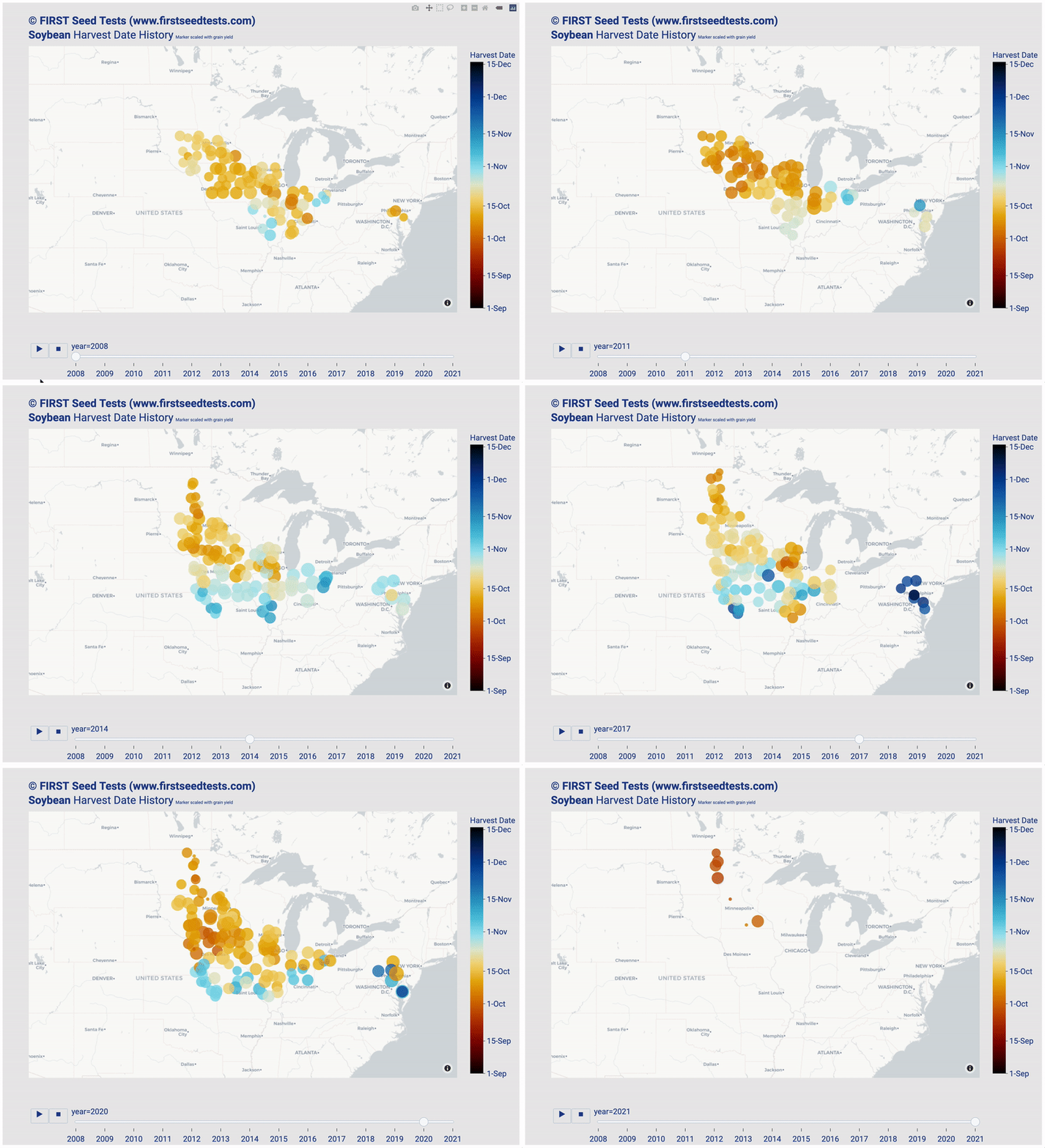
The dataset FIRST is using to present weather information this season, PRISM, is one Snodgrass uses in his reporting as well. It’s based on surface observations from a large network of sensors, overlaid with RADAR for precipitation, and it is excellent for observed weather. We thank him for spending time with us, and you can find more of Snodgrass’s agriculture-focused weather expertise at https://ag-wx.com/.