2026 City Budget Review
Last week, the City Council voted on the alternative city budget after weeks of negotiations and hearings. On Monday, we finalized the last pieces of the 2026 budget which was an arduous process. The final vote of 30-18 on December 20th was the first time in decades that the Council rejected a Mayor’s budget.
The Mayor has moved forward with the budget with some reservations and additional executive orders.
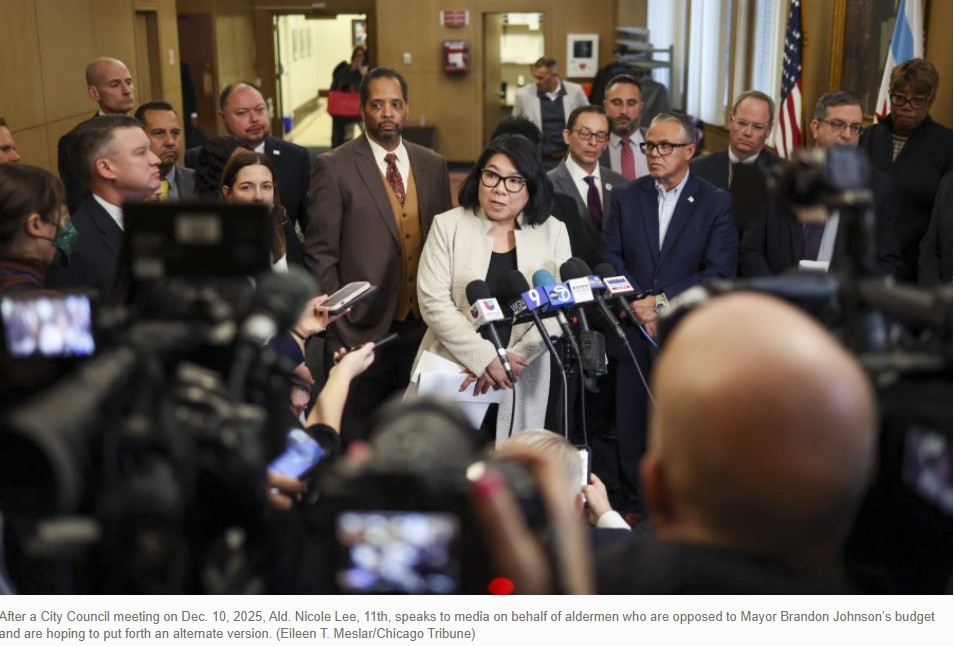
A coalition of 30 aldermen came from wards spanning the entire city as well as all caucuses in a good faith effort to shape an alternative budget. The effort was done to prevent a shutdown of the City by Mayor Johnson and to prevent us from falling off a fiscal cliff. The choices he had were to veto the budget of the 30 aldermen or a government shutdown. The Mayor said he will not veto the budget but will not sign it. The budget will still pass despite him not signing it. This year’s budget shortfall was over $1.2 billion with another projected gap of over $1 billion in 2027, so we have our work cut out for us.
I want to again thank everyone who provided valuable input on the 2026 budget. I also want to thank my colleagues in Council who worked with us to recraft the portion of the budget that we improved. While our efforts were only able to affect about 1.6% of the entire city budget of over $16 Billion, we passed the appropriate Advanced Pension Payment, restored Mayor Johnson’s cuts to the libraries, gender based violence, and youth programs, and stopped the massive Head Tax that would have further damaged the business community both large and small.
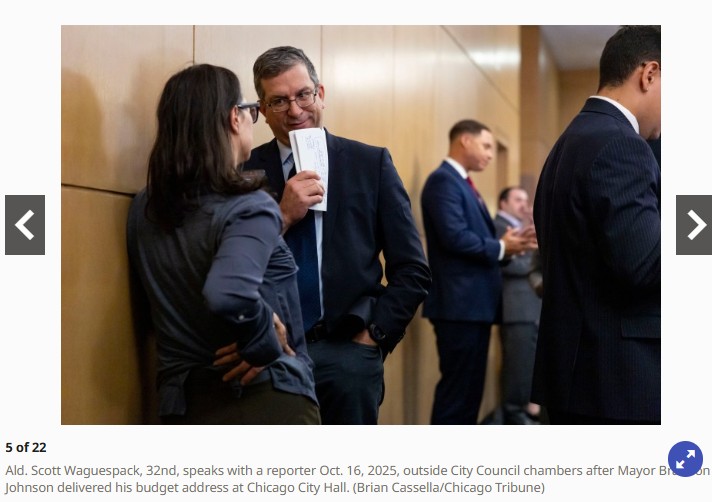
In the days following the release of Mayor Johnson’s budget proposed FY26 on Oct. 16, 2025, members of the City Council submitted multiple data requests to the Mayor’s budget office to get a better understanding of how they arrived at a range of spending and revenue projections.
Over the course of several weeks, these requests were repeatedly declined in part or entirely, leaving basic questions around assumptions, estimates, and methodology included in the Mayor’s plan unanswered. In May, Ernst & Young (EY) had been contracted for $3 million to provide the City with efficiencies and options to improve our budget and financial status as a major US City. A separate task force had also been created that dovetailed on the EY report and provided additional ideas to build on. Council members pressed for information during this time, especially to receive the EY report and allow us to learn what the Johnson Administration already knew. It wasn’t until after repeated requests, emails, and public pressure that the administration released a vetted report to us in late October. The report indicated over $1 billion in potential savings, with the Administration showing about $12 million in accepted actions.
Throughout the months of October, November, and December, a growing coalition of Alders took steps to make public their positions on the Mayor budget, from getting a majority to sign letters in opposition to a head tax, to demand more EY efficiencies be included in the budget, to a rejection of the Mayor’s revenue proposal by members of the Finance committee.
It was nearly a month after the Mayor introduced his budget that his office agreed to participate in a hearing with the Council’s Budget committee where Alders could ask questions not only of the Mayor’s budget team, but reps from EY. Unfortunately, that hearing yielded virtually no answers to our queries. The Mayor’s budget team answered most of the questions while the EY rep was relegated to a minor role.
As it became clear that the Administration was unwilling to engage, a majority coalition of Alders, driven by concern over Chicago’s trajectory and the growing risk of another credit downgrade, felt they were left with no choice but to collaborate together on building a financially responsible, balanced alternative. To achieve a financially responsible budget that took steps to avoid a credit downgrade we focused our efforts on a few concerns, not all of which we found success in changing. Some of these included:
-No head tax on jobs
-Make the full advance pension payment
-Include additional structural efficiencies as identified EY report
-No borrowing to pay firefighter back pay
-Identify additional structural revenues
-Reduce small business fees and licensing hurdles
During this time, we also sought advice from numerous municipal budget and finance experts, as well as various industry experts. This helped us to crunch revenue projections and eventually present a financially responsible and balanced budget on December 2. Every number in any budget, spending or revenue, is an estimate based on assumptions. This is true of both the Mayor’s proposal and the alternative budget. In FY25, the Mayor’s own revenue estimates came in tens of millions under in some categories and tens of millions over in others. The City Council adopted the alternative balanced budget based on the information available at the time, including the City Council’s revised revenue and expenditure assumptions.
Avoiding another credit downgrade is critical and was also an impetus for our alternative budget. Issues addressed in the negative outlook given in S&P’s in November included “actual performance during the year relative to the budget; city leadership’s efficacy in delivering structural solutions…, reports identifying wide-ranging gap-closing options; and the fate of the city’s advance pension payment.”
Despite trying to collaborate with the 5th floor and being rebuffed, we ended up crafting our own proposal of a portion of the budget that would address issues and maintain a coalition at the same time. There were also no attempts made to negotiate or collaborate on pensions, efficiencies, or borrowing.
We removed a proposed garbage fee increase, restored more funding to youth jobs, and worked on more alternatives. The Mayor stood firm on a head tax while also leaning into divisive language and finger-pointing to shame Alders into voting for what he proposed.
Mayor’s Head Tax
The head tax was the only element of the Mayor’s proposal that kept changing, for the worse. A head tax on Chicago businesses could not be more ill timed. Chicago businesses, especially those downtown, continue to struggle in COVID’s wake - the Chicago Federal Reserve projects the city will experience its worst job outlook since the pandemic in 2026, while depressed downtown property values are driving the shift in property tax burdens from downtown to neighborhood homeowners and small businesses. When downtown thrives, it subsidizes neighborhood property taxes, reducing those taxes outside of the central business district. But when downtown struggles, taxes get shifted to the neighborhoods. At a time when we need downtown business to thrive once again, a tax on jobs undermines that recovery at the worst possible moment and puts too much burden on our residents.
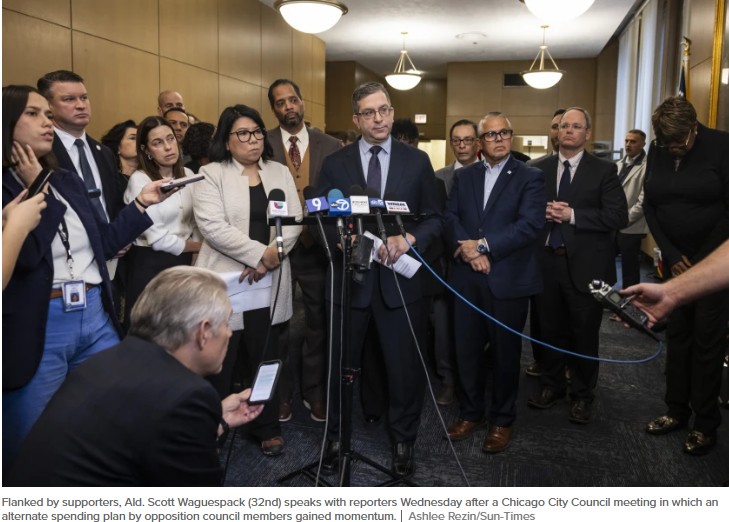
Our coalition continued to recommend implementing more of the efficiencies and cuts from the EY report despite almost 100% pushback from the Mayor to do more on the report’s findings. Alderman Nicole Lee and I spent several hours testifying in a q & a session on the Council floor to the alternative budget, forging ahead with a plan to do what taxpayers need, and demand reforms and changes in city spending and governing.
Debt Collection
Debt collection was one of many areas that needed some truth shed on it. Despite rhetoric from the Administration, at no time did our coalition “target poor people” in the policy proposal to collect debt from those incurring tickets or fines from the City. While the Mayor’s budget relied on $113 million in debt collection, our review of the EY report, input from city officials and many other institutions, showed we could do more. The Mayor and others continued efforts to namecall and distort the truth was shameful.
We asked for guardrails around any debt collection and made sure uninformed colleagues knew that the City already collects debt, just not in an efficient way. At this time, there is over $8 billion in unpaid debt that is owed to the City. Over $1 billion a year has been added in the past two years. Prospective city employees must pay all their debt to the City before being hired. Apparently, that same rule is no longer enforced by this Administration. Tens of millions are owed to the City by CPS, CHA, CTA, and many more government agencies with little effort to correct this bad policy of non-collection. It would not take much to put guardrails in place to avoid problems with collecting debt, but the Mayor rejected any attempts to use common sense on the debt issues.
We moved forward with the group of 30 Alders to continue to make sure we could find the best possible path to a balanced budget. With the exception of borrowing for firefighter back pay (as there was nowhere left to replace the revenue needed to cover those costs), we were able to secure votes to move the budget in the right direction to protect taxpayers.
TIF Concerns
The TIF surplus was another issue that needs addressing. While the Mayor wants to surplus as much as possible over the next couple years, TIF funds are also used to pay for other infrastructure projects and over a billion is tied to new housing. TIF dollars can't be designated to 2 -3 different things at the same time. The TIF portion for CPS was always going to be included in the budget; letters, websites, and commentary on the Council floor that claimed the coalition was taking away school funding were simply distortions. The Mayor rejected the arguments of many Aldermen who were angry about the Mayor unilaterally removing a billion in TIF surplus from dozens of TIF districts with no notice. The TIF sweep has wiped out dozens of projects being planned by the City. The additional TIF sweeps undercut public infrastructure projects such as affordable housing projects, roads, bridges, open space, and more.
The openness and collaborative approach our coalition worked through did not include everything each individual Alderman wanted, but the democratic process worked to bring 30 people to the table. I also want to thank the three alderwoman who helped lead the effort, Alds. Dowell, Lee, and Nugent who along with our group spent hundreds of hours working on the budget concerns. While the budget was imperfect, it was better than the original and with the alternatives we can get this City growing again and back on the right track for all.
Since the budget process never ends, and there are significant issues to watch in 2027, we will have to press for proactive reporting and accountability on the entire budget throughout the upcoming year.
Again, I appreciate the input and ideas that many of you shared during this complex process and we will continue to work on your behalf in doing what is best for our City as a whole.
|