The University of Chicago Center for Practical Wisdom is committed to the scientific study of wisdom. We apply science to understand wisdom and its role in the decisions and choices that affect everyday life. | | |
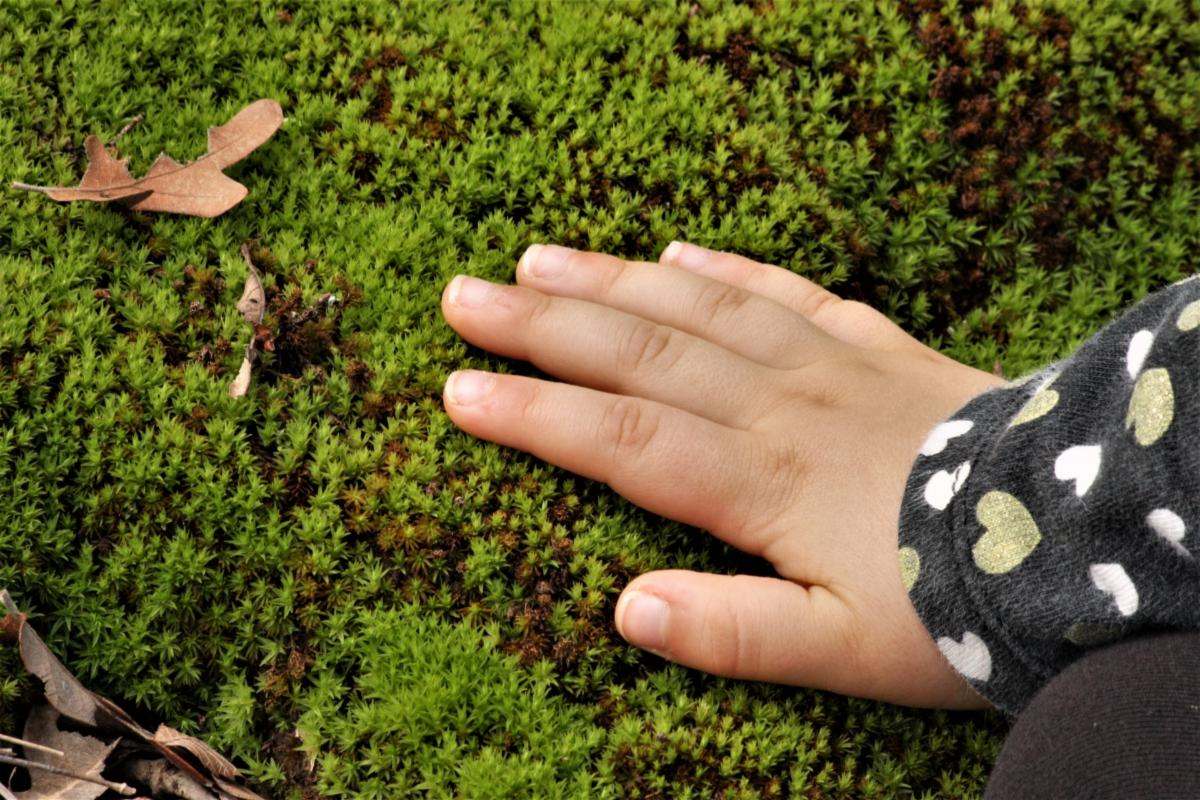
THE WISDOM OF NATURE AND AUTISTIC LIVED EXPERIENCES
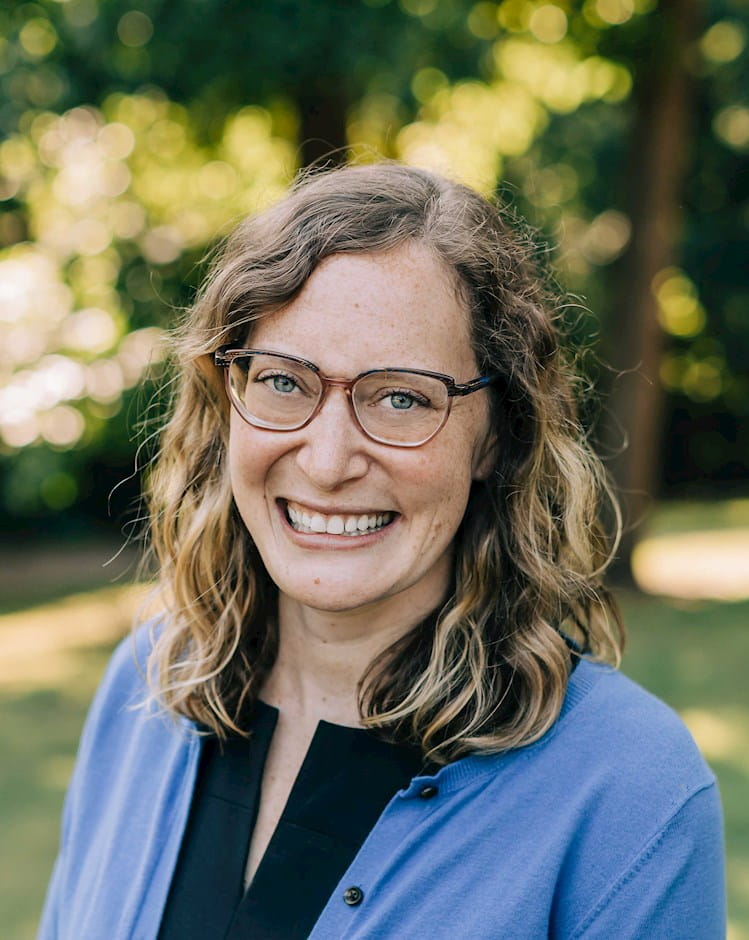
by Brenda Huskey Winkler, Center for Practical Wisdom
| |
Every week, it’s the same story. I walk into the clinic to greet my non-speaking autistic clients, and almost immediately, little hands pull me toward the exit—or they rush past me to the glass door marked with a laminated sign, “STOP! Where’s my adult?”—a visual reminder to our young elopers.
They make it undeniably clear: They do not want to be in my carefully curated, brightly lit therapy room. They want to be outside!
Take one of my sweet clients, who will suddenly stop mid-session, completely tuning out my indoor activities, to just stare out the window for minutes at a time. With my fine motor manipulatives suddenly static in his hands, his gaze shifts to a more natural landscape. He becomes completely transfixed by the richly detailed scene of vibrant autumn leaves, billowing clouds and gentle sunlight flowing through.
Another client of mine doesn't just look—his body demands full immersion. Given the slightest opportunity, he will push straight out the door into our backyard clinic space. He discards his socks and shoes, choosing to walk completely barefoot across the cool earth, sharp pebbles, and grainy sand, all while tightly gripping a pair of sticks in his hands.
How do we explain these behaviors that I often see in my non-speaking autistic clients? Is it distractibility? Escape or avoidance behavior? Or something else?
As an occupational therapist, I’ve learned that there are countless reasons for behavior; and within these contexts, it may be less about escaping and more about actively seeking the exact regulatory inputs their nervous systems desperately need to survive.
To understand why, I will translate environmental psychology and neuroscience into therapy practice by connecting three areas: the lived experiences of non-speaking autistic people, the mathematical beauty of Fractal Theory, and the environmental neuroscience research of Dr. Marc Berman at the University of Chicago...
Read more here.
| | WISDOM LIVESTREAM LECTURE: Dr. Emma Levine | |
Join us for our next Wisdom Livestream Lecture
on Friday Nov 13, 2026 at 3:30 pm CST by Dr. Emma Levine, the Charles M. Harper Professor of Behavioral Science at the University of Chicago Booth School of Business.
About the speaker:
Emma Edelman Levine studies the psychology of altruism, trust, and ethical dilemmas. Her research seeks to understand how individuals make trade-offs between different values, and how this influences decision-making and social perception. Her main stream of research investigates the tension between honesty and benevolence. Using a variety of research methods, in both the laboratory and the field, Levine studies how individuals navigate this tension. Her research unearths specific circumstances in which people welcome and appreciate deception, as well as circumstances in which they underestimate the benefits of honesty.
About this wisdom livestream lecture:
A fruitful literature has examined the consequences of lying. However, lying is only one source of false information. Communicators engage in a broad set of complex behaviors that stretch the boundaries of honesty, including strategically avoiding information and presenting real, but misrepresentative information as truth. Though not lies per se, these are nonetheless deviations from honesty that have serious costs to organizations, consumers, and society broadly. In the present talk, I introduce a multidimensional framework of honesty that highlights how honesty encompasses more than the absence of lies—it has relational elements (e.g., fostering an accurate understanding in others through what we disclose and how we communicate) and intellectual elements (e.g., evaluating information for accuracy, searching for accurate information, and updating our beliefs accordingly; Cooper, Huppert, Cohen, Levine, & Fleeson, 2023). Then I present results from two ongoing empirical papers that examine how people make social judgments of these different facets of (dis)honesty. In the first paper (Wallace & Levine, under review), we examine reactions to false information stemming from biased beliefs (“bias”) versus lying (“dishonesty”). Five studies find that people are less likely to punish falsehoods from biased versus dishonest communicators, even when these processes are intentional and lead to identical harms. Increased punishment of dishonesty is driven, in part, by the belief that dishonest actors are less constrained by moral norms than (even intentionally) biased actors. In the second paper (Duncan, Levine, & Small, in progress), we examine reactions to marketing tactics that involve fabrication (inventing or producing false information) versus cherry-picking. Three studies find that people find fabrication to be more morally problematic than cherry-picking, even when cherry-picking misleads the audience to a greater extent. This work deepens our understanding of multiple facets of dishonesty, broadens the field’s understanding of reactions to corporate and consumer fraud, and sheds light on the challenges associated with punishing misinformation.
Register for the online event here.
| |
ON WISDOM PODCAST SPECIAL SERIES: 5 episodes now available
by Igor Grossmann and Charles Cassidy, On Wisdom podcast
| |
About this special series: The On Wisdom podcast is hosted by Igor Grossmann, director of the Wisdom & Culture Lab at the University of Waterloo and Charles Cassidy of the Evidence-Based Wisdom project in London. Since 2018, each episode pairs conversation with guest spots from leading behavioural scientists working on reasoning, wellbeing, culture, and society. Their recent special release of 5 episodes, now available, includes conversations on metacognition, wisdom exemplars, measuring wisdom, and wisdom interventions. the first episode in this special series touches on the the question: When we face life challenges, where do our ideas about wise judgment, or even wisdom writ large come from, and how do they shape the way we work through such challenges and live thereafter? Episode 2 addresses if thinking harder is always the key...
Read more here.
| |
IS WISDOM A PREDICTOR OF QUALITY OF LIFE IN PEOPLE WITH EXPERIENCE OF DEMENTIA?
by Swapneel Mirani, Tessa Williams, Shi Tang, Briony Harden, and Martin Orrell
|
| |  | Abstract: Wisdom has been linked to greater well-being in older adults, but its relationship with quality of life in people with dementia remains unclear. This study investigated the relationship between wisdom and quality of life for people with dementia and other groups with dementia experience. Methods: This cross-sectional online survey was conducted via the Join Dementia Research (JDR) platform, United Kingdom, with 3144 adults registered on the platform. Wisdom was measured using the 12-item Three-Dimensional Wisdom Scale (3D-WS-12) and quality of life using the Control, Autonomy, Self-realization, and Pleasure scale (CASP-12). Demographic information and type of dementia experience were also recorded. Data were analyzed using correlations, t-tests, ANOVAs, and linear regressions. Results:Wisdom was positively associated with quality of life, with reflective wisdom showing the highest correlation. Being female and older were each associated with higher wisdom scores. Family carers scored significantly higher...
Read more here.
| |
PRACTICAL WISDOM IN EDUCATIONAL LEADERSHIP
by Özgür Sert and İbrahim Sani Mert
|
| | | Abstract: Practical wisdom is a long-standing concept in moral and political philosophy, most commonly associated with the Aristotelian term phronesis. In educational leadership, the concept refers to the capacity to make sound, context-sensitive judgments about what ought to be done, when action should be taken, and how competing goods should be balanced in real situations. It is especially relevant when educational leaders cannot rely on rules, technical procedures, or performance indicators alone. Schools, universities, and education systems are value-laden institutions. Leaders in these settings routinely face problems that involve uncertainty, plural interests, uneven evidence, and moral tension. A principal may need to decide how to combine fairness with compassion in a disciplinary case, how quickly to implement innovation without undermining staff trust, or how to pursue improvement while protecting the broader educational purposes of schooling. In such cases, effective leadership depends not only on knowledge and skill but also on wise judgment. For this reason, practical wisdom has become an important concept...
Read more here.
| |
THE DISPOSITIONAL DYNAMICS OF CONSUMER WISDOM IN WISE AND UNWISE CONSUMPTION DECISIONS
by Quynh N. X. Nguyen, Nguyen T. Thai, Nina Reynolds, and Nadia Zainuddin
| |
Abstract: Consumer wisdom has been conceptualised as a stable yet adaptable capacity guiding mindful consumption; prior research has primarily focused on trait-level conceptualisations that offer limited insight into how wisdom is enacted or disrupted in real-world decisions. This study adopts a dispositional perspective, conceptualising consumer wisdom as the dynamic interaction between stable internal capacities and situational, emotional, and contextual conditions. We combine trait-level measurement using the Consumer Wisdom Scale with the Critical Incident Technique to analyse 130 wise and unwise consumption decisions...
Read more here.
| |
MECHANISMS OF WISDOM DEVELOPMENT: A systematic review of intervention evidence and methodological rigor
by A. Kadir Bahar, Atilla Ozdemir, Yasemin Sipahi, and Zülal Melek
| |
Abstract: Wisdom has traditionally been viewed as a developmental achievement shaped by life experience, reflection, and psychological maturity. Growing intervention research has examined whether wisdom or related capacities can be intentionally cultivated. This systematic review synthesized 33 empirical studies of interventions targeting wisdom or wisdom-related capacities. It examined intervention characteristics, proposed mechanisms, methodological designs, measurement approaches, and methodological quality. Six recurring mechanisms were identified: experience-to-insight transformation, egocentric bias reduction, compassionate orientation, socially distributed reasoning, ethical orientation, and self-integration...
Read more here.
| |
CAMPAIGN TO SUPPORT WISDOM RESEARCH STUDENTS!
| |
This year, we’re strengthening our efforts to support student researchers in the Center for Practical Wisdom—and we’re launching a campaign to help fund their important work.
We know you value the work we do at the Center for Practical Wisdom. This campaign is one small but meaningful way to support our mission while helping train the next generation of researchers interested in understanding wisdom from a psychological and scientific perspective.
For the next six weeks, through the end of November, you can make a donation of any amount to the Center for Practical Wisdom. Every dollar raised will directly support our student researchers by helping cover the costs of their research, from participant fees and lab supplies to other essential research expenses.
Your donations will also help us provide hourly wages for our student researchers, allowing them to gain valuable research experience without having to choose between working in our labs and taking on other jobs to help cover their educational expenses.
And here’s how much your support can make a difference: If every person who receives our newsletter donated just $1 today, we would have enough to fund our student researchers for two years! That’s the power of a community coming together to support our students.
Make a Difference Today!
To donate directly to the Center for Practical Wisdom, visit the UChicago giving page and enter “Wisdom” in the “Area of Support” box.
Thank you for supporting our students and helping us advance the scientific study of wisdom!
Click here to donate today!
| |
CALL FOR PAPERS | ADVANCING WISER CONSUMPTION AND INNOVATION: Consumer wisdom, wiser innovation, and public policy for flourishing
Journal of Public Policy & Marketing
|
| | | Description: Rapid technological, market, and societal changes are reshaping consumption in ways that profoundly influence well-being. For example, AI-enabled tools increasingly guide financial, health, and purchasing decisions; digital platforms structure how consumers connect, learn, and spend their time; and innovations in products and services—from personalized recommendations to on-demand consumption—reconfigure everyday choices and usage behaviors. These examples are illustrative of a much broader set of transformations that are reshaping how consumption is experienced and enacted across contexts. Building on prior work, such as the Transformative Consumer Research (TCR) movement, this special issue introduces wisdom as a distinct lens for understanding these phenomena. Rather than viewing consumption primarily in terms of trade-offs or isolated outcomes, a wisdom perspective emphasizes how individuals, firms, and institutions can engage in more reflective, ethically grounded, and context-sensitive processes that support individual and collective flourishing.
This special issue advances this perspective by drawing on research that conceptualizes wisdom as a process integrating metacognitive capacities (e.g., reflection, perspective-taking, intellectual humility) with moral reasoning oriented toward the well-being of oneself and others (Grossmann et al. 2020). In consumer contexts, this builds on emerging work defining consumer wisdom as the pursuit of well-being through mindful management of consumption-related choices and behaviors (Luchs and Mick 2018; Luchs, Mick, and Haws 2021).
Special Issue Editors: Michael G. Luchs, Varun Nagaraj, Jason Stornelli, and ShabbirHusain R.V.
Submission window: January 1, 2027–April 5, 2027
Read more and submit here.
| | |
JOIN THE EMBODIED NEURAL COMPUTATION AND AWARENESS LAB (ENCAL)
University of Montana
| |
Description: The Embodied Neural Computation and Awareness Lab (ENCAL) at the University of Montana, directed by Dr. John Veillette is seeking PhD candidate applications.
Deadline: Dec 1, 2026
About ENCAL: Most cognitive neuroscience research, especially concerning humans, treats the brain as if it were a standalone computer. In reality, neural “computation” both influences and is itself influenced by biological processes throughout the body. At the ENCAL, we study how the brain-body axis shapes our conscious subjective experience of ourselves and of the world around us. To this end, we integrate computational and empirical experimental approaches to concretely link biological mechanisms with downstream psychological manifestations (e.g., what we see or hear, whether we feel a sense of agency over an action, etc.). Our lab space is located in the basement of the Skaggs Research Building, where we host (or are about to… the lab is brand new!) a state-of-the-art facility for behavioral/psychophysical testing, non-invasive brain measurements (electroencephalography, a.k.a. EEG), cardiography, beat-to-beat blood pressure monitoring, electrical stimulation (e.g., muscle or nerve stimulation, galvanic vestibular stimulation, transcranial brain stimulation), and more!
Read more and apply here.
| |
If you have any questions, or would like to contribute a blog post, news item, or publication, please contact Jean Matelski Boulware at wisdom@uchicago.edu.
Center for Practical Wisdom
University of Chicago
| | | | |