|
The economy continues to send mixed signals as the conflict with Iran remains a major source of uncertainty. Oil prices moved sharply higher this week, with WTI crude closing at about $87 a barrel and Brent at $94, as tensions with Iran and continued disruptions through the Strait of Hormuz raised concerns about global oil supplies. Higher oil prices are being felt by consumers at the pump, with the national average price of regular gasoline now about $4.11 a gallon, up from $4.07 last week and the highest ever recorded for this time of year. There are signs that consumers are becoming more cautious, with many households concentrating their spending on necessities and postponing larger purchases. The labor market has also weakened, although unemployment claims remain low. The combination of slower hiring, cautious consumer spending and higher energy costs bears watching closely, particularly if the war continues to keep oil and gasoline prices elevated. At the same time, stock markets remain near record highs and the real estate market has continued to be fairly active with prices remaining very stable.
The Dow Jones Industrial Average closed the week at 53,277.01, down 0.8% from 53,732.41 last week. It is up 10.8% year-to-date from 48,063.29 on December 31, 2025.
The S&P 500 closed the week at 7,674.37, down 1.4% from 7,786.76 last week. The S&P is up 12.3% year-to-date from 6,845.50 on December 31, 2025.
The Nasdaq closed the week at 26,170.46, down 2.1% from 26,729.16 last week. It is up 12.6% year-to-date from 23,241.99 on December 31, 2025.
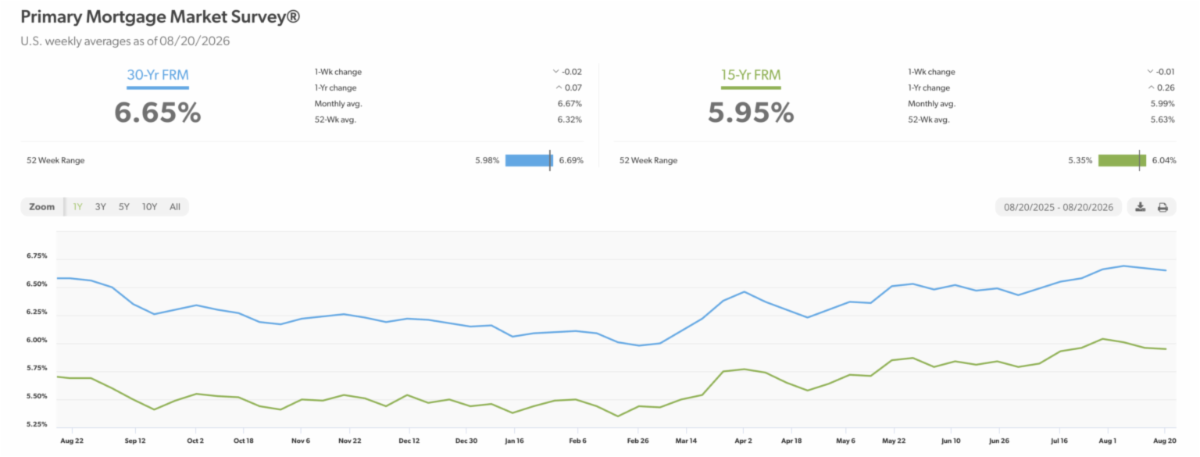
US Treasury Bonds - The 10-year treasury bond closed the week yielding 4.74%, up from 4.68% last week. The 30-year treasury bond yield ended the week at 5.27%, almost unchanged from 5.25% last week. We watch bond yields because mortgage rates follow bond yields.
|