Missed the last issue of Currents? Click here to view it in your web browser! | |
Thank You to All That Made the 2025 Hydrogen & Fuel Cell Seminar a Success! | |
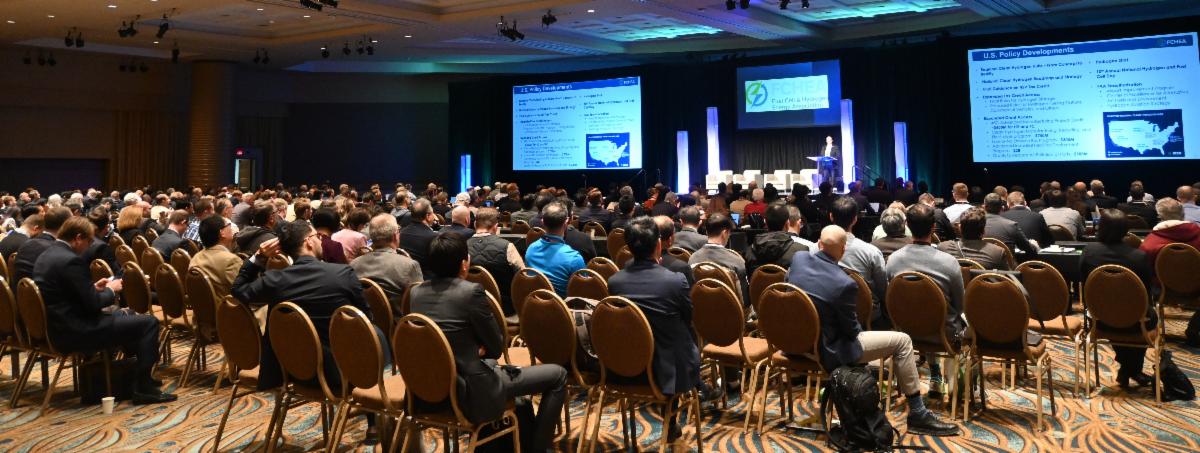
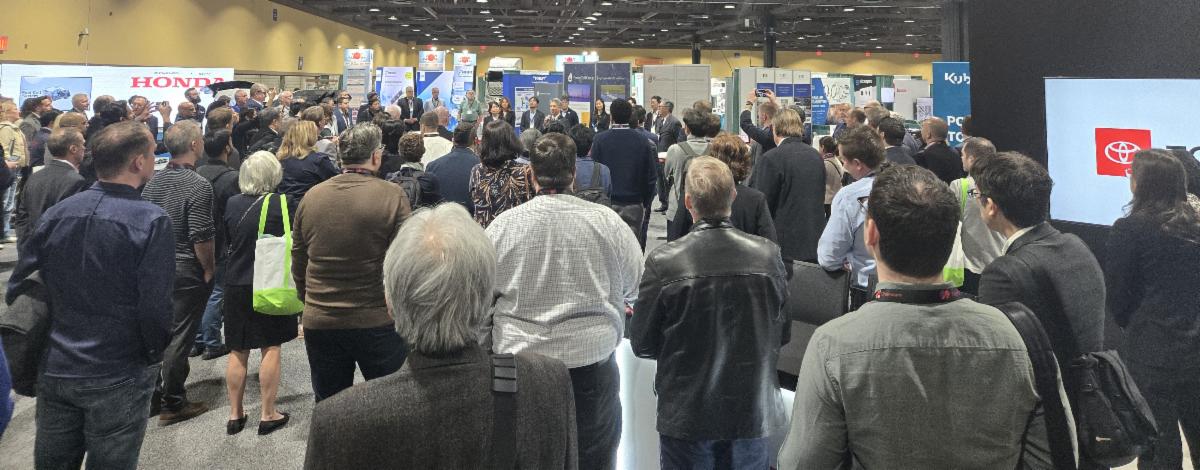
FCHEA would like to thank all of our member companies that sponsored, exhibited, and sent representatives to speak, present, or attend the 2025 Hydrogen & Fuel Cell Seminar last week in Long Beach, California. It was an important event for the industry and made a bigger impact with your contributions and participation.
| 2025 Conference Tracker - Call for Participation | |
FCHEA is conducting a member poll to gather information on the conferences your company plans to attend, exhibit at, or sponsor in 2025. This information will help us determine which events to potentially partner with as a supporting organization (to negotiate discounts or other opportunities) and amplify member participation via social media. We kindly ask that you complete the brief survey linked below by EOD January 24, 2025.
Click here to access the FCHEA Conference Tracker survey.
| |
U.S. Department of Energy Announces Funding Awards to Heartland and Mid-Atlantic Hydrogen Hubs | |
|
On January 17, the U.S. Department of Energy's Office (DOE) of Clean Energy Demonstrations (OCED) announced awards for two hydrogen hubs.
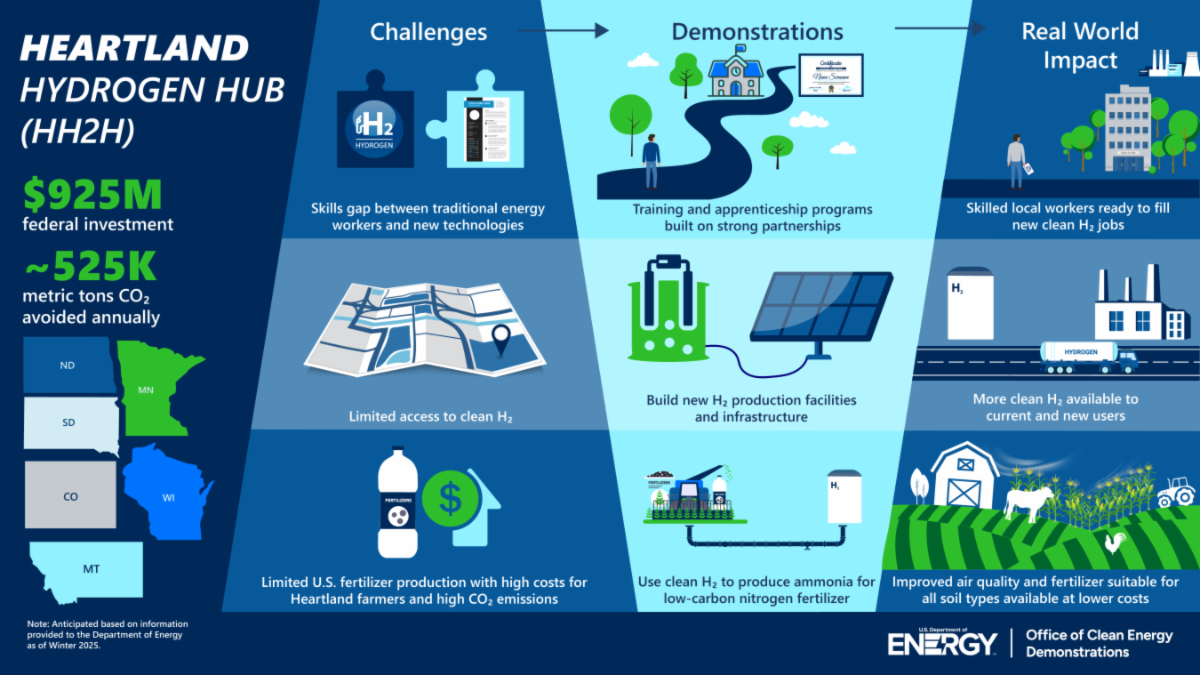
OCED awarded the Heartland Hydrogen Hub, led by the University of North Dakota Energy & Environmental Research Center (EERC), with $20 million to begin Phase 1 activities. The Hub plans to leverage new and existing energy resources and infrastructure to produce commercial-scale quantities of clean hydrogen that would be used for American-made, low-carbon nitrogen fertilizer.
| |
(Source: U.S. Department of Energy) | |
|
OCED also awarded the Mid-Atlantic Hydrogen Hub, led by Mid-Atlantic Clean Hydrogen Hub, Inc. (MACH2), with $18.8 million to begin Phase 1 activities. The Hub plans to develop hydrogen production facilities to be used in industrial application such as power generation and replacement fuel for process heaters—and heavy-duty transportation, with several refueling stations planned to serve sanitation trash trucks, street sweepers, cargo handling equipment, and fuel cell electric buses.
Click here for the full press release from DOE.
Click here to learn more about the Heartland Hydrogen Hub.
Click here to learn more about the Mid-Atlantic Hydrogen Hub.
| |
Plug Closes $1.66 Billion Loan Guarantee from the U.S. Department of Energy | |
|
On January 16, Plug announced it has closed a $1.66 billion loan guarantee from the U.S. Department of Energy’s (DOE) Loan Programs Office (LPO). The loan guarantee will help finance the construction of up to six projects to produce and liquify zero- or low-carbon hydrogen at scale throughout the United States.
Click here for the full press release from Plug.
Click here for the full press release from DOE.
| |
Cummins Launches Industry-First Hydrogen Internal Combustion Engine Turbochargers for On-Highway Applications | |
|
On January 15, Cummins announced the launch of its new turbocharger designed specifically for hydrogen internal combustion engines (H2 ICE). Cummins Components and Software (CCS), part of Cummins' Components business segment, has secured a contract to supply H2 ICE turbochargers to a major European OEM.
Click here for the full press release from Cummins.
| |
FuelCell Energy Announces Contract to Support Hartford Area Grid | |
|
On January 22, FuelCell Energy announced plans to build a 7.4 MW fuel cell power plant in Hartford, Connecticut. The project will deliver Class 1 renewable baseload power to the local grid in support of the state’s Renewable Portfolio Standard. The power produced by the fuel cell plant will be sold to the local distribution utilities, Eversource and United Illuminating, under a 20-year power purchase agreement. As a PPA, the project is expected to add more than $160 million of future revenue to FuelCell Energy’s generation backlog, a queue of new power generation projects.
Click here for the full press release from FuelCell Energy.
| |
Nel Receives Purchase Order for 5 MW of Containerized PEM Electrolyzers | |
|
On January 21, Nel Hydrogen US, a subsidiary of Nel ASA, announced it has received a purchase order for two containerized PEM electrolyzer units totaling roughly $7 million. The two MC500 electrolyzers, 2.5 MW each, will be used to produce hydrogen for a new steel mill in the United States. The customer is undisclosed, but NEL reports the company is one of the largest U.S. steel producers and already uses Nel’s PEM electrolyzers to generate hydrogen at two other sites in the U.S.
Click here for the full press release from PR Newswire.
| |
U.S Department of Energy Releases Updated Report on Pathways to Commercial Liftoff for Clean Hydrogen | |
On January 15, the U.S. Department of Energy (DOE) recently released its latest Pathways to Commercial Liftoff report, an update to the Pathways to Commercial Liftoff: Clean Hydrogen report, which was first released in March 2023 at the of the Liftoff effort. The updated report addresses four major updates since the original report that will impact the timing of Liftoff, including:
- The U.S. is on track to reach 7-9 MMTpa in operational production capacity by 2030.
- Developers face higher production cost estimates due to higher electricity prices, installation costs, and cost of capital. Tax credits like 45V or 45Q can help offset some or all of these increases.
- Industrial sectors continue to pull near-term demand, although an increasing number of projects will service export markets. Starting in 2030, new end-use applications will emerge.
- Promising clean hydrogen production technologies continue to develop, like methane pyrolysis and drilling for geologic hydrogen.
Click here for the full press release from DOE.
| |
Plug Announced Purchase Agreement with Allied Green Ammonia | |
|
On January 15, Plug announced a purchase agreement with Allied Green Ammonia (AGA) for three gigawatts (GW) of electrolyzer capacity to AGA's green hydrogen-to-ammonia plant, currently under development in Australia.
AGA will install a 4.5 GW solar plant to power the Plug electrolyzers, which will produce green hydrogen that will be used to make green ammonia.
Click here for the full press release from Plug.
| |
Be sure to stay on top of state and DC-based events through FCHEA's This Week in Hydrogen and Fuel Cells email newsletter. If you are not already subscribed, please contact Connor Dolan at cdolan@fchea.org.
| |
|
They Said It Best
"The regulations will break the logjam that has been happening in the absence of final rules on section 45V and should give rise to the first building wave of new projects, thus making the United States more competitive."
- Beth Deane, Chief Legal Officer, Electric Hydrogen
Source: A Closer Look At The Final Hydrogen Regs
| |
Have Open Job Positions? Feature Opportunities Through FCHEA's Job Board |
The Fuel Cell and Hydrogen Energy Association Job Board is available here. If you would like a posting featured on our site, please contact Connor Dolan at cdolan@fchea.org. | |
Requests for Papers, Proposals, & Information | |
Funding Available to Small Businesses for Clean Energy Research and Development | |
|
The U.S. Department of Energy (DOE) opened new funding to small businesses for innovative clean energy technologies as part of its Small Business Innovation Research and Small Business Technology Transfer (SBIR/STTR) programs. SBIR and STTR are competitive funding opportunities that encourage U.S.-based small businesses to engage in research and development to accelerate the commercialization of innovative technologies.
Through SBIR and STTR, the Office of Energy Efficiency and Renewable Energy (EERE) has enabled thousands of small businesses and entrepreneurs to develop cutting-edge technologies required to accelerate our transition to a clean energy future.
SBIR/STTR provides funding in two phases: Small businesses can receive up to $200,000 in Phase I to prove the feasibility of an idea; successful awardees can then receive up to $1 million in Phase II for further development including prototyping, validation, and testing.
The funding opportunity covers all EERE technology areas, including:
- Advanced materials and manufacturing
- Bioenergy
- Buildings
- Geothermal energy
- Hydrogen
- Industrial decarbonization
- Solar energy
- Vehicles
- Water power
- Wind energy
Mandatory letters of intent for this funding opportunity are due Wednesday, Feb. 26, 2025 by 11:59 p.m. ET.
Click here for more information.
| |
DOE/EIS-0570: California Hydrogen Hub | |
|
The U.S. Department of Energy (DOE) is preparing an Environmental Impact Statement (EIS) to assess the potential environmental impacts for the proposed action of providing financial assistance to the Alliance for Renewable Clean Hydrogen Energy Systems (also referred to as ARCHES) to facilitate the design, construction, operation and maintenance of the California Hydrogen Hub in the state of California.
The California Hydrogen Hub is proposed to consist of a suite of demonstration projects involving clean hydrogen production, transportation, and end uses located within California. ARCHES is the primary funding recipient and lead California Hydrogen Hub manager. As currently structured, the California Hydrogen Hub encompasses approximately 35 projects including clean hydrogen production facilities that could produce 450-500 metric tonnes per day of clean hydrogen from renewable electricity and biogenic sources, connective infrastructure including refueling stations and pipelines, and a range of end uses including fuel-cell electric trucks, fuel-cell electric buses, a marine vessel, cargo handling equipment, power generation via turbines, and stationary fuel cells.
DOE welcomes written comments on the scope of the EIS until March 3, 2025. Comments will be accepted and considered at any time during the EIS process. However, commenters should be aware that their comments should be timely for them to be fully considered.
To provide written comments through the www.regulations.gov web portal:
Navigate to www.regulations.gov, search for Docket No. DOE-HQ-2024-0087, and follow the instructions for submitting comments.
| |
DOE/EIS-0571: Pacific Northwest Hydrogen Hub | |
|
The U.S. Department of Energy (DOE) is preparing an Environmental Impact Statement (EIS) (DOE/EIS-0571) to assess the potential impacts to the human environment for the proposed action of providing financial assistance to the Pacific Northwest Hydrogen Association (also referred to as the PNWH2 Association). This action would facilitate the design, construction, operation and maintenance of the Pacific Northwest Regional Hydrogen Hub (Pacific Northwest Hub) including in the states of Washington, Oregon, and Montana. The Pacific Northwest Hub would demonstrate the production of clean hydrogen from renewable energy resources and would consist of a suite of demonstration projects involving clean hydrogen production, transportation, and end uses located within the Pacific Northwest.
As currently proposed, the Hub would encompass approximately 10 projects, including clean hydrogen production facilities that could produce 300-400 metric tons per day of clean hydrogen, hydrogen liquefiers, connective infrastructure including refueling stations and pipelines, and a range of end uses including fuel cell electric trucks, fuel cell electric buses, cargo handling equipment, and stationary fuel cells.
DOE welcomes written comments on the scope of the EIS until March 3, 2025. Comments will be accepted and considered at any time during the EIS process. However, commenters should be aware that their comments should be timely for them to be fully considered.
To provide written comments through the www.regulations.gov web portal:
Navigate to www.regulations.gov, search for Docket No. DOE-HQ-2024-0094, and follow the instructions for submitting comments.
| |
DOE/EIS-0569: Appalachian Hydrogen Hub | |
|
The U.S. Department of Energy (DOE) is preparing an environmental impact statement (EIS) to assess the potential environmental impacts for the proposed action of providing financial assistance to the Battelle Memorial Institute (Battelle) to facilitate the design, construction, operation, and maintenance of the Appalachian Hydrogen Hub (also referred to as the Appalachian Regional Clean Hydrogen Hub or ARCH2) in the Appalachian Region including Ohio, Pennsylvania, and West Virginia. The Appalachian Hydrogen Hub is proposed to consist of a suite of demonstration projects involving clean hydrogen production, transportation, and end uses located within the Appalachian Region that includes Ohio, Pennsylvania, and West Virginia. Battelle is the primary funding recipient and lead Appalachian Hydrogen Hub manager.
As currently proposed, the Appalachian Hydrogen Hub would encompass 12 proposed projects, including hydrogen production facilities that could produce at least 1,700 metric tons per day of clean hydrogen (autothermal reformation facilities with carbon capture, biomass pyrolysis facilities, electrolysis facilities, and facilities for recovering hydrogen from waste gases), hydrogen liquefiers, and a range of end uses including residential fuel cells, materials handling equipment, mobility, and industrial uses, including production of ammonia, urea, and low-carbon aviation fuel.
DOE welcomes written comments on the scope of the EIS until March 3, 2025. Comments will be accepted and considered to the extent practicable throughout the EIS process. However, commenters should be aware that their comments should be timely for them to be fully considered.
To provide written comments through the www.regulations.gov web portal:
Navigate to www.regulations.gov, search for Docket No. DOE-HQ-2024-0082, and follow the instructions for submitting comments.
| |
Southwest Virginia Hydrogen Hub | |
|
The Virginia Department of Energy is launching a program to encourage hydrogen production in the Southwest Virginia (SWVA) region and its use across the Commonwealth. The primary objective of this initiative is to tackle energy issues critical for a successful transition to clean energy while promoting economic development in SWVA. These planning grants will support and extend the efforts for energy transition in that region.
Virginia Energy invites proposals for establishing four planning grants at $250,000 each to help support the potential for the development of the hydrogen production industry in the Southwestern Virginia region.
Awards will be based on competitive evaluation and scoring criteria outlined in the application.
Submit complete applications by January 31, 2025. Late or incomplete submissions will not be considered.
Click here for more information.
| |
Intercity Transit Announces RFP | |
|
Intercity Transit, the public transportation provider in Thurston County, Washington, anticipates that it will soon seek proposals from qualified firms interested in providing a Hydrogen Refueling Station at its location in Olympia, Washington.
The solicitation documents for this project will be available online through Washington’s Electronic Business Solution (WEBS). If your firm may be interested in this opportunity, please register in WEBS so that you may download the solicitation documents once they have been posted.
The WEBS registration process can be started by visiting the website provided above and clicking “register now”. If you require assistance with the WEBS registration process, please contact WEBS customer service at (360) 902-7400.
| |
DOE Issues Notice of Intent for Funding to Advance Hydrogen and Fuel Cell Technologies to Drive National Decarbonization | |
|
On September 10, the U.S. Department of Energy announced a notice of intent for potential funding to accelerate the research, development, and demonstration (RD&D) of affordable clean-hydrogen and fuel cell technologies to drive national decarbonization. The potential funding will focus on advancing technologies for hydrogen production, hydrogen infrastructure, and fuel cells, as well as demonstrating hydrogen and fuel cells in new, high-impact applications.
Potential topic areas include:
- Photoelectrochemical (PEC) Water Splitting Device Scale Up will develop and demonstrate PEC water splitting devices using low-cost, scalable synthesis and fabrication techniques.
- High-Performance Materials for Hydrogen Service, Including Cryogenic and/or High-Pressure Conditions will develop advanced materials for use in high-pressure hydrogen storage tanks, cryogenic service conditions, and fiber reinforced polymer hydrogen pipelines.
- Sustainable High-Temperature Proton Exchange Membranes and Ionomers for Heavy-Duty Transportation Applications will develop membranes and ionomers (key components of fuel cells) suitable for high temperature operation (up to 120°C) in heavy-duty fuel cell applications, without the use of perfluorosulfonic acid.
- Domestic Hydrogen Fuel Cell Electric Motorcoach Bus Development and Demonstration will develop and demonstrate domestically produced fuel cell electric motorcoach buses suitable for long-haul service.
For all topic areas, HFTO envisions awarding financial assistance awards in the form of cooperative agreements with periods of performance ranging from approximately two to four years.
Click here for more information from DOE.
| |
OCED Announces Plans to Fund up to $400 Million for Clean Energy Projects in Rural and Remote Areas | |
|
On August 22, the U.S. Department of Energy’s (DOE) Office of Clean Energy Demonstrations (OCED) today issued a Notice of Intent (NOI) for up to $400 million to spur innovative, community-focused clean energy solutions in rural and remote areas across the United States. This funding will support the deployment of a variety of commercially available, clean energy technologies, demonstrating their viability and benefits to rural and remote residents, and ultimately encouraging widespread adoption.
The anticipated new funding plans to support the demonstration of energy technologies that provide clean, resilient, reliable, affordable power, while also aiming to increase local energy independence and economic development. Eligible projects must address at least one of the following: improving overall cost-effectiveness of energy generation, transmission, or distribution systems; siting or upgrading transmission and distribution lines; reducing greenhouse gas emissions from energy generation in rural or remote areas; providing or modernizing electric generation facilities; developing microgrids; or increasing energy efficiency.
Click here for more information.
| |
|
The Namibian green hydrogen initiative is centered around three key hydrogen valleys: the Southern Region, the Central Region, and the Northern Region. These valleys are designed with integrated infrastructure and production on facilities es powered by abundant solar and wind energy resources. The comprehensive plan includes the development of necessary transportation on infrastructure to facilitate efficient distribution on and export. The objective of this initiative is to achieve an output of 10-12 million metric tons per annum by 2050. This ambitious target underscores Namibia’s commitment to becoming a leading producer and exporter of green hydrogen and its derivatives.
The Namibian government, via the Namibian Hydrogen Fund are conducting a market sounding process to identify interested promoters for the Southern Corridor Green Valorisation and the Central Valley Common User Infrastructure (CUI) Development projects. RfPs will be shared with those participants that have indicated their interest at this stage.
For more information, contact CTEN@CrossBoundary.com.
| |
Projects for the Manufacture and/or Assembly of Electrolyzers and their Components in Chile | |
|
This program aims to contribute to sustainable productive development and to enable the green hydrogen industry in the country by facilitating the creation of industrial and commercial partnerships between domestic and foreign companies along the green hydrogen value chain, and contributing to the local and international supply of electrolyzers to reduce delivery times within Chile and the region, ensuring qualified personnel for electrolyzer maintenance services in the national territory, while contributing to the economic development of the country.
Benefits include:
- Up to 60.00% of the total cost of each selected project will be co-financed, with a maximum benefit of $10,000,000 per project, to be provided by SQM Salar S.A. in installments as determined by Corfo and signed in agreement with the Recipient Entity. Installments will be paid in advance.
- Co-financing: participants must provide the remaining co-financing of at least 40.00% of the total project cost through monetary and/or “in-kind” contributions.
Click here for more information.
| |
ARPA-E Announces $150 Million in Vision Open 2024 | |
ARPA-E announced up to $150 million in funding to develop technologies to realize ARPA-E’s vision of the energy future.
The three goals set forth by Vision OPEN 2024 require disruptive and ambitious technologies:
GHG-Free Abundant Primary Energy:
This first goal seeks to provide a path to a complete transition of global primary energy supply to GHG-free forms by 2050, while increasing the primary energy supply. This will be realized through innovations that accelerate deployment of GHG-free primary energy and advance both new and nascent technologies.
Intermodal Energy Superhighway:
The goal is to develop an intermodal energy superhighway to transfer energy through several modalities—not just electrical power. A wide range of primary energy will be transferred through various networks (e.g., electrical, chemical, and thermal) designed to support its efficient, reliable, and inexpensive distribution.
Carbon as a Sustainable Building Block of the Future:
ARPA-E envisions a path to a transition from carbon as a source of unsustainable energy to a source of valuable materials. This will be realized through innovations, including engineering plants and algae into “living refineries” of atmospheric carbon; transforming fossil refineries into low-GHG materials factories; applying advanced carbon allotropes to energy technologies and sequestration; and scaling up new polymers that are recyclable by design.
You can access more information about Vision OPEN 2024 on ARPA-E eXCHANGE here.
| |
U.S. Department of Energy Announces $20 Million to Develop Hydrogen Detection and Quantification Technologies | |
|
On April 25, the U.S. Department of Energy (DOE) announced up to $20 million in funding to support the development of innovative approaches for hydrogen gas emissions detection and quantification. The focus of this new ARPA-E effort is on detecting emissions throughout the full hydrogen supply chain, from production to end use. Cost-effective, accurate measurements of hydrogen gas will facilitate detection and mitigation of direct emissions. ARPA-E—through the H2SENSE Exploratory Topic—is seeking technologies with a:
- Minimum detection and quantification threshold of 10 kg/hr across a 100 meters (m) x 100 m area; and
- Cost of no more than $10,000 for the detection area.
Click here for more information from DOE.
| |
U.S. Department of Energy Announces Up To $100 Million for Pilot-Scale Testing of Advanced Carbon Dioxide Removal Technologies | |
|
On February 15, the U.S. Department of Energy's (DOE) Office of Fossil Energy and Carbon Management (FECM) announced up to $100 million to help develop a commercially viable carbon dioxide removal industry in the United States. The funding will support pilot projects and testing facilities to demonstrate and scale carbon dioxide removal technologies that reduce carbon dioxide (CO2) pollution by removing it directly from the atmosphere and then storing the CO2 in geological, biobased, and ocean reservoirs or converting it into value-added products.
Projects selected under this FOA will focus on three areas of interest:
- Small Biomass Carbon Removal and Storage Pilots — will support integrated pilot-scale testing of biomass carbon removal—including carbon-negative hydrogen production—and storage or conversion with appropriate monitoring, reporting, and verification.
- Small Mineralization Pilots — will support integrated pilot-scale testing of enhanced mineralization technologies with appropriate monitoring, reporting, and verification.
- Multi-Pathways Carbon Dioxide Removal Testbed Facilities — will support testbed facilities suitable for evaluating, developing, and integrating multiple carbon dioxide removal pathways across different ecosystems, climates, and communities.
Click here for more information from the U.S. Department of Energy.
| |
Drayage Truck Funding from Ports of Los Angeles and Long Beach Available to Stack with HVIP | |
|
Starting Tuesday, November 14, 2023, the Clean Truck and Bus Voucher Incentive Project (HVIP) will make $60 million provided by the Ports available for voucher requests for zero-emission Class 8 tractors performing drayage operations at the Ports of Los Angeles and Long Beach.
Voucher enhancements funded by the Ports are $100,000 per truck for fleets size 10 and smaller and $75,000 for fleets larger than 10, additional to the HVIP drayage voucher amount of $150,000 per truck and any other applicable HVIP voucher enhancements listed on www.californiahvip.org/funding. Purchaser qualifications are as defined in the HVIP Implementation Manual.
Funding is made available through the Ports’ Clean Truck Funds and administered by CALSTART on a first-come, first-served basis through the existing HVIP voucher request process and online Voucher Processing Center. Voucher requests will follow HVIP requirements, including the eligible trucks and dealers listed at www.californiahvip.org.
Additionally, all existing eligible unredeemed HVIP drayage truck vouchers that meet the Ports’ requirements will receive the same additional funds of $75,000 or $100,000 added to their HVIP voucher. Outreach to individual dealers and purchasers is already underway regarding this increase as additional actions are required to apply Port Clean Truck Funds to existing vouchers.
Click here for more information.
| |
Zero-Emission Freight and Marine Statewide Grant Funding in California | |
|
On August 22, the California Air Resources Board announced up to $20 million in funding is now available Statewide through the VW Zero-Emission Freight and Marine (ZEFM) program. This VW ZEFM solicitation incorporates the modifications to California's Beneficiary Mitigation Plan that were recently approved by the California Air Resources Board and has the following new features:
- Allows stacking with Clean Off-Road Equipment Voucher Incentive Project (CORE) and other state programs that don’t claim NOx emissions reductions
- Removed static funding caps for all project categories, including the funding cap for Airport Ground Support Equipment
- Includes a higher cost-effectiveness threshold (increased from $280,000 to $466,000 per ton of NOx reduced) that will be used as the primary factor in determining maximum funding
- Requires CARB’s pre-approval for projects with proposed award over $1 million
Funding is available for the following project categories:
- Heavy-lift forklifts (8,000 lb. lift capacity or greater) scrap and replace
- Airport ground support equipment scrap and replace
- Port cargo handling equipment (including terminal tractors) scrap and replace
- Ferries, tugboats, towboats repower, and
- Shore power system installation for ocean-going vessels not required or not yet required to use shore power while at berth.
Applications are being accepted and reviewed on a first-come, first-served basis until funding is exhausted.
Click here for more information.
| |
Statewide Funding for California Zero-Emission Class 8 Freight and Port Drayage Trucks |
Funding is now available from the California Volkswagen Environmental Mitigation Trust for the Zero-Emission Class 8 Freight and Port Drayage Trucks category. This program will provide incentive funds on a first-come, first-served basis to truck owners operating in the state of California to replace Class 8 freight trucks, including drayage trucks, waste haulers, dump trucks, and concrete mixers, with zero-emission technologies approved by the California Air Resources Board and available for commercial use.
Click here for more information on the program.
| |
Incentives for Off-Road Zero-Emission Equipment | |
The California Air Resources Board announced $125 million in funding incentives for its Clean Off-Road Equipment Voucher Incentive Project (CORE). CORE helps offset the higher cost of zero-emission technology with a point-of-sale discount. There is no scrappage requirement, and additional funding is available for charging and fueling infrastructure and for equipment deployed in disadvantaged communities.
Click here for more information on the program.
| |
|
Upcoming FCHEA Meeting Calendar
For more information on any of FCHEA's working groups, committees, or to be added to any working group rosters, please contact Connor Dolan at cdolan@fchea.org.
| |
FCHEA Communications and Marketing Committee
A virtual meeting will be held Wednesday, January 29 at 2:00 PM EST
FCHEA Tax Working Group
A virtual meeting will be held Thursday, January 30 at 2:00 PM EST
| |
1025 Connecticut Avenue NW, Suite 1000, Washington D.C. 20036 | 202-355-9463 | | | | |