Vol. 43 | July 2026, 5-minute read

Clinical Research Update Newsletter Banner: Current Clinical Research News Roundup

2026 Clinical Research Colloquium Recap

Many UT Southwestern leaders, clinicians, researchers, and staff gathered in June for the fifth annual Clinical Research Colloquium to discuss the progress of our clinical research operations and trends shaping the field.

 
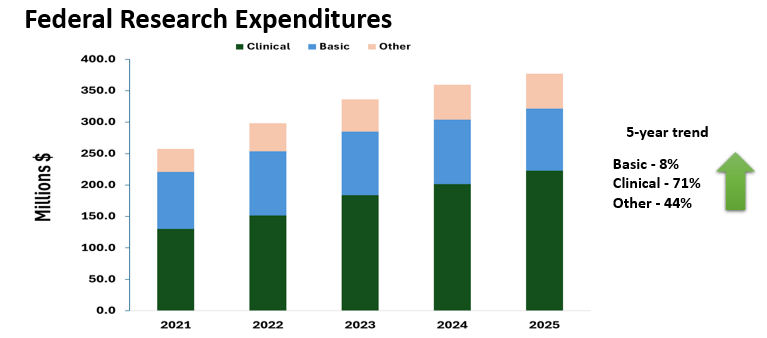
Graph representation of federal funding to UTSW clinical research. Title is Federal Research expenditures. Y axis is funding in millions of USD. X axis is years between 2021 and 2025. Bars measure clinical, basic, and other research expenditure totals. Total in 2021 is 257 million; total in 2022 is 298 million; total in 2023 is 336 million; total in 2024 is 359 million; total in 2025 is 377 million. Main takeaway is a 5 year trend representing an increase in funding by 8% in basic research, 71% in clinical research, 44% in other funding expenditures.

Federal Expenditures to UTSW Research. Clinical includes clinical departments and OSPH.


By the Numbers 

In FY25, UTSW’s total research expenditure increased to $818 million from $761 million in FY24. Of this, more than $377 million was provided through federal grants. Clinical research at UTSW received over $222 million of this funding support, provided by federal, industry, state, institutional sources among others.


The number of clinical studies at UTSW continued its five-year upward trend, with industry partnerships increasing by 23% and federal collaborations by 21% since 2020. Looking forward, we expect these numbers to decrease in 2026 because several major studies closed in 2025.


One of the most positive indicators presented was the rebound in our clinical research faculty. After several years of decline, the number of clinical scholars increased by 22 members over the last year. The increase shows that the strategic investments in clinical research infrastructure, workforce development programs, and protected research time are successfully reversing earlier workforce attrition.

AI Accelerates Study Start-Up 

As part of UTSW's broader strategy to apply artificial intelligence to research operations, two up-and-coming AI tools represent tangible examples of how AI can enhance efficiency, reduce administrative burden, and accelerate study activation timelines. 

Agent IRB

The Office of Research Regulatory Affairs is introducing AgentIRB, an agent designed to help investigators submit stronger Institutional Review Board (IRB) applications and reduce delays in the review process. 


AgentIRB is a web extension designed to extract submission data from the ETHOS system, including smart forms, protocols, consents, and supporting documents. The tool then evaluates submissions against established rules and returns a report flagging potential issues, rationale, and recommendations for improvements before the application reaches IRB reviewers. 


By identifying common errors and omissions early, AgentIRB will help investigators submit stronger Institutional Review Board applications at the outset and reduce delays in the review process. Contact Rhonda Oilepo for more information. 

TrialCover AI 

TrialCover is a pilot project undertaken by the Office of Clinical Research and SPA that uses AI to assist with clinical trial coverage analysis, the process of determining which study-related procedures should be billed to insurance or must be paid by the study.  


TrialCover streamlines this process by automatically extracting study events to determine coverage requirements. Overall, the tool aims to reduce coverage-analysis timelines and help investigators move studies through startup more quickly and efficiently.  


Early results suggest substantial gains in efficiency. The system currently captures approximately 86% of coverage-analysis details, including study events, timelines, and coverage determinations. About 20% of analyses are considered high-confidence and ready for use with minimal review, while others are routed for analyst approval or full compliance review. The tool also offers meaningful financial benefits, with projected annual savings exceeding $578,000 through reduced coverage-analysis costs. As the system continues to learn and improve, leaders expect even greater gains in speed, efficiency, and compliance. Contact Megan Marks for opportunities to engage TrialCover for your research.

Welcome New Dean's Scholar

We are thrilled to welcome an outstanding new early-career investigator to the Dean's Scholar in Clinical Research Program, which will support his independent research over the next two years.


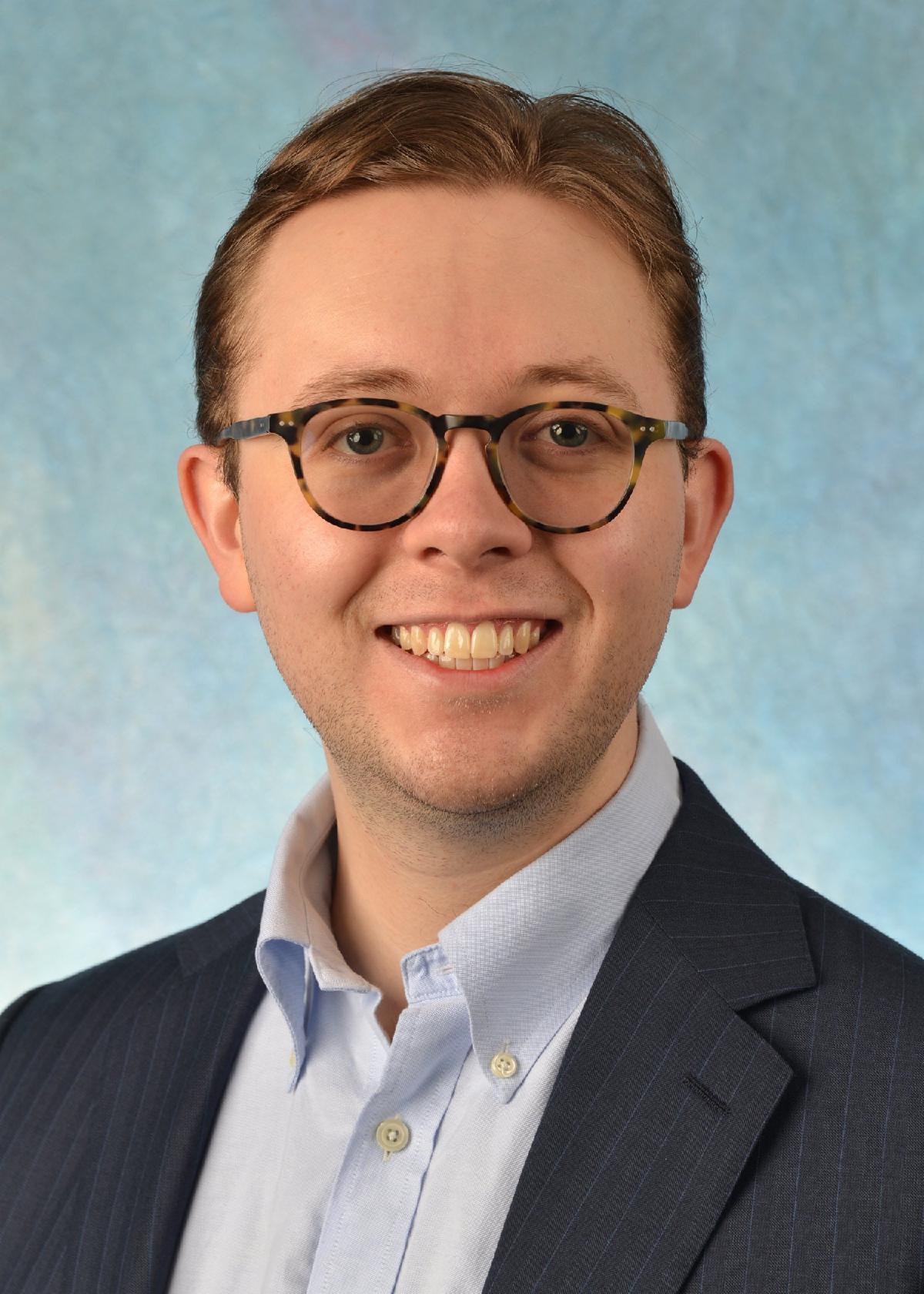
Jay Lusk, M.D., M.B.A.
Dr. Lusk will be joining UTSW from the University of North Carolina at Chapel Hill, where he conducted his residency in preventive medicine and public health. In his supported research, Dr. Lusk will determine the efficacy of a clinical blood pressure target to optimize neurovascular function in older patients with dementia, while minimizing risk for falls and injuries related to low blood pressure.


The Dean’s Scholar in Clinical Research Program strives to enhance the success of UT Southwestern faculty in the Clinical Scholar track. It provides early-career faculty protected research time, support, didactic training, career guidance, and mentorship to facilitate their development as successful clinical investigators. Applications for the fall cycle open Aug. 3.

UTSW Invests in Strengthening Our Clinical Trials Enterprise

A multidisciplinary committee on clinical research was established this year by Health System leadership in order to develop a more efficient and supportive environment for clinical research at UTSW. Through the committee’s recommendations, four workgroups have been created to improve clinical trial implementation and engagement, with many initiatives expected to begin rolling out in FY27 with strong support from the health system.


The committee’s core focus areas include building a more scalable trial infrastructure for investigators through enhanced training, mentorship, and centralized research support; developing a system for trial selection and activation through accelerating activation timelines and organizing contracts; establishing systems for more efficient trial recruitment by removing barriers to patient enrollment and automating screening processes; and strengthening our coordination with the health system to engage wider audiences and drive higher patient enrollment.


The workgroup’s recommendations include expanding AI-enabled screening tools, increasing recruitment coordinator support, and creating incentives that recognize excellence in expanding our clinical trial portfolio and trial recruitment.


As planning moves forward, the workgroup will develop a comprehensive set of performance metrics spanning operational efficiency, study activation timelines, enrollment performance, referral growth, trial visibility, investigator support, and workforce development. We will share updates on new resources, tools, and opportunities to help shape the future of clinical research across our campus.


Funding Opportunities

Applications Open for the 2026-27 THR Clinical Scholars Program

The Texas Health Resources (THR) Clinical Scholars Program supports the training and development of outstanding clinician-researchers at UT Southwestern. It provides up to 70% protected research time and other resources to promote career development for clinical investigators. Scholars are eligible to receive up to $750,000 for research and salary support for three years.


  • Cycle 2 applications are due Sept. 25.
  • Cycle 3 applications are due Jan. 30.

Children's Clinical Research Advisory Committee Grant Funding Cycle Now Open

Children’s Health will support research designed to improve the understanding, prevention, diagnosis, or treatment of childhood diseases. In particular, Children’s Health seeks to provide one year of funding for innovative research ideas with high potential for sustainable extramural support in the future.


O'Donnell Brain Institute Trainee Travel Grant Program

The OBI Travel Grant Program is accepting applications for trainee travel through February 2027. The program supports trainees presenting their original research at national and international conferences. Applicants must be a Ph.D. student, postdoctoral scientist, resident, or clinical fellow in an OBI-affiliated lab. Each award covers up to $2,500 in travel costs.


Important Dates and Upcoming Events

The Learning Blueprint: Building Competence with UDL, Accessibility, and Scaffolding

This one-hour session explores how Universal Design for Learning (UDL), accessibility, cognitive load, and scaffolding work together to support student learning and the development of competence.


AI in 30: CAS Newton and Reaxys AI to Answer Chemistry Questions

The AI in 30 series explores the Library's AI-powered tools in quick, digestible 30-minute sessions, highlighting core features and how to integrate the tools into your workflows. This session introduces CAS Newton, an AI assistant in CAS SciFinder, and the AI capabilities in Reaxys. Participants will learn how these tools leverage curated chemical knowledge bases to generate evidence-informed responses, identify relevant literature, and support scientific decision-making.


Turning Data Into Decisions with Copilot

Discover how to transform raw data into decision‑ready insights using Excel Copilot and the Analyst Agent. Through hands‑on labs and real examples from clinical, education, and research settings, this session walks you through a repeatable workflow that moves from identifying trends to producing leadership‑ready recommendations. Learn how to analyze structured and text data, validate findings, and generate concise readouts that support confident, evidence‑based decisions.


Accessibility 101: The Why Behind the What

To support UT Southwestern’s move toward compliance with federal digital accessibility requirements, the Accessibility 101 training series will continue as a standing monthly offering. 


Facebook  LinkedIn  X