WMU Newsletter

9.12.2025

"WMU, a Leader of Change and Innovation"


President's Message


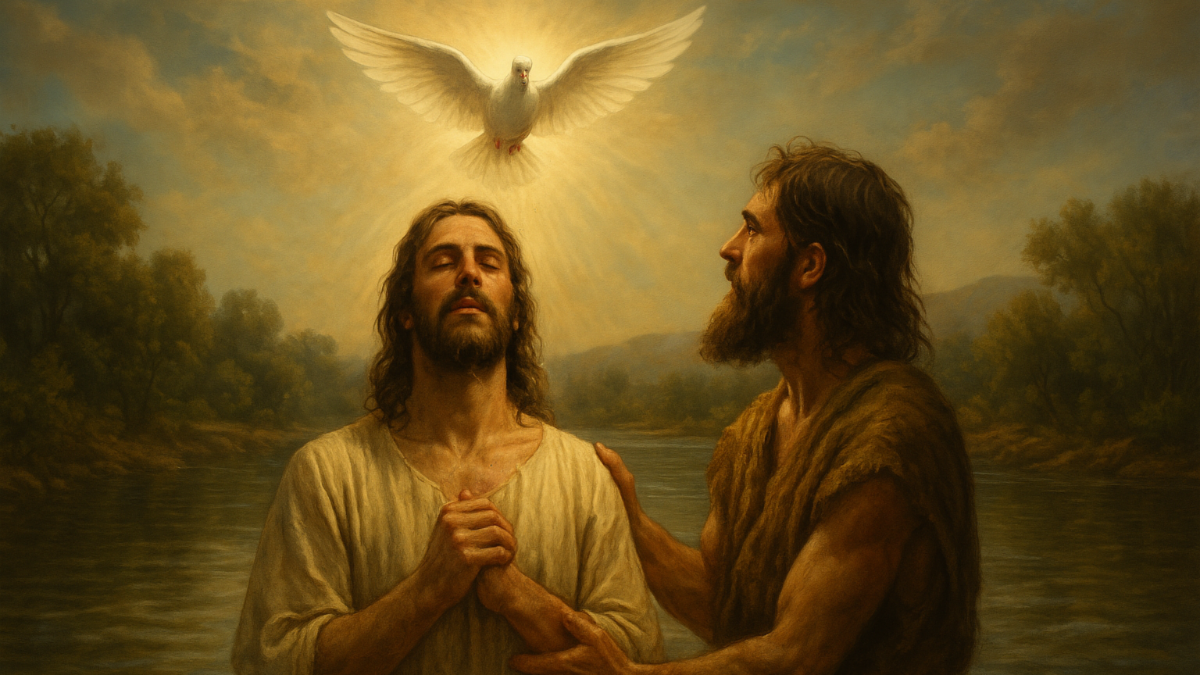
Baptism and New Life (Romans 6:1–23)


“Therefore we were buried with Him through baptism into death, in order that, just as Christ was raised from the dead through the glory of the Father, we too may walk in newness of life.” (6:4)


Romans 6 explains how the Christian’s “new life” begins and continues through the sign of baptism. The question in verse 1 (“Shall we go on sinning so that grace may increase?”) is a possible objection raised by someone who has heard the emphasis on grace and hope in 5:20–21. Paul immediately points out that this is a logical error and carefully unfolds how union with Christ—symbolized in baptism—breaks down the old self and establishes a new creation.


Union through Baptism (vv. 2–11)

In verses 2–4, Paul presents the principle that “one who has died can no longer be ruled over.” A person who has participated in Christ’s death through baptism has also become “dead to sin,” and sin can no longer reign over them. Through Jesus’ resurrection, God overcame sin and death, and He grants those united with Him in baptism the possibility of a new life. Verses 5–7 repeat this truth and emphasize that the “body of sin” has already died. The old self (all humanity in Adam) that was ruled by sin was put away in the symbolic funeral of baptism. Then in verses 8–11, participation in Christ’s resurrection is added. The fullness of new life is still future, but its power is already at work within. Just as Christ dealt with the demands of sin and obeyed God, those united with Him in baptism are declared to “consider themselves dead to sin but alive to God.”


Living Out the New Life (vv. 12–14)

Christians established on this new foundation cannot live irresponsibly. Verses 12–13 urge believers to present the parts of their body as instruments of righteousness so that “sin may no longer reign.” This does not end with passive grace but assumes a person’s willing decision and intentional participation. The law is no longer a violent authority that promotes sin but is reshaped as guidance for a life that follows the order of grace. Verse 14 declares, “sin shall not be your master,” assuring ongoing victory in real life.


A Change of Masters: From Sin to Righteousness (vv. 15–23)

From verse 16 onward, Paul presents a choice between two masters—sin and righteousness (God). The fruit of one’s actions depends on which power a person offers themselves to as a slave. Verse 19 urges believers to leave behind a life that once served impurity and instead serve righteousness. Verses 20–23 describe this change of slavery more concretely. The wages of the old master, sin, is death, but the service offered in obedience to the new master, God, leads to holiness (sanctification) and results in eternal life. Ultimately, the “change of dominion” that began through union in baptism leads to real transformation and maturity in every area of life, confirming that the journey of new life moves toward completion.


Baptism is not merely a ritual but a “starting line of new life” symbolizing union with Christ in His death and resurrection. This union neutralizes the power of sin and leads life under the reign of righteousness and life. The Christian’s willing decisions and ongoing obedience are the process of living out, in daily life, the change of dominion brought about by grace. In the end, Romans 6 emphasizes that the fundamental “change of identity” brought about through baptism must be connected to action, inviting believers to pursue true freedom and sanctification in Christ.


Hello, I am Juhyun Cho, a MACP graduate serving in a counseling ministry in Indonesia.


After graduating from the MACP program, which remains a very meaningful season in my life, I have been providing free online (Zoom) counseling to Indonesians who are struggling with emotional and mental difficulties. Through this counseling ministry, I have newly come to realize that behind the outwardly cheerful and optimistic nature of many Indonesians, there are deep inner struggles. Among my clients are not only Christians but also Muslims and Buddhists, and I share God’s love with them in natural ways. Although I have not used direct evangelistic methods, I am very thankful that one Muslim client and one Buddhist client have begun to open their hearts to Christianity. I pray that through this counseling ministry, those who suffer in their hearts will find comfort and come to experience Jesus, the ultimate Healer.


Together with my husband, I am also involved in personal evangelism and training ministries. The training is designed for pastors, missionary candidates, seminary students, and Muslim-background believers (MBBs), focusing on how to evangelize Muslims, make disciples, and plant house churches.


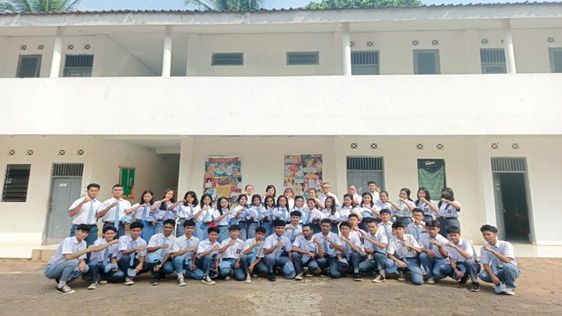
In addition, I serve the Sundanese people of Indonesia through a school ministry. The Sundanese, with a population of 50 million, are the second largest ethnic group among Indonesia’s more than 300 ethnic groups, and 99.8% are Muslim—an unreached people group. There is a small village where a minority of Christians live among the Muslim majority, and in that place a high school was established in 2011. Each time I hear the students’ praises lifting up the name of Jesus in the midst of a predominantly Muslim environment, my heart is deeply moved. Over the years, children of Muslim-background believers who needed a firm faith identity have enrolled, receiving both academic education and spiritual training. So far, 30 students have gone on to study at theological seminaries, dreaming of becoming pastors and evangelists. I hope this school will continue to raise the next generation of spiritual leaders devoted to the evangelization of the Sundanese people and Indonesia.


What has guided my life as a missionary is Jesus’ command: “Go and make disciples of all nations.” At times, when the work has been difficult and I have felt like giving up, I have remembered His promise that the One who has all authority in heaven and on earth is with us always, to the very end of the age. Remembering this promise has given me strength again. Please pray that I will continue to hold onto this promise and faithfully carry out the mission the Lord has given me. Thank you.


Recruiting Students for the Certificate Program


The DSLIM Foundation, a partner organization of World Mission University, has developed a certificate program titled Understanding Christian Disability Studies and Ministry. This program is designed to help various faith communities develop a proper understanding of disability, explore theological and ethical issues, and equip leaders of institutions and local churches, laypersons, and community volunteers to support the full participation of people with disabilities in both church and society.


This October, the course “Disability and Family Ministry” will be offered. We invite your interest and participation.


Course Information

Course Title: Disability and Family Ministry


Instructors:

  • Rev. June Hyuk Lee (Special Needs Ministry, Youngnak Church of Los Angeles)
  • Rev. Yoon Kyung Ahn (Infant Ministry, ANC Onnuri Church)
  • Prof. Hyuna Lee (Department of Social Welfare, World Mission University)


Schedule: October 20 – December 14 (8 weeks)

Online format (self-paced learning and participation in Zoom meetings)


Tuition:

  • $150 per individual registration
  • $100 per person for church or group registrations


Registration Deadline: Sunday, October 12


Course Description

The course Disability and Family Ministry provides a broad understanding of families of individuals with disabilities, strengthens their capacities, and explores ways to effectively support them within the church and local community. Topics include common misconceptions about families of people with disabilities, practical ways to understand and support these families, biblical perspectives on disability, and principles and methods of faith-based care and empowerment for family ministry.


This course is intended for anyone interested in families of people with disabilities and related ministry.


Weekly Topics

  • Week 1: Common Misconceptions About Families of Individuals with Disabilities (Part 1)
  • Week 2: Common Misconceptions About Families of Individuals with Disabilities (Part 2)
  • Week 3: From Empathy to Ministry: Practical Ways to Understand and Support Families
  • Week 4: Biblical Perspectives on Disability (Part 1)
  • Week 5: Biblical Perspectives on Disability (Part 2)
  • Week 6: Disability, Faith, and the Family
  • Week 7: Principles and Practices for Empowering Families of Individuals with Disabilities
  • Week 8: Foundations and Practices of Family Ministry


Learning Format and Features

Courses are delivered through an online Moodle-based learning platform and run for 8 weeks per course in a self-paced format.


All classes are 100% online, allowing participants to engage at their convenience.


Contact: Prof. Hyuna Lee (hyunalee@wmu.edu)