|
The American Society of
Le Souvenir Français Inc.
Monthly Bulletin - Vol. VI, No. 7
July 2026
| | |
America250
Part of a series
250 Years
15 Defining Moments
| |
| |
Cover illustration:
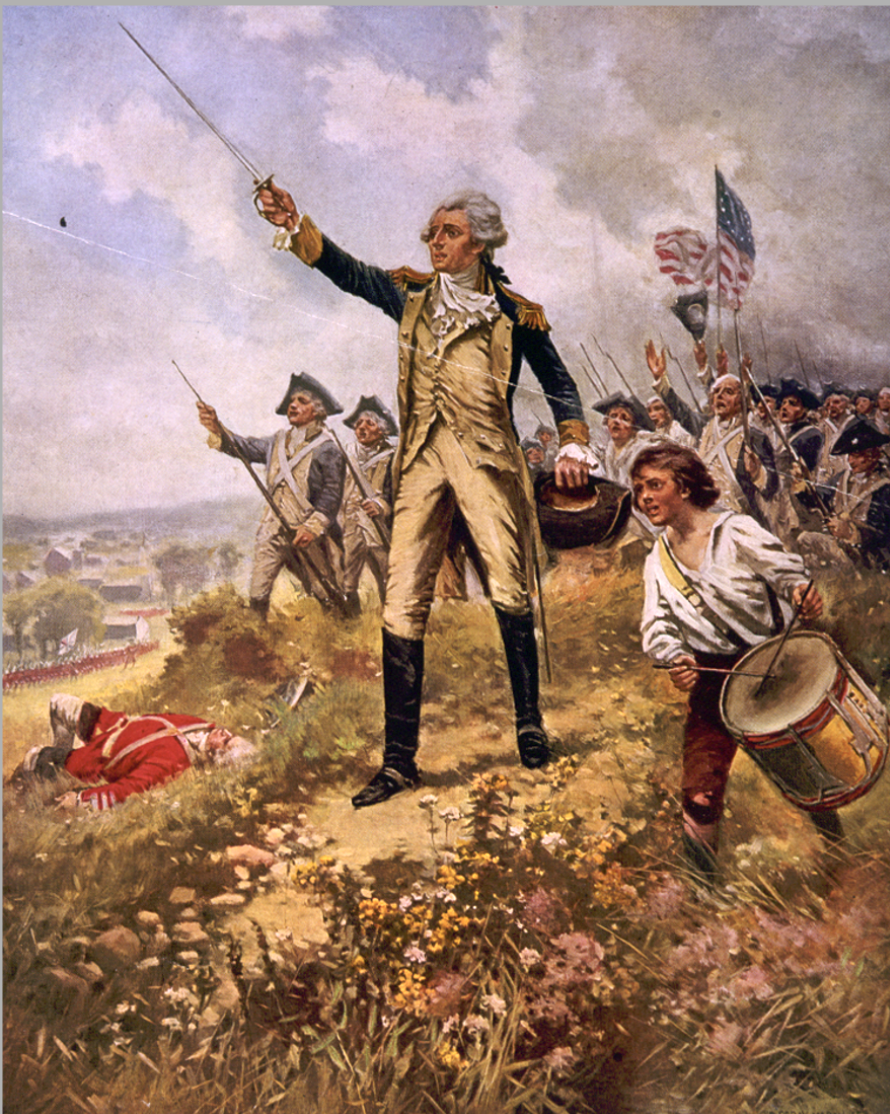
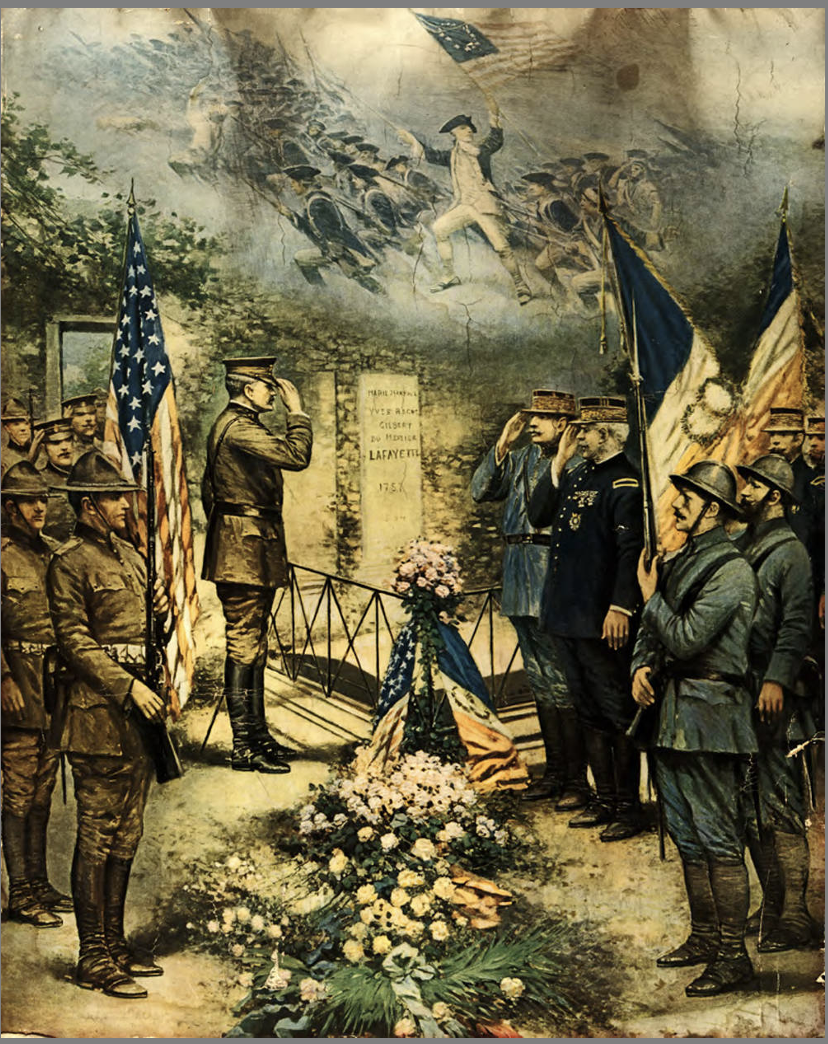
It all started with Lafayette — and 250 years later, having endured all the vicissitudes of history, it endures still.
"Lafayette's baptism of fire" by E. Percy Moran (1862-1935), c. 1909, Library of Congress Prints and Photographs Division Washington, D.C. 20540 Public Domain, https://www.loc.gov/pictures/item/96508902/
| | |
Editorial
On July 4th, the United States celebrated the 250th anniversary of its Declaration of Independence with fireworks and celebrations from coast to coast. In France too, many events were held in Paris, Versailles, and many other cities to celebrate this momentous occasion and reaffirm the historic ties of alliance and friendship between the two nations.
The Declaration of Independence itself was the spark that gave birth to the nation. However, France crucial support was manifest and very real — if initially covert —as early as 1775, as we narrated in our January bulletin.
Louis XVI and his Foreign Affairs Minister Vergennes were cautious. The possibility of a reconciliation between the 13 Colonies and the British Crown was thought to be real, and would have imperiled, they thought, the French colonies in the Caribbean facing a combined British and American attack. After many unsuccessful entreaties with his Spanish uncle to support the Rebels, Louis XVI finally decided to risk war with the British alone in 1778 (Spain would only join the fight marginally in 1779, and as an ally of France — not as an official ally of the United States). It took the point of "no return" of the Declaration of Independence, and ultimately the victory of Saratoga in October 19, 1777, for the French court to sign the official Treaty of Alliance of February 6, 1778 recognizing the Independence of the United States, and consequently open war with the British.
First among nations to officially recognize the United States independence by a formal Treaty, French and U.S. history shared significant moments during the ensuing 250 years. This is what we would like to relate. There are, of course, litterally hundreds of big and small events punctuating this timeline. We admit that our selection is somewhat arbitrary. Although our guiding principle was to choose events that have had, we believe, the most lasting psychological impact on both societies across the Atlantic.
They shaped the perception of both peoples have on one another, they are still celebrated today, and, as a family photo album, would be the 15 most iconic events of this long marriage, with its cohorts of successes and also quarrels.
We will resume in the following months of this 250th anniversary year our stories of individual French volunteers who fought for the freedom of the United States.
Part Two of this Bulletin continues our tradition of honoring a particular American volunteer who, conversely, fought and died for France 142 years later. This month we will honor Sergeant Steven Michael Tyson, "Mort pour la France" on July 19, 1918 at Dormans near Château-Thierry, in the Département of the Marne.
Part Three of this Bulletin lists several news items and save-the-dates. You will see a selection of photos of recent events celebrating July 4th, including several in which our Society took an important part.
We wish you a very happy summer and happy reading!
On behalf of the Board of Directors,
Thierry Chaunu
President, The American Society of Le Souvenir Français, Inc.
Délégué Général du Souvenir Français pour les Etats-Unis.
| |
| |
Key Moment #1
Lafayette lands in America
June 13, 1777
| | |
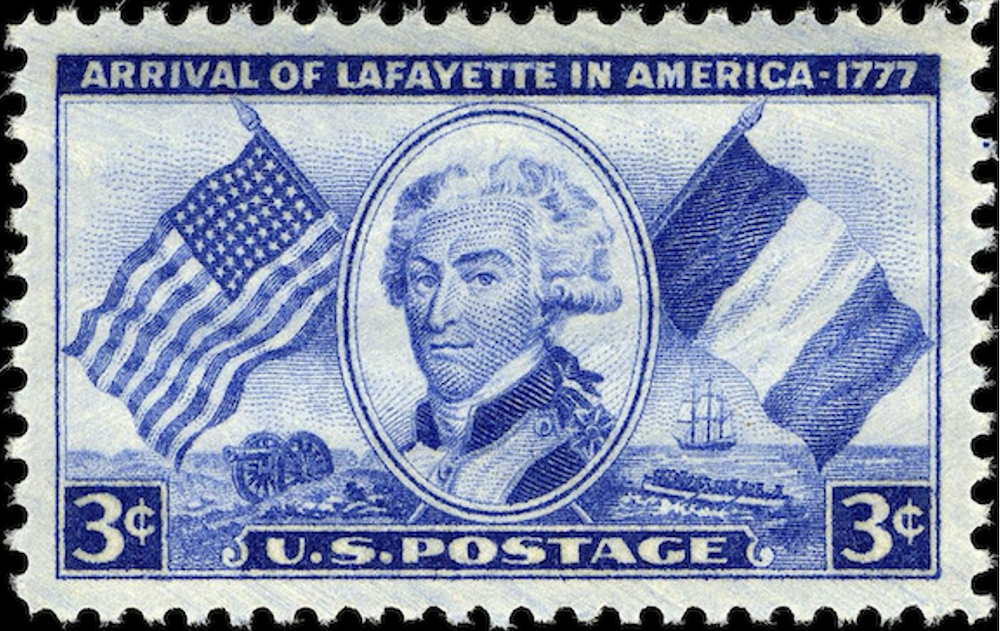
Above:
Top: : 3-cent US stamp Lafayette, 1952, By U.S. Bureau of Engraving and Printing; Stamp designed by Victor S. McCloskey, Jr.; Imaging by Gwillhickers - U.S. Post Office; Smithsonian National Postal Museum, Public Domain, https://commons.wikimedia.org/w/index.php?curid=34160959
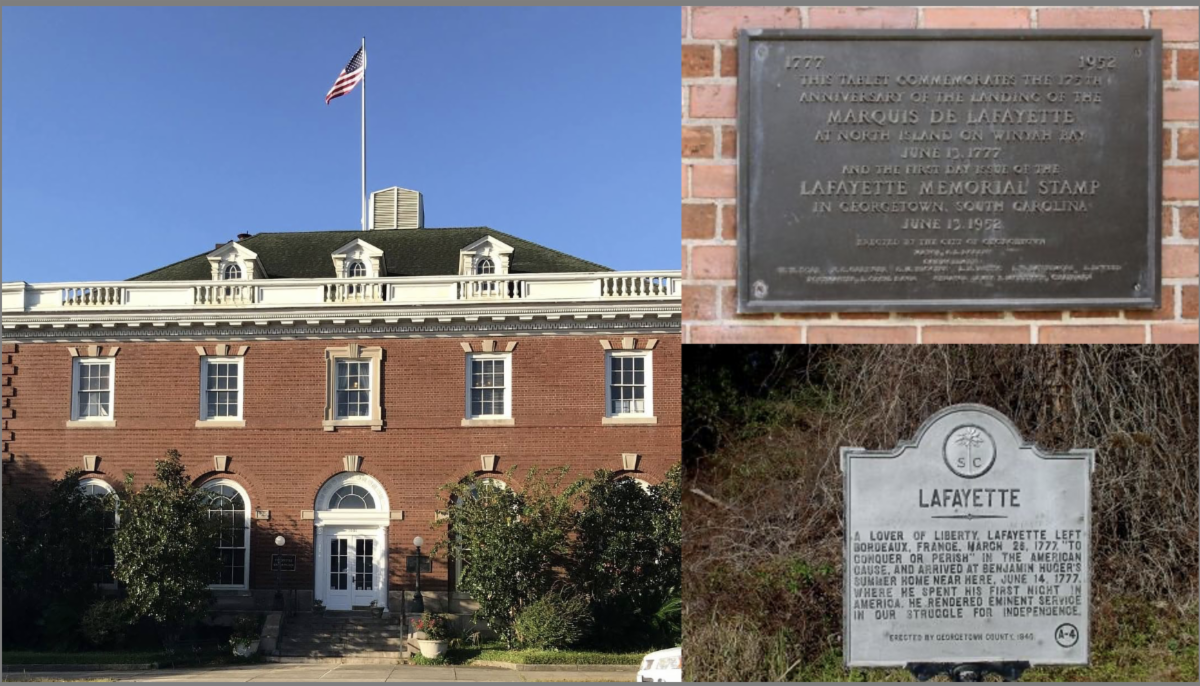
Bottom: Plaque commemorating that first night, Left: 1001 Front Street, Georgetown, SC 29440, bottom right: Marker alongside Ocean Highway, Photo by J. J. Prats, January 20, 2008, https://www.hmdb.org/m.asp?m=4872
| | |
Out of the myriads of historic moments lived by Lafayette in the United States, we choose that first morning of June 13, 1777, when he spotted the shores of America. Certainly, his emotions must have been very intense—as intense, assuredly, as those felt by millions of immigrants after him. The "Hero of Two Worlds" was about to fulfill his destiny.
Three markers commemorate that particular moment in French-American history:
Plaque, “Marquis de Lafayette”
Harborwalk, Rice Museum (Old City Hall), at the base of the town clock
633 Front Street, Georgetown, SC 29440
GPS: 33.365483, -79.282333
• Inscription:
“This tablet commemorates the 150th anniversary of the first landing of
Marquis de Lafayette
accompanied by Baron de Kalb on North Island,
Georgetown County, S. C. June 13, 1777.
He came to draw his sword for the young republic
in the hour of her greatest need.”
Erected 1927 by Georgetown Chapter, Daughters of the American Revolution.”
Plaque, “Landing of Lafayette 1777 - 1952”
1001 Front St, Georgetown, SC 29440
GPS: 33.368300, -79.286400
• Inscription:
“This Tablet Commemorates the 175th
Anniversary Of The Landing Of The
Marquis de Lafayette
at North Island on Winyah Bay
June 13, 1777
and the First Day Issue of the
Lafayette Memorial Stamp
in Georgetown, South Carolina
June 13, 1952
Erected by City of Georgetown, Mayor S.L. Rosen and Councilmen.”
Marker “Lafayette” – First Night in America
Ocean Highway (Route 17) beside the southbound lanes, Pawleys Island, SC 29585
GPS: 33.364500, -79.235000
• Inscription:
"A lover of liberty, Lafayette left Bordeaux, France, March 26, 1777, “to conquer or perish” in the American cause, and arrived at Benjamin Huger’s summer home near here, June 14, 1777, where he spent his first night in America. He rendered eminent service in our struggle for independence.
Erected 1940 by Georgetown County. (Marker Number 22-8 (A-4).)"
• For further reading, please refer to our August 2024 Bulletin:
"The legacy of Lafayette in America"
https://conta.cc/3X90SWQ (original version in English)
https://conta.cc/3YQTmRG (version en français)
| | |
Key Moment #2
Vergennes, Franklin and the Treaty of Alliance
February 6, 1778
| | |
Above:
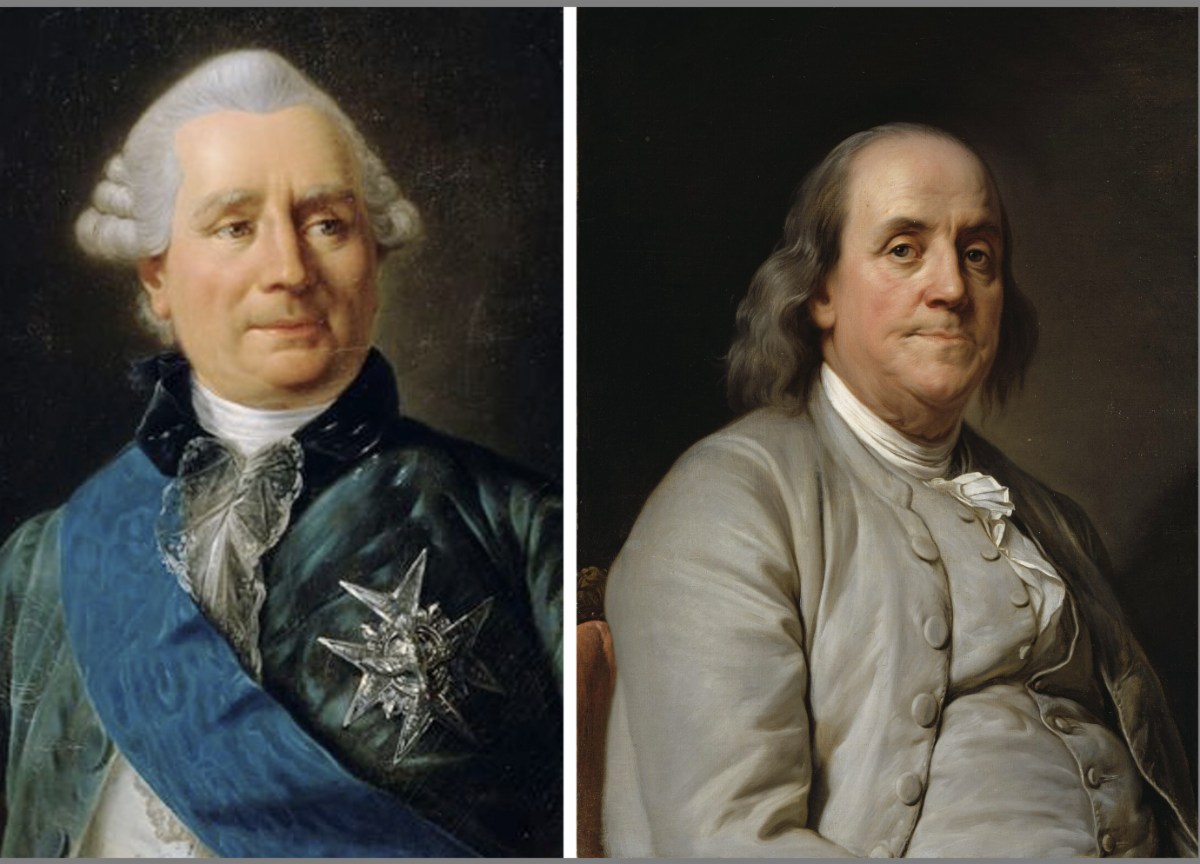
Top Left: A painting of Benjamin Franklin ca. 1785 By Joseph-Siffred Duplessis - Public Domain, https://commons.wikimedia.org/w/index.php?curid=21880454
Top Right: Count Charles Gravier de Vergennes, minister of Foreign Affairs, crop of an oval portrait, by Antoine-François Callet - Public Domain, https://commons.wikimedia.org/w/index.php?curid=2495337
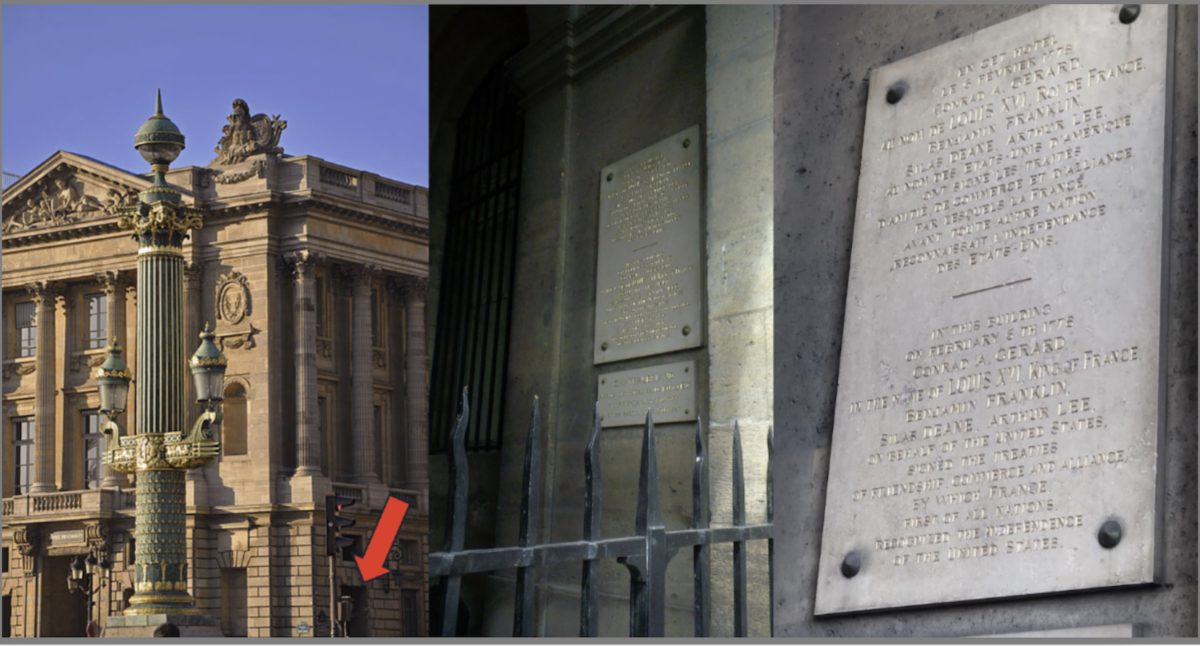
Bottom: Marble plaque at the Hôtel de Coislin, 4 Place de la Concorde, (angle du 1, rue royale), Paris
GPS: 48.867008, 2.322043
The formal Treaty of Alliance and the Treaty of Amity and Commerce between France and the United States were signed at the Hôtel de Coislin in Paris, February 6, 1778. News of the signature reached the US on May Day, and the treaties were ratified by Congress on May 4, 1778.
| | |
• King Louis XVI stated publicly that he recognized the sovereignty of the United States on December 6, 1777.
• On January 30, 1778, the king gave permission to Secrétaire du Conseil d'Etat Conrad Alexandre Gérard to sign the Treaty of Amity and Commerce and a secret Treaty of Alliance for him.
• On February 6, 1778, Gérard fulfilled this task, and Deane, Franklin, and Lee signed on behalf of the United States.
• Through these treaties, France pledged to uphold the "liberty, sovereignty, and independence" of the United States if war broke out between France and Great Britain.
• France committed to continue fighting until the United States' independence was secured in a peace agreement.
• The United States agreed not to make any truce or peace with Great Britain without first obtaining formal consent from France.
A plaque located at the corner of Rue Royale and Place de la Concorde in Paris states:
"In this building
On February 6th, 1778
Conrad A. Gerard
In the name of Louis XVI King of France
Benjamin Franklin
Silas Deane, Arthur Lee,
On behalf of the United States
Signed the treaties
Of friendship, commerce and alliance
By which France
First of all nations
Recognized the independence
Of the United States"
We are hearing again, more and more, and happily so, the expression "France, America's oldest Ally" in the public discourse of our elected leaders. This of course is a welcome development, and historically totally accurate.
• The Office of the Historian of the United States Department of State retired its online section “Milestones in the History of U.S. Foreign Relations". In today's State Department website, broken down by countries, one reads that "France is one of the United States oldest allies" presumably to remain...diplomatic, stay inclusive and not offend any other third party. It is quite amazing as well that the internet abounds with posts on social networks making all sorts of tortuous, truncated and outlandish claims.
• Yet, it is a irrefutable historic fact that France was the first sovereign nation to officially recognize the United States of America by Treaty. A quick search on the internet point to The Netherlands and Morocco as the earliest nations which recognized the United States de facto, if not de jure.
• The Netherlands became the 2nd country to officially recognize the United States, on April 19, 1782 when it signed the appropriate diplomatic instrument.
However the first acknowledgement of the sovereignty of the United States occurred on November 16, 1776, when an official salute was given to the American flag of the vessel Andrew Doria on the Dutch island of St. Eustatius.
• The 3rd country, after France and The Netherlands to officially recognize the US. was Spain, which entered the war as France’s ally only on June 21, 1779, and didn’t recognize American independence until February 20, 1783, just seven months before Great Britain.
• Morocco is often cited as being the first to recognize the United States, because Sultan Mohammed III signed on June 23, 1777 a decree granting American ships protection and free access to Moroccan ports. This one-sided 'recognition' lacked the requisite treaty and the exchange of ambassadors, consisting solely of the acceptance of American vessels. A formal recognition by treaty would not be signed until 1786, after Sweden, Britain, the Papal States, and Prussia.
For a list with detailed explanations, please refer to :
https://allthingsliberty.com/2018/05/the-first-countries-to-diplomatically-recognize-the-united-states/
• As far as diplomatic representations are concerned, bilateral diplomatic relations began on August 6, 1778, when Gérard presented his credentials to the U.S. Continental Congress as the “Minister-Plenipotentiary and Consul-General” from France. A month later, on September 14, 1778, Congress officially appointed Benjamin Franklin as the “Minister Plenipotentiary from the United States of America at the Court of Versailles.”
On March 23, 1779, Franklin presented his credentials to the French court, which accepted them, marking the start of the first U.S. diplomatic mission.
• For further reading, please refer to our following Bulletins:
January 2026: "From Covert Aid to Official Alliance 1776-1778"
https://conta.cc/3L1Dasy (original version in English)
https://conta.cc/4b48K3p (version en français)
January 2025 "Notable French diplomats in the United States (1778-1938)”
https://conta.cc/40nPab9 (original version in English)
https://conta.cc/42j2NLm (version en français)
For a narration on how the news of the French Alliance were celebrated by George Washington and the Continental Army, and how it continues to be celebrated:
April 2021 Bulletin: "Annual commemoration of “French Alliance Day”
https://conta.cc/3a6pjvm (original version in English)
https://conta.cc/3g9bGPO (version en français)
| |
|
|
Key Moment #3
The Siege of Savannah
October 9, 1779
| | |
Above:
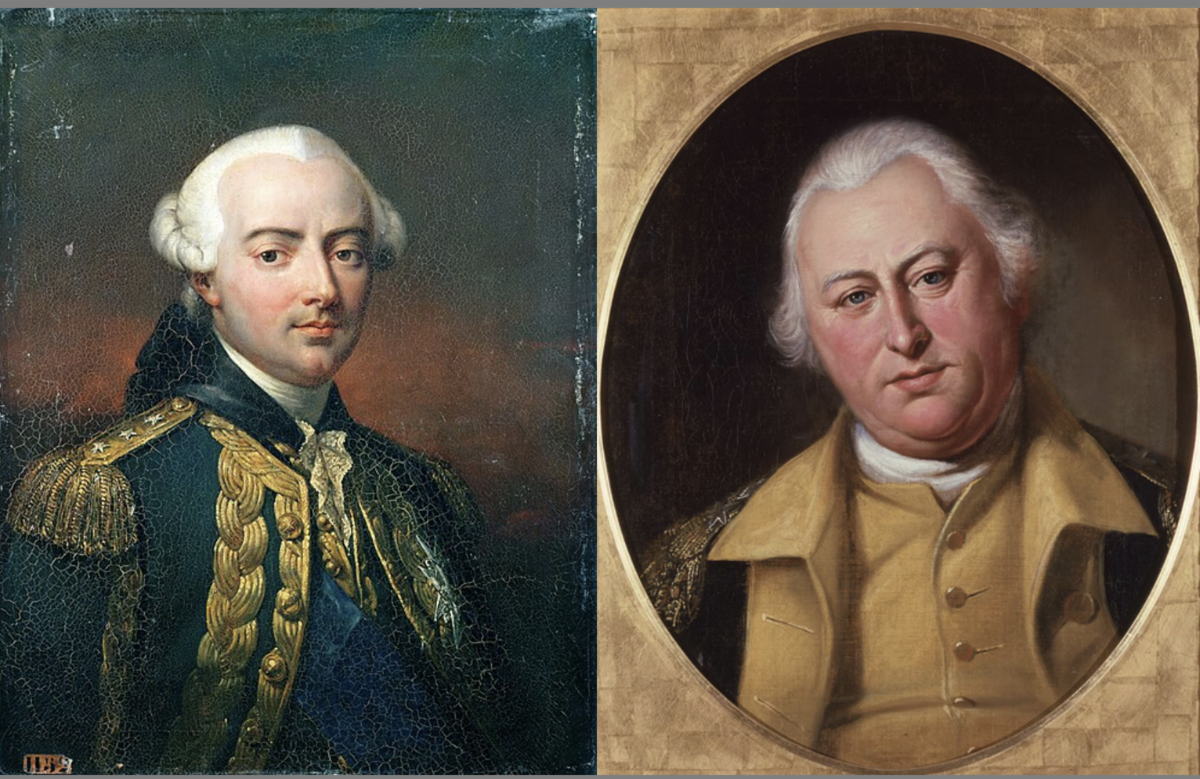
Top Left: Admiral d'Estaing by Jean-Pierre Franque (19th Century portrait) - Public Domain, https://commons.wikimedia.org/w/index.php?curid=140487
Top Right: Continental Army Major general Benjamin Lincoln, by Charles Willson Peale - Independence Hall Museum, Philadelphia, PA, Public Domain, https://commons.wikimedia.org/w/index.php?curid=170714563
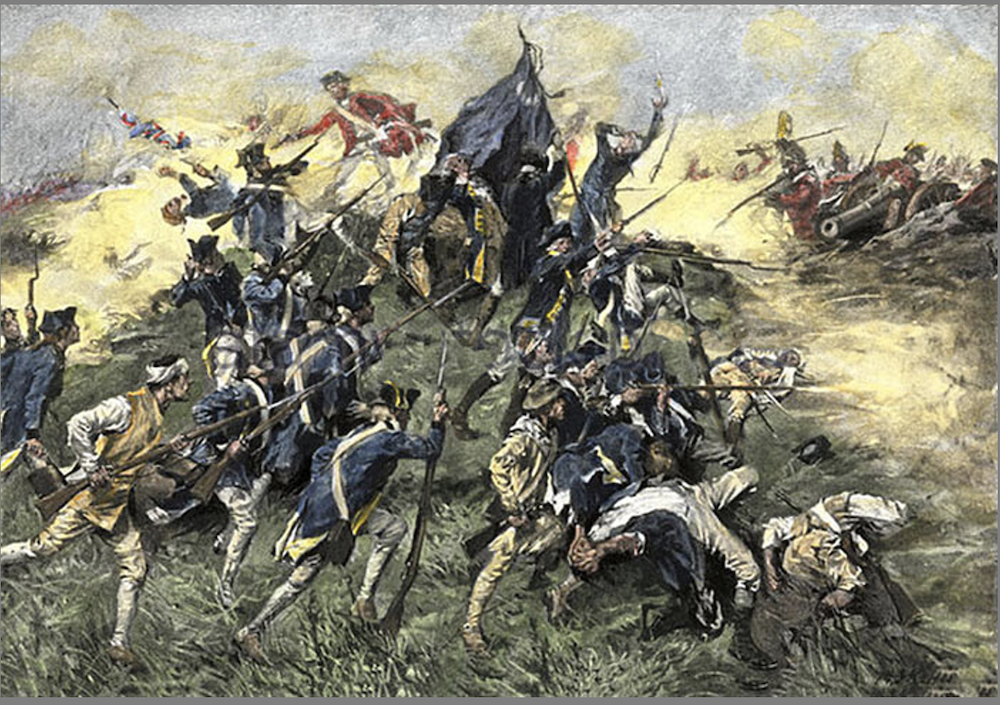
The Franco-American attack on the British defenses at Savannah, Georgia, in October 1779 during the Siege of Savannah in the American War of Independence (1775-1783). Keller, A. I. (2023, April 05). Attack on Savannah, 1779. World History Encyclopedia., https://www.worldhistory.org/image/17268/attack-on-savannah-1779/
| | |
The Battle of Savannah in Georgia took place from September 16 to October 18, 1779, and was the second bloodiest confrontation in the American Revolutionary War. At that time, British forces had held Savannah, the capital of Georgia, for a year. Savannah was defended by 3,346 troops led by (Swiss-born Augustin) naturalized British General Augustine Prévost. They faced a challenge from 650 Continental troops and 750 militia soldiers under General Benjamin Lincoln, who were backed by 3,524 French soldiers led by Count d’Estaing, which included 750 colored troops from Saint-Domingue and other French Caribbean territories.
• On September 4, the French fleet began to arrive off that coast. On September 11, Continental Army general Benjamin Lincoln departed from Charleston with his own troops, aiming to join forces with d’Estaing.
• From the onset, the French inflicted considerable damage on the British fleet, capturing the warship Experiment with its 50 guns, the frigate Ariel, and two supply ships carrying payroll for the Savannah garrison. They also captured Brigadier General George Garth, who was supposed to take command of the British forces in Georgia upon his arrival.
• Meanwhile, the British continued to strengthen their defenses on the mainland, sinking six of their ships in Savannah harbor to block the French fleet from approaching and bombarding the city.
• The French bombarded Savannah for five straight days, hoping to weaken British defenses, but to no avail.
• On the morning of October 9, the Franco-American Allies launched a significant attack. Fog covered the battlefield, making it hard for troops to move forward. Many soldiers got lost in the swamps near the Spring Hill Redoubt, which was their target. D’Estaing chose this location thinking it was weakly defended by local Loyalist militia. However, the Loyalists were supported by experienced British Regulars. When the fog cleared, the French forces were vulnerable and faced heavy fire from the defenders of the redoubt. It was later discovered that the British had prior knowledge of the attack plan due to information leaked by loyalists and deserters.
• Casualties mounted rapidly. Always intrepid, d’Estaing was wounded twice while leading the charge. The Polish cavalry leader, Casimir Pulaski, was mortally wounded during the assault as he tried to guide his cavalry through a gap in the British lines.
In all, the Allies lost about 1,000 men in the attack on the Spring Hill Redoubt, while the British had only 150 casualties.
• After an hour of pushing his troops ahead, d’Estaing, himself badly wounded, decided to stop the attack, realizing it was pointless. A week later, the French commander left, leaving Lincoln behind and putting a strain on the Franco-American Alliance. On October 18, Lincoln ended the siege. Savannah would stay under British control until the war was over.
Although this first combined amphibious assault in modern warfare ended in failure, lessons were later drawn by American and French commanders to enhance their communications and cooperation.
• For further reading, please refer to our February 2025 Bulletin:
"The Battle of Savannah (1779) and the "Chasseurs Volontaires de Saint Domingue”
https://conta.cc/4ay3TFa (original version in English)
https://conta.cc/4i13c9W (version in French)
| | |
Key Moment #4
Rochambeau and the French Army
to the rescue
Newport, R.I. - July 11, 1780
| | |
Above:
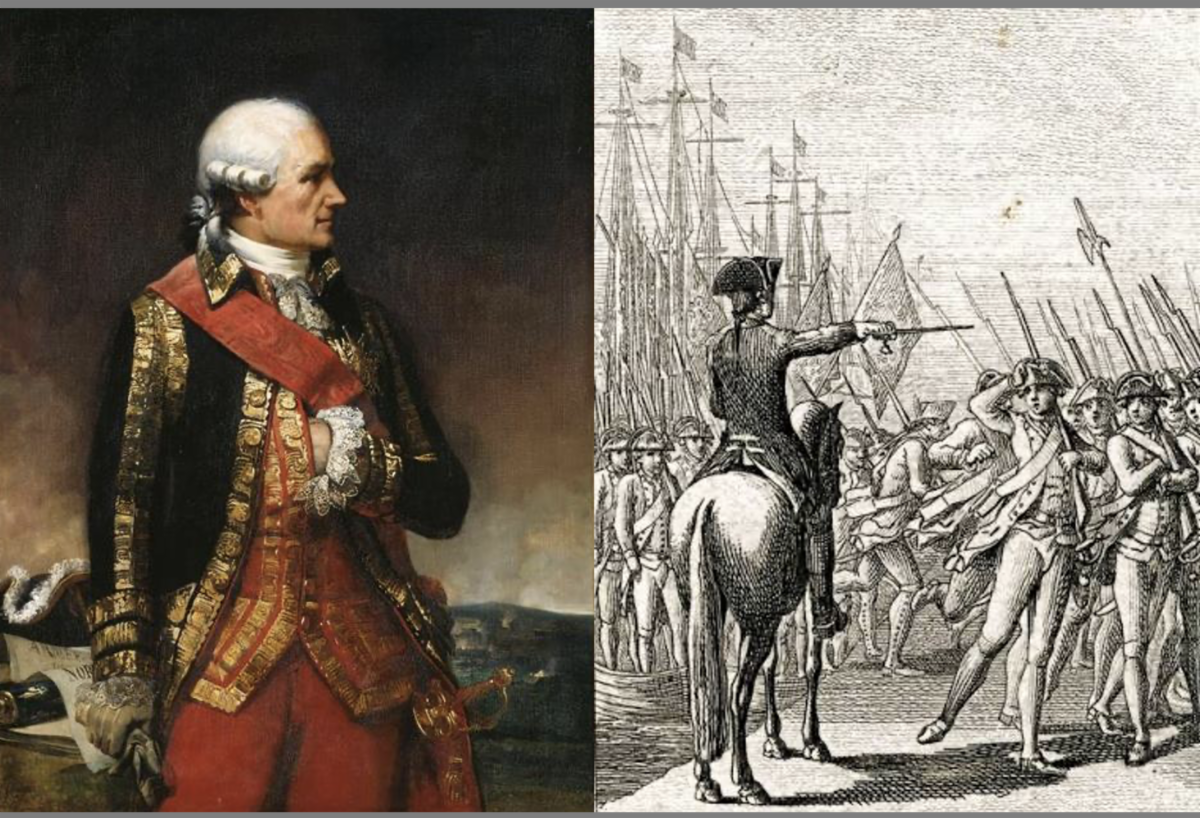
Top Left: Rochambeau, by Charles-Philippe Larivière, Château de Versailles, 2009, Domaine public, https://commons.wikimedia.org/w/index.php?curid=7190277
Top Right: Landing of the French fleet at Newport, R.I., July 11, 1780, Engraving by Daniel Nikolaus Chodowiecki (German, 1726-1801), National Gallery of Art, Washington D.C., Public Domain, https://commons.wikimedia.org/w/index.php?curid=112763
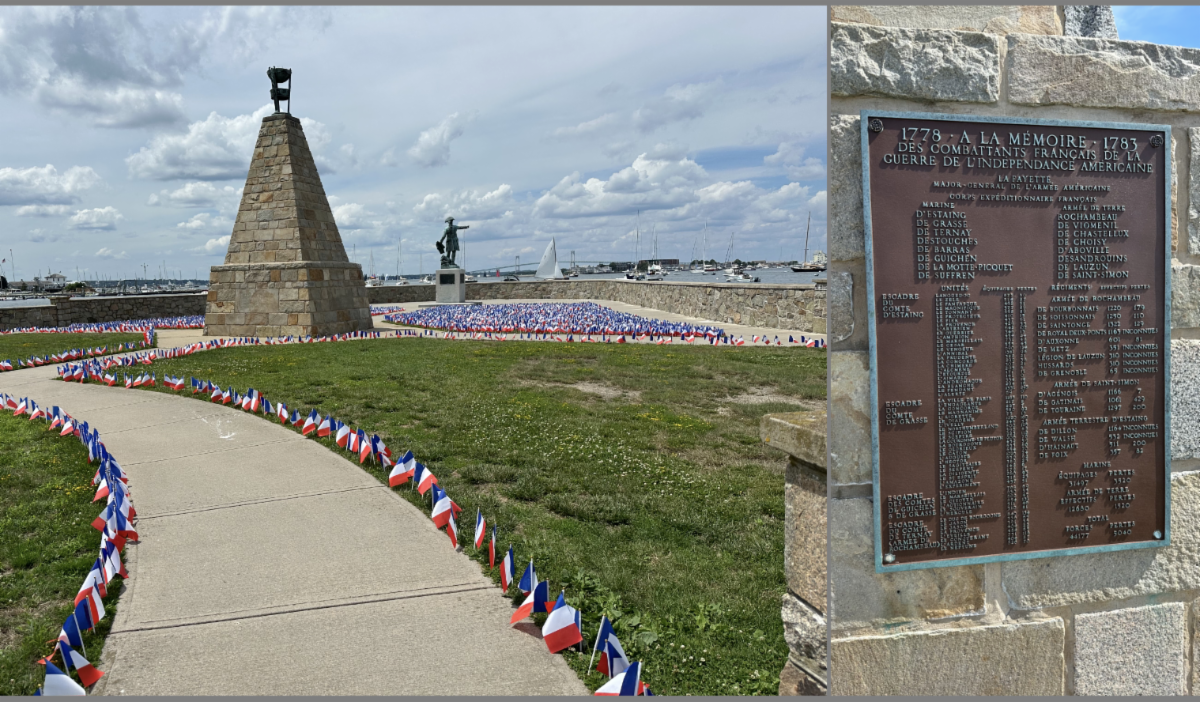
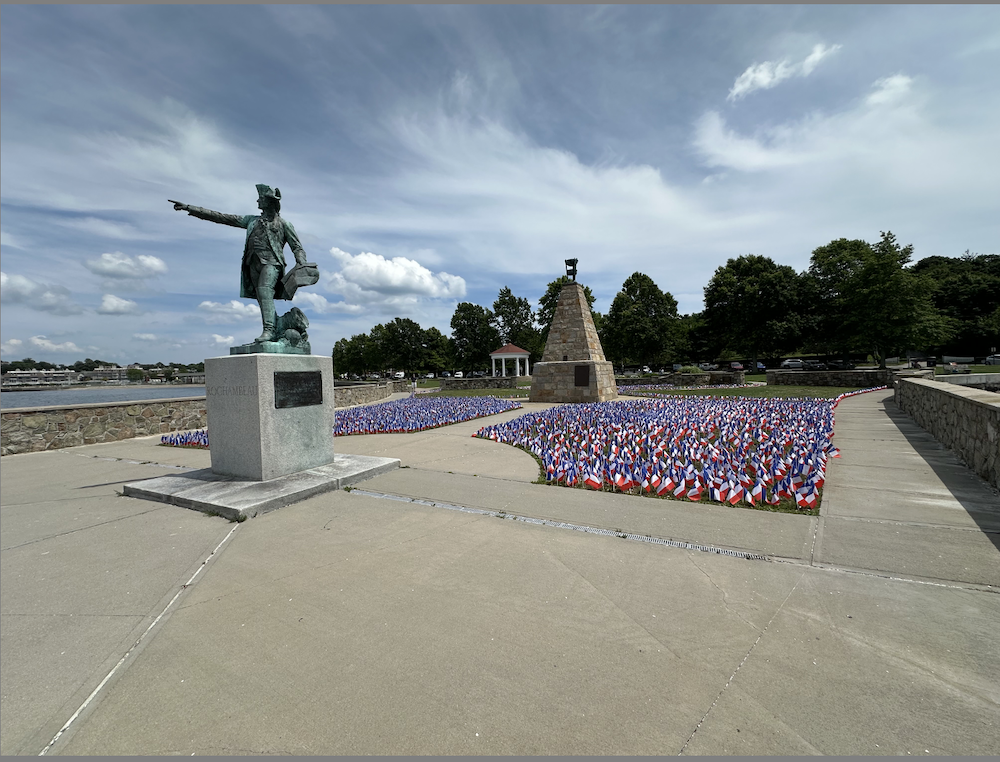
Bottom: Statue of Rochambeau and the Memorial to the French Fleet, Newport, R.I. with 6,000 flags representing the French soldiers of the "Expédition Particulière"
Photo: TC © ASSFI 2026
| |
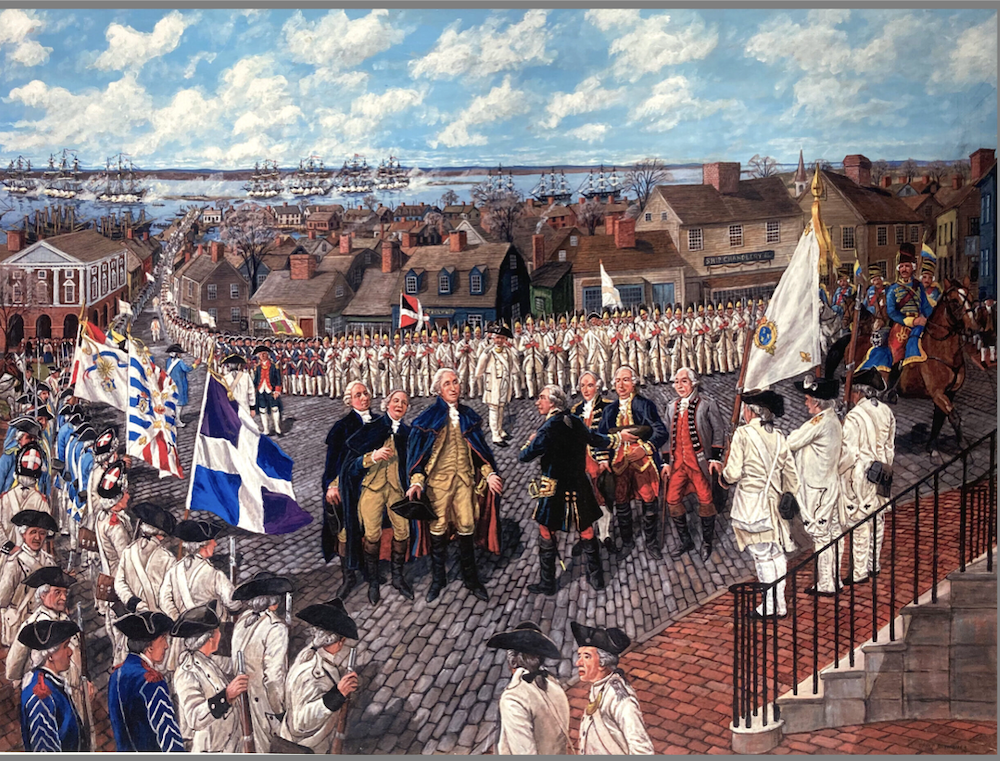
When the French fleet (commanded by Admiral de Ternay) transporting the Comte de Rochambeau, along with 5,500 French troops and 7,000 sailors, arrived at Newport, Rhode Island, a significant new phase commenced in the American Revolution and the Franco-American alliance. The French forces dedicated almost a year in Newport to training, strategizing, and addressing cultural disparities—an investment of time that General Washington deemed valuable, referring to the French presence in Newport as "a new proof of the magnanimity of the nations."
The Statue of Rochambeau and the Memorial to the French Fleet were erected in 1934 and restored by the Alliance Française de Newport in 2017. It is a replica from the original in Vendôme, France which was inaugurated in 1900.
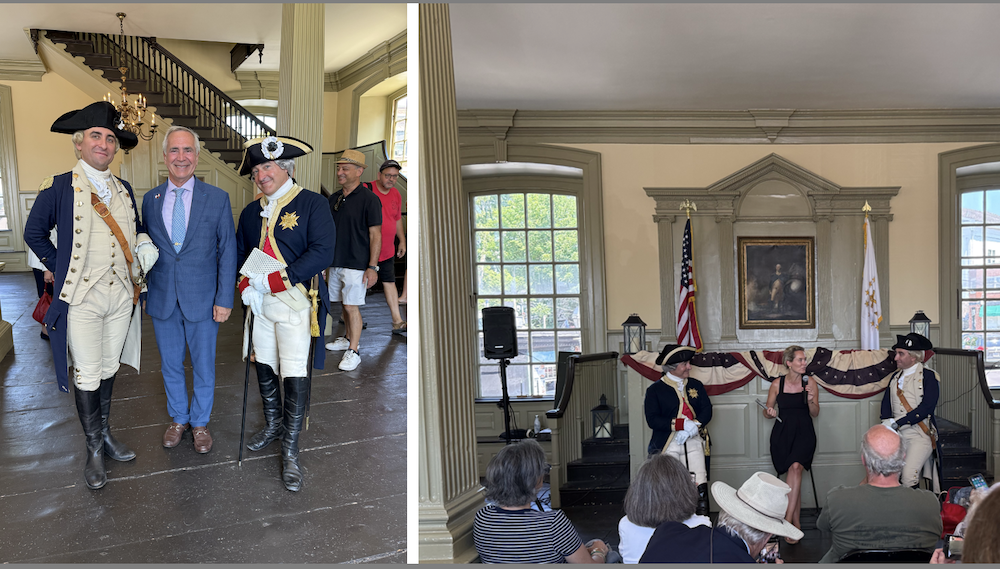
• The American Society of Le Souvenir Français Inc. lays a wreath at the foot of the statue every year around July 11 during a “Tribute to France” weekend organized by the National Park Service, the City of Newport and the Newport Historical Society along with numerous civic and patriotic associations.
Rochambeau Statue and Memorial, Newport, RI
Rochambeau Plaza, King Park, waterfront, Newport R.I.
GPS: 41.476733, -71.321555
• Inscription:
[ Left side : ]
On June eighteenth, 1781, General Rochambeau left Newport with his army to join the American forces on the Hudson, and on August nineteenth, 1781, the combined armies under command of General Washington began their victorious march to Yorktown.
* * *
This tablet presented by Forsyth – Wickes
[ Right & Back sides : ]
To Jean Baptiste Donatien de Vimeur Count de Rochambeau
Marshal of France 1725 – 1807,
Commander-in-Chief of the French Army
at the siege of Yorktown – October 6th, 1781
Presented to the City of Newport by Kingsley Macomber – Paris, France
Dedicated July 13th, 1934
Mortimer A. Sullivan – Mayor City of Newport - Willing Spencer – Chairman, Dedication Committee - Rededicated on this site July 4th, 1940 Hon. Perry Belmont – Chairman
Erected 1934 by Kingsley Macomber – Paris, France.
• The Memorial to the French Fleet (official name) is a stone pyramid, erected 1928 by Newport Historical Society in King Park (Newport, Rhode Island).
Memorial French Fleet, Newport, R.I.
At the waterfront in Kings Park, Newport R.I. 02840
GPS: 41.476733, -71.321555
• Inscription:
[ South side : ]
Near this spot
the French army of 6000 men
led by General Rochambeau
our allies
in the War for Independence
first set foot upon American soil
[ East side : ]
I welcome the news
of your arrival
A new mark of friendship
from his most Christian Majesty
George Washington
July XIII, 1780
[ West side : ]
Erected by the
Newport Historical Society
Gift of Roderick Terry
1928
[ North side : ]
Stone 19.5 " x 17.5"
July 11, 1780
1902 unsigned
Erected 1928 by Newport Historical Society.
• Inscription of bronze plaque:
(list of ships and regiments with detailed breakdown of casualties)
• French Navy: Total: 31,497 sailors Dead: 3,520
• French Army: Total: 12,680 soldiers Dead: 1,520
Total: 44,177 Dead: 5,040
Note: This plaque is identical to the one placed next to the French Monument at Yorktown, VA. and lists the names of units and casualties during the Revolutionary War.
• For further reading, please refer to our March 2021 Bulletin:
"Honoring two French Navy officers from Rochambeau’s army buried in Newport, RI."
https://conta.cc/3vgTuZy (original version in English)
https://conta.cc/3bC7aGJ (version en français)
| |
|
Key Moment #5
De Grasse and the battle of Cheasapeake
Rochambeau and Washington at Yorktown
September - October 1781
| | |
Contrary to what one may read here and there on the internet, there were indeed more French soldiers actively involved in the siege of Yorktown. The figures are:
Americans: 8,000–9,000 men (5,900 regular troops and 3,100 militia (not engaged)
French: 10,800 men and 29 warships
Total: 19,800 (fewer engaged)
versus:
British: 5,000 (including German: fewer than 3,000)
Total: 8,000–9,000
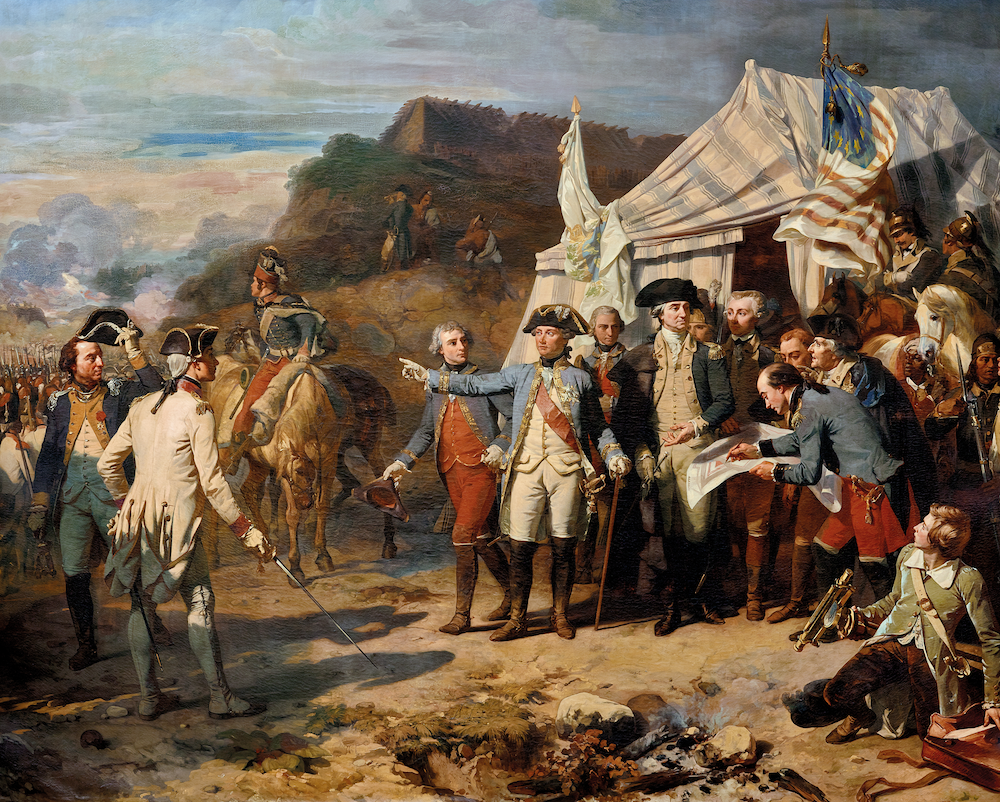
• The American victory at Yorktown is often remembered as Washington's triumph, but the siege only succeeded because of a French-led campaign at sea and a French army on land that, in critical respects, outweighed the American contribution.
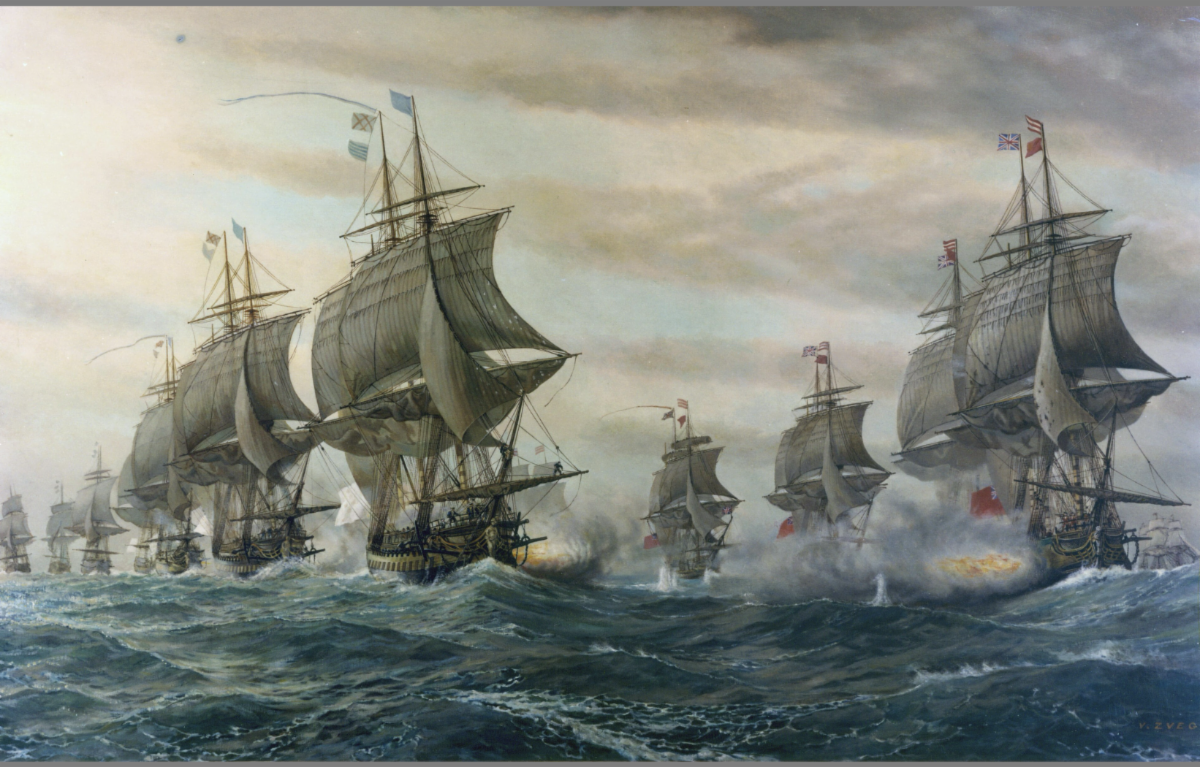
• The naval campaign was decisive. Cornwallis had retreated to Yorktown expecting the Royal Navy to resupply or evacuate him by sea, as it had done for British forces elsewhere in the war. That option was closed off by Admiral François-Joseph Paul de Grasse, who sailed his fleet north from the Caribbean and, on September 5, 1781, fought the Battle of the Chesapeake against a British fleet under Admiral Thomas Graves. The battle itself was tactically inconclusive, but de Grasse held the bay afterward, forcing the British fleet to withdraw to New York. That single outcome sealed Cornwallis's fate: without naval control, he had no way to escape or receive reinforcements, no matter how the land siege went.
• The land force was substantially French. The Comte de Rochambeau marched roughly 5,500 French troops nearly 700 miles from Newport, Rhode Island, to join Washington's army — a campaign of remarkable logistical coordination for the era. By the time the siege began in late September 1781, the combined Franco-American force numbered around 17,000–19,000 troops, and the French contingent (soldiers plus de Grasse's marines put ashore) actually equaled or outnumbered the Continental Army regulars on the ground. Cornwallis, by contrast, commanded roughly 6,000–8,000 men.
The siege itself was a joint operation, engineered largely by the French. French engineers under officers like Louis Le Bègue Duportail (though himself serving the Continental Army) and Rochambeau's staff designed the parallel trenches used to close in on the British works — classic Vauban-style siege tactics that the French army had refined over a century of European warfare. French artillery made up a large share of the guns bombarding the British lines.
• The most vivid illustration of the two armies working in tandem came on the night of October 14, 1781, when allied forces stormed two key British redoubts guarding Yorktown's flank. American light infantry under Alexander Hamilton took Redoubt 10; French grenadiers and chasseurs under the Baron de Viomenil took the more heavily defended Redoubt 9, at a noticeably higher cost in casualties. The fall of both redoubts made the British position untenable, and Cornwallis surrendered five days later, on October 19, 1781.
Beyond the battlefield, the campaign was financed substantially by French loans and subsidies to the struggling American war effort, without which Washington's army could barely have been supplied, let alone moved to Virginia.
Taken together — the fleet that sealed the trap, the army that was larger than the Americans on the siege lines, the engineers who directed the approach — Yorktown is best understood not as an American victory with French assistance, but as a Franco-American victory in which the French contribution was, in several respects, the determining one.
• For further reading, please refer to our October 2021 Bulletin:
"On the footsteps of Rochambeau (Part 5 – Final episode: Victory in Yorktown!)"
https://conta.cc/3BOnY8l (original version in English)
https://conta.cc/3AzLSCW (version en français)
and our June 2022 Bulletin:
"The crucial role of the French Navy in the War of Independence"
https://conta.cc/3u2EjnG (original version in English)
https://conta.cc/39RDLdy (version en français)
| |
|
Key Moment #6
L’Enfant and the Design of Washington D.C.
1791
| |
Above:
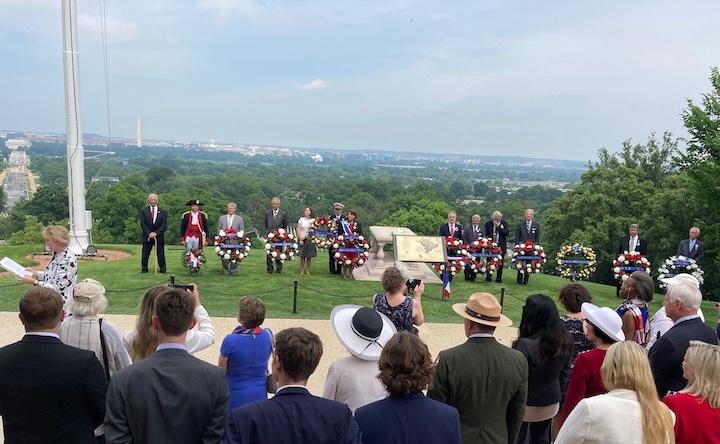
Top: Inauguration of our Society's interpretive marker at Arlington National Cemetery, June 14, 2022
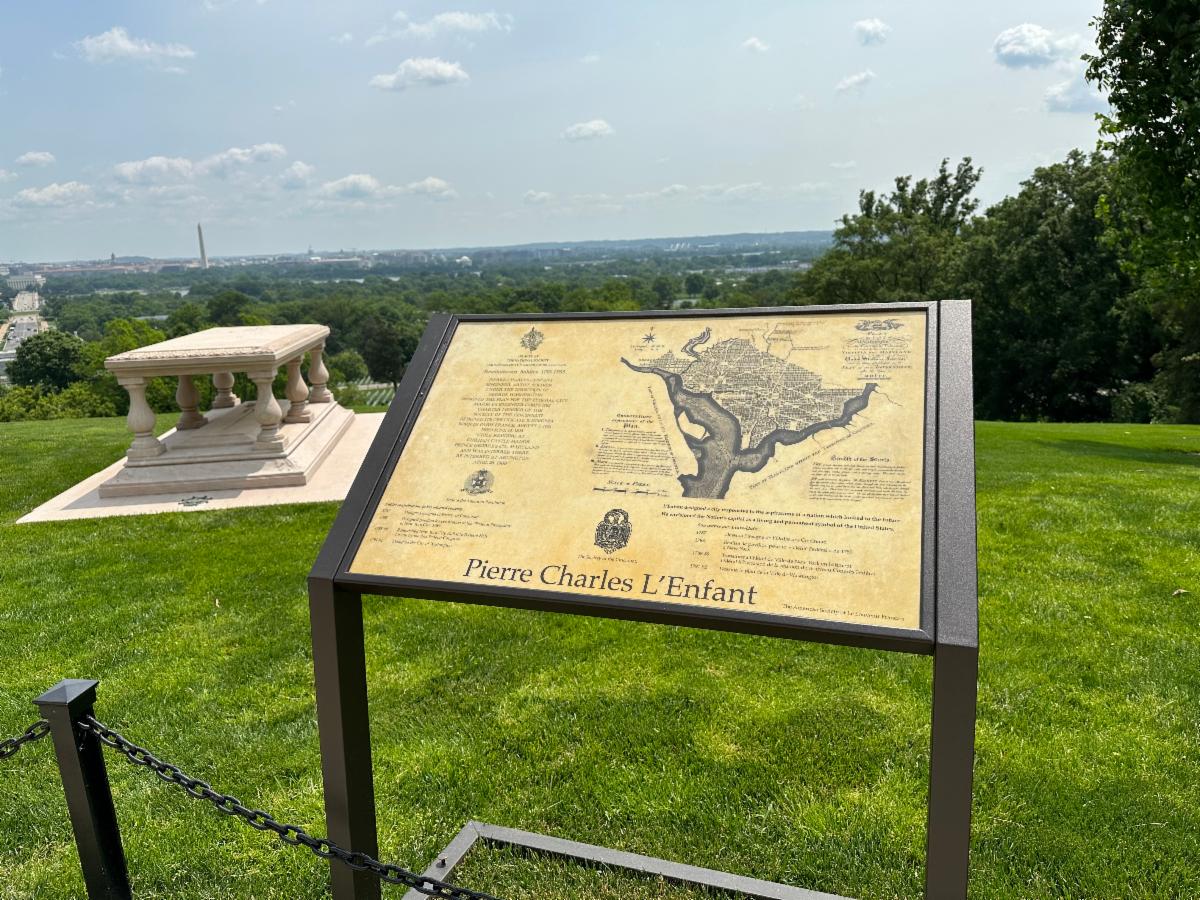
Below: View of Major L'Enfant's grave and plan of Washington, D.C. by Major Pierre L'Enfant
Photos: TC © ASSFI 2022
| |
Pierre Charles L'Enfant (1754–1825) was a French-born architect, engineer, and military officer who became one of the many French figures who shaped early America.
Born in Paris, he trained as an artist before coming to America in 1777 to volunteer in the Continental Army during the Revolutionary War—part of the same wave of French support (alongside figures like Lafayette) that helped the fledgling United States win its independence. He served under George Washington, was wounded at the Siege of Savannah, and rose to the rank of major.
- After the war, L'Enfant became a naturalized American citizen and pursued architecture and engineering, redesigning New York's City Hall as Federal Hall, where Washington was inaugurated as the first president in 1789.
- His lasting legacy came in 1791, when President Washington commissioned him to design the plan for the new federal capital city—Washington, D.C. L'Enfant conceived an ambitious, grand layout: broad diagonal avenues radiating from key points, a grid of streets, public squares, and prominent sites for the Capitol and the President's House, all meant to reflect the dignity and permanence of the new republic.
- His vision was inspired by European city planning (particularly Versailles and Paris) but adapted to express democratic ideals—open, monumental, and designed for a nation's capital rather than a monarch's court.
- He was dismissed from the project in 1792 after clashing with the commissioners overseeing the city's development, and he died in relative poverty and obscurity. However, his basic plan was largely preserved and executed by others (notably Andrew Ellicott and Benjamin Banneker), and it remains the structural backbone of Washington, D.C. today—including the National Mall, the Capitol's placement, the location of the White House, and the city's distinctive avenue system.
Long overlooked, L'Enfant was eventually honored for his contribution: in 1909, his remains were reinterred at Arlington National Cemetery with a grave overlooking the city he designed, and a memorial plaza at the U.S. Capitol bears his name.
On June 14, 2022, our Society rededicated a new marker co-signed with the Daughters of the American Revolution. Presidents of all major American and French patriotic societies laid a wreath in a show of unity to celebrate this major figure of French-American history.
• For further reading, please refer to our April 2022 Bulletin:
"Tribute to Major Pierre Charles L’Enfant"
https://conta.cc/3uR5rqO (original version in English)
https://conta.cc/3JPeFIg (version en français)
| | |
Key Moment #7
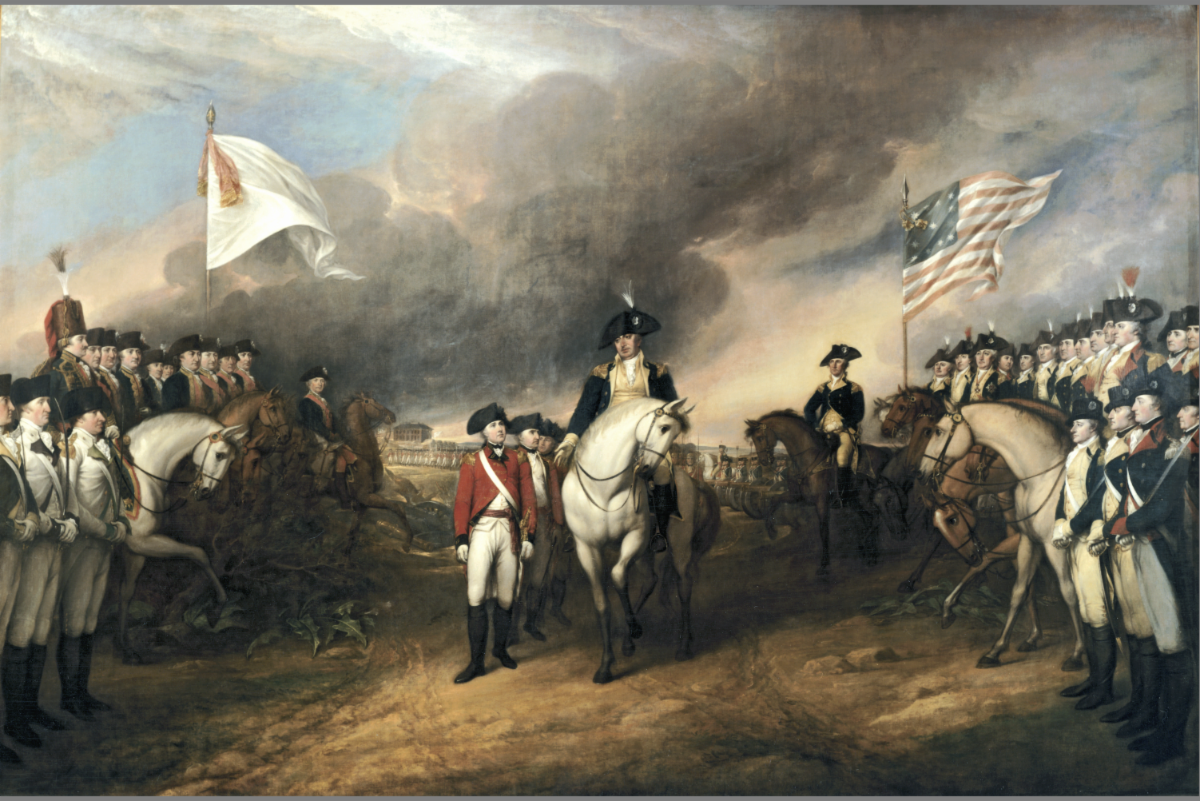
The Louisiana Purchase
1803
| | |
Above:
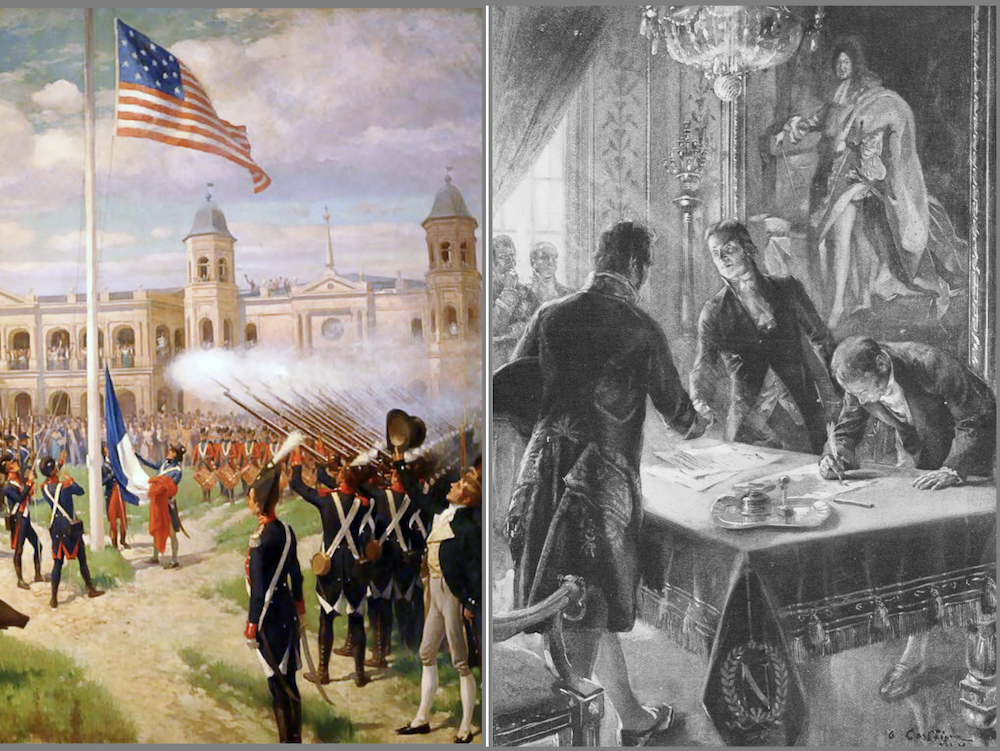
Top Left: Hoisting American colors, Louisiana Cession, December 20, 1803, oil on canvas, by Thure de Thulstrup (Swedish-American illustrator, circa 1903) - Louisiana State Museum, Public Domain, https://commons.wikimedia.org/w/index.php?curid=19310406
The dramatic moment on December 20, 1803 when the American flag was raised in place of the French flag in front of St. Louis Cathedral, modern day Jackson Square in New Orleans, marking the transfer of the Louisiana Territory from France to the United States.
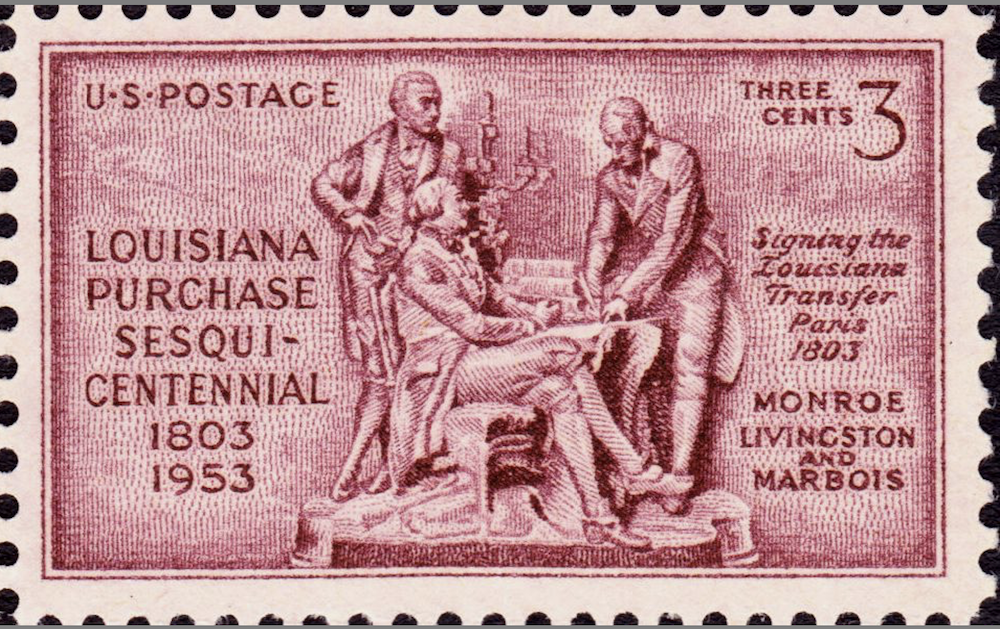
Top Right: The Signing Of The Louisiana Purchase By (Left To Right) Marquis François De Barbe-marbois, Robert Livingston, And James Monroe In Paris, 30 April 1803. Line Engraving, 1904, Drawing By André Castaigne published in the Rose of Old St. Louis, By Mary Dillon, Grosset & Dunlap Publishers
https://Www.Gutenberg.Org/Files/20911/20911-h/20911-h.htm
Bottom: US postage stamp (c. 1953) commemorating the Louisiana Purchase; Barbé-Marbois is pictured alongside James Monroe and Robert Livingston. By Bureau of Engraving and Printing; Imaging by Gwillhickers - U.S. Post Office; Smithsonian National Postal Museum, Public Domain, https://commons.wikimedia.org/w/index.php?curid=2957315
| | |
In 1803, the United States purchased the vast Louisiana Territory from France for roughly $15 million—about four cents an acre. The territory had passed to Spain before it returned it to France in 1800, as Napoléon Bonaparte intended to rebuild a French colonial empire in the Americas anchored by the sugar-rich colony of Saint-Domingue (Haiti).
That plan collapsed when French forces failed to suppress the Haitian Revolution, and Bonaparte, facing renewed war with Britain and needing funds, decided to abandon his American ambitions. President Thomas Jefferson had originally sent envoys (including future president James Monroe) merely to negotiate purchasing New Orleans and securing navigation rights on the Mississippi River—vital for Western farmers shipping goods to market. Napoleon's ministers stunned the American delegation by offering the entire territory instead. The negotiators, lacking authority for such a deal but recognizing the opportunity, agreed on the spot.
Jefferson faced a constitutional dilemma: the Constitution didn't explicitly authorize the federal government to acquire new territory. He ultimately set aside his strict-constructionist principles and pushed the treaty through, believing the strategic and economic benefits outweighed the constitutional ambiguity.
-
The acquisition of the territory of Louisiana by the United States from the French First Republic in 1803, which effectively roughly doubled the size of the United States at the time, added sizeable territories that would become the States of: Louisiana, Arkansas, Missouri, Iowa, Oklahoma, Kansas, Nebraska, North Dakota, South Dakota, and parts of Minnesota, New Mexico, Montana, Wyoming, and Colorado (as well as portions of Alberta and Saskatchewan in today's Canada).
-
It secured American control of the Mississippi River and the port of New Orleans, critical arteries for trade and westward expansion.
- It removed a major European power (France) from direct proximity to U.S. borders, reducing the risk of future conflict.
- It opened the way for westward expansion, later explored and mapped by the Lewis and Clark Expedition (1804–1806), and fed into the broader 19th-century notion of "Manifest Destiny."
- It stands as one of the largest land acquisitions in history achieved through peaceful negotiation rather than conquest—though it's worth noting the purchase disregarded the sovereignty of the many Native American nations already living on that land, whose displacement intensified in the decades that followed.
The Louisiana Purchase is widely regarded as one of Jefferson's most consequential achievements, fundamentally reshaping the geographic, economic, and political future of the United States.
Numerous markers and memorials commemorating this unique transaction and the French legacy dot the landscape throughout what was once known as "La Nouvelle France".
• For further reading, please refer to our May 2025 Bulletin:
"222 years ago: the Louisiana Purchase"
https://conta.cc/4dsqMvu (in English)
https://conta.cc/4jUS0Nu (in French)
| | |
Key Moment #8
Lafayette’s Farewell Tour
1824-1825
| | |
Above:
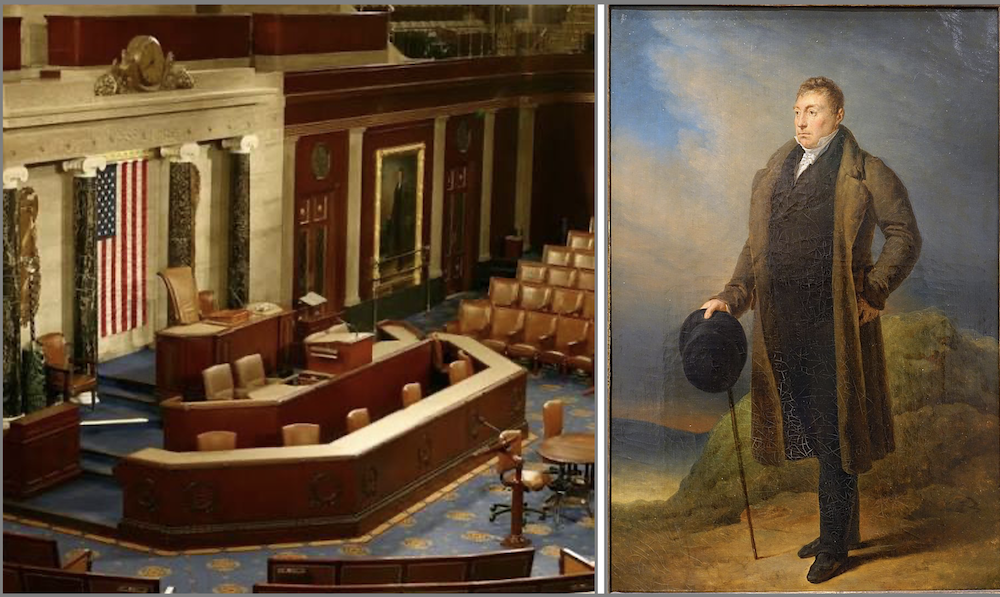
Right: Marie-Joseph-Paul-Yves-Roch-Gilbert du Motier, Marquis de Lafayette (1757-1834) c. 1822, oil on canvas by French-Dutch artist Ary Scheffer (1795-1858) - Public Domain – US Congress, House of Representatives. It is part of the wall to the left of the Speaker of the House (George Washington portrait is to the Speaker’s right).
Left: View of the House of Representative and the Desk of the Speaker of the House, with Lafayette's portrait on the right https://case.house.gov/about/us-house-of-representatives.htm
The 1950 renovation included frames built into the new wood paneling, making the two paintings of Washington and Lafayette permanent Chamber fixtures, physically as well as symbolically.
| | |
When Lafayette returned to America at the age of 68, as "Guest of the Nation" at the invitation of President James Monroe, the new Republic was not 50 years old and was facing intense political tensions. It was thought that Lafayette, the last surviving general of the American Revolution, who had demonstrated so many times his profound love and devotion for this country, would maybe teach to a new generation the importance of the values for which his own generation sacrificed so much, and rekindle the "Spirit of '76".
Lafayette visited all 24 states then in the Union, traveling thousands of miles by carriage, steamboat, and horseback, accompanied by his son, Georges Washington Lafayette (named in honor of his old commander and friend).
Everywhere he went, Lafayette was met with extraordinary public adulation: massive parades, banquets, balls, and ceremonies. He revisited old battlefields like Yorktown and Bunker Hill, reunited with aging fellow veterans of the Revolution, and met with sitting and former presidents, including a emotional reunion with Thomas Jefferson at Monticello. Cities, counties, and towns across the country renamed themselves in his honor—dozens of "Fayetteville"s and "Lafayette"s still dot the American map today as a result.
- The tour came at a symbolically resonant moment: it coincided with the run-up to the nation's 50th anniversary (1826), as the Revolutionary generation was rapidly passing away, and Americans were eager to celebrate and memorialize their founding while a living link to it still remained.
- Lafayette served as a unifying figure at a time of growing regional and political tension in the young republic (it took place just before the bitterly contested 1824 election). His visit offered a rare moment of shared national pride across factions.
- It reaffirmed and celebrated the enduring bond between France and the United States, echoing the alliance that had helped secure American independence—a reminder that the nation's founding had been an international as well as domestic achievement.
- Congress voted to grant Lafayette a substantial sum of money and a large land grant in gratitude for his Revolutionary War service, formally recognizing a debt owed decades earlier.
- The tour helped cement Lafayette's status as an American folk hero and "adopted son" of the nation—a status that would later be invoked, over 90 years afterward, when American troops arriving in France in 1917 declared "Lafayette, we are here!" as a symbolic repayment of that same debt during World War I.
Clearly, the General Marquis de Lafayette plays a central role in the narrative of the formation of this great Nation, and it is almost impossible to turn the spotlight on the most illustrious actors of the shared history of France and the United States without mentioning his name.
• For further reading, please refer to the following Bulletins:
August 2022: "Lafayette, Welcome back"
https://conta.cc/3dM6271 (original version in English)
https://conta.cc/3ChITnb (version en français)
Lafayette's Farewell Tour Bicentennial:
November 2024: https://conta.cc/4eicigw
October 2024: https://conta.cc/3N9EWF6
September 2024: https://conta.cc/3X71riU
| | |
Key Moment #9
Tocqueville writes
Democracy in America
1831
| | |
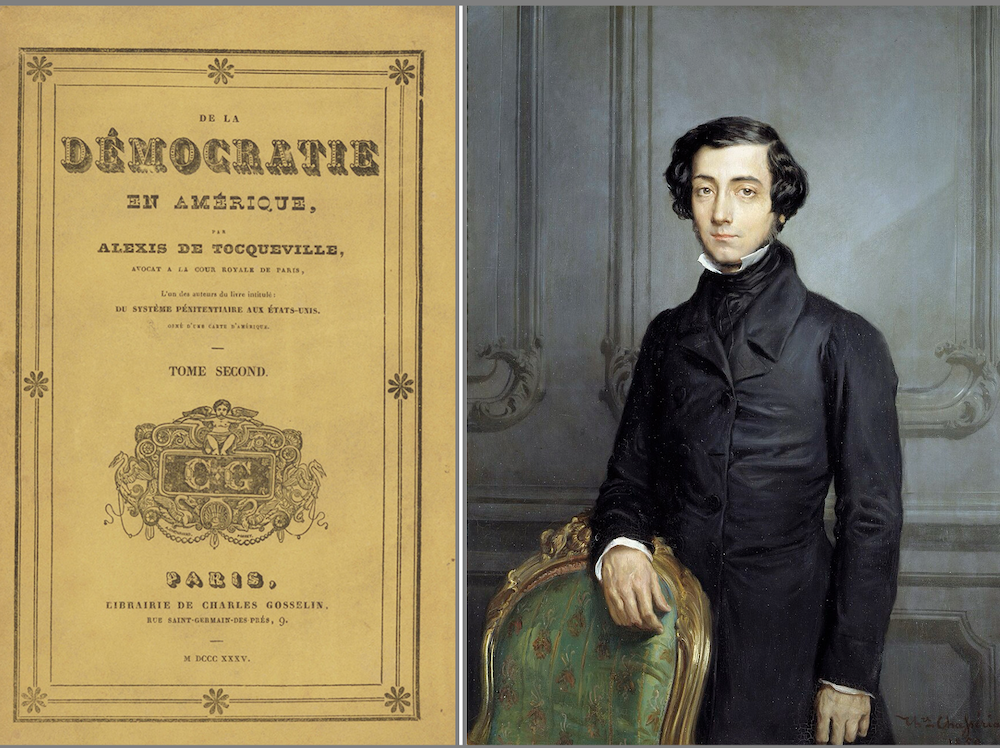
Alexis de Tocqueville (1805–1859) was a French aristocrat, political thinker, and statesman, whose name is forever linked with the United States.
In 1831, at age 25, he traveled to America with his friend Gustave de Beaumont, officially to study the American prison system, but really to observe the young republic's democratic experiment firsthand. He spent about nine months touring the country—from New York and Boston to the frontier and the South—talking with politicians, farmers, judges, and settlers, taking copious notes on how American society actually worked.
Why Democracy in America (1835–1840) matters:
- It was one of the first serious attempts to analyze democracy not just as a political system but as a social condition—a whole way of life shaping manners, religion, family, and thought.
- Tocqueville was remarkably prescient: he foresaw dangers democracy would face, like the "tyranny of the majority," creeping conformity, and the risk of citizens retreating into individualism and apathy toward public life.
- He praised features—like voluntary associations, local self-government, and a free press—as vital counterweights that kept American democracy vibrant rather than tyrannical.
- The book bridges description and theory: it's both a vivid portrait of 1830s America and a lasting meditation on the promises and perils of egalitarian societies everywhere.
That combination—keen observation plus far-sighted analysis—is why it's still assigned in political science, sociology, and history courses today, and why politicians across the spectrum still quote it.
Our Society envisions paying homage to this great thinker with a statue (surprisingly, no public one exists as of today), hopefully at a leading Ivy League university, in time for the Bicentennial of his visit to America in 2031.
| | |
Key Moment #10
The Gift of the Statue of Liberty
1886
| |
| |
Above:
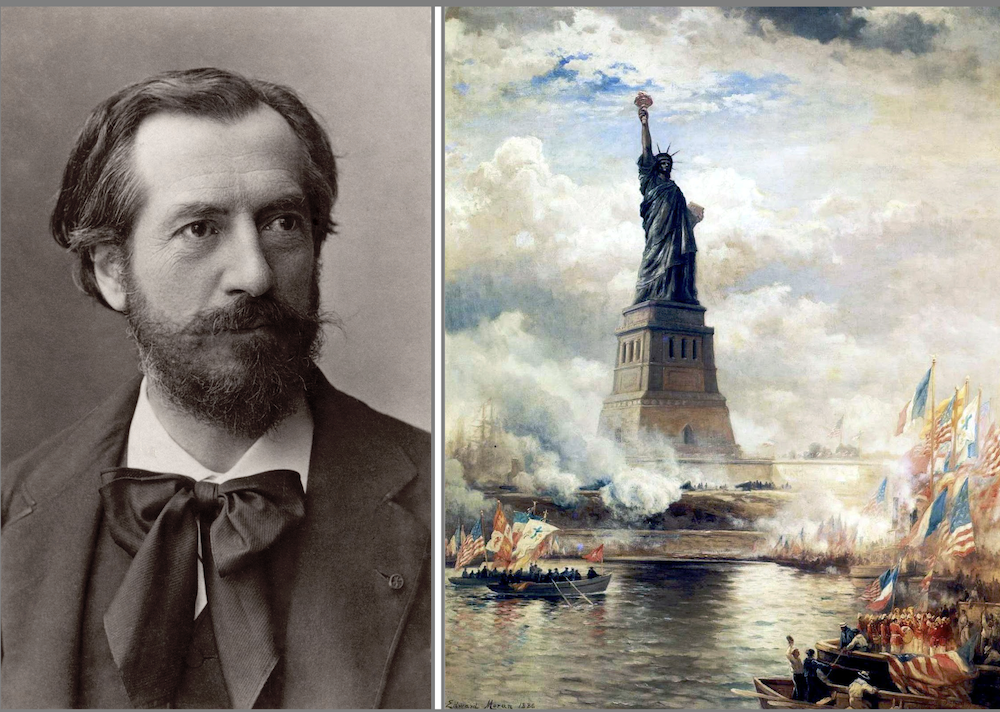
Left: Auguste Bartholdi, (1834 - 1904), French sculptor, By Nadar - This file comes from Gallica Digital Library and is available under the digital ID 12148/btv1b53097843f, Public Domain, https://commons.wikimedia.org/w/index.php?curid=67111410
Right: A painting by Edward Moran depicting the unveiling of the Statue of Liberty on October 28, 1886. This was an actual historical event near Bedloe's Island in which thousands of spectators gathered in boats for the dedication of statue, Museum of the City of New York, Public Domain, https://commons.wikimedia.org/w/index.php?curid=229787
| | |
France gave the Statue of Liberty to the United States to mark the two nations' long friendship, dating back to French support for the American Revolution, and to celebrate the centennial of American independence (the idea took shape around 1876, though the statue itself wasn't completed and dedicated until 1886).
French historian and abolitionist Édouard de Laboulaye proposed the idea, partly to honor the recent Union victory in the Civil War and the abolition of slavery. Sculptor Frédéric Auguste Bartholdi designed and built it, with Gustave Eiffel engineering its iron skeletal structure.
What it represents:
- Liberty itself — the statue's full name is "Liberty Enlightening the World," and she holds a torch symbolizing enlightenment and freedom's reach.
- Franco-American friendship — a gesture of solidarity between two republics that saw themselves as sister experiments in democracy and liberty.
- A shared democratic ideal — Laboulaye, a liberal reformer, also hoped the gift would inspire French citizens toward their own republican and democratic aspirations, since France itself was still working out its post-revolutionary political identity.
- A beacon for immigrants — over time, especially after Emma Lazarus's 1883 poem "The New Colossus" was added to its base in 1903, the statue became closely associated with welcoming immigrants arriving at nearby Ellis Island, standing for opportunity and refuge as much as liberty.
It is a monument to a friendship and to a political ideal, and became the symbol of the United States and the values of Democracy and Freedom.
• For further reading, please refer to our April 2025 Bulletin:
"Statues of Liberty in the United States”
https://conta.cc/42rUqMd (original version in English)
https://conta.cc/3GiXRNz (version in French)
| |
|
Key Moment #11
American Field Service Volunteers
Escadrille Lafayette Volunteers
1914-1917
| |
Above:
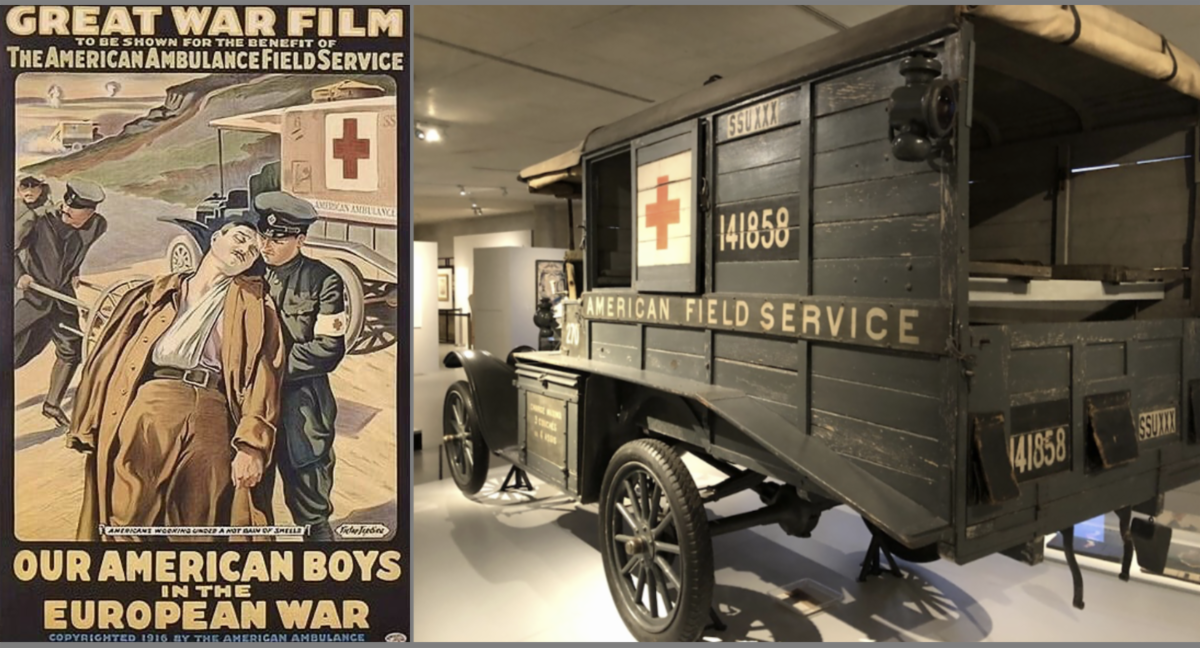
Top Left: American Field Service Volunteer Overseas Ambulance Service WWII, Poster, 1942 by John Scott Williams, 1942
https://www.alamy.com/world-war-ii-propaganda-poster-afs-1942-american-field-service-volunteer-overseas-ambulance-units-artwork-by-john-scott-williams-image714451009.html
Top Right: Ford Model T of the American Field Service, "La Section n°1 de l'American Field Service à Cappy-sur-Somme", oil on canvas by White Victor Gerald (1891-1954) and a different version of the poster shown above, all on display at the Musée Franco-Américain, Château de Blérancourt, 33 Pl. du Général Leclerc, 02300 Blérancourt, France - Photos: TC © ASSFI 2019
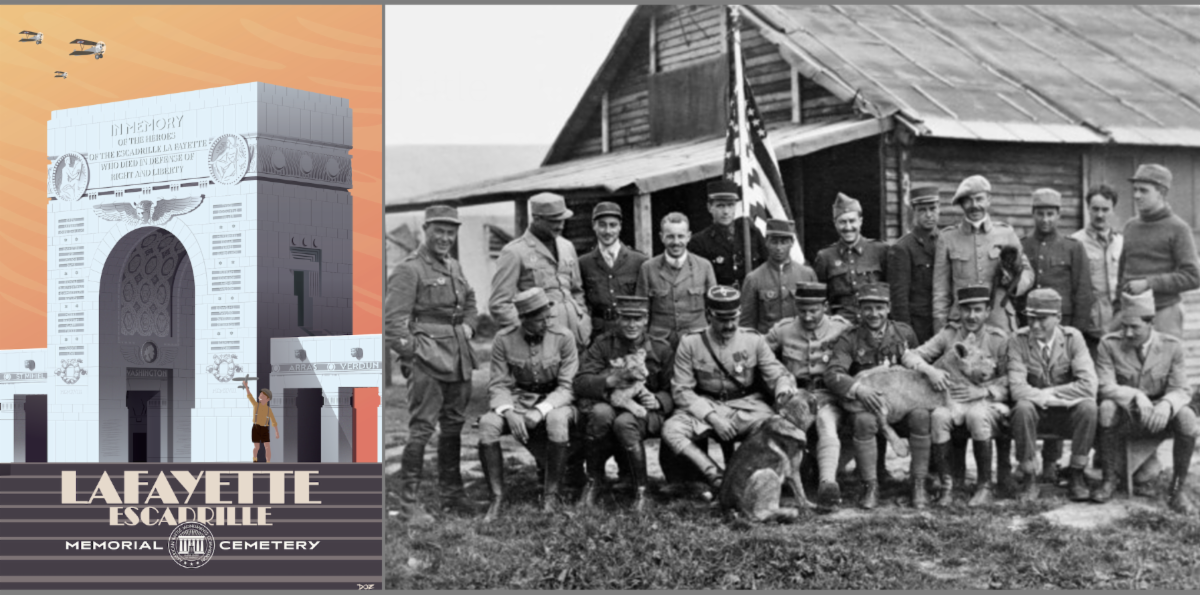
Bottom Left: Mémorial Escadrille La Fayette, Domaine National de Saint Cloud, 5 Bvd R. Poincaré - 92430 Marnes-la-Coquette (western suburb of Paris) GPS: 48.836638, 2.172146
https://shop.abmf.org/
Bottom Right: The pilots of the Lafayette Escadrille at Chaudun, France, summer 1917. Posing with them are their ever-present mascots Whiskey, Soda, and Capitaine Thenault’s dog Fram. (Photo: U.S. Air Force)
| |
The American Field Service (AFS)
Before the U.S. officially entered the war in April 1917, American neutrality laws barred citizens from enlisting in foreign militaries. Volunteers got around this by serving in noncombatant roles—most famously as ambulance drivers.
- Founded initially as an offshoot of the American Hospital of Paris's ambulance corps, the AFS grew into a substantial volunteer organization that transported wounded French soldiers from the front lines to hospitals, often under shellfire.
- It drew idealistic young Americans—many of them college students (Harvard, Yale, Princeton) and aspiring writers—who wanted to support France before their own country joined the fight. Ernest Hemingway, John Dos Passos, and E.E. Cummings all served in ambulance units (Hemingway with the Red Cross, a related effort).
- Symbolically, the AFS represented an early, unofficial declaration of sympathy: even while Washington remained neutral, thousands of private American citizens were already risking their lives for France.
The Lafayette Escadrille
Formed in April 1916, this was a fighter squadron of the French Air Service made up largely of American volunteer pilots, flying under French command since the U.S. wasn't yet a belligerent.
- Its name deliberately invoked the Marquis de Lafayette, the French nobleman who fought for American independence—flipping the historical debt and framing American pilots as repaying that old alliance.
- The squadron became a powerful propaganda and morale symbol on both sides of the Atlantic: proof that Americans backed France even before their government did.
- Pilots like Raoul Lufbery became aces and celebrities; the unit's mascots (lion cubs named Whiskey and Soda) and its emblem—a Sioux warrior head—made it culturally iconic.
- After the U.S. entered the war, most of its pilots transferred into the newly formed U.S. Air Service, seeding it with experienced combat aviators.
Together, these groups did several things:
- They kept the Franco-American bond—forged in the Revolutionary War—alive and visible during a moment when official U.S. policy was neutral.
- They gave France tangible proof of American sympathy, boosting French morale.
- They provided a pool of trained, battle-tested personnel (ambulance drivers, mechanics, pilots) who transitioned into the American Expeditionary Forces once the U.S. joined in 1917.
- They became enduring symbols of a reciprocal debt between the two nations—America returning, in the 20th century, the favor France had shown during its own founding.
• For further reading, please refer to our October 2023 Bulletin:
"Tribute to the Lafayette Escadrille"
https://conta.cc/3Qz0Xjl (original version in English)
https://conta.cc/3QCRqYM (version en français)
and our October 2024 Bulletin:
"Tribute to the American Field Service"
https://conta.cc/4eBIdJA (original version in English)
https://conta.cc/3YxlXuM (version in French)
| |
Key Moment #12
The Harlem Hell Fighters
1918
| |
Above:
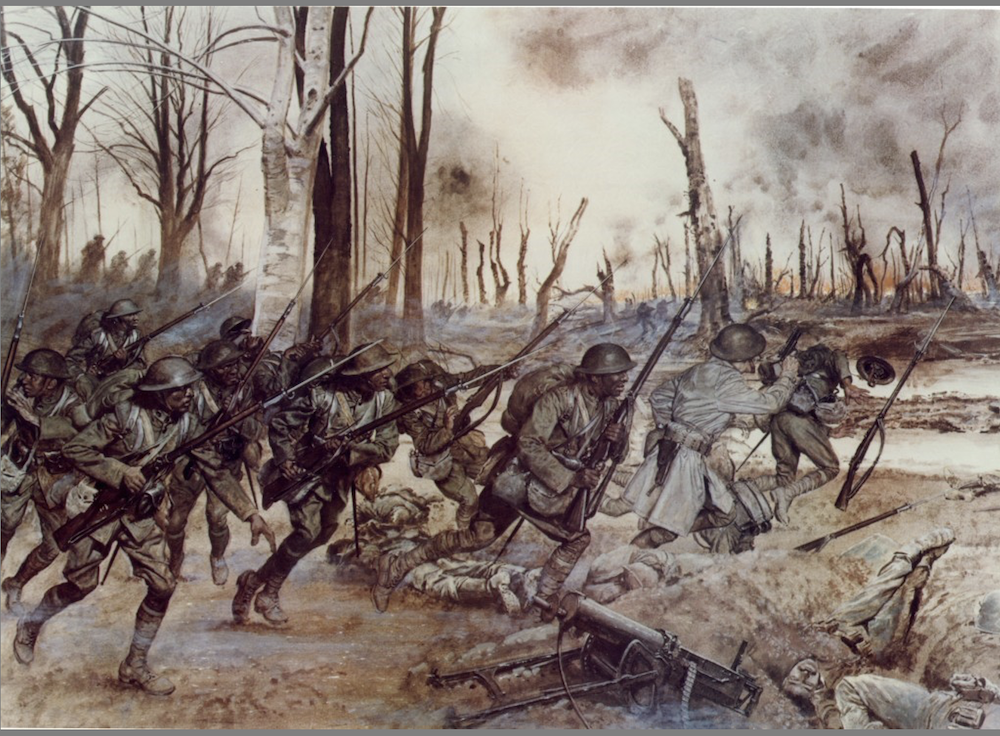
Top: The Harlem Hellfighters in Séchault, France on September 29, 1918 during the Meuse Argonne Offensive. The 369th in action. After being detached and seconded to the French, they wore the French "Adrian helmet", while retaining the rest of their U.S. uniform. Seen here at Séchault, France on 29 September 1918, during the Meuse-Argonne Offensive, they wear the U.S. Army-issue "Brodie" helmet, correct for that time. Illustration by H. Charles McBarron, Jr. Public Domain, https://commons.wikimedia.org/w/index.php?curid=86977618
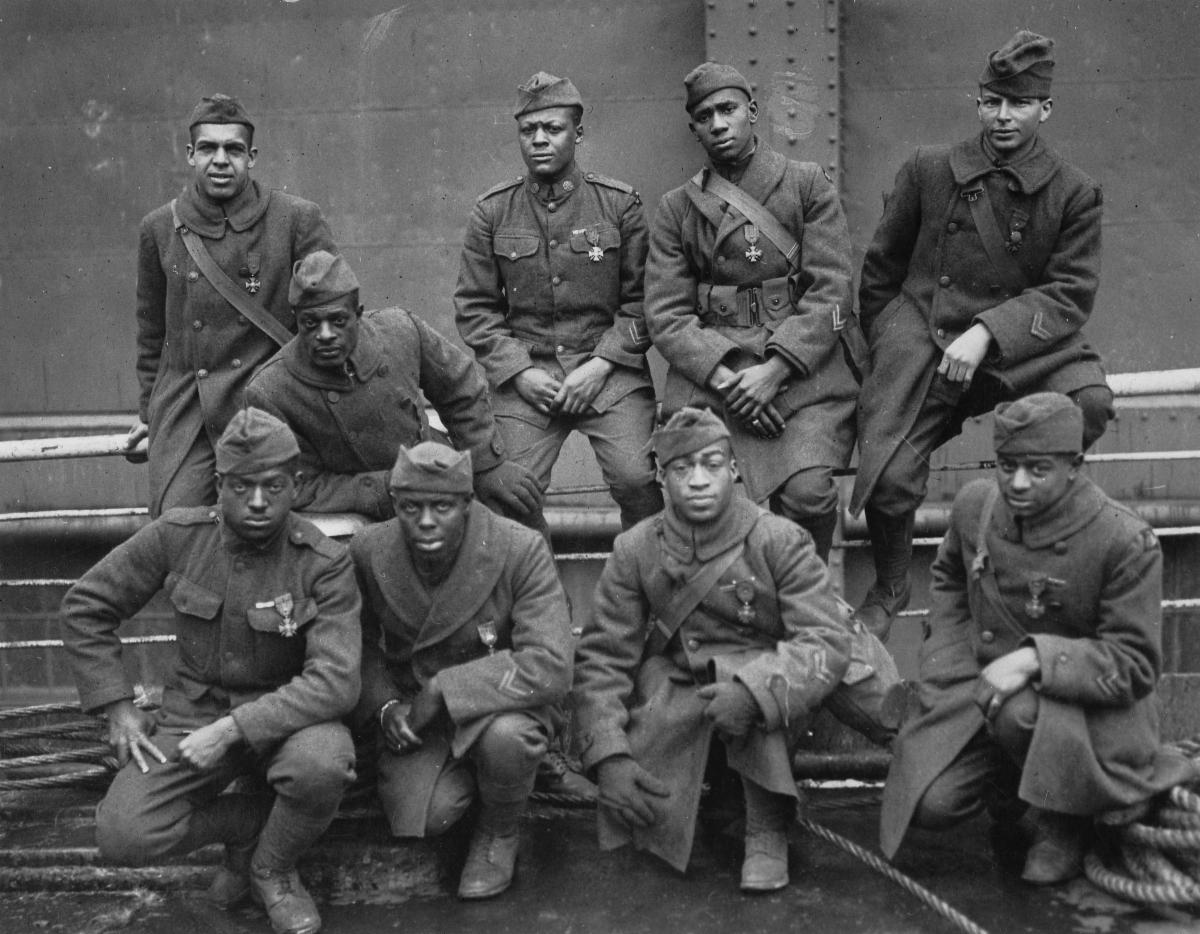
Bottom: Soldiers of the 369th (15th N.Y.), awarded the Croix de Guerre for gallantry in action, 1919.
Left to right. Front row: Pvt. Ed Williams, Herbert Taylor, Pvt. Leon Fraitor, Pvt. Ralph Hawkins. Back Row: Sgt. H. D. Prinas, Sgt. Dan Storms, Pvt. Joe Williams, Pvt. Alfred Hanley, Cpl. T. W. Taylor
By an unknown photographer - ARC Identifier: 26431282US National Archives website, Public Domain,
https://commons.wikimedia.org/w/index.php?curid=3908981
The photo shows these brave soldiers waiting to disembark in New York on February 12, 1919. This particular photo is among the famous ones of the 369th Infantry. Unfortunately, only a few of these photos have captions that provide information about the soldiers' names or any details about them.
| |
Originally organized in 1916 as the 15th New York National Guard Regiment (sometimes written as the 15th New York Infantry Regiment), recruited specifically as a Black regiment for the New York National Guard, the 369th Infantry Regiment, nicknamed the "Harlem Hellfighters". It was composed almost entirely of African American soldiers from New York, along with a number of Puerto Rican soldiers.
Fighting under French command:
Despite training for combat, the regiment faced pervasive racism within the U.S. Army, which was reluctant to deploy Black troops in combat roles alongside white American units. Rather than fight alongside their own countrymen, the 369th was essentially loaned to the French Army, which needed reinforcements and had no such restrictions. They wore American uniforms but used French weapons, helmets, and equipment, and fought under French command for most of the war.
Combat record:
- They spent 191 days in front-line trenches—longer than any other American regiment—and never had a man captured or lost a foot of ground.
- Corporal Henry Johnson and Private Needham Roberts became the first Americans of the war to receive the French Croix de Guerre, after fighting off a German raiding party of a dozen or more soldiers in hand-to-hand combat while badly wounded, in May 1918.
- The entire regiment was later awarded the Croix de Guerre by France for its actions at Séchault during the Meuse-Argonne offensive, one of the final and most brutal Allied pushes of the war.
- They earned the nickname "Hellfighters" reportedly from the Germans, who were said to respect and fear their tenacity in combat.
- Their service formed part of the sustained Allied pressure of 1918 that helped break German lines in the war's final offensives, contributing to the momentum that led to the November 1918 armistice.
- They came home and faced segregation and discrimination, a painful contrast that helped fuel the postwar civil rights consciousness of the era.
Last, but not least, the regiment's celebrated regimental band, led by James Reese Europe, introduced jazz music in France, leaving a lasting cultural legacy beyond the battlefield.
The Hellfighters stand as one of the most decorated American units of WWI and a striking example of how the war's manpower demands, French openness, and Black soldiers' own courage combined to produce an outsized contribution to victory—despite the discrimination they faced from their own army.
• For further reading, please refer to our February 2024 Bulletin:
"Tribute to the Harlem Hell Fighters - 369th Regiment"
https://conta.cc/3OHOLM0 (version in English)
https://conta.cc/4bDQZWu (version en français)
| |
Key Moment #13
The Return of the Unknown Soldier
October 25, 1921
| |
Above:
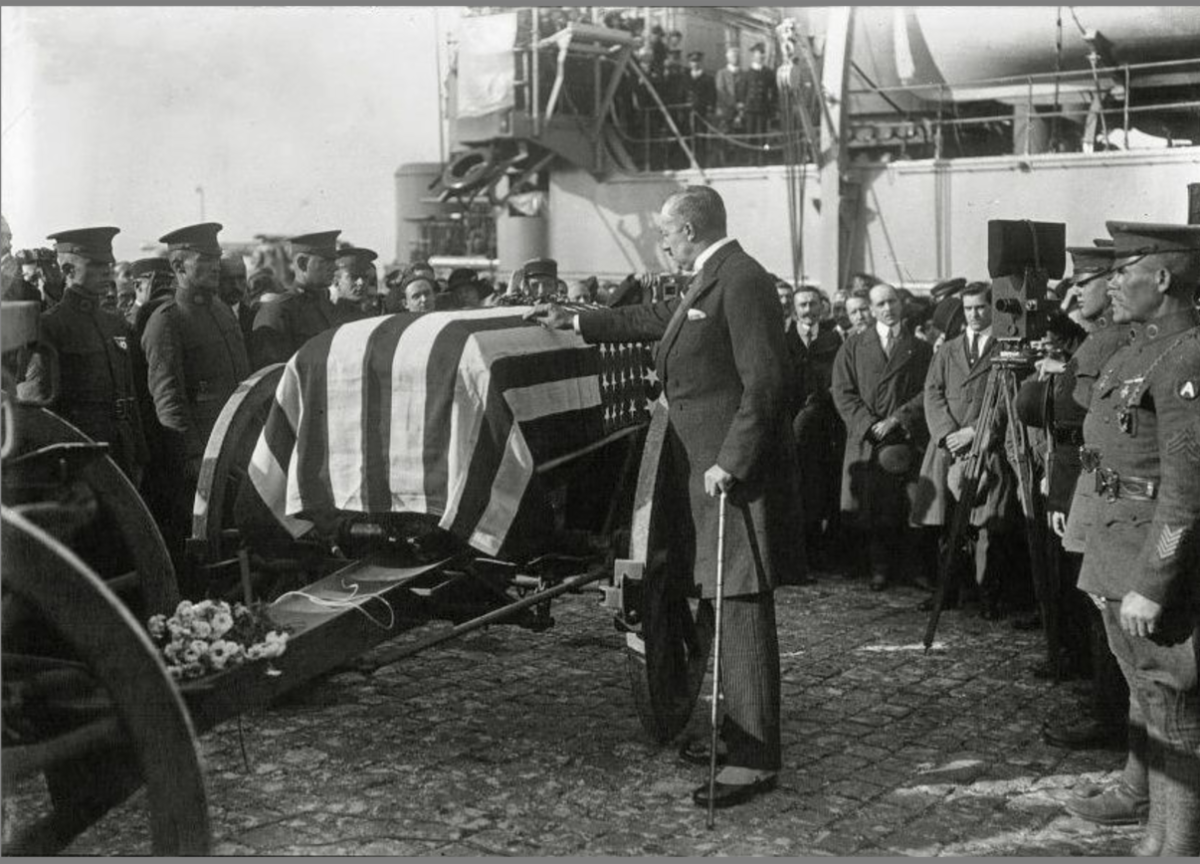
Top: André Maginot, French Minister of Pensions, himself a wounded veteran, decorates the American Unknown Soldier with the Legion of Honor before the remains are hoisted on the USS Olympia, Le Havre, France, October 25, 1921
https://arlingtoncemetery.mil/Blog/Post/11471/Andre-Maginot-The-French-Patriot-Who-Bade-Farewell-to-the-Unknown-Soldier
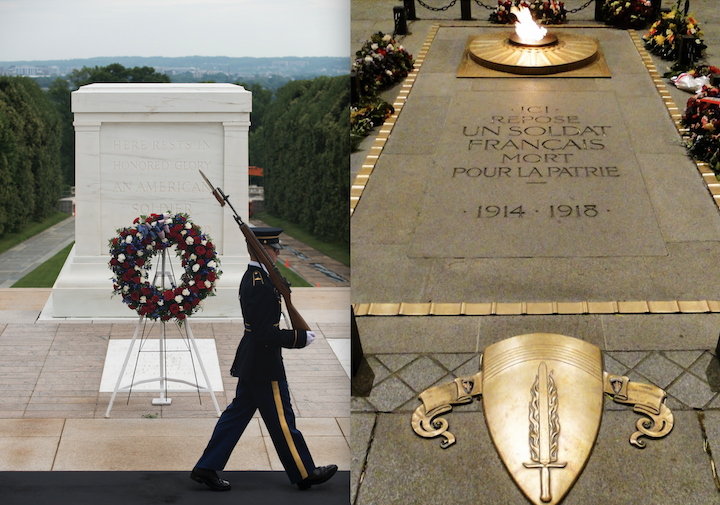
Bottom Left and Right: side-by-side, a soldier from the 3d U.S. Infantry Regiment (The Old Guard), Tomb Guard Platoon, goes past the Tomb of the Unknown Soldier in Arlington, Va., (U.S. Army photo by Rachel Larue/released, Public Domain) - Tombe du Soldat Inconnu, Arc de Triomphe, Paris, (WikiCommons Public Domain)
| |
On November 20, 1916, while the battle of Verdun was still raging, Francis Simon, president of the local chapter of Le Souvenir Français in Rennes, Brittany, suggested that France honor a soldier who had died for the Motherland, as an hommage to all soldiers who fought for the ideals of freedom. On November 8, 1920, the deputies unanimously passed a law so that the remains of an Unknown Soldier be buried under the Arc de Triomphe.
Similarly, on October 29, 1919, Brigadier General William D. Connor, commander of the United States Forces in France, proposed to the Chief of Staff of the United States Army, General Peyton C. March, to celebrate an unidentified American soldier dead on French soil, on the model of French ceremonies. On March 4, 1921, Congress approved the project and on July 3, 1926, authorized the completion of the Tomb and the expenditure for a superstructure on top of the tomb.
Our Society is proud to have been named a Lifetime Associate Member of the Society of Honor Guard / Tomb of the Unknown Soldier. We are deeply grateful for the Tomb Guards' service and for their presence with white roses at the French Cemetery in Yorktown, where 50 French Unknown Soldiers rest.
• For further reading, please refer to our November 2021 Bulletin:
"The Two Unknown Soldiers from WW1, side by side across the Atlantic"
https://conta.cc/3oK4fBe (original version in English)
https://conta.cc/3HGaS02 (version en francais)
| |
Key Moment #14
Costes & Bellonte
September 1-2, 1930
| |
Above:
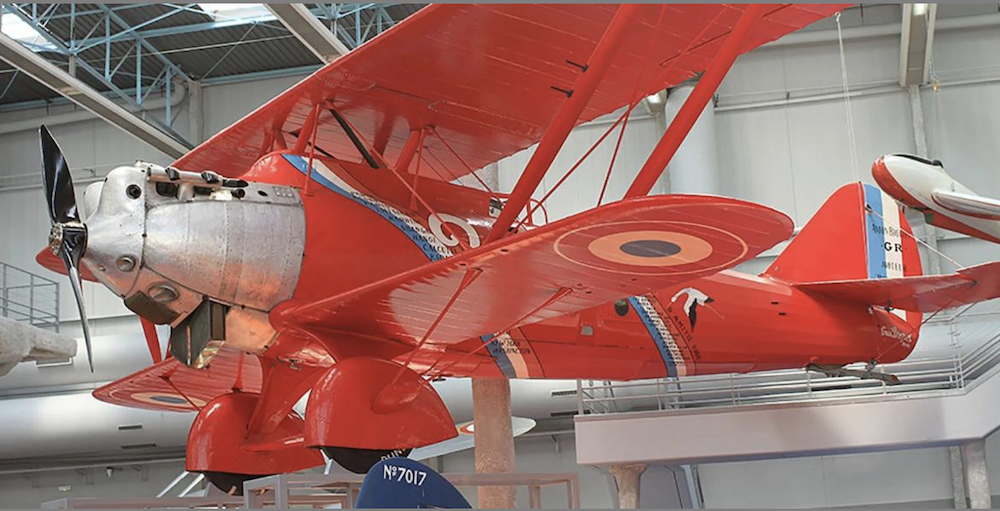
Top: Bréguet XIX "Point d'Interrogation" ("Question Mark") aboard which Costes and Bellonte made the first Paris-New York flight in 1930. On display at the Musée de l'Air et de l'Espace, Aéroport de Paris-Le Bourget, 93352 Le Bourget, France GPS: 48.946590, 2.434618
Photo: https://www.memorial-flight.com/point-d-interro?lang=en
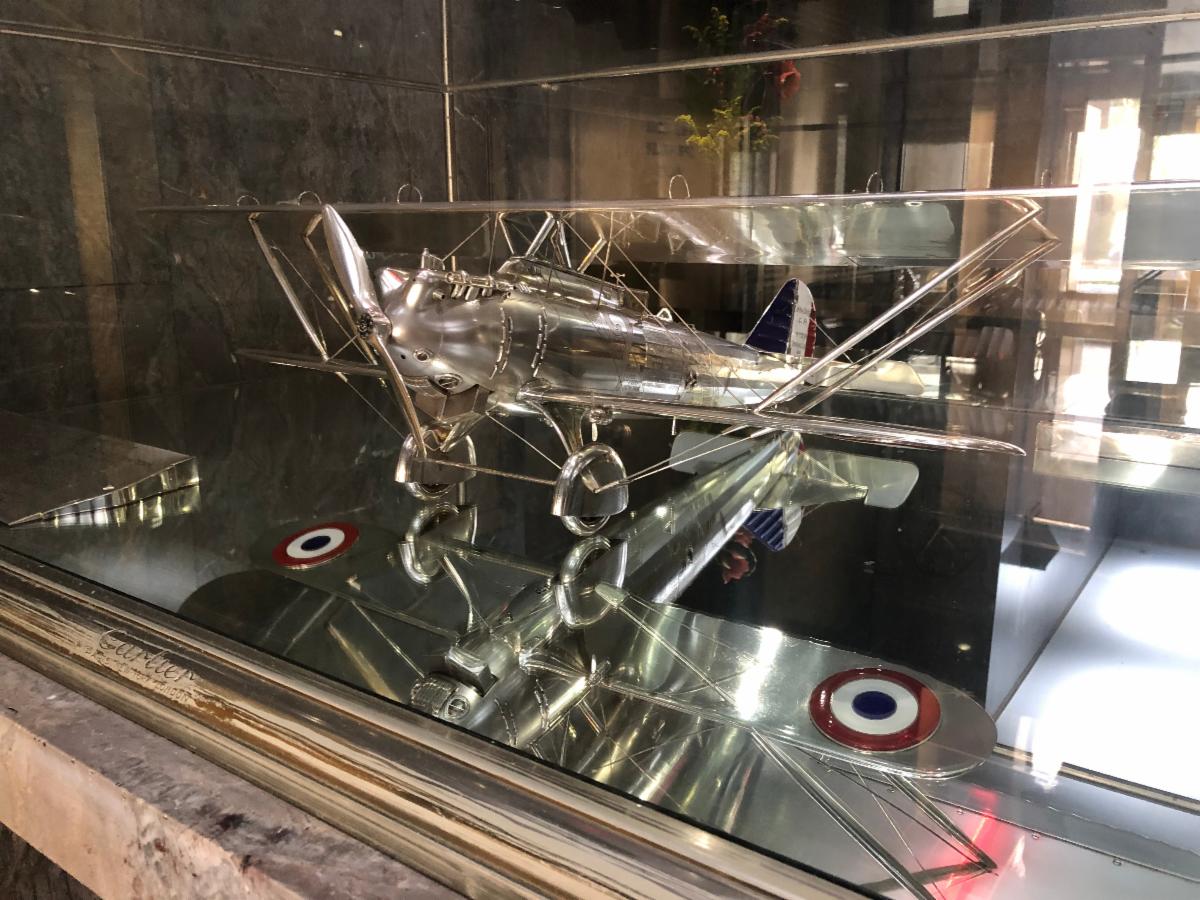
Bottom: Tribute to French Aviators Costes & Bellonte, Rockefeller Center, Maison Française, NYC, 610 Fifth Avenue & 49th Street, New York, NY 10020, GPS: 40.758117, -73.977640
Photo: TC © ASSFI 2021
| |
On September 1, 1930, two French aviation pioneers, Dieudonné Costes and Maurice Bellonte, became the first individuals to fly non-stop westward, from Paris to New York, in their biplane named "Point d'Interrogation" (“Question Mark" in French).
This was also a significant milestone as they were the first to successfully cross the Atlantic from east to west, a more challenging route due to prevailing winds. The journey required additional fuel and more hours of flight compared to Lindbergh's solo flight.
• After 37 hours and 18 minutes, they landed on September 2, 1930 at New York's Roosevelt Field, where they were welcomed by 25,000 spectators, including Charles Lindbergh himself.
Dieudonné Costes greeted Lindbergh with the words "Comment ça va?" ("How are you?") to which Lindbergh replied, "I congratulate you! I congratulate you!"
At that moment, they understood that they too had become legendary.
• It was also the first event in the history of the world ever to be broadcasted live over the radio, heard live, simultaneously on both sides of the Atlantic.
• At the time, national pride played a significant role. France was a leader in aviation at the end World War One, producing thousands of aircraft. However, competition was fierce, and Lindbergh's achievement in 1927 served as a wake-up call for the French. It was important for them to showcase their own capabilities. In this context, the reverse Atlantic crossing, which is regarded by aviation experts as more challenging due to the opposing winds, presented the perfect opportunity to demonstrate their aviation prowess.
• The aerial crossing between Paris and New York was considered the most challenging but also the most prestigious for those who managed to accomplish it. Other aviators had attempted this feat, and unfortunately, some lost their lives. For example, in 1927, the French aviators Nungesser and Coli disappeared aboard their plane "Oiseau Blanc" ("White Bird"). Although Lindbergh successfully crossed the Atlantic in the same year, his west-east route benefited from more favorable winds.
They were welcomed on September 2 by an enthusiastic crowd, with Charles Lindbergh present at the airfield, were treated with a ticker-tape parade on Broadway, were received by president Hoover at the White House and did a triumphal tour in 37 cities throughout America... and yet they are mostly forgotten today.
• For further reading, please read our August 2023 Bulletin:
"The exploits of Costes & Bellonte"
https://conta.cc/45h0veo (original version in English)
https://conta.cc/3YIFabf (version en français)
| |
Key Moment #15
D-Day
June 6, 1944
| |
Above:
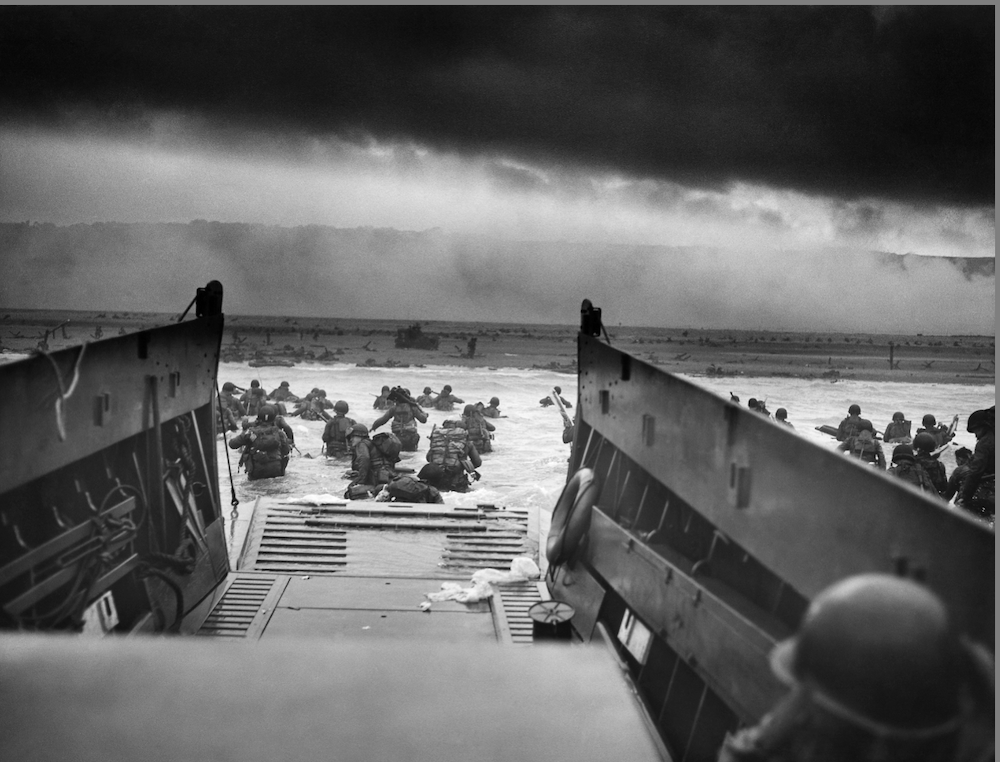
Top: A LCVP (Landing Craft, Vehicle, Personnel) from the U.S. Coast Guard-manned USS Samuel Chase disembarks troops of Company A, 16th Infantry, 1st Infantry Division (the Big Red One) wading onto the Fox Green section of Omaha Beach (Calvados, Basse-Normandie, France) on the morning of June 6, 1944. During the initial landing two-thirds of Company E became casualties.
By Chief Photographer's Mate (CPHoM) Robert F. Sargent - Public Domain,
https://commons.wikimedia.org/w/index.php?curid=17040973
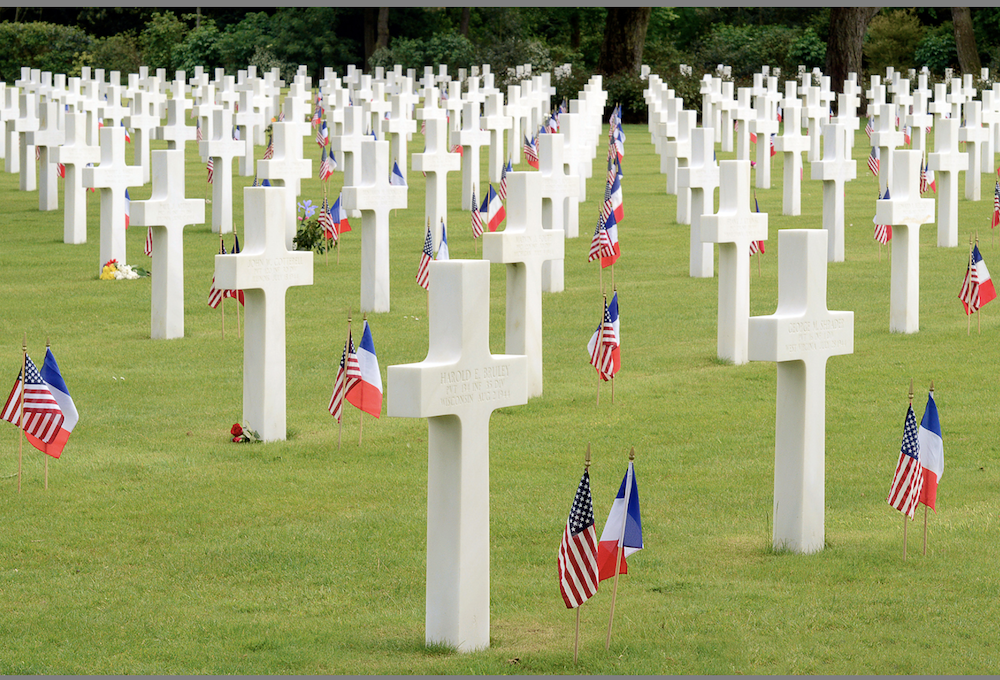
Middle: The Normandy American Cemetery and Memorial, overlooking Omaha Beach, By Peter K Burian - Own work, CC BY-SA 4.0, https://commons.wikimedia.org/w/index.php?curid=78489341
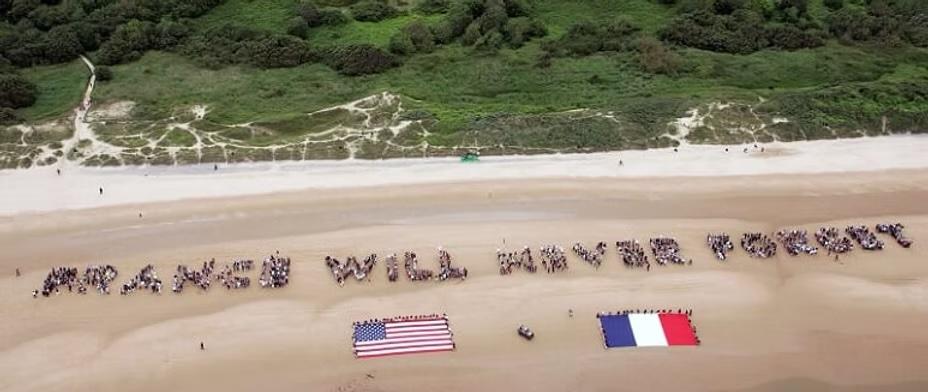
Bottom: "France Will Never Forget": view the video by clicking HERE
| |
• On June 6, 1944, Allied forces launched Operation Overlord, the largest amphibious invasion in history, landing on five beaches along the Normandy coast: Utah, Omaha (American sectors), Gold, Juno, and Sword (British and Canadian sectors). Nearly 160,000 troops crossed the English Channel that day, supported by thousands of ships and aircraft, after months of deception operations designed to convince the Germans the invasion would come elsewhere, at Pas-de-Calais.
The American sacrifice
- Omaha Beach became the deadliest of the five landing zones. Steep bluffs, well-entrenched German defenders, and rough seas turned the initial assault into a slaughter—many soldiers were cut down before even reaching dry sand. Roughly 2,400 American casualties occurred there alone on the first day.
- Utah Beach saw lighter resistance, but airborne divisions (the 82nd and 101st Airborne) that dropped inland overnight to secure roads and bridges suffered scattered, chaotic landings and heavy losses fighting in the dark, often isolated in small groups behind enemy lines.
- Total Allied casualties on D-Day are estimated at around 10,000, including roughly 6,000 American dead, wounded, or missing.
D-Day was only the beginning. The Battle of Normandy that followed through August 1944 was grueling—fighting through hedgerow country (the bocage), taking towns like Saint-Lô and Caen street by street, and enduring a brutal war of attrition before the Allies finally broke out and pushed toward Germany.
The Normandy American Cemetery at Colleville-sur-Mer, overlooking Omaha Beach, holds the graves of 9,388 American service members, a solemn testament to the cost of that single campaign. D-Day is remembered as a pivotal turning point that opened the Western Front and began the liberation of Western Europe from Nazi occupation—achieved through immense courage and at enormous human cost, much like the American sacrifices of the world war a generation before.
• We salute our friends at TheFrenchWillNeverForget, an organization co-founded by our Society's 1st Vice President , LCL (h) Patrick du Tertre whose mission mission is to demonstrate the friendship and the gratitude of the French people for the decisive help received from their American ally twice in the last century.
• We also highly recommend this remarkable documentary by American director Christian Taylor, "The Girl Who Wore Freedom", also available on Amazon.
| | |
EPILOGUE
An enduring Alliance and Friendship
| | |
There are, of course, dozens of important other milestones marking the shared history of the Untied States and France. We chose, in our view, some of the most important.
The relationship began with the 1778 Treaty of Alliance, when France—still an absolute monarchy—chose to back a revolutionary republic against its own rival, Britain. French money, ships, soldiers (Lafayette, Rochambeau), and the decisive naval victory at Yorktown were indispensable to American independence. That founding act created something rare: a shared origin story, reinforced ever since by symbols and gestures—the Statue of Liberty, Lafayette's 1824 tour, and later "Lafayette, we are here" in 1917.
Each generation found a way to "return the favor": American volunteers and troops in France in 1917–18, American forces liberating France in 1944, French support (rhetorical and material) for the U.S. during the Cold War. This back-and-forth reciprocity created a self-reinforcing narrative of loyalty.
Both nations trace their modern identities to Enlightenment-era revolutions built on liberty, equality, and republican government—giving the relationship an ideological dimension beyond mere strategic interest.
Figures like Tocqueville, Benjamin Franklin, and Thomas Jefferson (who both served as U.S. minister to France) fostered deep intellectual cross-pollination. American writers, artists, and soldiers (the "Lost Generation," the Lafayette Escadrille) developed lasting personal and cultural ties to France, and vice versa.
Physical monuments, place names (dozens of Lafayettes and Fayettevilles), war cemeteries, and annual commemorations continually renew the relationship in public consciousness, making it resistant to any single political disagreement.
This friendship isn't a fixed inheritance—it's a living dynamic that each generation must actively renew. Governments and diplomats matter: treaties, state visits, and official commemorations give the relationship its formal architecture. But history suggests the real durability of the Franco-American bond has always come from somewhere else—from private individuals and civil society choosing, again and again, to invest in it personally.
It was private citizens who built the Statue of Liberty through public subscription, not government decree. It was young volunteers—ambulance drivers, aviators, writers—who crossed the Atlantic before their governments ever declared war, driven by personal conviction rather than official policy. It's sister-city partnerships, student exchanges, scholars like Tocqueville, businesses, artists, and countless ordinary travelers and friendships that have kept the relationship textured and alive between the moments when heads of state shake hands.
That's arguably the deeper lesson of these 250 years: alliances between governments can shift with elections and administrations, but a friendship between peoples has to be chosen and re-chosen, continuously, by the individuals who carry it forward. If the Franco-American bond is to endure for another 250 years, it won't be sustained by treaties alone—it will depend, as it always has, on the ongoing willingness of citizens on both sides of the Atlantic to keep telling each other's stories, keep crossing the ocean, and keep choosing one another as friends.
| | |
PART TWO
Tribute to the American Volunteers
who joined the Lafayette Flying Corps:
Every month, we are paying tribute to an American volunteer who fought for France, freedom and democracy. This month, we honor:
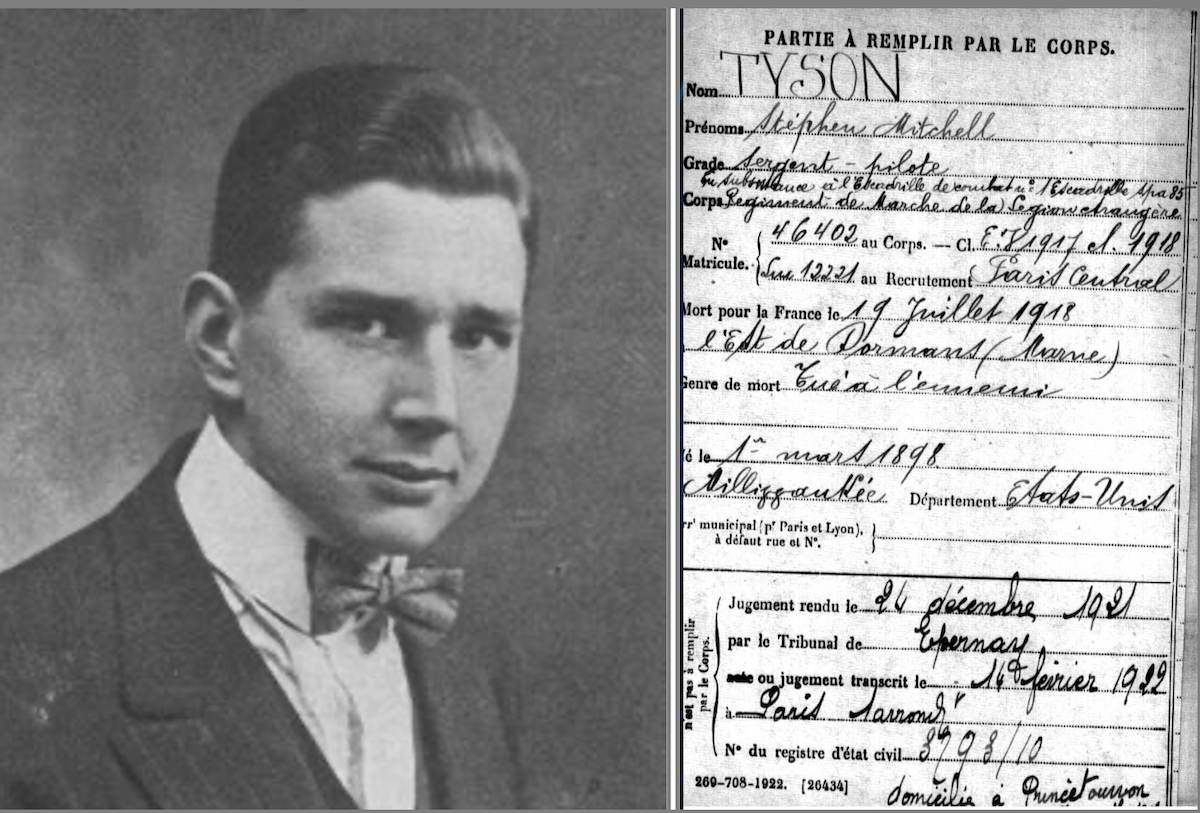
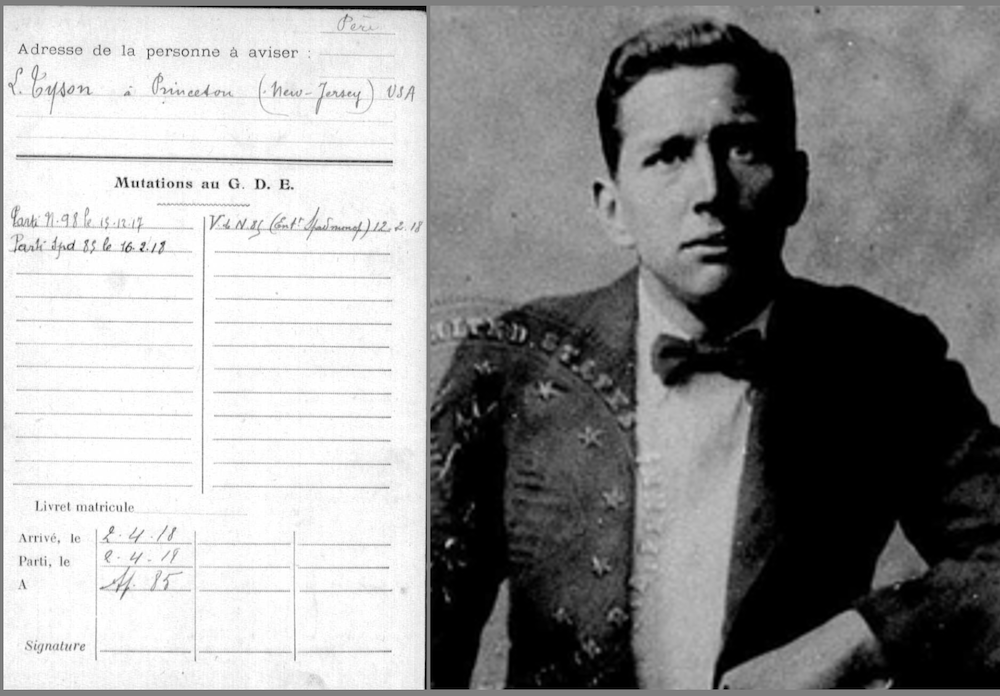
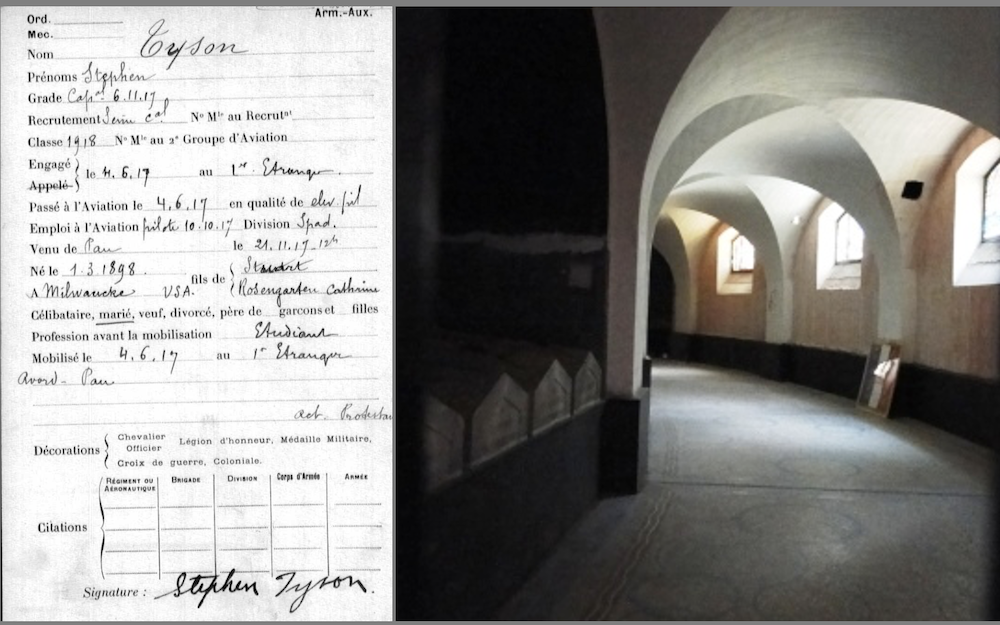
Sergeant Stephen Mitchell Tyson
"Mort Pour la France"
July 18, 1918
at Dormans (51 - Marne, France)
Note*: "Mort pour la France" meaning "Died for France," is a legal term in France. It is an honor given to men or wome who lost their lives in conflicts while serving the country. This phrase appears on their death certificates. Both French citizens and foreign volunteers can receive this recognition.
| | |
Stephen Mitchell Tyson
Rank: Sergeant
Units: Régiment de marche de la Légion étrangère (RMLE) - Lafayette Escadrille
Serial Number: 12221
State: New Jersey
Date of Death: 1918-07-19
Mention: Mort pour la France
Cemetery: Lafayette Escadrille Memorial, Marnes la Coquette
Decoration: Croix de Guerre
Stephen Mitchell Tyson was born on March 12, 1898, in Milwaukee, Wisconsin, the second of twelve children. When his mother Katharine died in 1915, he was left restless and unsettled—so, like many future Lafayette Flying Corps pilots, he headed to France straight out of high school to join the American Ambulance Field Service, driving ambulances near the front lines.
Before long, Tyson enlisted in the French Army as an aviator. After five months training at aviation schools across France, he earned his brevet—his military pilot's license—on October 16, 1917, almost exactly a year after arriving in France. He qualified on the Caudron, already an outdated, primitive aircraft, but by spring he'd be at the controls of something far more formidable: a brand-new 180-horsepower Spad, the French military's latest fighter.
On December 19, he was posted to the front with Spad 85. As the Germans were in the midst of their historic second retreat from the Marne, Tyson found himself flying patrol at 15,000 feet between Dormans and Château-Thierry, roughly 50 miles northeast of Paris, at around 5:30 in the afternoon. Breaking from formation, he pressed an attack against eight German aircraft alone, leaving the rest of his patrol behind and giving the Germans an eight-to-one advantage. He was shot down.
"
With a courage and a conviction characteristic of so many of our American soldiers, Stuart Mitchell Tyson gave his life to France and her Cause willingly, consciously, considering it a privilege. It was his final protest against a world wrong --- it was his glorious consecration to the simple faith that Right is Might in a christianized world. Literally, and confidently, he "died to make men free."
Sergeant Tyson was born in Milwaukee, Wisconsin, March 12, 1898. He was educated at a school in Oxford, England, and at the Haverford School, Pennsylvania. In 1915 he entered the Midvale Steel Company. A year later he left for France as an ambulance driver, serving with Section One along the Verdun front in the hard winter of 1916-17 when the French division, with which it served, was engaged in the recovery of Vaux and Douaumont. At the end of six months he enlisted in the French Army as an aviator, and after the necessary period of training was breveted, and sent to the front in December, 1917, where he served with the Esquadrille Spad 85 until July 19, 1918, the day of his death. He was killed in action near Château-Thierry, while attacking eight German monoplanes. In recognition of his heroism he received the Croix de Guerre with palm.
The following extracts from letters to his father are characteristic of the spirit of this man. On May 1, 1917 he wrote: "I am delighted with my work here, in the ambulance service, and am wrapped up in the cause of France. I have decided to give myself to her . . . . . Knowing your sentiments on the war, I am sure you will have no objections to my doing what little I can for France. Dear Father, I realize that my chances for getting through are pretty slim, but it is well worth it by my having a chance to help crush those devils."
And just a year later, May 1, 1918, he writes from the Aviation Service, "We have been constantly moving from place to place, and are now right in the thick of the big battle. What a sight it is, seen from the air. The endless train of men and supplies coming up from the rear, the narrow strip of No-Man's Land with its cloud of smoke and fire caused by the never ceasing rain of shells, and above, the German planes circling, in and out of the clouds, like great birds waiting for a chance to strike. Our group has been assigned to shooting up the German column as they march up from the rear. We fly very low, so you can imagine what two machine guns on each aeroplane, flying full in the face of the enemy, can do. It is very exciting work. We are in the trajectory of shells from both sides, with anti-craft guns shooting up. I have had awfully good luck. Not been touched yet, although my machine has been badly hit twice."
An appreciation from his commanding officer attributes to him all of the highest qualifications of a real man and soldier.
"Stephen Tyson was a brave and capable pilot, always ready to do more than his duty, and was beloved by all his comrades in the Esquadrille."
Source of information: "The Lafayette Flying Corps: The American Volunteers in the French Air Service in World War One," by Dennis Gordon. Schiffer Military History, Atglen, PA: 2000
“I am wrapped up in the cause of France.
I have decided to give myself to her.”
— Stephen Mitchell Tyson, letter to his father, dated May 1st, 1917
| | |
PART THREE
NEWS & ANNOUNCEMENTS
| | |
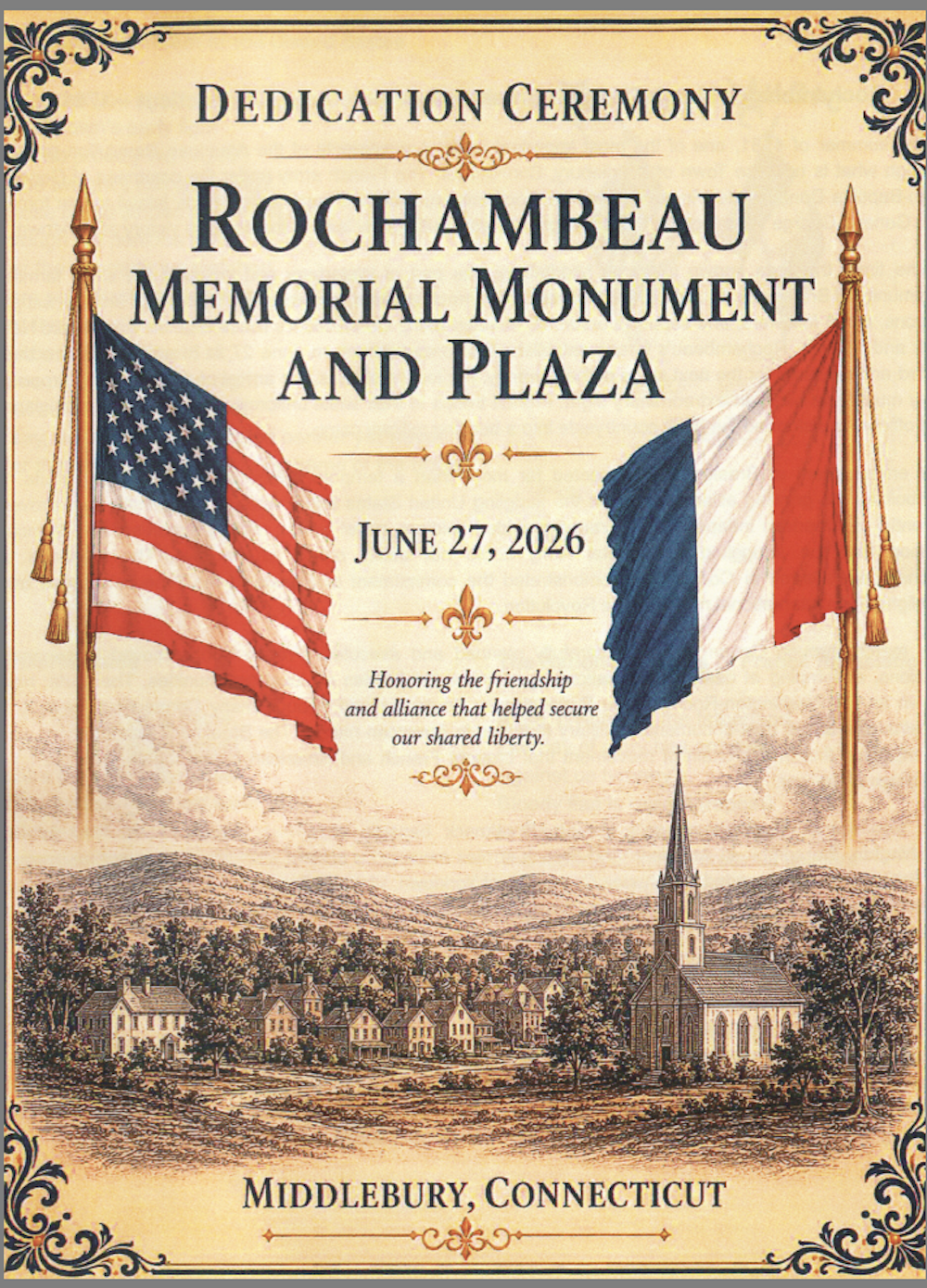
June 27, 2026
Dedication of the
Rochambeau Memorial Park
Middlebury, CT.
| | |
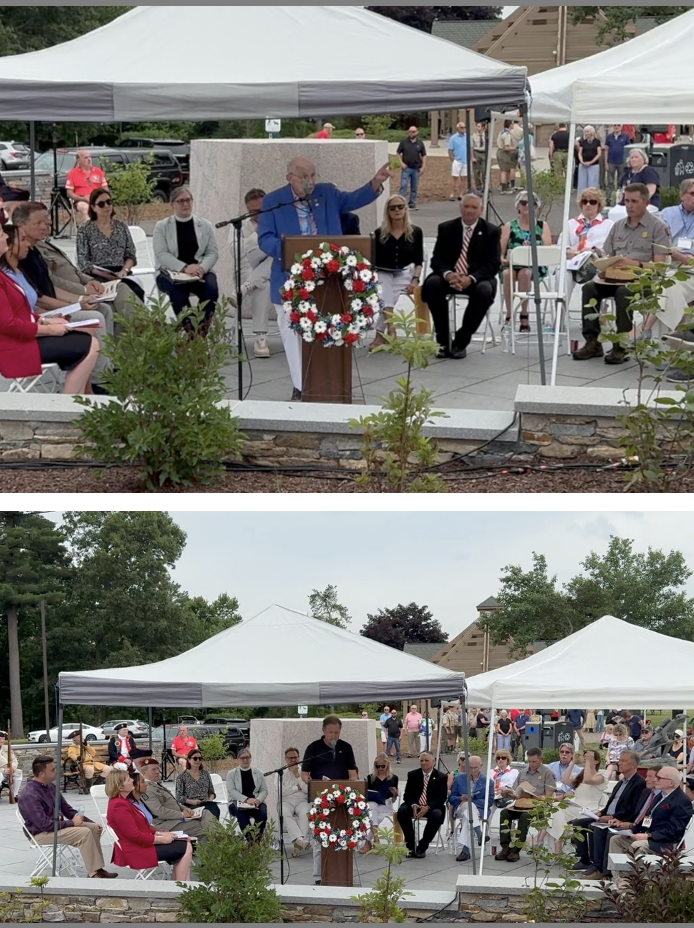
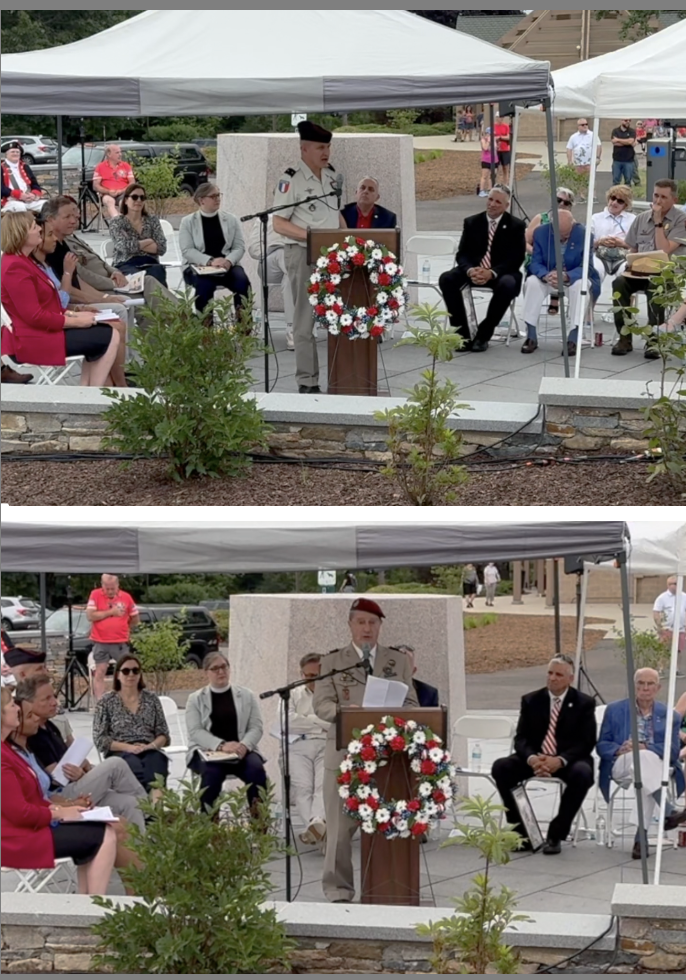
Above, from Top to Bottom:
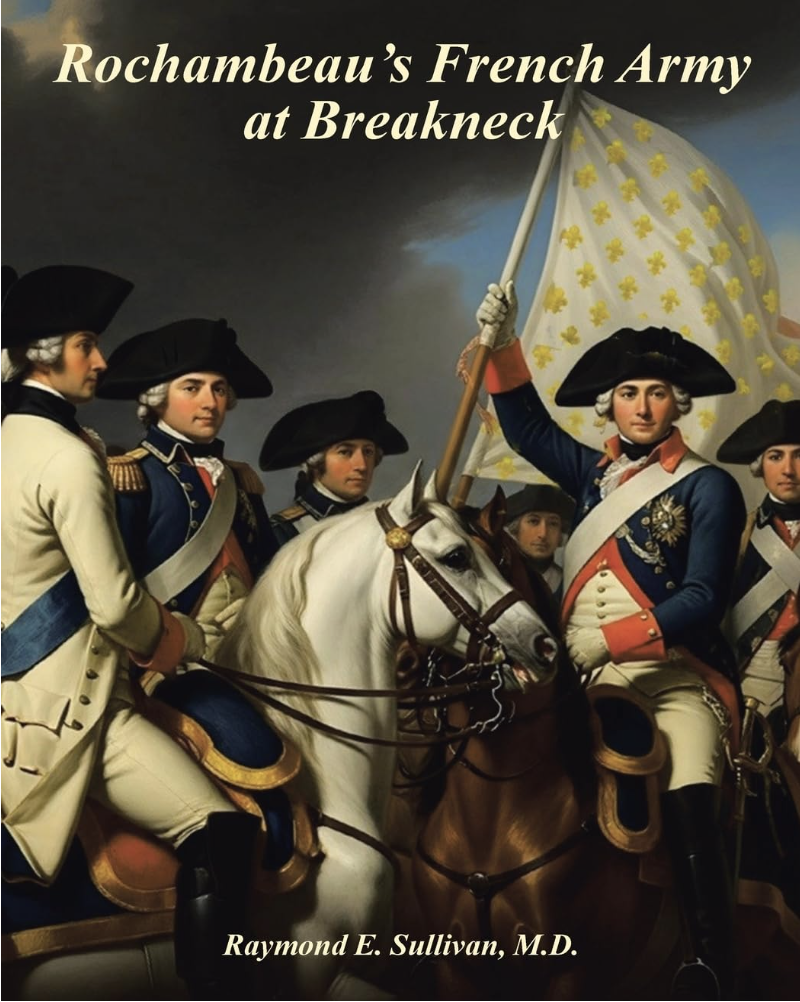
Among the Keynote speakers: Raymond E. Sullivan, MD comments on the struggle made by the French Army at Breakneck Hill, Larry Janesky, Honorary Chairman and General Contractor, LCL(h) Patrick du Tetre, Association of French Reserve Officers in the United States tells a heartwarming story, and French Brigadier General Guillaume Ponchin, Head of the French Military Representatin at the United Nations. Click on the photos to access the videos.
Photos courtesy of Middlebury Historical Society
| |
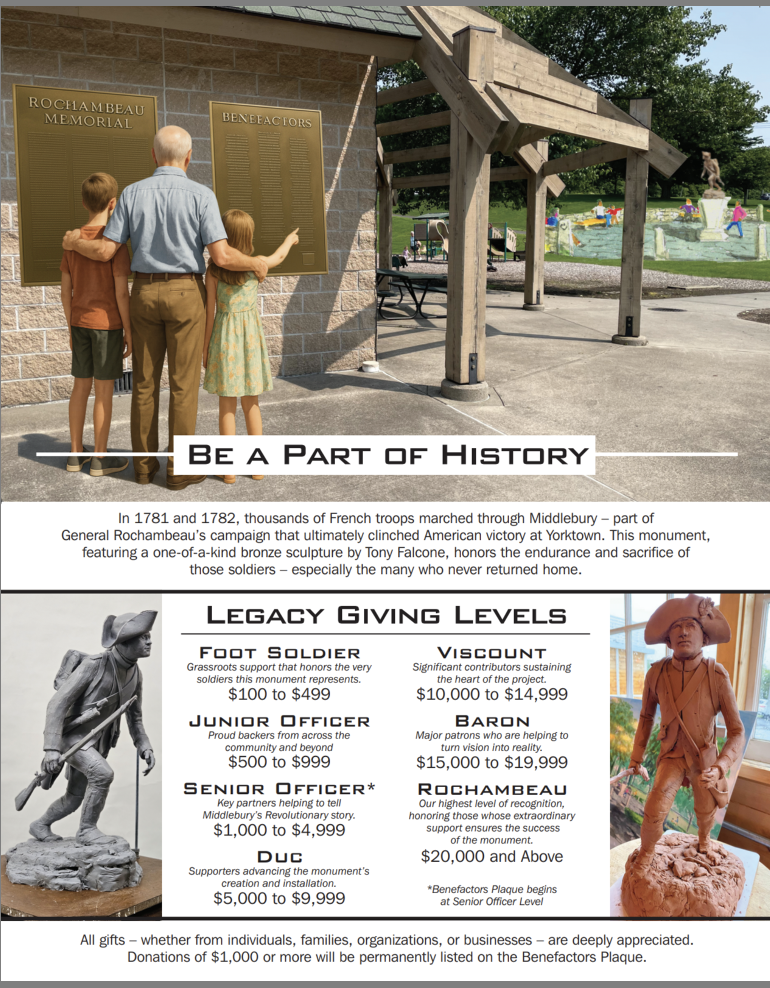
The Rochambeau Monument, led by the Middlebury Historical Society, honored the French soldiers who camped on Breakneck Hill in 1781 and 1782 as part of General Rochambeau’s forces. A bronze statue by Connecticut artist Tony Falcone was dedicated on June 27, 2026. The society opted to depict a French soldier instead of Rochambeau himself, distinguishing this monument from existing tributes to Rochambeau in Washington, Newport, and Yorktown.
It is one of the most ambitious civic and cultural initiatives in Middlebury’s recent history, and was supported by generous contributions from the community — including a notable donation from Larry and Marie Janesky, the State of Connecticut, and ongoing local fundraising efforts — our Society was joined by the Association of French Reserve Officers in the United States.
Robert Rafford, president of the Middlebury Historical Society, remarked that the project “is the most significant tribute to Rochambeau and the French army, not only in Middlebury but throughout Connecticut, and will serve as a major attraction along the entire Washington-Rochambeau Revolutionary Route.”
Our Society is honored to contribute to the erection of the bronze statue of a French soldier, and was represented by our 1st Vice President, Lt.Col. (H) Patrick du Tertre.
The statue is now on view at Meadowview Park, located at 190 Southford Road (Route 188) in Middlebury, within a newly established plaza.
Meadowview Park, 190 Southford Rd, Middlebury, CT 06762.
GPS: 41.5184169, -73.1378729 . It is easily accessible via I-84, only 86 miles from Manhattan.
The Middlebury Historical Society need your help!
We invite you to visit our dedicated website to learn more:
https://www.middleburyhistoricalsociety.org/
| |
July 4th, 2026
Celebration of the 250th anniversary of
The United States
New York, NY
| Photos: Daniel Falgerho, Federation of French War Veterans, Inc. | |
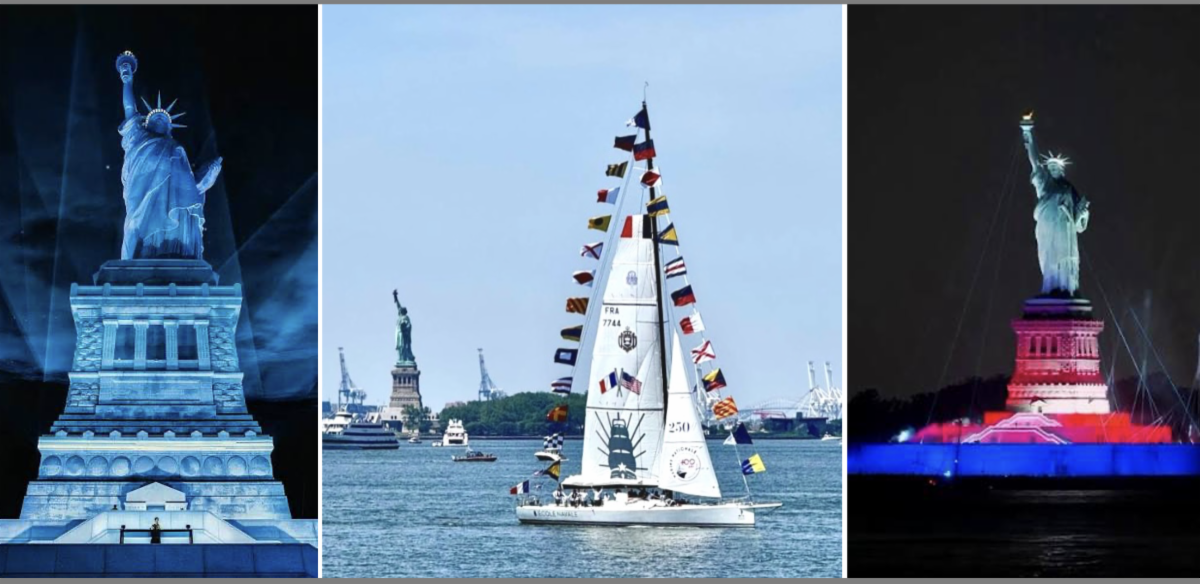
• On July 1st, the Statue of Liberty shined in a unique light show created by a French company Monumental Tour. The artistic tribute celebrated America’s 250th anniversary while honoring the enduring bond between our two nations.
Photo: Cecilia Sanchez / AFPTV / AFP
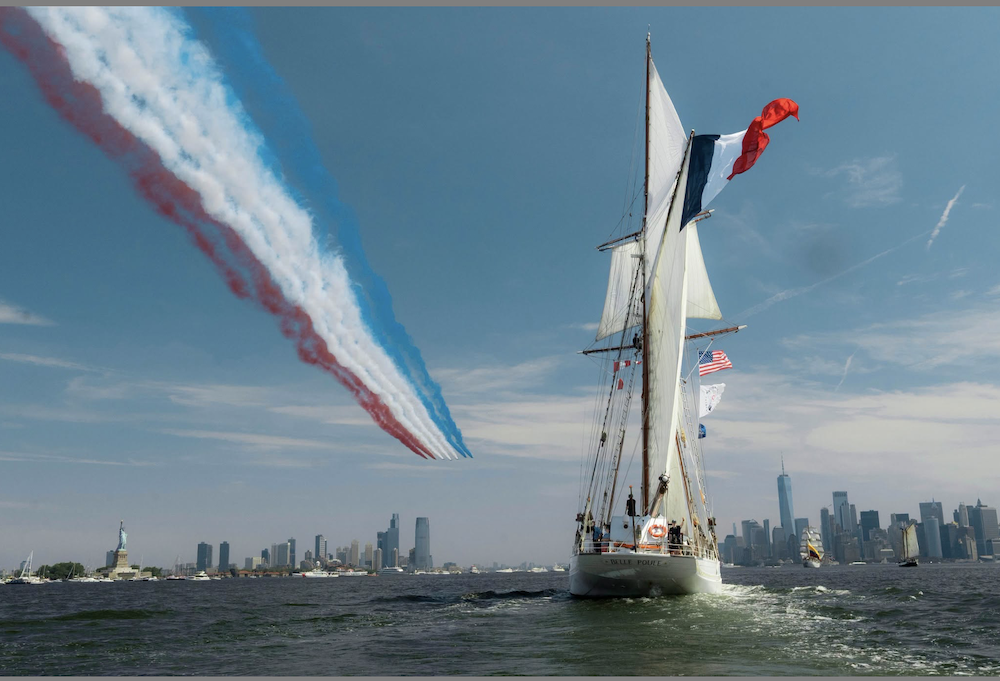
• As part of the July 4 celebrations marking the 250th anniversary of U.S. independence under the America250 initiative, France took part in the festivities held in New York through two iconic symbols of its heritage.
As part of Sail250, the French Navy schooner Belle Poule took part in the grand Parade of Ships in New York Harbor, alongside sailboats from around the world. Built in 1932 and based in Brest, this training schooner has been training generations of French Navy officer cadets for nearly a century. Having served with the Free French Naval Forces during World War II, she remains a living symbol of French maritime history and tradition.
The celebrations also continued in the skies over New York with a flyover by the Patrouille de France, offering a spectacular tribute to this historic occasion.
From the sea to the skies, the presence of the Belle Poule and the Patrouille de France illustrated the depth of the ties that bind France and the United States, nearly 250 years after France stood alongside the American rebels on the path to independence.
Text & Photos: French Ministry of Foreign Affairs
• The training sailing boat Intrépide from the Ecole Navale sailed from Brest to join the naval parade. It was manned by a joint-crew of French and American Cadets from the US Naval Academy in Annapolis.
Photo: Ecole Navale
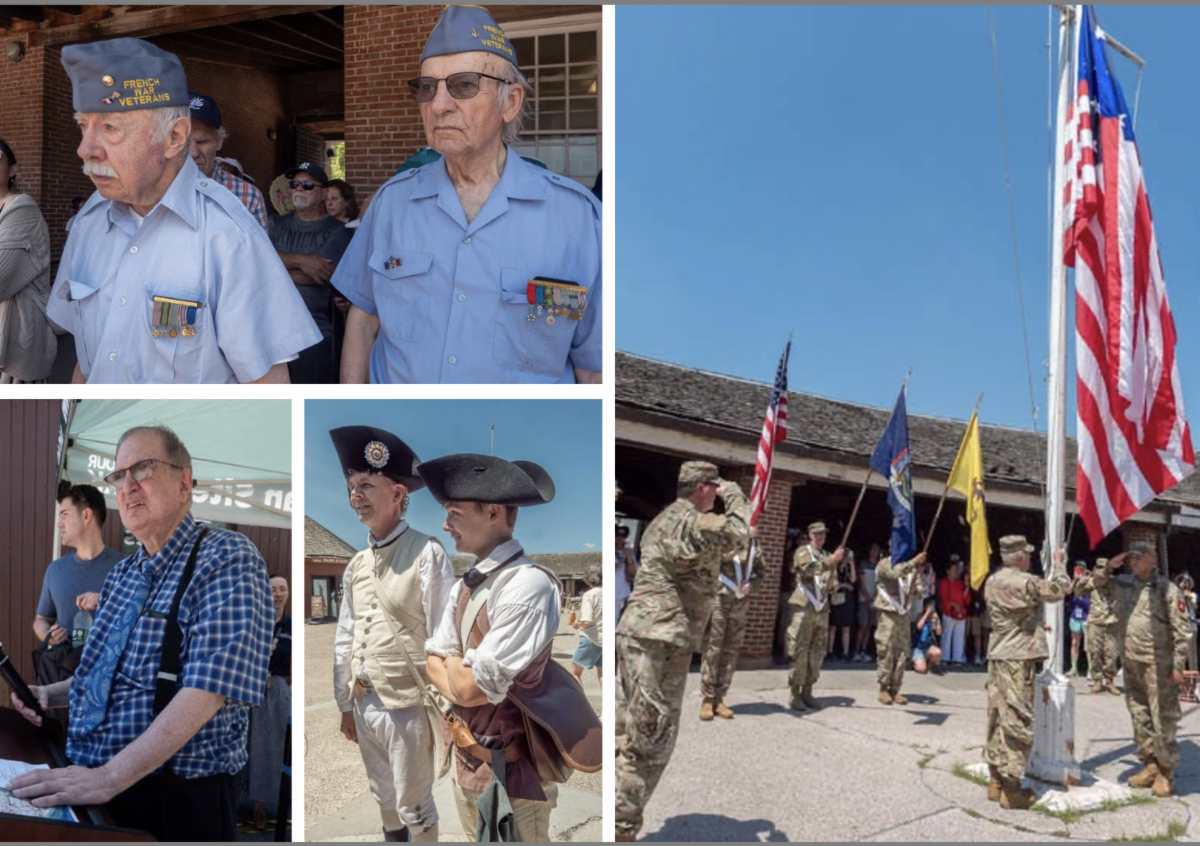
• Also on July 4th, the French War Veterans joined the Lower Manhattan Historical Association in their traditional parade.
"At the invitation of the Lower Manhattan Historical Association and the Sons of the American Revolutions we were proud and happy to celebrate Independence Day in a dazzling event organized in cooperation with CultureNOW and the National Park Service. The Veteran Corps of Artillery of the State of New York provided the Color Guard and a wealth of Revolutionary War era uniforms and dresses was a reminder of the international nature of the conflict as, in addition to France, Spain and the Dutch Republic also supported the United States. Lunch at Fraunce’s Tavern was a wonderful opportunity to see old friends and meet new ones.
Happy Birthday to the United States!"
Text and photos: Daniel Falgerho, Federation of French War Veterans, Inc.
| |
July 5, 2026
Dedication of the
"Sacred Soil Marker"
at
Arlington National Cemetery
| | |
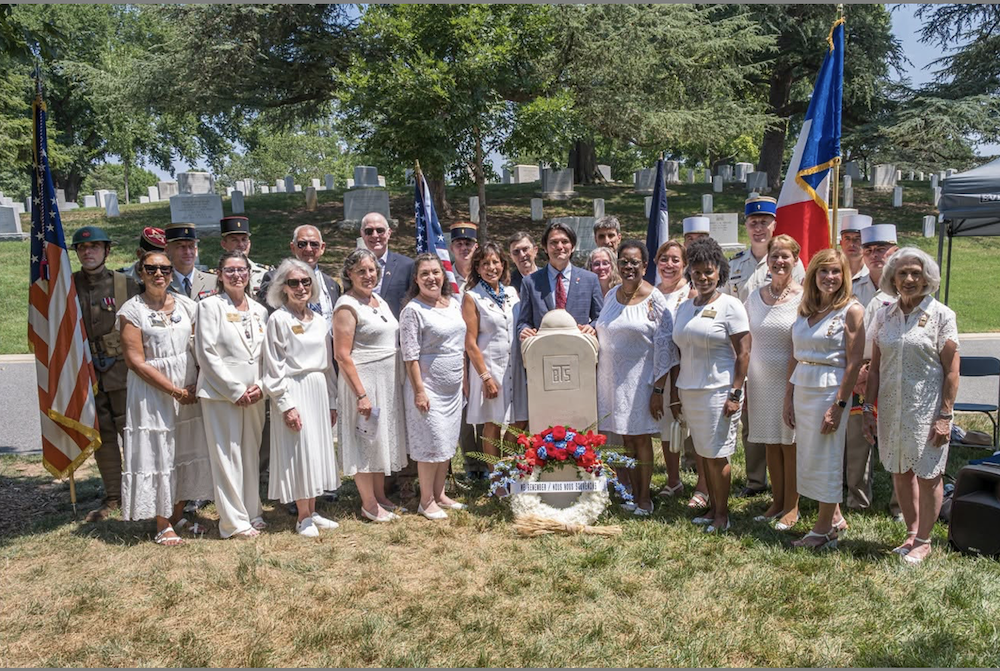
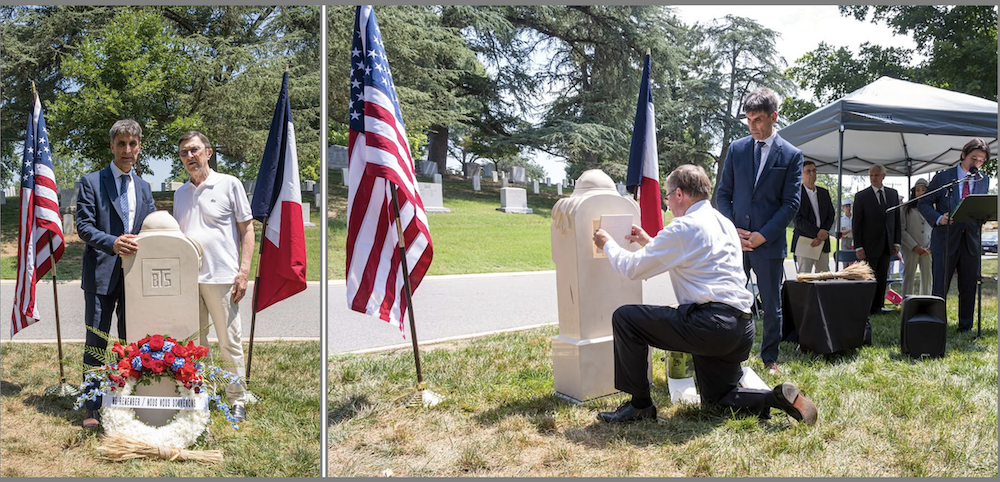
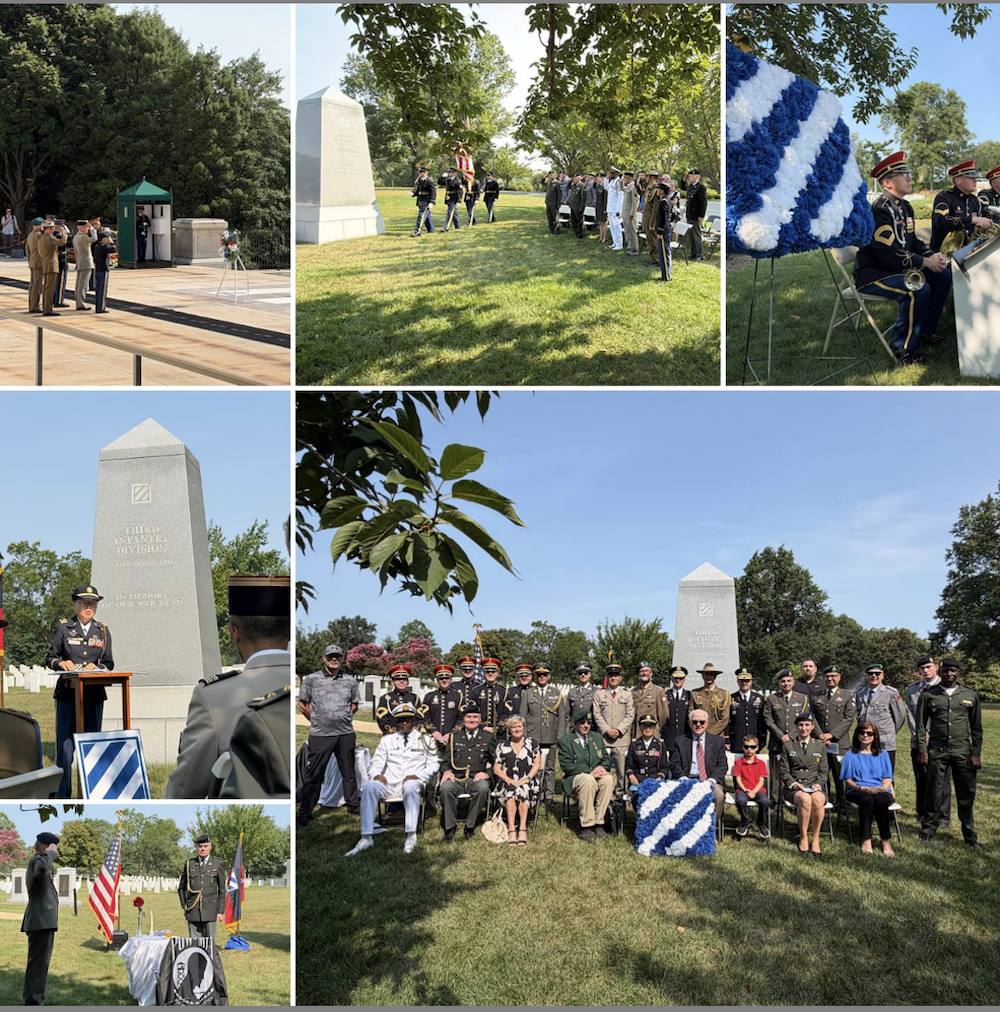
A historic Sacred Soil Marker at Arlington National Cemetery has undergone restoration, revitalizing a nearly century-old emblem of commemoration that pays tribute to Americans who lost their lives on the battlefields of World War I.
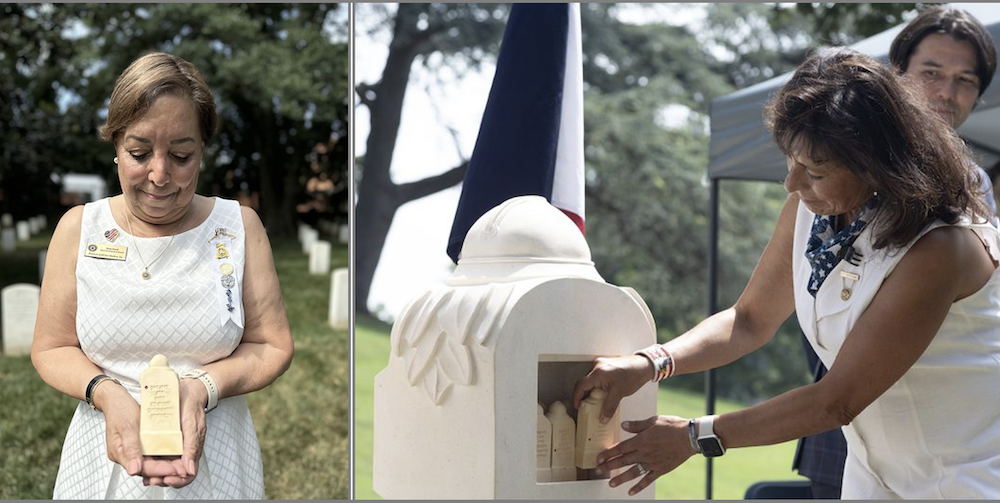
On July 5, 2026, beneath a scorching 98-degree summer sun in Section 18 of Arlington National Cemetery, the restored Sacred Soil Marker was officially unveiled, signifying the culmination of nearly a century of history and remembrance.
The Sacred Soil Markers, which contain earth collected from the battlefields of World War I, were envisioned in early 1927 by French sculptor and World War I veteran Gaston Deblaize. Their restoration guarantees that future generations will honor the sacrifices made by those who served during the Great War.
The rededication of the restored marker took place during a ceremony that included representatives from the American Battle Monuments Commission and the American Battle Monuments Foundation, the American Gold Star Mothers, Arlington National Cemetery, the Embassy of France, Les Amis de Renée et Gaston Deblaize, and the American Society of Le Souvenir Français, represented by COL Pierre Oury, USAF (ret), along with the United Veterans War Council, represented by Ryan Hegg, who also serves as our Society's liaison officer with U.S. Veterans organizations and acted as the Master of Ceremony.
This installation could not have been realized without the generosity of our Society's members, Wally & Daun Frankland, to whom we express our deep and lasting gratitude.
Photos: Gold Star Mothers
Bottom right: Wally Frankland in the process of sealing the marker
| |
| |
July 9, 2026
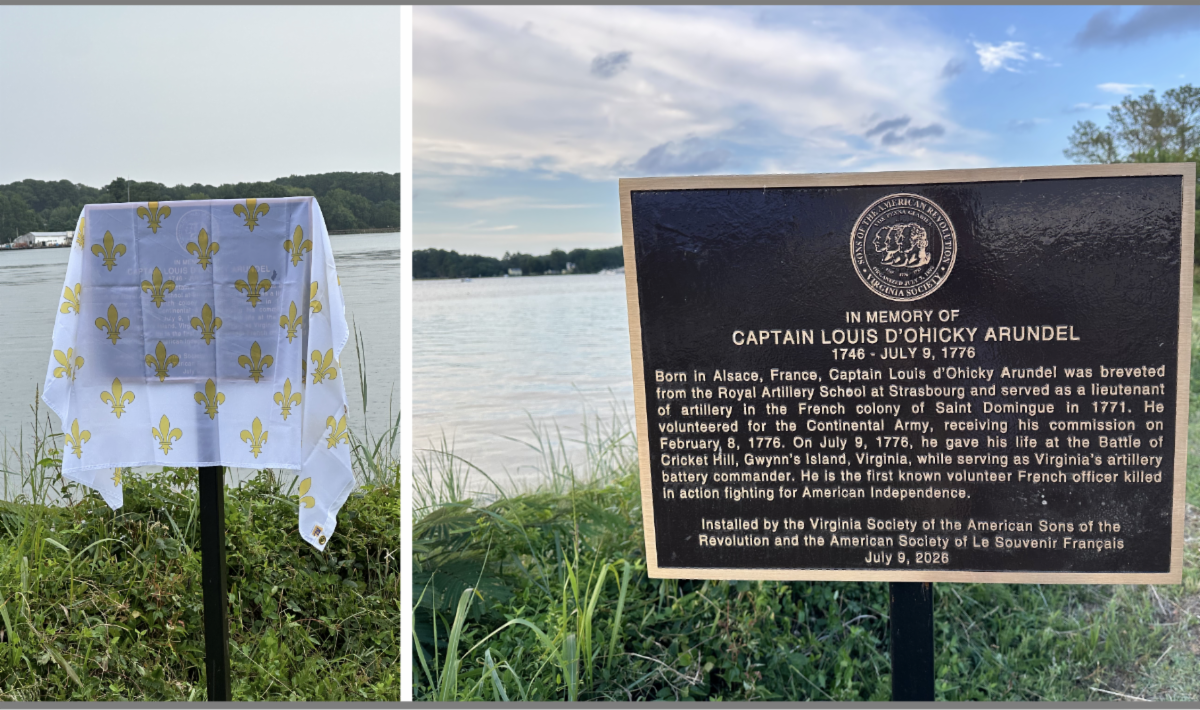
Dedication of our marker honoring
Capt. Louis d'Ohicky Arundel
First French officer Volunteer killed
of the American Revolutionary War
Gwynn Island, VA.
| |
| |
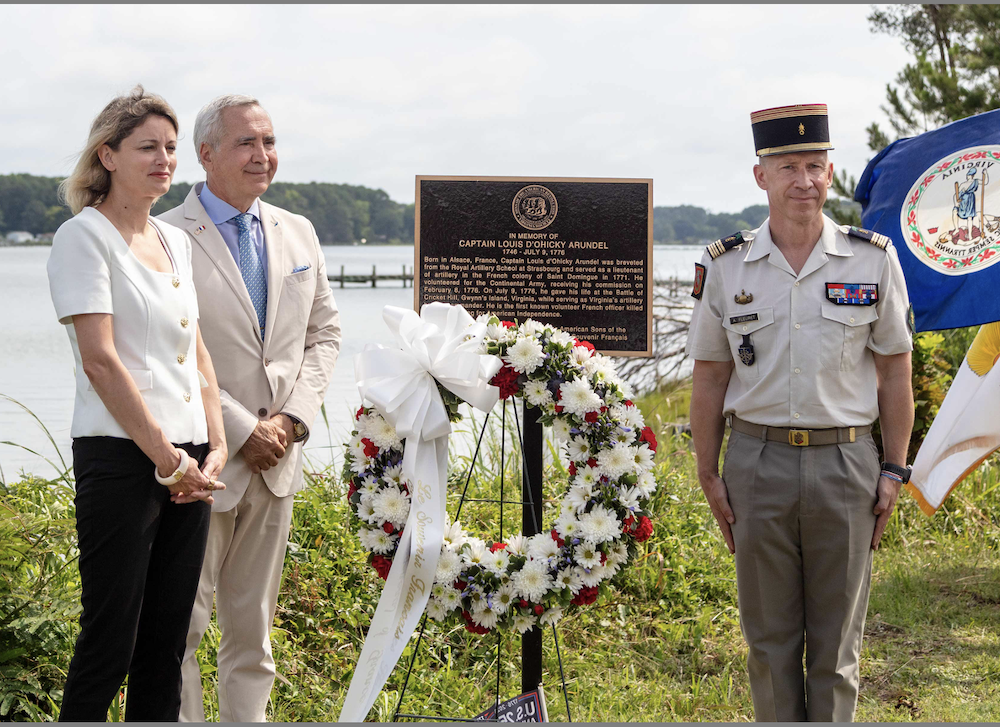
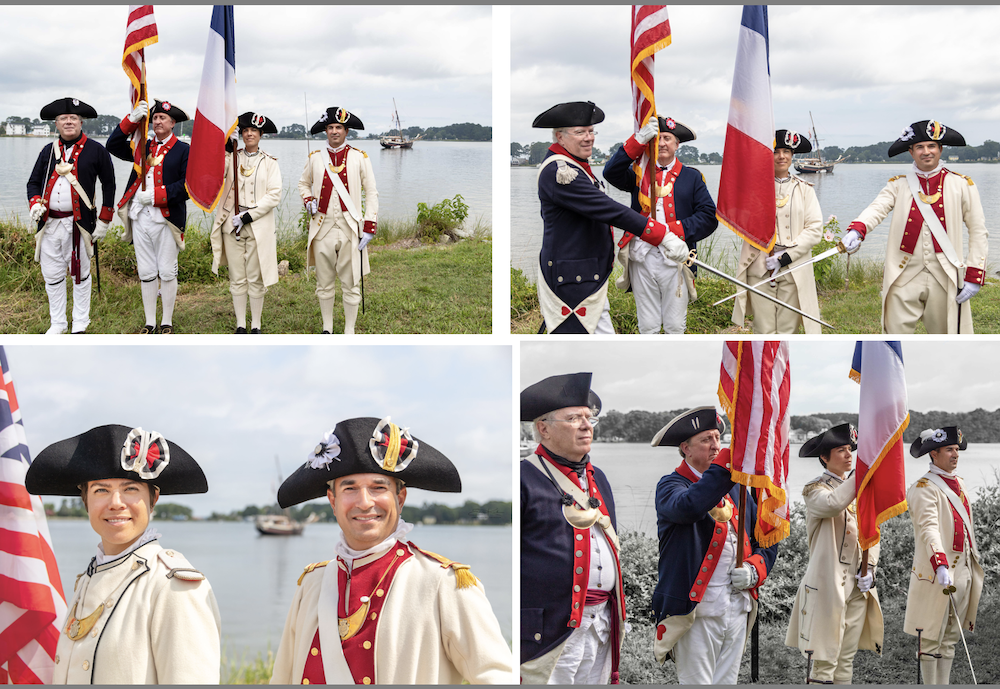
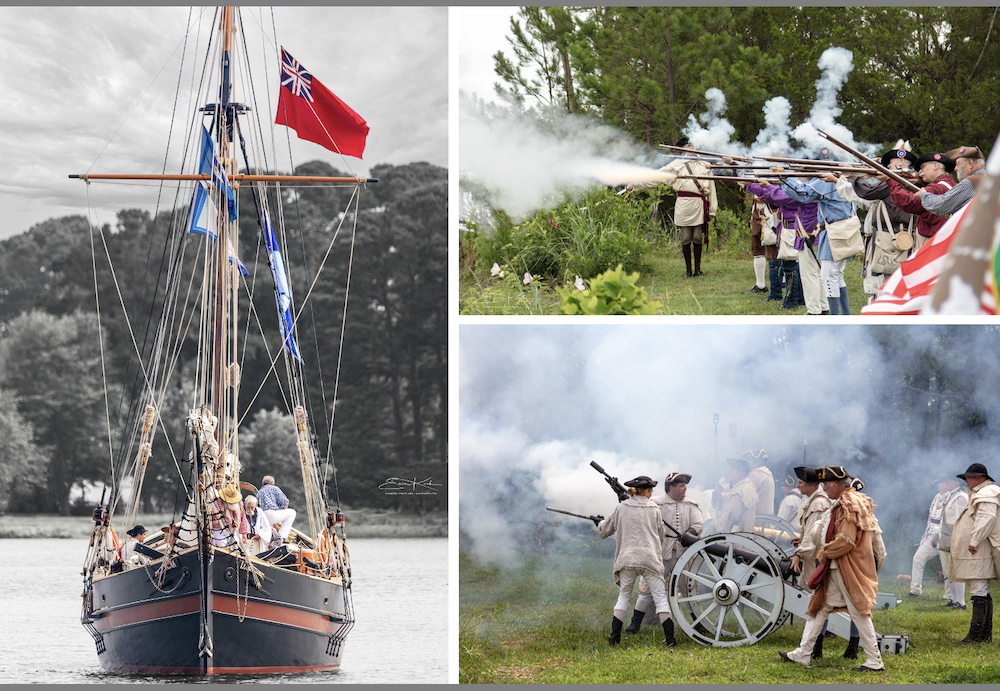
The Battle of Cricket Hill took place on July 9, 1776 when Patriot forces bombarded the British ships at anchor on Gwynn’s Island, forcing Lord Dunmore and his entourage to re-embark and flee. This was a signal victory for the Patriots just five days after the Second Continental Congress adopted the Declaration of Independence.
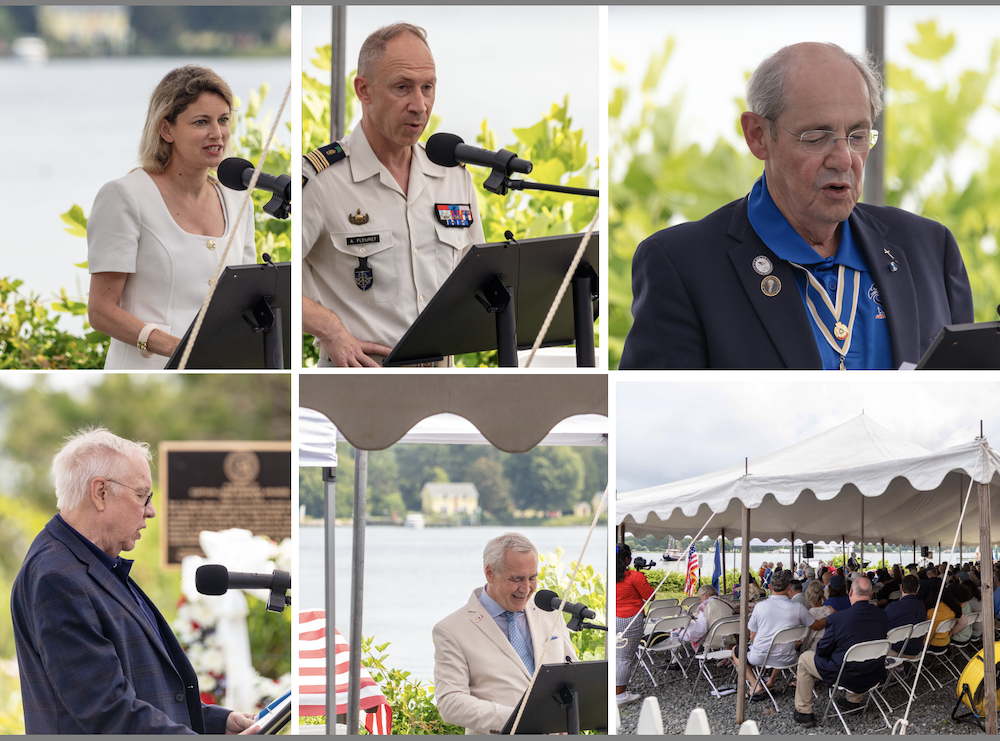
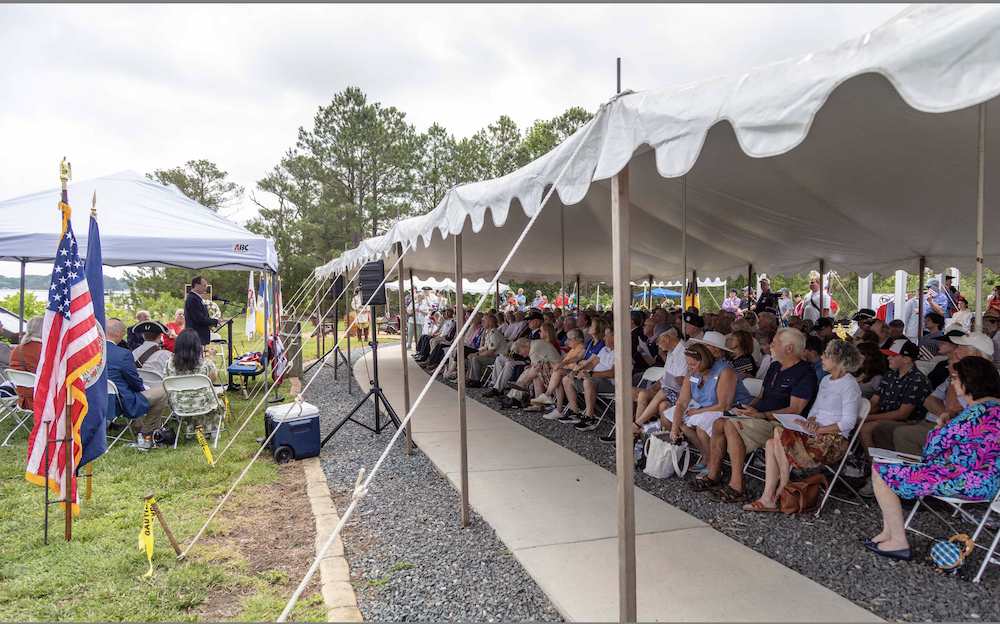
The Mathews VA250 Committee in partnership with the Virginia Society Sons of the American Revolution, Daughters of the American Revolution, and the American Society of Le Souvenir Français, Inc., conducted opening ceremonies for the 250th anniversary of the Battle of Cricket Hill.
Ceremonies included the dedication of a memorial marker to the only Patriot casualty and a Road to Revolution interpretive sign of the battle, followed by a formal ceremony hosted by Sons of the American Revolution and Daughters of the American Revolution, complete with Color Guard, wreath-laying service, as well as musket and cannon fire.
Dignitaries and Keynote speakers included: The Hon. Robert J. Wittman, U.S. House of Representatives, Ambassador (ret) Randolph Marshall Bell, The Peyton Society of Virginia, Hon. Caroline Monvoisin, Consul General of France in Washington DC, COL Antoine Fleuret, French National Liaison to ACT NATO HQ, Michael Rhodes, Chair, Mathews VA250 Committee, Fred Lyon, Committee Chair, Mathews VA250 Committee, Virginia Society, Sons of the American Revolution, Thierry Chaunu, president of the American Society of Le Souvenir Français, Kathleen "Kathy" Mayer Rugh, State Regent, Virginia Society, Daughters of the American Revolution, Jeffrey Thomas, National Historian General, Sons Of The American Revolution, Mark M. Jakobowski, President, Sons of the Revolution in the Commonwealth of Virginia, Michael J. Elston, President General, National Society, SAR, Darrin Schmidt, President, Virginia Society, SAR, Drew Wajciechowski, State 1st President, Virginia Society, C.A.R., Robert Kelly, Historic Resources, Gloucester County, VP American Friends of Lafayette, Regional Delegate for Virginia of the American Society of Le Souvenir Français, and Andrew Lawler, author of “A Perfect Frenzy”. Among the reenactors were CDR Julien Dechanet, French Navy, NATO, and Capt. Lennie Roux Le Jalle, also stationed at NATO HQ, both in period uniforms offered by our Society in 2022.
A bronze plaque marker now honors French volunteer, artillery Capt. Louis d'Ohicky Arundel, considered the first French casualty of the American War of Independence. This marker is co-signed with the Virginia Society, Sons of the American Revolution, and entirely financed by the American Society of Le Souvenir Français, thanks to our members donations.
Our heartfelt thanks to Michael Rhodes and Fred Lyon, and all the volunteers and reenactors, for organizing such a beautiful ceremony.
Photos: by Kirk photographer, Mathews VA250
You can also view a teaser video by clicking HERE
| | |
July 11, 2026
Annual Tribute to France
Newport, R.I.
| | |
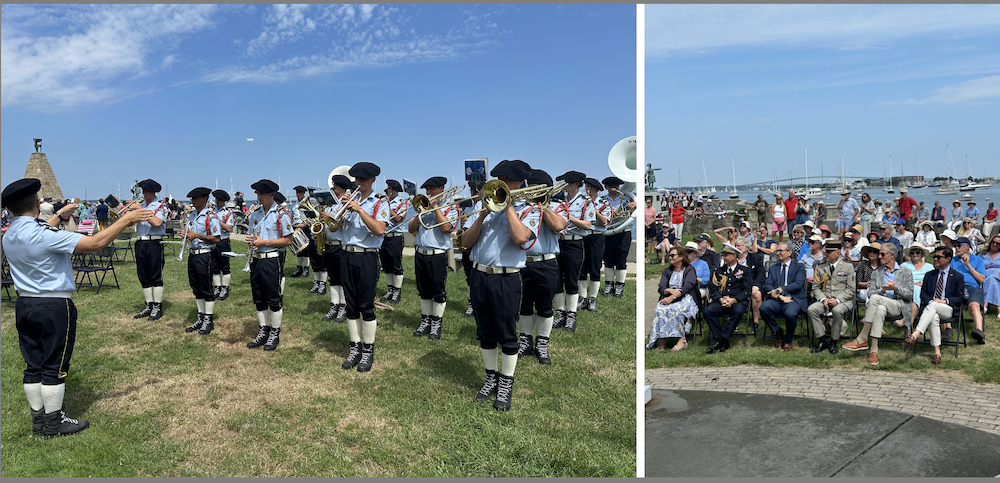
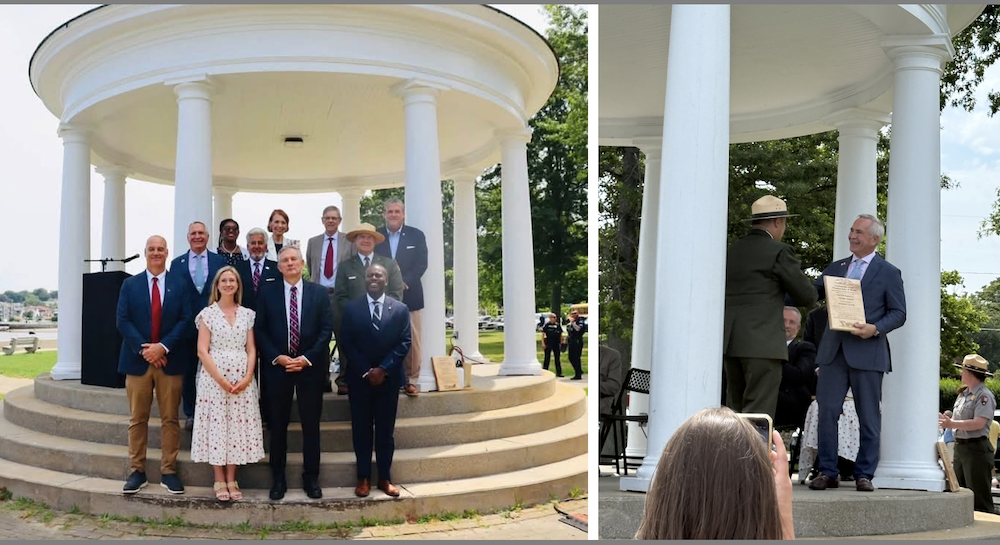
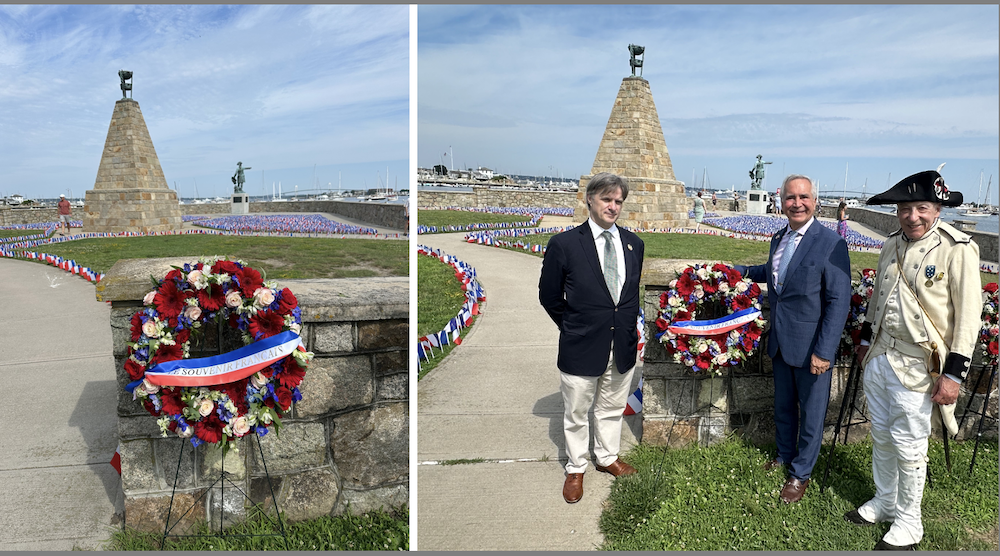
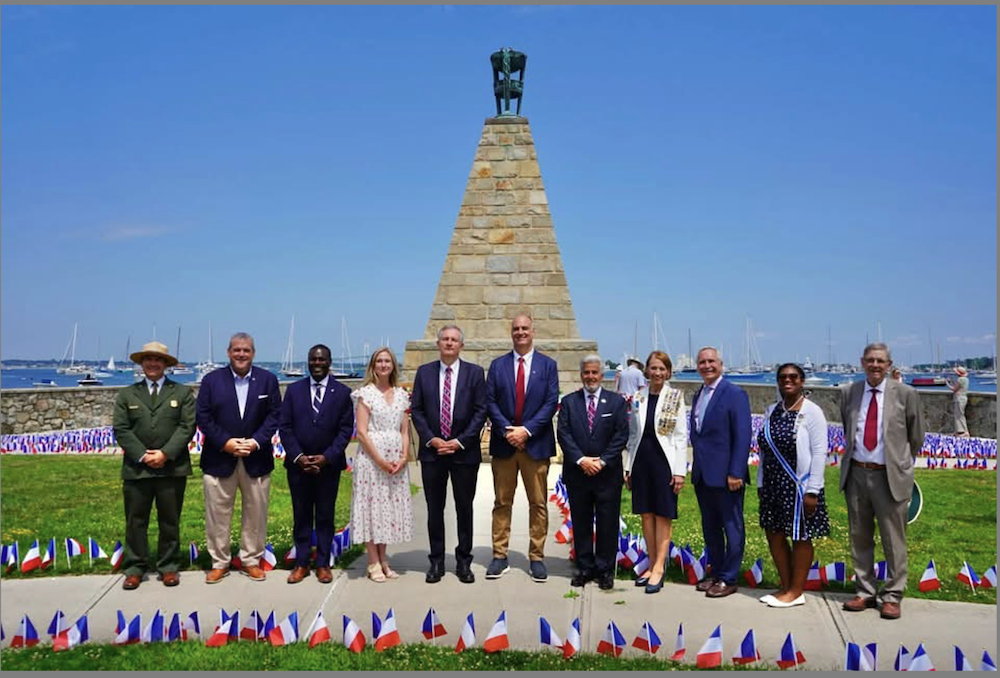
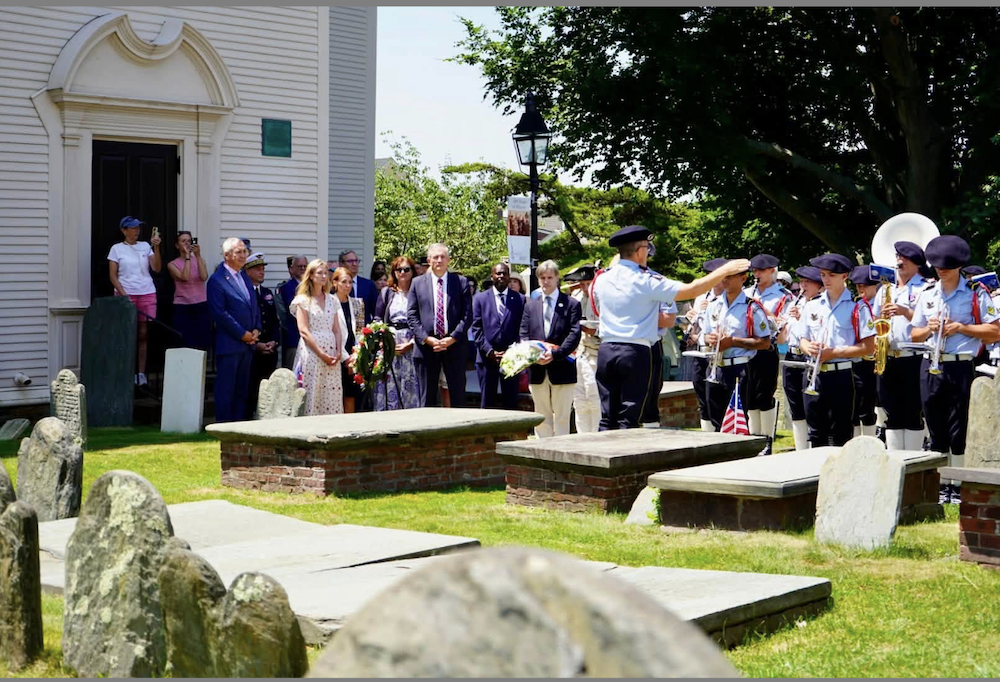
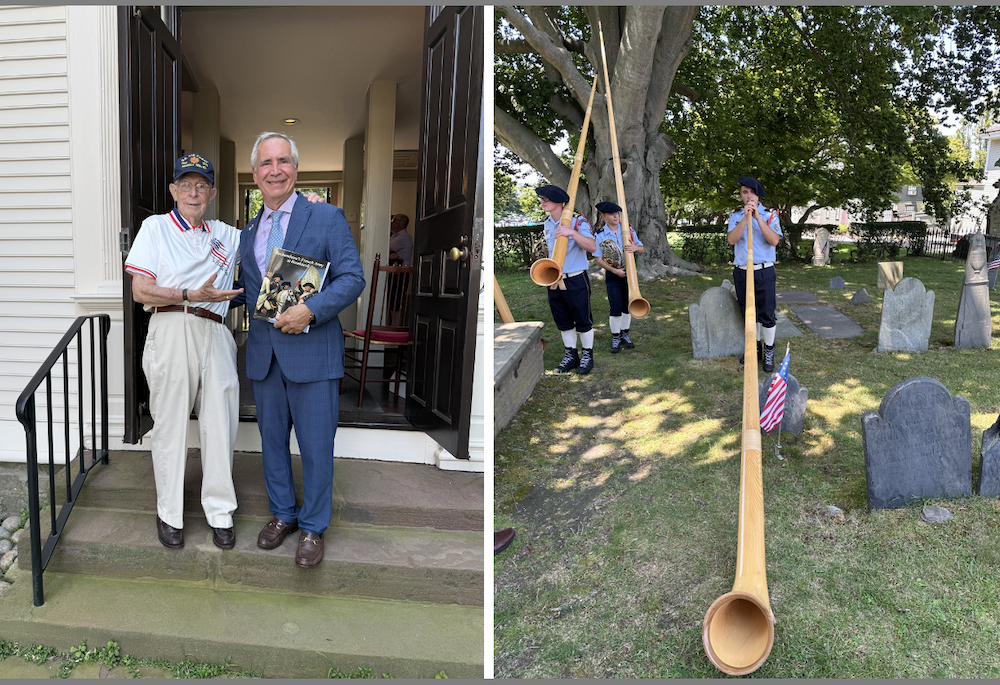
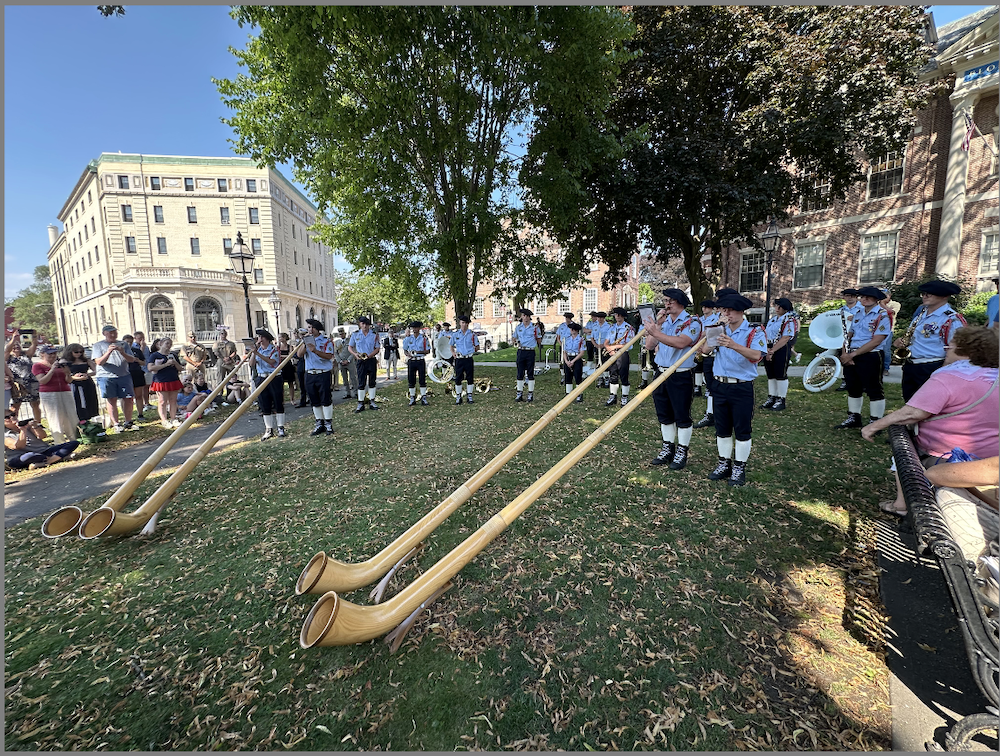
Every year, Prof. Norman Desmarais, Regional Delegate of our Society for New England, Yves de Ternay, general secretary, and our president Thierry Chaunu, lay a wreath at the foot of the Statue of Rochambeau and the Monument to the French Fleet at King Park, Newport, R.I.
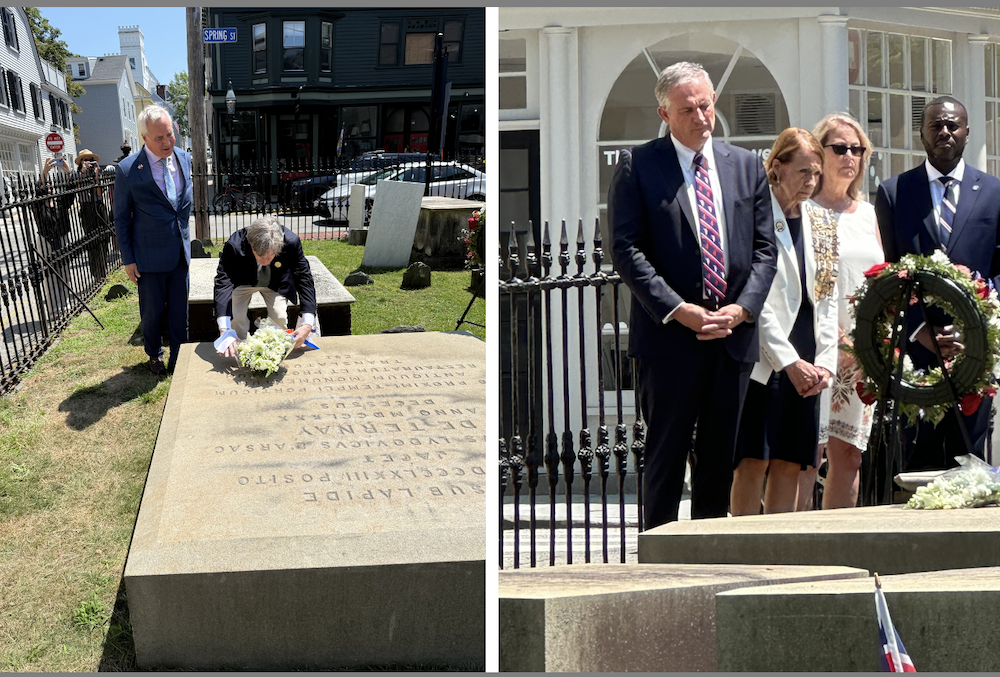
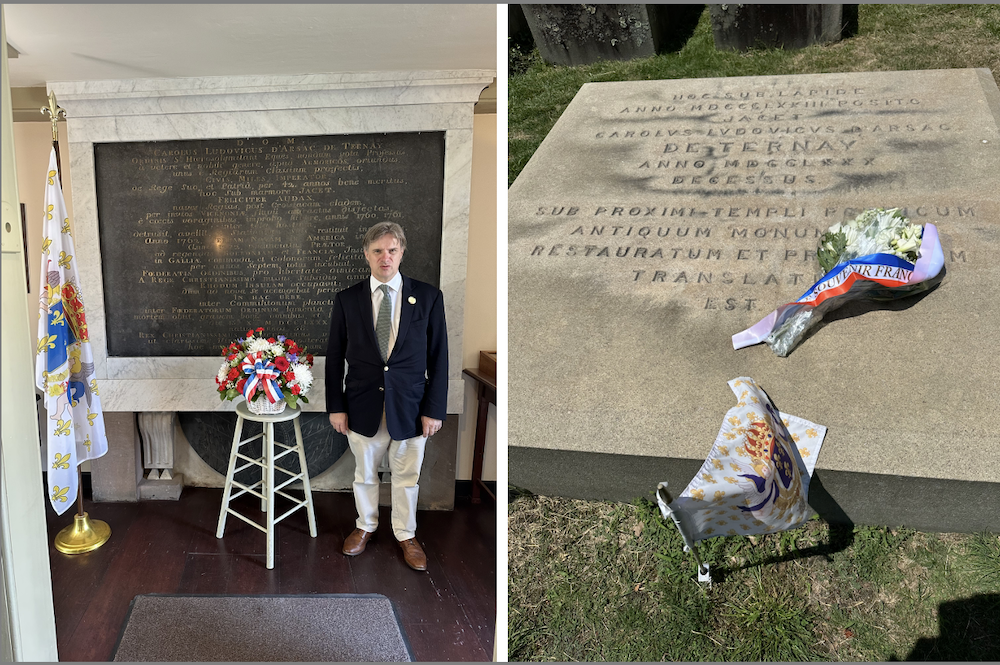
Yves de Ternay also lays a bouquet every year on the tomb of his ancestor Admiral de Ternay who commanded the French fleet that brought Rochambeau and his army to America on July 11, 1780. The admiral is buried at the historical Trinity Churchyard, along 2 French officers of the frigate Hermione.
H.E. Mr. Laurent Bili, Ambassador of France to the United States, along with Hon. Mustafa Soykurt, Consul General of France in Boston, were present this year.
The Washington-Rochambeau Revolutionary Route National Historic Trail in partnership with the Newport Historical Society hosted the French in Newport 2026, a signature living history event commemorating the Franco-American alliance and its role in securing American independence.
Held in the heart of Newport, this annual event brought history to life through reenactments, performances, and interactive experiences that highlighted the presence of French troops and naval forces in Rhode Island during the American Revolution. Visitors explored the story of the allied march to Yorktown and Newport’s vital role as a staging ground for French forces.
As part of the nation’s 250th anniversary, "French in Newport 2026" served as a key commemorative event highlighting 250 years of shared history between the United States and France.
Photos: The military band of France’s 27th Alpine Infantry Battalion opened the ceremony at King Park with musical selections as 6,000 French flags surrounded the Rochambeau monument and the Memorial to the French Fleet. Among the dignitaries and speakers: Johnny Carawan, National Park Service, Rebecca Bertrand, Executive Director Newport Historical Society, French Ambassador Laurent Bili and Charles Holder, Mayor of Newport, Barry Bailey, president of the Alliance Française de Newport, Chuck Schwam, American Friends of Lafayette (MC), Dr. Patti Maclay, M.D., VP Daughters of the American Revolution. Amb. George Krull (ret), of the Battle of Rhode Island Association, Dr. Raymond Sullivan of the Middlebury Historical Society, author of "Rochambeau's French Army at Breackneck" also honored us by their presence. Dr. Iris de Rode, Ph.D., moderated a Q&A public session with reenactors Rochambeau and Lafayette. Philippe and Romane de Chastellux from France were also distinguished guests .
Our thanks to Rebecca Bertrand and Johnny Carawan, and all the volunteers who made this event so memorable. Also our very special thanks to Rev. Meghan Kelly Brower, Trinity Church, and Charlotte Johnson, historian Trinity Churchyard, for their warm welcome.
| | |
July 12, 2026
Central Park Concert
for Bastille Day
| | |
Every year, the C.A.F.U.S.A., Committee of French and Francophone Associations (to which our Society is a member) partners with the General Consulate of France in New York to produce an incredible free public Bastille Day concert in Central Park, thanks to the support of many French companies.
This year was exceptional with French pop music legend Michel Polnareff on stage, preceded by Laurent Voulzy, another iconic figure of the French music scene. French rapper Black M. The crowd was ecstatic.
Prior to the concert, our friends Marie Volpiano sang both national anthems, accompanied by husband Jacques Letalon at the keyboard, in the presence of the Consul General of France Cédrik Fouriscot, Thomas Vandenabeele, president of the CAFUSA, and Alain Dupuis, Henri Dubarry and Daniel Falgerho of the Federation of French War Veterans.
| | |
Dedication
of our Memorial to 4 soldiers of the
Régiment Royal-Deux-Ponts
at Odell House - Rochambeau HQ Museum
October 2026
| Details will be announced by our partners the Friends of Odell House Rochambeau HQ later this summer! | |
Dedication
of our Memorial to French Sailors
Riverwalk, Yorktown, VA
October 18, 2026
| |
In 2022, we installed an interpretive marker dedicated to Admiral de Grasse explaining the crucial role of the French Navy 1778-1783. It has been seen by thousands of tourists on the Riverwalk, a few steps from the 4 sculptures of General Washington, Rochambeau, Lafayette and admiral de Grasse.
We have received the authorization from Yorktown authorities to install a granite memorial "In honor of 3,520 French sailors and soldiers who died at sea 1778 - 1783 for the independence of the United States". They do not have tombs as there are resting at the bottom of the ocean.
We are deeply grateful for the support from the Virginia Society, Sons of the Revolution. The inauguration is planned for October 18, 2026, on the eve of the 245th anniversary of the joint French-American victory.
Details will be announced later this summer.
| | |
Re-dedication
of the
Lapérouse Memorial
and inauguration of our Society's marker
Maui, Hawaii
Postponed to Fall 2026 (date to be announced)
| | |
This restoration of the lava rock monument and installation of the marker would not have been possible without the constant support of Marc Onetto, West Coast Regional Delegate. Our interpretive marker, in three languages (English, Hawai'ian and French) and in Hawai'ian style, was installed last October and already visited by many tourists.
We were hoping to officially re-dedicate the site by the end of May 2026. Due to the French Ambassador's other pressing obligations, the ceremony has now been postponed until the Fall of 2026.
We will announce the exact day of the rededication ceremony in a future Bulletin!
| | |
From Prof. Norman Desmarais
and Arthur S. Lefkowitz:
"George Washington's Dilemna"
| |
From Professor Norman Desmarais, Regional Delegate of our Society for New England: "I am happy to announce the publication of my 51st book, George Washington's Dilemma, co-authored with Arthur S. Lefkowitz. This is first ever account of the 200 French volunteers who joined the Continental Army. They volunteered to serve prior to the entry of France into the war as America's ally. The Continental Congress commissioned them as officers and told them to report to General Washington for assignments. Washington had to decide which of the volunteers had valuable military experience while others were frauds who bluffed their way into the Patriot Army."
"...a team of unique Revolutionary War scholars have successfully tackled the story of the French volunteers who helped win American independence. They are Arthur Lefkowitz, who has a reputation for dogged research and Norman Desmarais who is fluent in French and has written extensively about French participation in the American Revolution. Their research has produced this groundbreaking book. It reveals that the Europeans who fought with the Patriots were either educated in France, officers in the French Army or influenced by the French to join the rebel cause. It lists 200 men who came from France as volunteers early in the war who were commissioned as officers in the Continental Army. Some of them were a great asset to General Washington while others were frauds who came to America to make money. The book focuses on some of the most interesting and important of the French volunteers. George Washington's Dilemma is a pioneering study of a previously ignored but fascinating aspect of the American Revolution."
Available on Amazon.com
| |
From LTC Timothy R. Stoy, U.S. Army (ret) and
CPT C. Monika Stoy, U.S. Army (ret):
Sharpen your bayonets!
| |
"15 July 2026, we celebrated our 3ID's motto Rock of the Marne' 108th anniversary of baptism near Chateau Thierry, France and since.
It was a very hot day just like 108years ago, but no one was shooting at us. It was a grand day reaffirming our alliances and friendship.
Rock of the Marne! We conducted this ceremony at Arlington National Cemetery by laying a wreath at the Tomb of Unknowns and at the front of the 3ID Monument."
Text & Photos: courtesy Lt. Col Stoy and Col. Monika Stoy in France, 3rd Infantry Division
Our friends and esteemed members of our Society LTC Tim Stoy, US Army, ret. and CPT C. Monika Stoy, US Army, ret. never cease to honor the Fallen throughout American cemeteries in France. Above are recent photos of their visit. In addition, Tim Stoy published this captivating book. "Sharpen your baionets!" which we heartily recommend to our readers.
"John Wilson “Iron Mike” O’Daniel was one of the U.S. Army’s great fighting generals of the 20th century. He began his military career with the Delaware Militia in 1914, served on the Mexican border in 1916, received a Distinguished Service Cross in World War I, was Mark Clark’s man for hard jobs in the early days of World War II, and commanded the storied 3rd Infantry Division from Anzio to the end of the war in Europe, ending the war in Salzburg after liberating Munich, and Hitler’s Berghof and Eagle’s Nest on the Obersalzberg, Bavaria, Germany. “Iron Mike “commanded I Corps in Korea 1951–1952 and ended his career as the Chief of the Military Assistance Advisory Group in Vietnam in the early days of American involvement there.
LTC Stoy paints a vivid picture of this great American warrior who played an important role in World War II, became an ardent anti-Communist crusader after duty in Moscow as Military Attaché 1948–1950 as the Cold War intensified, laid the foundation for the Army of the Republic of Vietnam, and remained an ardent supporter of President Ngo Dinh Diem while serving as Chairman of the American Friends of Vietnam from his retirement in 1956 until 1963, shortly before Diem’s assassination."
| | |
Dr. Raymond E. Sullivan, M.D.
Middlebury Historical Society, CT
(Foreword by Thierry Chaunu)
Rochambeau's French Army at Breakneck
| | |
"After the American victory at Saratoga in 1777, France formally entered the Revolutionary War under the command of General Rochambeau. In 1780, over 5,000 French troops landed in Rhode Island and later marched through Connecticut to join General Washington's army on the way to the decisive victory at Yorktown. This book tells the powerful story of that journey - focusing on their encampment at Breakneck Hill - and honors the sacrifice of the thousands of French soldiers whose courage helped secure America's independence."
Available at Barnes & Noble and on Amazon
| | |
Join Us!
If you have not done so already....
Please renew now your Membership!
Whether you are renewing, joining us for the first time, or after an absence, we send you our warm greetings of welcome.
Your contribution is essential to our activities!
- $ 25 for Veterans and Students
- $ 50 for a membership ($80 for a couple)
- $100 for a Supporting Level membership
- $150 for a Benefactor Level membership
- $250 donation for the 'America250 special fund' (installation of a bronze plaque at Gwynn Island, VA)
- $500 donation for our granite memorial at Riverwalk, Yorktown, VA to honor the 3,250 French sailors who died at sea for the independence of the United States (1778-1783)
-
Any amount for the sculpture of Le Petit Prince and Antoine de Saint Exupéry in Miami (with $1,000, your name will be on the Donors plaque inside the Museum)
- We are an IRS-qualified 501(c)3 non-profit organization. Dues and/or donations are tax deductible. Donations of $250 or more automatically include membership for 2026
Note: If you joined in the final quarter of 2025, your membership is automatically extended through the entirety of the calendar year 2026.
The list of our activities, achievements, projects, is extensive and can be discovered on our site: www.SouvenirFrancaisUSA.org as well as our monthly Bulletins.
Please help us promote the historical ties between France and the United States. We thank you for your membership and any donations you may make to help us promote our missions and values!
| | |
You can send your Membership or donation
via PayPal:
https://souvenirfrancaisusa.org/donate/
(100% secure - no need to have an account with PayPal - major credit cards accepted)
or
By check, payable to "American Society of Le Souvenir Français, Inc"
Mailing address:
Yves de Ternay, General Secretary
5650 Netherland Avenue #4G Bronx NY 10471
You will receive a Membership e-card, a donation receipt,
and
a unique link to access our compilation of French sites in the U.S.A.
(a $19.5 value)
| | |
The 3rd edition of Memories of France (Revised & Augmented) is now available on Amazon documents 3,000 sites of French presence across all 50 states and five centuries of American history, up from 2,000 from the previous edition.
Join us and receive a special link to access a free PDF special version !
| |
OUR MISSIONS:
• To preserve the memory of the French soldiers, sailors and airmen who gave their lives for freedom, and who are buried in the United States.
• To honor French Citizens who did great deeds in the United States, or with a strong connection with the United States,
• To promote the appreciation for French culture and heritage in the United States, and the ideals that unite our two nations, in order to pass the torch of memory to younger generations.
• To strengthen the long-standing traditional bonds of friendship between the American and French peoples, and to this end: erect or maintain memorials and monuments and encourage historical research, public presentations and publications in the media.
The American Society of Le Souvenir Français, Inc. is an independent American corporation, apolitical, established in 1993 in NY, with 501 (c) 3 non-profit status.
| | |
Board of Directors
2025 - 2028
Directors:
Françoise Cestac, Honorary President • Gabriel Chalom • Thierry Chaunu, President • Yves de Ternay, General Secretary • Patrick du Tertre, 1st Vice President • Francis Dubois • Alain Dupuis, 2nd Vice President •
Daniel Falgerho • Dr. Patti Maclay, M.D. • Domitille Marchal-Lemoine •
Mathias Maisonnier, Treasurer • Prof. Clément Mbom, 3rd Vice President •
Jean-Hugues Monier, Auditor • Patrick Pagni • Harriet Saxon
We are pleased to announce that W. Robert Kelly, Jr. is our new Regional Delegate for Virginia as of June 1st, 2026.
Regional Delegates:
Jacques Besnainou, Great Lakes and Midwest • Bruno Cateni, South •
Prof. Norman Desmarais, New England • W. Robert Kelly, Jr., Virginia •
Alain Leca, Washington D.C. • Marc Onetto, West Coast •
Brigitte Van den Hove – Smith, Southeast
| | |
MONTHLY BULLETINS
OUR AIM: To turn the spotlight on a famous, or less famous, episode or historical figure during the long shared history between France and the United States, with illustrations and anecdotes.
You can have access to our past monthly Bulletins
(in English and French) at: www.SouvenirFrancaisUSA.org
Click on the illustrations on each page for further access to sources and references
| | |
The American Society of Le Souvenir Français, Inc. is a registered NY State non-profit corporation and has full IRS tax exempt 501(c)3 status. All donations are tax deductible.
Copyright © 2026 The American Society of Le Souvenir Français, Inc.
All Rights Reserved
Merci de nous contacter si vous souhaitez recevoir ce bulletin dans sa version traduite en français.
Contact: Thierry Chaunu, President
Email: tchaunu@SouvenirFrancaisUSA.org
| | | | |