|
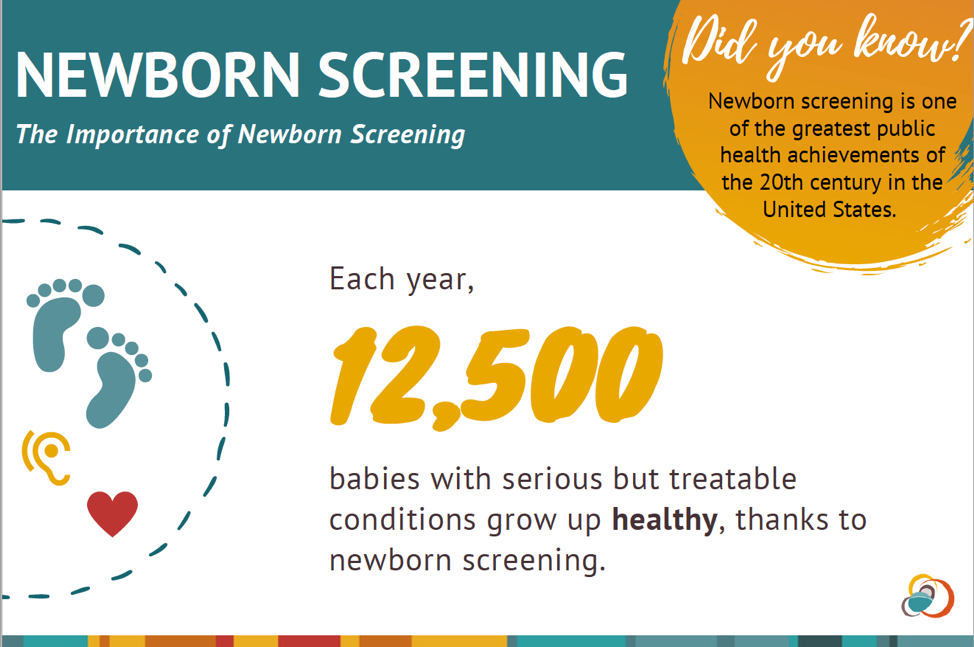
In collaboration with the Frontiers in CDG Consortium (FCDGC) and our patient association partners, the CDG Newborn Screening Initiative is ongoing to determine the feasibility of newborn screening for N-linked glycosylation disorders at birth.
This project could be an incredible first step to hundreds, possibly thousands of families receiving a CDG diagnosis BEFORE having to navigate down the road that all of us have taken on our own winding diagnostic journey!
With the dedication of our CDG research partners at CHOP, initial progress on this initiative has found evidence that CDG can be diagnosed on newborn screening dried blood spot samples! Our team has already tested 8 punch cards and found diagnostic changes consistent with the known diagnosis of PMM2-CDG, MPDU1-CDG and ATP6AP2-CDG. The presentation of these extraordinary findings was awarded "Best Presentation" and received the "Society for Inherited Metabolic Disorders (SIMD) President Award" at the recent SIMD meeting in April 2023. Additional data analysis also suggests that 24 hours of life may be a better diagnostic window for CDG types, such as ALG13-CDG, thank are known to be difficult to detect later in life.
With so much success already showing positive results, our researchers are asking for twelve more families to participate!
Here are the details for families who are interested in joining this effort:
WHY – This study is so important because the findings will support newborn screening for N-linked CDGs.
WHO – Our target audience is CDG patients born in California or New York who have a confirmed diagnosis of an N-linked glycosylation disorder (PMM2, MPI, PGM1, SLC35A2, ATP6AP1, MOGS, all of the N-linked CDGs, etc). Families in Texas may also be eligible to participate if your child is < 3 years old.
HOW – Qualifying families who are interested in participating should email the research team coordinator at Hem@chop.edu. You may also call and leave a voicemail at 215-590-1177. The participation process is easy. Parents/Caregivers will be guided through filling out the required forms to have their child’s newborn screening blood spot cards sent in for research analysis. No new blood collection is necessary.
WHEN – The deadline for this project has been extended to Jun 30, 2024… so we encourage interested families to email or call the research team coordinator as soon as possible.
We all know that establishing early diagnosis is important to enable early monitoring, treatments, and provide opportunities to start targeted therapies when available which could potentially halt the progression of the disease and improve clinical outcomes for so many children yet to be diagnosed!
|