|
In This Issue:
- Market Update: Japanese Trade Agreement Highlight of the Week
- Washington, D.C. Update
- USRPA Hosts USDA Agricultural Trade Specialists in Texas
- Support Texas Rice Farmers: Sponsor the Texas Rice Roundup Today!
- Texas Grown Rice Shines at the 2025 Texas Restaurant Show
- RMTC Creates Lasting Links: MachVision’s Analyzer Now a Staple in Louisiana Rice Operations
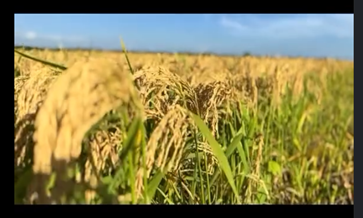
- Video from Rice Country
| | Japanese Trade Agreement Highlight of the Week | | |
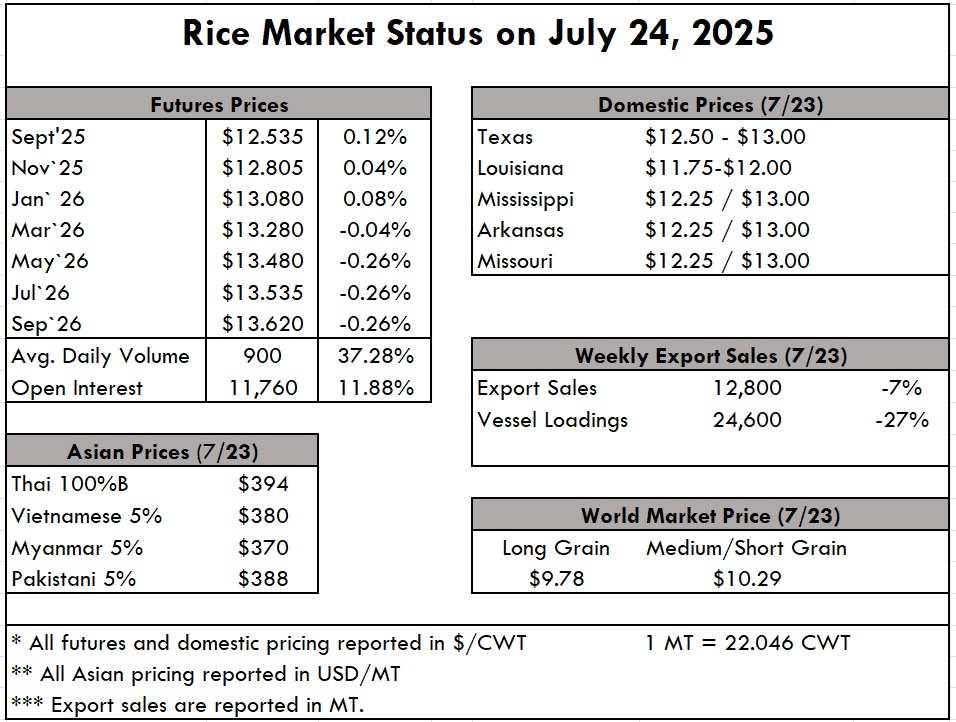
The rice market itself is holding steady, with cash prices calm and milling steady for domestic, Iraq, and Haitian business. The fireworks are certainly coming out of DC right now, as the Trump trade deals are coming in hot and heavy. There have been deals made with Indonesia and the Philippines, both positive for the U.S., but they will have minimal impact on the U.S. rice complex.
Most recently announced is the Japanese trade agreement, which does have a focus on increasing imports of U.S. rice in a significant manner. As we understand it at this point (things are always changing), Japan has a 682,000 metric ton import quota of tariff-free rice. The current U.S. share is 327,000 MT, or 48%. The new trade deal preliminary outlines that the U.S. will receive an increased allotment of this 682,000 MT, thereby increasing its “piece of the pie” in the coming years. This almost certainly means an increase in MA (minimum access) business, and possibly an increase in SBS business (simultaneous buy-sell). Thailand typically exports about 270,000 MT to Japan under the agreement (40%), and Australia around 68,000 MT, or 10%. While this is great news for the rice producers on the West Coast, there are other victories for long-grain producers coming from the UK, and potentially the EU and other Latin American countries soon.
In Asia, the carnage continues with prices well below $400 pmt. Thailand and Vietnam are both now being quoted in the $380-$385 pmt range. These prices, even a year ago, were unthinkable. It was well known that the release of Indian rice was going to distort pricing, but to this extent would have been only a guess to the most discerning prognosticator. While there is an indirect impact of these low prices coming out of the Eastern Hemisphere, the US is fortunate to still have prices being quoted at $650 pmt. However, as the Export Sales report will show below, there isn’t a lot of buying at that level.
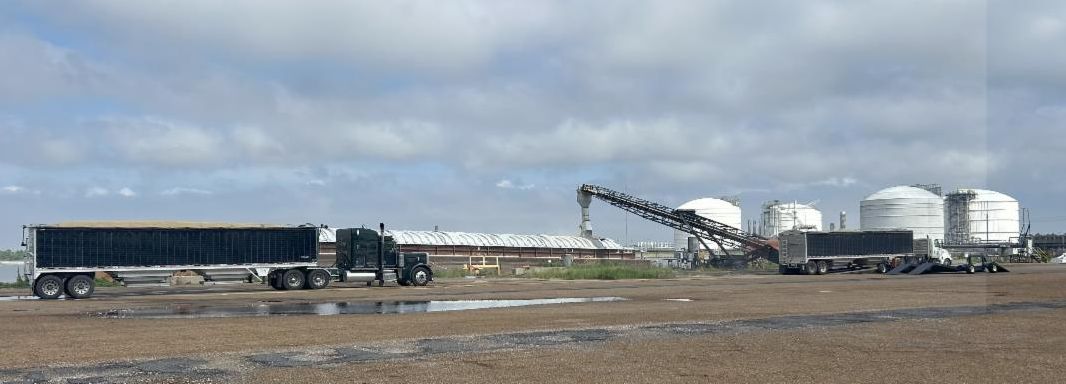
On the ground, there is some concern about the coming harvest because of the heat, but there’s not much to be done about it at this point. The USDA Crop Progress Report as of July 20 is shows a positive trend is in line, as 79% of the crop is in good/excellent condition, where last week it was 77%, and last year 83%. California is showing 90% in good/excellent condition, where growing conditions have been favorable so far this year, but a cold spell has some producers worried about the maturation of some fields. Texas leads the pack of rice headed with 87%, then Louisiana at 83%, followed by Mississippi, Arkansas, and Missouri at 66%, 36%, and 25%, respectively. California shows 25% headed. Early harvest reports out of southwest Louisiana are generally positive, both with field yields (45-55 bbls per acre) and milling quality (59-60% whole grain). Varieties include Avant, Max Ace, PVL03, and DG263. The South Louisiana Rail Facility (SLRF) has shipped paddy rice with good milling yields of 55 or better this week to Central America.
| SLRF loading barges of paddy rice for shipment via New Orleans to Central America this week. | The weekly USDA Export Sales Report shows net sales this week of only 12,800 MT, a marketing year low. Exports of 24,600 MT were down 26% from the previous week and 33% from the prior 4-week average. The destinations were primarily to medium grain destinations, highlighting the difficulty in U.S. long grain exports. | | |
USDA Announces Large-Scale Reorganization Plan: On Thursday, July 24, the U.S. Department of Agriculture (USDA) Secretary Brooke Rollins announced the Department’s plan to initiate a large-scale reorganization plan. The USDA’s phased plan involves relocating much of its Agency headquarters and National Capital Region (NCR) staff out of the Washington, D.C. area to five hub locations. With the high cost of living and federal salary locality rate (33.94%) in the NCR, USDA has selected hubs in areas where existing concentrations of USDA employees are already located, offering lower costs of living. These five regions and their federal locality rates have been identified as Raleigh, North Carolina (22.24%); Kansas City, Missouri (18.97%); Indianapolis, Indiana (18.15%); Fort Collins, Colorado (30.52%); and Salt Lake City, Utah (17.06%). Through these changes, the USDA hopes to ensure that the size of its workforce aligns with available financial resources and agricultural priorities, bring the USDA closer to its customers, eliminate management layers and bureaucracy, and consolidate redundant support functions. Over the next month, USDA senior leadership is expected to notify offices with more details regarding relocation during this first phase of a multi-month process. For more information, please see USDA’s initial press release here.
White House Announces Proposed Trade Deal with Japan, Including Pro-Ag Carveouts: On Wednesday, July 23, the Trump Administration announced a proposed trade framework with Japan that includes a commitment to buy an additional $8 billion worth of agricultural and other goods, such as corn, soybeans, fertilizer, bioethanol, and sustainable aviation fuel. The current agreement stipulates that Japan will be subject to a baseline tariff rate of 15%. From an agricultural perspective and relevant to USRPA, the Administration highlighted that Japan will immediately increase imports of U.S. rice by 75%, with major expansion of import quotas as discussed in the Market Update. Details are still forthcoming from the White House as the deal becomes finalized. You can find more information and details from the Trump Administration here.
Senate Ag Holds Nomination Hearing for USDA FPAC Under Secretary: On Wednesday, July 23, the Senate Committee on Agriculture, Nutrition and Forestry convened to hold a nomination hearing for Mr. Richard Fordyce to be the next Under Secretary at the U.S. Department of Agriculture (USDA) for Farm Production and Conservation (FPAC). In this role, Fordyce would oversee the Farm Service Agency (FSA), Natural Resources Conservation Service (NRCS), and the Risk Management Agency (RMA). During the hearing, Committee members expressed bipartisan support for Fordyce’s confirmation, pointing to his extensive career in the farm industry and previous USDA experience. Discussions centered around agricultural disaster relief, modernization across the USDA, and loan limits for farmers and ranchers. Both Democrats and Republicans expressed concerns about staffing shortages and the impact of the Deferred Resignation Program. Overall, Mr. Fordyce committed to aligning with USDA Secretary Brooke Rollins and the broader Trump Administration to deliver quality assistance to farmers and ranchers nationwide. You can watch the full nomination hearing here.
House Ag Holds Hearing on Crop Production Innovation: On Tuesday, July 22, the House Agriculture Committee held a hearing titled, “Past Breakthroughs and Future Innovations in Crop Production. During the hearing, members and witnesses raised concerns about the Environmental Protection Agency’s (EPA) slow and inefficient pesticide review process, pointing to a growing backlog that delays access to new tools for farmers. Democrats criticized EPA staffing cuts, saying they have hindered the Agency’s ability to review products and support science. There was strong bipartisan support for more research, especially through land-grant universities and public-private partnerships, to help farmers and advance innovation. Democrat members criticized the ‘Make America Healthy Again’ (MAHA) Commission Report for using bad science and leaving out farmer input. Other topics included the need for a faster review system, federal regulation reform, and more investment into programs that support specialty crops and respond to climate challenges. You can watch the full hearing here.
| | USRPA Hosts USDA Agricultural Trade Specialists in Texas | | |
The US Rice Producers Association had the honor of hosting a delegation of marketing specialists from USDA’s Agricultural Trade Offices around the world as part of their outreach to key U.S. agriculture and food sectors. The visit aimed to strengthen collaboration between USRPA and USDA’s international marketing initiatives, promote U.S. rice exports, and explore opportunities for growth in global markets.
During the visit, USRPA showcased the capacity, sustainability, and quality of U.S. rice production, while providing an overview of its international programs. The exchange included valuable insights into global trade dynamics, market access challenges, and promotional strategies. In addition, USRPA facilitated in-depth discussions that identified promising areas for collaboration between USDA’s Foreign Agricultural Service and USRPA across several emerging and strategic markets.
| | Support Texas Rice Farmers: Sponsor the Texas Rice Roundup Today! | | Texas Grown Rice Shines at the 2025 Texas Restaurant Show | | Left to right: Debbie Hoffpauir, Hoffpauir Grain, DBA HG Rice Mill; Iris Figueroa, USRPA; Christie Naiser, Honestly Texas; Grace Wang, USRPA. | |
The 2025 Texas Restaurant Show in Houston wrapped up with record-breaking attendance and an electric atmosphere at the George R. Brown Convention Center. Thousands of restaurant owners, chefs, and industry professionals from across Texas and beyond gathered to explore over 500 exhibitor booths showcasing the latest innovations in food, beverage, equipment, and technology. Texas-grown rice was proudly represented by Hoffpauir Grain, DBA HG Rice Mill, and Honestly Texas, highlighting the importance of supporting local agriculture in the foodservice industry. The show’s dynamic education sessions offered actionable insights into culinary trends, business strategies, and emerging technologies shaping the future of hospitality. Special events like the Texas Restaurant Awards and the Lone Star Bash brought the community together to celebrate excellence and resilience in the industry. With its vibrant networking opportunities and strong focus on local products and partnerships, the 2025 Texas Restaurant Show reaffirmed its position as a must-attend event for foodservice leaders driving growth and innovation.
“At US Rice Producers Association, we believe that participating in these types of events not only strengthens Texas rice producers by connecting them directly with chefs, restaurateurs, and distributors, but also plays a key role in promoting U.S. rice more broadly," USRPA's Iris Figueroa said. "Showcasing locally grown rice at a major industry gathering helps build awareness, inspires culinary innovation with rice-based dishes, and reinforces the value of supporting American farmers within the global food system.”
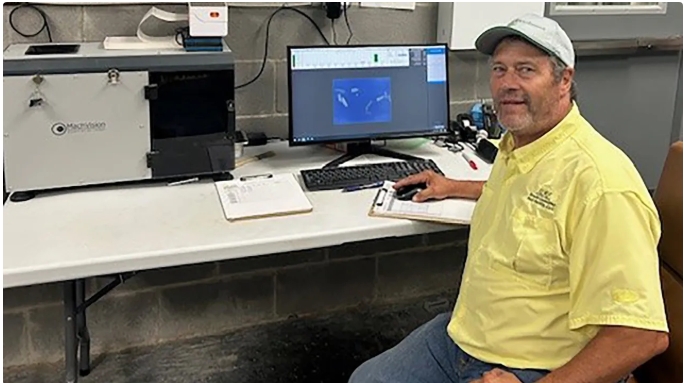
| | RMTC Creates Lasting Links: MachVision’s Analyzer Now a Staple in Louisiana Rice Operations | | Mark Pousson is shown with the Rice Analyzer at the South Louisiana Rail Facility | | |
At the intersection of global innovation and local impact, the Rice Market & Technology Convention (RMTC) continues to serve as a catalyst for meaningful industry connections. One such success story emerged from the 2025 convention in Miami, where MachVision, a company specializing in automated quality control technology for the rice industry, exhibited its cutting-edge Rice Analyzer. This encounter led to a transformative partnership with the South Louisiana Rail Facility and the Port of Lake Charles, where the technology is now streamlining operations and improving rice quality assessment.
“One of the most consistent pieces of feedback I hear is how RMTC creates meaningful connections that lead to real-world impact. It’s not just a conference, it’s a catalyst for innovation, collaboration, and long-term relationships across the rice industry. That kind of feedback reinforces exactly what RMTC is designed to do: bring the global rice community together to exchange ideas, form partnerships, and move the industry forward,” Marcela Garcia said.
To learn more about how this collaboration unfolded and what it means for U.S. rice producers, be sure to read the full article by Forrest Laws in Farm Progress News.
| | | |  |
Food & Agriculture
Regulatory & Policy Roundup
| | | | | |
Inter-Rice
World Rice
Market Report
| | |
Supplemental Disaster Relief Program
(SDRP)
| | | |
Deadline: August 15, 2025
| | |
|
August 6, 2025
Mizzou Fisher Delta Research Center Ag Research Expo
Portageville, MO
More Information
| |
|
August 7, 2025
Rice Research & Extension Center Field Day
Stuttgart, AR
More Information
| | |
August 14, 2025
Missouri Rice Research & Merchandising Council Annual Field Day
Glennonville, MO
More Information
| |
August 21 - 22, 2025
National Black Growers Council Model Farm Field Day
Altheimer, AR
More Information
| |
October 3 - 4, 2025
Texas Rice Festival Education Exhibit
Winnie, TX
More details to come
| |
January 31, 2026
Texas Rice Roundup
Richmond, TX
SAVE THE DATE: More details to come
| |
|
February 5 - 6, 2026
29th Annual National Conservation Systems Cotton & Rice Conference
Jonesboro, AR
More details to come
| | |
USRPA does not discriminate in its programs on the basis of race, color, national origin, gender identity, sexual orientation, religion, age, disability, political beliefs, or marital/family status. Persons who require alternative means for communication of information (such as Braille, large print, sign language interpreter or translation) should contact USRPA at 713-974-7423. |
| | | |